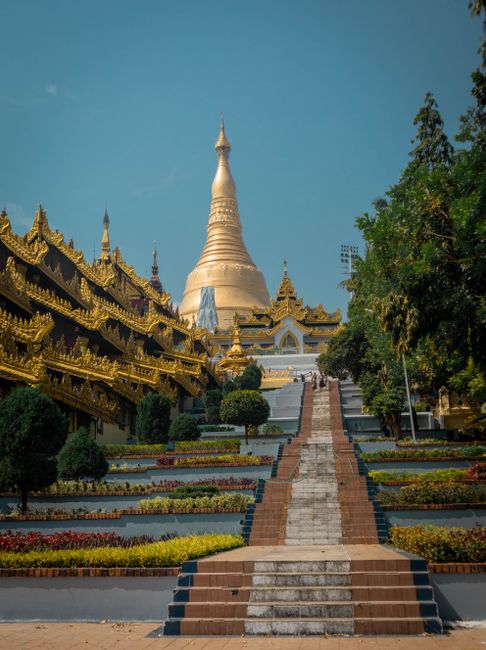
Myanmar, also known as Burma, is the largest country in mainland Southeast Asia, a land of golden pagodas, slow brown rivers, misty hill country and long Bay of Bengal beaches stretched between India, Bangladesh, China, Laos and Thailand. Its great sights are among the most remarkable in Asia: the gilded Shwedagon Pagoda rising over Yangon, the plain of more than 3,500 temples and stupas at Bagan, the stilt villages, floating gardens and leg-rowing fishermen of Inle Lake, and the royal city of Mandalay on the Ayeyarwady (Irrawaddy). Buddhist culture runs through daily life, from monks collecting alms at dawn to the tea shops, markets and pagoda festivals that fill the calendar. Travel here needs more planning than anywhere else in the region. Since the military takeover of February 2021, fighting has continued across much of the country, large areas are closed to foreigners, and roads, flights and internet access can change at short notice; the earthquake of March 2025 also damaged Mandalay, Sagaing and parts of Bagan. Most visitors now fly between Yangon, Bagan and Inle, use an e-visa that is valid only at a few entry points, and carry plenty of US dollars in cash. This guide sets out what is possible, practical and current as of October 2026.
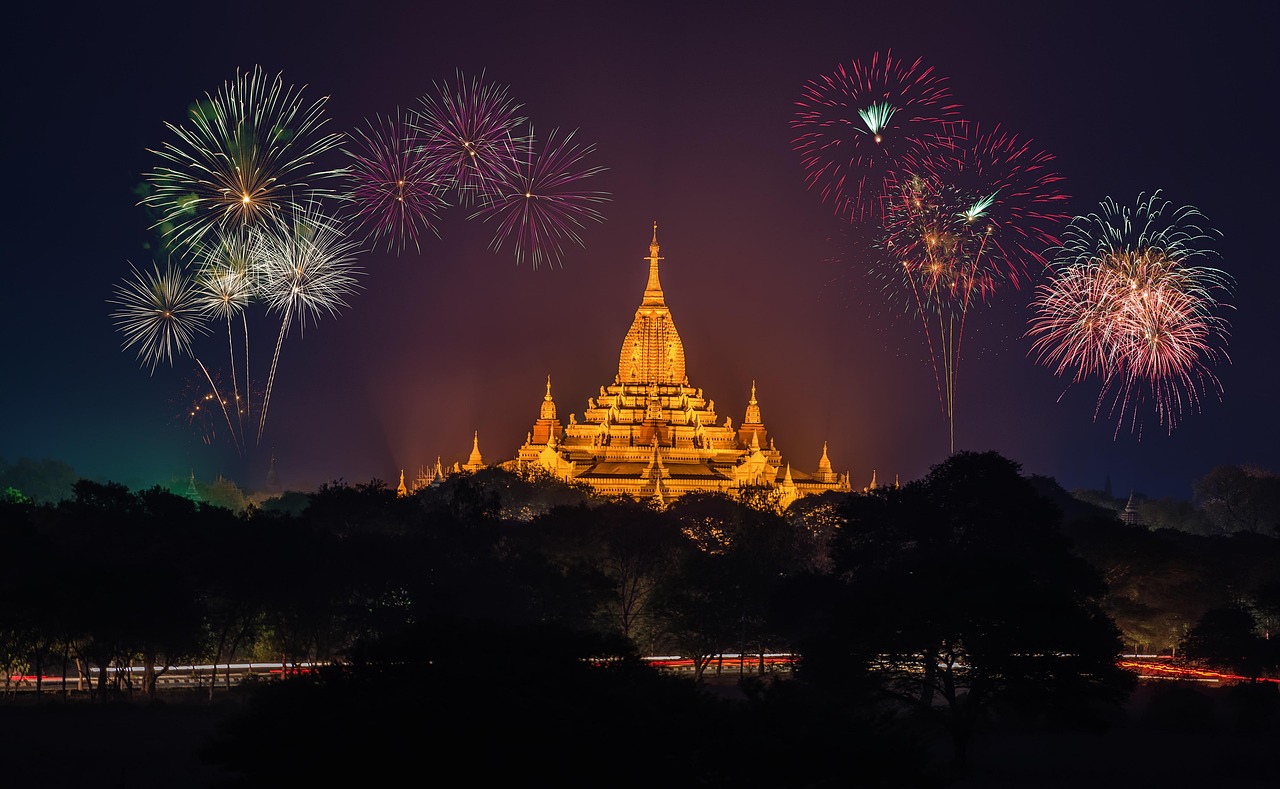
Right now in Myanmar
- Wed 23–31°C 74–88°F 1 mm Showers
- Thu 24–32°C 75–89°F 3 mm Mostly clear
- Fri 24–32°C 76–89°F 1 mm Light showers
Weather: MET Norway (CC BY 4.0)
Multi-day tours of Myanmar
Multi-day tours from local operators. You check dates and book on Viator, our partner; we may earn a commission at no extra cost to you. How we earn money
Myanmar at a glance
The Republic of the Union of Myanmar covers about 676,600 km² (261,200 sq miles), a little smaller than Texas, and has a population of more than 50 million. It is divided into seven regions, seven states and the union territory of Naypyidaw, the purpose-built capital since 2005–2006; Yangon remains the largest city and the main gateway. Burmese is the official language, and the government recognizes 135 ethnic groups, including the Shan, Karen, Rakhine, Mon, Chin and Kachin; about nine in ten people are Theravada Buddhists, with Christian, Muslim and Hindu minorities.
Myanmar uses Myanmar Standard Time (UTC+6:30), with no daylight saving time, half an hour behind Thailand. Electricity is 230 V, and sockets take a mix of plugs, including round two-pin (types C and F), round three-pin (type D) and British-style square three-pin (type G). The currency is the kyat (MMK).
A short history
The kingdom of Bagan unified the Ayeyarwady valley in the 11th century and built most of its temples between the 11th and 13th centuries; later dynasties ruled from Inwa (Ava), Taungoo, Amarapura and finally Mandalay, built by King Mindon in 1857. Britain annexed the country in three wars between 1824 and 1885 and ruled it as part of British India until 1937. Burma became independent on January 4, 1948, and was ruled by the military from 1962. A period of reform from 2011 opened the country to tourism, and visitor numbers grew quickly until 2020. In February 2021 the military took power again and declared a state of emergency, and armed conflict has since spread to many states and regions.
Myanmar’s regions
- Yangon and the delta: the former capital, with the Shwedagon Pagoda, colonial downtown, markets and the Circular Railway, and the Ayeyarwady delta to the west.
- Central Myanmar: Bagan’s temple plain, Mount Popa, Mandalay and the old royal capitals of Amarapura, Inwa, Sagaing and Mingun, and the capital, Naypyidaw.
- Shan Plateau: Inle Lake and the town of Nyaungshwe, the hill station of Kalaw, Pindaya’s caves and Taunggyi.
- The coast: the beaches of Ngapali on the Rakhine coast, Ngwe Saung and Chaung Tha west of the delta, and the Myeik Archipelago in the far south.
- The north and the borderlands: Kachin, Chin, Sagaing, Kayah, Kayin and northern Shan, mountainous areas that are mostly closed to foreign visitors because of fighting.
Regions
Where to go: pagodas, temples and lakes
Most trips today focus on the three places that remain the core of tourism in Myanmar, linked by domestic flights. See our guides to each:
- Yangon: the Shwedagon Pagoda, the Sule Pagoda and downtown’s colonial streets, Bogyoke Aung San Market, the giant reclining Buddha of Chaukhtatgyi, Kandawgyi Lake and the Circular Railway.
- Bagan: the UNESCO-listed plain of temples and stupas on the Ayeyarwady, including Ananda, Shwezigon, Thatbyinnyu, Dhammayangyi and Sulamani, explored by e-bike, horse cart or, in season, hot-air balloon.
- Inle Lake: a shallow highland lake of stilt villages, floating tomato gardens, weaving workshops, rotating markets and the Phaung Daw Oo Pagoda, with Nyaungshwe as the base.
Mandalay, the last royal capital, has the moated palace, Mandalay Hill, the Kuthodaw Pagoda with its 729 marble tablets of Buddhist scripture, the Mahamuni Buddha and the nearby U Bein Bridge at Amarapura, the world’s longest teak footbridge. The March 2025 earthquake caused heavy damage in Mandalay and across the river in Sagaing, Inwa and Mingun; repairs are continuing, and some monuments and museums are closed or fenced off, so check before planning a visit, and remember that the area north of Mandalay is affected by fighting.
On the coast, Ngapali Beach near Thandwe in Rakhine State was the country’s best-known beach resort, but much of Rakhine State has been a conflict zone since 2023–2024, and flights and hotels there have been suspended or reduced; check carefully before considering it. Ngwe Saung and Chaung Tha, reached by road from Yangon through the delta, and the Myeik Archipelago, explored on liveaboard boats from Kawthaung on the Thai border, are the other coastal options. Kalaw, a former British hill station on the Shan Plateau, is the starting point for two- and three-day treks to Inle Lake through farming villages; whether the route is open depends on local conditions each season. See our hiking guide.
Naypyidaw, the capital, is a curiosity: a planned city of ministries, hotel zones and boulevards up to 20 lanes wide, with the Uppatasanti Pagoda, a near-replica of the Shwedagon, and a gem museum. Its international airport is one of the e-visa entry points, and it was badly shaken by the 2025 earthquake.
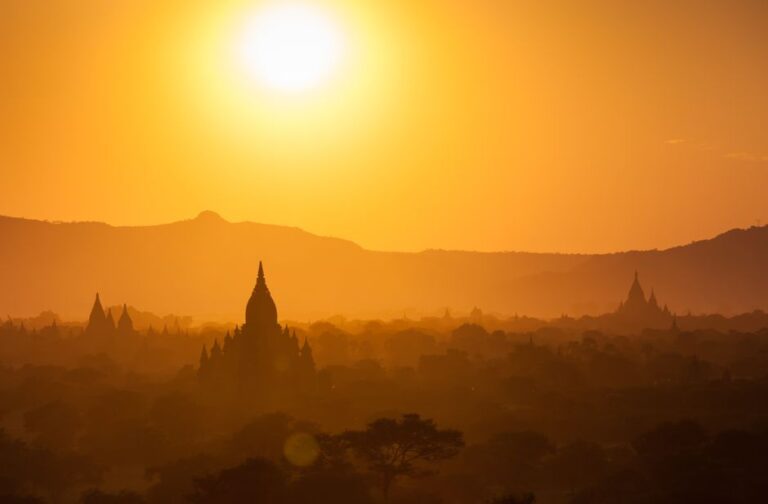
Bagan Travel Guide
Plan a trip to Bagan: the 30,000-kyat zone fee, the climbing ban, Nyaung-U, Old Bagan and New Bagan and where to stay, Ananda, Shwezigon,…
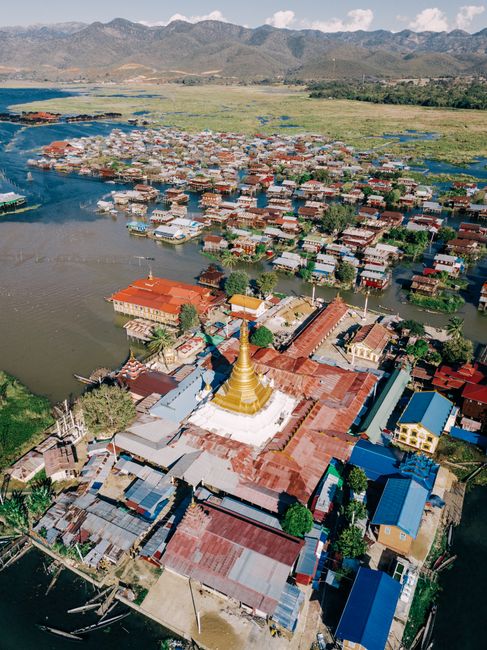
Inle Lake Travel Guide
Plan a trip to Inle Lake: the zone fee, Nyaungshwe and the lake resorts, leg-rowing fishermen and floating gardens, Phaung Daw Oo, In Dein,…
Yangon Travel Guide
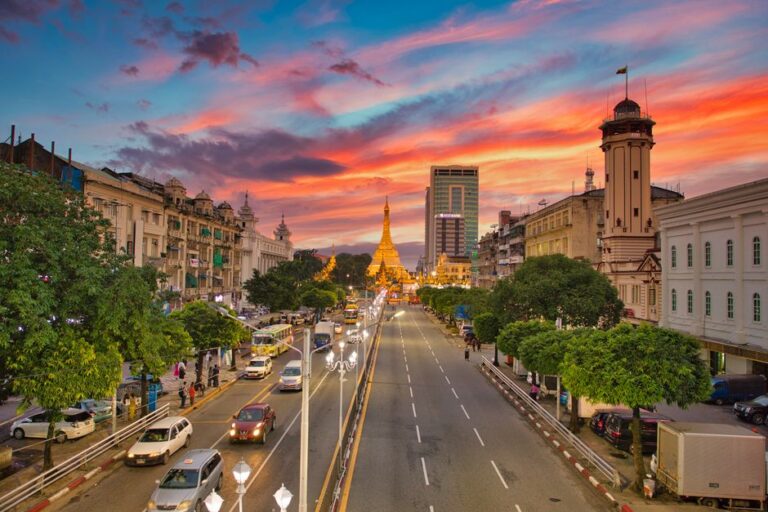
Plan a trip to Yangon: downtown, Kandawgyi and Inya Lake and where to stay, the Shwedagon and Sule pagodas, colonial buildings, Bogyoke Aung San…
Best time to visit Myanmar
Myanmar has a tropical monsoon climate with three seasons. The cool, dry season from November to February is by far the best time to visit, with sunny days of 29–33 °C (84–91 °F) in Yangon and Bagan, cool nights on the Shan Plateau, and clear skies for balloon flights over Bagan. The hot season, from March to May, brings heat of 37–40 °C (99–104 °F) in the central dry zone around Bagan and Mandalay. The southwest monsoon, from about late May to October, brings heavy rain to Yangon and the coast, where more than 5,000 mm (200 in) falls in a year at Thandwe, near Ngapali; Bagan and Mandalay, in the rain shadow, stay much drier, and the countryside turns green. Cyclones can hit the coast between mid-April and mid-May and in October and November.
The table shows rounded averages from the 1991–2020 climate normals of Myanmar’s Department of Meteorology and Hydrology, as submitted to the World Meteorological Organization (WMO), for one station in each main travel area.
| Area (station) | January high / low | July high / low | Rain a year | Wettest months |
|---|---|---|---|---|
| Yangon (Mingaladon) | 33 °C (91 °F) / 18 °C (64 °F) | 30 °C (87 °F) / 24 °C (76 °F) | about 2,600 mm (102 in) | June to August |
| Bagan (Nyaung-U) | 30 °C (86 °F) / 13 °C (56 °F) | 35 °C (95 °F) / 27 °C (80 °F) | about 640 mm (25 in) | September and October |
| Mandalay | 30 °C (86 °F) / 14 °C (58 °F) | 35 °C (96 °F) / 26 °C (79 °F) | about 890 mm (35 in) | August and September |
| Inle area (Taunggyi, 1,436 m) | 24 °C (74 °F) / 9 °C (48 °F) | 24 °C (76 °F) / 18 °C (65 °F) | about 1,440 mm (57 in) | August and September |
| Rakhine coast (Thandwe) | 31 °C (88 °F) / 13 °C (55 °F) | 30 °C (86 °F) / 24 °C (74 °F) | about 5,380 mm (212 in) | June to August |
Myanmar month by month
| Month | Weather | Highlights | Crowds and prices |
|---|---|---|---|
| January | Dry and sunny; cold nights in the hills | Ideal for Bagan, Inle and Yangon; Ananda Pagoda festival in Bagan around the January or February full moon | Highest of the year |
| February | Dry and warming | Balloon season at Bagan; Shwedagon festival around the Tabaung full moon (February or March) | High |
| March | Hot and hazy | Good for Inle; smoke from field burning in the hills | Moderate |
| April | The hottest month | Thingyan, the water festival and New Year, in mid-April; transport and offices close for several days | High around Thingyan |
| May | Very hot; first storms | Cyclone risk on the coast; Kasone full moon, watering the Bodhi trees | Low |
| June | Monsoon arrives | Green landscapes; beach resorts close | Low |
| July | Wet in Yangon, drier in Bagan | Start of Buddhist Lent | Low |
| August | The wettest month in Yangon | Nat festival at Taungbyone near Mandalay | Low |
| September | Wet; floods possible | Phaung Daw Oo Pagoda festival at Inle Lake (September or October) | Low |
| October | Rains ending; cyclone risk | Thadingyut, the festival of lights, at the end of Lent | Rising |
| November | Dry and pleasant | Tazaungdaing festival, with the hot-air balloon contest in Taunggyi | High |
| December | Cool and dry | Peak season | Very high |
Festivals and holidays
- Thingyan (Water Festival): Myanmar New Year in mid-April, with several days of water throwing in the streets, merit-making at pagodas and a national holiday that closes banks, offices and many restaurants.
- Thadingyut: the festival of lights at the full moon of October, marking the end of Buddhist Lent, when homes and pagodas are lit with candles and lanterns.
- Tazaungdaing: the November full moon, celebrated with weaving contests at the Shwedagon and fire-balloon competitions in Taunggyi.
- Pagoda festivals: held around full moons all year, with fairs, food stalls and theater, among them the Ananda festival in Bagan and the Phaung Daw Oo festival at Inle Lake.
- National holidays: Independence Day (January 4), Union Day (February 12) and Armed Forces Day (March 27), when security is tightened in cities.
Monsoon, floods, heat and cyclones
From June to September, heavy rain floods streets in Yangon and can close roads, damage bridges and disrupt boats; river levels peak in August and September. In April and May, temperatures in Bagan and Mandalay regularly pass 40 °C (104 °F), so plan sightseeing for early morning and late afternoon. Cyclones form in the Bay of Bengal between mid-April and mid-May and in October and November; Cyclone Mocha struck the Rakhine coast in May 2023. Follow forecasts from the Department of Meteorology and Hydrology and allow spare days around flights.
How long to stay: sample itineraries
- 5 days: Yangon (2 nights) and Bagan (3 nights), flying between them.
- 7–8 days: Yangon (2), Bagan (3) and Inle Lake (3), with domestic flights to Nyaung-U and Heho.
- 10–12 days: add Mandalay (2–3 nights) when conditions and earthquake repairs allow, or the Kalaw–Inle trek when the route is open.
- Two weeks: add a beach stay at Ngwe Saung, or a Myeik Archipelago boat trip from Kawthaung, entering or leaving via Thailand. See our Thailand guide.
Entry, money and costs
Visas and the e-visa (last reviewed October 2026)
Most visitors need a visa, and there is no general visa on arrival. According to the Ministry of Hotels and Tourism, the tourist e-visa, applied for on the official portal evisa.moip.gov.mm, allows a stay of 28 days, is single-entry, is processed in a minimum of three working days, and the approval letter is valid for 90 days from issue; the fee, US$50 in recent years, is non-refundable and is paid online by Visa, Mastercard or JCB card. You need a passport valid for at least six months, a recent color photo, a return ticket from Myanmar and a booking at a registered hotel, guesthouse or boat. Tourist e-visas are being issued to ordinary passport holders of 100 listed countries, including the United States, the United Kingdom, Canada, Australia, New Zealand, India, China, Japan and most of Europe.
The e-visa can only be used at four entry points: Yangon, Mandalay and Nay Pyi Taw international airports and the Kawthaung land border with Ranong in Thailand; other land crossings and seaports do not accept it. Visa exemptions apply to ordinary passport holders of Brunei, Cambodia, Indonesia, Laos, the Philippines and Thailand (14 days) and Vietnam (30 days) arriving and leaving through the three international airports, and to Singapore (30 days, at all international checkpoints). A visa on arrival costing US$50 for a 30-day stay has been introduced as one-year pilot schemes for citizens of China and India (from August 2025) and Japan, South Korea and Macau (from October 2025), and earlier for Hong Kong; check whether these schemes have been extended before relying on them. Overstaying brings a fine, payable in US dollars, and possible detention.
Restricted areas
Large parts of Myanmar are closed to foreigners, and the list changes with the fighting. The Ministry of Hotels and Tourism directs visitors to the Ministry of Immigration and Population for current restricted areas. In practice, tourism is concentrated in Yangon, Bagan, Inle Lake and a few other places, reached by air; most border areas, much of Sagaing, Magway, Rakhine, Kachin, Chin, Kayah, Kayin and northern Shan, and parts of Mandalay, Bago and Mon are off limits or affected by fighting. Hotels and licensed tour companies know which routes are open, and checkpoints may turn travelers back.
Customs and rules to know
Declare foreign currency worth more than US$10,000, as well as gold, gems and valuable jewelry, on arrival; buying gems from unlicensed sellers is illegal and a common scam. Drones need a permit before you arrive, and flying one near tourist sites, religious buildings or government buildings can lead to prison. Do not photograph police, the military, checkpoints or demonstrations. Insulting religion is a criminal offense, which can include Buddha tattoos or disrespectful images. Drug offenses carry very long sentences. Carry your passport with your visa at all times.
Money and cards
Myanmar is largely a cash economy. On October 5, 2026, the Central Bank of Myanmar’s reference rate was 2,100 kyat to the US dollar; prices on this site are converted at that rate, but banks and licensed money changers have often given considerably more kyat per dollar, so check the rate when you arrive. Bring clean, new US dollar notes without folds, marks or tears, in high denominations, which exchange counters inspect carefully; notes with serial numbers starting AB or CB may be refused. Many ATMs do not accept foreign cards, and withdrawal limits are low; Visa is more widely accepted than Mastercard in upscale hotels, but always check in advance. Overstay fines and excess baggage must be paid in US dollars.
Tipping
Tipping is not traditional but is appreciated in tourism: round up restaurant bills or leave 5–10% in tourist restaurants, and tip guides, drivers and boatmen 5,000–20,000 kyat a day, depending on the service.
What a trip costs
Prices are approximate, for October 2026, converted at the Central Bank of Myanmar’s reference rate of 2,100 kyat to the US dollar.
| Item | Typical cost |
|---|---|
| Bowl of mohinga or Shan noodles at a local stall | 2,000–4,000 MMK (about US$1–2) |
| Dinner in a mid-range restaurant | 15,000–35,000 MMK (about US$7–17) per person |
| Bottle of Myanmar beer in a restaurant | 2,500–5,000 MMK (about US$1.20–2.40) |
| Shwedagon Pagoda entry for foreigners | 20,000 MMK (about US$9.50) |
| Bagan Archaeological Zone fee, valid 3 days | 30,000 MMK (about US$14) |
| Inle Lake zone fee | about 15,000 MMK or US$10 |
| Taxi across central Yangon | 5,000–10,000 MMK (about US$2.40–4.80) |
| Domestic flight, Yangon to Bagan or Heho, one way | US$90–160 |
| Mid-range hotel double, per night | US$35–90 |
A comfortable mid-range trip costs roughly US$70–120 per person per day, sharing a double room, plus domestic flights; budget travelers in guesthouses can manage on US$35–50.
Where to stay and hotel registration
Foreigners must stay in licensed hotels, guesthouses, resorts or boats, which register guests with the authorities; staying in private homes or monasteries is not allowed without permission. Yangon has the widest choice, from international chains around Kandawgyi Lake and Inya Lake to colonial heritage hotels downtown. Bagan has riverside resorts in Old Bagan, mid-range hotels in New Bagan and guesthouses in Nyaung-U; Inle Lake has stilt resorts on the water and good-value guesthouses in Nyaungshwe. Many hotels quote prices in US dollars and accept cash only, and some have closed or reduced services since 2021, so confirm bookings directly and ask whether the hotel can arrange airport transfers, which saves dealing with checkpoints yourself. Power cuts are common, and better hotels run generators.
Getting there and getting around
Airports
The main gateway is Yangon International Airport (RGN), about 15 km (9 miles) north of downtown, with flights from Bangkok, Singapore, Kuala Lumpur, Kunming and other Chinese cities and a few Indian and other Asian hubs; Mandalay International (MDL) has fewer international flights. See our Thailand, Singapore, Malaysia, China and India guides. Flights can be cancelled or rescheduled at short notice, so leave spare time before onward international connections.
Domestic flights
Domestic airlines link Yangon with Nyaung-U (NYU) for Bagan, Heho (HEH) for Inle Lake, Mandalay and a few other airports, usually on morning flights that hop between several stops. Schedules are thinner than before 2021 and change often; book through your hotel or a licensed agent, carry your passport, and reconfirm the day before.
Roads and buses
Express buses connect Yangon with Mandalay, Bagan and Inle, but long road journeys pass through areas affected by fighting, with military checkpoints, closures and attacks reported on routes including the Yangon–Mandalay Expressway and National Highway 1; roads and bridges were also damaged by the March 2025 earthquake. Most visitors fly between the main destinations and use cars with drivers only for short trips. Driving is on the right, although most cars are right-hand drive.
Trains and boats
The Yangon Circular Railway is a popular way to see local life; long-distance trains are slow and timetables unreliable. River boats on the Ayeyarwady between Mandalay and Bagan ran daily before 2021; check whether any operate this season. Boats on Inle Lake are the only practical transport there.
Crossing from Thailand
Only the Kawthaung crossing from Ranong in southern Thailand accepts the e-visa; the main northern crossings at Tachileik and Myawaddy are not open for e-visa entry, and the Myawaddy area is known for scam compounds and fighting.
National parks and World Heritage Sites
Myanmar has two UNESCO World Heritage Sites:
- Pyu Ancient Cities: the remains of three walled cities of the Pyu civilization, Halin, Beikthano and Sri Ksetra, dating from about 200 BCE to 900 CE, inscribed in 2014.
- Bagan: the plain of more than 3,500 Buddhist monuments on the Ayeyarwady, inscribed in 2019. See our Bagan guide.
Inle Lake is a UNESCO biosphere reserve. Myanmar’s national parks, among them Hkakabo Razi in the far north and Natma Taung (Mount Victoria) in Chin State, lie in areas that are currently closed to visitors. See our hiking, boat trips and city sightseeing guides.
Culture, food and everyday etiquette
Food
Burmese food is built around rice and curries cooked slowly in oil, served with many small side dishes, soups and salads. The national breakfast is mohinga, a fish and rice-noodle soup with lemongrass and banana stem; others include laphet thoke, a salad of fermented tea leaves with crunchy beans and peanuts, Shan noodles in a light tomato and pork or chicken sauce, ohn no khao swe, coconut chicken noodle soup, and salads of tomato, ginger or pennywort. Indian and Chinese dishes are everywhere, from biryani to dim sum. Tea shops, serving sweet milky tea and snacks, are the center of social life. Drink bottled or filtered water.
Longyi, thanaka and betel
You will notice three everyday customs at once. Men and women wear the longyi, a sarong tied at the waist, and visitors are welcome to buy one, which also solves the pagoda dress code. Many women and children paint their cheeks with thanaka, a pale paste of ground bark that cools the skin and protects against the sun. And many men chew betel quid, wrapped in leaves at street stalls, which explains the red stains on pavements.
A few words of Burmese
Hotel staff and guides in tourist areas speak English, but a few words help: mingalaba (hello), kyay zu tin ba de (thank you), ho ke (yes), ma hote bu (no), beh lauk leh? (how much?) and sar lo kaung deh (delicious). Burmese has its own rounded script, and street signs outside the main cities are mostly in Burmese.
Responsible travel
Choose family-run guesthouses, local guides and community tourism projects, buy crafts directly from the makers, and ask before photographing people. Avoid wildlife products, which are often illegal, and keep politics out of conversations in public, which can put local people at risk.
Etiquette
Remove shoes and socks before entering any pagoda, monastery or home, and dress modestly: shoulders and knees covered at religious sites, and no shorts or short skirts. Walk clockwise around stupas, never point your feet at a Buddha image or a person, and do not touch people’s heads. Women should not touch monks or hand things to them directly. Public displays of affection are frowned upon. Pass things with your right hand, and keep your voice down.
Safety, health and connectivity
These are the current conditions to know before you travel:
- Conflict: fighting between the military and armed opposition and ethnic groups continues in many states and regions, including airstrikes and attacks with explosives on military and government targets in towns. Some areas are under martial law, curfews can be imposed at short notice, and there are military and police checkpoints on roads and in cities. Security is tightened around national holidays. Stay away from military sites, demonstrations and crowds, carry your passport, follow local instructions and get local updates every day.
- Closed areas, roads and flights: much of the country is closed to foreigners, road travel between regions is limited by fighting and checkpoints, and domestic flights run on reduced schedules. See “Restricted areas” above.
- The March 2025 earthquake: on March 28, 2025, a magnitude 7.7 earthquake struck central Myanmar, with the heaviest damage in Mandalay, Sagaing and Naypyidaw, including hospitals, roads, bridges and many religious and historic buildings, such as the Kuthodaw Pagoda in Mandalay. In Bagan, a number of temples and stupas were cracked or lost brickwork, and repairs continue; some monuments are fenced off. Earthquakes are a continuing risk.
- Landmines: mines are a serious risk in rural areas of Rakhine, northern Shan and Kachin and have spread to other conflict areas; stay on main roads.
- Scams and trafficking: online-scam compounds operate in border areas, especially around Myawaddy and Tachileik; be wary of job offers, and of gem sellers anywhere.
- Crime: petty theft, bag snatching and gem or currency scams occur; keep cash out of sight.
- Health: dengue occurs in the wet season and malaria in rural and border areas; medical care is limited outside Yangon, and serious cases are evacuated to Bangkok or Singapore, so have insurance that covers evacuation. Do not swim in fresh water because of schistosomiasis.
- Emergencies: call 199 for police, 192 for an ambulance and 191 for fire.
Mobile coverage is good in cities and along main roads but can be cut by the authorities. Buy a local SIM card (MPT, Atom, Mytel or U9) on arrival; foreign SIMs do not work reliably, and visitors’ phones work on local networks for 30 days before they must be registered with the national IMEI registry. Facebook, WhatsApp and some other services are blocked and need a VPN, and internet access is cut entirely in some areas.
Things to do: pagodas, temples, lakes and markets
Walk barefoot around the Shwedagon Pagoda at sunset, ride the Circular Railway, explore Bagan’s temples by e-bike at dawn and watch the balloons rise over the plain, take a boat across Inle Lake to stilt villages and rotating markets, learn about lotus-silk weaving, and drink tea and eat mohinga in a local tea shop. See our city sightseeing, boat trips, cycling and hiking guides. Myanmar pairs naturally with Thailand, Laos and India, and from Yangon there are direct flights to Bangkok, Singapore and Kuala Lumpur.
Myanmar travel FAQ
Can tourists visit Myanmar now?
Yes. Tourist e-visas are being issued for 100 nationalities, and visitors are traveling to Yangon, Bagan and Inle Lake, mainly by air. Large areas are closed or affected by fighting, so plan with a local hotel or licensed agent and check conditions shortly before you go.
Do I need a visa for Myanmar?
Most visitors do. Apply for the tourist e-visa at evisa.moip.gov.mm; it allows 28 days and is valid for entry within 90 days of approval. Citizens of some Southeast Asian countries are visa-exempt, and visa-on-arrival pilot schemes have been introduced for a few nationalities.
Where can I enter Myanmar with an e-visa?
Only at Yangon, Mandalay and Nay Pyi Taw international airports and the Kawthaung land border with Ranong, Thailand.
Is the Bagan zone fee still charged?
Yes. Foreigners pay a zone fee of 30,000 kyat, valid for three days, set by the Department of Archaeology and National Museum in October 2023; it is collected at Nyaung-U airport, at road checkpoints and at hotels.
Is there a fee to visit Inle Lake?
Yes. A zone fee, in recent years about 15,000 kyat or US$10, is collected at a checkpoint on the road into Nyaungshwe.
Was Bagan damaged by the 2025 earthquake?
Some temples and stupas lost brickwork or were cracked, and repairs are continuing, but the plain remains open to visitors. The worst heritage damage was in Mandalay, Sagaing, Inwa and Mingun.
How do I get from Yangon to Bagan and Inle Lake?
Most visitors fly: about 1 hour 20 minutes to Nyaung-U for Bagan and about 1 hour 10 minutes to Heho for Inle Lake. Long road journeys cross areas affected by fighting.
What is the best time to visit Myanmar?
November to February, when it is dry and cool. March to May is very hot, and June to October is the monsoon season.
What currency is used in Myanmar?
The kyat. Bring clean, new US dollar notes to exchange, as many ATMs do not accept foreign cards and most businesses take only cash.
Do credit cards work in Myanmar?
Only in some upscale hotels and restaurants, mainly Visa. Plan to pay almost everything in cash.
Can I use WhatsApp and Facebook in Myanmar?
They are blocked, along with some other services, and need a VPN; internet access is also cut entirely in some areas.
How many days do I need in Myanmar?
A week covers Yangon, Bagan and Inle Lake by air; 10–12 days lets you add Mandalay or a trek when conditions allow.
What should I wear at pagodas in Myanmar?
Clothes that cover your shoulders and knees, and you must remove shoes and socks before entering pagoda and monastery grounds.
Sources and last review
Researched and last reviewed on 5 October 2026. E-visa conditions, stay length, approval-letter validity, processing time, the 100 eligible countries, the four e-visa entry points, visa exemptions and the visa-on-arrival pilot schemes: the Ministry of Hotels and Tourism (tourism.gov.mm); exchange rate: the Central Bank of Myanmar; climate normals: the Department of Meteorology and Hydrology via the World Meteorological Organization’s 1991–2020 normals; earthquake damage to heritage in Mandalay, Sagaing, Inwa and Mingun: ICOMOS and UNESCO’s joint mission. Banking and cash, customs, drones, photography, religious laws, checkpoints, curfews and martial law, landmines, scam compounds, the March 2025 earthquake’s effect on infrastructure, cyclone seasons, SIM and IMEI rules and blocked services are from the UK government’s factual entry and safety pages. The Bagan zone fee is from the Department of Archaeology and National Museum as reported by CNI Myanmar; the Inle Lake fee, the e-visa fee, the Shwedagon entry fee, flight times, population, area, history, festivals, emergency numbers and typical prices are general references or estimates, flagged for checking. Conditions change quickly, so check official sources and local news before you go.
Plan your trip
Partner links: TravelerCenter may earn a commission if you book, at no extra cost to you.
🇲🇲 Useful Burmese phrases for Myanmar
All 38 Burmese phrases: restaurant, hotel, emergencies, romance (printable) →