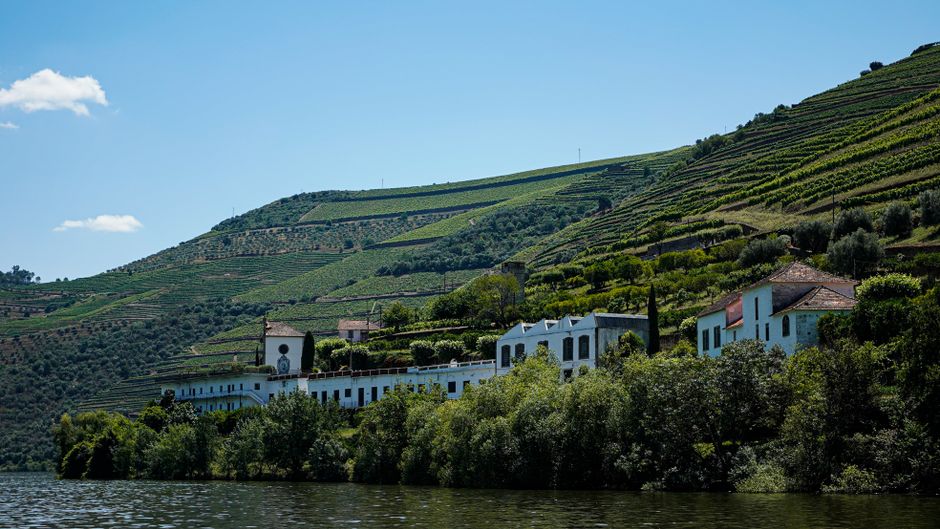
The Douro Valley is the wine country east of Porto, where steep terraces of vines climb the slopes above a slow, winding river. Slow down here: taste port and Douro reds on a quinta terrace, ride the riverside train, take a boat out among the vineyards and watch the light change from a hilltop miradouro. Come for a day from Porto, or better, stay two or three nights.
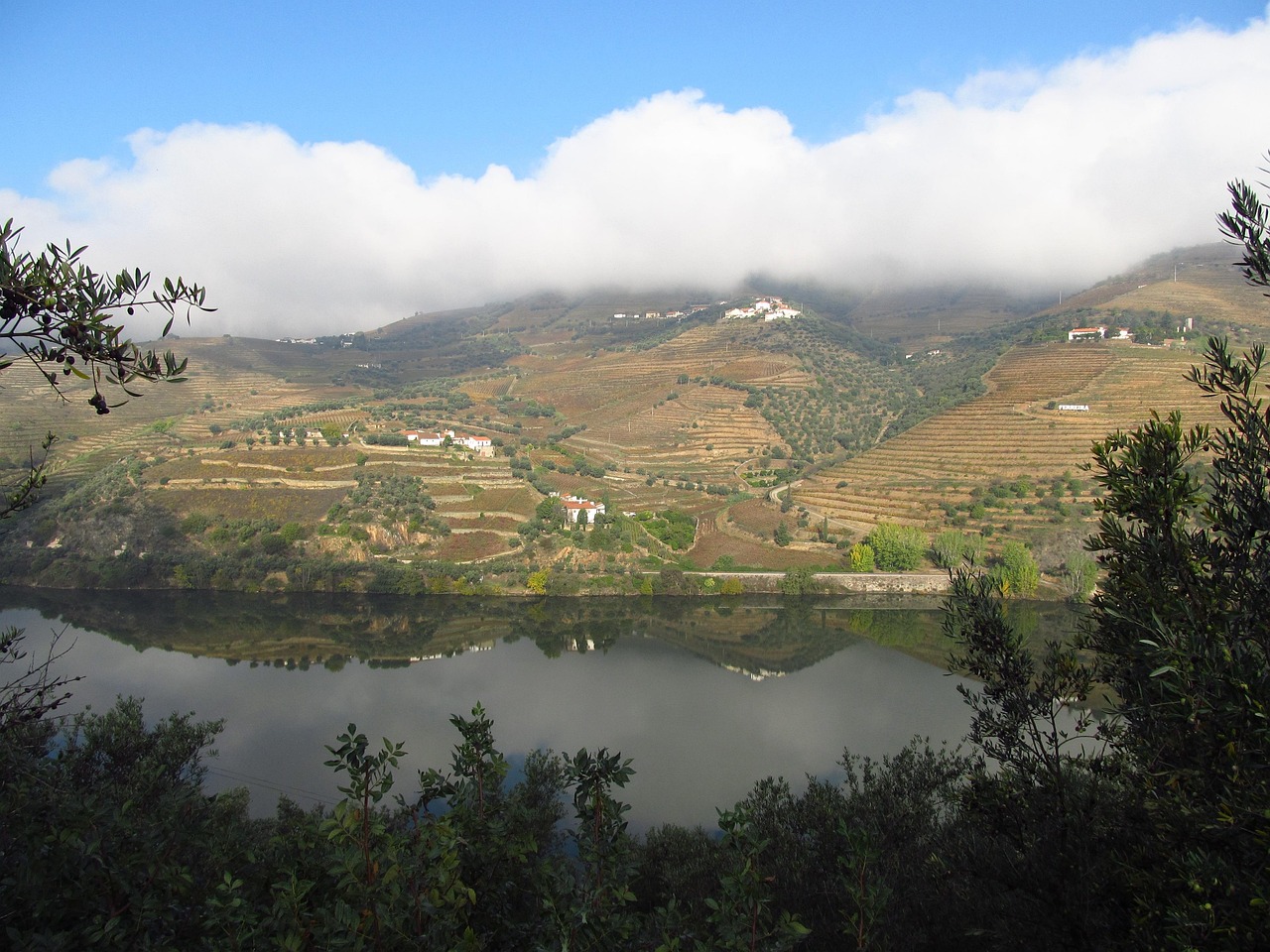
Right now in Douro Valley (Peso da Régua)
- Wed16–24°C60–76°F1 mm rain
- Thu13–23°C55–74°FPartly cloudy
- Fri11–19°C51–66°FClear
Top tours in Douro Valley
See all tours for Douro Valley →
From local operators, with prices and reviews; you check availability and book on Viator, our partner. We may earn a commission at no extra cost to you. How we earn money
Douro Valley at a glance
- Best for: wine tastings at quintas, river views, scenic train and boat trips, slow countryside days.
- How long: a long day trip from Porto, or 2–3 nights to taste, cruise and explore without rushing.
- Best time: May–June and September–October; the grape harvest runs through September into early October. July and August are hot.
- Getting in: CP’s Douro line from Porto Campanhã reaches Peso da Régua in about 1 hour 50 minutes and Pinhão in about 2 hours 15 minutes on the faster trains (October 2026 timetable).
- Heritage: the Alto Douro Wine Region has been a UNESCO World Heritage cultural landscape since 2001.
- Gateway city: Porto, with the nearest airport. Entry rules, money and general safety are in our Portugal travel guide.
The Douro’s three parts
The Douro was demarcated as a wine region in 1756. Today it covers about 250,000 hectares, about 44,000 of them vineyards, according to the IVDP, the official port and Douro wine institute. Inside it, UNESCO’s World Heritage area protects 24,600 hectares of the most traditional terraced landscape, where wine has been made for some 2,000 years, mostly on schist, the flaky grey rock of every wall and terrace. Going upriver, the region falls into three parts.
Baixo Corgo: Régua and Lamego
The western part, closest to Porto, is the greenest and wettest. The IVDP records about 1,200 mm of rain a year at its wettest point, and vines cover almost a third of the land. Peso da Régua, the main river town, has the Museu do Douro, boat piers and the valley’s busiest station. Across the river and up the hill, Lamego is a small city with a famous baroque stairway. Best for: first-time visitors without a car, short trips and easy train connections.
Cima Corgo: Pinhão, the heart of the valley
Upriver of the Corgo tributary, the valley narrows and the terraces get steeper. This is the postcard Douro, with the region’s largest area of vines, about 20,400 hectares. The riverside village of Pinhão sits at its centre, with its tiled station, a boat pier and quintas all around. Best for: wine lovers, couples and anyone who wants to wake up among the vineyards.
Douro Superior: wilder, toward Foz Côa and Spain
East of the Valeira gorge, the Douro Superior runs to the Spanish border. It is the biggest sub-region and the least planted, and it is also the driest: the IVDP records as little as 380 mm of rain a year at Barca d’Alva. Expect big open landscapes, olive and almond groves, quiet villages and the Côa Valley rock art; the railway ends at Pocinho. Vila Nova de Foz Côa’s almond-blossom festival celebrates the flowering trees in late winter (mid-February to 8 March in 2026). Best for: repeat visitors, road trippers and anyone who prefers space to crowds.
Things to see in the Douro Valley
Prices and hours below were checked on the official sites in October 2026. They change, so check before you go.
São Leonardo de Galafura viewpoint
On a ridge north of the river in the Régua municipality, at about 640 metres, this is the classic big-sky view over the valley, with terraces folding down to the water in every direction. There is a small chapel, picnic tables and a tile panel with lines by Miguel Torga, the writer who loved this spot. Come in the late afternoon, by car or taxi.
Casal de Loivos viewpoint
Just uphill from Pinhão, on the road toward Alijó, the village of Casal de Loivos has a terrace that looks straight down on the bend of the river and the white houses of Pinhão, with terraced vineyards wrapping around the hills. Drive up in minutes, or walk it on the trail described under hiking below.
Museu do Douro, Peso da Régua
The valley’s own museum, in the 18th-century Casa da Companhia on the Régua riverfront, is a good first stop. Its permanent exhibition, Douro: Matéria e Espírito, tells the story of the land, the wine and the people, and there is a restaurant, wine bar and river terrace. As of October 2026 it opens daily from 10:00 to 18:00 (March to October) and 10:00 to 17:30 (November to February). Tickets are €8, €4 for over-65s and students aged 12–25, and free for children under 12.
Nossa Senhora dos Remédios, Lamego
Lamego’s landmark is a baroque pilgrimage church on Santo Estêvão hill, reached by a monumental zig-zag stairway of 686 steps, with landings, fountains, statues and blue-and-white tile panels. Walk up for the view, or drive to the top and walk down. The big pilgrimage festival builds through late August to its main day on 8 September.
Pinhão railway station tiles
Even if you arrive by car, stop at Pinhão station. Its walls carry 24 blue-and-white tile panels, more than 3,000 tiles made by the Aleluia factory in Aveiro and put up in 1937, showing the landscapes and customs of the wine country: the harvest, the grape-treading and the rabelo boats that once carried wine down to Porto. It is free to look around.
Côa Valley rock art (a longer trip)
Near Vila Nova de Foz Côa, the Côa Valley’s open-air Stone Age rock engravings are on UNESCO’s World Heritage list. Start at the Museu do Côa. The rock art sites (Canada do Inferno, Penascosa and Ribeira de Piscos) are visited only on guided tours you book through the Côa Parque foundation. As of October 2026 the museum opens 9:00–17:30 from October to April and 9:00–18:00 from May to September. It closes on Mondays from November to March. It is a long day from Pinhão, so add a night nearby.
Other sights
- Pinhão train station
Viewpoints
Protected areas
- Estação arqueológica do Alto da Fonte do Milho
- Prehistoric Rock Art Sites in the Côa Valley
Monuments
- Castle of Carrazeda (ruins)
Archaeological sites
- Castro of Cidadelhe
Things to do in the Douro Valley
Wine tastings at the quintas
A quinta is a wine estate, and many along the Port and Douro Wine Route open their doors to visitors. A typical visit is a walk through the vineyards and the winery, sometimes with the old granite lagares (treading tanks), followed by a tasting of a few wines: white and red Douro table wines, then ports. Many also offer lunches or premium tastings. Most visits run at set times and need booking, well ahead in September and October. Plan two, at most three, visits a day: the roads between estates are slow and winding.
River cruises: from Porto or within the valley
The Douro is navigable for 208 km from the sea to Barca d’Alva on the Spanish border, climbing 125 metres through five dam locks, according to the port authority APDL. There are two very different ways to take a boat:
- Full day from Porto: boats leave the Gaia or Ribeira quays early in the morning and sail upstream to Régua, rising through the Crestuma-Lever lock (14 m) and the Carrapatelo lock (35 m), with breakfast and lunch on board. You come back by coach or train in the evening. One operator lists its Porto–Régua trip at €75–92 depending on season and weekday, running April to October (as of October 2026). Most of the cruise is in the greener lower valley.
- Short trips within the valley: from Pinhão (and Régua), rabelo-style boats run short trips among the vineyards. One operator’s one-hour Pinhão trip costs €15, half price for ages 6–11, with departures every 30 minutes from 10:00 to 17:30 between April and October (11:00–16:00 in winter), as of October 2026.
Ride the Douro line train
CP’s Douro line is one of the most beautiful train rides in Portugal. After Régua the tracks run right beside the river, past Pinhão and Tua to the end of the line at Pocinho, with vineyards rising on both banks. Sit on the right going upstream for the river views. Regional tickets are cheap, so hop off at Pinhão for lunch or ride on to Pocinho. From Porto Campanhã to Pocinho the faster trains take about 3 hours 20 minutes on the October 2026 timetable. CP is still upgrading the line between Marco de Canaveses and Régua, with works planned to continue until 2028, so check the CP site for notices of delays or replacement buses.
The Douro historic train
CP’s Comboio Histórico do Douro is a seasonal outing in five early-20th-century carriages. Many guides still call it the steam train, but in 2026 CP runs it behind a vintage 1400-series diesel locomotive painted in its original colours. The 2026 season has 51 trips between 6 June and 18 October, on Saturdays, Sundays and some Wednesdays. It leaves Régua at 15:00 with live music and a welcome glass of port, stops at Pinhão and Tua to meet local producers, and is back in Régua at 18:22. Tickets cost €60 for adults and €32 for children aged 4–12 (as of October 2026), from cp.pt or station ticket offices. It sells out on busy weekends, so book early.
Drive the N222
The national road EN222 follows the south bank of the Douro for more than 225 km, from Vila Nova de Gaia to Vila Nova de Foz Côa. Its most famous stretch runs between Peso da Régua and Pinhão: 27 km with 93 bends, hugging the river below the terraces, past the Bagaúste dam. Infraestruturas de Portugal describes it as perfect for driving, and a study for the car-rental firm Avis named it the world’s best driving road. Go slowly and save the tastings for later.
Hike among the terraces
Walking shows you the scale of the terraces and their dry-stone walls. A good starter is the PR20 trail in the Alijó municipality, a circular route of about 9.8 km of medium-to-low difficulty. It starts and ends at Pinhão station and climbs through the vineyards to the Casal de Loivos viewpoint. Paths are steep, rocky and shadeless, so walk early in the morning, carry plenty of water and avoid the midday heat from June to September.
Join the harvest
The vindima (grape harvest) is the valley’s most exciting time. Pickers fill the terraces, tractors bring grapes down to the wineries, and at some estates the grapes are still trodden by foot in stone lagares. It usually runs from September into early October, but the start date shifts with the weather each year. In 2026 the harvest began earlier than usual. Many wine-tourism quintas offer harvest experiences, with picking, a treading session and often a meal. These fill up fast, so book in early summer.
Activities and best months
- Boat tripsRiver trips run up the Douro from the Vila Nova de Gaia quay as far as Barca de Alva, or from Régua combined with the train.
- Wine tastingSepOctMany quintas on the Port Wine Route open for visits and tastings (book ahead); in September and October visitors can join the grape harvest at most wine-tourism quintas.
Getting to the Douro Valley
From Porto by train. CP’s Douro line leaves from Porto São Bento and Porto Campanhã. On the timetable valid since 5 August 2026, about 11 trains a day reach Régua, 6 continue to Pinhão and 5 go all the way to Pocinho. The faster InterRegional trains take about 1 hour 50 minutes to Régua and about 2 hours 15 minutes to Pinhão. As of October 2026 a one-way ticket from Campanhã costs about €10.90 to Régua and €12.35 to Pinhão, with half price for children. The last train back from Pinhão leaves at about 20:24 and reaches Campanhã at about 23:35. Check the latest timetable at cp.pt, because a few early regional trains run Monday to Saturday only.
From Porto by car. Régua is roughly 90 km from Porto by motorway (A4, then A24 south), about an hour and a quarter without traffic. Motorways in Portugal have tolls. How they work with rental cars is explained in our Portugal guide.
From Porto by boat. Full-day cruises sail upstream from Gaia or Ribeira to Régua or Pinhão and bring you back by coach or train (see river cruises above).
From Lisbon. Take the Alfa Pendular or Intercidades train to Porto Campanhã (about 2 hours 45 minutes on the fastest trains) and change there for the Douro line. It makes for a long day, so many travellers spend a night in Porto first. Driving takes you up the A1 and then east from Porto.
Getting around the valley
- Without a car: very doable if you base yourself in Régua or Pinhão. Use the train between the river towns, walk to nearby quintas, take a boat trip, and book a guided wine tour or a taxi for the hilltop viewpoints and estates. Local buses are infrequent and not much use for sightseeing.
- With a car: the freedom to reach hilltop quintas, viewpoints like São Leonardo de Galafura, Lamego and the Douro Superior. Roads are narrow, steep and full of bends, so allow more time than the map suggests.
- Taxis: Régua and Pinhão have taxis, including a rank by Pinhão station, but there are not many. Book ahead for evenings, return trips from quintas and harvest weekends, and ask your accommodation for a local number.
- Drinking and driving: Portugal’s legal limit is 0.5 g/l of alcohol in the blood, and 0.2 g/l for drivers in their first three years. A few tastings can easily put you over it. Choose one designated driver who spits rather than swallows, or book a guided tour or a driver for wine days.
When to go and how long to stay
The Douro has a much more extreme climate than coastal Porto: cold winters, and summers that are very hot and dry. The table uses IPMA’s official 1991–2020 climate normals for Vila Real, the nearest official station, on the plateau about 560 metres up, just north of the valley. Down by the river at Régua and Pinhão, summer afternoons are usually even hotter.
| Season | Average high / low | Rainy days per month | What it’s like |
|---|---|---|---|
| Spring (Mar–May) | 16–21 °C / 6–10 °C | 8–10 | Fresh green vines, wildflowers, comfortable hiking; some showers |
| Summer (Jun–Aug) | 25–29 °C / 13–15 °C | 2–4 | Hot and dry; about 13–14 days of 30 °C or more in July and in August |
| Autumn (Sep–Nov) | 25 °C falling to 13 °C / 13 °C falling to 6 °C | 5 in September, 10–11 in October–November | Harvest in September, golden and red vines in October, then rain returns |
| Winter (Dec–Feb) | 10–12 °C / 3–4 °C | 9–11 | Cold, often misty, frosty nights; very quiet, some services close |
Vila Real gets about 950 mm of rain a year, mostly from October to April. The sweet spots are May–June, with green vines and warm days, and September–October, with the harvest and then autumn colours. In July and August, plan activities for mornings and evenings.
Day trip or a few nights?
A day trip from Porto works: an early train to Pinhão, a short boat trip, one quinta and an evening train back, though with four to five hours of travel. With 2 nights you can add a second quinta, a viewpoint at sunset and the train to Pocinho. With 3 nights, add Lamego and the Museu do Douro, a hike among the terraces, or a day in the Côa Valley.
Weather month by month
Where to stay in the Douro Valley
- Peso da Régua: the most practical base without a car, with the most trains, restaurants, shops, the museum and boat piers. It is a working town rather than a pretty village.
- Pinhão: small and right in the heart of the vineyards, with the train, boats and several quintas within reach. It gets busy by day in summer and very quiet at night.
- Quinta stays on the slopes: wake up among the vines with a pool and a view. Wonderful, but most need a car or taxis, and dinner is often at the estate.
- Lamego: a small historic city with more everyday life, restaurants and baroque sights, a short drive above the river. Good with a car.
- Douro Superior (around Foz Côa and Pocinho): remote and peaceful, for the Côa rock art, almond blossom and empty landscapes. You will want a car.
Book early for September and October weekends, the busy harvest weeks.
Practical tips for the Douro Valley
- Book quintas ahead: most tastings run at set times with limited places, and harvest experiences sell out. Reserve before you travel and confirm the estate’s opening days and times.
- Respect the heat: from June to September, inland afternoons often pass 30 °C. Walk and hike early, wear a hat and drink plenty of water.
- Watch the last train: trains are not frequent. Note the last train back to Régua or Porto before you settle in for a long tasting lunch.
- Sundays and holidays: a few early local trains do not run. Plan Sunday routes around the InterRegional trains, which run every day, and check quinta opening days.
- Fire season: in the hot, dry months never light fires or drop cigarette ends among the vines and scrub. Follow local warnings and closures.
- Mondays in winter: the Museu do Côa closes on Mondays from November to March. The Museu do Douro in Régua opens every day.
What to pack for the Douro Valley
In summer: a wide-brimmed hat, sunglasses, high-factor sunscreen, light breathable clothes and a refillable water bottle. Pack swimwear if your quinta has a pool. Bring closed shoes with good grip for walking on rocky schist paths and terraces; sandals are fine for the boats. Even in summer, add a light layer for breezy evenings on the river or a hilltop terrace. From October to April pack a waterproof jacket and warm layers, as winter nights can be frosty. Add a small day bag and a padded wine bag for bottles to bring home.
What to pack
- City walking shoesQuinta visits and harvest days mean steep terraces, gravel and cellar floors.
- Dry bags and phone pouchesSpray soaks phones and cameras on open boats to the Algarve caves and on whale-watching trips.
- Fleeces and warm layersIt is cooler at sea than on land, especially on morning whale-watching trips.
- Rain jacketsA windproof, waterproof shell keeps you warm on open boats, where wind and spray cool you quickly.
- Reef-friendly sunscreenSun reflects off the water on cruises and cave tours.
- Water shoesKayak and small-boat trips to the Algarve grottoes land on rock and wet sand.
- Wine bottle travel protectorsPort and Douro wines bought at the quintas travel home safely in checked luggage with padded bottle protectors.
Douro Valley travel FAQ
Can I visit the Douro Valley as a day trip from Porto?
Yes. Faster trains from Porto Campanhã reach Régua in about 1 hour 50 minutes and Pinhão in about 2 hours 15 minutes, and full-day cruises and guided tours also run from Porto. Expect a long day with four to five hours of travel. One or two nights in the valley is far more relaxed.
Which is the best town to stay in, Régua or Pinhão?
Pinhão if you want to be in the heart of the vineyards, with boats and quintas close by. Régua if you have no car and want the most trains, restaurants and services. With a car, a quinta stay on the slopes is the dream option.
Do I need a car in the Douro Valley?
No, but it helps. Without one, use the train, boats, guided tours and pre-booked taxis from a base in Régua or Pinhão. A car opens up hilltop viewpoints, Lamego and the Douro Superior, but whoever drives can’t really join the tastings.
Can I drink at tastings and then drive?
Be very careful. Portugal’s limit is 0.5 g/l, or 0.2 g/l for drivers with less than three years’ experience, and a few glasses of port can take you over it. Have a designated driver who spits, or book a tour or a driver.
When is the grape harvest in the Douro?
Usually from September into early October, with the exact dates set by the weather each year (2026 started early). Many quintas run harvest experiences with picking and foot-treading. Book them well ahead.
Is there still a steam train in the Douro?
The historic train runs, but in 2026 it is pulled by a vintage diesel locomotive, not steam. CP runs it between Régua and Tua from 6 June to 18 October on Saturdays, Sundays and some Wednesdays, leaving at 15:00. Tickets cost €60 for adults and €32 for children aged 4–12 (as of October 2026).
Is a river cruise or the train better?
For the scenery, the train wins: it is cheaper and faster, and beyond Régua it runs beside the river through the most dramatic terraces. A full-day cruise from Porto is a relaxing day out with meals and big locks, but it spends most of its time in the lower valley. A good mix is the train up and a short boat trip from Pinhão.
What is the best time to visit the Douro Valley?
May–June and September–October. Spring is green and mild, and September and October bring the harvest and autumn colours. July and August are hot, with average highs near 29 °C at Vila Real and hotter by the river.
How many days do I need in the Douro Valley?
Two or three nights is ideal: time for two or three quinta visits, a boat trip, a train ride to Pocinho and a sunset viewpoint. Add a night if you want to see the Côa Valley rock art.
Is the N222 worth driving?
Yes. The 27 km stretch between Peso da Régua and Pinhão has 93 bends along the river and has been called the world’s best driving road. Drive it slowly, ideally in the morning before any tastings.
Is the Douro Valley a UNESCO World Heritage Site?
Yes. The Alto Douro Wine Region was listed in 2001 as a living cultural landscape, covering 24,600 hectares of terraced vineyards. The Côa Valley rock art, upriver, is a separate UNESCO site.
Nearby destinations
- Porto92 km
- Coimbra131 km
- Salamanca157 km
- Rías Baixas170 km
- Santiago de Compostela209 km
- Nazaré218 km
- Segovia286 km
- Évora290 km
Plan your trip
Partner links: TravelerCenter may earn a commission if you book, at no extra cost to you.
🇵🇹 Useful Portuguese phrases for Douro Valley
All 38 Portuguese phrases: restaurant, hotel, emergencies, romance (printable) →
Traveler centers in Douro Valley
Tourist information offices, visitor centers and travel agencies in Douro Valley, from OpenStreetMap.
- Tourist information office
Tourist information office
Sources · last reviewed 3 October 2026
Researched and last reviewed on 3 October 2026. Heritage facts come from UNESCO; region, sub-region and rainfall figures from the Instituto dos Vinhos do Douro e do Porto (IVDP); climate figures from IPMA’s 1991–2020 normals for Vila Real; timetables, fares and the historic train from CP (Comboios de Portugal); river navigation facts from the port authority APDL; the N222 and Pinhão station from Infraestruturas de Portugal; museum hours and prices from the Museu do Douro and the Côa Parque foundation; and boat trip details from the operators’ official pages. Prices, hours and timetables change, so check the official links before you go.
Also: visitportugal.com · IPMA normals 1991–2020, Vila Real (climate)
Data: Weather: MET Norway (CC BY 4.0) · Air quality: OpenAQ · Rates: ECB · Costs: World Bank ICP and price levels · © OpenStreetMap contributors (ODBL) · Wikidata (CC0)