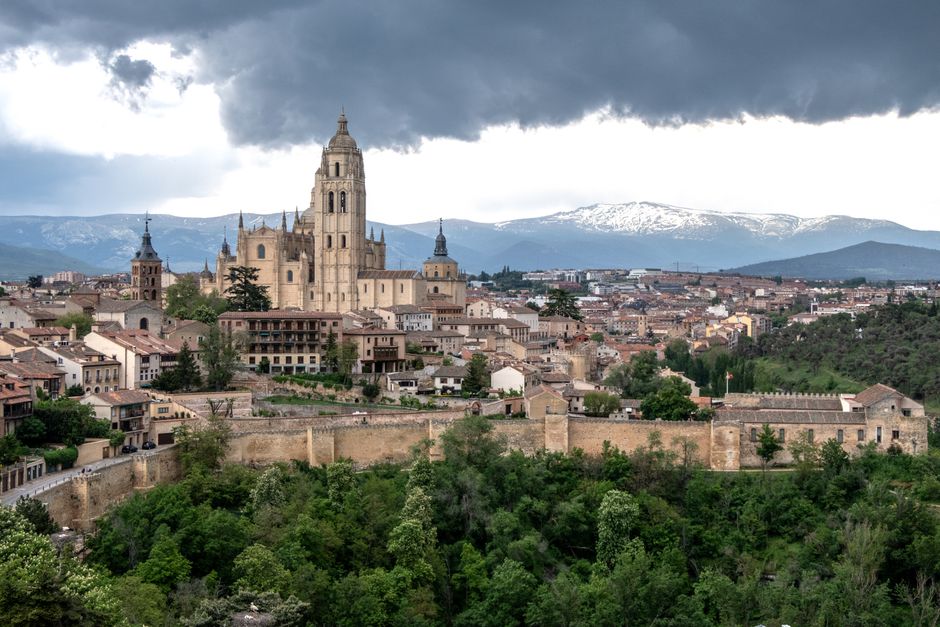
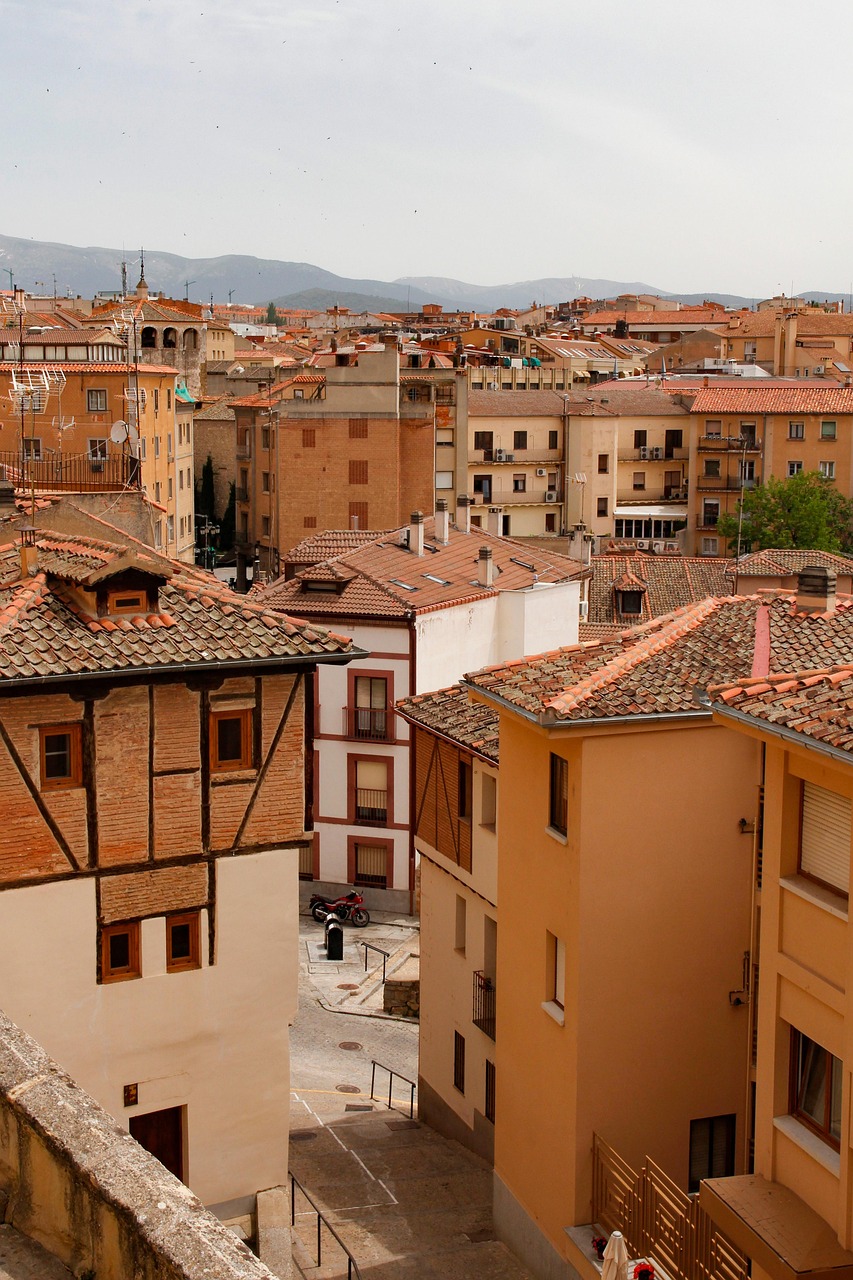
Segovia is a golden-stone town on a narrow ridge about 1,000 metres up, with a 2,000-year-old Roman aqueduct striding across its main square at one end and a turreted Alcázar on a cliff at the other. In between are a late-Gothic cathedral, Romanesque churches, an old Jewish quarter and restaurants that have roasted suckling pig for generations. Fast trains from Madrid take under half an hour, so it’s a classic day trip, but an overnight lets you see the aqueduct lit up and add the royal palace and fountains of La Granja. The best months are May, June, September and October. Winters are cold, often near freezing at night.
Right now in Segovia
- Wed 11–17°C 52–63°F 5 mm Light showers
- Thu 9–16°C 48–61°F Partly cloudy
- Fri 4–14°C 38–57°F Clear
- Mon 12 Oct National Day of Spain (Fiesta Nacional de España)
Weather: MET Norway (CC BY 4.0) · Air quality: OpenAQ · Rates: ECB · Holidays: Nager.Date
Top tours in Segovia
See all tours for Segovia →
From local operators, with prices and reviews; you check availability and book on Viator, our partner. We may earn a commission at no extra cost to you. How we earn money
Segovia at a glance
- Best months: May–June and September–October, with average highs of about 18–26 °C. July and August average about 29–30 °C, and from December to February highs are only 8–10 °C, with frost at night.
- Days needed: 1 for the aqueduct, the cathedral and the Alcázar, 2 to add La Granja, the Jewish quarter and an evening in town.
- Getting there: high-speed trains from Madrid-Chamartín to Segovia-Guiomar in about 25–30 minutes, then a local bus into town; or direct buses from Madrid’s Moncloa interchange in about 1 hour 20 minutes.
- Getting around: on foot. The old town is a 25-minute walk end to end, aqueduct to Alcázar, mostly along one main street.
- Budget level: moderate. Monuments are cheap (the cathedral is €4, the Alcázar €7–10), but a traditional suckling pig lunch is a splurge. See our Spain guide for money and entry rules.
Segovia’s old town and neighbourhoods
The Old Town of Segovia and its Aqueduct became a UNESCO World Heritage Site in 1985. The walled town sits on a ridge between two small rivers, the Eresma and the Clamores, so many streets end at a wall with a view over the valleys.
- Azoguejo and the aqueduct: the square under the aqueduct’s tallest arches, where buses drop you, the tourist office stands and the classic restaurants are. Busy and convenient.
- Calle Real and the Plaza Mayor: the old town’s main street climbs from the aqueduct past the Casa de los Picos, with its diamond-studded façade, to the arcaded Plaza Mayor beside the cathedral. Best for a first, short stay.
- The Jewish quarter (Judería): the southern lanes between the cathedral and the walls, with the former main synagogue, a small interpretation centre and the Puerta de San Andrés.
- Canonjías and the Alcázar end: the quiet western tip of the ridge, with the canons’ old houses, the Romanesque San Esteban tower and the Alcázar gardens.
- San Lorenzo and the Eresma valley: below the walls to the north, a village-like quarter with a Romanesque church, the Templar church of Vera Cruz and the riverside walk. Go for the views back up at the Alcázar.
Top things to see in Segovia
Prices and hours below come from the official websites, as of October 2026. The Alcázar and the cathedral open daily; La Granja closes on Mondays.
The Roman aqueduct
Built around the end of the 1st century AD, the aqueduct carried water from the mountains to the town and stayed in use into modern times. Its granite blocks are fitted together without mortar, in a double row of arches that reaches about 28 metres high over the Plaza del Azoguejo. How to visit: it’s free and always open. See it from the square below, then climb the steps on the left side (as you face the town) to see the arches at eye level. Follow it out along Avenida de Padre Claret to see where it gets lower and the water channel runs along the top. Come back after dark, when it’s floodlit.
The Alcázar of Segovia
This fortress-palace on the prow of the ridge, with its slate-roofed turrets, was a favourite home of the kings of Castile; Isabella set out from here to be proclaimed queen in 1474. Inside are royal halls with Mudéjar ceilings, armour and stained glass, plus the museum of the Royal Artillery College. Climb the 152 steps of the Tower of Juan II for the best view in town. How to visit: palace and museum €7, or €10 with the tower; reduced €5 and €8 (ages 6–16, students, over-65s, large families); free for under-6s (as of October 2026). EU citizens get free entry to the palace and museum on Tuesdays 14:00–16:00 (except holidays), at the ticket office only. An audio guide in 12 languages costs €3.50 extra. It opens daily 10:00–19:30 from April to October and 10:00–18:00 from November to March, with last entry 30 minutes before closing; it closes on 25 December and early on 24 and 31 December. Buy online for weekends and holidays, which sell out.
Planning your visit: allow 1.5 hours. The tower stair is narrow and spiral, so skip it if you have trouble with heights or steps. For the classic photo of the Alcázar, walk down to the Eresma valley and the Mirador de la Pradera de San Marcos, about 20 minutes below.
Segovia Cathedral
Begun in 1525, Segovia’s is one of the last great Gothic cathedrals built in Spain, with pinnacles and flying buttresses rising over the Plaza Mayor. Inside, the light is soft and golden, with chapels, a Renaissance cloister moved here from the old cathedral and a museum of tapestries. How to visit: a general ticket for the cathedral and Bishop’s Palace is €4, reduced €3, free under 8 (as of October 2026). It opens Monday to Saturday 9:30–18:30 and Sunday 13:30–18:30. Entry to the church is free on Sunday mornings: 9:00–10:00 from April to October and 9:30–10:30 from November to March. Guided tours cost €6; the guided tower climb costs €7 (reduced €6), at 10:30, 12:00, 13:30, 15:00 and 16:30 daily, and takes 1 hour, in Spanish with an audio guide in other languages. A cathedral-plus-tower guided combination is €10, Monday to Saturday.
The Jewish quarter
Segovia had a large Jewish community until the expulsion of 1492. Its quarter fills the lanes south of the cathedral. The former main synagogue, later the church of Corpus Christi, still stands on Calle Real, and a small interpretation centre (Centro Didáctico de la Judería) tells the story of the community. Walk out through the Puerta de San Andrés to the walls, and across the Clamores valley to the old Jewish cemetery of El Pinarillo. The lanes are quiet even when the Calle Real is packed.
Romanesque churches and Vera Cruz
Segovia has one of Spain’s richest collections of Romanesque churches, many with arcaded porches on the outside: San Martín and San Millán near the Calle Real, and San Esteban with its tall bell tower. Below the town, the 12-sided church of Vera Cruz, consecrated in 1208 and linked to the crusading orders, is a short walk from the viewpoint opposite the Alcázar.
La Granja de San Ildefonso: palace, gardens and fountains
About 11 km from Segovia, at the foot of the Guadarrama mountains, Philip V built a French-style royal palace with formal gardens, woods and some 20 monumental fountains, inspired by his grandfather’s Versailles. How to visit the palace: run by Patrimonio Nacional; €9, reduced €4 (as of October 2026). It opens Tuesday to Sunday, 10:00–18:00 from October to March and 10:00–19:00 from April to September, and closes on Mondays and some holidays. EU and Latin American citizens can enter free at set times; check the official site. The gardens are free to walk.
The fountains: the fountains run only on selected days from April to August, usually on Sundays at noon and some weekdays at 17:30, with a few special days when more fountains run together (30 May, 25 July and 25 August in 2026). Tickets were €5 in 2026. Summer night shows at the Baths of Diana are held on some Saturdays, but in 2026 all August night shows were cancelled because of water shortages. Check Patrimonio Nacional’s calendar for the 2027 dates before you plan around them. Buses run from Segovia’s bus station to La Granja in about 20 minutes.
Monuments
- Aqueduct of Segovia
Churches and cathedrals
- Corpus Christi Convent (Old Main Synagogue)
- La Vera Cruz Church
- Segovia Cathedral
Monasteries and convents
- Monastery of Santa Cruz la Real, Segovia
Museums
- Royal Alcázar of Segovia
Protected areas
- Guadarrama National Park
Things to do in Segovia
Eat cochinillo (roast suckling pig)
Segovia’s famous dish is cochinillo asado, a milk-fed piglet roasted in a wood oven until the skin crackles. The old restaurants near the aqueduct carve it with the edge of a plate to show how tender it is. Also try judiones de La Granja, a stew of giant white beans, roast lamb, and ponche segoviano, a marzipan-topped sponge cake. Book lunch on weekends; Spaniards eat it from about 14:00.
Walk the walls and the valley loop
A path loops around the foot of the ridge, through the Eresma and Clamores valleys, with views up at the walls, the cathedral and the Alcázar. Allow 1.5–2 hours, and go late in the day for golden light. See our hiking guide for more walks.
Hike or cycle in the Guadarrama mountains
The Sierra de Guadarrama National Park rises just south-east of the town, with pine woods and trails above La Granja and Valsaín, and quiet country roads that are popular with road cyclists. Summer days are cooler up here, and there’s often snow on the peaks in winter. See our cycling guide.
See the aqueduct at night
Stay the night and the aqueduct, the cathedral and the Alcázar are all floodlit. The Plaza Mayor bars fill with locals for the evening stroll, and the Calle Real is calm once the day-trippers have caught their trains.
Activities and best months
- City sightseeingThe old town and the Roman Aqueduct are a UNESCO World Heritage site; the Alcázar and the cathedral are a short walk away, so the sights can all be seen on foot. · source
- HikingSegovia is one of the municipalities of the Sierra de Guadarrama National Park (about 36% of it in Segovia province), which has many signposted routes; the park's Valsaín valley visitor centre is in San Ildefonso, next to La Granja (about 10 km from the city), and free guided walks (e.g. the 8 km Senda de Gabarreros, medium) start from Valsaín. · source
Day trips from Segovia
- La Granja de San Ildefonso: the royal palace, gardens and fountains, about 20 minutes by bus. Easily a half day.
- Pedraza: a tiny walled medieval village about 35 km north-east, with a castle, an arcaded square and lamb roasted in wood ovens. You need a car or a tour. Each July it holds the Conciertos de las Velas, when the village is lit by thousands of candles for open-air concerts; in 2026 they were on 4 and 11 July, with free but limited village-entry tickets released online in June.
- Madrid: about 30 minutes by high-speed train, for the Prado, the Reina Sofía and the Royal Palace. Read our Madrid guide.
- Ávila: the best-preserved medieval walls in Spain, about 65 km south-west, by bus or car.
Nearby destinations
- Madrid69 km
- Toledo120 km
- Salamanca130 km
- Picos de Europa258 km
- Bilbao275 km
- Zaragoza281 km
- Douro Valley286 km
Getting there and getting around
By train from Madrid
Renfe’s Avant trains, and some AVE and other high-speed trains heading to Valladolid and the north, run from Madrid-Chamartín to Segovia-Guiomar in about 25–30 minutes. Single Avant fares are usually about €7–14, cheaper booked ahead. Guiomar station is about 7 km from the centre, so add a city bus: line 11 runs to the aqueduct (Plaza de la Artillería) and line 12 to the bus station, timed to meet the trains, in about 15 minutes, for about €2 a ride. A taxi costs more but is quicker with luggage. A slow regional line also runs from Madrid to the old Segovia station, closer to town, but takes about two hours.
By bus from Madrid
Avanza buses (the former La Sepulvedana line) leave Madrid’s Moncloa interchange (metro lines 3 and 6) roughly every half hour on weekdays and take about 1 hour 20 minutes. They stop on the edge of town and at Segovia’s bus station, a 5–10-minute walk from the aqueduct, so you skip the station transfer. Fares are usually below the train’s.
By car and getting around
Segovia is about 90 km north-west of Madrid on the AP-6 and AP-61 (tolls) through the Guadarrama tunnels, or over the mountain passes. Park outside the walls, as the old town’s lanes are narrow and access is limited. Inside, walk: the Calle Real runs gently uphill from the aqueduct to the Plaza Mayor in about 10 minutes, and on to the Alcázar in another 10.
When to go and how long to stay
At about 1,000 metres, Segovia is cooler than Madrid all year. Summers are warm and sunny with fresh nights. Winters are cold: average highs of 8–10 °C, nights around freezing, frequent frost, and some snow most years (about 14 snowy days a year). The figures below are long-term averages for Segovia’s weather station.
| Season | Average high / low | What it’s like |
|---|---|---|
| Spring (Mar–May) | 14–20 °C / 3–8 °C | Fresh and changeable; cold snaps into April. May is lovely, and the fountains start running. |
| Summer (Jun–Aug) | 26–30 °C / 12–15 °C | Warm days and cool evenings, a relief from Madrid’s heat. Busiest season; Pedraza’s candle concerts in July. |
| Autumn (Sep–Nov) | 12–24 °C / 3–11 °C | September and October are ideal, with golden light; November turns cold. |
| Winter (Dec–Feb) | 8–10 °C / 0–1 °C | Cold, often frosty, sometimes snowy, but sunny and quiet. The aqueduct looks magical under snow. |
1 day in Segovia
Arrive mid-morning and start at the aqueduct. Walk the Calle Real to the Plaza Mayor and the cathedral, then on to the Alcázar and its tower. Have a late cochinillo lunch, walk down to the viewpoint below the Alcázar and Vera Cruz, and come back through the Jewish quarter before your train.
2 days in Segovia
Add La Granja on the second morning, timed for the fountains if they’re running, then walk the valley loop in the afternoon light. Spend the evening around the Plaza Mayor and the floodlit aqueduct. With a car, swap La Granja for Pedraza, or do both.
As part of a central Spain trip
Combine a night in Segovia with a night in Toledo, using Madrid as your hub; the two are on opposite sides of the capital, so don’t try them on the same day.
Where to stay in Segovia
- First visit, short stay: along the Calle Real or around the Plaza Mayor, between the aqueduct and the cathedral. Everything is on foot.
- Quieter and atmospheric: the Jewish quarter or the Canonjías near the Alcázar, in small hotels in old stone houses.
- With a car: hotels just outside the walls, near the aqueduct or the bus station, with easier parking; or the parador on a hill outside town, with views of the skyline.
- Arriving by train late or leaving early: stay near the aqueduct, where the line 11 bus to Guiomar starts.
- In winter: check the room has good heating; old houses can be draughty.
Practical tips for Segovia
- Book the Alcázar online for weekends and holidays; tickets sell out.
- Free times: the cathedral is free on Sunday mornings, and the Alcázar’s palace and museum are free for EU citizens on Tuesdays 14:00–16:00.
- Mondays: the La Granja palace closes. The aqueduct, the Alcázar and the cathedral open daily.
- Allow for the station bus: Guiomar is outside town, so add about 30 minutes each way to your plans.
- Dress for the altitude: it’s often 5 °C cooler than Madrid, and evenings are chilly even in summer.
- Mind your bag in the crowds at the aqueduct. The emergency number is 112.
Weather month by month
Averages from AEMET normals 1991–2020, Segovia · Last reviewed 3 Oct 2026
What to pack for Segovia
Pack layers whatever the season. From November to March, bring a warm coat, hat, gloves and a scarf: nights are around freezing, wind on the ridge is cold, and it sometimes snows. In spring and autumn, bring a sweater or light jacket for evenings. Summer days are warm and sunny at altitude, so add a sun hat, sunglasses and sunscreen, plus a light layer for the cool nights. Comfortable walking shoes help on the cobbles, the Alcázar tower stairs and the valley paths.
What to pack
- City walking shoesLisbon and Porto are steep, with polished limestone cobbles that get slippery, so grippy soles matter.
- Day packs and anti-theft bagsA small zipped or anti-theft bag makes crowded trams and viewpoints less stressful.
- Fleeces and warm layersSummits like Pico do Areeiro averaged about 11 °C over 2024, so a fleece is needed even in summer.
- HeadlampsLevada routes such as PR1 and PR9 pass through long, dark, wet tunnels.
- Hiking shoes and bootsMadeira's levadas and the Azores' crater rims are wet, rocky and slippery, so grippy shoes matter more than anywhere else in Portugal.
- Rain jacketsFrom October to April Porto and Lisbon see rain on roughly a third of days.
- Travel adapters and convertersPortugal uses Type C and F sockets at 230 V, so most visitors from outside Europe need an adapter.
- Trekking polesLong stone staircases and steep descents on Madeira's peaks and the Azores' crater rims are easier on the knees with poles.
- Water bottles and hydration packsAlgarve and Alentejo trails are hot and exposed with few refill points.
Segovia travel FAQ
How do I get from Madrid to Segovia?
Take a high-speed train from Madrid-Chamartín to Segovia-Guiomar (about 25–30 minutes), then bus 11 or 12 into town (about 15 minutes). Or take an Avanza bus from Moncloa, about 1 hour 20 minutes, which stops close to the aqueduct.
Is Segovia worth an overnight stay?
Yes. One day covers the aqueduct, the cathedral and the Alcázar, but staying lets you see the floodlit aqueduct, eat a relaxed cochinillo dinner and add La Granja or Pedraza.
How much does the Alcázar of Segovia cost?
€10 for the palace, museum and tower, or €7 without the tower (as of October 2026). Reduced tickets are €8 and €5, and under-6s go free.
Is the Alcázar of Segovia free on any day?
For EU citizens, the palace and museum are free on Tuesdays from 14:00 to 16:00, except holidays. Tickets must be collected at the ticket office during that time.
Can you visit the Segovia aqueduct for free?
Yes. It stands in the open over the Plaza del Azoguejo and is free to see at any time, and it’s floodlit at night.
When do the fountains of La Granja run?
On selected days from April to August, usually Sundays at noon and some weekdays at 17:30. In 2026 tickets were €5, and August night shows were cancelled because of water shortages. Check Patrimonio Nacional’s calendar.
How far is Segovia-Guiomar station from the town?
About 7 km from the centre. City buses 11 and 12 meet the trains and take about 15 minutes to the aqueduct or the bus station, for about €2.
What is the best time to visit Segovia?
May, June, September and October. Summer is pleasant but busy, and winter is cold, with frost and some snow.
How cold is Segovia in winter?
Cold. Average highs are 8–10 °C from December to February and nights average around 0–1 °C. It snows on a handful of days most winters.
What is cochinillo?
Roast suckling pig, Segovia’s signature dish: a milk-fed piglet slow-roasted in a wood oven until the skin is crisp. It’s a lunch dish, and best booked ahead on weekends.
Can I visit Segovia and Toledo in one day?
Not comfortably. They’re on opposite sides of Madrid and use different stations. Give each its own day, or a night each.
How do I get to Pedraza?
By car or on a tour; it’s about 35 km north-east of Segovia, and public transport is very limited. During the July candle concerts, entry to the village needs a free ticket booked online.
Sources
- © OpenStreetMap contributors · ODbL · fetched 3 Oct 2026
- Wikidata · CC0 · fetched 3 Oct 2026
Sources and last review
Researched and last reviewed on 3 October 2026. Alcázar prices, hours and free entry come from the Alcázar of Segovia’s official website and its published price list; cathedral prices, hours and tower tours from the cathedral’s own website; and La Granja palace prices, hours and the 2026 fountain notice from Patrimonio Nacional. The 2026 fountain timetable, city bus fares, the Madrid bus and train times and the Pedraza concert dates were checked in local press and travel references where no official page could be read. Climate figures are long-term averages for Segovia’s weather station. Prices, timetables and opening hours change, so check the official sites before you travel.
Plan your trip
Partner links: TravelerCenter may earn a commission if you book, at no extra cost to you.
🇪🇸 Useful Spanish phrases for Segovia
All 38 Spanish phrases: restaurant, hotel, emergencies, romance (printable) →