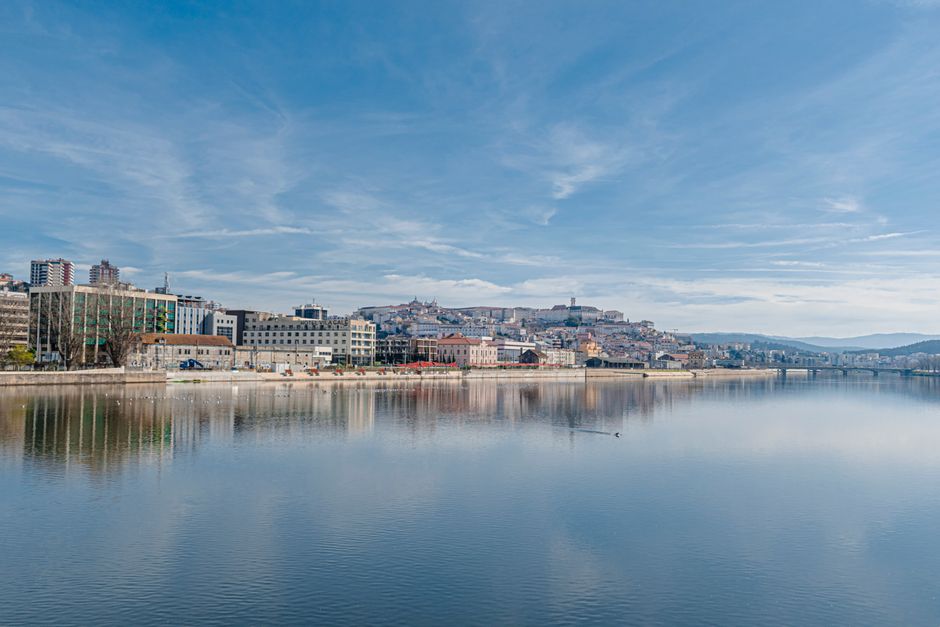
Coimbra is Portugal’s old university city, built on a hill above the Mondego River halfway between Lisbon and Porto, and the country’s first capital. You come to see the gilded Joanina Library, climb the steep lanes to the Romanesque Old Cathedral, visit the tombs of Portugal’s first kings in Santa Cruz Monastery and hear Coimbra fado, sung by men in black student capes. It is under two hours from Lisbon and about an hour from Porto by fast train. Give it one full day for the university and the old town, two or three to add the gardens across the river, the Roman ruins of Conímbriga and the Buçaco forest.
Right now in Coimbra
- Wed15–23°C59–73°F2 mm rain
- Thu13–26°C55–79°FPartly cloudy
- Fri14–22°C56–72°FClear
Top tours in Coimbra
See all tours for Coimbra →
From local operators, with prices and reviews; you check availability and book on Viator, our partner. We may earn a commission at no extra cost to you. How we earn money
Coimbra at a glance
- Best for: university history, baroque libraries, medieval churches, student traditions, Coimbra fado and day trips to Roman ruins and old forest.
- How long: 1 day for the university, the Old Cathedral and Santa Cruz; 2–3 days to add Santa Clara across the river, Conímbriga and Buçaco.
- Best time: April to June and September to October, with highs of about 19–27 °C; May for the Queima das Fitas student festival.
- Getting in: Alfa Pendular trains reach Coimbra-B from Lisbon in about 1 hour 45 minutes and from Porto in about 1 hour; since September 2026 the Metrobus links Coimbra-B with the centre.
- Getting around: on foot, with steep climbs; Metrobus and SMTUC buses for longer hops. As of October 2026, the main university ticket with the Joanina Library cost €16.50.
- Before you go: entry rules, money and general safety are in our Portugal travel guide.
Coimbra, area by area
The old city climbs one hill on the north bank of the Mondego: the university on top, the shopping streets of the Baixa at the bottom, and a web of stairs and alleys between them. The University of Coimbra, the Alta and Rua da Sofia have been a UNESCO World Heritage Site since 2013.
The Alta (upper town)
The upper town grew up around the royal palace that became the university. Here are the Paço das Escolas, the Joanina Library, the Old and New Cathedrals, the Machado de Castro National Museum and the student “repúblicas”, shared houses with their own names and traditions. Best for: sightseeing on foot, views and evening fado.
The Baixa (lower town)
The flat lower town is the everyday centre: the pedestrian Rua Ferreira Borges, Praça do Comércio, Santa Cruz Monastery and the D. Pedro V market. The Arco de Almedina, an old town gate, and the steep Quebra-Costas stairway lead up to the Old Cathedral. Rua da Sofia, laid out in the 16th century for the university colleges, has been closed to through traffic since September 2026. Best for: shopping, cafés and a base near the Metrobus.
Praça da República and Santa Clara
East of the Alta, Praça da República is the student square, full of cafés and now a Metrobus terminus. Across the river, the Santa Clara side has the old convents, Portugal dos Pequenitos and Quinta das Lágrimas, plus the classic view back at the hill. Best for: student life, families and gardens.
Top things to see in Coimbra
Prices and hours below were checked on the official sites in October 2026. They change, so check before you go.
The University of Coimbra and the Joanina Library
Founded in 1290 and settled in Coimbra for good in 1537, the university occupies the old royal palace, the Paço das Escolas, around a courtyard that opens onto the river. Inside are the Joanina Library, built under King João V in the early 18th century, with gilded bookcases, painted ceilings and tens of thousands of old books (a colony of small bats helps keep insects away); the Royal Palace rooms, including the Great Hall of Acts, where doctoral ceremonies still take place; and Saint Michael’s Chapel, with its baroque organ. The university tower was closed to visitors as of October 2026.
Tickets, as of October 2026. “Joanina Library + University + Science Museum” cost €16.50 for adults and covers the library, the palace, the chapel and the Science Museum; allow about three hours. “University + Science Museum”, without the Joanina, cost €12.50, and a guided tour of the Palace of Schools €25. Tickets are not refundable. Buy online or at the kiosk on Rua Larga, in front of the Faculty of Medicine, open daily 9:00–18:00.
The Joanina rule. Any ticket with the Joanina gives you a fixed date and time slot for the library; the other spaces can be visited over two days. The Palace of Schools opens daily 9:00–18:00, with last entry to the Joanina at 17:40. Photography is not allowed on the library’s main floor, and flash, tripods and selfie sticks are banned in all visit spaces. The circuit closes on some festival days (in 2026, 24 May and 4 October) and over Christmas and New Year. Wheelchair access to the Joanina is limited to the main floor.
The Science Museum and the Botanical Garden
The Science Museum, covered by both main tickets, fills the 18th-century Chemistry Laboratory and nearby rooms with the Physics Cabinet, the Cabinet of Curiosities, the Mineral Gallery and the Academic Museum on student life (daily 9:00–18:00). Below the São Sebastião aqueduct, the Botanical Garden has terraces of old trees, a bamboo wood and a great iron greenhouse; it opens daily 9:00–17:30 from October to March and to 20:00 from April to September, and some areas are closed for restoration.
The Old Cathedral (Sé Velha)
The fortress-like Old Cathedral was begun in 1164, and Sancho I, Portugal’s second king, was crowned here in 1185. It is the only Romanesque cathedral of the Reconquest era in Portugal to survive largely intact. Look for the carved capitals, the gilded Gothic altarpiece, the Renaissance Porta Especiosa and the cloister, begun in 1218. As of October 2026, entry cost €3. From October to May it opens 9:30–17:30 (Sundays 11:00–17:00), and from June to September 9:30–18:30 (Sundays 11:00–18:00); visits stop during services.
Santa Cruz Monastery
Founded in 1131, Santa Cruz holds the tombs of Afonso Henriques, Portugal’s first king, and his son Sancho I, and is a National Pantheon. The church and cloister were rebuilt in the 16th century in rich Manueline and Renaissance style. The paid visit covers the Cloister of Silence, the sacristy paintings, the carved choir stalls and a sacred art museum; as of October 2026 it cost €5, Monday to Saturday 9:30–16:30 and Sunday 13:00–17:00. It closes on student parade days. Next door, the Café Santa Cruz serves coffee in a former chapel.
The Machado de Castro National Museum
Coimbra’s main art museum, in the old bishop’s palace above a Roman cryptoporticus, has one of Portugal’s best sculpture collections. As of October 2026 it was temporarily closed for conservation works, with no reopening date published; it closed in February 2026.
Quinta das Lágrimas and Santa Clara
The gardens of Quinta das Lágrimas are tied to Portugal’s most famous love story: Prince Pedro and Inês de Castro, killed here in 1355 on his father’s orders. Legend says the Fountain of Tears sprang from her tears. Run by the Fundação Inês de Castro, the gardens have a medieval garden, a romantic garden, giant sequoias and an amphitheatre. As of October 2026 a ticket cost €3.50 (€2 for under-15s and over-65s); they open Tuesday to Sunday, 10:00–19:00 until 15 October and 10:00–17:00 from 16 October to 15 March.
Nearby, the Gothic monastery of Santa Clara-a-Velha, once swamped by the river’s floods, was temporarily closed for works as of October 2026. Up the hill, Santa Clara-a-Nova holds the silver tomb of Queen Saint Isabel.
Portugal dos Pequenitos
This 1940 park of child-size Portuguese houses, monuments and pavilions is a hit with children. The price list on the official site, in force since January 2023, gives €14.95 for ages 14 to 64, €9.95 for ages 3 to 13 and €11.95 for over-65s; check before you go. It opens daily 10:00–19:00 from March to 15 October and 10:00–17:00 the rest of the year, closed on Christmas Day.
Coimbra fado and student traditions
Coimbra fado grew out of student serenades. It is traditionally sung by men in the black academic cape, accompanied by the Coimbra guitar, and its songs are about love, the city and farewell to student days. At a serenade, people clear their throats instead of clapping. Small venues run regular shows, among them Fado ao Centro at the foot of the Quebra-Costas steps and À Capella in a former chapel, and the university stages Coimbra song shows in the Casa das Caldeiras. Check times and book on each venue’s site.
The Queima das Fitas, the “burning of the ribbons” for graduating students, is one of Europe’s biggest student festivals. It runs for about a week in May, opening with the midnight Monumental Serenade at the Old Cathedral and including a parade of floats; in 2026 it ran from 22 to 30 May, and the 2027 dates had not been announced in October 2026. In early October, the Latada welcomes first-year students with a noisy parade of tin cans (on 4 October in 2026). On parade days, roads close, buses and the Metrobus are diverted and some monuments shut.
Things to do in Coimbra
The Mondego, the Choupal and the viewpoints
The Parque Verde do Mondego runs along both banks, joined by the Pedro e Inês footbridge. Downstream, the Choupal is a riverside wood of poplars and eucalyptus, celebrated in Coimbra songs, with flat paths for walks and rides; see our cycling guide. For the postcard view of the hill, stand on the left bank by the Santa Clara bridge, or look out from the Paço das Escolas courtyard and the Penedo da Saudade garden. See our city sightseeing guide.
Eat and drink like a local
Try chanfana (goat slow-cooked in red wine), leitão (suckling pig) from the nearby Bairrada with a glass of its sparkling wine, and convent pastries such as pastéis de Santa Clara. Student tascas around Praça da República serve cheap plates of the day.
Day trips: Conímbriga and Buçaco
Conímbriga, about 16 km south-west near Condeixa-a-Velha, is one of the largest Roman sites in Portugal, with city walls, baths, a forum and houses floored with fine mosaics; the House of the Fountains, with water jets in a garden courtyard, is the highlight. As of October 2026 the ticket cost €10 for adults, and the site opens daily 10:00–18:00, ticket office until 17:15. It is about 20 minutes by car, or take a SIT Região de Coimbra bus. The museum is step-free, but the ruins are not suitable for wheelchairs, and there is little shade.
The Buçaco forest (Mata Nacional do Bussaco), near the spa town of Luso, is a walled forest planted by Carmelite monks, with giant cedars, chapels, a cascading fountain and the neo-Manueline Palace Hotel; the 1810 Battle of Buçaco was fought on the ridge. Walking in is free; the Fundação Mata do Bussaco lists €7 for a car and €3 for the small cork-lined convent. Regional trains run from Coimbra-B to Luso-Buçaco a few times a day, then it is a steep walk or a taxi. See our hiking guide.
Getting to Coimbra
By train. Coimbra-B, about 2 km north of the centre, is the city’s station on the Lisbon–Porto line; the old central station, Coimbra-A, closed in January 2025. In CP’s timetable valid since 20 September 2026, Alfa Pendular trains take about 1 hour 45 minutes from Lisbon Santa Apolónia and about 1 hour from Porto Campanhã; Intercidades trains about 2 hours 20 minutes and 1 hour 15 minutes. As of October 2026, a one-way Alfa Pendular ticket cost €27.10 (standard) or €38.50 (first) from Lisbon, and €19.70 or €25.80 from Porto. Book on cp.pt or the CP app.
From Coimbra-B to the centre. Since 10 September 2026, the Metrobus, an electric bus on its own lane, runs from Coimbra-B through the Baixa to Praça da República, every 5 minutes at peak times and about every 7.5 minutes otherwise. Taxis wait outside.
By bus, air and car. Rede Expressos and FlixBus coaches link Coimbra with most Portuguese towns. There is no airline airport: fly to Lisbon or Porto and take the train. The A1 motorway passes just east of the city; central parking is limited and the Baixa has restricted access.
Getting around Coimbra
Walk, but expect stairs: the Elevador do Mercado lift helps with the climb from the Baixa market towards the Alta. SMTUC runs the city buses, and several lines meet the Metrobus at Praça da República. As of October 2026, an SMTUC ticket bought from the driver cost €2. For longer stays, the rechargeable MOVE-C card (€6) works on SMTUC, the Metrobus and local CP trains: a 90-minute journey in Coimbra cost €1, a 1-day ticket €5 and a 3-day ticket €10. Load it first at an SMTUC or Metro Mondego shop, and validate every time you board.
When to go and how long to stay
Coimbra is a little inland, so it is hotter in summer, cooler in winter and wetter than Lisbon. The table uses the IPMA (Portuguese weather service) 1991–2020 averages for the Coimbra/Bencanta station by the river: average daily highs and lows, rainfall and days with at least 1 mm of rain.
| Season | Average high / low | Rain per month | Rainy days per month | What it’s like |
|---|---|---|---|---|
| Winter (Dec–Feb) | 15.0–16.4 °C / 5.2–6.2 °C | 81–114 mm | 9–11 | Mild days, chilly nights, the wettest months; short queues |
| Spring (Mar–May) | 19.1 rising to 23.3 °C / 7.8–11.8 °C | 65–85 mm | 8–11 | Pleasant walking, gardens in flower; Queima das Fitas in May |
| Summer (Jun–Aug) | 26.3–29.1 °C / 14.2–15.7 °C | 9–26 mm | 2–4 | Hot, dry afternoons; hard work on the hill |
| Autumn (Sep–Nov) | 27.4 falling to 18.0 °C / 14.1 falling to 8.3 °C | 50–122 mm | 5–12 | Warm September, students back in October, rain by November |
Coimbra averages about 866 mm of rain a year, mostly from October to April. August has about 11 days at 30 °C or more and July about 9, so climb the hill in the morning. Frost is rare, about 6 nights a year.
Coimbra in 1 day
Morning: your Joanina slot, the Royal Palace, the chapel and the Science Museum. Afternoon: walk down past the Old Cathedral and the Quebra-Costas steps to Santa Cruz and its café. Evening: the view from the Santa Clara bridge at sunset, then a fado show.
Coimbra in 3 days
Day 2: the Botanical Garden, Quinta das Lágrimas, Portugal dos Pequenitos with children and a riverside walk. Day 3: Conímbriga, or a full day in the Buçaco forest. Coimbra also makes an easy overnight stop between Lisbon and Porto.
Where to stay in Coimbra
- The Baixa: the most practical base, flat and close to Santa Cruz, restaurants and the Metrobus.
- The Alta: small guesthouses and apartments near the university, with views and stairs.
- Praça da República: student quarter, good value, lively in term time.
- Santa Clara (left bank): riverside hotels with the classic view, and the historic hotel at Quinta das Lágrimas.
Book well ahead for Queima das Fitas week in May and graduation weekends.
Practical tips for Coimbra
- Book the Joanina slot: your ticket has a fixed library time; buy online.
- Check closures: as of October 2026, the Machado de Castro Museum, Santa Clara-a-Velha and the university tower were closed.
- Watch the student calendar: parade days close roads and some monuments.
- Arrive at Coimbra-B: all long-distance trains stop there; take the Metrobus into town.
- Keep quiet: speak softly in the library, and stay silent while a fado singer performs.
What to pack for Coimbra
Shoes with good grip for steep, polished cobbles, a rain jacket from October to May, and a sun hat, sunscreen and water for summer and for Conímbriga. Bring walking shoes for the Buçaco trails and a small bag for the university spaces.
Coimbra travel FAQ
How much does it cost to visit the Joanina Library?
As of October 2026, the “Joanina Library + University + Science Museum” ticket cost €16.50 for adults and also covers the Royal Palace and Saint Michael’s Chapel. Without the Joanina, the ticket cost €12.50.
Do I need to book the Joanina Library in advance?
It is wise. Every ticket with the Joanina has a fixed date and time for the library, chosen when you buy, and slots fill at busy times. Last entry is at 17:40.
Can you take photos in the Joanina Library?
No. Photography and filming are not allowed on the library’s main floor.
Which train station should I use in Coimbra?
Coimbra-B, where all Alfa Pendular and Intercidades trains stop. The central Coimbra-A station closed in January 2025; since September 2026 the Metrobus links Coimbra-B with the centre.
How long is the train from Lisbon or Porto to Coimbra?
About 1 hour 45 minutes from Lisbon and about 1 hour from Porto on the Alfa Pendular. As of October 2026, standard-class tickets cost €27.10 from Lisbon and €19.70 from Porto.
Is Coimbra worth a day trip from Lisbon or Porto?
Yes. With an early train you can see the university, the Old Cathedral and Santa Cruz in a day; stay overnight to add fado and a day trip.
Where can I hear Coimbra fado?
At small venues in the old town such as Fado ao Centro and À Capella, or at the university’s Casa das Caldeiras. Book ahead on their sites.
When is the Queima das Fitas?
Every May, for about a week; in 2026 it ran from 22 to 30 May. The 2027 dates had not been announced in October 2026.
How do I get to Conímbriga from Coimbra?
It is about 16 km away: 20 minutes by car or by SIT Região de Coimbra bus. As of October 2026, entry cost €10, daily 10:00–18:00.
Is the Machado de Castro Museum open?
Not as of October 2026: it has been closed for works since February 2026, with no reopening date published.
When is the best time to visit Coimbra?
April to June and September to October, with highs of about 19–27 °C. July and August are hot; winter is mild but wet.
Nearby destinations
- Nazaré87 km
- Porto106 km
- Douro Valley131 km
- Sintra178 km
- Lisbon178 km
- Évora188 km
- Cascais189 km
- Rías Baixas242 km
Plan your trip
Partner links: TravelerCenter may earn a commission if you book, at no extra cost to you.
🇵🇹 Useful Portuguese phrases for Coimbra
All 38 Portuguese phrases: restaurant, hotel, emergencies, romance (printable) →
Sources · last reviewed 4 October 2026
Researched and last reviewed on 4 October 2026. University tickets, hours and rules: Turismo da Universidade de Coimbra; Old Cathedral and Santa Cruz: the Unidade Pastoral Aeminium parishes; Machado de Castro and Conímbriga: Museus e Monumentos de Portugal; Santa Clara-a-Velha: Património Cultural; Quinta das Lágrimas: Fundação Inês de Castro; Portugal dos Pequenitos: Fundação Bissaya Barreto; Buçaco: Fundação Mata do Bussaco; trains: CP; Metrobus and festival closures: the City of Coimbra; bus fares: SMTUC; Queima das Fitas: Turismo Centro de Portugal; climate: IPMA 1991–2020 normals for Coimbra/Bencanta. Prices and timetables change, so check the official links before you travel. For entry rules, money and safety, see our Portugal travel guide; on the same rail line, our Lisbon guide and Porto guide; and for wine country, our Douro Valley guide.
Data: Weather: MET Norway (CC BY 4.0) · Air quality: OpenAQ · Rates: ECB · Costs: World Bank ICP and price levels · Wikidata (CC0)