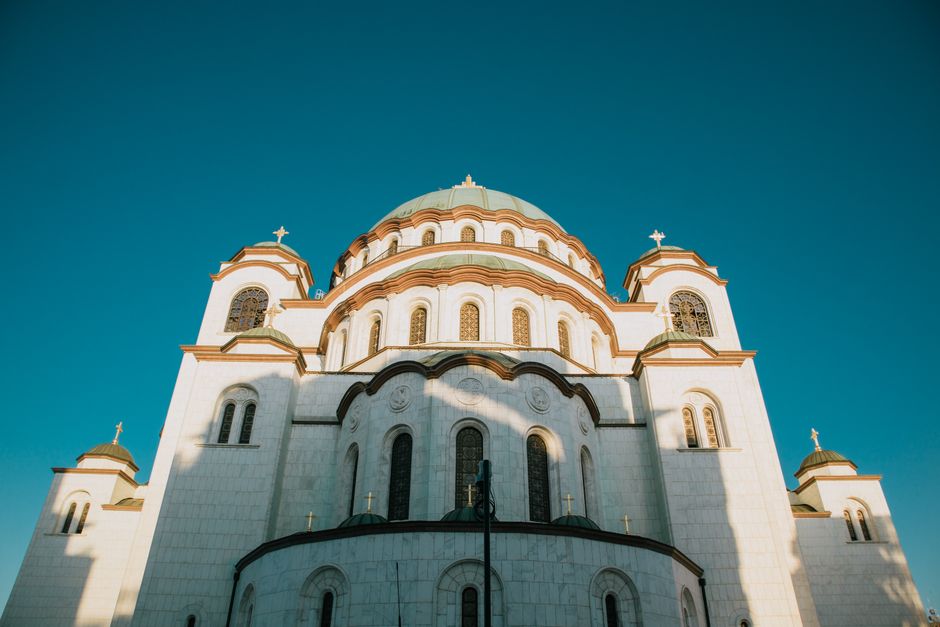
Serbia is the big, warm-hearted country at the centre of the Balkans, where the Danube meets the Sava under Belgrade’s fortress and life is lived late, loud and around the table. Belgrade is one of Europe’s great nightlife capitals, with river clubs, smoky kafanas and a fortress park with sunset views; Novi Sad, up the Danube, is a relaxed, elegant university city below the Petrovaradin Fortress; and in the hills of western Serbia, Zlatibor, Tara National Park and the narrow-gauge Šargan Eight railway offer fresh air and big views. Beyond them you find painted medieval monasteries, Roman emperors’ palaces, the Danube’s Iron Gates gorge, spa towns, Art Nouveau Subotica and the wine hills of Fruška Gora. Prices are low, portions are huge, and Serbs are generous hosts. May, June and September are the sweet spots. Give it a week for a first trip, ten days to two weeks to see the country properly.
Right now in Serbia
- Wed 11–25°C 51–77°F Clear
- Thu 12–26°C 54–79°F Clear
- Fri 16–23°C 61–74°F 6 mm Showers
Weather: MET Norway (CC BY 4.0)
Multi-day tours of Serbia
Multi-day tours from local operators. You check dates and book on Viator, our partner; we may earn a commission at no extra cost to you. How we earn money
Serbia at a glance: the Danube, the plains and the mountains
Serbia is landlocked, bordered by Hungary, Romania, Bulgaria, North Macedonia, Montenegro, Bosnia and Herzegovina and Croatia, and by Kosovo, which declared independence in 2008 and which Serbia considers part of its territory. Excluding Kosovo, Serbia covers about 77,500 square kilometres. The north, Vojvodina, is flat, fertile farmland on the edge of the Pannonian Plain, crossed by the Danube, the Tisa and the Sava. South of Belgrade the land rises into the rolling hills of Šumadija and then into mountains: the Dinaric ranges in the west (Zlatibor, Tara), the Carpathian and Balkan mountains in the east, where Midžor (2,169 m) on Stara Planina is the highest point outside Kosovo, and Kopaonik in the south. The Danube flows for almost 600 km through Serbia and leaves it through the Iron Gates (Đerdap), one of Europe’s most dramatic river gorges, on the border with Romania.
According to the Statistical Office of the Republic of Serbia, about 6.55 million people lived in Serbia, not counting Kosovo, in 2025, a number that has been falling for decades; roughly a quarter of them live in and around Belgrade. Serbian is the official language, and Serbia is one of the few countries that use two alphabets side by side: Cyrillic is the official script, but Latin letters are everywhere, on shop signs, menus and in the press. Hungarian, Slovak, Romanian and other minority languages are official in parts of Vojvodina. English is widely spoken by younger people and in tourist businesses, less so by older people in the countryside, where German and Russian are more likely.
Serbia is a candidate for EU membership but not a member, and it is not in the Schengen area. It uses its own currency, the dinar. Time zone: Central European Time (UTC+1, UTC+2 from the last Sunday in March to the last Sunday in October), the same as Hungary and Croatia.
Serbia’s regions
- Belgrade: the capital, on the ridge where the Sava meets the Danube: the Belgrade Fortress and Kalemegdan Park, the pedestrian Knez Mihailova street, bohemian Skadarlija, the vast Temple of Saint Sava, the Museum of Yugoslavia and Tito’s tomb, the old Austro-Hungarian town of Zemun and the river island beaches of Ada Ciganlija.
- Vojvodina: the flat, multi-ethnic north: Novi Sad and the Petrovaradin Fortress; the baroque town of Sremski Karlovci and the monasteries and vineyards of Fruška Gora National Park; Subotica, near the Hungarian border, with its Art Nouveau town hall and synagogue; Lake Palić; and the wetlands of the Danube and the Tisa.
- Western Serbia: green, rolling uplands and gorges: the plateau resort of Zlatibor, Tara National Park and the Drina river canyon, the Šargan Eight railway and Drvengrad at Mokra Gora, the Ovčar-Kablar gorge with its monasteries, and Užice.
- Central Serbia (Šumadija and the Ibar valley): the historic heartland: Topola and the royal mausoleum at Oplenac, Kragujevac, the spa town of Vrnjačka Banja, the monasteries of Žiča and Studenica (UNESCO), and Kopaonik, Serbia’s largest ski resort.
- Eastern Serbia: the Danube’s Đerdap National Park and Iron Gates, Golubac Fortress, the prehistoric settlement of Lepenski Vir, the Roman palace of Felix Romuliana at Gamzigrad (UNESCO), Zaječar, Negotin wine cellars and the wild Stara Planina mountains.
- Southern Serbia: Niš, birthplace of Emperor Constantine, with its fortress and the grim Skull Tower; the rock formations of Devil’s Town (Đavolja Varoš); the spa of Sokobanja; and, in the south-west, Novi Pazar with the UNESCO-listed Stari Ras and Sopoćani monastery.
Where to go: Belgrade, the Danube and the western hills
Belgrade is the hub of Serbia’s roads, railways and only big international airport. From there, Novi Sad is about half an hour away by high-speed train, Zlatibor about three and a half hours by bus or car, and Niš about two and a half hours down the motorway.
Belgrade
Serbia’s capital is not a postcard city, but it is one of the most enjoyable in Europe. Walk the walls of the Belgrade Fortress above the meeting of two rivers, stroll Knez Mihailova to Republic Square, eat in the kafanas of cobbled Skadarlija, marvel at the mosaics of the Temple of Saint Sava, and learn about Tito and Yugoslavia at the Museum of Yugoslavia. Evenings start late: in summer, the floating river clubs (splavovi) on the Sava and Danube stay open until dawn. See our Belgrade guide for details.
Novi Sad
Serbia’s second city is calmer and prettier than Belgrade: a pastel, pedestrian old town around the Name of Mary Church and Liberty Square, the Danube beach Štrand, and, across the river, the 18th-century Petrovaradin Fortress with its clock tower whose hands are reversed and its underground tunnels. Sremski Karlovci and the monasteries of Fruška Gora are a short drive away.
Zlatibor and the west
Zlatibor is a plateau of rolling pine-dotted pastures at about 1,000 metres, Serbia’s favourite year-round mountain resort. Ride the Gold Gondola, one of the world’s longest panoramic cable cars, to the Tornik ski area, walk to the Gostilje waterfall, visit the open-air museum at Sirogojno, and take the heritage Šargan Eight train at nearby Mokra Gora. Tara National Park, with views over the Drina canyon, is an hour away.
Subotica and Palić
Near the Hungarian border, Subotica is a showcase of Hungarian Art Nouveau: the town hall, the restored synagogue and the Raichle Palace are covered in colourful tiles and curves. The lakeside resort of Palić is 8 km away.
Fruška Gora and Sremski Karlovci
The low, wooded ridge of Fruška Gora, south of Novi Sad, holds more than a dozen Orthodox monasteries and a string of wineries. Sremski Karlovci, at its foot, is a small baroque town famous for its sweet bermet wine and its seminary and patriarchal palace.
The Danube’s Iron Gates
East of Belgrade, the Danube narrows between cliffs in Đerdap National Park. Stop at the restored Golubac Fortress, the 8,000-year-old settlement of Lepenski Vir, and the giant rock carving of the Dacian king Decebalus on the Romanian bank, best seen from a boat at Kazan.
Niš and the south
Niš is a lively, affordable city with an Ottoman fortress, the remains of Constantine’s villa at Mediana, the Skull Tower built from the skulls of Serbian rebels after an 1809 battle, and some of Serbia’s best grilled meat. Devil’s Town, with its earth pillars topped by stones, is about 90 km away.
The monasteries
Serbia’s medieval monasteries are its great cultural treasure. Studenica (12th century, UNESCO) in the Ibar valley, Žiča, Sopoćani (UNESCO) near Novi Pazar, Manasija and Ravanica in central Serbia, and Mileševa in the south-west, with its famous White Angel fresco, are all still home to monks and nuns.
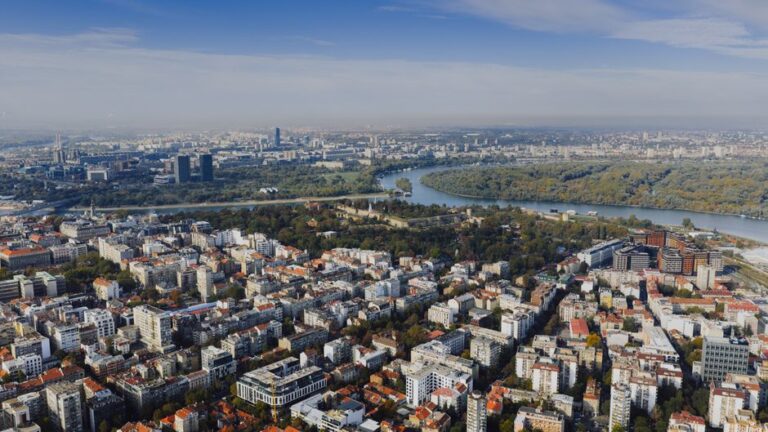
Belgrade Travel Guide
Plan a trip to Belgrade: the Belgrade Fortress and Kalemegdan, the Temple of Saint Sava, the Museum of Yugoslavia and Tito's House of Flowers,…
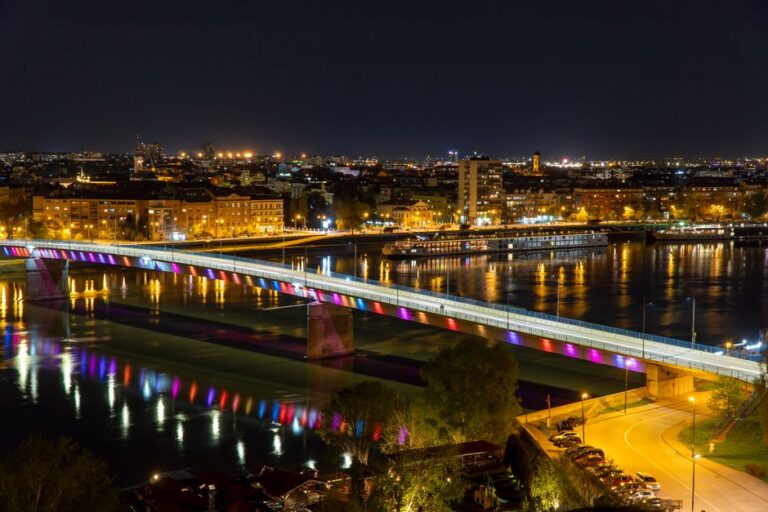
Novi Sad Travel Guide
Plan a trip to Novi Sad: the Petrovaradin Fortress and its reversed clock, Liberty Square and the old town, the Štrand beach, Sremski Karlovci…
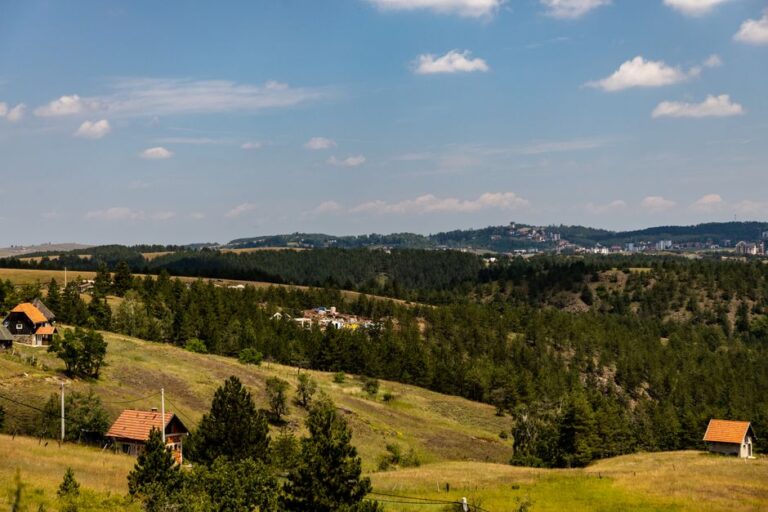
Zlatibor Travel Guide
Plan a trip to Zlatibor: the Gold Gondola to Tornik with 2026 prices, the Šargan Eight railway and Drvengrad at Mokra Gora, the Sirogojno…
Best time to visit Serbia, region by region
Serbia has a continental climate: hot, sunny summers with thunderstorms, cold winters with frost and some snow, and short but lovely springs and autumns. Belgrade and the north are the warmest and driest in summer; the mountains of the west and south are much cooler, with snow on the ground for three to four months a year at Zlatibor and longer at Kopaonik. In winter, a cold south-easterly wind, the košava, sometimes blows hard through Belgrade and the Danube valley. The table shows rounded average daily highs and lows and yearly rainfall: for Belgrade, Novi Sad and Niš from the official 1991–2020 normals that Serbia’s Republic Hydrometeorological Service (RHMZ) submitted to the World Meteorological Organization, and for Zlatibor from RHMZ’s 1981–2010 station averages.
| Region (station) | Spring highs (Mar–May) | Summer highs (Jun–Aug) | Autumn highs (Sep–Nov) | Winter highs (Dec–Feb) | Winter lows (Dec–Feb) | Rain a year |
|---|---|---|---|---|---|---|
| Belgrade | 13 °C rising to 24 °C | 27–30 °C | 24 °C falling to 12 °C | 5–8 °C | about −0.7 to 0.6 °C | about 700 mm |
| Vojvodina (Novi Sad) | 13 °C rising to 23 °C | 27–29 °C | 24 °C falling to 11.5 °C | 4–7 °C | about −2.5 to −1 °C | about 680 mm |
| South (Niš) | 14 °C rising to 24 °C | 28–31 °C | 25 °C falling to 13 °C | 5–8 °C | about −2.5 to −1 °C | about 615 mm |
| Western mountains (Zlatibor, 1,028 m) | 7.5 °C rising to 17.5 °C | 21–23 °C | 18.5 °C falling to 8 °C | 2–3 °C | about −5 to −4 °C | about 1,020 mm |
August is usually the hottest month, with average highs near 30 °C in Belgrade and Niš and frequent heatwaves above 35 °C; January is the coldest, with average nights around or below freezing everywhere. May and June are the wettest months in the lowlands, with rain mostly in short, heavy storms. Days are long in summer, with light until about 20:30 in late June, and short in December, when it is dark by about 16:00.
Crowds and prices through the year
- April to early June: one of the best times to visit: mild weather, green countryside, café terraces filling up and moderate prices. Orthodox Easter and the 1 May holiday bring busy long weekends.
- July and August: hot in Belgrade and Novi Sad, when locals head for the river beaches, Montenegro’s coast and the mountains; Belgrade’s river clubs and festivals are in full swing, and mountain resorts such as Zlatibor are busy and at their most expensive.
- September and October: excellent: warm days, the grape harvest in Fruška Gora, Župa and Negotin, and autumn colours in Tara and Zlatibor.
- November to March: cold and grey in the lowlands, with air pollution on still winter days in Belgrade and other cities. The ski season at Kopaonik and Zlatibor’s Tornik runs from about December to March, and late December to mid-January (New Year, then Orthodox Christmas on 7 January and the Orthodox New Year on 13–14 January) is the peak of winter.
Festivals and events: late 2026 and 2027
Dates published by the organisers so far:
| Event | Dates | Good to know |
|---|---|---|
| BEMUS (Belgrade Music Festival) | 16–25 October 2026 | Serbia’s oldest classical music festival, in Belgrade’s concert halls |
| Belgrade Marathon and the European Running Championships | Saturday 17 – Sunday 18 April 2027 | The 40th Belgrade Marathon doubles as the European Running Championships: half marathon and 10 km on the Saturday, marathon on the Sunday morning; expect road closures and full hotels |
| Guča Trumpet Festival | early August (the 2026 edition ran 7–9 August) | The wild brass-band festival in the village of Guča, near Čačak; 2027 dates not yet announced |
| BITEF | mid-September (2026: 13–20 September) | Belgrade’s international theatre festival |
- November to January: Armistice Day (11 November), then New Year’s Eve concerts in Belgrade’s squares, Orthodox Christmas on 7 January, with bonfires of oak branches (badnjak) outside churches on Christmas Eve, and the “Serbian New Year” on the night of 13–14 January.
- Spring: Orthodox Easter (2 May 2027), with painted eggs and family feasts, and the Belgrade Marathon.
- Summer: open-air concerts at the Belgrade Fortress and on the rivers, Guča in August, and village fairs. EXIT, the famous festival at Novi Sad’s Petrovaradin Fortress, held its last Serbian edition in 2025 and moved to Montenegro in 2026.
- Autumn: grape harvest festivals in Vršac, Sremski Karlovci and Aleksandrovac (Župa) in September, and BEMUS in October.
Public holidays
Serbia’s public holidays follow the Orthodox calendar for Christmas and Easter. On these days shops, banks and offices close and transport runs a reduced timetable. When a holiday falls on a Sunday, the next working day is off. The next ones, from October 2026:
| Holiday | Date |
|---|---|
| Armistice Day | Wednesday 11 November 2026 |
| New Year | Friday 1 and Saturday 2 January 2027 |
| Orthodox Christmas | Thursday 7 January 2027 |
| Statehood Day (Sretenje) | Monday 15 and Tuesday 16 February 2027 |
| Orthodox Easter (Good Friday to Easter Monday) | 30 April – 3 May 2027 |
| Labour Day (1 and 2 May, with Tuesday 4 May off in lieu) | 1–4 May 2027 |
| Armistice Day | Thursday 11 November 2027 |
With Easter and Labour Day together, 30 April to 4 May 2027 is a five-day break, when many Serbs travel and roads and buses are busy. Catholics, Muslims and Jews may also take their own main religious holidays off.
How long to stay: sample itineraries
Belgrade is the natural base, with fast trains north to Novi Sad and Subotica, motorways south to Niš and buses everywhere. Western Serbia and the monasteries are easiest by car, or with a combination of buses and day tours.
4 days: Belgrade and Novi Sad
Spend two and a half days in Belgrade: the fortress and Kalemegdan, Knez Mihailova and Skadarlija, the Temple of Saint Sava, the Museum of Yugoslavia and an evening in Zemun or on a river club. Then take the high-speed train to Novi Sad for a night, with the old town, the Petrovaradin Fortress at sunset and a half-day in Sremski Karlovci and Fruška Gora.
7 days: Belgrade, Novi Sad and Zlatibor
Add three nights in the west: Zlatibor for the Gold Gondola, Sirogojno and the Gostilje waterfall, a day for the Šargan Eight train and Drvengrad at Mokra Gora, and a drive or tour to the Drina canyon viewpoints in Tara National Park.
10 days: the classic loop
Belgrade, Novi Sad and Subotica in the north; Zlatibor, Mokra Gora and Tara in the west; then east via the Ibar valley and Studenica Monastery to Niš, and back to Belgrade along the Danube’s Iron Gates and Golubac Fortress.
14 days: Serbia and its neighbours
Serbia combines well with its neighbours: Budapest is about four hours from Novi Sad by road; Bucharest and Sofia are within a day’s travel from Belgrade or Niš; and from Zlatibor, the road continues to Montenegro’s coast. Sarajevo is about six to seven hours from Belgrade by bus, via the Drina valley. If you also plan to visit Kosovo, read the border rule in the entry section first.
Entry, money and costs
Entry: visas, registration and EES (last reviewed October 2026)
Serbia is not in the EU or the Schengen area and sets its own rules. Citizens of EU countries, the UK, the United States, Canada, Australia and many other countries can visit without a visa for up to 90 days in any 180-day period, and citizens of EU countries, Switzerland, Norway and Iceland can enter with a national ID card. According to Serbia’s Ministry of Foreign Affairs, people who would otherwise need a visa can also enter for up to 90 days in 180 if they hold a valid Schengen, UK or US visa or residence permit; everyone else applies online for an electronic visa through the official welcometoserbia.gov.rs portal. Days spent in Serbia don’t count towards your 90 days in the Schengen area.
- Passports: your passport must be valid for at least 90 days after you leave Serbia, have been issued within the last 10 years and have two blank facing pages.
- Get your stamp: make sure the border police stamp your passport when you enter by land; the UK government warns that leaving without an entry stamp can lead to charges.
- Registering with the police: every foreign visitor must be registered with the local police within 24 hours of arrival. Hotels, hostels and licensed apartments do this when you check in; if you stay with friends, they must take you to the police station. Not registering can mean a fine.
- Kosovo and the Serbian border: Serbia does not treat its crossing points with Kosovo as international border crossings. You can travel from Serbia into Kosovo and come back the same way. But if you entered Kosovo from Albania, North Macedonia or Montenegro, or flew into Pristina, you have no Serbian entry stamp, and you are likely to be refused entry if you try to cross from Kosovo directly into Serbia; go through North Macedonia or Montenegro instead and enter Serbia there. The UK government also reports isolated cases of Serbian officials cancelling Kosovo stamps in passports. Plan your Balkan route with this in mind.
- EES at the EU border: Serbia is not part of the EU’s Entry/Exit System, but its neighbours Hungary, Croatia, Romania and Bulgaria are. Since 10 April 2026, non-EU travellers entering those countries from Serbia have their passport details, photo and fingerprints recorded on their first crossing. In July 2026, cars waited up to about three hours at Batrovci (Croatia) and 45 minutes to two hours at Horgoš (Hungary) at peak times; avoid summer weekends and the hours of 07:00–11:00 and 16:00–20:00 if you can.
- ETIAS: not needed for Serbia. For onward travel into the Schengen area, it is not in operation as of October 2026, and no start date has been published.
- Cash: declare cash worth more than €10,000 when you arrive, and keep the bank receipt if you bring Serbian dinars into the country.
Rules change, so check Serbia’s Ministry of Foreign Affairs and your own government’s travel information before you go.
Language
A few Serbian words help, and many signs are in Cyrillic, so it is worth learning to recognise the letters of a few key words: zdravo (hello), dobar dan (good day), hvala (thank you), molim (please, and also “you’re welcome”), živeli (cheers), ulaz / улаз and izlaz / излаз (entrance and exit), stanica (station), and muški and ženski (men and women) on toilet doors.
Money: the dinar, cards and cash
Serbia uses the dinar (RSD, written din. or дин.). On 2 October 2026, the National Bank of Serbia’s official middle rate was 117.49 dinars to the euro (104.40 to the US dollar), so 1,000 dinars is about €8.50. Cards and phone payments are widely accepted in Belgrade, Novi Sad and Zlatibor, in hotels, restaurants, supermarkets and petrol stations, but carry cash for bakeries, markets, small kafanas, village guesthouses and some museums (the Nikola Tesla Museum takes cash dinars only). ATMs are everywhere; when one offers to charge you in your home currency, choose dinars. Licensed exchange offices (menjačnica) are common and usually give better rates than banks; never change money with people on the street. Hotels and apartments often quote prices in euros, but you normally pay in dinars. Change leftover dinars before you leave, as banks abroad rarely take them.
Tipping
Tipping is customary but informal: round up the bill or leave about 10% in restaurants and cafés if you are happy with the service, round up taxi fares, and tip musicians at your table in a kafana if you ask them to play. Service is rarely added to the bill.
VAT and tax-free shopping
Prices include VAT (PDV): 20% as standard and 10% on some goods and services, including accommodation. Foreign visitors can reclaim VAT on goods they take out of the country, according to Serbia’s Tax Administration: you must spend at least 6,000 dinars including VAT with one seller (receipts from the same seller within three months can be combined), take the goods out of Serbia within three calendar months after the month of purchase, and have the refund form, filled in by the shop, certified by customs when you leave. The refund is then paid by the shop, or by a refund operator minus its commission, within 15 days; you have up to 12 months to claim it.
Typical travel costs
Serbia is good value by European standards, though Belgrade prices have risen quickly and central hotels can cost as much as in Central Europe. Food, drink, buses and trains are cheap. These estimates, per person per day, are a planning guide as of October 2026:
| Style | Estimated cost per day | What that looks like |
|---|---|---|
| Budget | about 5,000–8,000 RSD (€45–70) | Hostel dorm or simple guesthouse, burek for breakfast, ćevapi for lunch, free public transport in Belgrade and one museum |
| Mid-range | about 12,000–20,000 RSD (€100–170) | Double room in a 3- or 4-star hotel shared by two, kafana dinners with wine, a couple of paid sights and trains or buses between cities |
| High-end | about 35,000 RSD+ (€300+) | Design hotels in Belgrade, fine dining, private guides and drivers |
Hotels and apartments add a local tourist tax (boravišna taksa) per person per night. Under a government decree, from 15 October 2026 each town sets it within national ranges of 90–240 dinars depending on its category, with Belgrade in the top band. The figures above are our estimates, not official statistics.
Getting there and getting around
Airports
- Belgrade Nikola Tesla Airport (BEG): Serbia’s main airport and the hub of the national airline, Air Serbia, about 18 km west of the centre, with flights across Europe and the Middle East and some long-haul routes. To get into town, take the free city bus 72 to Zeleni venac, the A1 airport minibus to Slavija (400 dinars in cash, about 30 minutes), or a taxi with a fixed-price voucher from the kiosks in the arrivals hall (from 2,700 dinars as of October 2026, depending on the zone).
- Niš Constantine the Great Airport (INI): in the south, with low-cost flights to a number of European cities.
- Morava Airport (KVO): near Kraljevo in central Serbia, with Air Serbia flights to Istanbul all year and to Thessaloniki and Tivat in summer.
For Vojvodina, Budapest Airport is a useful alternative, about three and a half to four hours from Novi Sad by road.
Trains: Srbijavoz and the high-speed line
Serbia’s railways, run by Srbijavoz, were slow for decades, but the new high-speed line from Belgrade to Novi Sad and Subotica has transformed the north. Soko trains, at up to 200 km/h, leave from Belgrade Centar station (also called Prokop) and reach Novi Sad in about 34 minutes and Subotica in about 1 hour 20 minutes. In Novi Sad they stop at Petrovaradin, across the Danube, because the main station has been closed since its canopy collapsed in November 2024. A second-class ticket from Belgrade to Novi Sad costs roughly 700–770 dinars, a little less online or in the Srbijavoz app; buying on board costs 500 dinars more. There is no longer a through train to Budapest: since December 2025 you change at Subotica and Szeged, and the journey takes about six hours (special fares from €32 from Belgrade). Elsewhere, trains are slow and infrequent, though the line from Belgrade through Užice towards Montenegro is scenic. In the west, the narrow-gauge Šargan Eight heritage railway at Mokra Gora is a highlight. In Belgrade itself, the BG Voz suburban trains are free.
Buses
Buses are the main way to get around outside the north, and they are frequent and cheap. Belgrade’s main intercity bus station moved in 2024 to a new building in New Belgrade (Blok 42, Antifašističke borbe street), with buses to Novi Sad (about an hour and a half), Zlatibor (about three and a half to four hours), Niš (about three hours) and every corner of the country, plus international buses to Sarajevo, Podgorica, Skopje, Budapest, Vienna and further afield. Lasta is the largest operator. Buy tickets at the station or online; you may pay a small extra fee for a platform token and for luggage in the hold.
Driving and motorway tolls
Motorways run from the Hungarian border through Novi Sad and Belgrade to Niš and on to North Macedonia (the A1), from Croatia to Belgrade (the A3), from Niš to Bulgaria (the A4) and south-west from Belgrade towards Čačak and western Serbia (the A2, Miloš the Great motorway). Other roads are slower and often busy with trucks; the UK government singles out the Ibar highway (Ibarska magistrala) between Belgrade, Čačak and Montenegro as particularly dangerous.
- Tolls: there is no vignette; you pay at toll booths in cash, by card (Visa, Mastercard or DinaCard) or with an electronic tag. As of 2026, Belgrade to Novi Sad costs 340 dinars for a car and Belgrade to Subotica 850 dinars.
- Rules: dipped headlights must be on at all times. Speed limits are 130 km/h on motorways, 100 on expressways, 80 on other roads outside towns and 50 in built-up areas. The alcohol limit is 0.2 grams per kilogram, and zero for new and professional drivers. Winter tyres are required in winter conditions, usually from November to April.
- Licences and insurance: a UK photocard licence is accepted for visits, and the UK government suggests carrying a 1968 International Driving Permit as well, which Serbian police recognise. Check that your car insurance covers Serbia.
- Kosovo: many Serbian car hire firms don’t allow their cars into Kosovo, Albania or Bulgaria, and green card insurance is not valid in Kosovo, where you must buy border insurance. Since January 2024, cars with Kosovo (RKS) plates can drive in Serbia.
- Help: call 1987 for roadside assistance from the Automobile and Motorcycle Association of Serbia (AMSS).
Boats, bikes and taxis
The Danube is one of Europe’s great cycling routes: the EuroVelo 6 path follows the river across Serbia from the Hungarian border through Novi Sad and Belgrade to the Iron Gates. River cruise ships stop in Novi Sad and Belgrade, and in summer local boats run sightseeing trips on the rivers in Belgrade and in the Đerdap gorge. In cities, use registered taxis with a roof sign and meter, or order one by phone or app, rather than accepting offers from drivers at stations and the airport.
Culture, food and everyday etiquette
Hospitality is central to Serbian life. Guests are offered coffee, rakija or homemade fruit preserves (slatko), and saying no to everything can seem cold. Each Orthodox family celebrates its patron saint’s day, the slava, with an open house, and you may be invited. Serbs greet friends with three kisses on the cheeks, shake hands with new acquaintances, and look you in the eye when they toast with živeli. Dress modestly in churches and monasteries (shoulders and knees covered; women are sometimes asked to cover their hair), and don’t take photos of services without asking. Politics, the 1990s wars and Kosovo are sensitive subjects; it is fine to listen and ask, but avoid strong opinions.
Serbian food is generous and meat-heavy. Try ćevapi (small grilled sausages) and pljeskavica (a spiced patty) with onions and kajmak, a rich clotted cream; karađorđeva šnicla (a rolled, breaded schnitzel stuffed with kajmak); sarma (cabbage rolls); prebranac (baked beans); gibanica (cheese filo pie) and burek for breakfast with yoghurt; ajvar (roasted pepper relish); and urnebes, a spicy cheese spread. Vegetarians will find plenty of salads, beans and pies, and Orthodox fasting menus (posno) are vegan. Rakija, above all plum brandy (šljivovica), is the national drink; Serbia also makes good wines in Fruška Gora, Župa, Negotin and Šumadija, and strong Turkish-style coffee (domaća kafa) is served everywhere. Smoking is still common in bars and kafanas.
Safety, health, accessibility and connectivity
Safety
Current conditions (October 2026): expect longer waits at the borders with the Schengen area. Mass gatherings and demonstrations take place in Belgrade and other towns and cities; they can happen at short notice and disrupt public transport and mobile networks, and while most are peaceful, some have turned violent. There is some violence linked to organised crime and high-profile sporting events, and petty crime is common in tourist areas.
In practice, Serbia is a safe and welcoming country for visitors, and serious crime against tourists is rare. Take the usual city precautions:
- Protests: since late 2024, after the collapse of the canopy at Novi Sad’s railway station, there have been large anti-government demonstrations; keep away from them, and follow local news.
- Petty crime: watch for pickpockets on buses and trams, in Knez Mihailova and around the bus and railway stations, and keep valuables out of sight in cars.
- Taxis and bills: use registered taxis or apps, and check the bill in bars and clubs.
- Football: matches between Red Star (Crvena zvezda) and Partizan Belgrade often bring violence; avoid the area around the stadiums on derby days.
- Landmines: some unexploded ordnance from 1999 remains in the mountains near the boundary with Kosovo; stay on marked roads and paths there.
- Photography: don’t photograph military or police buildings, staff or vehicles.
Emergency numbers: 192 for police, 193 for the fire service and 194 for an ambulance. The UK government also lists 112 for all emergencies, but the European number was still being rolled out in 2026, so the local numbers are the safest choice.
Health
Travellers should have travel insurance with medical cover: Serbia is not in the EU, so the EHIC is not valid, although Serbia has reciprocal healthcare agreements with some countries (UK visitors should check the UK government’s guidance). Private clinics in Belgrade and Novi Sad are good. Pharmacies (apoteka) are everywhere. Tap water is generally safe to drink in cities. In winter, air pollution can be high in Belgrade, Niš and other cities on still days; people with breathing or heart conditions should check air-quality readings. In summer, use insect repellent near the rivers, where mosquitoes are common, and check for ticks after walks in forests and meadows.
Accessibility
Belgrade’s newer buses and trams are low-floor, and the high-speed trains and newer stations are accessible, but pavements are often uneven and kerbs high, and Belgrade’s old centre and fortress are hilly and cobbled. Many older buildings, kafanas and monasteries have steps. Ask Srbijavoz about assistance before you travel by train.
Connectivity and power
Serbia is not part of the EU’s roaming area, so check your plan before you use data: EU and UK mobile plans may charge high roaming fees, although an agreement between EU and Western Balkan operators has made data packages cheaper, and in June 2026 EU ministers authorised talks to bring the region into “roam like at home”. A local prepaid SIM or eSIM from Yettel, A1 or mts is cheap and quick to buy with a passport. Coverage is good in towns and along main roads, and Wi-Fi is standard in hotels and cafés. Serbia uses 230 V and European two-pin plugs, type C and F. You need an adapter for UK, US and Australian plugs; see our guide to travel adapters.
Things to do: sightseeing, the Danube, mountains and wine
- City sightseeing: Belgrade’s fortress, museums and nightlife, Novi Sad’s old town and fortress, Art Nouveau Subotica, Roman and Ottoman Niš, and the medieval monasteries of central and western Serbia.
- Cycling: the EuroVelo 6 Danube route through Novi Sad, Belgrade and the Iron Gates, and the gentle trails of Fruška Gora and Zlatibor.
- Hiking: Tara National Park and the Drina canyon viewpoints, the plateau of Zlatibor, the Uvac river meanders and griffon vultures, Stara Planina and Kopaonik.
- Wine tasting: the wineries of Fruška Gora and Sremski Karlovci, the Župa region around Aleksandrovac, Šumadija around Topola, and the old wine cellars of Rajac and Rogljevo near Negotin.
- Boat trips: sightseeing boats on the Sava and Danube in Belgrade, boats through the Đerdap gorge, and boat trips on the winding Uvac canyon.
What to pack
Pack for the season: light, breathable clothes, a sun hat and sunscreen for hot summers; a warm coat, hat and gloves from November to March, and proper winter gear for the mountains. Comfortable walking shoes are essential for Belgrade’s hills and cobbles, and hiking shoes help at Zlatibor and Tara. A light rain jacket covers spring and early-summer storms. Bring a scarf and long trousers or a skirt for monasteries, and a type F plug adapter if you come from outside continental Europe.
Serbia travel FAQ
When is the best time to visit Serbia?
May, June and September are the best all-round months: warm and sunny, without the heat of July and August. Summer is best for Belgrade’s river life and the mountains; December to March is ski season on Kopaonik and Zlatibor’s Tornik.
How many days do you need in Serbia?
Two or three days covers Belgrade. Four days adds Novi Sad, a week lets you add Zlatibor and the Šargan Eight railway, and ten days to two weeks gives time for the monasteries, Niš and the Danube’s Iron Gates.
Does Serbia use the euro?
No. Serbia uses the dinar; in early October 2026, one euro was worth about 117.5 dinars. Cards are widely accepted, but carry some dinars for small purchases.
Do I need a visa for Serbia?
Not if you are a citizen of the EU, the UK, the US, Canada, Australia or many other countries: you can stay up to 90 days in any 180-day period. EU, Swiss, Norwegian and Icelandic citizens can use an ID card. Others can apply online for an e-visa.
Is Serbia in the EU or the Schengen area?
No. Serbia is an EU candidate but not a member, and it is not in Schengen, so ETIAS does not apply. When you cross into Hungary, Croatia, Romania or Bulgaria, non-EU travellers are registered by the EU’s Entry/Exit System, which can mean long queues in summer.
Can I travel from Kosovo to Serbia?
Only if you entered Kosovo from Serbia. Serbia does not treat its crossings with Kosovo as international border points, so if you entered Kosovo from another country or by air, you are likely to be refused entry from Kosovo; enter Serbia via North Macedonia or Montenegro instead.
Do I have to register with the police in Serbia?
Yes, within 24 hours of arrival, but hotels, hostels and licensed apartments do it for you when you check in.
Is Serbia safe for tourists?
Yes, generally. Demonstrations take place in Belgrade and other cities, and petty crime is common in tourist areas. Avoid protests and football derbies, and watch your belongings.
Is public transport in Belgrade free?
Yes. Since 1 January 2025, Belgrade’s buses, trams, trolleybuses and BG Voz suburban trains have been free for everyone, including visitors. The A1 airport minibus and E-line minibuses still charge a fare.
How do I get from Belgrade to Novi Sad?
Take the Soko high-speed train from Belgrade Centar: about 34 minutes to Novi Sad (Petrovaradin), with frequent departures and second-class fares of roughly 700–770 dinars. Buses take about an hour and a half.
How much are motorway tolls in Serbia?
There is no vignette; you pay at toll booths. As of 2026, Belgrade to Novi Sad costs 340 dinars for a car and Belgrade to Subotica 850 dinars. You can pay in cash or by card.
Can I get a VAT refund in Serbia?
Yes, if you live abroad and spend at least 6,000 dinars with one seller. Ask the shop for the refund form, have it certified by customs when you leave Serbia within three months, and claim the refund from the shop or its refund operator.
What plug type does Serbia use?
Type C and F European two-pin plugs, at 230 V. Visitors from the UK, Ireland, North America and Australia need an adapter.
Sources and last review
Researched and last reviewed on 4 October 2026. Safety information from GOV.UK foreign travel information and the US State Department’s country information; visa, passport and e-visa rules from Serbia’s Ministry of Foreign Affairs; registration and the Kosovo crossing rule from the UK government; population from the Statistical Office of the Republic of Serbia; climate from the official 1991–2020 station normals Serbia submitted to the World Meteorological Organization (archived by NOAA) and from RHMZ’s Zlatibor station page; VAT refunds from the Tax Administration; Soko journey times, Budapest connections and the Šargan Eight from Srbijavoz; Morava Airport from Airports of Serbia; free Belgrade transport from the European Commission’s Urban Mobility Observatory; the Belgrade Marathon and BITEF from the organisers; EU roaming from the EEAS. The exchange rate (from a mirror of the National Bank’s list), tolls, train fares, the new tourist tax ranges, border waiting times, holiday dates, airport taxi and minibus fares, BEMUS and Guča dates, and the end of EXIT in Novi Sad come from press reports or secondary sources and are flagged for checking. Daily costs are estimates. Prices, timetables and entry rules change, so check the official sites before you travel.
Plan your trip
Partner links: TravelerCenter may earn a commission if you book, at no extra cost to you.
🇷🇸 Useful Serbian phrases for Serbia
All 38 Serbian phrases: restaurant, hotel, emergencies, romance (printable) →