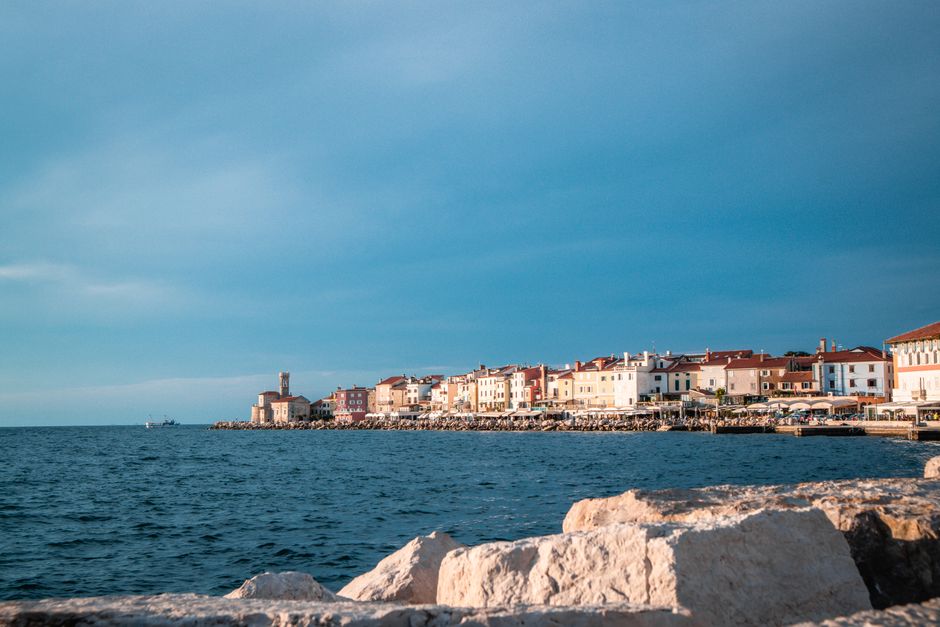
Piran is the jewel of Slovenia’s short Adriatic coast: a compact medieval town on a narrow peninsula, its Venetian houses, lanes and squares packed together below a hilltop church and a line of old town walls. For five centuries it belonged to Venice, and it still feels Italian, with Italian an official language alongside Slovene. The heart is the marble-paved Tartini Square, the edges are a seafront promenade lined with fish restaurants, and the sunsets over the Gulf of Trieste are famous. You come to wander, swim off the rocks, climb the bell tower and the walls, eat seafood and visit the salt pans next door. Piran is car-free, and an easy base for the whole coast and the Karst caves. Give it two or three days.
Right now in Piran
- Wed16–21°C60–70°F7 mm rain
- Thu18–21°C64–70°F48 mm rain
- Fri16–20°C61–69°F12 mm rain
Top tours in Piran
See all tours for Piran →
From local operators, with prices and reviews; you check availability and book on Viator, our partner. We may earn a commission at no extra cost to you. How we earn money
Piran at a glance
- Best for: Venetian architecture, sunsets, seafood, swimming from rocks and promenades, a slow seaside break and day trips to the salt pans, the Karst caves and Istria.
- How long: 1 day for the town; 2–3 days to add the Sečovlje salt pans, Strunjan, Portorož and a cave.
- Best time: June and September for warm sea and fewer crowds; July and August for full summer; spring and autumn for walking and quiet.
- Getting in: about 1 hour 30 minutes by car or 2 to 2.5 hours by bus from Ljubljana; Trieste airport is about an hour away.
- Getting around: on foot. Visitors’ cars can’t stay in the old town: as of October 2026, the Fornače garage costs €3.20 an hour, with a minibus to Tartini Square.
- Before you go: Slovenia uses the euro and is in Schengen; as of October 2026 there are temporary checks at the Croatian border just south of Piran, so carry your passport or ID for trips into Istria.
Piran and its neighbours: which town suits whom
The Slovenian coast is only 47 km long, and its four towns sit within 20 minutes of each other, linked by buses, a coastal cycle path and, in summer, boats.
Piran
The prettiest and most atmospheric, with the old town on the tip of the peninsula and the Punta lighthouse at its end. Rooms are mostly small hotels and apartments in old houses; there are no big beaches. Best for: couples, photographers, food lovers and anyone happy without a car.
Portorož
Piran’s neighbour, 3 km along the bay, is the coast’s resort: a long promenade, sandy and lawned beach areas, big hotels, spas, a casino and a marina. Best for: families, beach days and spa breaks.
Izola and Koper
Izola is a down-to-earth fishing town with good, cheaper fish restaurants and a cove beach at Simonov zaliv. Koper, the biggest town and Slovenia’s port, has a fine Venetian square with the Praetorian Palace and cathedral, a cruise terminal and the coast’s main bus and train stations. Best for: value, local life and transport links.
Top things to see in Piran
Prices and hours below were checked in October 2026. They change, so check before you go.
Tartini Square
The oval main square was once the inner harbour, filled in during the 19th century. It is named after Giuseppe Tartini, the violinist and composer born in Piran in 1692, whose statue stands in the middle; his birthplace, Tartini House, is on the square. Look for the red Venetian Gothic Venetian House, with its stone lion and the inscription Lassa pur dir (“let them talk”), said to have been built by a merchant for his young lover, the town hall and the courthouse. Cafés spill onto the marble paving in the evening.
St George’s Church and the bell tower
On the ridge above the square, the Church of St George, Piran’s parish church, dominates the skyline. Its free-standing bell tower is a copy of the campanile in St Mark’s Square in Venice; climb the wooden stairs for a bird’s-eye view of the red roofs, the square and the sea, and on clear days the Alps and the Italian coast. There is a small entry fee for the tower (pay in cash), and opening hours are longer in summer. The terrace beside the church, above the sea wall, is one of the best sunset spots in town.
The town walls
Above the town, a stretch of 15th- and 16th-century walls with crenellated towers runs along the hill. You can walk along the top for the classic panorama over Piran and the bay; the entrance is a 10–15 minute climb from Tartini Square through the lanes, with a small fee at a turnstile (have coins ready).
Punta, the promenade and the museums
Walk out to Punta, the tip of the peninsula, with its lighthouse and the Church of St Clement, and follow the promenade along the north side of the town, where ladders lead from the concrete and rocks into the sea. The Sergej Mašera Maritime Museum, in a palace on the harbour, covers seafaring, salt-making and fishing; the small Piran Aquarium shows Adriatic sea life; and the peaceful cloister of the Minorite Monastery hosts summer concerts.
Museums
- Sergej Mašera Maritime Museum
Historic centres
- Tartini Square
Churches and cathedrals
- St George's Church, Piran
Viewpoints
- Walls of Piran
Nature reserves
- Strunjan Landscape Park
- Strunjan Salina
Protected areas
- Sečovlje Salina Nature Park
The salt pans and the Strunjan cliffs
Piran grew rich on salt, and salt is still made by hand in the Sečovlje Salina Nature Park, on the Croatian border south of Portorož, using a 700-year-old method in which a layer of algae and minerals called petola keeps the salt white. The park is also an important wetland for birds. The Lera section has the working salt pans and the shop; the Fontanigge section, reached on foot or by bike along the old canal, has the Saltworks Museum in restored salt-makers’ houses (open in season). As of October 2026, entrance costs €7 for adults from April to October and €6 from November to March (€5 and €4 for students and seniors; family €16 and €14). Lera opens from 7:00 to 19:00 in September and October and 8:00–17:00 in winter; the salt harvest is in summer.
North-east of Piran, the Strunjan Landscape Park protects the coast’s highest flysch cliffs, about 80 m above the sea, with a clifftop path, viewpoints, old olive groves and small pebble beaches below, including Moon Bay. There are smaller, still-working salt pans at Strunjan too.
Swimming and beaches
Piran has no sandy beach. People swim from the rocks and concrete platforms along the northern promenade and around Punta, using the steps and ladders into deep, clear water. Portorož has the coast’s main managed beach areas with sunbeds, grass and some sand, and Strunjan and Simonov zaliv near Izola have pebble beaches. The sea is warm enough for most people from June to September. Bring water shoes for the rocks and sea urchins. See our beaches guide for other places to swim along the Adriatic.
Activities and best months
- Beaches and swimmingPiran's Riviera is a rocky shore with concrete platforms and pebbled steps into the sea; Fiesa beach, just east of town, has a shallow pebble shore and pine shade suited to families; Portorož Central Beach (about 25,000 m², sand, grass and pebbles) is the largest on the coast.
- City sightseeingA 1-2 hour walk through Piran's historic heart starts on Tartini Square (the filled-in inner dock, with Tartini's monument and birth house) and climbs to the 14th-century Church of St George, whose 46 m bell tower is modelled on St Mark's campanile in Venice; the best-preserved stretch of the town walls (1470-1533) runs along the Mogoron slope, with seven gates and some towers open to visitors.
- CyclingThe Parenzana, a 130 km trail on the former narrow-gauge railway from Trieste to Poreč, passes the salt pans and the Valeta tunnel; marked routes link Piran, Portorož, Strunjan and Seča with Istrian villages and vineyards.
Day trips from Piran
- Škocjan Caves: about 45 minutes by car. The UNESCO-listed underground canyon of the Reka river; as of October 2026, adult tickets cost €18 in October and €16 from November to March.
- Lipica: the stud farm where the Lipizzaner horses were first bred in 1580, about 45 minutes away, with tours and riding displays.
- Hrastovlje: a fortified hilltop church in the hinterland, known for its 15th-century fresco of the Dance of Death.
- Postojna Cave and Predjama Castle: about an hour by car; as of October 2026, €34.90 for the cave or €49.90 with the castle.
- Croatian Istria: Umag, Novigrad, Poreč and Rovinj are 30 minutes to 1 hour 15 minutes south; see our Istria guide. Carry your passport or ID for the border checks.
- Trieste and Venice: Trieste is about 40 minutes by car. In summer, catamarans have run from Piran to Venice on certain days; check the operators’ 2027 schedules.
Nearby destinations
Getting to Piran and getting around
By bus. Direct buses run from Ljubljana’s main bus station to Piran in about 2 to 2.5 hours, several times a day and more often in summer. Local buses link Piran with Portorož, Izola and Koper.
By train. The nearest station is Koper, on the line from Ljubljana via Divača; from there, take a local bus or taxi to Piran (about 30 minutes).
By air. Trieste airport, in Italy, is about an hour away by car; Ljubljana is about 1 hour 30 minutes; Venice is about 2 hours 30 minutes. Portorož has a small airport with few scheduled flights.
By car and parking. Piran is about 1 hour 30 minutes from Ljubljana on the A1 motorway (e-vignette needed). The old town is closed to visitors’ traffic: you may drive in for up to 15 minutes free to drop off passengers and luggage, but parking in the centre costs €6 an hour in season and €4 in winter as of October 2026. Instead, park at the Fornače (Amfora) garage at the entrance to town, €3.20 an hour or €32 for more than 10 hours, and walk 15 minutes along the seafront or take the electric minibus to Tartini Square (about €1). Garages in Portorož are cheaper, from €2 an hour.
On foot and by bike. Piran is entirely walkable, and a seaside path runs on to Portorož in about 30–40 minutes. The Parenzana, a cycle path on an old narrow-gauge railway line, connects the coastal towns and continues into Croatian Istria.
When to go and how long to stay
Piran has the mildest climate in Slovenia: hot, sunny summers, mild winters and rain mainly in autumn. The table uses ARSO’s averages for Portorož, 3 km away; the latest published table covers 1971–2000, and recent summers have been warmer.
| Season | Average daily high | Average night low | Sunshine per month | What it’s like |
|---|---|---|---|---|
| Winter (Dec–Feb) | 9–10 °C | 0–1 °C | 94–132 hours | Quiet and mild, sometimes windy with the bora; some places close |
| Spring (Mar–May) | 13 °C rising to 22 °C | 3–11 °C | 172–255 hours | Fresh and bright, good for walking; sea still cool |
| Summer (Jun–Aug) | 26–28 °C | 15–17 °C | 273–315 hours | Hot and sunny, warm sea; busiest and dearest |
| Autumn (Sep–Nov) | 24 °C falling to 13 °C | 13 °C falling to 5 °C | 223 falling to 110 hours | Warm sea in September; October and November are the wettest months |
Portorož gets about 930 mm of rain a year on about 87 days, and about 2,300 hours of sunshine. In winter, the cold bora wind can blow hard from the north-east for a day or two, bringing clear skies and rough seas.
Piran in 1 day
Morning coffee on Tartini Square, the bell tower and St George’s Church, then the town walls for the panorama. Lunch by the harbour, a swim off the rocks at Punta, the Maritime Museum, and sunset from the church terrace or the end of the peninsula.
Piran in 3 days
Add the Sečovlje salt pans by bike or car and an afternoon on the beaches of Portorož, and a day inland at the Škocjan Caves and Lipica, or a walk along the Strunjan cliffs followed by dinner in Izola.
Weather month by month
Where to stay in and around Piran
- Piran old town: small hotels on the seafront and apartments in old houses in the lanes; full of character, but often with stairs and no lifts. Ask your host about parking and luggage drop-off.
- Fornače and the edge of town: newer hotels and apartments near the garage, 10–15 minutes’ walk from the square.
- Portorož: large resort and spa hotels by the beach, a 30–40 minute seaside walk from Piran.
- Izola and the hinterland: cheaper rooms by the sea, and farm stays among the olive groves and vineyards of Slovenian Istria.
Book early for July and August. A tourist tax of a few euros per adult per night is added to bills.
Practical tips for Piran
- Leave the car outside: use the Fornače garage or Portorož; parking in the old town is very limited and costly.
- Carry coins: the bell tower and the walls take cash, and some kiosks don’t accept cards.
- Eat fish simply: order the catch of the day grilled (priced by weight), with Swiss chard and potatoes and a glass of Malvazija or Refošk from Slovenian Istria.
- Buy salt and olive oil: Piran salt and salt flower from Sečovlje, and the local olive oil, make good souvenirs.
- Dress for town: cover up with a shirt and shorts when you leave the bathing areas for shops, churches and restaurants.
What to pack for Piran
Swimwear, a quick-dry towel, sunscreen, a sun hat and sunglasses from June to September, plus water shoes for the rocks and concrete platforms. Comfortable sandals or shoes with grip for smooth, steep lanes and stone steps, and a light jacket for breezy evenings. In winter, pack a warm, windproof coat for the bora. If you’re heading into the Karst caves, add a warm layer: they stay cool all year.
What to pack
- City walking shoesLisbon and Porto are steep, with polished limestone cobbles that get slippery, so grippy soles matter.
- Day packs and anti-theft bagsCarries water, towel and sunscreen down the long stairways to Algarve coves.
- Dry bags and phone pouchesProtects phones and cameras from sand and spray on beaches reached by ferry or steep paths.
- Quick-dry beach towelsA sand-shedding quick-dry towel packs small for beach days and lido visits.
- Rain jacketsFrom October to April Porto and Lisbon see rain on roughly a third of days.
- Reef-friendly sunscreenSummer UV is strong on Portuguese beaches and there is little shade below the cliffs.
- Travel adapters and convertersPortugal uses Type C and F sockets at 230 V, so most visitors from outside Europe need an adapter.
- Water bottles and hydration packsRiding in the Algarve and Alentejo heat needs more water than you expect.
- Water shoesRocky coves, lava pools and weever fish in shallow sand make water shoes useful.
- WetsuitsOn the west and north coasts the sea stays around 16–18 °C even in summer, so a thin suit helps for long swims.
Piran travel FAQ
Can you drive into Piran?
Only briefly: visitors may drive in for up to 15 minutes free to drop off passengers and luggage. Park at the Fornače garage at the entrance to town (as of October 2026, €3.20 an hour, €32 for over 10 hours) and walk or take the minibus to Tartini Square.
Does Piran have a beach?
Not a sandy one. You swim from rocks and concrete platforms along the promenade and around Punta. For a beach with sunbeds and some sand, go to Portorož, 3 km away.
How do I get from Ljubljana to Piran?
By direct bus in about 2 to 2.5 hours, or by car in about 1 hour 30 minutes on the A1 motorway. Trains go only as far as Koper, 30 minutes away by bus.
How much are the Sečovlje salt pans?
As of October 2026, €7 for adults from April to October and €6 from November to March, with discounts for students, seniors and families. The ticket covers both the Lera and Fontanigge sections for the day.
How many days do you need in Piran?
One day for the town itself; two or three to add the salt pans, the Strunjan cliffs, Portorož’s beaches and a trip to the Škocjan Caves or Lipica.
Can you visit Croatia from Piran?
Yes, the border is just south of Sečovlje, and Rovinj is about 1 hour 15 minutes away. As of October 2026, Slovenia runs temporary checks at the Croatian border until 21 December 2026, so carry your passport or ID card.
Is there a ferry from Piran to Venice?
In summer, catamarans have run between Piran and Venice on certain days, taking about 3 hours. There is no service in winter; check the operators’ timetables for 2027.
When is the best time to visit Piran?
June and September give warm sea and long days with fewer crowds than July and August. May and October are lovely for walking and eating out, and winter is quiet and mild.
Plan your trip
Partner links: TravelerCenter may earn a commission if you book, at no extra cost to you.
🇸🇮 Useful Slovenian phrases for Piran
All 38 Slovenian phrases: restaurant, hotel, emergencies, romance (printable) →
Sources · last reviewed 4 October 2026
Researched and last reviewed on 4 October 2026. Parking prices and rules: Portorož and Piran Tourist Board (portoroz.si); the Sečovlje salt pans: Sečovlje Salina Nature Park (kpss.si); Škocjan and Postojna prices: the cave operators; border checks: the Government of Slovenia; climate: ARSO’s 1971–2000 averages for Portorož (no 1991–2020 table was published for this station). The bell tower and town wall fees, the Venice catamaran and bus journey times come from secondary sources and are flagged for checking. Prices, timetables and rules change, so check the official links before you go. For more of the Adriatic, see our Croatia travel guide.
Also: portoroz.si · Aeronautica Militare normals 1991–2020, Trieste (Italy) (climate)
Data: Weather: MET Norway (CC BY 4.0) · Sea temperature: NOAA CoastWatch · Air quality: OpenAQ · Rates: ECB · Costs: World Bank ICP and price levels · © OpenStreetMap contributors (ODBL) · Wikidata (CC0)