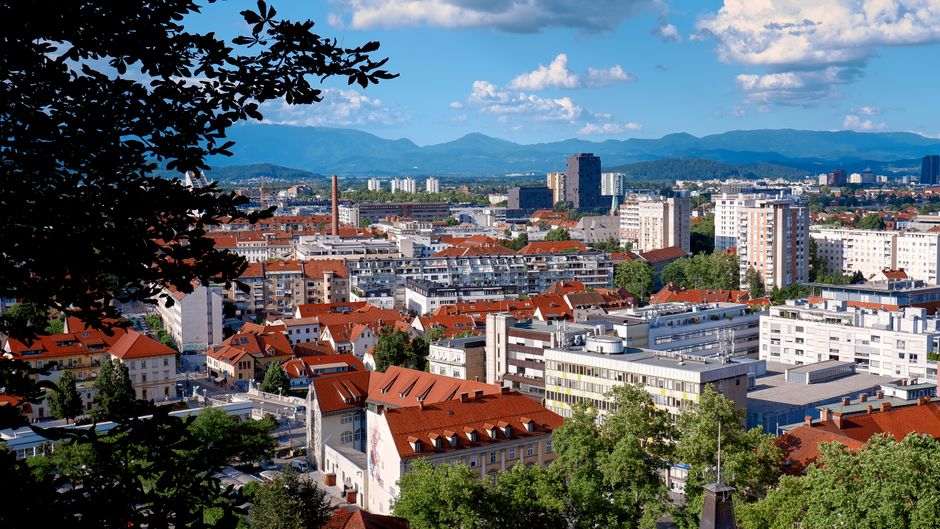
Ljubljana is a capital on a human scale: a green, car-free old town along the willow-lined Ljubljanica river, a castle on a wooded hill, and bridges, colonnades and squares designed by the architect Jože Plečnik. It is relaxed and walkable, with riverside cafés, a lively market, good museums and plenty of students. You come to stroll from Prešeren Square across the Triple Bridge, ride the funicular to the castle, browse the Central Market, see Plečnik’s buildings and spend evenings by the water. It is also the best base for day trips to Lake Bled, the Postojna and Škocjan caves and the coast. Give it two days for the city, three or four to add day trips.
Right now in Ljubljana
- Wed7–21°C44–70°F1 mm rain
- Thu12–18°C54–64°F19 mm rain
- Fri11–16°C52–60°F6 mm rain
Top tours in Ljubljana
See all tours for Ljubljana →
From local operators, with prices and reviews; you check availability and book on Viator, our partner. We may earn a commission at no extra cost to you. How we earn money
Ljubljana at a glance
- Best for: a relaxed city break, architecture, riverside cafés and food, festivals, and day trips to Bled, the caves and the Alps.
- How long: 2 days for the old town, castle, market and Plečnik; 3–4 days with day trips to Bled, Postojna or Škocjan.
- Best time: May, June and September for warm weather and outdoor life; July and August for the Ljubljana Festival; late November to early January for Festive December.
- Getting in: Ljubljana Airport is 26 km north, about 45–55 minutes by bus; trains and coaches arrive at the joint train and bus stations, a 10–15 minute walk from the old town.
- Getting around: walk; the centre is largely car-free. As of October 2026, city buses cost €1.50 a ride, and the Ljubljana Card costs from €41 for 24 hours.
- Before you go: Slovenia uses the euro and is in Schengen; as of October 2026 it runs temporary checks at its borders with Croatia and Hungary, so carry your passport or ID if you cross them.
Ljubljana, area by area
The Ljubljanica river curves through the centre below the castle hill. The medieval old town (Stari trg and Mestni trg) lies between the river and the hill; the 19th- and 20th-century centre spreads out on the left bank around Prešeren Square, Congress Square and the museums, with Tivoli Park to the west. Almost everything a visitor needs is within 15 minutes’ walk.
The old town and the riverbanks
Cobbled Mestni trg with the town hall and the Robba Fountain, Stari trg and Gornji trg with their pastel baroque houses, Ljubljana Cathedral, and the bridges and riverside terraces that link them to Prešeren Square. Best for: first visits, character hotels and apartments, evenings out.
Center, Congress Square and Tivoli
The left bank holds Congress Square, the University, the National and University Library, the National Gallery and the Museum of Modern Art, with Tivoli Park and its outdoor photo gallery a short walk away. Best for: museums, larger hotels and quick access to the train and bus stations.
Trnovo, Krakovo and Metelkova
South of the centre, Trnovo and Krakovo are quiet, village-like quarters with Plečnik’s house, the Trnovo bridge and riverside paths. East of the station, Metelkova is a former army barracks turned into an alternative arts and music zone, next to museums of ethnography and contemporary art. Best for: local life, walks and nightlife.
Top things to see in Ljubljana
Prices and hours below were checked on the official sites in October 2026. They change, so check before you go.
Prešeren Square and the Triple Bridge
Ljubljana’s heart is Prešeren Square, named after the 19th-century poet France Prešeren, whose statue faces a window with a bust of Julija, the woman he loved from afar. The salmon-pink Franciscan Church of the Annunciation closes the square. Plečnik added two footbridges either side of the old stone bridge in the 1930s to create the Triple Bridge, the city’s emblem. From here, walk along the river to the Butchers’ Bridge, hung with love padlocks, and the Dragon Bridge, guarded by four copper dragons, the symbol of the city.
Ljubljana Castle and the funicular
The castle on the hill above the old town has medieval roots but mostly dates from the 15th and 16th centuries. Inside are a permanent exhibition on Slovenian history, the Gothic chapel of St George, a puppetry museum, the Penitentiary (the old castle prison) and the Outlook Tower, with views over the red roofs to the Alps on clear days. Walk up through the woods in 15–20 minutes, or ride the glass funicular from Krekov trg in about a minute. As of October 2026, a castle ticket with the funicular costs €19 for adults and €13.50 for children aged 7 to 18, students and seniors (€46 for a family); the castle ticket alone is €15. The castle is open 9:00–18:00 from October to April and 9:00–20:00 from May to September, and the funicular runs until 19:00 and 22:00 respectively; the courtyard is free to enter. Last tickets are sold an hour before closing.
The Central Market and Plečnik’s colonnades
Between the cathedral and the river, the open-air Central Market sells fruit, vegetables, flowers, cheese and honey from Monday to Saturday mornings, with a covered fish market under Plečnik’s long riverside colonnades. On Fridays from spring to autumn (weather permitting), the Open Kitchen street-food market fills the neighbouring Pogačar Square with cooks from all over Slovenia.
Plečnik’s Ljubljana
Jože Plečnik (1872–1957), who also worked in Vienna and Prague, remodelled his home city between the two world wars, adding bridges, embankments, squares, churches, parks and the monumental National and University Library (NUK), with its striking reading room. In 2021, these works were listed by UNESCO as “The works of Jože Plečnik in Ljubljana – Human Centred Urban Design”. The Plečnik House in Trnovo, where he lived and worked, can be seen on guided tours only (as of October 2026, €9 for adults, closed on Mondays; book ahead, as groups are small).
Museums and galleries
The National Gallery has Slovenian art from the Middle Ages to the early 20th century, including the impressionists; the National Museum shows the Vače situla, a decorated Iron Age bronze bucket; the City Museum displays the world’s oldest known wooden wheel with axle, about 5,000 years old, found in the nearby Ljubljana Marshes; and the Museum of Modern Art and the Metelkova galleries cover the 20th century and today. Most are closed on Mondays.
Tivoli Park and the Ljubljanica by boat
Tivoli is the city’s largest park, with Jakopič Promenade, a photo exhibition along its central path, Tivoli Mansion and forest paths up Rožnik hill. On the river, tourist boats run sightseeing cruises from several piers in the old town most of the year, taking about 45–60 minutes; as of October 2026 a standard cruise costs about €15 for adults, and one cruise is included in the Ljubljana Card.
Other sights
- Dragon Bridge
- Prešeren Square
Monuments
- Triple Bridge
Castles and forts
- Ljubljana Castle
Museums
- National Gallery of Slovenia
- Plečnik House
Parks and gardens
- Tivoli City Park
Food, cafés and evenings out
Ljubljana eats well. At lunchtime many restaurants serve a cheap daily menu (dnevno kosilo); try štruklji (rolled dumplings), kranjska klobasa sausage, jota stew, buckwheat dishes and, for dessert, prekmurska gibanica. Slovenian wines by the glass are good value in the bars along the river. The Open Kitchen on Fridays is the easiest way to taste the country in one place.
In the evening, the riverside terraces between the Triple Bridge and the Cobblers’ Bridge are the place for a drink. Metelkova has concerts and clubs, and the Ljubljana Festival brings opera, concerts and dance to the open-air Križanke theatre, another Plečnik design, in July and August.
Festive December 2026
From 27 November 2026 to 15 January 2027, Festive December fills the old town with a Christmas market along the river, food and mulled-wine stalls, free concerts in the squares and some of the most inventive Christmas lights in this part of Europe. Entry to all the events is free. The castle courtyard hosts its own events, and the city celebrates New Year’s Eve with concerts in several squares.
Activities and best months
- Boat tripsSightseeing cruises on the Ljubljanica leave from the Breg pier in the old town and last about 50 minutes (adults EUR 15.82, children 6-13 EUR 8.44); free with the Ljubljana Card.
- City sightseeingThe Ljubljana Card covers more than 30 attractions including Ljubljana Castle, a guided city tour, a river cruise and unlimited LPP city buses, for 24, 48 or 72 hours (adults EUR 41 / 49 / 54).
Day trips from Ljubljana
- Lake Bled: about 1 hour 15 minutes by bus, with frequent departures. Ride a pletna boat to the island (as of October 2026, €20 return plus €12 island entrance) and visit Bled Castle (€19). Add Lake Bohinj with a car or a tour.
- Postojna Cave and Predjama Castle: about an hour south-west by car, bus or train. As of October 2026, Postojna Cave costs €34.90 for adults, or €49.90 with Predjama Castle.
- Škocjan Caves: about 1 hour 15 minutes by car or by train to Divača and a short walk. The UNESCO-listed underground canyon costs €16–24 for adults depending on the month as of October 2026 (€18 in October).
- Piran and the coast: about 1 hour 30 minutes by car, 2 to 2.5 hours by bus. Long but doable as a day trip, better with a night.
- Velika Planina: about 45 minutes north by car or bus to Kamniška Bistrica, then a cable car to a plateau of herders’ huts. As of October 2026, the Ljubljana Card includes the cable car.
- Škofja Loka: a medieval town with a castle and painted houses, 30 minutes away by train or bus.
Nearby destinations
Getting to Ljubljana
By air. Ljubljana Jože Pučnik Airport (LJU) is 26 km north of the city. Regional buses run to the main bus station in about 45–55 minutes for a few euros, roughly hourly on weekdays and less often at weekends, and pre-booked shuttle vans take about 30 minutes. Many visitors fly instead to Venice, Trieste, Zagreb or Graz and continue by coach or train.
By train. Ljubljana station has direct trains to Maribor, Koper, Lesce-Bled and Jesenice, Zagreb, Villach and Vienna (via Graz or Villach). As of October 2026, a major rebuild of the station and works on the line to Jesenice mean replacement buses on many days, including mid- and late October and early November 2026, so check the Slovenian Railways (SŽ) website.
By bus. Domestic and international coaches leave from the bus station next to the train station, with links to Bled, Bohinj, Piran, Zagreb, Trieste, Venice, Vienna and many more.
By car. Ljubljana sits at the junction of the A1 and A2 motorways; you need an e-vignette (as of October 2026, €16 for 7 days). The old town is closed to cars: use a park-and-ride (P+R) on the edge of the city, where parking includes bus tickets, or a central garage.
Getting around Ljubljana and the Ljubljana Card
Walking is the best way to see the centre, and free electric carts called Kavalir carry people with limited mobility, parents and tired visitors around the car-free zone. City buses (LPP) reach Tivoli, the suburbs and the park-and-ride sites. As of October 2026, a ride costs €1.50: pay with a contactless bank card at the reader, or buy a rechargeable Urbana card (€2) at kiosks, tourist offices and Urbana machines. Only Urbana gives free transfers between buses within 90 minutes. The city’s bike-share system, BicikeLJ, has stations all over the centre.
The Ljubljana Card gives one entry to more than 30 sights and services, including the castle and funicular, a river cruise, a guided city tour, many museums and the Velika Planina cable car, plus unlimited city buses. As of October 2026, it costs €41 for 24 hours, €49 for 48 hours and €54 for 72 hours (€26, €31 and €35 for children aged 6 to 14). Buy it online as a QR code or at the tourist office. It pays off if you do the castle, a cruise and a couple of museums.
When to go and how long to stay
Ljubljana has warm summers with thunderstorms, cold winters with frequent morning fog, and autumn rain. The table uses the Slovenian Environment Agency’s (ARSO) official 1991–2020 averages for Ljubljana Bežigrad, in the north of the city.
| Season | Average daily high | Average night low | Rain per month | What it’s like |
|---|---|---|---|---|
| Winter (Dec–Feb) | 4–7 °C | −2 to −1 °C | 67–104 mm | Cold, often foggy, occasional snow; Festive December |
| Spring (Mar–May) | 12 °C rising to 22 °C | 2–11 °C | 83–114 mm | Blossom and café terraces reopening; changeable |
| Summer (Jun–Aug) | 26–28 °C | 14–16 °C | 122–125 mm | Warm to hot, with afternoon storms; festival season |
| Autumn (Sep–Nov) | 22 °C falling to 10 °C | 12 °C falling to 4 °C | 138–160 mm | Golden early autumn, then the wettest months |
Ljubljana gets about 1,370 mm of rain a year, falling on about 108 days. September and October are the wettest months by total, but rain often comes in heavy bursts with dry days between. Pack an umbrella whatever the season.
Ljubljana in 2 days
Day 1: Prešeren Square and the Triple Bridge, the Central Market (in the morning), the cathedral and the old town squares, then the funicular to the castle and sunset from the Outlook Tower, with dinner by the river. Day 2: Plečnik’s Ljubljana (the library, Congress Square, the Trnovo bridge and the Plečnik House tour), a river cruise, Tivoli Park and an evening in Metelkova.
Ljubljana in 4 days
Add a full day at Lake Bled (and Bohinj, if you have a car), and a day at the Postojna or Škocjan caves, combined with Predjama Castle or, with an early start, the coast at Piran.
Weather month by month
Where to stay in Ljubljana
- Old town and riverbanks: boutique hotels and apartments in historic houses; the most atmospheric, with lively evenings and limited car access.
- Center (left bank): larger hotels near Congress Square and Slovenska cesta, a few minutes from both the old town and the stations.
- Near the train and bus stations: practical, often cheaper, and handy for day trips by bus.
- Trnovo and Krakovo: quieter guesthouses and apartments in leafy streets, 10 minutes’ walk from the centre.
Prices rise in summer, during big conferences and over Festive December weekends. A tourist tax, among the highest in Slovenia at a few euros per adult per night, is added to hotel bills.
Practical tips for Ljubljana
- Go to the market early: it is at its best in the morning and closes around midday on Saturdays; it doesn’t run on Sundays.
- Plan for Mondays: most museums and the Plečnik House are closed; the castle, market and parks stay open.
- Check train works: as of October 2026, replacement buses often run from the new bus terminal next to the station; leave extra time.
- Use Urbana for transfers: paying by bank card on buses doesn’t include the 90-minute free transfer.
- Drink from the fountains: the tap water is excellent, and there are free drinking fountains around the centre.
What to pack for Ljubljana
Comfortable shoes for cobbles and the walk up to the castle, an umbrella or light waterproof (see our guide to rain jackets), light clothes and a hat for hot summer days, and a warm coat, scarf and gloves from November to March, when foggy mornings are cold. If you plan day trips to the Alps or caves, bring a warm layer (the caves stay at about 8–10 °C all year) and shoes with good grip. Slovenia uses type C and F plugs; see our guide to travel adapters.
What to pack
- City walking shoesLisbon and Porto are steep, with polished limestone cobbles that get slippery, so grippy soles matter.
- Day packs and anti-theft bagsA small zipped or anti-theft bag makes crowded trams and viewpoints less stressful.
- Dry bags and phone pouchesSpray soaks phones and cameras on open boats to the Algarve caves and on whale-watching trips.
- Fleeces and warm layersIt is cooler at sea than on land, especially on morning whale-watching trips.
- Rain jacketsA windproof, waterproof shell keeps you warm on open boats, where wind and spray cool you quickly.
- Reef-friendly sunscreenSun reflects off the water on cruises and cave tours.
- Travel adapters and convertersPortugal uses Type C and F sockets at 230 V, so most visitors from outside Europe need an adapter.
- Water shoesKayak and small-boat trips to the Algarve grottoes land on rock and wet sand.
Ljubljana travel FAQ
How many days do you need in Ljubljana?
Two days covers the old town, the castle, the market and Plečnik’s buildings at a relaxed pace. Three or four days lets you add day trips to Lake Bled and the Postojna or Škocjan caves.
How much does Ljubljana Castle cost?
As of October 2026, a castle ticket with the funicular costs €19 for adults and €13.50 for children, students and seniors; the castle ticket alone is €15. The courtyard is free, and you can walk up in 15–20 minutes.
Is the Ljubljana Card worth it?
Usually, if you do the castle, a river cruise and a museum or two. As of October 2026, it costs €41 for 24 hours, €49 for 48 hours and €54 for 72 hours, including city buses and the Velika Planina cable car.
How do I get from Ljubljana Airport to the city?
Regional buses run to the main bus station in about 45–55 minutes for a few euros, and pre-booked shuttle vans take about 30 minutes. A taxi is quickest but much more expensive.
How do I pay for buses in Ljubljana?
As of October 2026, a ride costs €1.50. Tap a contactless bank card on the reader, or use the rechargeable Urbana card, which also gives free transfers within 90 minutes. Drivers don’t sell tickets for cash.
Can you do Lake Bled as a day trip from Ljubljana?
Yes. Buses take about 1 hour 15 minutes and run frequently. Leave early, especially in summer, to reach the island and castle before the crowds.
When is the Ljubljana Christmas market in 2026?
Festive December runs from 27 November 2026 to 15 January 2027, with a market along the river, lights and free concerts. Entry is free.
Is Ljubljana walkable?
Very. The centre is largely car-free, and the main sights are within 15 minutes’ walk of Prešeren Square. Free electric Kavalir carts help people with limited mobility.
When is the best time to visit Ljubljana?
May, June and September for warm weather and outdoor café life; July and August for the Ljubljana Festival; late November to early January for Festive December.
Plan your trip
Partner links: TravelerCenter may earn a commission if you book, at no extra cost to you.
🇸🇮 Useful Slovenian phrases for Ljubljana
All 38 Slovenian phrases: restaurant, hotel, emergencies, romance (printable) →
Sources · last reviewed 4 October 2026
Researched and last reviewed on 4 October 2026. Castle tickets and hours: Ljubljana Castle (ljubljanskigrad.si); the Ljubljana Card and Festive December: Visit Ljubljana; city buses: LPP; the Plečnik House: Museum and Galleries of Ljubljana (MGML); Postojna, Škocjan and Bled prices: the cave operators, Bled Island, the Municipality of Bled and Bled Castle; climate: ARSO’s official 1991–2020 averages for Ljubljana Bežigrad. River cruise prices, airport bus details, railway works and the tourist tax come partly from secondary sources and are flagged for checking. Prices, timetables and rules change, so check the official links before you go. For a neighbouring capital, see our Zagreb guide.
Also: visitljubljana.com · ARSO normals 1991–2020, Ljubljana-Bežigrad (climate)
Data: Weather: MET Norway (CC BY 4.0) · Air quality: OpenAQ · Rates: ECB · Costs: World Bank ICP and price levels · © OpenStreetMap contributors (ODBL) · Wikidata (CC0)