Incheon, on the Yellow Sea west of Seoul, is where most visitors first set foot in Korea, but South Korea’s third-largest city is much more than its airport. This is where Korea opened to the world in 1883: the old port has Korea’s only Chinatown, the birthplace of jajangmyeon noodles, streets of 19th-century trading houses and a fairy-tale mural village, while Wolmido island has seaside promenades and Songdo, a brand-new city built on reclaimed land, has a waterfront park among glass towers. Offshore, more than a hundred islands, from the beaches of Yeongjong and Muuido to the dolmens and temples of Ganghwa, are reached by bridge or ferry. Incheon is easy to combine with Seoul, less than an hour away by subway, and it makes a handy first or last stop near the airport. Spring and fall are the best seasons; summers are hot and rainy, and winters cold.
Right now in Incheon
- Wed 11–22°C 52–72°F Clear
- Thu 12–24°C 53–74°F Clear
- Fri 13–25°C 56–77°F Cloudy
- Fri 9 Oct Hangul Day (한글날)
Weather: MET Norway (CC BY 4.0) · Sea temperature: NOAA CoastWatch · Rates: ECB · Holidays: Nager.Date
Top tours in Incheon
See all tours for Incheon →
From local operators, with prices and reviews; you check availability and book on Viator, our partner. We may earn a commission at no extra cost to you. How we earn money
Incheon at a glance
- Best for: Chinatown and the open-port history, seafood, Songdo’s modern skyline, island beaches, layovers and a first or last night near the airport.
- How long: 1–2 days for the city; 3 or more with Ganghwa and the islands.
- Best time: April to June and September to November, with highs of about 16–26 °C (61–79 °F).
- Getting there: Incheon International Airport is on Yeongjong Island, about 40 minutes from the old port by car; Seoul is about an hour away by subway line 1.
- Getting around: two Incheon subway lines, Seoul’s line 1 and the Suin-Bundang line, buses and taxis; pay with a T-money card.
- Good to know: since July 1, 2026, Incheon has new district names: the airport is in Yeongjong-gu, and Chinatown and the old port are in Jemulpo-gu.
- Before you go: the K-ETA (and the exemption for 22 countries until December 31, 2026), the e-Arrival card, money and general safety are in our South Korea travel guide; see also our Seoul guide.
Incheon’s areas and where to stay
Incheon spreads along the coast southwest of Seoul, with the old port and Wolmido facing the sea, Songdo on reclaimed land to the south, and the islands of Yeongjong (the airport), Ganghwa and dozens more offshore. In a reorganization that took effect on July 1, 2026, the city’s districts were redrawn; according to the Incheon city government, Incheon now has nine districts (Yeongjong-gu, Jemulpo-gu, Michuhol-gu, Yeonsu-gu, Namdong-gu, Bupyeong-gu, Gyeyang-gu, Seohae-gu and Geomdan-gu) and two counties, Ganghwa and Ongjin.
The old port: Chinatown and Wolmido
The historic heart around Incheon Station, the terminus of Seoul’s line 1: Chinatown, the Open Port Cultural District, Jayu (Freedom) Park and Songwol-dong’s fairy-tale village, with Wolmido’s seaside promenade, amusement park and cafés a short ride away. Atmospheric by day, quiet at night, with a few hotels and guesthouses.
Songdo International Business District
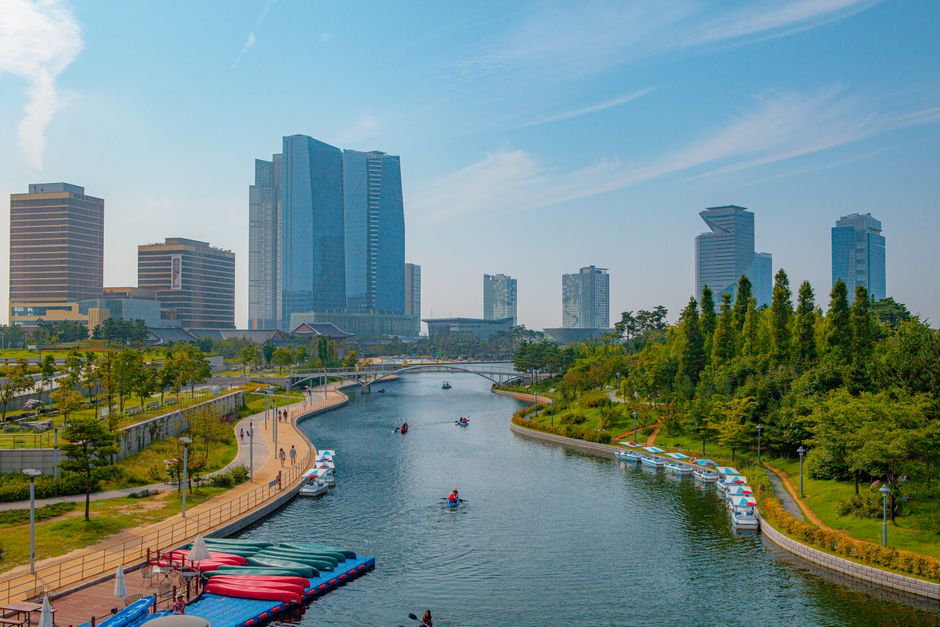
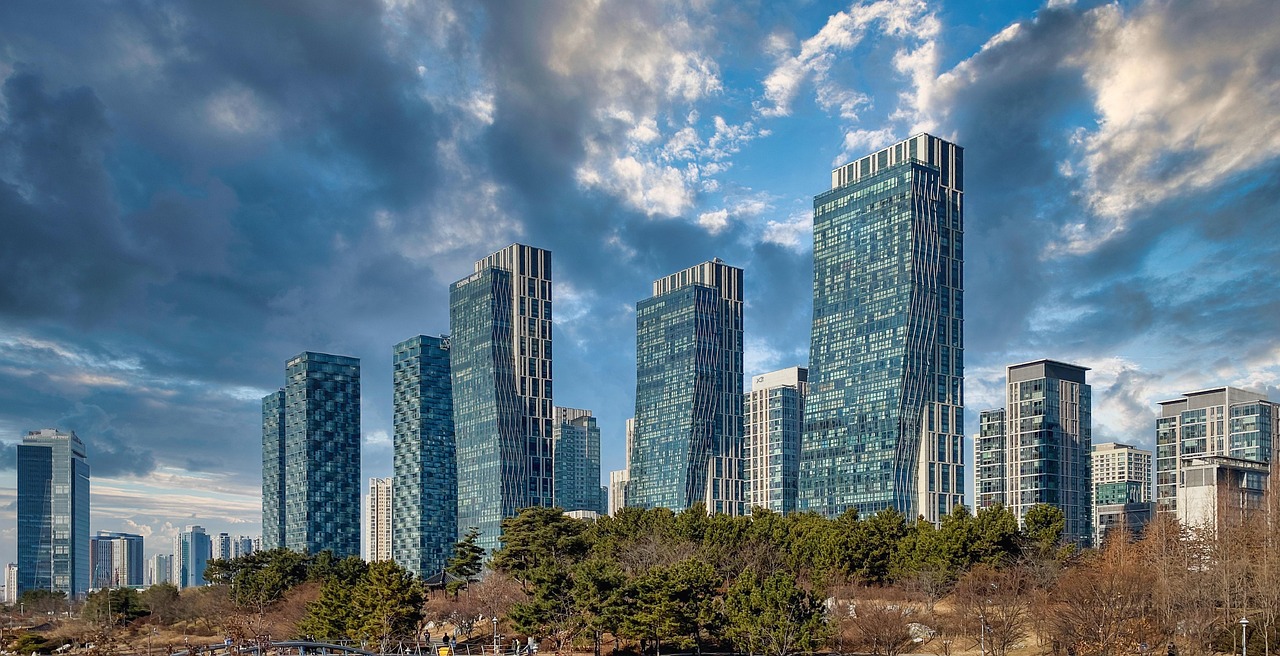
A planned city of skyscrapers, canals and parks built on reclaimed land since the 2000s, home to Central Park, the convention center, international universities and the city’s best hotels. Modern, green and quiet in the evening; on Incheon subway line 1.
Yeongjong Island and the airport
The airport island has resort hotels and casinos (Paradise City and Inspire), airport hotels, and beaches such as Eurwangni and Wangsan, with Muuido across a bridge. Ideal for a first or last night, or for a long layover.
Bupyeong and Guwol-dong
The city’s commercial and shopping centers, with a huge underground shopping mall at Bupyeong, the Incheon Bus Terminal and Lotte and Shinsegae stores. Practical, with business hotels and good transportation.
Top things to see in Incheon
Chinatown and Jajangmyeon Museum
Founded in 1884 after Incheon’s port opened, Korea’s only official Chinatown climbs the hill from Incheon Station through a red gate, with Chinese restaurants, bakeries and souvenir shops. It is the birthplace of jajangmyeon, noodles in black bean sauce, now one of Korea’s favorite dishes; the Jajangmyeon Museum tells its story in the building of a famous early restaurant. The steps and murals of the Three Kingdoms wall lead up to Jayu Park.
The Open Port Cultural District
Next to Chinatown, the former Japanese concession preserves banks, trading offices and warehouses from the late 19th and early 20th centuries, now museums, cafés and galleries. The Korea Tourism Organization (KTO) lists it with Chinatown and the Songwol-dong Fairy Tale Village, a lane of houses painted with storybook characters, among Korea’s 100 must-visit tourist spots. The Incheon Open Port Museum and the Modern Architecture Museum explain the era.
Jayu Park
Korea’s first Western-style park, laid out in 1888 on the hill above the port, with a statue of General Douglas MacArthur, who led the 1950 Incheon landing in the Korean War, and views over the harbor and Incheon Bridge. It is lovely with cherry blossoms in April.
Wolmido
A former island now joined to the mainland, with a seafront promenade, raw fish restaurants, an amusement park with old-fashioned rides, ferries to nearby islands, and the Wolmi Sea Train, an elevated monorail that circles the island with views of the port. Walk up Wolmi Park’s hill for the view, and stay for the sunset over the Yellow Sea.
Songdo Central Park
A 40-hectare (100-acre) park with a seawater canal at the heart of Songdo, surrounded by towers. Rent a boat or a kayak, take a water taxi, or walk to the Tri-bowl cultural center and the observatory of the G-Tower for views over the city and the sea.
More classic sights
- Incheon Landing Operation Memorial Hall: the story of the 1950 landing that changed the course of the Korean War.
- Sorae Ecological Park and Sorae Port: salt pans, wetlands and windmills, and a lively fish market.
- Sinpo International Market: a covered market famous for dakgangjeong (sweet and spicy fried chicken) and dumplings.
- Incheon Grand Park: the city’s largest park, with a lake, trails and an arboretum, best in spring and fall.
- Incheon Bridge: at about 21 km (13 miles), one of Korea’s longest bridges, linking Songdo with the airport; a spectacular drive.
Parks and gardens
- Incheon Grand Park
- Incheon Jayu Park
- Sorae Wetland Ecology Park
Museums
- Jajangmyeon Museum (Gonghwachun)
Nature
- Wolmido
Other sights
- Incheon Bridge
Other things to do in Incheon
Food and drink
Incheon’s signature dishes are jajangmyeon and Chinese-Korean dishes such as jjamppong (spicy seafood noodle soup) and tangsuyuk (sweet and sour pork) in Chinatown; dakgangjeong from Sinpo Market; jjolmyeon (chewy cold noodles), which were invented here; and seafood, from raw fish at Wolmido and Sorae Port to crab and the hearty bowls of kalguksu (noodle soup with clams) on the islands. Songdo has international restaurants and craft beer bars.
Islands and beaches
Incheon’s islands are an easy escape. On Yeongjong Island, near the airport, Eurwangni and Wangsan beaches have sunsets and seafood restaurants, and the island of Muuido, linked by a bridge, has walking trails and Hanagae beach. Ferries from the Incheon Coastal Passenger Terminal and Yeongjong’s ports serve the islands of Ongjin County, such as Deokjeokdo, with pine-fringed beaches, and remote Baengnyeongdo, close to North Korea. Beaches have lifeguards only in July and August. See our beaches and boat trips guides.
Ganghwa Island
North of the city, Ganghwa, linked to the mainland by bridges, has prehistoric dolmens that form part of a UNESCO World Heritage site, the ancient Jeondeungsa temple inside a mountain fortress, Manisan’s mountain altar, and the mudflats of the Han River estuary. From Ganghwa, a bridge leads to Gyodongdo, an island near the North Korean border with a 1960s-style market street, listed by the KTO among its 100 must-visit tourist spots. Bring your passport, as there may be a military checkpoint on the way.
Festivals
The Incheon Pentaport Rock Festival, one of Korea’s biggest music festivals, is held in Songdo in early August; Chinatown celebrates Lunar New Year; and Jayu Park and Incheon Grand Park fill with cherry blossoms in April.
Activities and best months
- City sightseeingThe KTO lists Incheon's Open Port Cultural District, Chinatown and Songwol-dong Fairy Tale Village among its 100 must-visit spots. · source
Day trips from Incheon
- Seoul: the palaces, markets and neighborhoods of the capital, about an hour by subway or AREX. See our Seoul guide.
- Ganghwa and Gyodongdo: dolmens, temples and the border island, about 1.5 hours by bus.
- Yeongjong and Muuido: beaches, sunsets and island walks near the airport.
- Suwon: the UNESCO-listed Hwaseong Fortress, about an hour by the Suin-Bundang line.
- The DMZ: organized tours from Seoul or Incheon visit the observatories and tunnels near Paju; bring your passport. Tours to Panmunjom have been suspended since July 2023.
Nearby destinations
- Seoul32 km
- Seoraksan National Park172 km
- Jeonju188 km
- Gangneung201 km
- Gyeongju291 km
Getting there and getting around
Incheon International Airport
Incheon International Airport, on Yeongjong Island, is Korea’s main gateway. According to the KTO, it ranked first in the world for international passenger traffic in the first half of 2026, with about 38.4 million passengers, and it links 183 cities in 53 countries. Korean Air, Asiana and their alliance partners use Terminal 2; most other airlines use Terminal 1. A free shuttle bus (about 15 minutes) and the AREX (about 5 minutes) link the terminals. Since May 2026, according to the KTO, Jeju Air has also flown a limited direct domestic route from Terminal 1 to Jeju.
The AREX Airport Railroad runs from both terminals to Seoul. The express train goes nonstop to Seoul Station in 43 minutes from Terminal 1 (51 minutes from Terminal 2) for 13,000 won (about US$9.50); the all-stop train calls at Unseo, Yeongjong, Cheongna International City and Geomam, where you can change for Incheon subway line 2, and continues to Gimpo Airport and Seoul. To reach the old port or Songdo, take an airport bus or a taxi across the Incheon Bridge or the Yeongjong Bridge (about 40 minutes).
Long layovers and transit tours
The airport runs free transit tours of less than five hours to Seoul, Incheon and the DMZ area for transit passengers, plus short cultural programs inside the terminals; according to the KTO, you can join without a visa if you are a citizen of a visa-waiver country (a K-ETA may still be required, depending on your nationality), hold certain visas, or have an onward ticket within 72 hours. Book through the airport’s website and check in at the transit tour desk 30 minutes before departure. For longer stays, the airport’s K-Stopover packages combine hotels, transportation and tours.
By subway and train from Seoul
Seoul’s subway line 1 runs to Incheon Station (for Chinatown and the old port) in about an hour from Seoul Station; express trains are faster. The Suin-Bundang line links Incheon with Suwon and southern Seoul, and Incheon’s two subway lines serve Songdo, Bupyeong, Guwol-dong and Geomam. KTX trains do not serve Incheon; use Seoul Station or Gwangmyeong.
By ferry
Ferries to the islands leave from the Incheon Coastal Passenger Terminal, about 35 minutes by bus from Jemulpo Station; bring your passport or ID. According to the KTO, an overnight ferry also sails from here to Jeju on Mondays, Wednesdays and Fridays at 7 p.m., arriving the next morning at 9:30. International ferries to Chinese ports leave from a separate terminal, the Incheon International Ferry Terminal in Songdo.
Getting around
Use the subway and buses with a T-money card, and taxis for the islands and Wolmido; the base fare is 4,800 won (about US$3.50). Book taxis with k.ride or Uber, and use Naver Map or Kakao Map for directions.
When to go and how long to stay
Incheon’s climate is close to Seoul’s, slightly milder in summer thanks to the sea breeze. The table uses the 1991–2020 normals of the Korea Meteorological Administration (KMA) for its Incheon station, as submitted to the World Meteorological Organization: average daily highs and lows, total rain and days with at least 1 mm of rain.
| Month | Average high / low | Rain (days with 1 mm or more) | What to expect |
|---|---|---|---|
| January | 2 °C (36 °F) / −5 °C (23 °F) | 16 mm (0.6 in), 3 days | Freezing nights and cold sea winds |
| February | 5 °C (41 °F) / −3 °C (27 °F) | 25 mm (1.0 in), 3 days | Cold and dry; Lunar New Year in Chinatown some years |
| March | 10 °C (50 °F) / 2 °C (36 °F) | 34 mm (1.3 in), 4 days | Cool; fine-dust days possible |
| April | 16 °C (61 °F) / 8 °C (46 °F) | 64 mm (2.5 in), 6 days | Cherry blossoms from early in the month at Jayu Park |
| May | 22 °C (71 °F) / 13 °C (56 °F) | 96 mm (3.8 in), 6 days | Mild and sunny; island walks |
| June | 26 °C (78 °F) / 18 °C (64 °F) | 106 mm (4.2 in), 7 days | Warm; jangma usually starts around June 25 |
| July | 28 °C (82 °F) / 22 °C (71 °F) | 338 mm (13.3 in), 12 days | The wettest month; beaches open |
| August | 29 °C (85 °F) / 23 °C (73 °F) | 275 mm (10.8 in), 10 days | Hot and humid; Pentaport Rock Festival |
| September | 26 °C (78 °F) / 18 °C (65 °F) | 130 mm (5.1 in), 6 days | Clearing, pleasant evenings |
| October | 20 °C (68 °F) / 11 °C (53 °F) | 51 mm (2.0 in), 4 days | Clear and cool; fall colors from late in the month |
| November | 12 °C (54 °F) / 4 °C (40 °F) | 51 mm (2.0 in), 6 days | Cool; fall colors early in the month |
| December | 4 °C (40 °F) / −3 °C (27 °F) | 22 mm (0.9 in), 4 days | Cold and dry; sunset festivals at year’s end |
Incheon gets about 1,210 mm (48 in) of rain a year, more than half of it in July and August. According to the KMA, the jangma monsoon normally reaches the central region around June 25 and lasts about a month; typhoons are possible from July to September and can cancel island ferries. The Yellow Sea has a large tidal range, so some beaches turn into mudflats at low tide.
Weather month by month
Averages from KMA normals 1991–2020, Incheon · Last reviewed 5 Oct 2026
Cherry blossoms: Incheon blooms a few days after Seoul. In 2026, the KTO’s forecast (from the private forecaster Weather i) put Incheon’s first cherry blossoms on April 7, the latest of the cities on its list.
1 day in Incheon
Chinatown and the Jajangmyeon Museum in the morning, the Open Port Cultural District and Jayu Park, lunch on jajangmyeon, then Songwol-dong’s fairy-tale village and Wolmido for the sunset and a seafood dinner.
2 to 3 days
Add Songdo’s Central Park and Sinpo Market, and a day on Ganghwa and Gyodongdo or the beaches of Yeongjong and Muuido.
Where to stay in Incheon
- Yeongjong Island: airport and resort hotels, best for early flights and layovers.
- Songdo: modern international hotels, quiet and green.
- The old port and Wolmido: small hotels and guesthouses near Chinatown.
- Bupyeong and Guwol-dong: business hotels with good transportation.
What a trip to Incheon costs
Prices are approximate, for October 2026, converted at about 1,365 won to the US dollar.
| Item | Typical cost |
|---|---|
| Subway ride with T-money | from about 1,550 won (about US$1.10) |
| AREX express, airport to Seoul Station | 13,000 won (about US$9.50) |
| Taxi, base fare | 4,800 won (about US$3.50) |
| Jajangmyeon in Chinatown | 8,000–12,000 won (about US$5.90–9) |
| Dakgangjeong at Sinpo Market | 20,000–30,000 won (about US$15–22) |
| Seafood dinner on Wolmido, per person | 30,000–60,000 won (about US$22–44) |
| Airport hotel double, per night | 100,000–200,000 won (about US$73–147) |
| Songdo hotel double, per night | 150,000–280,000 won (about US$110–205) |
Practical tips for Incheon
- Check your terminal: Terminal 1 and Terminal 2 are far apart; allow time for the shuttle.
- Tides: check tide times before visiting the island beaches and mudflats.
- Ferries: bring your passport, and book island ferries ahead on summer weekends.
- Combine with Seoul: stay near Incheon Station or Songdo if you prefer quieter evenings, and ride into Seoul.
- Help in English: call the 1330 Korea Travel Helpline.
Safety
Incheon is safe for visitors. The main risks are on the coast: the Yellow Sea’s tides rise quickly over the mudflats, so don’t walk far out at low tide, and follow the warning signs on island beaches. Typhoons and fog can cancel ferries; leave a margin before your flight home if you visit the islands. Near the border, on Ganghwa, Gyodongdo and the northern islands, there are military areas: carry your passport and follow signs and soldiers’ instructions. In an emergency, call 112 for the police or 119 for an ambulance or fire.
What to pack for Incheon
Comfortable shoes for Chinatown’s slopes, a windproof jacket for the sea breeze, water shoes for the island beaches, and warm layers from November to March. Korea uses 220 V and round two-pin plugs.
What to pack
- City walking shoesLisbon and Porto are steep, with polished limestone cobbles that get slippery, so grippy soles matter.
- Day packs and anti-theft bagsA small zipped or anti-theft bag makes crowded trams and viewpoints less stressful.
- Rain jacketsFrom October to April Porto and Lisbon see rain on roughly a third of days.
- Travel adapters and convertersPortugal uses Type C and F sockets at 230 V, so most visitors from outside Europe need an adapter.
Incheon travel FAQ
Is Incheon worth visiting?
Yes, for Chinatown, the open-port district, Songdo and the islands, especially if you have a day before or after your flight.
How do I get from Incheon Airport to Chinatown?
By airport bus or taxi (about 40 minutes), or by AREX to Geomam and the subway, changing to Seoul’s line 1 for Incheon Station.
How long does it take from Incheon to Seoul?
About an hour by subway line 1 from Incheon Station to Seoul Station; the AREX express links the airport and Seoul Station in 43 minutes.
Can I leave the airport during a layover?
Yes. Incheon Airport runs free transit tours of under five hours for eligible transit passengers, and K-Stopover packages for longer layovers.
What is Incheon famous for?
Korea’s main airport, the only official Chinatown, the birthplace of jajangmyeon, the 1950 Incheon landing, Songdo and its islands.
Which terminal does my airline use at Incheon?
Korean Air, Asiana and their partners use Terminal 2; most other airlines use Terminal 1. Check your ticket.
Are there beaches near Incheon Airport?
Yes. Eurwangni and Wangsan beaches and Muuido are on or near Yeongjong Island, a short taxi ride from the terminals.
When do the cherry blossoms bloom in Incheon?
A few days after Seoul; in 2026, the forecast put the first blossoms on April 7.
Can I take a ferry from Incheon to Jeju?
Yes. An overnight ferry leaves the Incheon Coastal Passenger Terminal on Mondays, Wednesdays and Fridays at 7 p.m.
What should I eat in Incheon?
Jajangmyeon and jjamppong in Chinatown, dakgangjeong from Sinpo Market, jjolmyeon cold noodles and seafood on Wolmido and the islands.
Sources
- © OpenStreetMap contributors · ODbL · fetched 5 Oct 2026
- Wikidata · CC0 · fetched 5 Oct 2026
Sources and last review
Researched and last reviewed on 4 October 2026. Incheon’s districts after July 1, 2026: the Incheon city government; the airport’s 2026 ranking and routes, the Incheon–Jeju route, transit tours and K-Stopover, airport transportation, the Incheon–Jeju ferry, the Open Port, Chinatown, Songwol-dong and Gyodongdo listings, taxi fares and the 2026 cherry blossom forecast (from Weather i): the Korea Tourism Organization (KTO); AREX fares and times: the Airport Railroad; Panmunjom tours: the official Panmunjom tour website; climate normals and jangma dates: the Korea Meteorological Administration (KMA), via the World Meteorological Organization; exchange rate: the US Federal Reserve. Which old districts went into which new ones, journey times, park and bridge sizes, festival dates, ferry details and typical prices are general references or estimates, flagged for checking. Prices and hours change, so check the official sites before you go. For entry rules, money and general safety, see our South Korea travel guide.
Plan your trip
Partner links: TravelerCenter may earn a commission if you book, at no extra cost to you.
🇰🇷 Useful Korean phrases for Incheon
All 38 Korean phrases: restaurant, hotel, emergencies, romance (printable) →