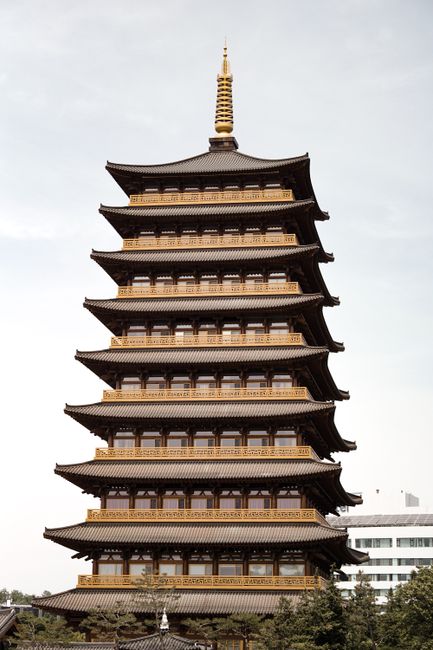
Gyeongju was the capital of the Silla kingdom for nearly a thousand years, from 57 BC to AD 935, and the whole city feels like an open-air museum: grassy royal burial mounds rise between the houses, temple foundations and pagodas dot the rice fields, and the forested slopes of Namsan are scattered with Buddhas carved into the rock. Its treasures include Bulguksa temple and the Seokguram grotto, the royal tombs of Daereungwon, the illuminated pavilions of Donggung Palace and Wolji Pond, and Asia’s oldest surviving observatory, Cheomseongdae; together they make up three UNESCO World Heritage sites, plus the Yangdong folk village and Oksan Seowon academy nearby. Gyeongju also hosted the APEC summit in 2025. It is compact, easy to explore by bike and an easy trip from Busan, and since May 2023 Bulguksa and Seokguram have been free to visit. Spring cherry blossoms and fall colors are the highlights; summers are hot.
Right now in Gyeongju
- Thu13–25°C56–77°FClear
- Fri13–26°C55–79°FPartly cloudy
- Sat19–23°C65–73°F8 mm rain
- Fri 9 Oct Hangul Day (한글날)
Top tours in Gyeongju
See all tours for Gyeongju →
From local operators, with prices and reviews; you check availability and book on Viator, our partner. We may earn a commission at no extra cost to you. How we earn money
Gyeongju at a glance
- Best for: Silla history, royal tombs, temples and Buddhist art, cycling between sights, cherry blossoms, night views and hanok stays.
- How long: 2 days for the main sights; 3 to add Namsan, Yangdong village and the coast.
- Best time: late March to May and October to mid-November, with highs of about 20–26 °C (67–79 °F) in spring and fall.
- Getting there: about 2 hours from Seoul and about 30 minutes from Busan by KTX to Singyeongju Station; KTX-Eum trains on the east coast stop at Gyeongju Station.
- Getting around: city buses (10 and 11 for Bulguksa, 12 for Seokguram), bicycles in the flat center, taxis and walking.
- Fees to know: Bulguksa and Seokguram are free; city-run sites such as Cheonmachong and Donggung Palace and Wolji Pond cost 3,000 won (about US$2.20).
- Before you go: the K-ETA (and the exemption for 22 countries until December 31, 2026), the e-Arrival card, money and general safety are in our South Korea travel guide; see also our Busan guide.
Gyeongju’s areas and where to stay
The historic core lies in a flat valley ringed by low mountains, with the city center, the tomb parks and the palace sites all within walking or cycling distance. Bulguksa and Seokguram are about 16 km (10 miles) southeast on the slopes of Tohamsan, and the Bomun Lake resort is about 6 km (4 miles) east.
The historic center and Hwangnidan-gil
Daereungwon’s tombs, Cheomseongdae, Donggung Palace and Wolji Pond, Gyochon hanok village and Woljeonggyo Bridge are all here, with the cafés, bakeries and restaurants of Hwangnidan-gil, a street of renovated hanok houses. The best base for walking and cycling, with hanok guesthouses and small hotels.
Bomun Lake Resort
A lakeside resort of big hotels, a golf course and the Gyeongju World theme park, lined with cherry trees around the lake. Comfortable and quiet, but you need buses or taxis to reach the center.
Bulguksa area
Guesthouses and hotels near the temple, convenient for an early start at Bulguksa and Seokguram but far from restaurants and nightlife.
Around the stations
Singyeongju Station, for KTX trains, is about 15 minutes by bus or taxi west of the center; Gyeongju Station, for the KTX-Eum and other trains on the east coast lines, is on the city’s eastern edge. The intercity and express bus terminals are in the center.
Top things to see in Gyeongju
According to the Gyeongju city government, the city-run historic sites are free for visitors aged 6 and under or 65 and over.
Bulguksa Temple
Bulguksa, founded in 528 and rebuilt in 751, is the masterpiece of Silla Buddhist architecture, with stone staircases and bridges leading to its halls and two famous stone pagodas, Dabotap and Seokgatap. Together with Seokguram it was one of Korea’s first UNESCO World Heritage sites. According to the temple, admission has been free since May 4, 2023, under the revised cultural heritage law. It opens daily at 9 a.m., with last entry at 6 p.m. from March to September, 5:30 p.m. in February and October, and 5 p.m. from November to January; parking costs 2,000 won. The trees around the temple turn brilliant red in early November.
Seokguram Grotto
High on Tohamsan above Bulguksa, an artificial granite grotto built in the 8th century shelters a serene seated Buddha facing the East Sea, one of the finest Buddhist sculptures in East Asia; you view it through a glass screen, and photography inside is not allowed. Like Bulguksa, it is free, with the same hours, and access may be closed during heavy rain, typhoon and snow warnings. Bus 12 runs up from Bulguksa, or you can hike the 3.2 km (2-mile) forest trail; according to the Korea National Park Service, that trail is among those normally closed in the fall fire-prevention season, from November 15 to December 15.
Daereungwon Tomb Complex and Cheonmachong
In the city center, 23 grassy mounds cover the tombs of Silla kings and queens. Entry to the Daereungwon park is free; inside, you can enter Cheonmachong, the “Heavenly Horse Tomb,” where a famous painting of a flying horse and a gold crown were found, for 3,000 won (about US$2.20), according to the city. More tombs line the streets nearby, and the magnolia-framed mound of tomb 98 (Hwangnamdaechong) is one of the city’s best photo spots.
Cheomseongdae and the Wolseong area
Cheomseongdae, a bottle-shaped stone tower built in the 7th century, is the oldest surviving astronomical observatory in East Asia; it is free and lit up at night. Beyond it, fields of flowers in season stretch to the site of Wolseong, the royal palace fortress, where excavations continue, and to the Gyerim forest.
Donggung Palace and Wolji Pond
The site of a Silla crown prince’s palace, with reconstructed pavilions reflected in a lake, is Gyeongju’s best night view. The city charges 3,000 won (about US$2.20); it is busiest from sunset, and the city warns that you may not get in if you arrive close to the last entry time.
Gyeongju National Museum
Silla’s gold crowns, belts and earrings, Buddhist sculpture and the great Divine Bell of King Seongdeok are displayed here, and entry is free (except special exhibitions).
Namsan
The mountain south of the city, part of Gyeongju National Park, is covered with more than a hundred temple sites and Buddhas carved into the rock. The Samneung valley trail, past the tombs of three kings and several rock carvings, climbs to the summit ridge in about 2 hours. According to the Korea National Park Service, you may start Namsan’s trails from 4 a.m. to 4 p.m. from April to October and from 5 a.m. to 3 p.m. from November to March; some trails in the park have been closed for heritage maintenance work in 2026, so check the KNPS website. See our hiking guide.
More classic sights
- Woljeonggyo Bridge: a reconstructed covered Silla bridge over the river, lit up at night, next to Gyochon hanok village.
- Bunhwangsa: a temple with the oldest dated Silla stone pagoda, free.
- Hwangnyongsa site: the vast foundations of Silla’s greatest temple, with a history and culture center (3,000 won).
- Oreung and Poseokjeong: the tombs said to belong to Silla’s founder and a stone water channel from royal banquets, 2,000 won each.
- Golgulsa: a cave temple carved into a cliff, known for sunmudo, the Buddhist martial art.
Parks and gardens
- Daereungwon
- Donggung Palace and Wolji Pond
Monuments
- Bulguksa
- Cheomseongdae
Churches and cathedrals
- Bunhwangsa
- Seokguram
Museums
- Gyeongju National Museum
Other things to do in Gyeongju
Food and drink
Gyeongju is known for ssambap (a meal of rice with many leaf vegetables for wrapping and side dishes), served in restaurants near Daereungwon; Gyeongju bread (hwangnam-ppang), small pastries filled with red bean paste; and chalboribbang (barley pancakes). Gyeongju beef (hanu) and the local makgeolli and Gyodong beopju rice wine are worth trying. Hwangnidan-gil has the city’s trendiest cafés and restaurants.
Cycling
The center is flat and compact, with bike paths linking Daereungwon, Cheomseongdae, Wolseong, Donggung Palace and Wolji Pond, the museum and Bomun Lake. Rent a bike or an e-bike near the bus terminal or Daereungwon. See our cycling guide.
UNESCO villages and academies
Yangdong Folk Village, 16 km (10 miles) north, is a living village of 15th-century clan houses on a hillside, listed by UNESCO with Andong’s Hahoe; entry is 4,000 won (about US$2.90). Oksan Seowon, a Confucian academy in a valley nearby, is one of nine seowon on the UNESCO list.
Temple stays and festivals
Golgulsa and other temples offer temple stays with meditation and martial arts. The Silla Cultural Festival is held in the fall, and the cherry blossoms around Bomun Lake and Daereungwon draw crowds in early April.
Activities and best months
- City sightseeingBulguksa and Seokguram have been free since 4 May 2023 and open from 9:00; most of Gyeongju's Silla sites are free or 2,000-3,000 won (Cheonmachong and Donggung and Wolji Pond 3,000 won).
- HikingNamsan, in Gyeongju National Park, is open to walkers 4:00-16:00 from April to October and 5:00-15:00 from November to March.
Day trips from Gyeongju
- Busan: beaches, markets and temples, about 30 minutes by KTX or an hour by KTX-Eum. See our Busan guide.
- The East Sea coast: the underwater tomb of King Munmu, just off Bonggil beach, and Gampo’s harbor and coastal trail, about 45 minutes by bus.
- Pohang: Homigot’s sunrise sculpture and Guryongpo’s Japanese house street, on the KTX-Eum line.
- Ulsan: the Bangudae petroglyphs, added to the UNESCO list in 2025, and the Daewangam cliffs.
- Andong: the Hahoe Folk Village and mask dance, about 1.5 to 2 hours away.
Nearby destinations
Getting there and getting around
By train
KTX trains on the Gyeongbu high-speed line stop at Singyeongju Station, about 2 hours from Seoul Station and 30 minutes from Busan; SRT trains from Suseo stop there too. Buses 50, 60, 70 and 700 run to the center in about 20 minutes, and some continue to Bulguksa. Gyeongju Station, on the new east coast lines, is served by the KTX-Eum: according to the Korea Tourism Organization (KTO), since December 30, 2025 the Donghae Line KTX-Eum has linked Gangneung and Busan’s Bujeon Station, stopping at Pohang and Gyeongju, about 3 hours 50 minutes end to end.
By bus
Express and intercity buses link Gyeongju with Seoul (about 4 hours), Busan (about 1 hour from Nopo terminal) and Daegu. The terminals are next to each other in the center, a short walk from Daereungwon.
Getting around
City buses cover all the sights: buses 10 and 11 loop between the center and Bulguksa, and bus 12 climbs from Bulguksa to Seokguram. Pay with a T-money card. Taxis are plentiful; the base fare in North Gyeongsang is lower than in Seoul. In the center, walking and cycling are the best way to get around. Use Naver Map or Kakao Map for bus times.
When to go and how long to stay
Gyeongju lies inland, so it is hotter in summer and colder on winter nights than Busan. The table uses the 1991–2020 normals of the Korea Meteorological Administration (KMA) for its Gyeongju station, as submitted to the World Meteorological Organization: average daily highs and lows, total rain and days with at least 1 mm of rain.
| Month | Average high / low | Rain (days with 1 mm or more) | What to expect |
|---|---|---|---|
| January | 6 °C (43 °F) / −5 °C (24 °F) | 32 mm (1.3 in), 3 days | Cold nights, sunny days; quiet sights |
| February | 8 °C (47 °F) / −3 °C (26 °F) | 31 mm (1.2 in), 4 days | Cold; plum blossoms at the end of the month |
| March | 14 °C (58 °F) / 1 °C (34 °F) | 60 mm (2.4 in), 6 days | Cherry blossoms from the last days of the month |
| April | 20 °C (67 °F) / 6 °C (43 °F) | 96 mm (3.8 in), 8 days | Cherry blossoms around Bomun Lake early in the month; canola fields |
| May | 26 °C (78 °F) / 12 °C (53 °F) | 55 mm (2.2 in), 6 days | Warm and dry; peonies and green fields |
| June | 28 °C (82 °F) / 17 °C (63 °F) | 101 mm (4.0 in), 7 days | Hot; jangma rains usually start around June 23 |
| July | 31 °C (87 °F) / 21 °C (71 °F) | 190 mm (7.5 in), 10 days | Hot and wet; lotus flowers at the ponds |
| August | 31 °C (89 °F) / 22 °C (71 °F) | 192 mm (7.6 in), 10 days | The hottest month, above 31 °C (88 °F) |
| September | 26 °C (79 °F) / 16 °C (61 °F) | 194 mm (7.6 in), 9 days | Rainy early in the month; typhoons possible |
| October | 22 °C (71 °F) / 9 °C (49 °F) | 108 mm (4.3 in), 5 days | Clear and comfortable; Silla Cultural Festival |
| November | 15 °C (60 °F) / 3 °C (37 °F) | 38 mm (1.5 in), 4 days | Peak fall colors at Bulguksa and the tombs early in the month |
| December | 8 °C (46 °F) / −3 °C (26 °F) | 24 mm (1.0 in), 4 days | Cold and dry; fewest visitors |
Gyeongju gets about 1,120 mm (44 in) of rain a year, less than the coast, with the most in July, August and September. According to the KMA, the jangma monsoon normally reaches the southern regions around June 23 and lasts about a month; typhoons are possible from July to September. Summer afternoons are hot and humid, so visit the outdoor sites early or after dark.
Weather month by month
Cherry blossoms and fall colors: in 2026, the KTO’s forecast (from the private forecaster Weather i) put Gyeongju’s first cherry blossoms on March 28, with full bloom about a week later; Bomun Lake, Daereungwon and the road to Bulguksa are lined with cherry trees. In the fall, the KTO lists Bulguksa among the country’s best spots for colors, which usually peak in early November.
2 days in Gyeongju
Day one, Bulguksa at opening time and Seokguram, then lunch near the temple; in the afternoon, Daereungwon and Cheonmachong, Cheomseongdae and Wolseong, and Donggung Palace and Wolji Pond at dusk, with dinner on Hwangnidan-gil. Day two, the Gyeongju National Museum, a bike ride to Bunhwangsa and the Hwangnyongsa site, Gyochon village and Woljeonggyo Bridge at night.
3 days with Namsan and the coast
Add a morning walk up Namsan from Samneung, and an afternoon at Yangdong Folk Village, or a trip to the coast and King Munmu’s underwater tomb.
Where to stay in Gyeongju
- Hwangnidan-gil and the center: hanok guesthouses and small hotels within walking distance of the tombs and night views.
- Bomun Lake: resort hotels, best for families and drivers.
- Near Bulguksa: quiet stays for early temple visits.
- Temple stays: overnight programs at Golgulsa and other temples.
Gyeongju fills up on spring and fall weekends, during cherry blossom season and with school trips; book ahead.
What a trip to Gyeongju costs
Prices are approximate, for October 2026, converted at about 1,365 won to the US dollar.
| Item | Typical cost |
|---|---|
| Bulguksa and Seokguram | free (parking 2,000 won) |
| Cheonmachong or Donggung Palace and Wolji Pond | 3,000 won (about US$2.20) each |
| Cheomseongdae, Gyeongju National Museum, Bunhwangsa | free |
| Yangdong Folk Village | 4,000 won (about US$2.90) |
| KTX, Seoul to Singyeongju, standard class | about 50,000 won (about US$37) |
| Bike rental, per day | 10,000–20,000 won (about US$7.30–15) |
| Ssambap set meal | 15,000–25,000 won (about US$11–18) |
| Hanok guesthouse double, per night | 80,000–180,000 won (about US$59–130) |
| Resort hotel at Bomun Lake | 150,000–300,000 won (about US$110–220) |
Practical tips for Gyeongju
- Go early: Bulguksa and Seokguram are calmest at 9 a.m., before the tour buses.
- Combine by bus: buses 10 or 11 to Bulguksa and 12 to Seokguram make an easy half-day loop.
- Night views: Donggung Palace and Wolji Pond, Cheomseongdae and Woljeonggyo Bridge are best after dark.
- Seniors and children: many city-run sites are free for visitors aged 6 and under or 65 and over.
- Help in English: call the 1330 Korea Travel Helpline.
Safety
Gyeongju is safe and relaxed. Heat is the main issue from July to early September, when the outdoor sites have little shade; carry water and avoid the middle of the day. Seokguram’s access road and the mountain trails close during heavy rain, typhoon and snow warnings. On Namsan, trails are steep and rocky in places; start before the KNPS cut-off times and carry water. When cycling, use the bike paths and watch for traffic on the roads around the center. In an emergency, call 112 for the police or 119 for an ambulance or fire.
What to pack for Gyeongju
Comfortable shoes for walking and cycling, a sun hat and water bottle in summer, a light rain jacket, and warm layers for cold winter nights. Korea uses 220 V and round two-pin plugs.
What to pack
- City walking shoesLisbon and Porto are steep, with polished limestone cobbles that get slippery, so grippy soles matter.
- Day packs and anti-theft bagsA small zipped or anti-theft bag makes crowded trams and viewpoints less stressful.
- Fleeces and warm layersSummits like Pico do Areeiro averaged about 11 °C over 2024, so a fleece is needed even in summer.
- HeadlampsLevada routes such as PR1 and PR9 pass through long, dark, wet tunnels.
- Hiking shoes and bootsMadeira's levadas and the Azores' crater rims are wet, rocky and slippery, so grippy shoes matter more than anywhere else in Portugal.
- Rain jacketsFrom October to April Porto and Lisbon see rain on roughly a third of days.
- Travel adapters and convertersPortugal uses Type C and F sockets at 230 V, so most visitors from outside Europe need an adapter.
- Trekking polesLong stone staircases and steep descents on Madeira's peaks and the Azores' crater rims are easier on the knees with poles.
- Water bottles and hydration packsAlgarve and Alentejo trails are hot and exposed with few refill points.
Gyeongju travel FAQ
How many days do I need in Gyeongju?
Two days for Bulguksa, Seokguram, the tombs and the night views; three to add Namsan and Yangdong village.
Is Bulguksa free?
Yes. Admission to Bulguksa and Seokguram has been free since May 4, 2023; only parking is charged.
What are Bulguksa’s opening hours?
It opens at 9 a.m., with last entry at 6 p.m. from March to September, 5:30 p.m. in February and October, and 5 p.m. from November to January.
How much does Donggung Palace and Wolji Pond cost?
3,000 won for adults, according to the city; it is best visited at dusk and after dark.
How do I get from Busan to Gyeongju?
Take the KTX to Singyeongju (about 30 minutes), the KTX-Eum from Bujeon to Gyeongju Station, or an express bus (about an hour).
How do I get from Bulguksa to Seokguram?
Take bus 12, or hike the 3.2 km (2-mile) forest trail, which normally closes from November 15 to December 15 for the fire-prevention season.
When do the cherry blossoms bloom in Gyeongju?
Usually in late March and early April; in 2026, the forecast put the first blossoms on March 28.
Can I cycle around Gyeongju?
Yes. The center is flat, with bike paths between the tombs, Cheomseongdae, Wolji Pond and the museum.
Is Gyeongju worth visiting?
Yes, for anyone interested in Korean history: it has the country’s greatest concentration of ancient sites, in a relaxed small city.
What should I eat in Gyeongju?
Ssambap wraps, Gyeongju bread, barley pancakes and local hanu beef.
Plan your trip
Partner links: TravelerCenter may earn a commission if you book, at no extra cost to you.
🇰🇷 Useful Korean phrases for Gyeongju
All 38 Korean phrases: restaurant, hotel, emergencies, romance (printable) →
Sources · last reviewed 4 October 2026
Researched and last reviewed on 4 October 2026. Bulguksa and Seokguram admission, hours and parking: the temples’ own websites; city-run site fees and free admissions: the Gyeongju city government; Namsan entry times, trail closures and the fall fire-prevention season: the Korea National Park Service; the KTX-Eum, APEC 2025, the Bangudae petroglyphs and the 2026 cherry blossom forecast (from Weather i): the Korea Tourism Organization (KTO); climate normals and jangma dates: the Korea Meteorological Administration (KMA), via the World Meteorological Organization; exchange rate: the US Federal Reserve. Journey times, bus numbers, trail lengths, festival dates and typical prices are general references or estimates, flagged for checking. Prices and hours change, so check the official sites before you go. For entry rules, money and general safety, see our South Korea travel guide.
Also: bulguksa.or.kr · knps.or.kr · KMA normals 1991–2020, Gyeongju (climate)
Data: Weather: MET Norway (CC BY 4.0) · Sea temperature: NOAA CoastWatch · Air quality: OpenAQ · Rates: ECB · Holidays: Nager.Date · Costs: World Bank ICP and price levels · © OpenStreetMap contributors (ODBL) · Wikidata (CC0)