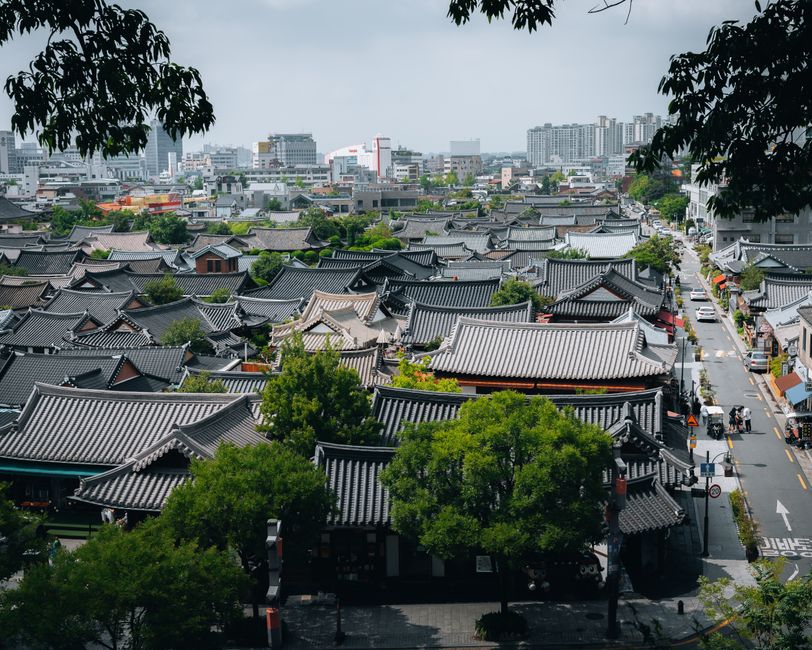
Jeonju, in the southwest of South Korea, is the country’s capital of food and tradition. Its Hanok Village, with more than 700 tile-roofed houses, is the largest traditional neighborhood in Korea, a maze of lanes where you can sleep on a heated floor, eat bibimbap in the city that made it famous, watch artisans make paper and fans, and climb to a hilltop pavilion for the view over curving roofs. Jeonju was the ancestral home of the Joseon dynasty’s royal family, and the Gyeonggijeon shrine still holds the portrait of its founder, King Taejo; the Romanesque Jeondong Cathedral, the Pungnammun gate and the Confucian school add to the history. The city is also a UNESCO City of Gastronomy, with a lively night market and makgeolli houses where the side dishes keep coming. Jeonju is under two hours from Seoul by KTX; spring and fall are the best seasons, and summers are hot.
Right now in Jeonju
- Thu9–24°C49–76°FClear
- Fri13–26°C55–78°FPartly cloudy
- Sat15–22°C59–72°F11 mm rain
- Fri 9 Oct Hangul Day (한글날)
Top tours in Jeonju
See all tours for Jeonju →
From local operators, with prices and reviews; you check availability and book on Viator, our partner. We may earn a commission at no extra cost to you. How we earn money
Jeonju at a glance
- Best for: hanok architecture and hanok stays, bibimbap and Korean food, traditional crafts such as hanji paper and fans, hanbok photos, and festivals.
- How long: 1–2 days; add a day for Gunsan, Maisan or Naejangsan.
- Best time: April to May and October to early November, with highs of about 20–25 °C (67–77 °F).
- Getting there: about 1 hour 40 minutes by KTX from Yongsan in Seoul to Jeonju Station, or about 2.5 hours by express bus.
- Getting around: the Hanok Village is compact and walkable; city buses and cheap taxis link it with the station and other districts.
- Fees to know: the Hanok Village is free to wander; Gyeonggijeon costs 3,000 won (about US$2.20).
- Before you go: the K-ETA (and the exemption for 22 countries until December 31, 2026), the e-Arrival card, money and general safety are in our South Korea travel guide; see also our Seoul guide.
Jeonju’s areas and where to stay
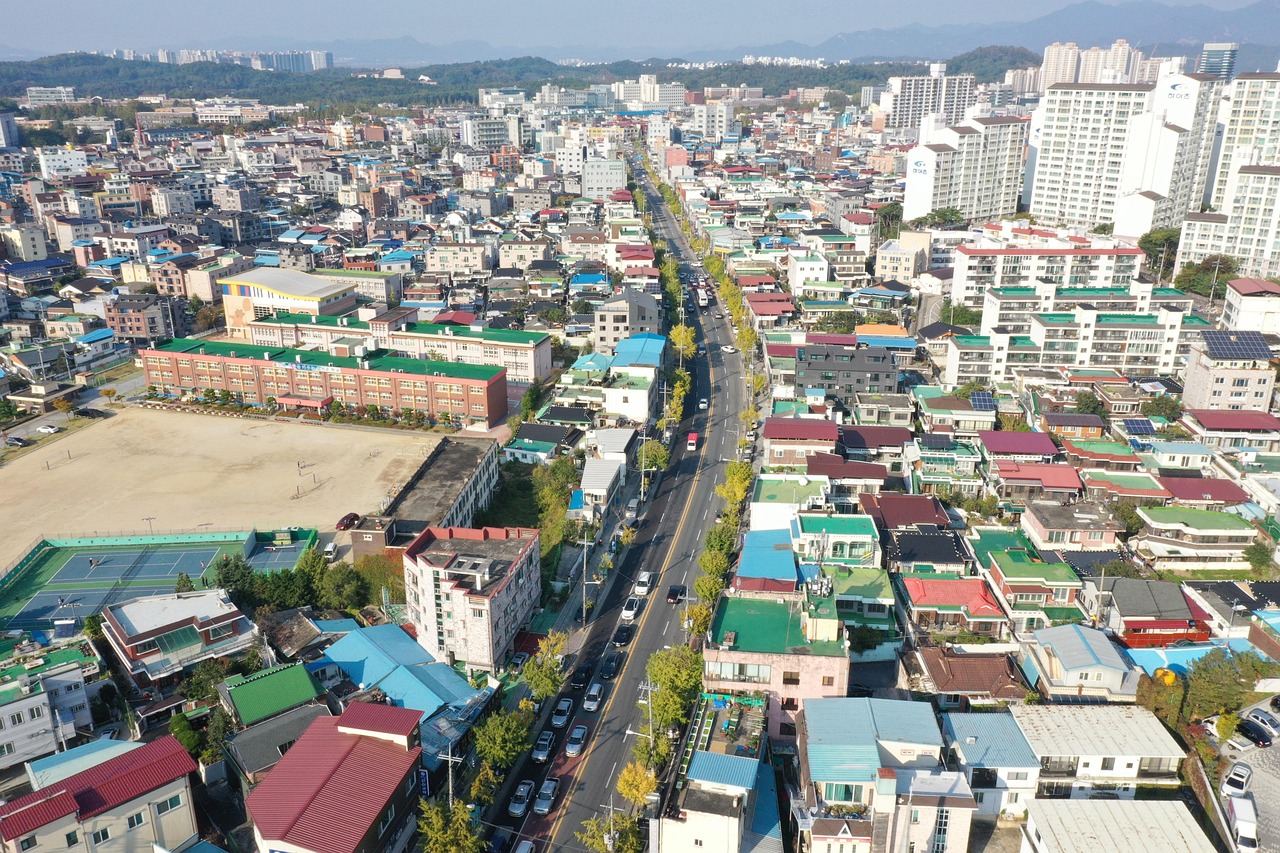
Jeonju is the capital of North Jeolla, now officially Jeonbuk State, a city of about 640,000 people on the edge of the fertile Honam plain. Almost everything visitors come for is in and around the Hanok Village, in the old center of Wansan-gu, with the rest of the modern city spread out to the north and west.
The Hanok Village
The heart of any visit: a grid of lanes lined with hanok guesthouses, restaurants, cafés, craft workshops and hanbok rental shops, with Gyeonggijeon, Jeondong Cathedral, Omokdae and the Confucian school (Jeonju Hyanggyo) along its edges. The best base, especially in the evening when the day-trippers leave.
Jeonju Old Town and Nambu Market
West of the Hanok Village, beyond the Pungnammun gate, are Nambu Market with its night market, the Youth Mall of small shops and bars upstairs, and the old downtown (Gaeksa) with shopping streets, modern hotels and the Jeolla Provincial Office site.
Around Jeonju Station and the new town
Jeonju Station, a modern building in traditional style, is about 20 minutes by bus or 15 minutes by taxi northeast of the Hanok Village. The Seogshin-dong and Ecocity districts have business hotels, and Deokjin Park, with its lotus pond, lies north of the center.
Top things to see in Jeonju
Jeonju Hanok Village
Korea’s largest traditional village grew up in the 1930s when Koreans built hanok houses here in response to the Japanese settlers in the downtown; today, according to the Korea Tourism Organization (KTO), it has more than 700 hanok and is among Korea’s 100 must-visit tourist spots. The village is open all the time and free to enter. Walk Taejo-ro and Eunhaeng-ro, the main lanes, then get lost in the side streets; the stone-walled lanes near Hyanggyo and along the Jeonjucheon stream are quieter. Many visitors rent hanbok for a few hours.
Gyeonggijeon Shrine
Built in 1410 to enshrine the portrait of King Taejo, the founder of the Joseon dynasty, whose family came from Jeonju, Gyeonggijeon is a walled shrine of halls, bamboo groves and ancient trees in the middle of the village. The Royal Portrait Museum displays the portrait of Taejo, a National Treasure, and paintings of other kings. According to the Jeonju Hanok Village website, it opens from 9 a.m. to 7 p.m. from March to May and in September and October, to 8 p.m. from June to August, and to 6 p.m. from November to February; adult admission is 3,000 won (about US$2.20), and entry is free on the last Wednesday of each month. In 2026, an evening program, “Gyeonggijeon Starlight Walk,” runs on Fridays from September to November.
Jeondong Cathedral
Across the street from Gyeonggijeon, this brick cathedral in Romanesque and Byzantine style, built from 1907 to 1914 on the site where Korean Catholics were martyred, is one of the most beautiful churches in Asia. It is open from 9 a.m. to 5 p.m. except during Mass, and free.
Omokdae and the Hanok Village view
A short climb from the southeast corner of the village leads to Omokdae, the pavilion where Yi Seong-gye, the future King Taejo, celebrated a victory in 1380, and to the viewpoint over the sea of tiled roofs; it is especially beautiful at sunset. Across the stream, the Jaman Mural Village climbs the hill with colorful paintings.
Pungnammun and Nambu Market
Pungnammun, the south gate of the old city walls, first built in 1389, is the only one of the four gates that survived; it is free and lit up at night. Next door, Nambu Market is a traditional market by day, known for its kongnamul-gukbap (bean sprout soup) restaurants, and on weekend evenings it hosts a busy night market of food stalls (check the current days and hours locally).
Jeonju Hyanggyo
A Confucian school founded in the Goryeo period, with halls shaded by enormous ginkgo trees that turn golden in late October and early November. According to the Hanok Village website, it is open from 10 a.m. to 6 p.m., and free.
More classic sights
- Hanbyeokdang: a pavilion on a cliff above the Jeonjucheon stream, one of Jeonju’s eight scenic views.
- Hakindang: a grand hanok mansion completed in 1908, now run by the family as a cultural experience house (paid, by reservation).
- Jeonju Hanji Museum and craft centers: traditional mulberry paper, fans and lacquerware, with workshops.
- Deokjin Park: a lake covered with lotus flowers in July and August, with a long suspension bridge.
- Jeonju Fortress (Namgosanseong): a mountain fortress on the southern edge of the city, with trails and views.
Monuments
- Gyeonggijeon Shrine
Castles and forts
- Pungnammun Gate
Churches and cathedrals
- Jeondong Cathedral
Other things to do in Jeonju
Food and drink
Jeonju is famous across Korea for its food, and UNESCO named it a City of Gastronomy in 2012. Its signature dish is Jeonju bibimbap, rice cooked in beef broth and topped with seasoned vegetables, raw beef (yukhoe), chili paste and an egg yolk, served in a brass or hot stone bowl. For breakfast, locals eat kongnamul-gukbap, a hangover soup of bean sprouts and rice, often with a raw egg and moju (sweet spiced rice wine). In the evening, Jeonju’s makgeolli houses (makgeolli golmok), in Samcheon-dong and Seosin-dong, serve kettles of rice wine with a table of side dishes that grows with every round, and the city’s convenience-store-style beer bars, known as gamaek, serve cold beer with grilled dried fish. Try the choco pie from PNB bakery, a Jeonju souvenir, and street food in the Hanok Village, such as grilled skewers and croquettes.
Hanbok, hanok stays and crafts
Rent a hanbok to wander the village (many shops are near Gyeonggijeon), and spend a night in a hanok guesthouse with ondol heated floors. Workshops let you make hanji paper, fans, traditional knots or kimchi, and you can take a Korean tea or etiquette class.
Festivals
Jeonju’s festivals include the Jeonju International Film Festival, one of Asia’s main festivals for independent cinema, in late April and early May; the Jeonju Bibimbap Festival, held in the fall (in 2026, according to the city, at Deokjin Park for the first time); the Jeonju International Sori Festival of traditional and world music in the fall; and the Jeonju Hanji Culture Festival in spring. Gyeonggijeon hosts evening walks and royal-themed programs from spring to fall.
Activities and best months
- City sightseeingGyeonggijeon shrine in the Hanok Village costs 3,000 won for adults (open 9:00-18:00 to 20:00 by season); Jeondong Cathedral, Jeonju Hyanggyo and Pungnammun gate are free.
Day trips from Jeonju
- Gunsan: a port with a well-preserved Japanese colonial-era district, old banks and a temple, about an hour by bus.
- Maisan: two horse-ear-shaped peaks and a temple of stone towers (Tapsa) in Jinan, about an hour away.
- Naejangsan National Park: one of Korea’s best places for fall maples, near Jeongeup, about an hour away; the KTO’s 2026 forecast (from Weather i) put its peak colors around November 11.
- Gochang and Buan: UNESCO-listed dolmens at Gochang, and the cliffs and beaches of Byeonsanbando National Park.
- Damyang: the bamboo forest of Juknokwon and the metasequoia-lined road, near Gwangju.
- Yeosu: the south coast’s island city, about 1.5 hours south by KTX. See our Yeosu guide.
Nearby destinations
- Yeosu127 km
- Gyeongju187 km
- Incheon188 km
- Busan189 km
- Seoul194 km
- Gangneung265 km
- Jeju Island277 km
- Seoraksan National Park280 km
Getting there and getting around
By train
KTX trains on the Jeolla line leave Yongsan Station in Seoul (some from Seoul Station and Haengsin) for Jeonju Station in about 1 hour 40 minutes, continuing to Suncheon and Yeosu; slower ITX and Mugunghwa trains also run. Book on the Korail website or the Korail Talk app. From the station, take a city bus or a taxi (about 15 minutes) to the Hanok Village.
By bus
Express buses leave Seoul’s Express Bus Terminal (Gangnam) and Central City Terminal for Jeonju about every 15 to 30 minutes, taking about 2.5 hours; buses also run from Busan, Gwangju and Incheon Airport. The express and intercity bus terminals are in the north of the city, about 15 minutes by taxi from the Hanok Village.
Getting around
The Hanok Village and the old center are best explored on foot. City buses link the station, the bus terminals and the village; pay with a T-money card. Taxis are cheap and plentiful. Public bicycles can be rented near the Hanok Village, according to its website. Use Naver Map or Kakao Map for directions.
When to go and how long to stay
Jeonju lies inland on the Honam plain, with hot, humid summers and cold winters. The table uses the 1991–2020 normals of the Korea Meteorological Administration (KMA) for its Jeonju station, as submitted to the World Meteorological Organization: average daily highs and lows, total rain and days with at least 1 mm of rain.
| Month | Average high / low | Rain (days with 1 mm or more) | What to expect |
|---|---|---|---|
| January | 5 °C (41 °F) / −4 °C (24 °F) | 27 mm (1.1 in), 6 days | Cold, with snow some days; quiet village |
| February | 7 °C (45 °F) / −3 °C (27 °F) | 37 mm (1.4 in), 5 days | Cold; plum blossoms late in the month |
| March | 13 °C (55 °F) / 2 °C (35 °F) | 54 mm (2.1 in), 7 days | Cherry blossoms from the last days of the month |
| April | 20 °C (67 °F) / 7 °C (45 °F) | 78 mm (3.1 in), 7 days | Spring flowers; Jeonju International Film Festival begins late in the month |
| May | 25 °C (77 °F) / 13 °C (55 °F) | 83 mm (3.3 in), 7 days | Warm and sunny; the best month for walking |
| June | 28 °C (83 °F) / 18 °C (65 °F) | 159 mm (6.3 in), 8 days | Hot and humid; jangma usually starts around June 23 |
| July | 30 °C (87 °F) / 23 °C (73 °F) | 303 mm (11.9 in), 13 days | Hot and wet; lotus flowers at Deokjin Park |
| August | 31 °C (88 °F) / 23 °C (73 °F) | 290 mm (11.4 in), 13 days | The hottest month, around 31 °C (88 °F) |
| September | 27 °C (81 °F) / 18 °C (64 °F) | 128 mm (5.0 in), 7 days | Warm; Chuseok crowds some years |
| October | 22 °C (71 °F) / 10 °C (50 °F) | 57 mm (2.3 in), 5 days | Clear and mild; festival season |
| November | 14 °C (58 °F) / 4 °C (39 °F) | 50 mm (2.0 in), 6 days | Golden ginkgo trees at Hyanggyo early in the month |
| December | 7 °C (45 °F) / −2 °C (28 °F) | 34 mm (1.3 in), 6 days | Cold and dry |
Jeonju gets about 1,300 mm (51 in) of rain a year, most of it from June to August. According to the KMA, the jangma monsoon normally reaches the southern regions around June 23 and lasts about a month; typhoons are possible from July to September. Summer afternoons are hot in the shadeless lanes, so explore early and late.
Weather month by month
Cherry blossoms and fall colors: in 2026, the KTO’s forecast (from the private forecaster Weather i) put Jeonju’s first cherry blossoms on March 28, with full bloom about a week later; the Jeonju-Gunsan road and the Jeonjucheon stream are lined with cherry trees. In the fall, the ginkgo trees of Hyanggyo and Gyeonggijeon turn gold in late October and early November.
Crowds: the Hanok Village is packed on weekends and holidays; visit on weekdays and early in the morning.
1 day in Jeonju
Gyeonggijeon at 9 a.m., Jeondong Cathedral, a bibimbap lunch, the lanes of the Hanok Village and Hyanggyo, Omokdae for the view at sunset, and the Nambu night market or a makgeolli house in the evening.
2 days
Add a hanji or cooking workshop, the Jaman Mural Village and Hanbyeokdang, a morning bowl of kongnamul-gukbap, and a half-day trip to Maisan or Gunsan.
Where to stay in Jeonju
- Hanok guesthouses in the village: the classic choice, with floor mattresses, small rooms and atmospheric courtyards; many include breakfast.
- Hanok hotels: more comfortable traditional-style rooms with private bathrooms and beds.
- Old downtown and Gaeksa: modern hotels a short walk from the village.
- Near the station and bus terminals: business hotels for short stays.
Rooms in the Hanok Village sell out on weekends and during festivals; book ahead, and note that many guesthouses have early check-out and shared facilities.
What a trip to Jeonju costs
Prices are approximate, for October 2026, converted at about 1,365 won to the US dollar.
| Item | Typical cost |
|---|---|
| KTX, Seoul (Yongsan) to Jeonju, standard class | about 35,000 won (about US$26) |
| Gyeonggijeon entry | 3,000 won (about US$2.20) |
| Jeondong Cathedral, Hyanggyo, Pungnammun | free |
| Jeonju bibimbap | 13,000–20,000 won (about US$9.50–15) |
| Kongnamul-gukbap | 8,000–10,000 won (about US$5.90–7.30) |
| Makgeolli house, kettle with side dishes, for two | 25,000–40,000 won (about US$18–29) |
| Hanbok rental, a few hours | 15,000–30,000 won (about US$11–22) |
| Hanok guesthouse double, per night | 70,000–150,000 won (about US$51–110) |
Practical tips for Jeonju
- Go early: the village is calmest before 10 a.m.; Gyeonggijeon opens at 9.
- Respect residents: people live in many of the hanok; keep your voice down in the side lanes.
- Hanok etiquette: take off your shoes indoors, and expect thin walls and heated floors.
- Information: the Hanok Village tourist information center (+82-63-282-1330) and its KakaoTalk channel answer questions.
- Help in English: call the 1330 Korea Travel Helpline.
Safety
Jeonju is safe and relaxed. The main issues are summer heat in the shadeless lanes, crowds on holiday weekends, and cars and scooters in the narrow streets of the village, where there are often no sidewalks. In heavy rain, stone paths and steps become slippery. In an emergency, call 112 for the police or 119 for an ambulance or fire.
What to pack for Jeonju
Comfortable shoes you can slip off easily for hanok stays and restaurants with floor seating, a hat and sunscreen in summer, an umbrella, and warm layers in winter, when hanok rooms are warm but the lanes are cold. Korea uses 220 V and round two-pin plugs.
What to pack
- City walking shoesLisbon and Porto are steep, with polished limestone cobbles that get slippery, so grippy soles matter.
- Day packs and anti-theft bagsA small zipped or anti-theft bag makes crowded trams and viewpoints less stressful.
- Rain jacketsFrom October to April Porto and Lisbon see rain on roughly a third of days.
- Travel adapters and convertersPortugal uses Type C and F sockets at 230 V, so most visitors from outside Europe need an adapter.
Jeonju travel FAQ
Is Jeonju worth visiting?
Yes, especially for food lovers and anyone interested in traditional Korea; the Hanok Village is the largest in the country.
How many days do I need in Jeonju?
One full day covers the Hanok Village; two days let you stay in a hanok, enjoy the night market and add a day trip.
How do I get from Seoul to Jeonju?
By KTX from Yongsan in about 1 hour 40 minutes, or by express bus from Seoul’s Express Bus Terminal in about 2.5 hours.
Is the Jeonju Hanok Village free?
Yes, the village is free and open at all times; only some sites, such as Gyeonggijeon (3,000 won), charge admission.
What are Gyeonggijeon’s opening hours?
From 9 a.m. to 7 p.m. in spring and fall, to 8 p.m. in summer and to 6 p.m. from November to February.
What is Jeonju bibimbap?
Rice cooked in beef broth topped with seasoned vegetables, raw or cooked beef, chili paste and egg; Jeonju is its home.
Can I stay overnight in a hanok in Jeonju?
Yes. The village has hundreds of hanok guesthouses and hotels, from simple rooms with floor mattresses to upscale stays.
When is the Jeonju International Film Festival?
Every year in late April and early May.
When do the cherry blossoms bloom in Jeonju?
Usually in late March and early April; in 2026, the forecast put the first blossoms on March 28.
When is Jeonju’s night market open?
Nambu Market’s night market runs on weekend evenings; check the current days and hours locally, as they change.
Plan your trip
Partner links: TravelerCenter may earn a commission if you book, at no extra cost to you.
🇰🇷 Useful Korean phrases for Jeonju
All 38 Korean phrases: restaurant, hotel, emergencies, romance (printable) →
Sources · last reviewed 4 October 2026
Researched and last reviewed on 4 October 2026. Gyeonggijeon, Jeondong Cathedral, Jeonju Hyanggyo and Pungnammun hours and fees, the 2026 Gyeonggijeon evening program, public bicycles and the tourist information center: the Jeonju Hanok Village website of Jeonju city; the 2026 Bibimbap Festival venue: the Jeonju city government; the Hanok Village listing and size, and the 2026 cherry blossom and fall foliage forecasts (from Weather i): the Korea Tourism Organization (KTO); climate normals and jangma dates: the Korea Meteorological Administration (KMA), via the World Meteorological Organization; exchange rate: the US Federal Reserve. Population, journey times, the night market schedule, festival dates, the UNESCO gastronomy designation, the history of sights and typical prices are general references or estimates, flagged for checking. Prices and hours change, so check the official sites before you go. For entry rules, money and general safety, see our South Korea travel guide.
Also: hanok.jeonju.go.kr · KMA normals 1991–2020, Jeonju (climate)
Data: Weather: MET Norway (CC BY 4.0) · Air quality: OpenAQ · Rates: ECB · Holidays: Nager.Date · Costs: World Bank ICP and price levels · © OpenStreetMap contributors (ODBL) · Wikidata (CC0)