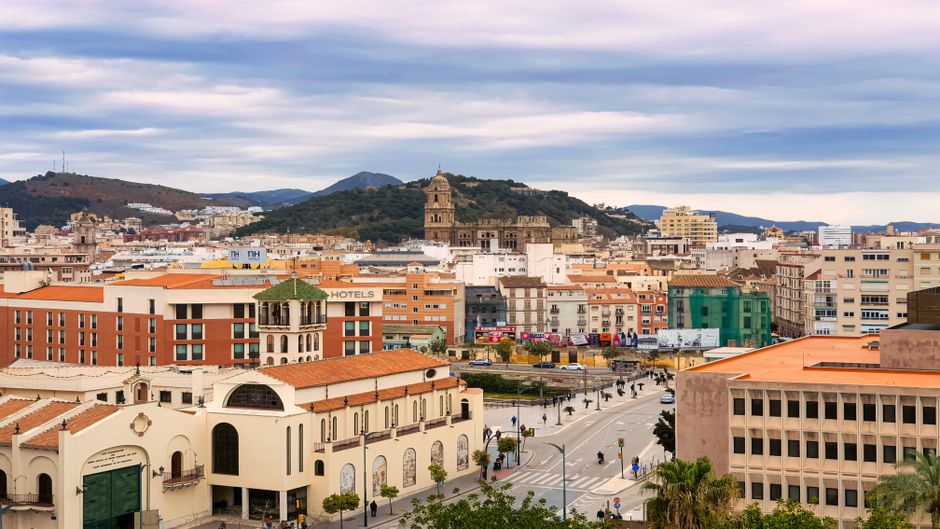
Málaga is a sunny port city on the Costa del Sol where a Moorish fortress, a Roman theatre and Picasso’s birthplace sit a few minutes’ walk from city beaches, tapas bars and a palm-lined harbour. It is warm almost all year, with about 2,900 hours of sunshine. The best months are April to June and September to October, warm enough for the beach without the August crowds. Give the city two or three days, plus extra days for Ronda, Nerja or the Caminito del Rey.
Right now in Málaga
- Wed 16–27°C 62–80°F Partly cloudy
- Thu 16–26°C 62–79°F Clear
- Fri 18–23°C 64–73°F 11 mm Light showers
- Mon 12 Oct National Day of Spain (Fiesta Nacional de España)
Weather: MET Norway (CC BY 4.0) · Sea temperature: NOAA CoastWatch · Rates: ECB · Holidays: Nager.Date
Top tours in Málaga
See all tours for Málaga →
From local operators, with prices and reviews; you check availability and book on Viator, our partner. We may earn a commission at no extra cost to you. How we earn money
Málaga at a glance
- Best months: April–June and September–October. Average highs run from about 21 °C in April to 28 °C in September, with at most 5 rainy days a month (AEMET normals, Málaga airport). July and August average 30–31 °C, and the sea reaches about 24 °C.
- Days needed: 2–3 for the city, 4–6 with day trips to Ronda, Nerja, the Caminito del Rey or Granada.
- Airport: Málaga–Costa del Sol (AGP), 8 km from the centre. The C1 local train reaches Málaga Centro-Alameda in about 12 minutes.
- Getting around: the old town is flat and walkable; EMT city buses, two metro lines and the C1 coastal train cover the rest.
- Budget level: mid-range for Spain, with cheap tapas and buses, but rooms climb steeply in summer and during Easter week. There is no tourist tax in Andalusia as of October 2026. See our Spain guide for money, entry rules and daily costs.
Málaga’s neighbourhoods
Most visitors stay between the old town and the sea. The city then stretches east along a string of beaches towards the old fishing quarters of Pedregalejo and El Palo.
- Centro Histórico: the pedestrian old town around marble-paved Calle Larios, the cathedral, Plaza de la Constitución and the Picasso museum. Everything is walkable and the streets stay lively until late. Best for first-timers; light sleepers should ask for an inside room.
- Soho: the grid of streets between the old town and the port, known for big street-art murals, small galleries and brunch cafés. A little cheaper than the centre and five minutes from everything.
- La Malagueta and Muelle Uno: the city beach just east of the port, with high-rise hotels, beach bars and the redeveloped harbour front of Muelle Uno, where you find the Centre Pompidou’s glass cube, shops and restaurants. Good for travellers who want the sea and the centre together.
- El Perchel and Huelin: west of the Guadalmedina river, near María Zambrano station. Residential, plainer and better value, with the Huelin and San Andrés beaches nearby. Handy if you arrive by train or plan many day trips.
- Pedregalejo and El Palo: former fishing districts 3–5 km east of the centre, with a seafront promenade lined with chiringuitos (beach restaurants) grilling sardines on skewers over wood fires. Relaxed and local; a short bus ride from the old town.
- El Limonar and La Caleta: leafy streets of old villas between La Malagueta and Pedregalejo, quieter and more upmarket, with the La Caleta beach below.
Top things to see in Málaga
Prices and hours below come from the official websites, as of October 2026. Several of the big sights are free on Sunday afternoons, which is the best budget tip in town.
Alcazaba and Gibralfaro Castle
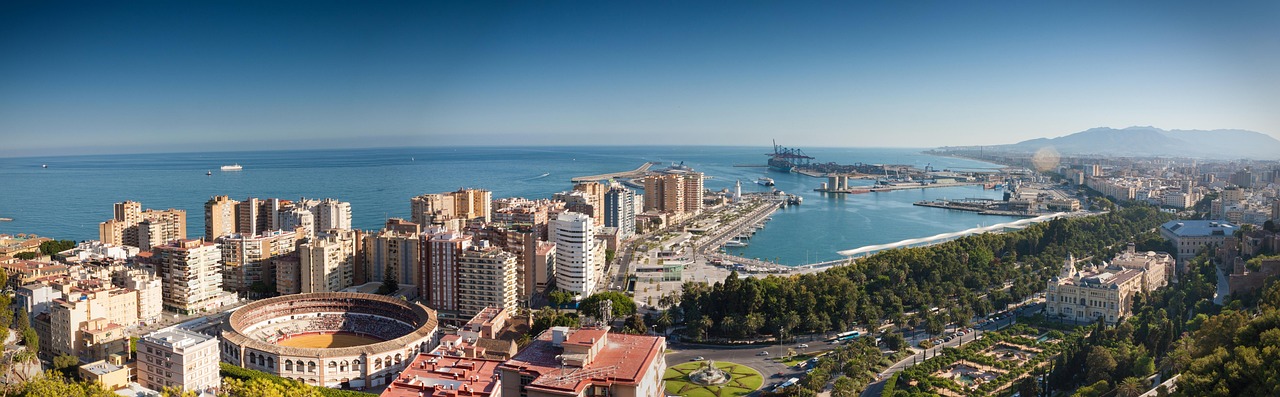
The Alcazaba is an 11th-century Moorish palace-fortress climbing the hill above the port, with arches, fountains and small courtyard gardens. Gibralfaro Castle crowns the hill above it, with walkways along the walls and the widest view over the bay and the bullring. How to visit: daily, 9:00–20:00 from 1 April to 31 October (last entry 19:00) and 9:00–18:00 from 1 November to 31 March (last entry 17:00). The Alcazaba costs €7, and a combined Alcazaba and Gibralfaro ticket is €10 (reduced €3 and €5). Entry is free for everyone on Sundays from 14:00, and for children under 6. Many guides still quote older, lower prices. The walk up to Gibralfaro is steep and sunny, so go early or take EMT bus 35 and walk down.
Roman Theatre
At the foot of the Alcazaba, the 1st-century BC Roman theatre was only rediscovered in 1951 and is now open to the sky beside a small interpretation centre. You can see most of it free from Calle Alcazabilla, which is also one of the nicest streets for an evening drink.
Museo Picasso Málaga
Pablo Picasso was born in Málaga in 1881, and this museum in the 16th-century Buenavista Palace holds a collection donated by his family, from early drawings to late paintings. How to visit: open daily, 10:00–19:00 from March to June and in September and October, 10:00–20:00 in July and August, and 10:00–18:00 from November to February. The ticket office closes 30 minutes before. A general ticket is €13 (reduced €11; free for under-17s). Entry is free on Sundays in the last two opening hours. It closes on 25 December and 1 and 6 January. His birthplace museum is a few minutes away on Plaza de la Merced.
Málaga Cathedral
Locals call it La Manquita (“the one-armed lady”) because its south tower was never finished. Inside are a carved choir and huge Renaissance and Baroque chapels. How to visit: the general ticket is €10 with an audioguide; over-65s pay €9, students aged 18–25 €7, ages 13–17 €6 and under-12s €4. From June to 25 October it opens Monday to Friday 10:30–20:00; from 26 October to March, Monday to Friday 10:30–18:30, Saturday 10:30–18:00 and Sunday 14:00–18:00. Last entry is 45 minutes before closing. Guided rooftop visits (about 200 steps) run at set times and are booked separately; check the cathedral’s website for the current price.
Centre Pompidou Málaga and Museo Carmen Thyssen
The Centre Pompidou Málaga shows modern and contemporary art under the colourful glass cube on Muelle Uno. Its agreement with Paris runs until 2035. It opens 9:30–20:00 and closes on Tuesdays; a combined ticket is €9 and entry is free on Sundays from 16:00 and for under-18s. The Museo Carmen Thyssen, in a 16th-century palace in the old town, is the place to see 19th-century Spanish and Andalusian painting. It opens Tuesday to Sunday, 10:00–20:00; tickets are €12, and it is free on Sundays from 16:00.
Atarazanas Market
The central market sits inside a former Moorish shipyard, behind a 14th-century horseshoe arch and under a big stained-glass window. Come in the morning for fruit, cured ham, olives and fish stalls, and stand at a counter bar for fried fish or a glass of sweet Málaga wine. Most stalls close in the afternoon and on Sundays.
Churches and cathedrals
- Málaga Cathedral
Castles and forts
- Alcazaba of Málaga
- Castle of Gibralfaro
Museums
- Museo Picasso Málaga
- Museum Jorge Rando
Monuments
- Plaza de toros de la Malagueta
Peaks and mountains
- Gibralfaro
Things to do in Málaga
Hit the city beaches
Málaga has a string of city beaches east and west of the port, and seven of them flew the Blue Flag in 2026: La Malagueta, La Caleta, Pedregalejo, El Palo, El Dedo, Misericordia and San Andrés. La Malagueta is the closest to the old town and the busiest; Pedregalejo’s small coves, protected by breakwaters, are calmer for children. The sand is greyish and coarse, the water is calm most days, and lifeguards cover the main beaches in summer. The dog beach is at La Araña, east of El Palo. See our beaches guide for more.
Eat espetos and tapas
The local classic is the espeto: sardines threaded on a cane skewer and grilled over olive-wood embers in an old boat filled with sand, at almost every chiringuito from La Malagueta to El Palo. In the old town, tapas bars serve fried fish (pescaíto frito), ajoblanco (a cold almond and garlic soup) and anchovies. Order coffee the Málaga way, with names that say how much milk you want, from solo (black) to mitad (half) to nube (a cloud of coffee in milk).
Get out on the water
Boats leave from the port and Muelle Uno for short sightseeing trips and sunset sails along the coast, and some operators run dolphin-spotting trips in the bay. In summer, you can rent paddleboards and kayaks on the eastern beaches. Compare operators on the quay, check the cancellation policy, and go out in the morning when the sea is calmest. See our boat trips guide.
Feria and Easter week
Málaga’s Easter week (Semana Santa) is one of Spain’s biggest, with huge religious floats carried through the old town for a week. The Feria de Málaga takes over the city in mid-August: in 2026 it ran from 15 to 22 August, opening with fireworks at La Malagueta, with a daytime party in the old town and a night fair at the Cortijo de Torres fairground. Rooms are expensive and scarce during both.
Activities and best months
- Beaches and swimmingMálaga has 16 beaches on the Mediterranean; La Malagueta is the city beach highlighted by the official Spain tourism site. · source
Day trips from Málaga and the Costa del Sol
- Caminito del Rey: a walkway pinned to the walls of the Desfiladero de los Gaitanes gorge, less than 60 km from Málaga. The route is 7.7 km one way (4.8 km of access paths and 2.9 km of walkways), north to south from Ardales to El Chorro, and takes 3–4 hours. Buy only on the official site, caminitodelrey.info: general tickets cost €10 and official guided visits €18, and every ticket must carry the visitor’s name. The rules are strict: no children under 8, original ID for everyone aged 8 and over, a helmet (handed out at the entrance), hiking shoes, and no large backpacks, bags or animals. It is closed on Mondays and can close for wind or rain. A new 110-metre suspension bridge opened in June 2026. A €2.50 shuttle bus (cash only) links the two ends.
- Ronda: a white town split by a 100-metre gorge and crossed by the 18th-century Puente Nuevo, with one of Spain’s oldest bullrings (open daily; €10, or €12 with audioguide). The Ronda railway line has been closed for works since February 2026, with reopening planned for 2027, so take the bus (about 1 h 45–2 h direct) or drive.
- Nerja and Frigiliana: about 50 km east, Nerja has the Balcón de Europa viewpoint, coves and the huge Nerja Cave (online tickets €16 for adults off-season and €18 in summer and holidays, as of 2026). Frigiliana, 6 km uphill, is one of the prettiest white villages in Andalusia, with steep whitewashed lanes and Moorish-era street names.
- Antequera: the Antequera Dolmens, huge Bronze Age burial mounds, are a UNESCO World Heritage Site, and the El Torcal limestone park nearby has easy marked walks among strange rock towers. See our hiking guide for more walks.
- Marbella and Mijas: Marbella’s old town and orange-tree squares, with Puerto Banús for yachts; Mijas Pueblo is a white village on the hillside above Fuengirola.
- Granada and Córdoba: Avant and high-speed trains reach Granada in about 1 h 10–1 h 20 (direct trains) and Córdoba in about an hour, so both work as long day trips. The Alhambra needs a booked, named ticket. Read our Granada guide and our Córdoba guide.
Nearby destinations
- Costa del Sol47 km
- Marbella48 km
- Ronda67 km
- Granada89 km
- Sierra Nevada105 km
- Tarifa132 km
- Córdoba134 km
- Seville159 km
Getting there and getting around
From the airport to the city
- Train (fastest): the Cercanías C1 line leaves from the station between the terminals and reaches María Zambrano in 8 minutes and Málaga Centro-Alameda in 12. Trains run about every 20 minutes, from early morning until around midnight. A single to the centre costs €1.80 (as of October 2026). Going west, the same line reaches Torremolinos, Benalmádena and Fuengirola (34 minutes).
- Airport bus A: runs to the centre and the port for €4, with luggage included; pay on board by card or cash.
- Taxi: taxis wait outside arrivals. Expect about €20–25 to the centre, with airport minimum fares that rise at night and on holidays.
Trains from Madrid and the rest of Andalusia
High-speed trains run from Madrid Puerta de Atocha to Málaga María Zambrano with Renfe (AVE and AVLO), Iryo and Ouigo, in roughly 2 h 30–3 h. The line was cut for over three months in early 2026, after a fatal crash at Adamuz (Córdoba) in January and a collapsed embankment at Álora in February. It reopened on 30 April on a single track, and double track returned on 17 July 2026, with more trains since. Check the current timetable on the operators’ sites before you book, and book early for weekends.
Getting around the city
The old town, the port and La Malagueta are all within a 20-minute walk. EMT city buses cover the beaches to the east and the hills; a single fare is €1.40 (as of October 2026, with a rise to €1.50 being approved), and under-14s ride free. Two metro lines run from the centre (Atarazanas and Guadalmedina) west towards the university and the stadium; they are useful mainly for María Zambrano station and the western suburbs. For the beach towns, the C1 train from Centro-Alameda is the easiest choice. Driving in the old town is not worth it; park in a public garage.
When to go and how long to stay
Málaga has one of the mildest winters in mainland Europe: average highs stay around 17 °C even in January, and frost is almost unknown. Summer is hot and dry; July and August average 30–31 °C, and a few times a year the terral, a hot, dry wind from inland, pushes temperatures above 40 °C. The airport’s record is 44.2 °C, set on 19 July 2023. On terral days, stay near the sea in the morning and inside in the afternoon.
| Season | Average high / low | Rainy days a month | What it’s like |
|---|---|---|---|
| Spring (Mar–May) | 20–24 °C / 10–14 °C | 3–5 | Warm, green and lively; Easter week fills the city. Sea still cool (about 16–18 °C). |
| Summer (Jun–Aug) | 28–31 °C / 18–21 °C | 0–1 | Hot, dry and busy, with the Feria in mid-August. Sea around 22–24 °C. |
| Autumn (Sep–Nov) | 20–28 °C / 11–19 °C | 2–6 | September is still beach weather; October is warm with the first rains. |
| Winter (Dec–Feb) | 17–18 °C / 7–9 °C | 5–7 | Mild, sunny between showers, and the quietest season. Good for sightseeing and day trips. |
AEMET’s published normals for Málaga airport cover 1981–2010; its 1991–2020 table for this station was not yet online when we checked.
2 days in Málaga
Day 1: the Alcazaba early, the Roman Theatre, the cathedral and the Picasso museum, then tapas around Calle Larios and sunset from Gibralfaro. Day 2: Atarazanas market in the morning, the Soho murals and the Centre Pompidou on Muelle Uno, then a beach afternoon and espetos for dinner in Pedregalejo.
3 days in Málaga
Add a day out: the Caminito del Rey (book well ahead), or Nerja and Frigiliana for the cave, the coves and a white village.
4 days or more
Use Málaga as a base: Ronda by bus or car, Granada and the Alhambra by train (with a named ticket booked in advance), or Córdoba’s Mezquita. With a week, spend a few nights in Granada or Ronda rather than doing everything as day trips.
Where to stay in Málaga
- First visit: the Centro Histórico, between Calle Larios, the cathedral and Plaza de la Merced. Everything is on foot, but rooms are small and streets can be noisy at weekends.
- Sea and city together: La Malagueta, a few minutes from the Alcazaba, with hotels facing the beach and the port.
- Value and train links: Soho or El Perchel, near María Zambrano and Centro-Alameda stations.
- Relaxed and local: Pedregalejo or El Palo, for seafront walks and fish dinners, with a bus ride into town.
- Beach holiday with day trips: Torremolinos, Benalmádena or Fuengirola on the C1 train line, with longer beaches and big resort hotels.
Málaga froze new tourist-flat and hotel licences on residential land for three years from August 2025. Existing licensed flats still operate, so check that your rental shows a registration number.
Practical tips for Málaga
- Dress code off the beach: a city bylaw bans walking around the streets in swimwear or shirtless away from the beach and promenades, with fines of €300–750 after a warning. Bring a cover-up for the walk back to your room.
- Sunday afternoons are free: the Alcazaba (from 14:00), the Picasso museum (last two hours), the Centre Pompidou and the Carmen Thyssen (from 16:00).
- Tuesday and Monday closures: the Centre Pompidou closes on Tuesdays and the Carmen Thyssen on Mondays; the Caminito del Rey is shut on Mondays.
- No tourist tax (yet): Andalusia does not charge a tourist tax as of October 2026, although Málaga’s mayor keeps asking for one. Check before you travel if your trip is in 2027.
- Pickpockets: watch your bag on Calle Larios, in the market and on crowded beaches, and never leave phones on the sand while you swim. The emergency number is 112.
- Heat: carry water, use the shade, and plan steep climbs like Gibralfaro for the morning, especially in July and August.
Weather month by month
Averages from AEMET normals 1991–2020, Málaga Aeropuerto · Last reviewed 4 Oct 2026
What to pack for Málaga
Pack for sun and the beach. From May to October, bring a swimsuit, a quick-dry towel, sunscreen, sunglasses, a hat and a refillable water bottle; the sun is strong and highs reach 30 °C or more in summer. Bring a light shirt or cover-up for walking from the beach into town. Comfortable shoes with grip help on Málaga’s polished marble pavements, which turn slippery when wet. For the Caminito del Rey, you must wear closed hiking shoes and bring only a small daypack. From November to March, add a light jacket and a layer for evenings, which cool to around 7–9 °C, and a compact umbrella for the occasional rainy day.
What to pack
- Day packs and anti-theft bagsCarries water, towel and sunscreen down the long stairways to Algarve coves.
- Dry bags and phone pouchesProtects phones and cameras from sand and spray on beaches reached by ferry or steep paths.
- Quick-dry beach towelsA sand-shedding quick-dry towel packs small for beach days and lido visits.
- Reef-friendly sunscreenSummer UV is strong on Portuguese beaches and there is little shade below the cliffs.
- Water shoesRocky coves, lava pools and weever fish in shallow sand make water shoes useful.
- WetsuitsOn the west and north coasts the sea stays around 16–18 °C even in summer, so a thin suit helps for long swims.
Málaga travel FAQ
How many days do you need in Málaga?
Two days covers the main sights and a beach afternoon. Three or four lets you add the Caminito del Rey, Nerja, Ronda or Granada.
What is the best time to visit Málaga?
April to June and September to October: warm, sunny and good for the beach, without the August heat and prices. Winter is mild and quiet, which suits sightseeing.
How do I get from Málaga airport to the city centre?
Take the C1 train from the airport station to Málaga Centro-Alameda, about 12 minutes for €1.80, or airport bus A for €4 (as of October 2026). A taxi costs about €20–25.
Does Málaga have a tourist tax?
No. As of October 2026, there is no tourist tax anywhere in Andalusia, although Málaga’s city council has asked for one.
How much does the Alcazaba cost?
€7 for the Alcazaba, or €10 for a combined ticket with Gibralfaro Castle (as of October 2026). Everyone gets in free on Sundays from 14:00.
When is the Picasso museum free?
On Sundays in the last two opening hours. A general ticket is €13 at other times (as of October 2026).
How do I book the Caminito del Rey?
Only on the official site, caminitodelrey.info: €10 for a general ticket or €18 for a guided visit (as of October 2026). Tickets are named, children under 8 are not allowed, and everyone 8 and over must bring original ID.
Can I get to the Caminito del Rey without a car?
Yes. Regional trains stop at El Chorro, at the southern end, and a €2.50 shuttle bus takes you to the start in Ardales; check Renfe’s timetable for trains. Many visitors book a tour with transport from Málaga instead.
Is Málaga a good beach destination?
Yes, for a city break with beaches. Seven city beaches had Blue Flags in 2026. For longer stretches of sand and resort hotels, stay in Torremolinos, Benalmádena or Fuengirola.
Can I walk around Málaga in my swimsuit?
No. A city bylaw bans swimwear and bare chests in the streets away from the beach and promenades, with fines of €300–750.
How long is the train from Madrid to Málaga?
Roughly 2 h 30–3 h on high-speed trains run by Renfe, Iryo and Ouigo. The line was disrupted in early 2026 but has had double track again since July 2026; check current timetables.
Is Ronda an easy day trip from Málaga?
Yes, by bus or car, in about 1 h 45–2 h each way. The Ronda railway line is closed for works until 2027.
Sources
- © OpenStreetMap contributors · ODbL · fetched 3 Oct 2026
- Wikidata · CC0 · fetched 3 Oct 2026
Sources and last review
Researched and last reviewed on 3 October 2026. Hours and prices come from the official websites of the Alcazaba and Gibralfaro (Ayuntamiento de Málaga), the Museo Picasso Málaga, the Centre Pompidou Málaga, the Museo Carmen Thyssen, Málaga Cathedral, the Caminito del Rey (Diputación de Málaga), the Ronda bullring and the Nerja Cave. Airport transport comes from AENA and Renfe, and the climate figures are AEMET’s normals for Málaga airport. Train disruption, tourist-flat rules, bylaws and tourist-tax news were checked in Spanish regional press where no official page was available. Prices, timetables and opening hours change, so check the official sites before you travel.
Plan your trip
Partner links: TravelerCenter may earn a commission if you book, at no extra cost to you.
🇪🇸 Useful Spanish phrases for Málaga
All 38 Spanish phrases: restaurant, hotel, emergencies, romance (printable) →