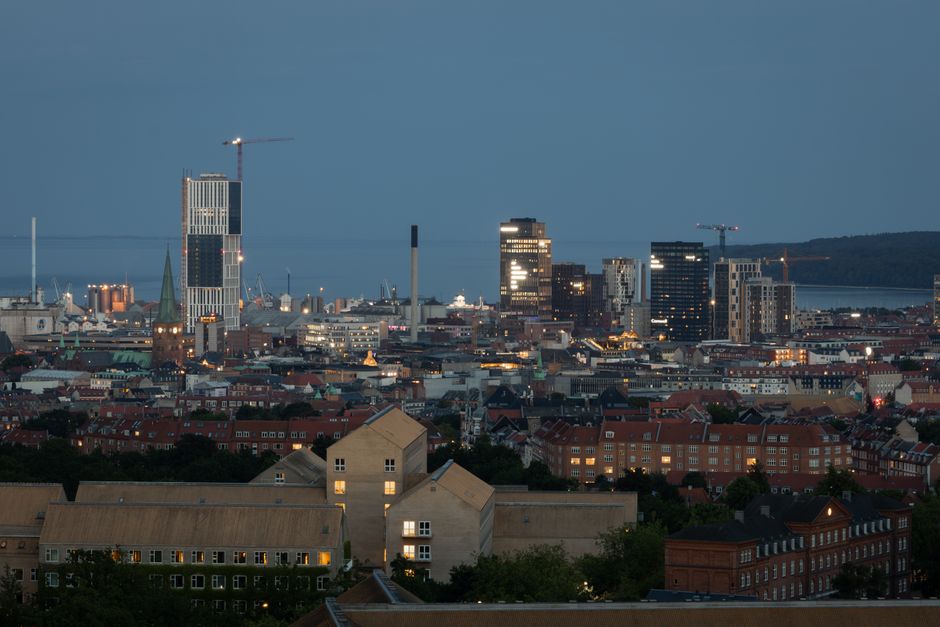
Aarhus is Denmark’s second city and its youngest: a relaxed university town on a bay on the east coast of Jutland, founded by the Vikings and now known for bold architecture, good food and a big student population. You come to walk inside the rainbow on the roof of the ARoS art museum, step back in time through the streets of Den Gamle By, meet the 2,000-year-old Grauballe Man at Moesgaard, and wander the Latin Quarter’s cobbled lanes and the new harbour district of Aarhus Ø. Beaches and beech forests start at the edge of town, and the hills of Mols Bjerge, Legoland and the lakes around Silkeborg are within easy reach. Give it two days for the city, three or four with day trips.
Right now in Aarhus
- Wed 11–15°C 51–58°F Cloudy
- Thu 10–15°C 50–58°F 3 mm Cloudy
- Fri 8–14°C 47–57°F 4 mm Rain
Weather: MET Norway (CC BY 4.0) · Sea temperature: NOAA CoastWatch · Air quality: OpenAQ · Rates: ECB
Top tours in Aarhus
See all tours for Aarhus →
From local operators, with prices and reviews; you check availability and book on Viator, our partner. We may earn a commission at no extra cost to you. How we earn money
Aarhus at a glance
- Best for: art and architecture, museums for all ages, the Viking and Iron Age past, café culture, beaches and forest walks, and a less touristy taste of Denmark.
- How long: 2 days for ARoS, Den Gamle By, Moesgaard and the centre; 3–4 days to add Mols Bjerge, Silkeborg or Legoland.
- Best time: May to September for beaches and outdoor life; late August to early September for the Aarhus Festuge arts festival; late November and December for Christmas in Den Gamle By.
- Getting in: trains from Copenhagen take about 3 hours; Aarhus Airport is about 45–50 minutes away by the 925X airport bus, and Billund Airport about 1 hour 30 minutes by the 912X.
- Getting around: the centre is walkable; the Letbane light rail and city buses cover the rest. As of October 2026, a day ticket for the whole municipality costs DKK 59.
- Money: Denmark uses the Danish krone (DKK); cards are accepted almost everywhere.
Aarhus, area by area
The city centre sits where the Aarhus river (Aarhus Å) meets the bay. The station and the shopping street Strøget are at the south end, the cathedral and the Latin Quarter in the middle, and the harbour to the east. Most sights are within a 20-minute walk; Moesgaard and the beaches are a short bus ride away.
The Latin Quarter and the river
The oldest part of town, around the cathedral: cobbled lanes, colourful old houses, independent shops, vintage stores and cafés. Below it, the river runs uncovered again through the centre, lined with bars and restaurants with outdoor seating. Best for: atmosphere and evenings out.
Aarhus Ø and the harbour front
A former container port turned into a new district of striking apartment blocks, including the white, jagged Iceberg (Isbjerget), with a free harbour bath, waterfront paths and Dokk1, the library and culture house, at its edge. Best for: architecture lovers and modern apartments.
Frederiksbjerg
South of the station, a 19th-century neighbourhood with food shops, delis, wine bars and the Saturday market at Ingerslevs Boulevard. Best for: foodies and a local feel.
Marselisborg and the south
South of the centre, the Marselisborg forests run along the coast past the royal summer residence of Marselisborg Palace, the deer park (Dyrehaven), the Infinite Bridge and the beaches, all the way to Moesgaard. Best for: walks, runs, bike rides and beach days.
Top things to see in Aarhus
Prices and hours below were checked on the official sites in October 2026. They change, so check before you go. Under-18s get into ARoS, Den Gamle By and Moesgaard free.
ARoS Aarhus Art Museum and Your rainbow panorama
One of the largest art museums in Northern Europe, ARoS is a red-brick cube with a spiral staircase at its heart. Its collection runs from the Danish Golden Age to today, with Ron Mueck’s giant crouching Boy as a favourite. On the roof, Olafur Eliasson’s Your rainbow panorama (2011) is a circular glass walkway in every colour of the spectrum, with views over the city and the bay. Underground, As Seen Below – The Dome, a Skyspace by James Turrell, is included in your ticket; special “Twilight” sessions at sunset are booked separately. As of October 2026, admission costs DKK 200 for adults and DKK 150 for under-31s and students; under-18s are free. From 1 October 2026 to 31 May 2027 it opens Tuesday to Friday 10:00–20:00 and weekends 9:00–17:00, closed on Mondays (except in school holidays such as 12 October 2026); it is closed on 24, 25 and 31 December and 1 January.
Den Gamle By (The Old Town)
An open-air museum unlike any other: about 75 historic buildings from across Denmark rebuilt as a complete market town, with shops, workshops, a merchant’s house and a bakery staffed by costumed townspeople. It moves on through time, with streets from 1864, the 1920s and the 1970s, complete with flats, shops and a jazz bar, and a newer quarter about life in the 2010s. It was named European Museum of the Year 2026. Plan four or five hours. Tickets and hours: it is open every day of the year, 10:00–17:00 from 1 August to 30 December (10:00–15:00 on 24 and 31 December) and 10:00–16:00 in early 2027. As of October 2026, admission costs DKK 205 for adults until 31 December and DKK 145 from 1 January to 27 March 2027; under-18s are free. At Christmas the old town is decorated as it would have been, with evening openings (18:00–21:00) on 27 and 28 November and 4, 5, 11, 12, 18 and 19 December 2026.
Moesgaard Museum
South of the city, Moesgaard’s sloping, grass-roofed building (you can walk up the roof) holds one of the world’s finest archaeology museums. Its star is the Grauballe Man, the world’s best-preserved bog body, laid in a peat bog around 2,000 years ago, alongside dramatic galleries on the Stone Age, the Iron Age bog offerings, the Vikings and the Middle Ages. A big special exhibition, Maya – The realm beneath the jungle, opens on 9 October 2026. As of October 2026, admission costs DKK 190 (DKK 180 online), DKK 110 for students and nothing for under-18s; it opens Tuesday to Sunday 10:00–17:00, with late opening on Wednesdays, and is closed on Mondays outside holidays. City bus 18 runs from the centre in about 25 minutes (a two-zone ticket); parking is free.
Aarhus Cathedral and the Latin Quarter
Aarhus Cathedral, begun around 1200, is the longest and tallest church in Denmark, with a whitewashed interior, the largest area of medieval frescoes in the country and a gilded altarpiece. Entry is free. Around it, the Latin Quarter (Latinerkvarteret) is the place to browse and sit outside; the Viking Museum in the basement of a bank on the cathedral square shows remains of the Viking-age town found on the spot.
Dokk1
The city’s main library and culture house, opened in 2015 on the harbour front, is a public space where anyone can sit, read, use the Wi-Fi and look over the bay. Children love the indoor and outdoor play areas, and a giant tubular bell, the Gong, rings every time a baby is born at the city hospital. It also houses the city’s citizen service and a café. Entry is free.
Aarhus Ø and the harbour bath
Walk or cycle out along the harbour to Aarhus Ø for its architecture: the Iceberg’s white peaks and blue balconies, the Lighthouse tower, and wooden boardwalks. The free harbour bath (Aarhus Ø Havnebad), designed by Bjarke Ingels’ BIG, has pools and diving towers and is staffed by lifeguards in summer; winter bathers use it all year with saunas nearby. It is a fine place for sunset.
The Infinite Bridge and the Marselisborg forests
Den Uendelige Bro, the Infinite Bridge, is a circular wooden pier 60 metres across, built out into the bay at Varna for the Sculpture by the Sea exhibition in 2015 and later brought back by popular demand. From it you see the coast, the forest and the city in turn. It is a seasonal installation, usually in place over the warmer months, so check before you go out of season. Combine it with a walk in the beech forest, the free deer park where tame sika and fallow deer eat from your hand, and the gardens of Marselisborg Palace, open to the public when the royal family is not in residence. Bus 18 or a bike ride gets you there.
Churches and cathedrals
- Aarhus Cathedral
Other sights
- Dokk1
Museums
- ARoS Aarhus Art Museum
- Den Gamle By (The Old Town)
- Moesgaard Museum
Viewpoints
- The Infinite Bridge (Den Uendelige Bro)
Beaches
- Ballehage Beach
Festivals, food and Christmas
- Aarhus Festuge: the city’s big arts festival fills streets, parks and venues with concerts, theatre and art for ten days from late August to early September (28 August to 6 September in 2026). The 2027 dates had not been published in October 2026.
- Summer music: Northside, a large rock and pop festival, in June; the Aarhus Jazz Festival in July; and Smukfest in the forest at nearby Skanderborg in early August.
- Christmas 2026: Den Gamle By’s historic Christmas with evening openings, and seasonal markets and lights around the centre.
- Food: Aarhus Street Food in a former bus garage by the bus station, Aarhus Central Food Market near the station, and New Nordic restaurants that have earned Michelin stars. Try smørrebrød at lunch and a pastry from a local bakery.
Beaches and the outdoors
Aarhus is ringed by beaches with clean, calm water. To the north, Den Permanente is a historic bathing jetty below the Riis Skov forest, and Bellevue is a popular sandy beach. To the south, Ballehage and Moesgaard beach lie along the forest. Swimming is pleasant from about mid-June to August (sea temperatures rarely pass 20 °C). The coastal path and the Marselisborg forests are good for walking, running and cycling; see our beaches guide and hiking guide for ideas.
Activities and best months
- Beaches and swimmingAarhus has beaches with calm waves and shallow water near the centre: Den Permanente, an old-fashioned bathing establishment a short ride away, Bellevue 4 km north in Risskov with the finest sand and hardly any rocks, Ballehage by Marselisborg Forest with a jetty and changing rooms for year-round bathing, and Moesgård Beach further south. · source
- City sightseeingVisitAarhus names the big sights: ARoS art museum with Your rainbow panorama on the roof and The Dome, Den Gamle By open-air museum with Danish market-town streets from four periods, and Moesgaard Museum with the Grauballe Man bog body. The Concert Hall, the Aarhus Øje viewpoint in the Lighthouse tower (Denmark's tallest building) and the Infinite Bridge pier are also on the list. · source
- WaterThe Harbour Bath on Aarhus Ø, designed by Bjarke Ingels Group (BIG), has a 50-metre pool, a diving pool, children's pools and saunas in the harbour. The Infinite Bridge, a circular wooden pier near Ballehage Beach, is another place to walk out over the bay. · source
Day trips from Aarhus
- Mols Bjerge and Ebeltoft: the rolling heather hills of Mols Bjerge National Park, across the bay, for hiking and views, and the half-timbered old town of Ebeltoft with the frigate Jylland, about an hour by car or bus.
- Silkeborg and the Lake District: Denmark’s hilliest landscape of lakes and forest, with canoeing, the old paddle steamer Hjejlen in summer, and Museum Silkeborg, home of the Tollund Man bog body, about 45 minutes by train or car.
- Legoland and Billund: Legoland Billund and Lego House, the “Home of the Brick”, about 1 hour 15 minutes by car; Legoland is seasonal, so check its dates.
- Jelling: the Jelling stones, mounds and church, a UNESCO World Heritage Site often called Denmark’s “birth certificate”, about an hour by car.
- Skagen: Denmark’s northern tip, where two seas meet, is about 3 hours away; it deserves a night rather than a day trip.
Nearby destinations
- Copenhagen156 km
- Skagen176 km
- Sylt183 km
- Malmö185 km
- Gothenburg203 km
- Rügen277 km
- Hamburg290 km
Getting to Aarhus
By train. DSB intercity trains run from Copenhagen Central Station and Copenhagen Airport via Odense to Aarhus H in about 3 hours, at least hourly; the line crosses the Great Belt Bridge. Seat reservations are optional but useful at busy times. There are also trains north to Aalborg and south to Fredericia, Hamburg and beyond (see our Hamburg guide).
By air. Aarhus Airport (AAR) is about 40 km northeast of the city, with flights to Copenhagen and seasonal and budget flights to London, Spain and elsewhere. The 925X airport bus runs between the airport and Aarhus Central Station in about 45–50 minutes, timed to meet every flight; you can pay on board by card, or buy a ticket in the Rejsebillet or Midttrafik apps, and it includes onward city transport. Billund Airport (BLL), Jutland’s main international airport, has far more routes; the 912X bus links it with Aarhus in about 1 hour 30 minutes.
By ferry and car. From Zealand, Molslinjen’s fast car ferries cross from Odden to Aarhus in a little over an hour, an alternative to driving over the tolled Great Belt Bridge. The E45 motorway runs down Jutland to the German border. Central parking is paid; many hotels have deals with nearby garages.
Getting around Aarhus
Walk in the centre; it is compact and largely car-free. City buses (Midttrafik) and the Letbane light rail, with lines L1 and L2 through the centre and out along the coast to Grenaa and south to Odder, cover the rest. Important: you cannot buy tickets on city buses or on the Letbane, so buy before you board, in the Rejsebillet app, or check in with the Rejsekort app or a Basiskort card.
- Day ticket Aarhus (Dagsbillet Aarhus): unlimited buses and Letbane across the whole municipality until midnight. As of October 2026, it costs DKK 59 for adults and DKK 29.50 for children; two children under 12 travel free with an adult. It is not valid on the airport buses or DSB trains.
- Aarhus 15 kroner: in a trial expected to last until summer 2027, a DKK 15 ticket (Rejsebillet app only) covers city bus lines 11, 14 and 17.
- Bikes: Aarhus is flat near the water and has good bike lanes; hotels and shops rent bikes by the day. See our cycling guide.
When to go and how long to stay
Aarhus has a cool, changeable maritime climate, slightly cooler and wetter than Copenhagen’s. Summers are mild with long light evenings; winters are grey and damp rather than very cold. The table is calculated from the Danish Meteorological Institute’s (DMI) station records for Aarhus Syd, 2011–2025.
| Season | Average daily high | Average nightly low | Rain per month | What it’s like |
|---|---|---|---|---|
| Winter (Dec–Feb) | 3.8–5.4 °C | -0.6–1.1 °C | 48–68 mm | Short, grey days, occasional frost; Christmas in Den Gamle By |
| Spring (Mar–May) | 7.4 °C rising to 16.1 °C | 0.3 °C rising to 6.3 °C | 38–53 mm | Fresh and often sunny; the beech forests turn green in May |
| Summer (Jun–Aug) | 19.5–21.2 °C | 9.6–11.5 °C | 67–76 mm | Mild, long evenings, beaches and festivals; showers likely |
| Autumn (Sep–Nov) | 17.6 °C falling to 8.0 °C | 9.3 °C falling to 3.2 °C | 57–78 mm | Festuge in early September, then wet and windy; quiet museums |
Aarhus gets about 730 mm of rain a year, falling on many days in light showers. Spring is the driest season and October the wettest month. The city is busiest during the summer festivals and Festuge, when hotels fill up.
Aarhus in 2 days
Day 1: ARoS and the rainbow panorama in the morning, lunch at Aarhus Street Food, the cathedral and the Latin Quarter in the afternoon, and dinner by the river. Day 2: Den Gamle By for the morning and early afternoon, then out to Aarhus Ø for Dokk1, the Iceberg and a sunset at the harbour bath.
Aarhus in 4 days
Add a day in the south for Moesgaard, the deer park, the Infinite Bridge and the beaches, and a day trip to Mols Bjerge and Ebeltoft or to Silkeborg’s lakes, or to Legoland with children.
Weather month by month
Averages from DMI station values 2011–2020 (10-year average), Århus Syd (sun: Ødum) · Last reviewed 4 Oct 2026
Where to stay in Aarhus
- City centre and the Latin Quarter: historic and design hotels within walking distance of ARoS, the river and Den Gamle By.
- Near the station: chain and budget hotels, handy for trains and the airport bus.
- Aarhus Ø and the harbour: apartments and modern hotels with water views.
- Frederiksbjerg and the south: smaller hotels and rentals close to the forest and beaches.
Prices are lower than in Copenhagen, except during Festuge, the summer festivals, big concerts and university events, when you should book early.
Practical tips for Aarhus
- Buy transport tickets first: there are no ticket sales on city buses or the Letbane.
- Watch for Monday closures: ARoS and Moesgaard close on Mondays outside school holidays; Den Gamle By is open every day.
- Bring the kids: under-18s are free at ARoS, Den Gamle By and Moesgaard, which makes Aarhus a great-value family city.
- Go to the roof early: the rainbow panorama is busiest in the afternoon and at weekends.
- Cards everywhere: card payment is the norm; tipping is not expected.
What to pack for Aarhus
A waterproof, windproof jacket in every season, layers for cool evenings by the bay, comfortable shoes for the cobbled Latin Quarter and the forest paths, and a warm coat, hat and gloves from November to March. In summer, bring swimwear and a towel for the harbour bath and the beaches.
What to pack
- City walking shoesLisbon and Porto are steep, with polished limestone cobbles that get slippery, so grippy soles matter.
- Day packs and anti-theft bagsCarries water, towel and sunscreen down the long stairways to Algarve coves.
- Dry bags and phone pouchesProtects phones and cameras from sand and spray on beaches reached by ferry or steep paths.
- Quick-dry beach towelsA sand-shedding quick-dry towel packs small for beach days and lido visits.
- Rain jacketsFrom October to April Porto and Lisbon see rain on roughly a third of days.
- Reef-friendly sunscreenSummer UV is strong on Portuguese beaches and there is little shade below the cliffs.
- Travel adapters and convertersPortugal uses Type C and F sockets at 230 V, so most visitors from outside Europe need an adapter.
- Water shoesRocky coves, lava pools and weever fish in shallow sand make water shoes useful.
- WetsuitsOn the west and north coasts the sea stays around 16–18 °C even in summer, so a thin suit helps for long swims.
Aarhus travel FAQ
How much does ARoS cost?
As of October 2026, DKK 200 for adults and DKK 150 for under-31s and students; under-18s are free. The ticket includes Your rainbow panorama and James Turrell’s Dome.
Is ARoS open on Mondays?
Not from October 2026 to May 2027, except during school holidays. In that period it opens Tuesday to Friday 10:00–20:00 and weekends 9:00–17:00.
How long do you need at Den Gamle By?
The museum recommends four to five hours. As of October 2026, admission costs DKK 205 for adults until the end of 2026 and DKK 145 from January to late March 2027; under-18s are free.
How do I get to Moesgaard Museum?
Take city bus 18 from the centre, about 25 minutes on a two-zone ticket, or cycle about 9 km through the Marselisborg forests. Parking is free.
How do I get from Aarhus Airport to the city?
The 925X airport bus meets every flight and takes about 45–50 minutes to Aarhus Central Station. Pay on board by card or in the Rejsebillet or Midttrafik apps.
How long is the train from Copenhagen to Aarhus?
About 3 hours on DSB intercity trains via Odense, from Copenhagen Central Station or Copenhagen Airport. Flights take about 40 minutes, but the airport transfer adds time.
Can I buy a ticket on the bus or the Letbane in Aarhus?
No. Buy before you board, in the Rejsebillet app, or check in with the Rejsekort app or a Basiskort card. As of October 2026, a day ticket for the whole city costs DKK 59.
When is Aarhus Festuge?
Ten days from late August to early September; in 2026 it ran from 28 August to 6 September. Check the festival’s website for the 2027 dates.
Is the Infinite Bridge open all year?
It is a seasonal installation that is usually in place over the warmer months. Check before you go in winter; the forest, deer park and beaches nearby are worth the trip anyway.
How many days do you need in Aarhus?
Two days for ARoS, Den Gamle By, the Latin Quarter and Aarhus Ø; three or four to add Moesgaard, the beaches and a day trip to Mols Bjerge, Silkeborg or Legoland.
Sources
- © OpenStreetMap contributors · ODbL · fetched 4 Oct 2026
- Wikidata · CC0 · fetched 4 Oct 2026
Sources and last review
Researched and last reviewed on 4 October 2026. ARoS prices and hours: aros.dk; Den Gamle By prices, hours and Christmas evenings: dengamleby.dk; Moesgaard prices, hours, the Maya exhibition and bus 18: moesgaardmuseum.dk; Dokk1: dokk1.dk; the 925X airport bus: Aarhus Airport and Midttrafik; day tickets, the 15-kroner trial and ticket rules on buses and the Letbane: Midttrafik; Festuge 2026: aarhusfestuge.dk; climate: calculated from DMI open data for Aarhus Syd, 2011–2025. Train times, the Billund bus time, the ferry crossing, the Infinite Bridge’s season, beaches and festival details other than Festuge come from general knowledge or secondary sources and are flagged for checking. Prices, timetables and rules change, so check the official links before you go. Travelling on by rail to Germany? See our Hamburg guide.
Plan your trip
Partner links: TravelerCenter may earn a commission if you book, at no extra cost to you.
🇩🇰 Useful Danish phrases for Aarhus
All 38 Danish phrases: restaurant, hotel, emergencies, romance (printable) →