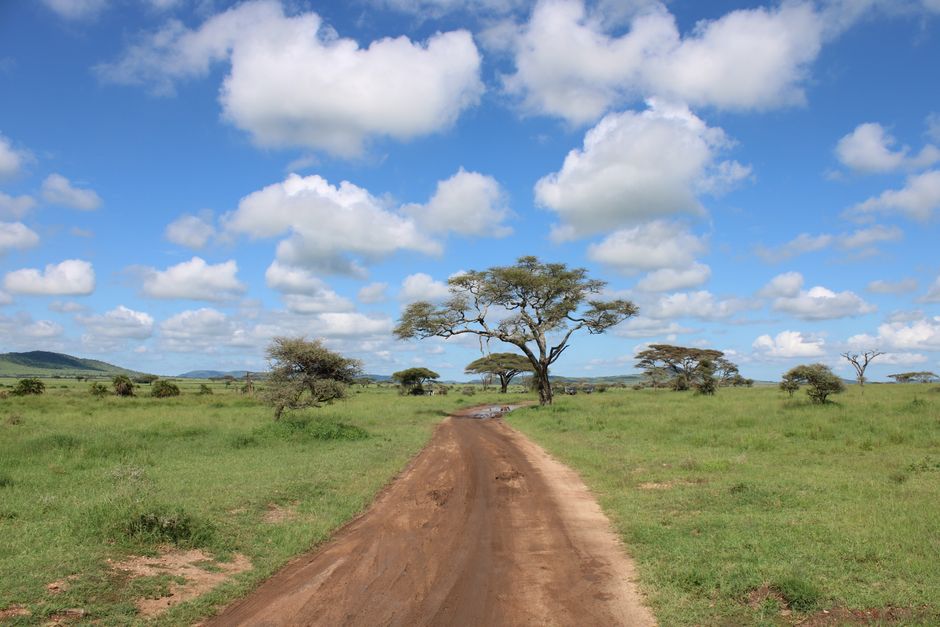
Serengeti National Park, in northern Tanzania, is the most famous wildlife park in Africa and the stage for the largest land migration on Earth. Tanzania National Parks (TANAPA), which manages it, calls it “home to the world’s last remaining large mammal migration”: more than 1.5 million wildebeest, with hundreds of thousands of zebras and gazelles, circle the ecosystem year-round between the short-grass plains of the south and Kenya’s Maasai Mara in the north, followed by lions, cheetahs, leopards, hyenas and crocodiles. Established in 1951 and inscribed as a UNESCO World Heritage Site in 1981, the park covers a vast area of open grasslands, acacia savanna, granite kopjes, riverine forest and woodland, roughly the size of Connecticut. The name is often traced to the Maasai word siringet, “the place where the land runs on forever”, and the endless horizons live up to it. You can see the Big Five here, though rhinos are rare, plus more than 500 bird species, according to TANAPA. Most visitors arrive on a safari from Arusha that also takes in the Ngorongoro Crater and Tarangire, by road over the crater highlands or by light aircraft to one of the park’s airstrips. Where you stay should depend on the month, because the herds move with the rains.
Right now in Serengeti National Park (Serengeti)
- Thu19–31°C65–88°FPartly cloudy
- Fri19–32°C66–90°F2 mm rain
- Sat19–31°C67–88°F1 mm rain
- Wed 14 Oct Nyerere Day (Siku ya Nyerere)
Top tours in Serengeti National Park
See all tours for Serengeti National Park →
From local operators, with prices and reviews; you check availability and book on Viator, our partner. We may earn a commission at no extra cost to you. How we earn money
Serengeti at a glance
- Best for: the Great Migration, big cats, the calving season, river crossings, balloon safaris and endless plains.
- How long: 3–4 nights at least; 5–6 nights to see two areas.
- Best time: all year; January to March for calving in the south, June to July for the western corridor, August to October for the Mara River in the north.
- Getting there: by road from Arusha (7–8 hours, according to TANAPA) or by light aircraft to Seronera and other airstrips.
- Park fees: TZS 178,850 (about US$68) per non-resident adult per 24 hours in TANAPA’s 2026/27 tariff.
- Good to know: fees are per 24 hours and add up fast; a ranger or licensed guide must accompany walks.
- Before you go: the visa, insurance, money and general safety are in our Tanzania travel guide.
Park fees, gates and rules
Serengeti park fees for 2026/27
TANAPA publishes its tariffs for each financial year, from July 1 to June 30. For non-resident adults, the 2026/27 entry fee for Serengeti is TZS 178,850 (about US$68 at October 2026 rates) per person, in the high-season period from May 16, 2026, to March 14, 2027; children aged 5 to 15 pay TZS 51,100 (about US$19), and children under 5 enter free. TANAPA states that conservation (entry) fees are valid for 24 hours from the time of entry, so each extra day needs a new fee, and that payments go through the government’s electronic payment gateway (GePG), with cards and mobile money accepted. Lodges and tented camps inside the park also charge a concession fee per person per night, listed at TZS 153,300 (about US$58) for adults from July to September, and vehicles pay a daily fee (for a foreign-registered vehicle up to 2,000 kg, TZS 102,200; for a Tanzanian-registered one, TZS 20,000). Your safari operator pays all of these and includes them in your price; ask whether their quote includes 18% VAT, as operators often quote in US dollars.
Gates and entry points
From Arusha and the Ngorongoro Conservation Area, vehicles enter at Naabi Hill Gate on the southeastern edge; others use Ndabaka Gate in the west, near Lake Victoria, Ikoma and Fort Ikoma in the north-center, and Klein’s Gate in the northeast. Note that the road from Arusha to Serengeti passes through the Ngorongoro Conservation Area, which charges its own fees.
Park rules
TANAPA’s visitor guide says visitors must stay in designated areas, avoid feeding wildlife and keep to speed limits, that guides must be certified, and that drones are prohibited without special permission. Stay in your vehicle except at designated points, keep to the roads, and don’t crowd animals.
Serengeti areas and where to stay
Central Serengeti (Seronera)
The Seronera Valley, in the middle of the park, is the hub of the Serengeti, with the main airstrip, a visitor center and the highest density of lodges and camps. Its rivers and kopjes hold resident lions, leopards and cheetahs year-round, so it’s good at any time. TANAPA mentions the Seronera Valley among the park’s vital habitats.
Southern Serengeti and Ndutu
From about December to April, the herds graze the short-grass plains of the southern Serengeti and the neighboring Ndutu area of the Ngorongoro Conservation Area. The Ngorongoro Conservation Area Authority says this is the calving season, when thousands of calves are born, drawing cheetahs, lions and hyenas. Seasonal camps move here for these months.
The Western Corridor and Grumeti
The Western Corridor stretches toward Lake Victoria along the Grumeti River, where the herds often pass in about May to July and huge crocodiles wait at the crossings. It’s quieter than the center.
Northern Serengeti and the Mara River
The remote northern Serengeti, around Kogatende and Lobo, borders Kenya’s Maasai Mara. From about July to October, the herds cross and recross the Mara River, and permanent and seasonal camps here offer the best chance of a crossing on the Tanzanian side.
Where to stay
- Lodges: larger hotels with pools in Seronera, Lobo and the west; good value and comfortable.
- Permanent tented camps: en-suite tents in prime locations; from mid-range to luxury.
- Mobile and seasonal camps: move with the migration, so you’re close to the herds.
- Public and special campsites: for camping safaris; TANAPA lists non-resident adult public camping at TZS 76,650 (about US$29) per night.
Top things to see in the Serengeti
The Great Migration
The migration is a continuous cycle rather than a single event. In a typical year, the herds are on the southern plains and around Ndutu from about December to April, calving in January and February; they move west and north from May to July, crossing the Grumeti River; they reach the north and the Mara River from about July to October, with many crossing into Kenya’s Maasai Mara; and they return south through the eastern Serengeti in November. Timing shifts every year with the rains, so a good operator will place you where the herds are expected.
Big cats
The Serengeti has one of Africa’s largest lion populations, and TANAPA lists lions, leopards, cheetahs and hyenas among its highlights. Look for prides on the kopjes of the Seronera and Moru areas, leopards in the sausage trees along the Seronera River, and cheetahs hunting on the open plains of the south.
The kopjes
Granite outcrops called kopjes rise like islands from the plains. The Moru Kopjes have Maasai rock paintings and a rock gong, and the Gol Kopjes in the southeast are a cheetah stronghold, with a separate vehicle entry fee of TZS 25,550 in the TANAPA tariff.
Rhinos, elephants and the rest
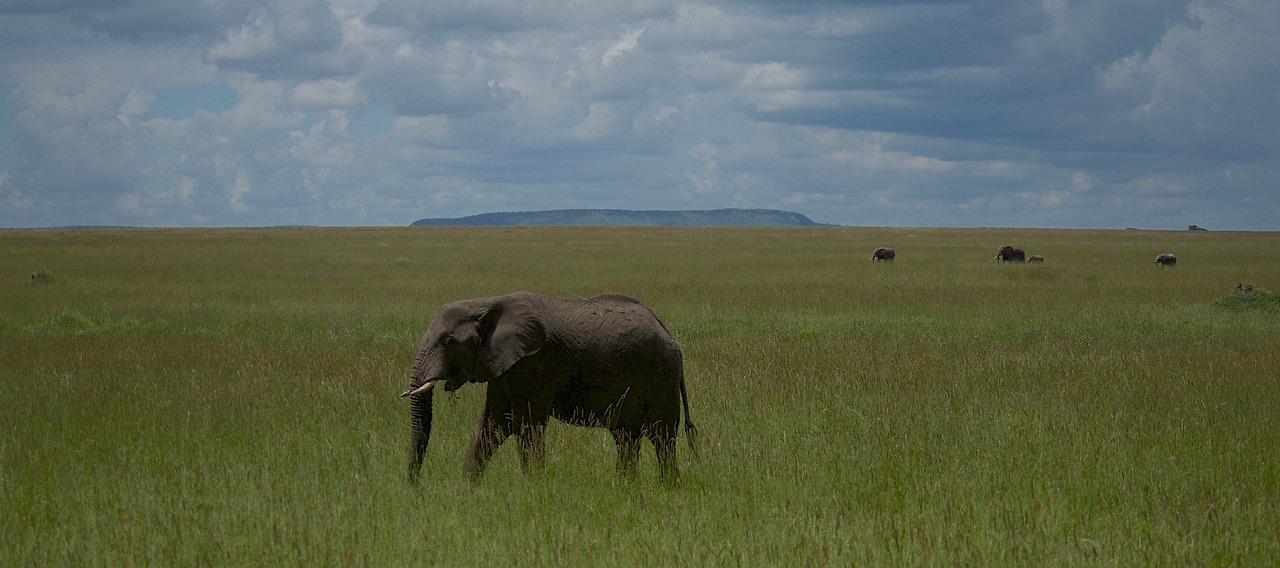
Elephants and buffalo are widespread, giraffes, topi, hartebeest, eland, impala and warthogs are common, and a small population of black rhinos lives in the Moru area, protected and hard to see. TANAPA also notes wild dogs among the park’s endangered species.
Hot-air balloon safaris
Balloons lift off at dawn from Seronera and seasonally from other areas, drifting over the plains for about an hour before a bush breakfast. TANAPA lists balloon safaris among the park’s activities; book well ahead.
Other things to do in the Serengeti
Walking safaris
TANAPA offers walking safaris with armed rangers: the 2026/27 tariff lists a short walk at TZS 51,100 (about US$19) and a long walk at TZS 63,875 (about US$24) per non-resident adult. They’re a chance to learn about tracks, plants and insects up close. See our hiking guide.
Bush meals and sundowners
TANAPA lists “bushmeal” experiences, with a small fee for hot bush meals and sundowners, which many camps arrange at a scenic kopje or riverbank.
Food and drink
Meals are included in safari packages: hearty breakfasts, picnic lunches in the bush or hot lunches at camp, and three-course dinners. Expect international food with Tanzanian touches such as ugali, pilau, nyama choma, coconut-based stews, chapati and fresh tropical fruit. Tanzanian coffee from the slopes of Kilimanjaro and Kenyan-style tea are served everywhere. Bring any special snacks you need, as there are no shops in the park beyond the lodges.
Day trips and nearby
- Ngorongoro Crater: about 3 hours from Seronera; most itineraries spend a day in the crater on the way in or out. See our Ngorongoro guide.
- Olduvai Gorge: the famous early-human site, on the road between Ngorongoro and Serengeti.
- Lake Victoria: beyond the Western Corridor, Africa’s largest lake, with the city of Mwanza.
- Maasai Mara: the same ecosystem across the Kenyan border, but there’s no tourist crossing inside the parks; you need to fly or use a road border.
- Tarangire: elephants and baobabs, on the way back to Arusha. See our Tarangire National Park guide.
Nearby destinations
- Maasai Mara National Reserve118 km
- Ngorongoro Conservation Area131 km
- Tarangire National Park235 km
- Arusha255 km
- Nairobi276 km
- Amboseli National Park296 km
Getting there and getting around
By road
According to TANAPA, Arusha is the most common entry point, and road safaris take 7–8 hours to the Serengeti. The route goes west via Mto wa Mbu, climbs the rim of the Ngorongoro Crater, and descends past Olduvai Gorge to Naabi Hill Gate; the last part is on gravel roads that are dusty in the dry season and can be muddy after rain. Most visitors travel in a pop-top 4×4 Land Cruiser with a licensed driver-guide.
By air
TANAPA notes regular flights to the Seronera airstrip, and light aircraft also serve Kogatende in the north, Ndutu, Grumeti and other airstrips, from Arusha, Kilimanjaro, Manyara and Zanzibar. Baggage is usually limited to about 15 kg (33 lb) in soft bags.
Getting around
You explore on game drives with your guide; self-driving is possible with a 4×4 and permits but not recommended for first-timers. Distances between areas are long: Seronera to Kogatende is a full day’s drive.
When to go and how long to stay
The Serengeti is good all year, but where you stay depends on the month. The short rains fall in about November and December and the long rains from about March to May; June to October is the long dry season, the busiest time, and January and February are a drier spell between the rains, ideal for calving. At about 1,200–1,800 m (3,900–5,900 ft), days are warm and nights cool. The table uses Tanzania Meteorological Authority (TMA) climate normals for 1991–2020, as published by the World Meteorological Organization (WMO), for Musoma, the nearest station, on Lake Victoria about 150 km (95 miles) northwest of Seronera: average daily highs and lows, total precipitation and days with at least 1 mm of rain. The central and eastern plains are cooler at night and generally drier.
| Month | Average high / low | Rain (days with 1 mm or more) | What to expect |
|---|---|---|---|
| January | 28 °C (83 °F) / 18 °C (65 °F) | 62 mm (2.4 in), 8 days | Calving season in the south; green plains |
| February | 29 °C (85 °F) / 19 °C (66 °F) | 58 mm (2.3 in), 6 days | Peak calving at Ndutu; predators active |
| March | 29 °C (84 °F) / 19 °C (66 °F) | 147 mm (5.8 in), 11 days | Long rains begin; herds in the south |
| April | 29 °C (83 °F) / 18 °C (65 °F) | 163 mm (6.4 in), 14 days | Long rains; some camps close; low season |
| May | 29 °C (83 °F) / 18 °C (64 °F) | 108 mm (4.3 in), 11 days | Rains easing; herds move west |
| June | 29 °C (83 °F) / 17 °C (63 °F) | 29 mm (1.1 in), 3 days | Dry season; Western Corridor and Grumeti |
| July | 29 °C (84 °F) / 17 °C (62 °F) | 13 mm (0.5 in), 2 days | Herds head north; first Mara crossings |
| August | 29 °C (84 °F) / 17 °C (63 °F) | 21 mm (0.8 in), 2 days | Mara River crossings; busiest month |
| September | 29 °C (85 °F) / 18 °C (65 °F) | 29 mm (1.1 in), 4 days | Crossings continue in the north |
| October | 29 °C (85 °F) / 19 °C (66 °F) | 67 mm (2.6 in), 8 days | Herds in the north; short rains approach |
| November | 28 °C (83 °F) / 18 °C (65 °F) | 119 mm (4.7 in), 12 days | Short rains; herds move south |
| December | 28 °C (83 °F) / 18 °C (65 °F) | 89 mm (3.5 in), 10 days | Herds back on southern plains |
How long to stay: 3, 4 and 6 nights
- 3 nights: central Serengeti (Seronera) for big cats, plus one area of the migration if close by.
- 4 nights: two nights in Seronera and two in the migration area (Ndutu, the west or the north, depending on the season).
- 6 nights: add a third area or a balloon flight, and allow full days with picnic lunches.
Typical costs
Prices are approximate, for October 2026, converted at about TZS 2,637 to the US dollar (Bank of Tanzania). Park fees are TANAPA’s 2026/27 non-resident rates; most safaris are priced in US dollars.
| Item | Typical cost |
|---|---|
| Serengeti entry, non-resident adult, per 24 hours | TZS 178,850 (about US$68) |
| Child aged 5–15, per 24 hours | TZS 51,100 (about US$19) |
| Lodge or camp concession fee, adult, per night (July–September) | TZS 153,300 (about US$58) |
| Public campsite, non-resident adult, per night | TZS 76,650 (about US$29) |
| Short walking safari, adult | TZS 51,100 (about US$19) |
| Balloon safari with breakfast | about US$550–650 per person |
| Mid-range 4-day northern-circuit safari, per person | about US$1,400–2,500 |
| Luxury tented camp, per person per night, all-inclusive | about US$700–1,800 |
Safety in the Serengeti
Wildlife: stay in the vehicle except at designated points, keep arms inside near lions and elephants, and follow your guide’s instructions. Camps are unfenced, so use an escort after dark and never walk alone. TANAPA recommends traveling with a guide or tour operator, carrying plenty of water, following ranger instructions, wearing neutral-colored clothing and using insect repellent. Tsetse flies are common in wooded areas; avoid dark blue and black clothes. Malaria occurs in all areas of Tanzania below 1,800 m (5,900 ft), including the Serengeti, so ask a travel-health professional about antimalarials. Tanzania requires a yellow fever certificate if you arrive from a country with yellow fever risk, including Kenya, or after a transit of more than 12 hours in one. Remoteness: some areas are far from medical help, so make sure your insurance covers evacuation; Tanzania’s compulsory inbound travel insurance is basic. Roads are rough and dusty; travel in daylight with an experienced guide. In an emergency, call 112.
Practical tips for the Serengeti
- Match your camp to the month: the migration moves; book where the herds should be.
- Budget for 24-hour fees: entry fees are charged per 24 hours, so a longer stay adds fees each day.
- Fly one way: a road safari in and a flight out saves a long day on bumpy roads.
- Bring cards: TANAPA accepts cards and mobile money; carry small US dollar notes or shillings for tips.
- No plastic bags: they’re banned in Tanzania and collected on arrival.
What to pack for the Serengeti
Neutral-colored (khaki, olive, tan) clothes in layers, a warm fleece for early mornings, a rain jacket in the wet seasons, a wide-brimmed hat, sunglasses, high-factor sunscreen, insect repellent, binoculars, a camera with a long lens and spare batteries, a dust cover or bag for your camera, a headlamp, soft luggage for light aircraft, and a power adapter: Tanzania uses 230 V with type D and G sockets. See our rain jackets, hiking shoes and travel adapters guides.
Serengeti National Park travel FAQ
How much is the Serengeti entry fee?
In TANAPA’s 2026/27 tariff, TZS 178,850 (about US$68) per non-resident adult and TZS 51,100 per child aged 5 to 15, per 24 hours; children under 5 are free.
When is the Great Migration in the Serengeti?
All year: calving in the south around Ndutu from about December to April, the Western Corridor from about May to July, and the Mara River in the north from about July to October.
Where can I see the river crossings?
On the Grumeti River in the west, usually around June, and on the Mara River in the far north, from about July to October.
How do I get to the Serengeti from Arusha?
By road in about 7–8 hours via the Ngorongoro Conservation Area, according to TANAPA, or by light aircraft to Seronera and other airstrips.
How many days do I need in the Serengeti?
At least three nights; four to six to combine central Serengeti with the migration area.
Can I combine the Serengeti and the Maasai Mara?
Yes, but not directly by road inside the parks. Fly or drive between Arusha and Nairobi and visit each separately.
Is the Serengeti fee valid for 24 hours?
Yes. TANAPA says its conservation fees are valid for 24 hours from the time of entry.
Can I fly a drone in the Serengeti?
Not without special permission, according to TANAPA.
Is there malaria in the Serengeti?
Yes. Malaria occurs throughout Tanzania below 1,800 m, including the Serengeti.
Can I do a walking safari in the Serengeti?
Yes. TANAPA offers short and long walking safaris with armed rangers in designated areas.
Plan your trip
Partner links: TravelerCenter may earn a commission if you book, at no extra cost to you.
🇹🇿 Useful Swahili phrases for Serengeti National Park
All 38 Swahili phrases: restaurant, hotel, emergencies, romance (printable) →
Sources · last reviewed 5 October 2026
Researched and last reviewed on 5 October 2026. Entry, concession, camping, walking safari, Gol Kopjes and vehicle fees, the 24-hour validity, payment methods and the 2026/27 tariff dates: Tanzania National Parks (TANAPA) tariff data; the migration description, wildebeest numbers, establishment, UNESCO status, birdlife, habitats, attractions, balloon and walking activities, road and air access and visitor rules: TANAPA; the calving season around Ndutu: the Ngorongoro Conservation Area Authority; malaria and yellow fever: the US CDC; plastic bags, insurance and emergency numbers: the UK government’s factual entry and safety pages, used for practical facts only; climate normals: the Tanzania Meteorological Authority via the World Meteorological Organization’s 1991–2020 normals (Musoma station); the exchange rate: the Bank of Tanzania. Gate names, area sizes, migration months by region, kopjes, rhinos, baggage limits, VAT treatment and typical prices are general references or estimates, flagged for checking. Fees and rules change, so check with your operator before you go. For the visa, insurance, money and general safety, see our Tanzania travel guide.
Data: Weather: MET Norway (CC BY 4.0) · Rates: ECB · Holidays: Nager.Date · Costs: World Bank ICP and price levels · Wikidata (CC0)