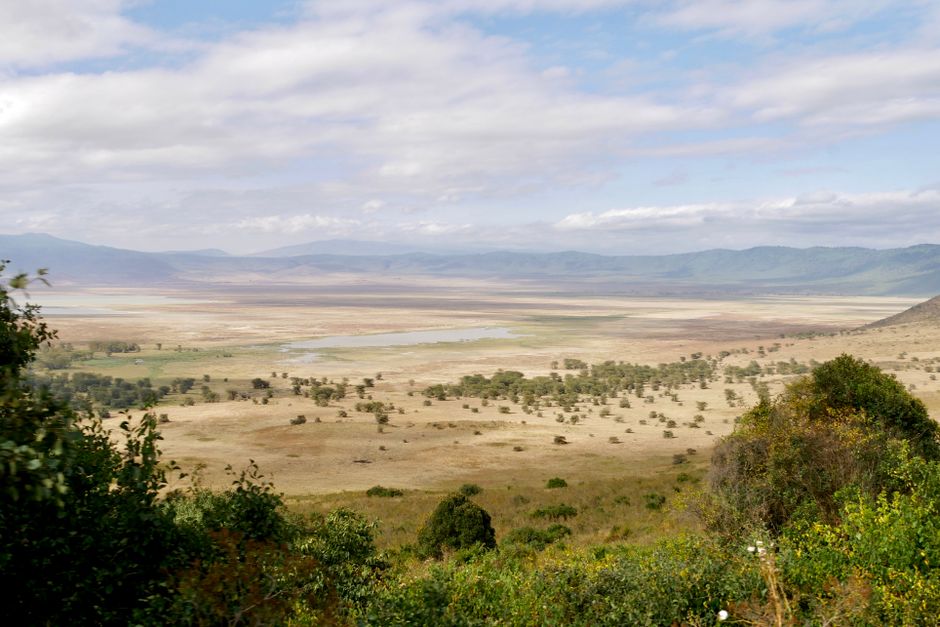
The Ngorongoro Conservation Area, in northern Tanzania between Arusha and the Serengeti, protects one of the natural wonders of the world: the Ngorongoro Crater. The Ngorongoro Conservation Area Authority (NCAA) describes it as the world’s largest intact and unfilled volcanic caldera, formed about 2.5 million years ago when a huge volcano, perhaps as big as Kilimanjaro, collapsed in on itself. Today its floor, about 260 km² (100 square miles) and some 610 m (2,000 ft) below the forested rim, holds grasslands, swamps, a soda lake, springs and acacia woods with more than 25,000 animals, including all of the Big Five. It is one of the best places in Africa to see black rhinos and big-maned lions in a single morning. But Ngorongoro is much more than the crater. The conservation area also covers the highland forests and the craters of Olmoti and Empakai, the short-grass plains of Ndutu, where the wildebeest migration gives birth from about December to April, and Olduvai Gorge, where the Leakey family’s discoveries changed our understanding of human origins. Unlike a national park, it’s a multiple-use area where Maasai pastoralists live and graze their cattle alongside wildlife. UNESCO inscribed it as a World Heritage Site in 1979. Most visitors spend a day in the crater as part of a northern-circuit safari.
Right now in Ngorongoro Conservation Area (Ngorongoro Crater)
- Wed12–21°C53–69°F2 mm rain
- Thu11–20°C51–68°F1 mm rain
- Fri11–19°C52–65°F9 mm rain
Top tours in Ngorongoro Conservation Area
See all tours for Ngorongoro Conservation Area →
From local operators, with prices and reviews; you check availability and book on Viator, our partner. We may earn a commission at no extra cost to you. How we earn money
Ngorongoro at a glance
- Best for: the crater’s Big Five, black rhinos, the calving season at Ndutu, Olduvai Gorge, crater highland walks and Maasai culture.
- How long: 1–2 nights on the rim or in Karatu, with a full day in the crater; more for Ndutu or Empakai.
- Best time: all year; June to October is dry; December to April for calving at Ndutu.
- Getting there: about 3–4 hours by road from Arusha to the Lodoare Gate and the crater rim; light aircraft to Lake Manyara or Ndutu airstrips.
- Fees: US$70.80 per non-East African adult per entry, plus a crater service fee of US$295 per vehicle, according to the NCAA.
- Good to know: descent roads into the crater close at 4 p.m., and the rim is cold, especially at night.
- Before you go: the visa, insurance, money and general safety are in our Tanzania travel guide.
Fees, permits and crater rules
Ngorongoro fees
The NCAA’s published tariff sets the entry permit for non-East African citizens aged 16 and over at US$70.80, with US$23.60 for children and free entry for children under 5. On top of that, every vehicle that descends into the crater pays a crater service fee of US$295 per vehicle per trip, shared among the people in it. Lodges and permanent tented camps charge a concession fee of US$59 per adult per night, public campsites cost US$35.40 and special campsites US$70.80 per adult per night. Other NCAA fees include Olduvai Gorge and the Shifting Sand (US$35.40), the Laetoli footprints (US$23.60), short and long guided walks (US$23.60 and US$29.50), the Endoro nature trail and elephant caves (US$17.70), and entry to cultural bomas (US$20 per vehicle). A foreign-registered vehicle up to 2,000 kg pays US$47.20. The NCAA says entry and camping fees must be paid within 24 hours of entry, and that all permits, including the crater service fee, are single entry. Your safari operator normally pays them all; check what’s included in your quote, as the NCAA page carries no effective date.
Crater rules
According to the NCAA’s visitor guidelines, only 4×4 vehicles up to 3,500 kg tare weight may drive on the crater floor; driving in the conservation area is allowed between 6 a.m. and 6 p.m.; the crater descent roads close at 4 p.m., and vehicles must be out by 6 p.m. Speed limits are 50 km/h (31 mph) in the area and 25 km/h (16 mph) in the craters. Off-road driving isn’t allowed, visitors must stay in their vehicles except at designated places such as the picnic sites, no more than five vehicles may gather at a sighting, and vehicles should stay at least 25 m (80 ft) from animals. Plastic bags are not allowed in the conservation area.
Areas of the Ngorongoro Conservation Area
The crater floor
The floor of the crater is a self-contained world: the soda Lake Magadi (pink with flamingos at times), the Lerai Forest of yellow fever trees, the Munge and Gorigor swamps with hippos and elephants, freshwater springs and open plains. NCAA notes the diverse habitats, grasslands, swamps, rivers and woodlands, and that animals can wander in and out year-round.
The crater rim
The rim, at about 2,300 m (7,500 ft), is covered in montane forest, often wrapped in mist in the morning. Lodges and campsites along it have views straight down into the crater. Elephants and buffalo wander through, and it’s cold at night.
Olmoti and Empakai craters
North of Ngorongoro, the smaller Olmoti Crater has a walk to a waterfall, and the deep Empakai Crater holds a soda lake with flamingos; a steep trail leads down to the lake with an armed ranger. Both are quiet and wild, about 1–2 hours’ drive from the rim.
Ndutu
In the southwest, bordering the Serengeti, Ndutu has short-grass plains, acacia woodland and the lakes Ndutu and Masek. NCAA says it is an excellent game-viewing area all year, and the best time is from the end of December, when the migration herds arrive, until about April, when they head north again; thousands of calves are born here.
Olduvai Gorge and the west
The road to the Serengeti passes Olduvai Gorge, the Shifting Sand (a migrating black dune), Nasera Rock and the plains of Gol, and to the south the Laetoli footprints.
Top things to see in Ngorongoro
A game drive in the crater
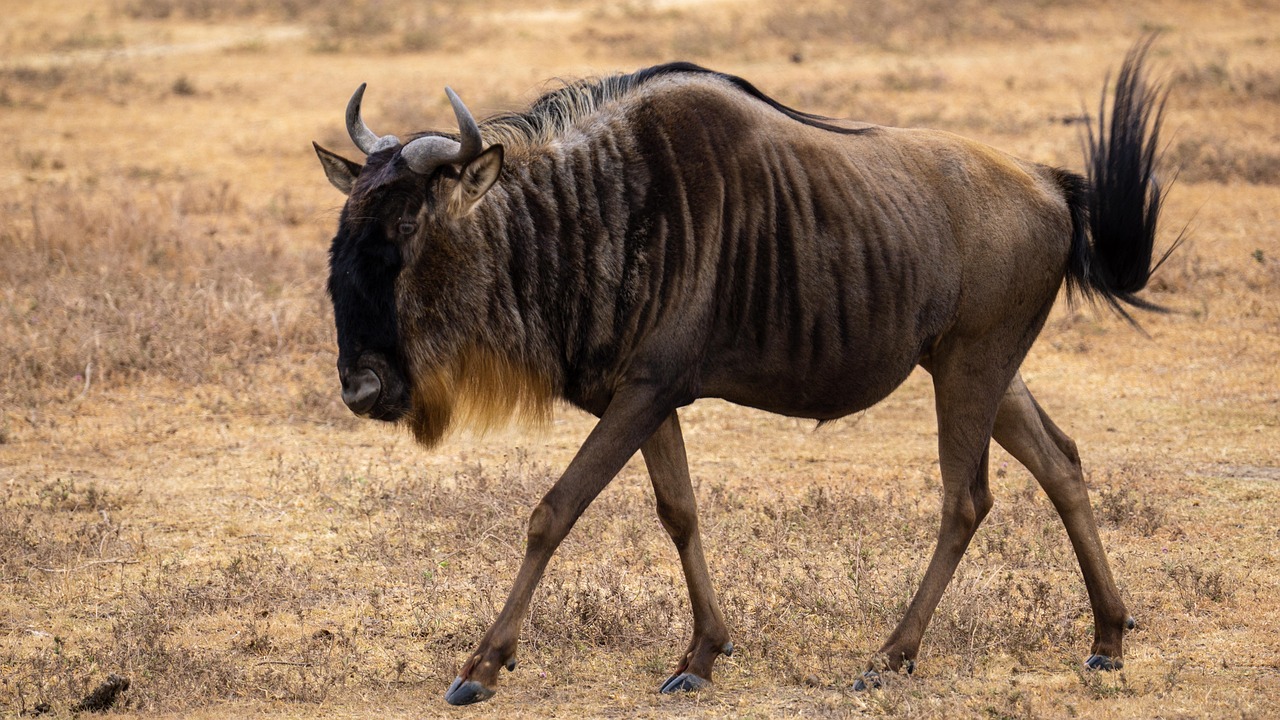
A day in the crater is the highlight of most Tanzanian safaris. Descend early, when the descent road opens and the light is soft, to see lions, spotted hyenas, elephants (mostly old bulls), buffalo, wildebeest, zebras, gazelles, hippos and jackals, plus crowned cranes, flamingos and kori bustards. The crater’s black rhinos are often seen at a distance on the open plains; binoculars help. Most drives last 6 hours, with a picnic lunch at a designated site by a hippo pool.
Olduvai Gorge
The NCAA calls Olduvai Gorge a remarkable archaeological site, part of the World Heritage Site since 1979, about 55 km (34 miles) long and 100 m (330 ft) deep. Here, over more than 30 years, Mary and Louis Leakey found the Zinjanthropus (Australopithecus boisei) skull and remains of Homo habilis and Homo erectus, with stone tools 1.6 to 1.8 million years old. The museum on the rim explains the finds; the NCAA says you need an official guide to visit the actual excavations.
The calving season at Ndutu
From about January to March, Ndutu’s plains are covered with wildebeest and zebras and their newborn calves, with lions, cheetahs and hyenas close by, one of the most dramatic wildlife spectacles in Africa. See our Serengeti National Park guide for the rest of the migration.
Maasai culture
The Maasai live throughout the conservation area, and NCAA cultural bomas welcome visitors to see homes, dances and crafts. The NCAA also lists the cultures of the Hadzabe, hunter-gatherers, and the Datoga, pastoralists and blacksmiths, who live around Lake Eyasi to the south.
Empakai Crater walk
The descent to Empakai’s lake, about an hour down and more back up, passes through forest with views of Ol Doinyo Lengai, the active volcano of the Maasai, and the Rift Valley. It’s one of the most beautiful walks in northern Tanzania. See our hiking guide.
Other things to do in Ngorongoro
Walks in the crater highlands
Guided walks with NCAA rangers, from short nature trails to multi-day treks across the highlands to Empakai and Lake Natron, show a different side of the area, with forests, waterfalls and Maasai villages.
Food and drink
Lodges on the rim and in Karatu serve buffet and set menus, often with produce from the fertile farms around Karatu, which is known for coffee, vegetables and fruit. On a crater day, you’ll have a packed lunch; keep food inside the vehicle, as kites swoop down to grab sandwiches. Try Tanzanian pilau, ugali with beef stew, chapati, mandazi and fresh passion-fruit juice, and Tanzanian coffee at the farm lodges.
Day trips and nearby
- Lake Manyara National Park: below the Rift Valley escarpment near Mto wa Mbu, known for its forest, birdlife and tree-climbing lions, according to TANAPA.
- Lake Eyasi: visit Hadzabe and Datoga communities with a local guide.
- Karatu coffee farms: coffee tours and walks in the farmland between the rim and Mto wa Mbu.
- Tarangire: about 2–3 hours east, with elephants and baobabs. See our Tarangire National Park guide.
- Serengeti: the road continues past Olduvai to Naabi Hill Gate. See our Serengeti National Park guide.
Nearby destinations
- Tarangire National Park105 km
- Serengeti National Park131 km
- Arusha137 km
- Maasai Mara National Reserve195 km
- Amboseli National Park208 km
- Kilimanjaro National Park212 km
- Nairobi262 km
Getting there and getting around
By road
From Arusha, the paved road runs west via Makuyuni, Mto wa Mbu and Karatu to the Lodoare Gate, about 3–4 hours; from the gate, a gravel road climbs to the rim. The crater is reached by descent and ascent roads from the rim, and the road to Serengeti continues west to Naabi Hill. Almost everyone visits with a licensed safari operator; the NCAA requires vehicles in the area (other than private and government vehicles) to be registered company vehicles with a valid tourism license.
By air
The nearest airstrips are at Lake Manyara, about 1 hour from the rim, and seasonally Ndutu, with flights from Arusha, Kilimanjaro and the Serengeti.
Getting around
You explore with your operator’s 4×4 and guide. Remember the single-entry rule: if you leave the conservation area and come back, you pay again.
When to go and how long to stay
Ngorongoro is good to visit all year. The dry season from June to October brings clear skies, dusty roads and more vehicles; the short rains in November and December and the long rains from about March to May make the crater greener and quieter, though roads can be muddy. The calving season at Ndutu runs from about January to March. The rim is much cooler than the lowlands: expect days around 15–20 °C (59–68 °F) and nights that can drop close to freezing from June to August (estimate). The table uses Tanzania Meteorological Authority (TMA) climate normals for 1991–2020 for Kilimanjaro International Airport, the nearest station with published normals, at 891 m (2,923 ft), as published by the World Meteorological Organization (WMO). It shows the pattern of rains in the region; at the crater rim, about 1,400 m (4,600 ft) higher, temperatures are roughly 8–9 °C (14–16 °F) lower (estimated).
| Month | Average high / low | Rain (days with 1 mm or more) | What to expect |
|---|---|---|---|
| January | 33 °C (92 °F) / 19 °C (66 °F) | 43 mm (1.7 in), 4 days | Warm, drier spell; calving at Ndutu |
| February | 34 °C (93 °F) / 19 °C (66 °F) | 39 mm (1.5 in), 3 days | Peak calving; green crater |
| March | 33 °C (91 °F) / 20 °C (68 °F) | 94 mm (3.7 in), 6 days | Long rains begin; quieter |
| April | 30 °C (86 °F) / 20 °C (68 °F) | 132 mm (5.2 in), 12 days | Wettest month; muddy roads |
| May | 27 °C (81 °F) / 19 °C (66 °F) | 73 mm (2.9 in), 9 days | Rains easing; cool on the rim |
| June | 26 °C (80 °F) / 16 °C (61 °F) | 9 mm (0.4 in), 2 days | Dry season; cold nights on the rim |
| July | 26 °C (79 °F) / 15 °C (59 °F) | 4 mm (0.1 in), 1 day | Coolest month; frost possible on the rim |
| August | 27 °C (81 °F) / 15 °C (60 °F) | 6 mm (0.2 in), 1 day | Dry; busy in the crater |
| September | 30 °C (85 °F) / 16 °C (61 °F) | 5 mm (0.2 in), 1 day | Dry and clear; excellent |
| October | 31 °C (88 °F) / 18 °C (64 °F) | 24 mm (1.0 in), 3 days | Warm days; short rains approach |
| November | 32 °C (89 °F) / 19 °C (66 °F) | 51 mm (2.0 in), 5 days | Short rains; green and quiet |
| December | 32 °C (90 °F) / 19 °C (66 °F) | 44 mm (1.8 in), 4 days | Showers; herds head for Ndutu |
How long to stay: 1, 2 and 3 nights
- 1 night: sleep on the rim or in Karatu and spend the next day in the crater.
- 2 nights: add Olduvai Gorge and a walk on the rim or Olmoti.
- 3 nights or more: in season, add Ndutu for the calving, or Empakai and the highlands.
Where to stay in Ngorongoro
- Rim lodges: views into the crater and the earliest descents; cold at night.
- Karatu: farm lodges and hotels outside the gate, about 30–45 minutes from the rim; good value, and you avoid the concession fee.
- Ndutu: lodges and seasonal camps for the calving season.
- Campsites: the NCAA public campsite on the rim (Simba) and special campsites; book with an operator.
Typical costs
Prices are approximate, for October 2026, converted at about TZS 2,637 to the US dollar (Bank of Tanzania). Fees are the NCAA’s published non-East African rates.
| Item | Typical cost |
|---|---|
| Entry permit, adult (16+), per entry | US$70.80 (about TZS 186,700) |
| Entry permit, child | US$23.60 (about TZS 62,200) |
| Crater service fee, per vehicle per descent | US$295 (about TZS 777,900) |
| Concession fee, lodge or camp, adult per night | US$59 (about TZS 155,600) |
| Olduvai Gorge and Shifting Sand | US$35.40 (about TZS 93,400) |
| Public campsite, adult per night | US$35.40 (about TZS 93,400) |
| Mid-range lodge in Karatu, per person per night, full board | about US$120–250 |
| Rim lodge, per person per night, full board | about US$250–800 |
Safety in Ngorongoro
Wildlife: stay in the vehicle except at the designated picnic sites and viewpoints, and keep your distance from buffalo and elephants on the rim, where they wander past lodges and campsites; never walk around at night. Cold and altitude: the rim is at about 2,300 m (7,500 ft); bring warm clothes, and drink plenty of water if you’re sensitive to altitude. Malaria occurs in Tanzania below 1,800 m (5,900 ft), so the crater floor (around 1,700 m) and Ndutu carry some risk; ask a travel-health professional about antimalarials and use repellent. Tanzania requires a yellow fever certificate if you arrive from a country with yellow fever risk, including Kenya. Roads: the gravel roads can be very dusty and slippery in the rains; travel in daylight with an experienced driver. Culture: ask before photographing Maasai people, and agree any fee in advance. In an emergency, call 112.
Practical tips for Ngorongoro
- Descend early: be at the descent road when it opens for the best light and fewer vehicles.
- Watch your lunch: black kites snatch food at the picnic sites; eat inside the vehicle.
- Remember the single-entry rule: permits aren’t valid for re-entry, so plan your route.
- Carry warm layers: mornings on the rim can be near freezing in July and August.
- Leave plastic bags behind: they’re banned in Tanzania and in the conservation area.
What to pack for Ngorongoro
A warm fleece and jacket, a hat and gloves for June to August, layers for warm crater afternoons, a rain jacket in the wet seasons, sunglasses, high-factor sunscreen, insect repellent, binoculars (essential for rhinos), a camera with a long lens, a dust cover, and a power adapter: Tanzania uses 230 V with type D and G sockets. See our rain jackets, hiking shoes and travel adapters guides.
Ngorongoro travel FAQ
How much does it cost to visit the Ngorongoro Crater?
The NCAA lists US$70.80 per non-East African adult for entry, plus a crater service fee of US$295 per vehicle per descent, shared by everyone in the vehicle.
Can you see the Big Five in the Ngorongoro Crater?
Yes. Lions, elephants, buffalo and black rhinos are seen regularly; leopards are present but harder to spot.
What time does the crater close?
The descent roads close at 4 p.m., and vehicles must leave the crater by 6 p.m., according to the NCAA.
How long is a game drive in the crater?
Most visitors spend about 6 hours on the crater floor, with a picnic lunch.
Can I stay overnight in the crater?
No. Accommodation is on the rim, in Karatu or elsewhere in the conservation area; the crater floor is for day visits only.
When is the calving season at Ndutu?
The NCAA says the herds arrive at the end of December and stay until about April; most calves are born from about January to March.
Is the Ngorongoro entry permit valid for re-entry?
No. The NCAA says all permits, including the crater service fee, are single entry.
Is Ngorongoro a national park?
No. It’s a conservation area managed by the NCAA, where Maasai people live alongside wildlife, separate from TANAPA’s national parks.
How cold is the Ngorongoro Crater rim?
Cool by day and cold at night, especially from June to August, when nights can approach freezing.
Can I visit Olduvai Gorge?
Yes. It’s on the road between the crater and the Serengeti; the NCAA fee is US$35.40, and an official guide is needed to visit the excavations.
Plan your trip
Partner links: TravelerCenter may earn a commission if you book, at no extra cost to you.
🇹🇿 Useful Swahili phrases for Ngorongoro Conservation Area
All 38 Swahili phrases: restaurant, hotel, emergencies, romance (printable) →
Sources · last reviewed 5 October 2026
Researched and last reviewed on 5 October 2026. Entry, crater service, concession, camping, Olduvai, Laetoli, walking, nature trail, cultural boma and vehicle fees, the 24-hour payment rule and single-entry permits: the Ngorongoro Conservation Area Authority (NCAA) tariff page (undated); crater rules, vehicle limits, opening hours, speed limits, sightings and plastic rules: the NCAA visitor guidelines; the crater’s formation, size, depth, animal numbers and habitats, Ndutu and the calving season, Olduvai Gorge and the cultures: NCAA attraction pages; Lake Manyara: TANAPA; malaria and yellow fever: the US CDC; emergency numbers: the UK government’s factual safety pages, used for practical facts only; climate normals: the Tanzania Meteorological Authority via the World Meteorological Organization’s 1991–2020 normals (Kilimanjaro International Airport station); the exchange rate: the Bank of Tanzania. Rim altitude and temperatures, the temperature adjustment for the rim, drive times, the Empakai walk, lodges and typical prices are general references or estimates, flagged for checking. Fees and rules change, so check with your operator before you go. For the visa, insurance, money and general safety, see our Tanzania travel guide.
Data: Weather: MET Norway (CC BY 4.0) · Rates: ECB · Costs: World Bank ICP and price levels · Wikidata (CC0)