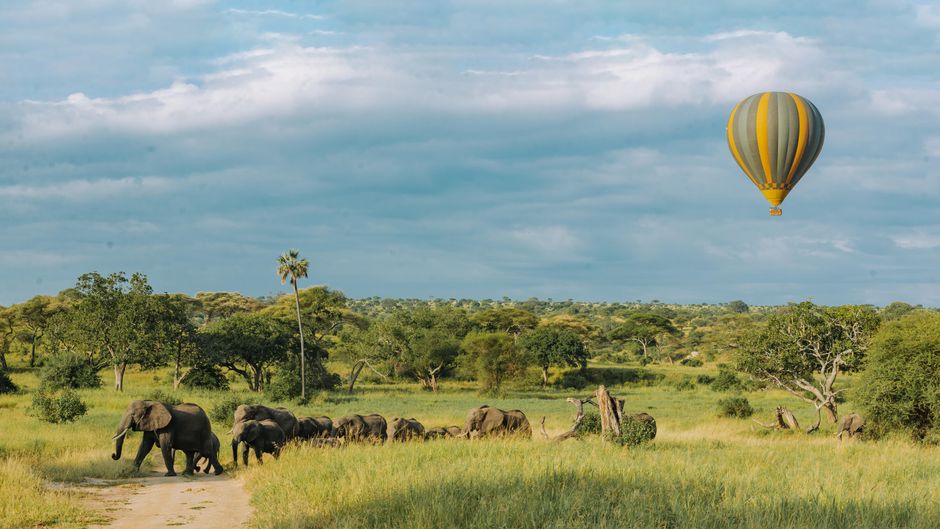
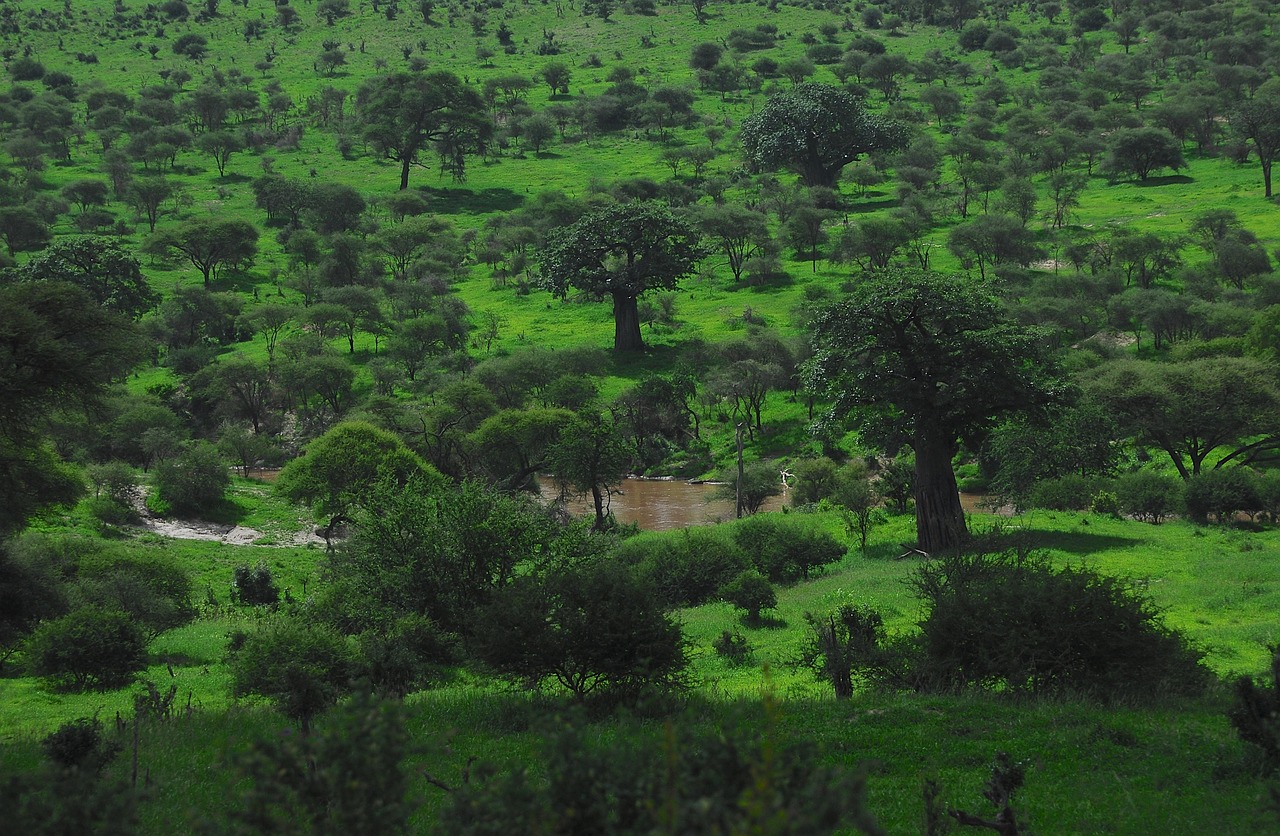
Tarangire National Park, about two and a half to three hours by road southwest of Arusha in Tanzania’s Manyara Region, is the land of giants: Tanzania National Parks (TANAPA) calls it famous for awe-inspiring elephant herds, the largest in Tanzania, and its iconic baobab-dotted landscapes. Named after the Tarangire River, which crosses the park and is its lifeline in the dry season, the park covers about 2,850 km² (1,100 square miles) at an altitude of 900 to 1,250 m (2,950 to 4,100 ft), according to TANAPA. From about June to October, when the surrounding plains dry out, wildebeest, zebras, buffalo, elands and hartebeests pour in from the Maasai Steppe to drink, and the riverbanks are crowded with elephants digging for water in the sand. Lions, leopards, cheetahs and hyenas follow the herds, tree-climbing pythons hide in the riverine thickets, and with more than 550 bird species TANAPA ranks Tarangire among East Africa’s finest birding parks. The swamps, especially Silale Swamp, are vital in the driest months. Tarangire is usually the first or last stop on a northern-circuit safari with the Ngorongoro Crater and the Serengeti, but its quieter southern areas, walking safaris, night drives and ancient baobabs reward a longer stay. It’s also easy to visit on a day trip from Arusha.
Right now in Tarangire National Park (Tarangire)
- Wed21–30°C69–86°F1 mm rain
- Thu18–32°C65–89°FMostly clear
- Fri18–31°C65–88°F12 mm rain
Top tours in Tarangire National Park
See all tours for Tarangire National Park →
From local operators, with prices and reviews; you check availability and book on Viator, our partner. We may earn a commission at no extra cost to you. How we earn money
Tarangire at a glance
- Best for: elephant herds, baobabs, dry-season concentrations of wildlife, birds, walking safaris and night drives.
- How long: 1–2 nights, or a long day trip from Arusha.
- Best time: June to October (dry season); green and full of birds from November to May.
- Getting there: about 2.5–3 hours by paved road from Arusha via Makuyuni and Minjingu, according to TANAPA, or by light aircraft to Kuro airstrip.
- Park fees: TZS 127,750 (about US$48) per non-resident adult per 24 hours in TANAPA’s 2026/27 tariff.
- Good to know: tsetse flies bite in wooded areas; avoid dark blue and black clothes.
- Before you go: the visa, insurance, money and general safety are in our Tanzania travel guide.
Park fees, seasons and rules
Tarangire fees for 2026/27
In TANAPA’s tariff for the 2026/27 financial year, the entry fee for non-resident adults is TZS 127,750 (about US$48 at October 2026 rates) per person per 24 hours from May 16, 2026, to March 14, 2027, and TZS 38,325 (about US$15) for children aged 5 to 15; under-5s enter free. TANAPA lists extra activity fees: night game drives at TZS 127,750 per adult, walking safaris at TZS 51,100 (short) or TZS 63,875 (long) per adult, canoeing at TZS 76,650 and bush meals or sundowners at TZS 12,775. Lodges inside the park charge a concession fee of TZS 102,200 per adult per night, public camping costs TZS 76,650 and special or seasonal campsites TZS 153,300 from July to September. TANAPA says fees are valid for 24 hours and paid via the government payment gateway, by card or mobile money; your operator normally arranges them. Ask whether VAT is included in your quote.
Seasons
TANAPA describes Tarangire’s bimodal rainfall: short rains in November and December, long rains from March to May, and dry seasons from June to October and in January and February, with an average of 650 to 700 mm (26 to 28 in) of rain a year. In the dry season, animals concentrate along the river and in the swamps; in the wet season, many migrate out to the Maasai Steppe and the park becomes lush and quieter, with migrant birds.
Park rules
TANAPA asks visitors to stay on designated tracks, observe speed limits, not feed or harass wildlife, leave the vehicle only at designated points and follow ranger and guide instructions. Walking activities must be accompanied by authorized rangers, and drones require prior written permission. Keep generous distances from elephants and buffalo and never block animal paths to water, TANAPA says.
The wider Tarangire ecosystem
The park is only the dry-season core of a much larger ecosystem. In the rains, many of its wildebeest, zebras and elephants spread out over tens of thousands of square kilometers of the Maasai Steppe, Lake Manyara’s shores and the plains around Lake Natron, sharing the land with Maasai herders, before returning to the river as the pans dry. Keeping these corridors open, through community wildlife areas and land-use agreements, is one of the big conservation challenges in northern Tanzania. Staying at a community-area camp is one way to support the people who live alongside the wildlife.
Tarangire’s areas and who each one suits
The northern river circuit
Most visitors stay in the north, between the main gate and the Tarangire River, with loops along the river valley and over baobab-studded ridges. This is where the big elephant herds gather in the dry season, and where day trips concentrate.
Silale Swamp
South of the northern circuit, Silale Swamp is a dry-season lifeline that concentrates buffalo, elephants and birds, TANAPA says, and is prime for relaxed viewing and photography. Lions sometimes climb trees around the swamp.
The south and the Gursi and Lamarkau swamps
The southern half of the park is wilder, with fewer roads, palms and seasonal swamps, and very few vehicles; a couple of remote camps operate here.
Outside the park
Wildlife-rich areas outside the park boundary, such as the community wildlife areas to the east and north, host tented camps that offer walking safaris and night drives.
Where to stay in Tarangire
TANAPA lists options from public campsites and pre-booked special campsites to partner lodges and tented camps along the Tarangire River, in the Silale Swamp area and on the park boundary, and recommends booking well in advance for the dry season.
- Inside the park: lodges and tented camps with river views; the best for early drives.
- On the boundary: camps in the community areas, with walks and night drives.
- Mto wa Mbu and Karatu: budget and mid-range lodges about an hour or more away, convenient for Ngorongoro.
Top things to see in Tarangire
Elephant herds and baobabs
Tarangire’s signature scene, TANAPA says, is large elephant families browsing beneath ancient baobabs along river terraces and open savanna. Families of 30 or more elephants are common in the dry season, and you may see them digging in the dry riverbed for water. The baobabs, some many centuries old, glow at sunset and are often scarred by elephants stripping their bark.
The dry-season migration
As the surrounding plains dry out, wildebeest, zebras and hartebeests funnel to the Tarangire River through seasonal migration corridors, TANAPA notes, creating superb dry-season game viewing. It’s a smaller, less famous migration than the Serengeti’s, but it can be just as dense.
Predators and pythons
Lions, leopards and hyenas patrol the plains, and TANAPA highlights the famous tree-climbing pythons in riverine thickets and among termite mounds. Cheetahs are occasionally seen in the open south.
Birds
TANAPA lists more than 550 species, from kori bustards and ostriches to yellow-collared lovebirds, bee-eaters and birds of prey, making Tarangire one of East Africa’s best birding parks. November to April is best for migrant birds.
Termite mounds and sunset viewpoints
Giant termite mounds rise across the plains, used by dwarf mongooses as homes. TANAPA recommends the sunset viewpoints, with golden light over the baobab hills and river valley.
Other things to do in Tarangire
Walking safaris
Guided walks with an armed TANAPA ranger, short (a few hours) or long, offer close-up encounters with tracks, trees and birds, and a chance to feel the scale of an elephant from ground level. See our hiking guide.
Night game drives
Tarangire is one of the parks where TANAPA offers night game drives, at TZS 127,750 per adult, for nocturnal animals such as genets, civets, bushbabies, aardvarks and hunting lions and leopards.
Balloon safaris
TANAPA lists balloon safaris among Tarangire’s activities, drifting over the river valley at dawn in season.
Photography
Tarangire is wonderfully photogenic: elephants against baobabs, the river valley in late light, and termite mounds with mongooses. The best light is in the first and last two hours of the day; in the dry season, dust adds a golden haze to backlit shots. Bring a zoom lens for birds and a wide lens for baobab landscapes, and protect your gear from dust with a bag or cover.
Food and drink
Meals are included at the lodges and camps, often eaten on terraces overlooking the river valley. Try Tanzanian dishes such as pilau, ndizi stew, chapati, mchicha (spinach in coconut sauce) and grilled meats, with tropical fruit and local coffee. On a day trip, operators bring a picnic lunch, eaten at the designated picnic site.
Day trips and nearby
- Lake Manyara National Park: about an hour away below the Rift Valley escarpment, known for its forest, birds and tree-climbing lions; TANAPA’s 2026/27 non-resident adult fee is TZS 127,750.
- Mto wa Mbu: a lively village with banana farms, markets and cultural tours.
- Ngorongoro Crater: about 2–3 hours west. See our Ngorongoro guide.
- Serengeti: the next stop on most itineraries. See our Serengeti National Park guide.
- Arusha: about 2.5–3 hours back by road. See our Arusha guide.
Nearby destinations
- Ngorongoro Conservation Area105 km
- Arusha105 km
- Kilimanjaro National Park186 km
- Amboseli National Park206 km
- Serengeti National Park235 km
- Maasai Mara National Reserve294 km
Getting there and getting around
By road
TANAPA says Tarangire lies about 2.5–3 hours by road from Arusha on a good tarmac route via Makuyuni and Minjingu, with final access on graded park roads, and recommends a 4×4 in the wet season (November to May). Most visitors travel in a pop-top safari vehicle with a licensed driver-guide.
By air
Scheduled and charter flights use the Kuro airstrip inside the park, according to TANAPA, with flights from Arusha and the Serengeti.
Getting around
You explore on game drives with your guide; self-drive is possible with a 4×4, but the tracks can be muddy in the rains, and a guide spots far more wildlife. TANAPA recommends avoiding waterlogged pans and unbridged crossings during the rains.
When to go and how long to stay
Tarangire is at its best in the dry season from June to October, when wildlife concentrates along the river; it’s hot by day, around 27–31 °C (81–88 °F), and dusty. January and February are a short dry spell, and the rains in November–December and March–May make the park green and beautiful, with fewer animals near the river but excellent birding and few visitors. The table uses Tanzania Meteorological Authority (TMA) climate normals for 1991–2020 for Kilimanjaro International Airport, the nearest station with published normals, at 891 m (2,923 ft), as published by the World Meteorological Organization (WMO); TANAPA puts Tarangire’s annual rainfall at 650–700 mm, a little more than the airport’s.
| Month | Average high / low | Rain (days with 1 mm or more) | What to expect |
|---|---|---|---|
| January | 33 °C (92 °F) / 19 °C (66 °F) | 43 mm (1.7 in), 4 days | Short dry spell; calving on the steppe |
| February | 34 °C (93 °F) / 19 °C (66 °F) | 39 mm (1.5 in), 3 days | Hot; green; good birding |
| March | 33 °C (91 °F) / 20 °C (68 °F) | 94 mm (3.7 in), 6 days | Long rains; lush; animals disperse |
| April | 30 °C (86 °F) / 20 °C (68 °F) | 132 mm (5.2 in), 12 days | Wettest month; some tracks muddy |
| May | 27 °C (81 °F) / 19 °C (66 °F) | 73 mm (2.9 in), 9 days | Rains easing; very green and quiet |
| June | 26 °C (80 °F) / 16 °C (61 °F) | 9 mm (0.4 in), 2 days | Dry season begins; herds return to the river |
| July | 26 °C (79 °F) / 15 °C (59 °F) | 4 mm (0.1 in), 1 day | Cooler; elephants gather at the river |
| August | 27 °C (81 °F) / 15 °C (60 °F) | 6 mm (0.2 in), 1 day | Dry; excellent game viewing |
| September | 30 °C (85 °F) / 16 °C (61 °F) | 5 mm (0.2 in), 1 day | Peak dry season; big herds |
| October | 31 °C (88 °F) / 18 °C (64 °F) | 24 mm (1.0 in), 3 days | Hot and dry; superb elephant viewing |
| November | 32 °C (89 °F) / 19 °C (66 °F) | 51 mm (2.0 in), 5 days | Short rains; migrant birds arrive |
| December | 32 °C (90 °F) / 19 °C (66 °F) | 44 mm (1.8 in), 4 days | Showers; green and quiet |
How long to stay: 1 and 2 nights
- Day trip: an early start from Arusha, game drive with a picnic lunch, back by evening.
- 1 night: an afternoon and a morning drive along the river.
- 2 nights: add a walking safari, a night drive or the Silale Swamp and the south.
Typical costs
Prices are approximate, for October 2026, converted at about TZS 2,637 to the US dollar (Bank of Tanzania). Park fees are TANAPA’s 2026/27 non-resident rates; safaris are usually priced in US dollars.
| Item | Typical cost |
|---|---|
| Tarangire entry, non-resident adult, per 24 hours | TZS 127,750 (about US$48) |
| Child aged 5–15, per 24 hours | TZS 38,325 (about US$15) |
| Night game drive, adult | TZS 127,750 (about US$48) |
| Short walking safari, adult | TZS 51,100 (about US$19) |
| Lodge concession fee, adult per night | TZS 102,200 (about US$39) |
| Public campsite, adult per night | TZS 76,650 (about US$29) |
| Day trip from Arusha with vehicle and guide, per person (2 people) | about US$250–400 |
| Mid-range lodge or tented camp, per person per night, full board | about US$200–450 |
Safety in Tarangire
TANAPA warns that Tarangire’s elephants and buffalo are powerful: keep generous distances and never block animal paths to water. Remain in your vehicle except at designated points. In tsetse areas, keep windows mostly up at low speeds and wear neutral-colored clothing; tsetse bites are painful, and dark blue and black attract them. Carry sufficient drinking water, sun protection and insect repellent, TANAPA says. During the rains, expect muddy sections and avoid waterlogged pans. Walking and any off-road permissions require an authorized ranger. Malaria occurs in Tanzania below 1,800 m (5,900 ft), which includes all of Tarangire, so ask a travel-health professional about antimalarials. Tanzania requires a yellow fever certificate if you arrive from a country with yellow fever risk, including Kenya. Camps are unfenced, so use an escort at night. In an emergency, call 112.
Practical tips for Tarangire
- Go in the dry season for elephants: July to October is peak.
- Start early: animals are most active and the light is best in the morning.
- Dress for tsetse: khaki and olive rather than black or dark blue.
- Book walks and night drives ahead: through your camp or operator, with TANAPA rangers.
- No plastic bags: banned in Tanzania and in the parks.
What to pack for Tarangire
Neutral-colored, lightweight clothes, long sleeves for dusk and tsetse areas, a light fleece for early mornings, a sun hat, sunglasses, high-factor sunscreen, insect repellent, binoculars, a camera with a zoom lens, a refillable water bottle, closed shoes for walking safaris and a power adapter: Tanzania uses 230 V with type D and G sockets. See our hiking shoes and travel adapters guides.
Tarangire National Park travel FAQ
How much is the Tarangire entry fee?
In TANAPA’s 2026/27 tariff, TZS 127,750 (about US$48) per non-resident adult and TZS 38,325 per child aged 5 to 15, per 24 hours.
When is the best time to visit Tarangire?
June to October, when animals gather at the Tarangire River; the green season from November to May is great for birds and quiet.
How far is Tarangire from Arusha?
About 2.5–3 hours by paved road via Makuyuni and Minjingu, according to TANAPA.
Can I do a day trip to Tarangire from Arusha?
Yes. Leave early, spend the day on game drives with a picnic lunch, and return by evening.
Why is Tarangire famous?
For its large elephant herds, the largest in Tanzania according to TANAPA, and its ancient baobab trees.
Are there tsetse flies in Tarangire?
Yes, in wooded areas. Wear neutral colors and use repellent; TANAPA suggests keeping windows mostly up at low speeds.
Can I do a night game drive in Tarangire?
Yes. TANAPA offers night game drives, at TZS 127,750 per non-resident adult in 2026/27.
Can I walk in Tarangire?
Yes, on guided walking safaris with an authorized ranger.
How many days do I need in Tarangire?
One night is enough for many visitors; two nights to add a walk, a night drive or the quieter south.
Is Tarangire worth visiting compared with the Serengeti?
Yes. It’s smaller and less famous, but the elephants and baobabs are unique, and it’s an easy start or finish to a northern safari.
Plan your trip
Partner links: TravelerCenter may earn a commission if you book, at no extra cost to you.
🇹🇿 Useful Swahili phrases for Tarangire National Park
All 38 Swahili phrases: restaurant, hotel, emergencies, romance (printable) →
Sources · last reviewed 5 October 2026
Researched and last reviewed on 5 October 2026. Park description, size, altitude, rainfall pattern, elephants, baobabs, Silale Swamp, birds, pythons, migration corridors, sunset viewpoints, activities, accommodation types, road and air access, wet-season 4×4 guidance, rules, drone permission and safety guidance: Tanzania National Parks (TANAPA); entry, night drive, walking, canoeing, bush meal, concession and camping fees for 2026/27, their dates and 24-hour validity, and the Lake Manyara fee: TANAPA tariff data; malaria and yellow fever: the US CDC; plastic bags and emergency numbers: the UK government’s factual safety pages, used for practical facts only; climate normals: the Tanzania Meteorological Authority via the World Meteorological Organization’s 1991–2020 normals (Kilimanjaro International Airport station); the exchange rate: the Bank of Tanzania. Area and swamp names in the south, community wildlife areas, temperatures, VAT treatment and typical prices are general references or estimates, flagged for checking. Fees and rules change, so check with your operator before you go. For the visa, insurance, money and general safety, see our Tanzania travel guide.
Data: Weather: MET Norway (CC BY 4.0) · Rates: ECB · Costs: World Bank ICP and price levels · Wikidata (CC0)