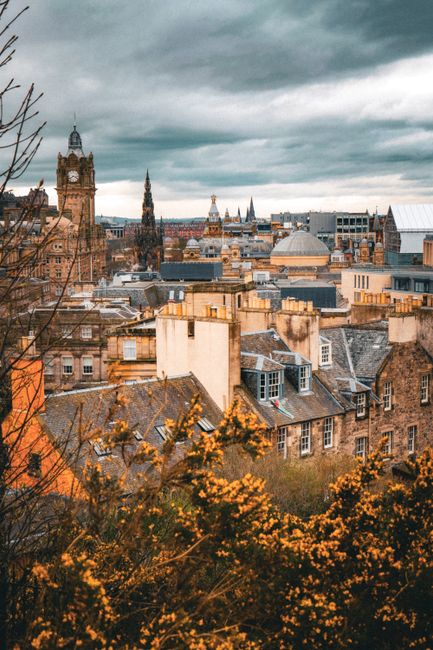
Edinburgh is Scotland’s capital, a city of dark stone built over volcanic hills, with a castle on a crag at its heart and the sea a short ride away. You come to walk the medieval Royal Mile from the castle to the royal palace of Holyroodhouse, climb Arthur’s Seat for a view over the rooftops to the Firth of Forth, wander the elegant Georgian streets of the New Town, and spend a rainy afternoon in free museums and cosy pubs. In August the whole city turns into a stage for the world’s biggest arts festival. Give it three days, or five with day trips to the Highlands’ edge, St Andrews or Glasgow.
Right now in Edinburgh
- Wed 6–12°C 43–53°F Clear
- Thu 5–12°C 41–53°F 3 mm Partly cloudy
- Fri 10–12°C 50–54°F 2 mm Partly cloudy
Weather: MET Norway (CC BY 4.0) · Sea temperature: NOAA CoastWatch · Rates: ECB
Top tours in Edinburgh
See all tours for Edinburgh →
From local operators, with prices and reviews; you check availability and book on Viator, our partner. We may earn a commission at no extra cost to you. How we earn money
Edinburgh at a glance
- Best for: castles and history, a UNESCO-listed old and new town, city walks and hill views, festivals, free museums, whisky and pub culture.
- How long: 2–3 days for the city, 4–5 with day trips.
- Best time: May to September for long, light evenings; August for the festivals (book months ahead); December for Christmas and Hogmanay.
- Getting in: Edinburgh Airport is about 13 km west of the centre, linked by tram and the Airlink 100 bus; trains from London arrive at Waverley station, right below the Old Town.
- Visitor levy: since 24 July 2026, overnight stays in the city carry a 5% visitor levy on the first five nights (see below).
- Before you go: entry rules (including the UK ETA), money and general safety are in our United Kingdom travel guide.
Edinburgh’s areas and who each one suits
The Old Town and the New Town together have been a UNESCO World Heritage Site since 1995, inscribed as the “Old and New Towns of Edinburgh”. They sit side by side, separated by the valley of Princes Street Gardens and Waverley station.
The Old Town
The medieval city grew along a ridge running down from the castle rock, with the Royal Mile as its spine and narrow closes (alleys) and steep stairs falling away on each side. It is packed with history, churches, whisky bars and souvenir shops, and gets very crowded in summer. Best for: first visits and being in the middle of things.
The New Town
Built from the 1760s as a planned Georgian city, with straight streets, grand squares and crescents, the New Town is where you find Princes Street, George Street, elegant townhouses, smart shops, cocktail bars and restaurants. Best for: comfortable hotels, shopping and a calmer feel, still a short walk from everything.
Stockbridge and Dean Village
A village-like neighbourhood just north of the New Town, with independent shops, cafés, a Sunday market and the Water of Leith walkway, which leads to the picture-perfect mill buildings of Dean Village. Best for: couples, food lovers and travellers who like a local feel.
Leith and the waterfront
Edinburgh’s old port, now a lively area of seafood restaurants, bars and converted warehouses along the Shore, linked to the centre by tram. The former royal yacht Britannia is moored here. Best for: food, nightlife and good-value stays.
Top things to see in Edinburgh
Prices and hours below were checked on the official sites in October 2026. They change, so check before you go.
Edinburgh Castle
The castle crowns an extinct volcanic plug above the city, and has been a royal fortress, palace, prison and garrison for around a thousand years. Inside its walls you can see the Honours of Scotland (the Scottish crown jewels), the Royal Palace, the tiny 12th-century St Margaret’s Chapel, the Great Hall, the National War Museum and the medieval siege gun Mons Meg. At 1 pm (except on Sundays) the One O’Clock Gun is fired from the Mills Mount battery.
Tickets and booking. The castle is run by Historic Environment Scotland, and you book a date and an entry time online. As of October 2026, online prices are £23.50 for adults (16–64), £19 for over-65s and £11.50 for children aged 7–15; tickets are dearer at the gate, if any are left. Tickets often sell out far in advance, especially in summer, and once they are sold out online there are no more at the castle. Book only on the official site: the castle warns of lookalike sites selling fake tickets. The castle opens daily at 9:30 am, closing at 6 pm from April to September and 5 pm from October to March, with last entry one hour before closing; it is closed on 25 and 26 December. Allow 2–3 hours, and start with the views from the ramparts before the crowds build.
The Royal Mile
Not a single street but a chain of them (Castlehill, the Lawnmarket, the High Street and the Canongate), running about a mile downhill from the castle to Holyroodhouse. Highlights along the way include the Camera Obscura and World of Illusions, St Giles’ Cathedral with its crown spire and Thistle Chapel, the Scottish Parliament at the bottom, and dozens of closes to duck into. In August the High Street fills with Fringe street performers.
The Palace of Holyroodhouse and Holyrood Abbey
At the foot of the Royal Mile, the Palace of Holyroodhouse is the King’s official residence in Scotland, run for visitors by the Royal Collection Trust. You see the state apartments, Mary, Queen of Scots’ chambers in the old tower, and the ruined Holyrood Abbey in the grounds. The palace closes during royal visits, usually including a week in early summer, so check the dates on the Royal Collection Trust site before you plan around it.
Arthur’s Seat and Holyrood Park
A real wild hill in the middle of the city: the summit of this ancient volcano, at 251 metres, is a climb of about 45 minutes to an hour from Holyrood, on paths that are steep and rocky near the top. The reward is a 360-degree view over the castle, the city and the Firth of Forth. Go early or at sunset, wear shoes with grip, and stay well back from the Salisbury Crags’ edges, especially in wind or rain. See our hiking guide.
Calton Hill
A five-minute climb from the east end of Princes Street, Calton Hill is the easiest classic viewpoint, crowned by the unfinished National Monument (modelled on the Parthenon), the Nelson Monument and the old City Observatory. It is the best place in town for sunset photos looking down Princes Street to the castle.
National Museum of Scotland
On Chambers Street, a few minutes from the Royal Mile, this is one of the best free museums in Britain: Scottish history from the earliest times, the Lewis chessmen, Dolly the sheep, natural history and world cultures under the glass roof of a Victorian grand gallery. Entry to the permanent galleries is free; some special exhibitions charge. It is usually open daily from 10 am to 5 pm. Don’t miss the rooftop terrace, with views to the castle.
More museums and galleries
The Scottish National Gallery on the Mound, the Scottish National Portrait Gallery and the Scottish National Gallery of Modern Art also have free entry to their main collections. The Writers’ Museum, the Museum of Edinburgh and the People’s Story on the Royal Mile are small, free and full of character.
Churches and cathedrals
- St Giles' Cathedral
Peaks and mountains
- Arthur's Seat
- Calton Hill
Historic centres
- Royal Mile
Museums
- National Museum of Scotland
Castles and forts
Palaces
- Holyrood Palace
The August festivals
Every August Edinburgh hosts several festivals at once, and the city’s population seems to double. The biggest is the Edinburgh Festival Fringe, the world’s largest open-access arts festival, with thousands of shows of comedy, theatre, music and cabaret in venues from theatres to pub cellars. The Fringe has announced its 80th edition for 6 to 30 August 2027. The Royal Edinburgh Military Tattoo, with massed pipes and drums on the castle esplanade, runs from 6 to 28 August 2027, with a show called “The Same Heart Beat”. The Edinburgh International Festival (classical music, opera, theatre and dance) and the Edinburgh International Book Festival run at the same time; as of October 2026 their 2027 dates had not been announced.
Festival tips: book accommodation as early as you can, since prices peak in August and the visitor levy still applies; buy Tattoo tickets well ahead; and leave room for free street shows on the Royal Mile and in the Fringe’s outdoor spaces. Outside August, the city’s other big moments are Hogmanay (New Year), the Christmas markets and the Science Festival in spring.
The Edinburgh visitor levy
Edinburgh was the first UK city to introduce a tourist tax. According to the City of Edinburgh Council, since 24 July 2026 a visitor levy of 5% applies to overnight stays anywhere in the council area, year-round, for a maximum of five consecutive nights. It covers hotels, hostels, guest houses, B&Bs, self-catering and short-term lets, and also caravan sites and campsites. It applies to bookings made on or after 1 October 2025; stays booked and paid before that date were exempt. Some people are exempt, including those receiving certain disability benefits, such as Personal Independence Payment, Disability Living Allowance and Attendance Allowance. Your accommodation adds the levy to your bill and pays it to the council, which spends it on city services, culture, heritage and events, and housing.
Activities and best months
- City sightseeingVisitScotland's Edinburgh highlights include Edinburgh Castle with the Honours of Scotland, The Real Mary King's Close underground tour on the Royal Mile, Calton Hill and the National Monument, the free National Museum of Scotland, Camera Obscura and the Palace of Holyroodhouse. · source
- HikingVisitScotland describes Arthur's Seat as an extinct volcano, 251 m high, with colour-coded walking routes of different difficulty through Holyrood Park and views over the city. Historic Environment Scotland adds that the park has cliffs, rolling hills and lochs such as Dunsapie and Duddingston, plus the ruins of St Anthony's Chapel. · source
Day trips from Edinburgh
- Glasgow: Scotland’s biggest city is under an hour away by frequent ScotRail trains, with free museums, street art and a lively music scene.
- Stirling: Stirling Castle and the Wallace Monument, about an hour by train.
- The Forth bridges and South Queensferry: three bridges from three centuries over the Firth of Forth, including the red Forth Bridge, a UNESCO World Heritage Site; there are boat trips from Hawes Pier in season. See our boat trips guide.
- St Andrews and the Fife coast: the home of golf, a ruined cathedral and sandy beaches, by train to Leuchars and a short bus ride. See our beaches guide.
- Rosslyn Chapel: the richly carved 15th-century chapel south of the city, made famous by The Da Vinci Code.
- The Highlands: day tours reach Glencoe and Loch Ness, but it is a long day; it is much better to spend a few nights. See our Scottish Highlands guide.
Nearby destinations
- Glasgow67 km
- Scottish Highlands160 km
- Lake District167 km
- Causeway Coast224 km
- Belfast230 km
- Isle of Skye245 km
- York260 km
- Manchester282 km
Getting there and getting around
By air
Edinburgh Airport is about 13 km west of the centre and has flights across Europe and to North America and the Middle East. As of October 2026:
- Tram: Edinburgh Trams run from the airport through the West End and Princes Street to St Andrew Square and on to Leith and Newhaven. An adult airport single costs £7.90 and an open return £9.50; buy before you board, from machines or the app, or tap a contactless card on and off. The ride to the centre takes about half an hour.
- Airlink 100 bus: the Lothian Buses express runs 24 hours a day to Waverley Bridge, up to every 10 minutes during the day. An adult single costs £6 and an open return £8.50, paid by contactless, app or cash.
- Taxi: from the official rank outside the terminal; expect around 25–30 minutes to the centre outside rush hour.
By train
LNER and other operators run fast trains on the East Coast line from London King’s Cross to Edinburgh Waverley in about four and a half hours; the Caledonian Sleeper runs overnight from London Euston. Waverley sits in the valley between the Old and New Towns, so most hotels are a walk or a short taxi ride away (the streets are steep and cobbled, so pack light).
Buses and trams in the city
The centre is compact and best seen on foot, but the hills are steep. Lothian Buses cover the whole city: as of October 2026 an adult single is £2.40, and contactless tapping caps your fares at £5.70 a day in the city zone (the City Day ticket is £6). The tram’s city-zone single is also £2.40.
Driving
Don’t drive in central Edinburgh. Parking is scarce and expensive, and the city has a low emission zone in the centre that older, more polluting vehicles may not enter. Pick up a hire car on your way out to the Highlands.
When to go and how long to stay
Edinburgh has a mild, changeable maritime climate: rarely very hot or very cold, often windy, with rain spread through the year. The table uses the Met Office’s 1991–2020 averages for the Royal Botanic Garden station in Edinburgh: average daily highs and lows, and days with at least 1 mm of rain.
| Season | Average high / low | Rainy days per month | What it’s like | Good for |
|---|---|---|---|---|
| Spring (Mar–May) | 10–15 °C / 3–7 °C | 9–10 | Bright, fresh and often the driest, sunniest time of year | City walks, Arthur’s Seat, day trips |
| Summer (Jun–Aug) | 17–19 °C / 10–12 °C | 10–11 | Mild, with very long evenings (light until after 10 pm in June) and showers | Festivals in August, terraces, the coast |
| Autumn (Sep–Nov) | 17 °C falling to 10 °C / 10 °C falling to 4 °C | 10–12 | Golden September, windier and wetter from October | Museums, walks in autumn colours, whisky bars |
| Winter (Dec–Feb) | 7–8 °C / about 2 °C | 10–12 | Cold, dark (daylight ends before 4 pm in December), occasional snow | Christmas markets, Hogmanay, cosy pubs |
Edinburgh gets about 730 mm of rain a year, less than the west of Scotland, on around 128 days. May is the sunniest month on average, and October the wettest. Bring a waterproof whatever the season: four seasons in a day is a local saying for a reason.
How long to stay: 2-, 3- and 5-day plans
Day 1: Edinburgh Castle at opening time, then down the Royal Mile with St Giles’ Cathedral, and the National Museum in the afternoon. Day 2: Holyroodhouse, then Arthur’s Seat; Calton Hill for sunset and dinner in the New Town. Day 3: Stockbridge, the Water of Leith walk to Dean Village, and Leith for seafood. Days 4–5: day trips to Stirling, St Andrews or the Forth bridges, or head north for the Isle of Skye and the Highlands.
Weather month by month
Averages from Met Office normals 1991–2020, Leuchars (Fife) · Last reviewed 4 Oct 2026
Where to stay in Edinburgh
- Old Town: historic atmosphere and everything on your doorstep, but noisy in summer and especially in August.
- New Town: the widest choice of hotels, elegant and central.
- Stockbridge: boutique stays and a neighbourhood feel, a short walk from the centre.
- Leith: good value, great food, and on the tram line to the airport.
- Haymarket and the West End: handy for the station, the tram and the airport.
Book early for August, Christmas and Hogmanay, when prices can triple and minimum stays apply. Remember the 5% visitor levy on the first five nights.
Practical tips for Edinburgh
- Book the castle early: buy timed tickets online on the official site, weeks ahead in summer.
- Wear good shoes: the Old Town is steep, with cobbles and stairs, and slippery in the rain.
- Go early or late: the Royal Mile is quietest before 10 am and after 6 pm.
- Free entry: the national museums and galleries are free, which makes a rainy day easy.
- Payments: cards and contactless are accepted almost everywhere; Scottish banks print their own pound notes, which are legal currency throughout the UK.
- Emergency number: 999 or 112.
What to pack for Edinburgh
A waterproof jacket with a hood (umbrellas struggle in the wind), comfortable walking shoes with grip, layers you can add and remove, a warm hat and gloves from October to April, and a small day pack. Summer evenings can be cool, so bring a light sweater even in July. A refillable bottle and a phone charger help on long sightseeing days.
What to pack
- City walking shoesLisbon and Porto are steep, with polished limestone cobbles that get slippery, so grippy soles matter.
- Day packs and anti-theft bagsA small zipped or anti-theft bag makes crowded trams and viewpoints less stressful.
- Fleeces and warm layersSummits like Pico do Areeiro averaged about 11 °C over 2024, so a fleece is needed even in summer.
- HeadlampsLevada routes such as PR1 and PR9 pass through long, dark, wet tunnels.
- Hiking shoes and bootsMadeira's levadas and the Azores' crater rims are wet, rocky and slippery, so grippy shoes matter more than anywhere else in Portugal.
- Rain jacketsFrom October to April Porto and Lisbon see rain on roughly a third of days.
- Travel adapters and convertersPortugal uses Type C and F sockets at 230 V, so most visitors from outside Europe need an adapter.
- Trekking polesLong stone staircases and steep descents on Madeira's peaks and the Azores' crater rims are easier on the knees with poles.
- Water bottles and hydration packsAlgarve and Alentejo trails are hot and exposed with few refill points.
Edinburgh travel FAQ
How much are Edinburgh Castle tickets?
As of October 2026, online tickets cost £23.50 for adults, £19 for over-65s and £11.50 for children aged 7–15, with a timed entry slot. Prices at the gate are higher, and only if tickets remain.
Do I need to book Edinburgh Castle in advance?
Yes, it is strongly advised. Tickets often sell out far in advance in summer, and once they are sold out online there are no tickets at the castle. Book only on the official Edinburgh Castle site.
What is the Edinburgh tourist tax?
Since 24 July 2026, the City of Edinburgh Council charges a 5% visitor levy on overnight stays, for a maximum of five consecutive nights. It applies to hotels, hostels, B&Bs, holiday lets and campsites, and is added to your bill.
When is the Edinburgh Festival Fringe in 2027?
The 80th Fringe runs from 6 to 30 August 2027. The Royal Edinburgh Military Tattoo runs from 6 to 28 August 2027. The International Festival and Book Festival had not announced their 2027 dates as of October 2026.
How do I get from Edinburgh Airport to the city centre?
By tram (£7.90 adult single, about half an hour to Princes Street) or the Airlink 100 express bus (£6 single, 24 hours a day, to Waverley Bridge), as of October 2026. Taxis wait outside the terminal.
Is the National Museum of Scotland free?
Yes. Entry to the permanent galleries is free, and it is usually open daily from 10 am to 5 pm. Some special exhibitions charge.
How long does it take to climb Arthur’s Seat?
About 45 minutes to an hour to the 251-metre summit from Holyrood, on steep, rocky paths near the top. Wear shoes with grip and take care in wind or rain.
Can you visit the Palace of Holyroodhouse?
Yes, most of the year, with tickets from the Royal Collection Trust. The palace closes when the royal family is in residence, so check the dates before you go.
What is the difference between the Old Town and the New Town?
The Old Town is the medieval city along the Royal Mile, with closes and tall tenements; the New Town is the planned Georgian city of the 18th and 19th centuries, with wide streets and squares. Together they are a UNESCO World Heritage Site.
How many days do you need in Edinburgh?
Two days covers the castle, the Royal Mile, Holyrood and a hill. Three days is ideal, and four or five lets you add day trips.
What are the best day trips from Edinburgh?
Glasgow, Stirling Castle, the Forth bridges, St Andrews and Rosslyn Chapel are all within about an hour. The Highlands are better as an overnight trip.
When is the best time to visit Edinburgh?
May to September for long, light days, with August for the festivals if you book early. Spring is often the sunniest and driest season; December is festive but dark and cold.
Sources
- © OpenStreetMap contributors · ODbL · fetched 4 Oct 2026
- Wikidata · CC0 · fetched 4 Oct 2026
Sources and last review
Researched and last reviewed on 4 October 2026. Castle tickets and hours: Historic Environment Scotland and edinburghcastle.scot; visitor levy: the City of Edinburgh Council’s published scheme; festival dates: the Edinburgh Festival Fringe Society and the Royal Edinburgh Military Tattoo; airport and city fares: Edinburgh Trams and Lothian Buses; World Heritage Site: UNESCO; climate: Met Office 1991–2020 averages for Edinburgh Royal Botanic Garden. Prices, opening times and festival dates change, so check the official links before you go. For entry rules, money and general safety, see our United Kingdom travel guide.
Plan your trip
Partner links: TravelerCenter may earn a commission if you book, at no extra cost to you.