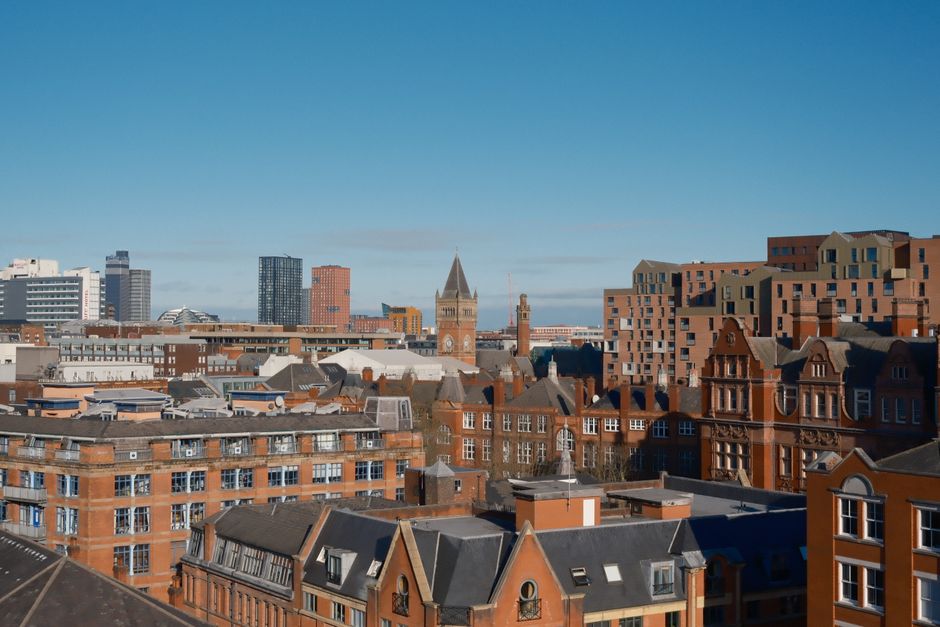
Manchester is the big, friendly capital of the north of England: the city where the Industrial Revolution took off, where the first modern computer ran its first program, and where Oasis, the Smiths and Joy Division started out in small clubs. Red-brick cotton mills and canal warehouses now hold bars, flats and studios, and the centre is packed with free museums, from the Science and Industry Museum on the site of the world’s oldest passenger railway station to the Gothic John Rylands Library and the People’s History Museum. Add two world-famous football clubs, a buzzing food and music scene in the Northern Quarter and Ancoats, and big Christmas markets in winter. It is about two hours from London by train and has the north’s main international airport. Give it two days for the city, or three or four to add a day in the Peak District, Liverpool or York.
Right now in Manchester
- Wed9–14°C48–56°F2 mm rain
- Thu6–13°C43–56°F1 mm rain
- Fri10–16°C50–60°F5 mm rain
Top tours in Manchester
See all tours for Manchester →
From local operators, with prices and reviews; you check availability and book on Viator, our partner. We may earn a commission at no extra cost to you. How we earn money
Manchester at a glance
- Best for: free museums, industrial history, live music and nightlife, football, food halls and independent shops, Christmas markets and a base for the Peak District.
- How long: 1 day for the centre and a couple of museums; 2–3 days to add a stadium tour, Salford Quays and a night out; 4 days with a day trip.
- Best time: May to September for the longest, driest days; from early November to Christmas for the markets and lights.
- Getting in: Avanti West Coast trains from London Euston reach Manchester Piccadilly in about 2 hours 10 minutes; Manchester Airport is about 15–20 minutes from Piccadilly by train.
- Getting around: on foot in the centre, plus Metrolink trams and Bee Network buses. As of October 2026, an adult single bus fare in Greater Manchester is £2.
- Before you go: entry rules, money and general safety are in our United Kingdom travel guide.
Manchester, area by area
The city centre is compact: you can walk from Piccadilly station to Deansgate in about 20 minutes. The River Irwell on its west side is the boundary with the separate city of Salford, and the Rochdale and Bridgewater canals thread through the centre. Most sights, hotels and restaurants are within a short walk of each other, and trams link the centre with Salford Quays and the football grounds.
City centre and St Peter’s Square
The civic heart of Manchester runs from the Victorian Gothic Town Hall on Albert Square to the round Central Library on St Peter’s Square, King Street’s banks and Market Street’s shops. Manchester Art Gallery is on Mosley Street, and the cathedral and the medieval Chetham’s Library sit to the north near Exchange Square and the Arndale shopping centre. Best for: first visits, shopping and the Christmas markets.
Northern Quarter and Ancoats
Between Piccadilly Gardens and the old mills of Ancoats, the Northern Quarter is Manchester’s creative district: record shops, vintage clothes, street art, coffee bars, craft beer and small music venues in old textile warehouses. Ancoats, once the world’s first industrial suburb, has restored cotton mills around the marina at New Islington and some of the city’s best restaurants. Best for: food, nightlife and independent shopping.
Deansgate, Spinningfields and Castlefield
Deansgate is the long street on the west side of the centre, home to the John Rylands Library. Spinningfields, by the river, is the glossy business district with the People’s History Museum at its edge. At the southern end, Castlefield is where Manchester began: the remains of a Roman fort, the canal basin where the Bridgewater Canal arrived in 1765, Victorian railway viaducts and the Science and Industry Museum. Best for: history, canal-side pubs and summer evenings outdoors.
Oxford Road and the universities
South of the centre, Oxford Road runs past the Palace Theatre, the HOME arts centre, the canal-side bars of Canal Street and the Gay Village, and on to the University of Manchester campus with Manchester Museum and, a little further, the Whitworth gallery in Whitworth Park. Further south is Rusholme’s “Curry Mile”. Best for: museums, theatre and cheap eats.
Salford Quays and MediaCityUK
Twenty minutes by tram from the centre, the old docks of the Manchester Ship Canal are now Salford Quays, with the Lowry arts centre, the Imperial War Museum North across the water in Trafford, and the BBC and ITV studios at MediaCityUK. Old Trafford, Manchester United’s stadium, is a short walk away. Best for: modern architecture, waterside walks and football fans.
Top things to see in Manchester
Prices and hours below were checked on the official sites in October 2026. They change, so check before you go.
Science and Industry Museum
Built on the site of Liverpool Road station, the terminus of the world’s first inter-city passenger railway in 1830, this museum tells the story of how Manchester changed the world: cotton, steam, railways and the first stored-program computer, the “Baby”, built at the university in 1948. The restored Power Hall is full of working engines, Revolution Manchester covers the city’s ideas and inventions, and the Textiles Gallery shows the cotton machines that made the city rich.
Tickets. As of October 2026, entry is free and the museum opens daily 10:00–17:00, except 24–26 December and 1 January. Booking a free ticket in advance is recommended; special exhibitions may charge. A multi-million-pound restoration is still under way, so some buildings and galleries are closed, and the Air and Space Hall has closed for good. Check the website for what is open on the day.
The John Rylands Library
Behind a red sandstone front on Deansgate, this Victorian Gothic library looks more like a cathedral than a reading room, with a vaulted Historic Reading Room, carved stone and stained glass. Enriqueta Rylands built it in memory of her husband, a cotton magnate, and it opened in 1900. It belongs to the University of Manchester and shows treasures from its special collections, including one of the oldest known fragments of the New Testament. As of October 2026 it opens Wednesday to Saturday, 10:00–17:00 (last entry 16:40), and is closed Sunday to Tuesday. Entry is free.
People’s History Museum
The national museum of democracy, beside the River Irwell in a former Edwardian pumping station, tells the story of how ordinary people won the vote and workers’ rights, from the Peterloo Massacre of 1819 in Manchester to the suffragettes and modern campaigns. Its collection of trade union banners is the largest in the world. As of October 2026, it opens 10:00–17:00 every day except Tuesday; entry is free, and most visitors donate about £10.
Manchester Museum
The University of Manchester’s museum of natural history and world cultures is home to Stan, a cast of a Tyrannosaurus rex skeleton, Egyptian mummies, a vivarium of living frogs and reptiles, and newer galleries on South Asia and Chinese culture. As of October 2026, it opens Tuesday to Sunday 10:00–17:00, with late opening to 21:00 on Wednesdays, and is closed on Mondays. All galleries are free; only the main temporary exhibition needs a booked ticket.
Manchester Cathedral and Chetham’s
Mostly 15th century, Manchester Cathedral has superb carved choir stalls with medieval misericords and modern stained glass replacing windows lost in the Second World War. As of October 2026, it opens to visitors Monday to Saturday 9:30–16:00 and Sunday 12:00–16:00. Entry is free, with a suggested donation of £5, and volunteer guides give free tours for individuals Monday to Saturday when they are available. Next door, Chetham’s Library, founded in 1653, is the oldest public library in the English-speaking world; Marx and Engels studied there.
Galleries: Manchester Art Gallery and the Whitworth
Manchester Art Gallery, in the centre, has a strong Pre-Raphaelite collection and paintings of the industrial city, while the Whitworth, in a park by the university, mixes historic textiles, wallpapers and modern art in a glass-walled building. Both are free and closed on Mondays. Look out too for the Lowry at Salford Quays, with paintings of the mill towns by L. S. Lowry.
Old Trafford and the Etihad Stadium
Manchester is home to two of the most famous football clubs in the world. Manchester United’s Old Trafford, nicknamed the “Theatre of Dreams”, has a museum and stadium tour; Manchester City’s Etihad Stadium in east Manchester runs tours of the dressing rooms, tunnel and pitchside. Book on the clubs’ official websites, as tours are limited or cancelled on match days and around concerts. Match tickets for the Premier League are hard to get and are sold mainly to members.
Aviva Studios and Factory International
Manchester’s huge new arts venue, Aviva Studios, opened in 2023 on the site of the old Granada TV studios by the river. Run by Factory International, which also organises the Manchester International Festival, it stages theatre, dance, gigs, classical concerts and big immersive shows in its vast warehouse space. In autumn 2026 the programme includes immersive David Bowie and dinosaur experiences and a dance adaptation of It’s a Sin; see the official listings for dates and prices.
Music, football and Manchester after dark
Music is part of the city’s identity. Fans of Factory Records, the Haçienda era, the Stone Roses and Oasis can join a guided music walking tour or simply follow the gig listings: Manchester has venues of every size, from tiny Northern Quarter basements to the Albert Hall, a converted Methodist chapel, and the arena-sized Co-op Live and AO Arena. On match days the trams to Old Trafford and the Etihad fill with fans, and pubs across the city show the games. For a night out, try the Northern Quarter’s bars, the Mackie Mayor food hall, the canal-side bars of Canal Street, or the Deansgate Locks bars under the railway arches.
Things to do in Manchester
Walk the canals
The towpaths of the Rochdale and Bridgewater canals make a quiet walk through the city’s industrial past: start at Castlefield basin, follow the Rochdale Canal’s locks past Canal Street, and finish at Ancoats and the New Islington marina. Self-guided, it takes a couple of hours. See our city sightseeing guide.
Eat your way around the city
Manchester’s food scene is one of the best in Britain outside London. Graze in a food hall, try a curry on the Curry Mile in Rusholme or dim sum in Chinatown, and order local classics: a Manchester tart, Eccles cakes and a pint from one of the city’s many craft breweries.
Imperial War Museum North and the Lowry
Take the tram to Salford Quays for the striking Daniel Libeskind building of the Imperial War Museum North, which looks at how war shapes people’s lives, and the Lowry arts centre, with its galleries and theatres. A footbridge links the two across the ship canal.
Cycle the city
Bee Network bikes and new segregated cycle lanes make short rides easy, and the canal towpaths and the Fallowfield Loop, an old railway line, lead out of the centre. See our cycling guide.
Christmas markets
Manchester’s Christmas markets are among the biggest in Britain, with about 200 stalls spread through ten city-centre squares and streets, including Albert Square, Exchange Square, St Ann’s Square, King Street and Cathedral Gardens. As of October 2026, the markets run from Friday 6 November to 22 December 2026, and the stalls in Albert Square and Cathedral Gardens stay open until 3 January 2027. They are busiest on Friday and Saturday evenings; go on a weekday afternoon if you can.
Getting to Manchester
By train from London. Avanti West Coast runs frequent trains from London Euston to Manchester Piccadilly, taking about 2 hours 10 minutes; book Advance tickets for the cheapest fares. Rail fares in England are frozen until March 2027, and a railcard takes a third off most fares (see our UK guide).
From the rest of Britain. TransPennine Express and Northern link Manchester with Liverpool (about 35–50 minutes), Leeds, York (about 1 hour 15 minutes to 1 hour 30 minutes), Newcastle and the Lake District, and CrossCountry runs to Birmingham and the south-west. Trains to Scotland leave from Piccadilly and the airport.
By air. Manchester Airport, about 15 km south of the centre, is the main international airport in the north of England. Trains run from the airport station to Manchester Piccadilly in about 15–20 minutes, several times an hour, and Metrolink trams run to the city centre more slowly. Remember that most visitors need a UK ETA before flying; see our United Kingdom travel guide.
By car. Manchester is ringed by the M60 motorway. As of October 2026, there are no Clean Air Zone charges anywhere in Greater Manchester: the planned charging zone was replaced by an investment-led plan approved by the government in 2025. City-centre parking is expensive, so use a Metrolink Park and Ride site and take the tram in.
Getting around Manchester
Walk in the centre, and use the Bee Network, Greater Manchester’s public transport system of yellow buses, Metrolink trams and bikes. As of October 2026, an adult single bus fare is £2, and a single lets you change buses within an hour; bus and tram fares are frozen until the end of 2026. Metrolink trams run to Salford Quays, Old Trafford, the Etihad, the airport and the suburbs, with fares by zone: tap in and out with a contactless card or phone at the yellow readers on the platform, and the system caps your daily spend. Plan journeys and check fares on the Transport for Greater Manchester website or app.
When to go and how long to stay
Manchester has a reputation for rain, and it does have more wet days than London, but the weather is mild: rarely very hot or very cold. The table uses the Met Office 1991–2020 averages for Woodford, the nearest long-running station, on a former airfield about 16 km south-east of the city centre.
| Season | Average high / low | Rainy days per month | What it’s like |
|---|---|---|---|
| Spring (Mar–May) | 10–16 °C / 2–7 °C | about 11–12 | Lengthening days, sunniest months of the year in May, fewer crowds |
| Summer (Jun–Aug) | 19–21 °C / 10–12 °C | 12–14 | Warm, long evenings, outdoor bars and festivals, wetter in July and August |
| Autumn (Sep–Nov) | 18 °C falling to 10 °C / 10 °C falling to 3 °C | 12–15 | Football and concert season, gigs and theatre, Christmas markets from early November |
| Winter (Dec–Feb) | 7–8 °C / about 1 °C | 12–16 | Grey and damp, occasional frost, Christmas markets and lights until early January |
Woodford records about 870 mm of rain a year, falling on about 155 days, with December and October the wettest months and February to May the driest. Most of it is light drizzle rather than downpours, and the museums mean a rainy day is easy to fill. May and June are the sunniest months, and late November to Christmas has the most festive atmosphere.
Manchester in 1 day
Start at the John Rylands Library (Wednesday to Saturday) or the cathedral, walk through the city centre to Albert Square, then head down to Castlefield for the Science and Industry Museum. Lunch in a food hall, spend the afternoon in the Northern Quarter’s shops and street art, and end with dinner in Ancoats and a gig or a pint.
Manchester in 3 days
Add the People’s History Museum, Manchester Museum and the Whitworth, a stadium tour, and a tram ride to Salford Quays for the Imperial War Museum North and the Lowry. On the third day, take the train into the Peak District for a walk around Edale or Castleton, or go to Liverpool for the waterfront and the Beatles.
Day trips from Manchester
The Peak District, Britain’s first national park, starts less than an hour away: trains on the Hope Valley line run from Piccadilly to Edale, the start of the Pennine Way below Kinder Scout, and to Hope for Castleton and Mam Tor. Liverpool, with its waterfront, the Beatles and two cathedrals, is under an hour by train. York, with its Minster and medieval walls, is about 1 hour 15 minutes to 1 hour 30 minutes away; see our York guide. For the lakes and fells, trains run from Manchester to Oxenholme and Windermere; see our Lake District guide. Closer in, the National Trust’s Quarry Bank, a cotton mill and village near the airport, and the Victorian seaside of Blackpool also make easy outings.
Where to stay in Manchester
- City centre and Piccadilly: chain and design hotels and serviced apartments near the station and the shops, handy for arrivals by train and from the airport.
- Northern Quarter and Ancoats: boutique hotels and apartments in converted warehouses, close to bars, restaurants and gigs, but can be noisy at weekends.
- Deansgate, Spinningfields and Castlefield: upmarket hotels, rooftop bars and quieter canal-side stays, close to the museums.
- Salford Quays: good-value hotels by the water, a tram ride from the centre and near Old Trafford.
Prices rise sharply on match days, big concert nights and Christmas market weekends; book early if your dates clash.
Practical tips for Manchester
- Check opening days: several museums close on Mondays, the People’s History Museum on Tuesdays, and the John Rylands Library from Sunday to Tuesday.
- Book free tickets: the Science and Industry Museum recommends booking free entry online, and some exhibitions are ticketed.
- Tap, don’t buy paper: use a contactless card or phone on buses and trams and the fares are capped for you.
- Watch the fixtures: on match days trams and hotels fill up and stadium tours are limited.
- No clean air charge: as of October 2026, there is no charge to drive anywhere in Greater Manchester.
- Carry a rain jacket: showers are frequent but rarely heavy, so a light waterproof beats an umbrella in the wind.
What to pack for Manchester
A light waterproof jacket in every season, comfortable shoes for walking the centre and the canal towpaths, warm layers, a hat and gloves for winter evenings at the Christmas markets, and something smarter for a night out. If you plan a day in the Peak District, add walking boots and a warm fleece.
Manchester travel FAQ
Are Manchester’s museums free?
Most are. As of October 2026, the Science and Industry Museum, Manchester Museum, the People’s History Museum, the John Rylands Library, Manchester Art Gallery and the Whitworth are all free, though some special exhibitions charge and donations are welcome.
When is the John Rylands Library open?
As of October 2026, Wednesday to Saturday from 10:00 to 17:00, with last entry at 16:40. It is closed from Sunday to Tuesday. Entry is free.
How much is the bus in Manchester?
As of October 2026, an adult single on Bee Network buses costs £2, including changes within an hour, and Greater Manchester’s bus and tram fares are frozen until the end of 2026. Trams are priced by zone; tap in and out with contactless.
Is there a Clean Air Zone charge in Manchester?
No. As of October 2026, there are no clean air charges to drive anywhere in Greater Manchester; the charging zone once planned was replaced by a non-charging plan approved by the government in 2025.
How do I get from Manchester Airport to the city centre?
Take the train from the airport station to Manchester Piccadilly, about 15–20 minutes, with several departures an hour. The Metrolink tram also runs to the centre but takes longer.
How long is the train from London to Manchester?
About 2 hours 10 minutes from London Euston to Manchester Piccadilly with Avanti West Coast. Advance tickets are cheapest, and a railcard saves a third.
When are the Manchester Christmas markets in 2026?
From Friday 6 November to 22 December 2026 across ten city-centre locations, with Albert Square and Cathedral Gardens staying open until 3 January 2027.
Can you tour Old Trafford and the Etihad?
Yes. Manchester United and Manchester City both run stadium tours that you book on the clubs’ official websites. Tours are limited or do not run on match days and around big events, so check the calendar first.
Does it always rain in Manchester?
Not always, but often a little. Woodford, south of the city, has about 870 mm of rain a year on about 155 days, mostly light. Spring is the driest season.
How many days do you need in Manchester?
Two days cover the main museums, the Northern Quarter and a night out. Three or four let you add Salford Quays, a stadium tour and a day trip to the Peak District, Liverpool or York.
Is Manchester a good base for the Peak District?
Yes. Trains on the Hope Valley line run from Piccadilly to Edale and Hope in under an hour, so you can walk Kinder Scout or Mam Tor and be back in the city for dinner.
What is the Northern Quarter?
Manchester’s creative district between Piccadilly Gardens and Ancoats, full of old textile warehouses now used by independent shops, record stores, cafés, bars, music venues and street art.
Nearby destinations
- Peak District31 km
- Liverpool50 km
- York93 km
- Birmingham113 km
- Lake District122 km
- Eryri (Snowdonia)128 km
- Stratford-upon-Avon148 km
- Cotswolds187 km
Plan your trip
Partner links: TravelerCenter may earn a commission if you book, at no extra cost to you.
Sources · last reviewed 4 October 2026
Researched and last reviewed on 4 October 2026. Science and Industry Museum hours and restoration closures: the Science Museum Group’s official site; John Rylands Library: the University of Manchester Library; People’s History Museum and Manchester Museum: their official sites; Manchester Cathedral: the cathedral; Aviva Studios programme: Factory International; Christmas markets: Manchester City Council; bus and tram fares: Transport for Greater Manchester and Greater Manchester councils; Clean Air Zone: Clean Air Greater Manchester; climate: Met Office 1991–2020 averages for Woodford. Prices, timetables and rules change, so check the official links before you go. For entry rules, money and general safety, see our United Kingdom travel guide; for the next stops, our York guide and Lake District guide; and for the capital, our London guide.
Data: Weather: MET Norway (CC BY 4.0) · Rates: ECB · Costs: World Bank ICP and price levels · Wikidata (CC0)