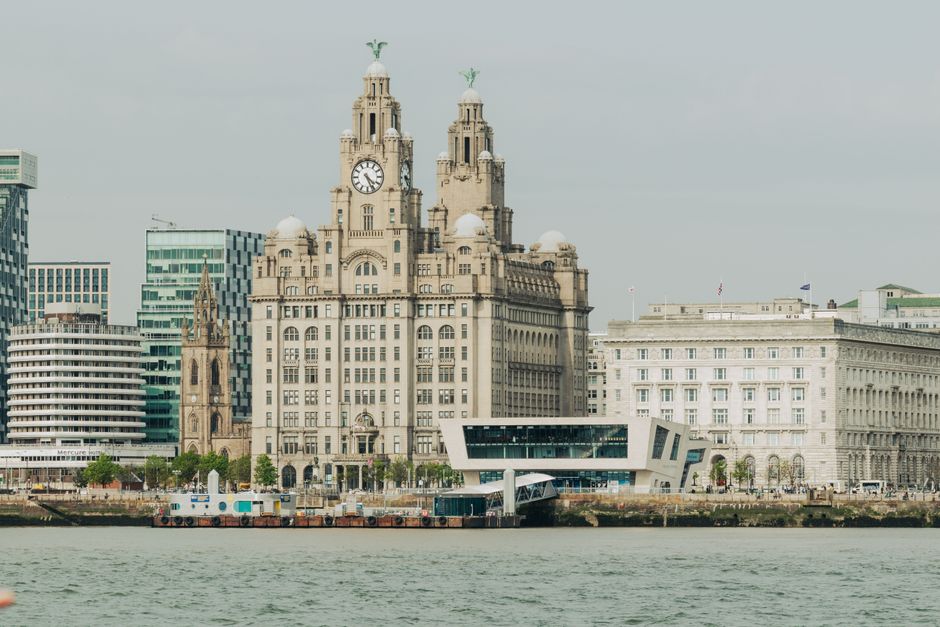
Liverpool is a great port city on the River Mersey with a big heart, a sharp sense of humour and a waterfront that once ranked among the grandest in the world. You come for the Beatles, from the Cavern Club where they played nearly 300 times to the Beatles Story museum and the childhood homes of John and Paul; for the Royal Albert Dock and the “Three Graces” on the Pier Head; for two vast cathedrals at either end of Hope Street; for free museums; and for football at Anfield and at Everton’s new stadium on the docks. Add a ferry across the Mersey, lively pubs and live music every night of the week. It is just over two hours from London by train and under an hour from Manchester. Give it two days for the highlights, or three to add the Beatles homes and a trip along the coast.
Right now in Liverpool
- Wed11–13°C51–56°F6 mm rain
- Thu11–13°C51–55°F2 mm rain
- Fri13–16°C56–60°F4 mm rain
Top tours in Liverpool
See all tours for Liverpool →
From local operators, with prices and reviews; you check availability and book on Viator, our partner. We may earn a commission at no extra cost to you. How we earn money
Liverpool at a glance
- Best for: the Beatles and live music, waterfront architecture, free museums, cathedrals, football, nightlife and friendly pubs.
- How long: 1 day for the waterfront, the Beatles Story and the Cavern Quarter; 2–3 days to add the cathedrals, a stadium tour, the Beatles homes and a ferry.
- Best time: May to September for long days on the waterfront; late August for International Beatleweek.
- Getting in: Avanti West Coast trains from London Euston reach Liverpool Lime Street in about 2 hours 15 minutes; trains from Manchester take about 35–50 minutes.
- Getting around: on foot in the centre, plus Merseyrail trains and buses. As of October 2026, a Beatles Story adult ticket cost £20.
- Before you go: entry rules, money and general safety are in our United Kingdom travel guide.
Liverpool, area by area
The centre runs uphill from the river. The waterfront, with the Pier Head and the Royal Albert Dock, is at the bottom; the shopping streets and the Cavern Quarter are in the middle; and the Georgian Quarter and the cathedrals are on the ridge above. From Lime Street station to the Pier Head is a 15-minute walk.
The Pier Head and the Royal Albert Dock
The Pier Head is lined with the “Three Graces”: the Royal Liver Building with its two Liver Birds, the Cunard Building and the Port of Liverpool Building. Next to them are the Museum of Liverpool, the Mersey Ferries terminal and statues of the Beatles. To the south, the Royal Albert Dock, opened in 1846, has the largest group of Grade I listed buildings in Britain, with the Beatles Story, restaurants and bars around its colonnaded warehouses. Best for: first visits, museums and river views.
The city centre and the Cavern Quarter
Around Mathew Street, the Cavern Quarter is a tangle of Beatles-themed pubs, the Cavern Club and live music from late morning until late. Nearby are the shops of Liverpool ONE and Bold Street, and up by Lime Street station the neoclassical St George’s Hall, the Walker Art Gallery, the World Museum and the Central Library. Best for: Beatles fans, shopping and nightlife.
Ropewalks and the Baltic Triangle
Ropewalks, between Bold Street and Hanover Street, is the place for independent cafés, vegetarian restaurants and bars. South of it, the Baltic Triangle is a former warehouse district now full of street food markets, breweries, studios and clubs. Best for: food, craft beer and a younger crowd.
Hope Street and the Georgian Quarter
Hope Street links Liverpool’s two cathedrals, the Anglican cathedral at one end and the Catholic Metropolitan Cathedral at the other, past the Philharmonic Hall and the ornate Philharmonic Dining Rooms pub. The streets around it have elegant Georgian terraces, the universities and some of the city’s best restaurants. Best for: architecture, concerts and quieter stays.
The north docks and Anfield
North of the Pier Head, the old docks are being reborn around Everton’s new Hill Dickinson Stadium at Bramley-Moore Dock. Inland, Anfield, home of Liverpool FC, and Goodison Park, Everton’s old ground, face each other across Stanley Park, about 3 km from the centre. Best for: football fans.
Top things to see in Liverpool
Prices and hours below were checked on the official sites in October 2026. They change, so check before you go.
The Beatles Story
This museum in the vaults of the Royal Albert Dock tells the band’s story from their Liverpool childhoods and the Hamburg clubs to Beatlemania and their solo careers, with a recreation of the Cavern Club, stage outfits and John Lennon’s glasses. A multilingual audio guide is included, and a visit takes about two hours.
Tickets. As of October 2026, an adult ticket (16 and over) cost £20, seniors and students £16 and children aged 5–15 £11; under-5s go free. Entry is by time slot, so booking online guarantees your time. Winter hours, from 5 October 2026 to 1 March 2027, are 9:00–17:30 from Sunday to Friday (last entry 16:15) and 9:00–18:30 on Saturdays and in Liverpool school holidays (last entry 17:15). It closes on 25 and 26 December and opens 10:00–16:00 on 31 December and 1 January.
The Cavern Club
The Beatles played the original Cavern on Mathew Street almost 300 times between 1961 and 1963. That cellar was filled in during the 1970s, and today’s club was rebuilt close by using many of the original bricks. It has live music every day from about 11:15, mostly Beatles tribute and covers bands in the day and a mix of acts at night. As of October 2026, single entry costs £6 for adults and an all-day-and-night pass £8.50, paid at the door; 12–17s pay £3 and may stay until 20:00 with an adult, and under-12s are free. The club is cashless, so bring a card or phone. Opposite, the Cavern Pub is free to enter.
Liverpool Cathedral
Britain’s largest cathedral, built in red sandstone over most of the 20th century to a design by Giles Gilbert Scott, has a vast nave, the highest and heaviest ring of bells in the world, and Tracey Emin’s neon “I felt you and I knew you loved me” above the west door. As of October 2026, it opens daily 10:00–18:00, and entry is free without booking. The Tower Experience takes two lifts and then 108 steps to the top, 101 m above the floor, for views over the city, the Mersey and on clear days the Welsh hills; it opens 10:00–16:30, and an adult ticket costs £8 (£6.50 concessions, £22.50 for a family). Small-group “Above and Beyond” tours of about two hours cost £25.
The Metropolitan Cathedral
At the other end of Hope Street, the Catholic cathedral of 1967 is a circular concrete tent topped by a crown of coloured glass, nicknamed “Paddy’s Wigwam” by locals. Inside, light pours through the lantern tower onto the central altar; underneath is the brick crypt of Lutyens’s far bigger, unfinished design. Entry is free.
Museum of Liverpool and the free museums
National Museums Liverpool runs free museums across the city. The Museum of Liverpool at the Pier Head tells the city’s story, from its docks and its football to its music and its people; the World Museum has natural history, ancient Egypt and a planetarium; and the Walker Art Gallery has one of the best art collections outside London. They are generally open Tuesday to Sunday, 10:00–17:00. Note that the Merseyside Maritime Museum and the International Slavery Museum on the Albert Dock closed on 5 January 2025 for repairs and a major redevelopment and, as of October 2026, are not due to reopen before 2028. Tate Liverpool’s gallery on the dock is also closed for a rebuild, with its programme meanwhile at RIBA North on Mann Island; check Tate’s site for the reopening date.
Anfield and the Hill Dickinson Stadium
Liverpool FC’s Anfield runs stadium tours with a museum of the club’s trophies, including its six European Cups. As of October 2026, the Stadium Tour and Museum cost £26 for adults, £21 for seniors and students and £17 for children, or £77 for a family of four; the museum alone costs £14. Everton moved in 2025 from Goodison Park to the new Hill Dickinson Stadium on the waterfront at Bramley-Moore Dock, which also offers tours. Book both on the clubs’ official sites, as tours change on match days.
St George’s Hall and the Royal Liver Building
St George’s Hall, opposite Lime Street station, is one of the finest neoclassical buildings in Europe, with a great hall and a jewel-like concert room; you can visit on open days and tours. On the waterfront, the Royal Liver Building 360 tour takes you up the clock tower to the 15th floor to stand beside the Liver Birds, with a few flights of stairs to climb.
Following the Beatles in Liverpool
Beyond the Beatles Story and the Cavern, the Beatles map spreads across the city. Bus tours and taxi tours visit Penny Lane, the gates of Strawberry Field (now a visitor centre run by the Salvation Army) and the houses where the four grew up. The National Trust owns Mendips, John Lennon’s childhood home, and 20 Forthlin Road, where Paul McCartney lived and the pair wrote early songs; you can see inside only on the Trust’s own small-group minibus tour, which runs from spring to the end of October and must be booked well ahead. The Beatles statue stands at the Pier Head, and every year in late August International Beatleweek fills the city with tribute bands from around the world; in 2026 it ran from 26 August to 1 September.
Things to do in Liverpool
Ride the ferry across the Mersey
Mersey Ferries’ River Explorer Cruise leaves the Pier Head for a 50-minute round trip to Seacombe and Woodside on the Wirral, with commentary and the best view of the waterfront skyline. As of October 2026, the official site listed an adult fare of about £14; tickets are valid for 12 months. See our boat trips guide.
See Another Place at Crosby
A short Merseyrail ride north, Antony Gormley’s Another Place puts 100 cast-iron figures along nearly 3 km of Crosby Beach, all staring out to sea and slowly covered by the tide. Go at sunset and check the tide times; stay off the soft mud and away from the water’s edge.
Eat and drink like a Scouser
Try scouse, the slow-cooked meat and vegetable stew that gave locals their nickname, with red cabbage and crusty bread, then a pint in a grand Victorian pub such as the Philharmonic Dining Rooms. Street food markets in the Baltic Triangle and the restaurants of Bold Street and Hope Street cover everything else.
Walk the waterfront
A flat promenade runs along the river from the north docks past the Pier Head and the Albert Dock to the riverside parks of the south. It is the easiest way to see the city’s landmarks; see our city sightseeing guide.
Getting to Liverpool
By train. Avanti West Coast runs direct trains from London Euston to Liverpool Lime Street in about 2 hours 15 minutes. From Manchester, frequent trains take about 35–50 minutes, and there are direct services from Birmingham, Leeds, York and Newcastle. Rail fares in England are frozen until March 2027.
By air. Liverpool John Lennon Airport, about 12 km south-east of the centre, has mostly European flights; buses run to the city centre. Manchester Airport, with far more long-haul flights, is about an hour away by train. Most visitors need a UK ETA before travelling; see our United Kingdom travel guide.
By sea. Liverpool is a gateway to Ireland and the Isle of Man. Stena Line sails to Belfast from Birkenhead, just across the Mersey, in about eight hours; see our Belfast guide. P&O Ferries crosses from Liverpool to Dublin; see our Dublin guide. The Isle of Man Steam Packet sails to Douglas, mostly from spring to autumn, with winter sailings from Heysham.
By car. The M62 links Liverpool with Manchester and the M6. Crossing the Mersey by the Queensway or Kingsway tunnels costs a toll, and city-centre parking is expensive, so leave the car at your hotel.
Getting around Liverpool
The centre is easy to walk, though Hope Street and the cathedrals are uphill from the river. Merseyrail’s electric trains run under the centre, linking Lime Street, Central, Moorfields and James Street with Crosby, Southport, the Wirral and Chester, and Merseytravel’s Saveaway ticket gives a day’s off-peak travel on trains, buses and the Mersey ferry’s commuter crossing. Buses reach Anfield, the airport and the suburbs. As of October 2026, single bus fares in England are capped at £3 until 1 January 2027, when the cap falls to £2 for 2027, and the Liverpool City Region has run its own lower cap; check Merseytravel for current fares. Contactless payment works on most buses.
When to go and how long to stay
Liverpool’s climate is mild and breezy, softened by the sea: winters are a little milder than inland Manchester and summers a little cooler. The table uses the Met Office 1991–2020 averages for Crosby, on the coast about 10 km north of the city centre.
| Season | Average high / low | Rainy days per month | What it’s like |
|---|---|---|---|
| Spring (Mar–May) | 10–16 °C / 4–8 °C | about 10–11 | The driest season, fresh sea breezes, the Grand National at Aintree in April |
| Summer (Jun–Aug) | 18–20 °C / 11–14 °C | 10–12 | Long light evenings on the waterfront, outdoor events, busiest |
| Autumn (Sep–Nov) | 18 °C falling to 11 °C / 11 °C falling to 6 °C | 12–16 | Beatleweek just over, football season, windier and wetter by November |
| Winter (Dec–Feb) | 7–8 °C / about 3 °C | 12–15 | Mild and damp, few frosts, Christmas lights and markets |
Crosby records about 820 mm of rain a year on about 147 days, with October to December the wettest months and April and May the driest. Frosts are rare, at under 30 days a year. May to September is best for walking the waterfront and the beach at Crosby, and the city’s museums and music make it a good year-round break.
Liverpool in 1 day
Start at the Pier Head and the Museum of Liverpool, walk to the Royal Albert Dock for the Beatles Story, and take the River Explorer ferry for the skyline. In the afternoon, walk up to the Anglican cathedral and climb the tower, then follow Hope Street to the Metropolitan Cathedral. Finish in the Cavern Quarter with live music.
Liverpool in 3 days
Add the National Trust tour of the Beatles’ childhood homes, a stadium tour at Anfield or the Hill Dickinson Stadium, the Walker Art Gallery and St George’s Hall, and an evening in the Baltic Triangle. On the third day, take Merseyrail to Crosby for Another Place, or go further along the coast to the pinewoods and red squirrels of Formby.
Day trips from Liverpool
Chester, with its Roman walls and black-and-white Rows, is about 45 minutes by Merseyrail. Port Sunlight, the model village built for Lever Brothers’ soap workers, is across the river on the Wirral. Formby’s dunes and pinewoods are on the coast to the north. Manchester is under an hour by train, and North Wales and the mountains of Eryri (Snowdonia) are about two hours by car. For a longer trip north, see our Lake District guide and York guide; across the Irish Sea, see our Belfast guide and Dublin guide.
Where to stay in Liverpool
- Waterfront and Albert Dock: hotels in converted warehouses and modern towers with river views, close to the museums and the ferry.
- City centre and Liverpool ONE: chain hotels and apartments near the shops, the Cavern Quarter and Lime Street station.
- Ropewalks and Baltic Triangle: boutique hotels, hostels and apartments near bars and restaurants; lively and sometimes noisy at weekends.
- Georgian Quarter: small hotels and guesthouses in elegant terraces near the cathedrals, quieter in the evening.
Book well ahead for home match weekends, the Grand National in April, Beatleweek in late August and big concerts, when prices rise sharply.
Practical tips for Liverpool
- Check what is closed: as of October 2026, the Maritime Museum, the International Slavery Museum and Tate Liverpool’s dock gallery are closed for redevelopment.
- Book the Beatles homes early: the National Trust tours have small groups and sell out in summer.
- Carry a card: the Cavern Club is cashless, as are many bars and buses.
- Mind the match days: roads near Anfield and the north docks are busy before and after games, and tours change.
- Dress for the wind: the waterfront is breezy even in summer.
- Respect the tide at Crosby: stay off the mud and away from the water when visiting Another Place.
What to pack for Liverpool
A windproof, waterproof jacket for the waterfront and the ferry, comfortable shoes for the walk up to the cathedrals and the tower stairs, warm layers outside summer, and something smart-casual for a night out. Bring a contactless card or phone, since many places no longer take cash.
Liverpool travel FAQ
How much is the Beatles Story?
As of October 2026, £20 for adults, £16 for seniors and students and £11 for children aged 5–15, with under-5s free. An audio guide is included, and booking a time slot online is recommended.
Can you visit the Cavern Club?
Yes, every day from late morning, with live music from about 11:15. As of October 2026, entry costs £6 for adults or £8.50 for an all-day-and-night pass, paid by card at the door; under-12s are free.
Is the Cavern Club the original?
Not quite. The cellar where the Beatles played was filled in during the 1970s, and today’s club was rebuilt nearby on Mathew Street using many of the original bricks.
Are Liverpool’s museums free?
Yes, the National Museums Liverpool venues, including the Museum of Liverpool, the World Museum and the Walker Art Gallery, are free. The Maritime Museum and the International Slavery Museum are closed for redevelopment as of October 2026.
Is Tate Liverpool open?
Not at the Albert Dock. As of October 2026, its building is closed for a major rebuild, and Tate Liverpool’s programme runs at RIBA North on Mann Island in the meantime. Check Tate’s website for the reopening date.
Can you climb Liverpool Cathedral’s tower?
Yes. Two lifts and 108 steps take you to the top, 101 m above the floor. As of October 2026, an adult ticket costs £8, and the tower opens daily 10:00–16:30. Entry to the cathedral itself is free.
How much is the Anfield stadium tour?
As of October 2026, the Stadium Tour and Museum cost £26 for adults, £21 for seniors and students and £17 for children; the museum alone is £14. Book on Liverpool FC’s official site.
How do I get from London to Liverpool?
By Avanti West Coast train from London Euston to Liverpool Lime Street, about 2 hours 15 minutes. Advance tickets are cheapest, and a railcard saves a third.
Can you take a ferry from Liverpool to Ireland?
Yes. Stena Line sails from Birkenhead, across the Mersey, to Belfast, and P&O Ferries from Liverpool to Dublin; both crossings take most of a day or a night. Ferries also sail to the Isle of Man.
How many days do you need in Liverpool?
One day covers the waterfront, the Beatles Story and the Cavern. Two or three days let you add the cathedrals, a stadium tour, the Beatles homes and Crosby beach.
Is Liverpool a good day trip from Manchester?
Yes. Frequent trains take about 35–50 minutes, so you can see the waterfront and the Beatles Story in a day, but a night lets you enjoy the live music.
Nearby destinations
- Manchester50 km
- Peak District77 km
- Eryri (Snowdonia)82 km
- Lake District116 km
- Birmingham126 km
- York139 km
- Stratford-upon-Avon160 km
- Cotswolds190 km
Plan your trip
Partner links: TravelerCenter may earn a commission if you book, at no extra cost to you.
Sources · last reviewed 4 October 2026
Researched and last reviewed on 4 October 2026. Beatles Story prices and winter hours: the Beatles Story; Cavern Club entry and hours: the Cavern Club; cathedral hours, tower and tours: Liverpool Cathedral; Anfield tours: Liverpool FC’s official booking site; museum closures: National Museums Liverpool and the Royal Albert Dock; ferries: Mersey Ferries; bus fares: the UK government and Merseytravel; climate: Met Office 1991–2020 averages for Crosby. Prices, timetables and rules change, so check the official links before you go. For entry rules, money and general safety, see our United Kingdom travel guide; for ferries onward, our Belfast guide and Dublin guide; and for the capital, our London guide.
Data: Weather: MET Norway (CC BY 4.0) · Sea temperature: NOAA CoastWatch · Air quality: OpenAQ · Rates: ECB · Costs: World Bank ICP and price levels · Wikidata (CC0)