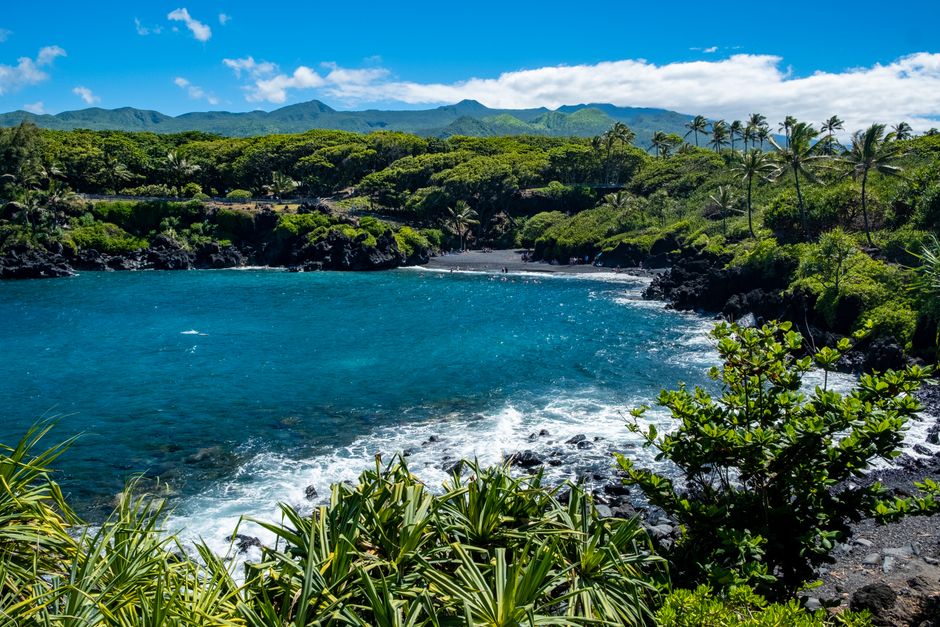
Maui, the second-largest Hawaiian island, is two volcanoes joined by a green isthmus: the jagged, rain-soaked West Maui Mountains and the vast summit of Haleakalā, rising to 10,023 feet (3,055 m). Between and around them lie some of Hawaiʻi’s best beaches, from Kāʻanapali and Kapalua in the west to Wailea and Mākena in the south, the winding Road to Hāna along the wet northeast coast, and the upcountry farms and ranches of Kula. In winter, humpback whales gather in the channels off Maui in greater numbers than almost anywhere else in Hawaiʻi. The island is still recovering from the August 2023 wildfires that destroyed most of Lahaina town, and visitors are welcome in West Maui as long as they travel with care and respect for residents. Plan ahead for reservations: Haleakalā sunrise, Waiʻānapanapa State Park and ʻĪao Valley all need them.
Right now in Maui (Kahului)
- Wed23–30°C73–87°F1 mm rain
- Thu23–26°C74–79°F22 mm rain
- Fri25–29°C76–84°F1 mm rain
- Mon 12 Oct Columbus Day
- Mon 12 Oct Indigenous Peoples' Day · regional holiday in Hawaii
Top tours in Maui
See all tours for Maui →
From local operators, with prices and reviews; you check availability and book on Viator, our partner. We may earn a commission at no extra cost to you. How we earn money
Maui at a glance
- Best months: April to May and September to October for dry weather, calm seas and fewer visitors; mid-December to March for whale watching, with the highest prices.
- Time needed: 4–5 days for Haleakalā, the Road to Hāna, a snorkel trip and beach time; a week to see the whole island at an easy pace.
- Getting there: Kahului Airport (OGG) in central Maui, with nonstop flights from the US mainland and frequent inter-island flights from Honolulu, about 35 minutes.
- Costs (as of October 2026): Haleakalā National Park $30 per car for 3 days, plus a $1 sunrise reservation per car; Waiʻānapanapa and ʻĪao Valley state parks $5 per non-resident plus $10 parking; hotel bills add about 18.7% in taxes.
- Before you go: entry rules (ESTA or visa), money, driving and general safety are in our United States travel guide.
Maui’s regions and who each suits
West Maui: Kāʻanapali, Nāpili and Kapalua
A string of resorts and condos along golden beaches north of Lahaina, with snorkeling at Black Rock (Puʻu Kekaʻa) and Honolua Bay, golf at Kāʻanapali and Kapalua, and sunsets over Lānaʻi and Molokaʻi. The resorts have been open to visitors since the fires, and visiting supports the many West Maui workers and businesses that depend on tourism. Good for families and first-timers who want classic beach resorts.
South Maui: Kīhei, Wailea and Mākena
The sunniest, driest side of the island. Kīhei has condos, beach parks and casual restaurants; Wailea has large resorts linked by a coastal walk; and Mākena has wild beaches, including Big Beach (Oneloa) in Mākena State Park. Boats leave nearby Māʻalaea for Molokini.
Central Maui and Upcountry
Kahului has the airport, big stores and the harbor; Wailuku is the old county seat at the mouth of ʻĪao Valley. Upcountry, on Haleakalā’s cool slopes, the towns of Makawao, Kula and Pukalani have ranches, lavender and protea farms and views over the whole isthmus. Upcountry makes a good base for an early Haleakalā sunrise.
East Maui: Pāʻia, Haʻikū and Hāna
Pāʻia is a laid-back surf town and the gateway to the Road to Hāna and the windsurfing at Hoʻokipa. Beyond, the rainforest coast leads to Hāna, a small, traditional Hawaiian community with a few inns and rentals, and to the Kīpahulu District of Haleakalā National Park.
Haleakalā National Park: fees and sunrise reservations
Haleakalā has two separate districts, not connected by road: the Summit District, reached from Kahului by Routes 37, 377 and 378, and the coastal Kīpahulu District, 12 miles (19 km) past Hāna. According to the National Park Service, both are open 24 hours a day. As of October 2026 one pass covers both districts for three days:
| Pass | Price | What it covers |
|---|---|---|
| Private vehicle | $30 | One non-commercial vehicle (14 seats or fewer) and everyone in it, 3 days, Summit and Kīpahulu |
| Motorcycle | $25 | Up to 2 motorcycles with 4 riders, 3 days |
| Per person (foot or bike) | $15 | Each person 16 or over; under-16s free; 3 days |
| Haleakalā annual pass | $55 | This park only, 12 months |
| Hawaiʻi Tri-Park annual pass | $55 | Haleakalā, Hawaiʻi Volcanoes and Puʻuhonua o Hōnaunau, 12 months |
| America the Beautiful pass | $80 US residents / $250 non-residents | All national parks and federal recreation lands for 12 months |
| Sunrise reservation | $1 per vehicle | Required to enter between 3 a.m. and 7 a.m.; the entrance fee is extra |
For international visitors: Haleakalā is not one of the 11 national parks that charge non-US residents an extra $100 per person in 2026, so visitors from abroad pay the same $30 per car as Americans. The $250 non-resident America the Beautiful pass only pays off if you will also visit several mainland parks, such as Yosemite or the Grand Canyon, where the $100 fee applies. If you will visit only the Hawaiʻi parks, the $55 Tri-Park pass, which covers Hawaii Volcanoes National Park too, is the better buy. Entrance stations take cards only; when they are closed, pay at the self-service machine beside the station. US citizens and residents enter free on the remaining 2026 fee-free days, 27 October and 11 November, but the free days do not cover the sunrise period from 3 a.m. to 7 a.m.
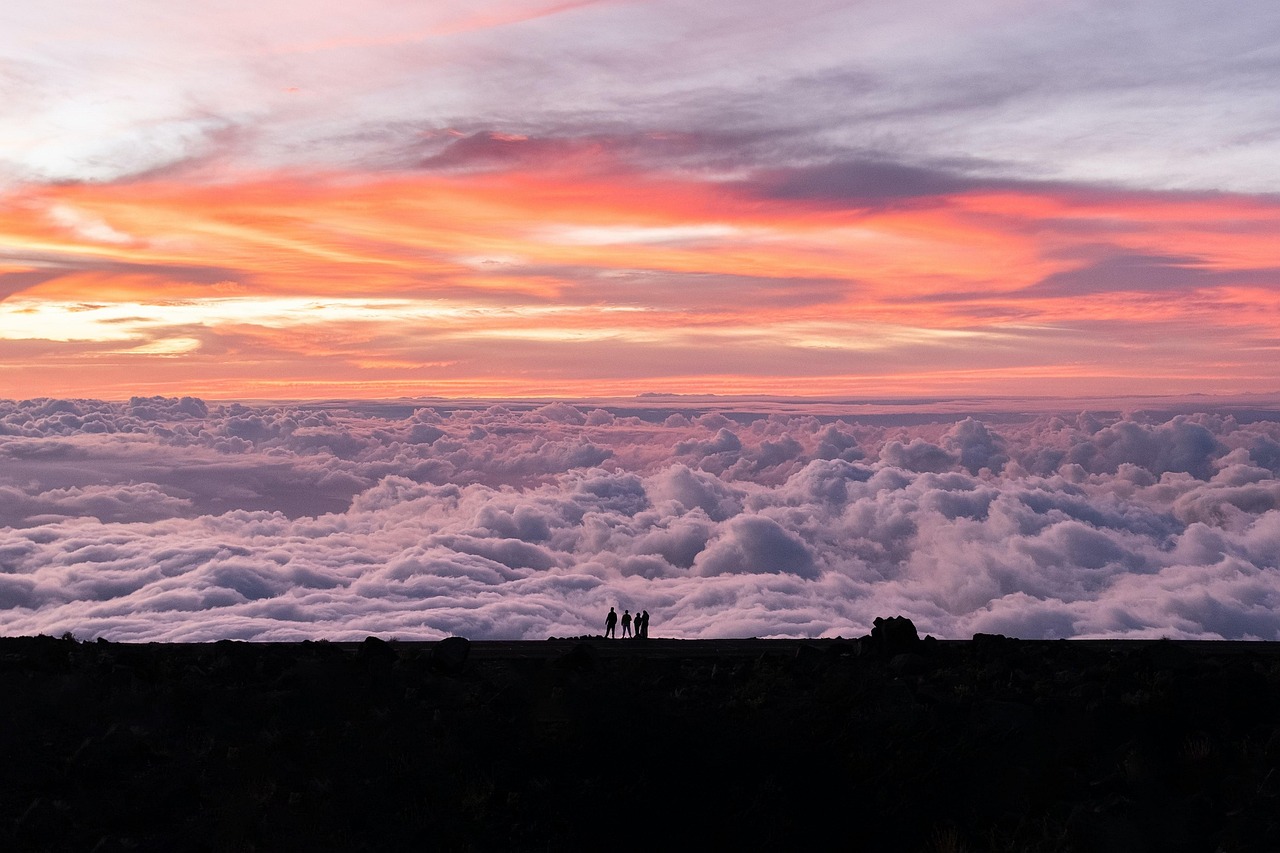
Sunrise reservations: to watch the sun rise over the crater you must reserve a $1 vehicle ticket on Recreation.gov. Tickets go on sale at 7 a.m. Hawaiʻi time up to 60 days ahead, and a share of each day’s tickets is released 2 days (48 hours) before. You may buy only one sunrise reservation per three-day period, the ticket is valid only for the date booked, and there are no refunds or exchanges because of weather. The reservation holder must be in the car with photo ID; rangers cannot make bookings at the gate, and visitors without one are turned away. Reservations work on a rolling 60-day window; as of October 2026 the park had not announced any change to the system for 2027. Authorized commercial tours are an alternative if you would rather not drive the dark mountain road.
At the summit: the drive from the entrance to the summit takes about 30 minutes on a road with no streetlights or guardrails. There is no food, clothing or fuel for sale in the park, and no EV charging; the last gas is in Pukalani. Before dawn the summit is often wet, windy and below freezing, while daytime highs are only 50–65 °F (10–18 °C) all year, so bring warm layers. For a quieter view, try the Leleiwi or Kalahaku overlooks. Haleakalā is sacred to Native Hawaiians; give space and quiet to anyone practicing cultural traditions. Watch for nēnē (Hawaiian geese) on the road and in parking lots. Sleeping in your car is not allowed; overnight stays are only at Hosmer Grove or Kīpahulu campgrounds, or the wilderness cabins and campsites in the crater, all booked on Recreation.gov. The US Geological Survey lists Haleakalā as a potentially active volcano at the normal (green) level.
Kīpahulu: the coastal district has the Pīpīwai Trail through a bamboo forest to Waimoku Falls and views of the Pools of ʻOheʻo from the Kūloa Point Trail. The pools are closed to swimming and wading because of flash floods and rockfall. Kīpahulu gets about 187 inches (475 cm) of rain a year, so bring rain gear and mosquito repellent; emergency medical help is at least an hour away.
The Road to Hāna and Waiʻānapanapa State Park
The Hāna Highway (Route 360) twists through rainforest, past waterfalls, taro patches and one-lane bridges on its way from Pāʻia to Hāna. Allow a full day, start early, and treat it as the journey itself: stop at the Keʻanae Peninsula, the arboretum and fruit stands, and pull fully off the road to let locals pass. Park only in marked areas, do not cross private property or “kapu” (keep out) signs to reach waterfalls, and stay out of streams when rain is falling upstream, as flash floods arrive fast. The road is prone to fallen trees, rockfalls and flooding in storms; when Hurricane Nolo passed in September 2026, the Hawaiʻi Department of Transportation asked people to pause non-essential travel to East Maui. The rough road beyond Kīpahulu around the south side is not recommended for rental cars; most visitors drive back the way they came.
Waiʻānapanapa State Park, just before Hāna, has the black-sand beach of Pailoa, sea caves, a natural stone arch, blowholes and a coastal trail on an ancient Hawaiian footpath. Reservations are required for non-residents. According to the Hawaiʻi Division of State Parks, the park is open from 7 a.m. to 6 p.m.; as of October 2026 entry costs $5 per non-resident and parking $10 per non-resident vehicle, booked with a time slot on gostateparks.hawaii.gov. Hawaiʻi residents enter free. The park closed during the September 2026 storms and reopened on 29 September 2026 once its water supply was restored. Campervan camping there is suspended from July 2026 to March 2027 while a new comfort station is built; cabins ($100 a night for non-residents) and tent sites ($30) are booked on the state’s Explore Outdoor Hawaiʻi site. Swimming at Pailoa is often dangerous because of strong currents.
Lahaina today
On 8 August 2023, a wind-driven wildfire destroyed most of Lahaina, the old royal capital of the Hawaiian Kingdom, killing more than 100 people. Recovery is a long, careful process led by the County of Maui with residents, many of whom are still rebuilding homes. As of October 2026, the county reports steady progress, but Lahaina is a community in recovery rather than a sightseeing stop.
- Front Street: after the seawall, sidewalk and railings were repaired, the county scheduled Front Street from Pāpalaua Street to Shaw Street, plus Dickenson and Prison streets, to reopen to traffic on 1 August 2026. Market Street, Papelekane Street and Mokuhinia Place remain closed while the state dredges Lahaina Harbor.
- Historic sites: according to the county, the Lahaina Courthouse and Banyan Tree Park stay closed until safety hazards are fixed, and the Lahaina Library and the Kamehameha Brick Palace site are closed until further notice. Fenced areas and private property are off-limits.
- Businesses: a handful of businesses are returning. ʻUlu o Lele, an interim marketplace for local vendors at the former Outlets of Maui site, was being prepared in late 2026 after vendor applications closed in September.
- Lahaina Small Boat Harbor: daytime use only, 6 a.m. to 6 p.m., for operators with state permits; tour passengers park in the free county lot at 116 Prison Street (3-hour limit), where operators meet them. County lots close at 6 p.m.
- Honoapiʻilani Highway (Route 30) is open through Lahaina between Māʻalaea and Kāʻanapali, with occasional lane closures for repairs.
If you pass through, drive slowly, follow the signs and the county’s outreach staff, do not photograph damaged properties or residents, and spend your money with Lahaina- and Maui-owned businesses. For the latest, see the county’s recovery site, mauirecovers.org.
Top things to see on Maui
Prices, hours and reservation rules below were checked on the official sites in October 2026; check again before you go.
Haleakalā summit and the crater
Beyond sunrise, the summit area rewards a daytime visit, with clearer views and fewer people. The Sliding Sands (Keoneheʻeheʻe) Trail drops into a vast, colorful landscape of cinder cones; even a mile down and back shows its scale, but remember the climb out is at high altitude. Look for the rare ʻāhinahina (Haleakalā silversword), found only here.
ʻĪao Valley State Monument
In the West Maui Mountains above Wailuku, a paved 0.6-mile (1 km) walk leads to a viewpoint of Kūkaʻemoku, the ʻĪao Needle, a vegetation-covered peak rising 1,200 feet (366 m) from the valley floor, and a garden of plants brought by early Hawaiians. The valley is the site of the 1790 battle of Kepaniwai. According to the Division of State Parks, it is open 7 a.m. to 6 p.m. daily, and non-residents need advance reservations: as of October 2026, $5 per person (children 3 and under free) plus $10 per vehicle for parking, on gostateparks.hawaii.gov.
Molokini and the south shore reefs
Molokini is a small, crescent-shaped volcanic crater off south Maui whose clear, protected waters are a marine life conservation district. Snorkel and dive boats leave early from Māʻalaea and Kīhei, when seas are calmest. From shore, try Ulua and Mōkapu beaches in Wailea or the rocky coves at Mākena. Never stand on coral, and keep your distance from turtles.
Kāʻanapali Beach and Black Rock
A long, golden beach in front of the resorts, with snorkeling around Puʻu Kekaʻa (Black Rock) at the north end. Calm in summer, it can have strong shorebreak and currents in winter.
Hoʻokipa and Pāʻia
Watch world-class windsurfers and surfers from the lookout at Hoʻokipa, and in the late afternoon green sea turtles hauling out on the beach (stay well back from them). Pāʻia’s shops and cafés make a good breakfast stop before the Road to Hāna.
Upcountry: Kula and Makawao
Lavender and protea farms, a winery on the slopes of Haleakalā, ranch country and the paniolo (cowboy) town of Makawao, with cooler air and views down to both coasts.
Protected areas
- Haleakalā National Park
Nature
- Molokini
Parks and gardens
- Iao Valley
Beaches
- Kāʻanapali Beach
Whale season and ocean safety
The waters between Maui, Lānaʻi, Molokaʻi and Kahoʻolawe are part of the Hawaiian Islands Humpback Whale National Marine Sanctuary. Humpbacks arrive in late fall and stay until spring, with the most sightings from January to March; you can often see them spout and breach from the shore at Kīhei, Wailea and Kāʻanapali. Federal rules keep boats, swimmers and drones at least 100 yards (91 m) from humpbacks in Hawaiʻi. Whale-watching cruises leave from Lahaina’s harbor and from Māʻalaea.
Maui’s beaches can be dangerous: swim where lifeguards are on duty, watch for shorebreak at Big Beach and strong currents on north- and east-facing shores in winter, and ask before entering the water. Hawaiʻi has banned the sale of sunscreens with oxybenzone and octinoxate since 2021; use mineral sunscreen or a rash guard. See our snorkeling, diving and beaches guides.
Other things to do on Maui
- Hiking: the Sliding Sands and Halemauʻu trails in Haleakalā’s crater, the Pīpīwai Trail at Kīpahulu and the coastal trail at Waiʻānapanapa. Polipoli Spring State Recreation Area and nearby upcountry forest reserves were closed after the September 2026 storms; check before you go. See our hiking guide.
- Boat trips: whale watching in winter, snorkel sails to Molokini and day trips to Lānaʻi. See our boat trips guide.
- Surfing and windsurfing: lessons in Kīhei and on gentle west-side breaks; Hoʻokipa is for experts. See our surfing guide.
- Cycling: guided rides on Haleakalā’s lower slopes, and road cycling upcountry for strong riders. See our cycling guide.
- Food and farms: farm tours and tastings upcountry, fresh fish in Kīhei and Pāʻia, and farmers markets around the island.
Activities and best months
- HikingHaleakalā summit at sunrise (3-7 a.m.) needs a $1 vehicle reservation, released up to 60 days ahead with a share two days ahead; park entry is $30 a vehicle for three days.
Getting there and getting around
Kahului Airport (OGG) is the main gateway, with nonstop flights from many West Coast and some other mainland cities and frequent inter-island flights from Honolulu. Kapalua’s small West Maui airport has limited inter-island service. A rental car is close to essential: the island’s bus service links the main towns but does not reach Haleakalā’s summit or Hāna, and the National Park Service says there is no public transport to either district of the park.
| From Kahului Airport (OGG) to | Distance | Driving time |
|---|---|---|
| Kīhei and Wailea | about 15–20 miles (24–32 km) | 25–40 minutes |
| Kāʻanapali (via Lahaina) | about 25 miles (40 km) | 45–60 minutes |
| Haleakalā summit | about 37 miles (60 km) | about 2 hours; allow more before dawn |
| Hāna | about 50 miles (80 km) | at least 2.5–3 hours without stops |
| Kīpahulu District (Haleakalā National Park) | about 60 miles (97 km) | about 4 hours via the Hāna Highway |
Gas up in Kahului, Pukalani or Pāʻia before Haleakalā or Hāna. Inter-island ferries no longer run between Maui and Oʻahu, so fly; a passenger ferry crosses to Lānaʻi.
Around Maui: day trips and other islands
- Lānaʻi: a quiet island of red-dirt roads and two resorts, with Hulopoʻe Bay’s marine preserve, reached by passenger ferry.
- Molokaʻi: rural and traditional, with few visitors; fly from Kahului or Honolulu.
- Oʻahu: Waikīkī, Diamond Head and Pearl Harbor, a short flight away (see our Honolulu guide).
- Hawaiʻi Island: Kīlauea’s eruption at Hawaii Volcanoes National Park, Mauna Kea and the Kona coast (see our Hawaii Island and Hawaii Volcanoes National Park guides).
Nearby destinations
- Hawaii Island157 km
- Honolulu175 km
- Hawaii Volcanoes National Park194 km
When to go and how long to stay
Maui’s climate depends on where you are: the leeward west and south coasts are sunny and dry, Hāna and the windward slopes get heavy rain, and Haleakalā’s summit can be freezing. The table uses NOAA’s 1991–2020 climate normals for Kahului Airport, in dry central Maui: average daily highs and lows, and days with at least 0.10 in (2.5 mm) of rain.
| Season | Average high / low | Rainy days per month | What it’s like | Good for |
|---|---|---|---|---|
| Winter (Dec–Feb) | 82–83 °F (28 °C) / 64–66 °F (18–19 °C) | 4 | Warm, with passing showers, big north swells and the most whales | Whale watching; peak prices |
| Spring (Mar–May) | 83–87 °F (28–30 °C) / 65–68 °F (18–20 °C) | 2–5 | Drying out, calmer seas by May | Snorkeling, Haleakalā, Road to Hāna |
| Summer (Jun–Aug) | 88–90 °F (31–32 °C) / 70–72 °F (21–22 °C) | 0–2 | Hot, dry, windy afternoons in central Maui | Beaches, Molokini, family trips |
| Fall (Sep–Nov) | 90 °F falling to 86 °F (32 to 30 °C) / 71 °F falling to 68 °F (22 to 20 °C) | 1–3 | Hot and dry, then the first winter rains; hurricane season ends 30 November | Deals, calm seas, quieter roads |
Kahului averages about 16.2 in (412 mm) of rain a year, falling on about 30 days, mostly from November to March. Haleakalā’s summit is about 30 °F (17 °C) cooler than the coast, and Kīpahulu gets more than ten times Kahului’s rain. The Central Pacific hurricane season runs from 1 June to 30 November. In 2026, Maui was affected by a Kona low storm in March, by Lala in August and by Hurricanes Lowell and Nolo in September; as of 2 October 2026 all Maui and Molokaʻi state parks had reopened except Polipoli. Brush fires can occur in dry, windy weather; follow the Maui Emergency Management Agency’s alerts.
Weather month by month
Maui in 4 days
Day one, settle in and snorkel at Wailea or Kāʻanapali. Day two, Haleakalā sunrise with a reservation, then breakfast upcountry and a visit to the farms of Kula. Day three, a full day on the Road to Hāna with a timed visit to Waiʻānapanapa, returning the same way. Day four, an early boat to Molokini, then ʻĪao Valley in the afternoon.
A week on Maui
Split your stay between the south or west coast and a night or two in Hāna or upcountry. Add the Pīpīwai Trail at Kīpahulu, a hike into Haleakalā crater by day, a whale-watching cruise in winter and a day on Lānaʻi.
Where to stay on Maui and the hotel taxes
- Kāʻanapali and Kapalua: big resorts and condos on the beach, best for families and sunsets.
- Wailea and Mākena: luxury resorts in the sunny south.
- Kīhei: condos and beach parks, often the best value.
- Upcountry, Pāʻia and Hāna: small inns, B&Bs and licensed vacation rentals; quieter and closer to Haleakalā or East Maui.
Hotel taxes: room rates in Hawaiʻi are quoted before tax. Since 1 January 2026, under Act 96 of 2025, the state transient accommodations tax (TAT) is 11%, up from 10.25%. Maui County adds its own 3% transient accommodations tax, and hotels usually pass on the general excise tax at up to 4.712%. Together that is about 18.7% on top of the room rate. The same 2025 law tried to tax cruise fares, but a federal appeals court blocked that part and the state is not enforcing it until further notice. Many resorts add a daily resort fee and parking charge; under the Federal Trade Commission’s fees rule in force since May 2025, mandatory fees must be included in the advertised total price. Choose licensed accommodation: housing for residents, especially in West Maui, is scarce after the fires.
Practical tips for Maui
- Book early: Haleakalā sunrise tickets open 60 days ahead at 7 a.m. Hawaiʻi time and sell out fast; book Waiʻānapanapa and ʻĪao Valley as soon as your dates are fixed.
- Time zone: Hawaiʻi Standard Time (UTC−10), no daylight saving time; after 1 November 2026, Maui is 2 hours behind California.
- Drive with aloha: let faster local traffic pass on the Hāna Highway and upcountry roads, and never stop on the road for photos.
- Respect closures: stay out of fenced areas in Lahaina and closed trails and forest reserves.
- Altitude: the summit of Haleakalā is above 10,000 feet; go slowly, and check with a doctor if you have heart or breathing problems or are pregnant.
- Emergencies: call 911.
What to pack for Maui
Pack summer clothes and swimwear for the coast, plus a warm jacket, hat, gloves and long pants for a Haleakalā sunrise, when it can be below freezing. Add a rain jacket and quick-dry layers for the Road to Hāna and Kīpahulu, sturdy shoes with grip, mineral sunscreen, a rash guard, a dry bag for boat trips, a headlamp for pre-dawn drives and insect repellent. Bring snacks and water for long drives, as East Maui has few shops.
What to pack
- Day packs and anti-theft bagsA 20–30 litre pack carries layers, water, a head torch and snacks on full-day levada walks.
- Fleeces and warm layersSummits like Pico do Areeiro averaged about 11 °C over 2024, so a fleece is needed even in summer.
- HeadlampsLevada routes such as PR1 and PR9 pass through long, dark, wet tunnels.
- Hiking shoes and bootsMadeira's levadas and the Azores' crater rims are wet, rocky and slippery, so grippy shoes matter more than anywhere else in Portugal.
- Rain jacketsMountain and island weather changes fast; a real shell beats an umbrella in the wind.
- Trekking polesLong stone staircases and steep descents on Madeira's peaks and the Azores' crater rims are easier on the knees with poles.
- Water bottles and hydration packsAlgarve and Alentejo trails are hot and exposed with few refill points.
Maui travel FAQ
Do I need a reservation for sunrise at Haleakalā?
Yes. Every vehicle entering between 3 a.m. and 7 a.m. needs a $1 reservation from Recreation.gov, released 60 days ahead at 7 a.m. Hawaiʻi time, with more tickets two days ahead. The $30 entrance fee is extra.
Does Haleakalā charge the $100 non-resident fee?
No. As of October 2026, Haleakalā is not one of the 11 parks with the $100 non-resident fee; everyone pays $30 per car for three days, or uses an annual or Tri-Park pass.
Do I need a reservation for Waiʻānapanapa State Park?
Yes, if you are not a Hawaiʻi resident: book a time slot on gostateparks.hawaii.gov. Entry is $5 per person and parking $10 per car as of October 2026.
Can I visit Lahaina?
West Maui’s resorts and the highway through Lahaina are open, and Front Street was scheduled to reopen to traffic on 1 August 2026, but the Banyan Tree Park, the courthouse and other historic sites remain closed. Drive slowly, stay out of fenced areas and respect residents.
Is the Banyan tree in Lahaina open to visitors?
Not as of October 2026. The County of Maui says Banyan Tree Park and the Lahaina Courthouse stay closed until safety hazards are fixed.
How long does the Road to Hāna take?
Plan a full day. Without stops, Kahului to Hāna takes at least 2.5 to 3 hours each way, and most people stop often.
When is whale season on Maui?
Humpback whales visit from late fall to spring, with the most sightings from January to March. Boats and swimmers must stay at least 100 yards away.
Do I need a reservation for ʻĪao Valley?
Yes, non-residents must reserve on gostateparks.hawaii.gov. Entry is $5 per person and parking $10 per car; the park is open 7 a.m. to 6 p.m.
What is the hotel tax on Maui?
About 18.7% as of October 2026: the 11% state transient accommodations tax, Maui County’s 3% and up to 4.712% general excise tax. Resort fees come on top.
Where should I stay on Maui?
Kāʻanapali or Kapalua for classic beach resorts and sunsets, Wailea for luxury and sunshine, Kīhei for value, and upcountry or Hāna for peace and quiet.
Plan your trip
Partner links: TravelerCenter may earn a commission if you book, at no extra cost to you.
Sources · last reviewed 4 October 2026
Researched and last reviewed on 4 October 2026. Haleakalā fees, sunrise reservations, hours, directions, weather and camping: National Park Service; national park passes and the non-resident fee: National Park Service; Waiʻānapanapa, ʻĪao Valley and storm-related park notices: Hawaiʻi Department of Land and Natural Resources, Division of State Parks; Lahaina recovery, Front Street and harbor access: County of Maui and its Office of Recovery (mauirecovers.org); Hāna Highway and Honoapiʻilani Highway notices: Hawaiʻi Department of Transportation; hotel taxes: Hawaiʻi Department of Taxation and the County of Maui; resort fees: Federal Trade Commission; Haleakalā volcano status: US Geological Survey; climate: NOAA’s 1991–2020 normals for Kahului Airport. Driving times and distances, whale-season months, the 100-yard whale rule, Molokini and beach descriptions are general knowledge, flagged for checking. Prices, hours and reservation rules change, so check the official sites before you go. For entry rules, money and general safety, see our United States travel guide.
Also: nps.gov · NOAA NCEI normals 1991–2020, Kahului Airport (climate)
Data: Weather: MET Norway (CC BY 4.0) · Sea temperature: NOAA CoastWatch · Air quality: OpenAQ · Rates: ECB · Holidays: Nager.Date · Costs: World Bank ICP and price levels · © OpenStreetMap contributors (ODBL) · Wikidata (CC0)