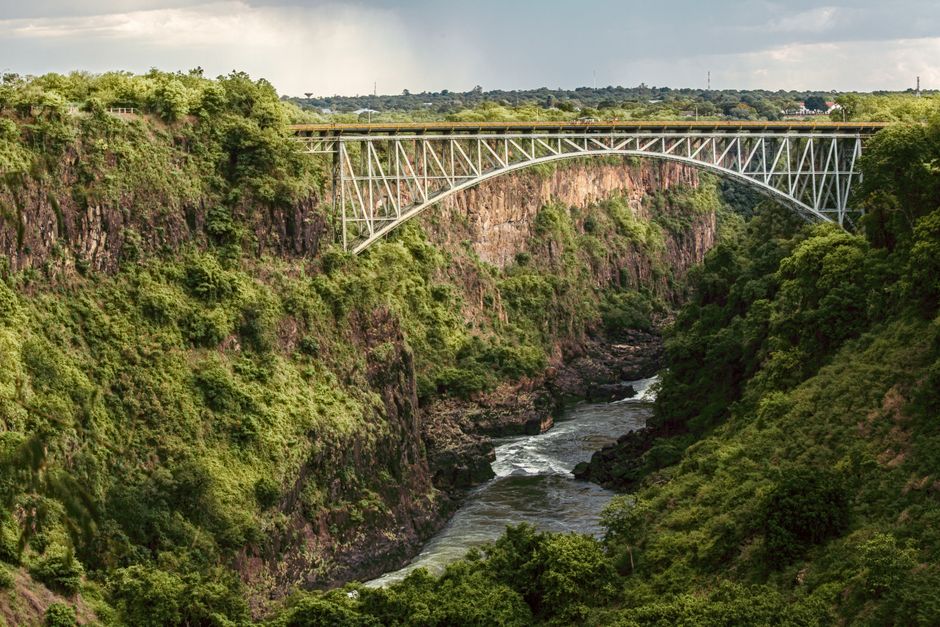
Zambia is wild Africa at its most authentic: a big, uncrowded country of rivers, floodplains and miombo woodland, where safaris are about expert guiding, walking in the bush and the feeling of having a vast park almost to yourself. It shares Victoria Falls with Zimbabwe; from the town of Livingstone, you can walk across the Knife-Edge Bridge in the spray and, in the low-water months, swim in Devil’s Pool at the very lip of the falls. In the east, South Luangwa National Park is famous for leopards and as the birthplace of the walking safari. The Lower Zambezi offers canoe safaris past elephants and hippos beneath an escarpment, and Kafue, one of Africa’s largest parks, has the remote Busanga Plains. Further afield, the wildebeest migration of Liuwa Plain, the fruit-bat gathering of Kasanka and the shoebills of the Bangweulu swamps draw wildlife enthusiasts. Zambia is one of the easiest countries in the region to enter: since late 2022, travelers from the United States, the United Kingdom, Canada, the European Union, Australia, Japan and many other countries can visit without a visa, and from January 2025 the list grew further. The friendly, English-speaking people and the relaxed pace add to the appeal. The safari season is the dry winter, from about June to October.
Right now in Zambia
- Wed 19–33°C 65–91°F 1 mm Light showers
- Thu 20–32°C 68–89°F 1 mm Partly cloudy
- Fri 20–30°C 68–86°F Mostly clear
Weather: MET Norway (CC BY 4.0)
Multi-day tours of Zambia
Multi-day tours from local operators. You check dates and book on Viator, our partner; we may earn a commission at no extra cost to you. How we earn money
Zambia at a glance
Zambia covers about 752,600 km² (290,600 square miles), slightly larger than Texas. Most of the country is a plateau at 1,000 to 1,400 m (3,300 to 4,600 ft), cut by the great valleys of the Zambezi, Luangwa and Kafue rivers, and dotted with lakes and wetlands, including Lake Kariba, shared with Zimbabwe, and Lake Tanganyika in the far north. Zambia is landlocked and borders eight countries: the Democratic Republic of the Congo, Tanzania, Malawi, Mozambique, Zimbabwe, Botswana, Namibia and Angola. Its 2022 census counted about 19.6 million people; the capital and largest city is Lusaka, and the Copperbelt in the north is the mining heartland.
English is the official language and is widely spoken; Bemba, Nyanja, Tonga and Lozi are among more than 70 local languages. The time zone is Central Africa Time (UTC+2) all year, with no daylight saving. Electricity is 230 V, mostly with British-style type G sockets, and some type C and D. Driving is on the left.
Zambia’s regions for travelers
- Livingstone and the Southern Province: Victoria Falls, Mosi-oa-Tunya National Park, Zambezi riverside lodges and Lake Kariba’s northern shore at Siavonga.
- Lusaka and the Lower Zambezi: the capital, and the Lower Zambezi National Park for canoeing, boating and game drives.
- The Luangwa Valley: South Luangwa, with Mfuwe, and the remote North Luangwa.
- Kafue and the west: Kafue National Park and the Busanga Plains, Liuwa Plain, and the Barotse floodplain of the Lozi people.
- The north: Kasanka, the Bangweulu wetlands, the waterfalls of the Northern Province, Shiwa Ng’andu and Lake Tanganyika.
Where to go: falls, valleys and rivers
A classic trip combines a few nights in Livingstone with a week split between South Luangwa and the Lower Zambezi, linked by short flights through Lusaka. Kafue adds a road-accessible wilderness between Lusaka and Livingstone. See our guide to the falls:
- Livingstone: the Zambian side of Victoria Falls, Devil’s Pool, Livingstone Island, rafting, sunset cruises and Mosi-oa-Tunya National Park.
Our Victoria Falls guide covers the Zimbabwean side, and our Chobe National Park guide covers Botswana, across the Kazungula bridge.
South Luangwa
South Luangwa, in the Luangwa Valley in the east, is one of Africa’s great parks, with a high density of leopards, lions, elephants, buffalo, hippos in the river and endemic Thornicroft’s giraffe. Walking safaris were pioneered here, and the park’s guides are among the best in Africa. Mfuwe airport is the gateway, and lodges range from riverside camps to seasonal bush camps. Night drives are permitted, giving excellent chances of leopards.
Lower Zambezi
Downstream from Lake Kariba, the Lower Zambezi National Park faces Zimbabwe’s Mana Pools across the river. Canoe safaris paddle along channels past elephants and hippos, and tigerfish fishing, boat cruises, game drives and walks fill the days. It is reached by light aircraft from Lusaka or by road via Chirundu and then by boat or 4×4. Camps line the river and the Chongwe area at the park’s western edge, and many close during the rains. Because the park lies below a steep escarpment, the valley floor is hot in October, but the shade of the riverine trees and the breezes on the water make canoeing pleasant in the cool mornings.
Kafue
Kafue National Park, covering about 22,400 km² (8,650 square miles), is one of the largest parks in Africa. Its northern Busanga Plains, a seasonal floodplain, are known for lions, cheetahs, red lechwe and puku, and the Kafue River and Lake Itezhi-Tezhi offer boating. It’s accessible by road from Lusaka and Livingstone and mostly open in the dry season. The paved Lusaka–Mongu highway crosses the park, making the central Kafue River area one of the easiest wild places to reach by road, and lodges along the river offer boat cruises, walks and drives. In the south, Lake Itezhi-Tezhi has lodges with sunset views, while the far north’s Busanga Plains are reached by light aircraft or a long 4×4 drive and open only from about June to October. Leopards are seen regularly, and the park is home to more antelope species than almost anywhere in Africa, including sable, roan, puku, red lechwe, oribi and sitatunga.
Liuwa, Kasanka and Bangweulu
In November, the Liuwa Plain in the far west hosts Africa’s second-largest wildebeest migration. Kasanka, from about late October to December, sees millions of straw-colored fruit bats gather in a swamp forest each evening. The Bangweulu wetlands are one of the best places to see the prehistoric-looking shoebill.
North Luangwa
North of South Luangwa, North Luangwa National Park is one of Africa’s most remote parks, with only a handful of seasonal camps and no public roads open to tourists in most areas. It is a destination for walking safaris, big buffalo herds and lions, and a reintroduced population of black rhinos.
Lusaka
Most travelers pass through the capital, but a night or two is worthwhile. Visit the Lusaka National Museum, browse the Sunday craft market and art galleries, eat at the city’s growing range of restaurants, and see orphaned elephants at the Lilayi Elephant Nursery on the city’s edge. Lusaka is also the hub for domestic flights to Mfuwe, the Lower Zambezi and Kafue.
Lake Kariba and Siavonga
On the northern shore of Lake Kariba, the resort town of Siavonga, about three hours from Lusaka, offers houseboats, sunset cruises, fishing for tigerfish and bream, and the Kariba Dam wall. Further west, small lodges overlook the lake’s islands.
Ceremonies and culture
Zambia’s traditional ceremonies are a highlight for culturally curious travelers. The best known is the Kuomboka, when the Litunga, king of the Lozi people, moves by royal barge from his flooded dry-season palace on the Barotse floodplain to higher ground, usually around March or April, depending on the floods. The Ncwala ceremony of the Ngoni people in the east takes place in February, and the Lwiindi of the Tonga near Victoria Falls in July. Dates depend on traditional leaders and seasonal conditions, so check close to the time.
Conservation and community
Much of Zambia’s wildlife lives in national parks surrounded by Game Management Areas, where communities share in tourism and wildlife revenue. Many lodges support schools, clinics, conservation education and anti-poaching patrols through community trusts and partnerships with the Department of National Parks and Wildlife. Ask your lodge about its projects; a visit to a nearby village or school, organized respectfully, can be a highlight of a trip.
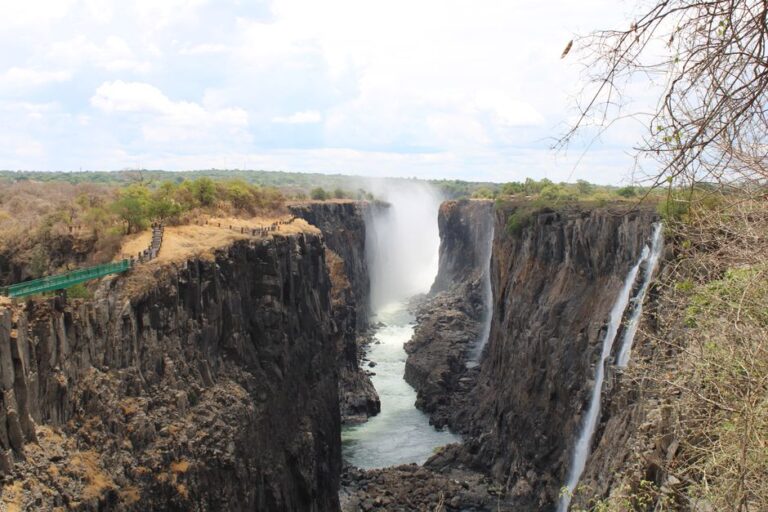
Livingstone Travel Guide
Plan a trip to Livingstone, Zambia: the Zambian side of Victoria Falls, the Knife-Edge Bridge and Boiling Pot, Livingstone Island and the Devil's Pool…
Best time to visit Zambia
Zambia has three seasons. The cool, dry season from about May to August has warm, sunny days and cool nights, sometimes near freezing at dawn on the plateau. The hot, dry season in September and October is the peak for game viewing, with temperatures in the low-lying valleys often reaching 38 °C (100 °F). The rainy season, from about November to April, brings heavy afternoon storms, green landscapes and migrant birds; many remote camps close, and some roads become impassable. The table shows rounded averages from the Zambia Meteorological Department (1991–2020), as published by the World Meteorological Organization (WMO).
| Region (station) | January high / low | July high / low | October high / low | Rain a year |
|---|---|---|---|---|
| — | — | — | — | — |
| Livingstone and Victoria Falls | 31 °C (88 °F) / 19 °C (67 °F) | 26 °C (79 °F) / 8 °C (46 °F) | 36 °C (96 °F) / 19 °C (67 °F) | about 650 mm (25 in), mostly November to March |
| Lusaka area (Mount Makulu) | 28 °C (82 °F) / 18 °C (64 °F) | 25 °C (76 °F) / 9 °C (49 °F) | 33 °C (91 °F) / 18 °C (65 °F) | about 770 mm (30 in), mostly November to March |
| South Luangwa (Mfuwe) | 32 °C (89 °F) / 21 °C (70 °F) | 30 °C (86 °F) / 11 °C (52 °F) | 38 °C (100 °F) / 20 °C (68 °F) | about 800 mm (32 in), mostly November to March |
| Copperbelt (Ndola) | 28 °C (82 °F) / 17 °C (63 °F) | 26 °C (78 °F) / 6 °C (43 °F) | 33 °C (91 °F) / 16 °C (61 °F) | about 1,130 mm (44 in), mostly November to April |
Victoria Falls follows the Zambezi’s flow: it is fullest from about March to May and lowest in about October and November. On October 5, 2026, the Zambezi River Authority measured the flow at Victoria Falls at 343 m³ per second, compared with a long-term annual average of 1,100 m³/s. According to the operator of Livingstone Island, Devil’s Pool is usually open from about late August to late December, depending on water levels. Safari season in South Luangwa, the Lower Zambezi and Kafue runs from about June to October, and some camps open only in these months.
Seasonal bush camps and the green season
Many of Zambia’s most atmospheric camps, built of reeds, canvas and thatch, are seasonal: they are put up when the dry season begins, around May or June, and taken down in November, when the rains turn the floodplains to mud and black-cotton soil roads become impassable. This means that some of the best walking and remote game viewing is only available in the dry months. In the green season, South Luangwa’s all-year lodges around Mfuwe offer “emerald season” safaris with boat trips on the swollen river, superb birdlife and big discounts, while Livingstone remains open all year. Kafue and the Lower Zambezi largely close from about December to March.
Zambia month by month
| Month | Weather | Highlights | Crowds and prices |
|---|---|---|---|
| — | — | — | — |
| January | Hot; heavy rain | Green season; birding; rising falls | Many bush camps closed; low rates |
| February | Hot; rainy | Lush valleys; boat safaris in some areas | Low |
| March | Warm; rains easing | Victoria Falls near peak flow | Low |
| April | Warm; last storms | Falls at peak; Angel’s Pool season on Livingstone Island | Moderate; Easter |
| May | Dry; pleasant | Camps reopening; spectacular falls | Shoulder season |
| June | Dry; cool nights | Safari season begins; walking safaris | Rising |
| July | Coolest; cold mornings | Excellent game viewing; good falls views | High |
| August | Dry; warming | Peak safari; rafting season; Devil’s Pool opens late in the month | High |
| September | Hot and dry | Game concentrates at rivers; Devil’s Pool | High |
| October | Hottest month | Dramatic sightings; Kasanka bats begin | High; very hot |
| November | Hot; first rains | Liuwa wildebeest migration; Kasanka bats | Shoulder season |
| December | Hot; rainy | Kasanka bats; Devil’s Pool until late December | Low; festive holidays |
Public holidays
Zambia’s public holidays include New Year’s Day, the National Day of Prayer (October 18), Women’s Day (March 8), Youth Day (March 12), Good Friday to Easter Monday, Labour Day (May 1), Africa Day (May 25), Heroes’ Day and Unity Day (the first Monday and Tuesday of July), Farmers’ Day (the first Monday of August), Independence Day (October 24) and Christmas Day.
How long to stay: sample itineraries
- 4 days: Livingstone (3 nights), with the falls, Livingstone Island and a day trip to Chobe.
- 7 days: Livingstone (2 nights) and South Luangwa (4 nights), with a flight via Lusaka.
- 10 days: Livingstone (2), Lower Zambezi (3) and South Luangwa (4).
- 14 days: Livingstone (3), Kafue and the Busanga Plains (4), South Luangwa (4) and the Lower Zambezi (3).
Entry, money and costs
Entry and visas (last reviewed October 2026)
Zambia’s Department of Immigration publishes the list of nationalities that don’t need a visa. On November 2, 2022, the Minister of Home Affairs announced a visa waiver, under Statutory Instrument No. 69 of 2022, for travelers from the United States, the United Kingdom, Canada, Norway, Australia, New Zealand, China, Japan, South Korea, the Gulf states and the European Union. A further waiver for nationals of 53 more countries, including Switzerland, Israel, Argentina and Turkey, took effect on January 1, 2025 (Statutory Instrument No. 78 of 2024), bringing the total to 167 countries, according to the department. Visa-exempt visitors arriving by air must have a return ticket, and those arriving by land or water must have enough money for their stay and departure. Nationals who still need a visa can apply online through the department’s e-services portal or, for some nationalities, on arrival; check the department’s lists for your passport.
KAZA UNIVISA: Zambia and Zimbabwe still issue the joint KAZA UNIVISA, according to the Zambia Department of Immigration. It costs US$50, allows multiple entries to both countries for up to 30 days in a 12-month period, and also covers day trips into Botswana through Kazungula. In Zambia, it is available at Kenneth Kaunda International Airport (Lusaka), Harry Mwaanga Nkumbula International Airport (Livingstone), the Victoria Falls border and the Kazungula border, and online for those arriving at these points. Nationalities that don’t need a Zambian visa only need it if they need a visa for Zimbabwe and plan several crossings.
Customs and what not to bring
Declare large sums of foreign currency. Ivory, rhino horn and other protected wildlife products are strictly controlled. Flying drones requires a special license from the Department of Civil Aviation, and drones are generally not allowed in national parks without permission.
Money, cards and cash
The currency is the Zambian kwacha (ZMW, K), divided into 100 ngwee. On October 5, 2026, the Bank of Zambia’s mid-rate was about K19.70 to the US dollar, the rate used on this page. Safari lodges, activities and park fees are usually quoted in US dollars, but day-to-day purchases are in kwacha. Cards are accepted at hotels, lodges, supermarkets and larger restaurants in Lusaka and Livingstone, and ATMs are common in towns. Carry some kwacha in cash for markets, taxis, tips and small shops, and US dollars in small, clean notes for tips and fees in remote areas.
National parks: entry fees
The Department of National Parks and Wildlife (DNPW) charges a daily entry fee per person, with separate rates for Zambians, residents and SADC nationals, and international visitors, plus vehicle fees; the National Heritage Conservation Commission (NHCC) manages entry to the falls themselves on the Zambian side. The figures below, which we could not confirm on a government website, are typical published rates for international visitors:
| Park (international visitors) | Per person, per day |
|---|---|
| — | — |
| South Luangwa and Lower Zambezi | about US$25 |
| Kafue | about US$20 |
| Victoria Falls, Zambian side (NHCC) | US$20 |
| Mosi-oa-Tunya National Park (game park section) | about US$10 |
The Victoria Falls fee is as stated by the operator of Livingstone Island; the others are flagged for checking. Lodge and camp rates often include park fees, and payment is usually accepted in US dollars or kwacha.
Taxes and tipping
Value-added tax applies to most goods and services. Tipping is appreciated: around 10% in restaurants, and on safari a daily tip for your guide and a contribution to the staff tip box, often in US dollars.
What a trip costs
Prices are typical ranges for October 2026, converted at about K19.70 to the US dollar; official fees are noted.
| Item | Typical cost |
|---|---|
| — | — |
| KAZA UNIVISA (official) | US$50 (about K985) |
| Victoria Falls entry, Zambian side (NHCC fee, as stated by the operator) | US$20 (about K394) |
| Livingstone Island boat tour with Devil’s Pool, breakfast option (operator rate, 2026) | US$149–159 |
| Coffee in a café in Lusaka or Livingstone | K40–80 (about US$2–4) |
| Main course in a mid-range restaurant | K150–350 (about US$8–18) |
| Sunset cruise on the Zambezi | US$60–100 |
| Mid-range hotel or lodge in Livingstone, double, per night | US$100–250 |
| Safari lodge in South Luangwa, per person per night, all-inclusive | US$300–1,200 |
| Light-aircraft flight, Lusaka to Mfuwe, one way | US$200–350 |
A mid-range trip with lodges in Livingstone and a fully inclusive safari costs roughly US$400–700 per person per day; budget travelers using campsites, backpacker lodges and buses can spend far less.
Getting there and getting around
Airports
Kenneth Kaunda International Airport (LUN) in Lusaka is the main gateway, with flights from Johannesburg, Nairobi, Addis Ababa, Dubai, Doha and other hubs. Harry Mwaanga Nkumbula International Airport (LVI) in Livingstone has direct flights from Johannesburg and Cape Town. Domestic flights connect Lusaka with Mfuwe (MFU) for South Luangwa, Livingstone, Ndola and other cities, and light aircraft serve the Lower Zambezi, Kafue and other bush airstrips.
Domestic flights and the safari circuit
Zambia’s parks are far apart, so most safari itineraries use scheduled and charter flights. Scheduled services link Lusaka with Mfuwe and Livingstone several times a week or daily, depending on the season, while light aircraft fly from Lusaka to the Lower Zambezi airstrips (Jeki and Royal) in about 30 to 40 minutes and to Kafue’s airstrips in about an hour and a half. Luggage limits on light aircraft are usually about 15–20 kg (33–44 lb) in soft bags. Lodges coordinate road transfers from the airstrips, often doubling as a first game drive.
Driving
Paved highways link Lusaka with Livingstone, the Copperbelt, Chipata (for South Luangwa) and the Zimbabwean border at Chirundu, but road quality varies, with potholes on some stretches. Park roads are gravel and sand, many impassable in the rains. Self-drive is possible with a well-equipped 4×4, but most visitors use transfers and flights. Expect police checkpoints; carry your license, passport and vehicle documents, and the reflective triangles and other equipment required by law. Avoid driving at night.
Buses
Intercity coaches connect Lusaka with Livingstone, Chipata, the Copperbelt and neighboring countries, and are inexpensive. Choose reputable companies and travel by day.
Border crossings
The Victoria Falls Bridge links Livingstone with Victoria Falls in Zimbabwe; the Kazungula bridge over the Zambezi, about 65 km (40 miles) west of Livingstone, leads to Kasane in Botswana. Chirundu is the main crossing to Zimbabwe for Harare, and Katima Mulilo links to Namibia’s Zambezi Region.
Culture, food and everyday etiquette
Food and drink
The staple is nshima, a stiff maize porridge eaten with the right hand and served with relishes such as beef, chicken or fish stew, beans, and green vegetables such as rape or pumpkin leaves (chibwabwa). Try fresh bream from the lakes and rivers, kapenta (small dried fish), roasted maize, and, if you’re adventurous, caterpillars (vinkubala). Lusaka has a varied restaurant scene, and safari camps serve international menus. Mosi, the local lager, is named after the falls. Drink bottled or filtered water.
Where to stay
Choices range from riverside lodges and backpacker hostels in Livingstone to city hotels in Lusaka, fully inclusive safari lodges and seasonal bush camps in South Luangwa, the Lower Zambezi and Kafue, and campsites for self-drivers.
Walking safaris and guiding
Walking safaris began in the Luangwa Valley in the mid-20th century, and they remain Zambia’s specialty. Guides undergo rigorous training and are accompanied by an armed scout from the park authority. Multi-day walking safaris between bush camps in South and North Luangwa are among the most memorable wildlife experiences in Africa.
Traveling with children
Livingstone is good for families, with the falls, cruises and the museum, but Devil’s Pool and other swimming activities have minimum ages, and many safari camps set minimum ages for walking and canoeing. Plan malaria prevention carefully for children.
Etiquette
- Greetings: take time to greet people properly; Zambians are known for their politeness.
- Respect: use your right hand to give and receive things, and dress modestly away from lodges.
- Photos: ask before photographing people; don’t photograph government buildings, bridges, airports or military sites.
- On safari: follow your guide’s and scout’s instructions at all times.
Safety, health and connectivity
Zambia is a peaceful country, and most visits are trouble-free. The main precautions for visitors relate to nature, health and the roads.
- River safety at the falls: stay on marked paths and behind barriers at Victoria Falls, where rocks are slippery and some edges are unfenced. Devil’s Pool and the other pools at Livingstone Island may only be visited with the licensed operator, when water levels are safe.
- Rivers and lakes: never swim in the Zambezi, Luangwa or Kafue rivers or in lakes with hippos and crocodiles, except where operators say it is safe; wear life jackets on boats and canoes.
- Wildlife: many camps are unfenced; don’t walk after dark without an escort, and keep away from elephants and hippos, including in Livingstone’s riverside lodges.
- Malaria: malaria is present throughout Zambia, with the highest risk in the rainy season from about November to April. Talk to a travel-health professional about preventive tablets and use repellent and nets.
- Heat: in October, valley temperatures often reach 38 °C (100 °F); drink plenty of water.
- Roads: potholes, heavy trucks, livestock and unlit vehicles make night driving dangerous; travel by day.
- Power: ZESCO, the national utility, publishes load-management schedules, and power cuts can occur; most lodges and hotels have generators or solar power.
- Belongings: in Lusaka and Livingstone, keep valuables out of sight, use hotel-arranged taxis at night, and watch out for pickpockets in markets and bus stations.
- Emergencies: call 999 for the police, 992 for an ambulance and 993 for the fire service; in remote areas your lodge can usually arrange help faster. Carry travel insurance with evacuation cover.
Connectivity: prepaid SIM cards from Airtel, MTN and Zamtel are sold in towns and at airports; registration requires your passport. Coverage is good in cities and along main roads but limited in the national parks.
Things to do: falls, walking and water
- Victoria Falls: the Knife-Edge Bridge, Boiling Pot trail, Livingstone Island and Devil’s Pool, rafting, microlight and helicopter flights.
- Walking safaris: in South and North Luangwa, from short walks to multi-day trails. See our hiking guide.
- Canoeing and boating: canoe safaris in the Lower Zambezi, boat cruises on the Zambezi and Kafue rivers, and houseboats on Lake Kariba. See our boat trips guide.
- Night drives: permitted in South Luangwa and other parks, for leopards and nocturnal animals.
- Wildlife spectacles: the Liuwa Plain wildebeest migration and Kasanka’s bat migration.
- Culture and history: the Livingstone Museum, the Kuomboka ceremony of the Lozi people, and the Shiwa Ng’andu estate. See our city sightseeing guide.
What to pack for Zambia
Pack neutral-colored clothes, a warm fleece and jacket for chilly winter mornings and night drives, light long sleeves and trousers against mosquitoes, a sun hat, sunglasses and SPF 50 sunscreen, insect repellent, sturdy walking shoes in muted colors for walking safaris, a light rain jacket for the falls and the rainy season, a swimsuit and water shoes for Livingstone Island, binoculars, a camera with a long lens, a soft bag for light-aircraft flights, and an adapter for type G sockets. See our hiking shoes, water shoes and travel adapters guides.
Zambia travel FAQ
Do I need a visa to visit Zambia?
Not if you’re from one of the 167 visa-exempt countries listed by Zambia’s Department of Immigration, which include the United States, the United Kingdom, Canada, the EU countries, Australia, New Zealand, Japan, South Korea and China. Others apply online or, for some nationalities, on arrival.
Since when is Zambia visa-free for Americans and Europeans?
Since November 2022, when Zambia waived visas for the US, the UK, Canada, the EU and other countries under Statutory Instrument No. 69 of 2022. Another 53 nationalities were added from January 1, 2025.
Is the KAZA UNIVISA still available?
Yes. Zambia and Zimbabwe still issue it for US$50. It covers multiple entries to both countries for up to 30 days, plus day trips to Botswana through Kazungula, and is sold at Lusaka and Livingstone airports and at the Victoria Falls and Kazungula borders.
When is Devil’s Pool open?
Usually from about late August to late December, depending on the Zambezi’s water level, according to the operator of Livingstone Island. In high water, Angel’s Pool is open instead, from about January to late August.
When is the best time to visit Zambia?
From June to October for safaris, when it is dry and animals gather near water; March to May for Victoria Falls at full flow; and September to December for Devil’s Pool and rafting.
What currency is used in Zambia?
The Zambian kwacha. On October 5, 2026, it was about K19.70 to the US dollar. Safari lodges and activities often price in US dollars, and cards work in hotels and supermarkets in towns.
Is there malaria in Zambia?
Yes, throughout the country, with the highest risk from about November to April. Talk to a travel-health professional about prevention.
What is South Luangwa known for?
Leopards, walking safaris, night drives, big herds of elephants and buffalo, hippos crowding the Luangwa River, and endemic Thornicroft’s giraffes.
How do I get to South Luangwa?
Fly from Lusaka to Mfuwe, about an hour and a quarter, then transfer by road to your lodge. By road, it’s a long day from Lusaka via Chipata.
Can I see Victoria Falls from both Zambia and Zimbabwe?
Yes. Walk across the Victoria Falls Bridge between the two border posts. Check visa rules: many nationalities need no visa for Zambia but do need one for Zimbabwe.
Is Zambia safe for travelers?
Zambia is peaceful, and most visits are trouble-free. Take normal care with valuables in towns, avoid night driving, follow guides’ instructions around wildlife and water, and protect yourself against malaria.
What plug type does Zambia use?
Mainly type G, the British three-flat-pin plug, with some type C and D sockets; the voltage is 230 V.
How many days do I need in Zambia?
At least four days for Livingstone and the falls; seven to ten days to add South Luangwa or the Lower Zambezi; two weeks to include Kafue.
Sources and last review
Researched and last reviewed on 5 October 2026. Visa waivers, the visa-exempt list and the KAZA UNIVISA: the Zambia Department of Immigration; the exchange rate: the Bank of Zambia; Zambezi flow: the Zambezi River Authority; Devil’s Pool season and the NHCC falls fee: the operator of Livingstone Island; climate: the Zambia Meteorological Department’s 1991–2020 normals via the World Meteorological Organization; load management: ZESCO. National park fees are typical published rates that we could not confirm on a government website, flagged for checking. The population, park sizes, airports, driving rules, wildlife seasons, malaria seasons, public holidays, emergency numbers and typical prices are general references or estimates, flagged for checking. Rules and prices change, so check official sites before you go.
Plan your trip
Partner links: TravelerCenter may earn a commission if you book, at no extra cost to you.