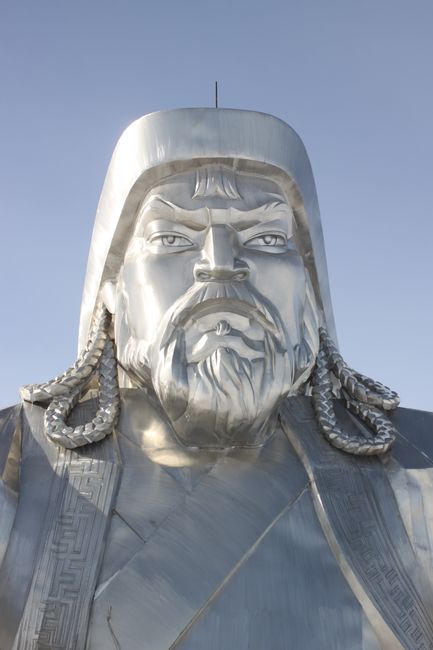
Mongolia is one of the last great wild spaces on Earth: a vast, sparsely populated land of rolling grassland, desert, forested mountains and crystal lakes between Russia and China, where about a third of the people still live as herders, moving their white felt gers (yurts) with the seasons. It is a country for road trips and open horizons. The capital, Ulaanbaatar, home to almost half the population, has the great Gandan Monastery, excellent museums and a booming modern center. Beyond it, the Gobi Desert in the south has singing dunes, ice-filled canyons and dinosaur fossil beds in Gobi Gurvansaikhan National Park; the heartland has the green Orkhon Valley, the old imperial capital of Kharkhorin and hot springs; the north has the deep blue Lake Khövsgöl, ringed by forests; and the far west has the glaciers of the Altai and the Kazakh eagle hunters of Bayan-Ölgii. Summer brings the Naadam festival of wrestling, horse racing and archery in July. Travel is easy to start, with visa-free entry for many nationalities, but distances are huge, roads mostly unpaved, and winters among the coldest of any country: Ulaanbaatar is the coldest capital in the world.
Right now in Mongolia
- Wed 3–14°C 38–57°F Cloudy
- Thu 2–15°C 36–58°F Clear
- Fri 1–13°C 34–56°F Cloudy
Weather: MET Norway (CC BY 4.0) · Air quality: OpenAQ
Multi-day tours of Mongolia
Multi-day tours from local operators. You check dates and book on Viator, our partner; we may earn a commission at no extra cost to you. How we earn money
Mongolia at a glance
Mongolia has a population of about 3.5 million and covers about 1.56 million km² (604,000 sq miles), more than twice the size of Texas, making it the most sparsely populated sovereign country in the world. It borders only Russia and China. The country is divided into 21 provinces (aimags) and the capital, Ulaanbaatar. Mongolian, written in the Cyrillic alphabet, with the traditional vertical script increasingly used, is the official language; Russian is spoken by older people, and English increasingly by the young. Most Mongolians follow Tibetan Buddhism, often mixed with shamanist traditions, and there is a Kazakh Muslim minority in the far west.
Most of Mongolia uses UTC+8 all year, with no daylight saving time; the three westernmost provinces (Bayan-Ölgii, Uvs and Khovd) use UTC+7. Electricity is 230 V, with round two-pin sockets (types C and E). The currency is the tögrög (MNT).
A short history
The steppes of Mongolia were home to a succession of nomadic empires, from the Xiongnu to the Turks and Uyghurs. In 1206, Chinggis Khaan (Genghis Khan) united the Mongol tribes, and he and his successors built the largest contiguous land empire in history, from Korea to Hungary, with its capital at Kharkhorin. After the empire fragmented, Tibetan Buddhism spread in the 16th century, and from the late 17th century Mongolia came under Qing Chinese rule. It declared independence in 1911 and became the Mongolian People’s Republic in 1924, the world’s second communist state, closely tied to the Soviet Union; in the 1930s, most monasteries were destroyed and thousands of monks killed. A peaceful democratic revolution in 1990 brought multiparty democracy, and the country has since grown rapidly on mining.
Mongolia’s regions
- Central Mongolia: Ulaanbaatar, Terelj National Park, the Chinggis Khaan Equestrian Statue, Khustai National Park and the sand dunes of Elsen Tasarkhai.
- The Gobi: the southern desert, with Gobi Gurvansaikhan National Park, the dunes of Khongoryn Els, Yolyn Am, the Flaming Cliffs and the town of Dalanzadgad.
- The Orkhon Valley and the Khangai: Kharkhorin and Erdene Zuu Monastery, the Orkhon waterfall, Tsenkher hot springs and the Khangai mountains.
- The north: Lake Khövsgöl, reindeer-herding communities in the taiga, and Amarbayasgalant Monastery.
- The west: the Altai mountains, Altai Tavan Bogd National Park, the lakes of Uvs and Khovd, and the eagle hunters of Bayan-Ölgii.
- The east: the grasslands and wetlands of Dornod and Khentii, birthplace of Chinggis Khaan.
Where to go: steppe, desert, lakes and mountains
Most first trips combine a few days in Ulaanbaatar with a road trip south to the Gobi and back through the Orkhon Valley and Kharkhorin, or north to Lake Khövsgöl. See our guides:
- Ulaanbaatar: the capital, with Gandan Monastery, Sükhbaatar Square, the Chinggis Khaan National Museum, the Winter Palace of the Bogd Khan and day trips to Terelj.
- Gobi Gurvansaikhan National Park: the Gobi’s main national park, with the dunes of Khongoryn Els, the ice canyon of Yolyn Am and nearby dinosaur sites.
Kharkhorin, about 360 km (225 miles) southwest of Ulaanbaatar, stands on the site of Karakorum, the capital of the Mongol Empire; its Erdene Zuu Monastery, founded in 1585 and enclosed by a wall of 108 white stupas, was one of the few to survive the purges. The surrounding Orkhon Valley is a UNESCO World Heritage Site, with the Orkhon waterfall, the Tövkhön Monastery on a mountaintop, and hot springs at Tsenkher. On the way, the Khustai National Park protects the takhi, or Przewalski’s horse, the only truly wild horse, reintroduced in the 1990s.
In the north, Lake Khövsgöl, at about 1,645 m (5,400 ft), holds a large share of Mongolia’s fresh water and is one of the clearest lakes in Asia, with ger camps, horse riding and kayaking in summer and ice festivals in winter. In the far west, Bayan-Ölgii is home to Kazakh eagle hunters and the glaciers of Altai Tavan Bogd, where Mongolia’s highest peak, Khüiten, reaches 4,374 m (14,350 ft). Closer to the capital, Terelj National Park, about 1.5 hours east, has granite rock formations, ger camps and easy hikes, and the 40 m (131 ft) Chinggis Khaan Equestrian Statue stands on the steppe at Tsonjin Boldog. Between the Gobi and the Orkhon Valley, popular stops include the ruined Ongi monastery, the granite outcrops of Baga Gazryn Chuluu, the eroded “white stupa” cliffs of Tsagaan Suvarga and the small dune field of Elsen Tasarkhai, sometimes called the “mini Gobi,” about 280 km (175 miles) west of Ulaanbaatar.
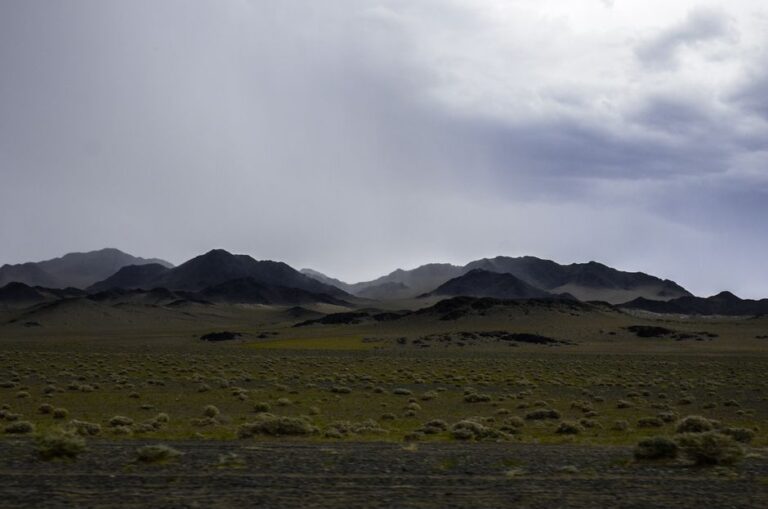
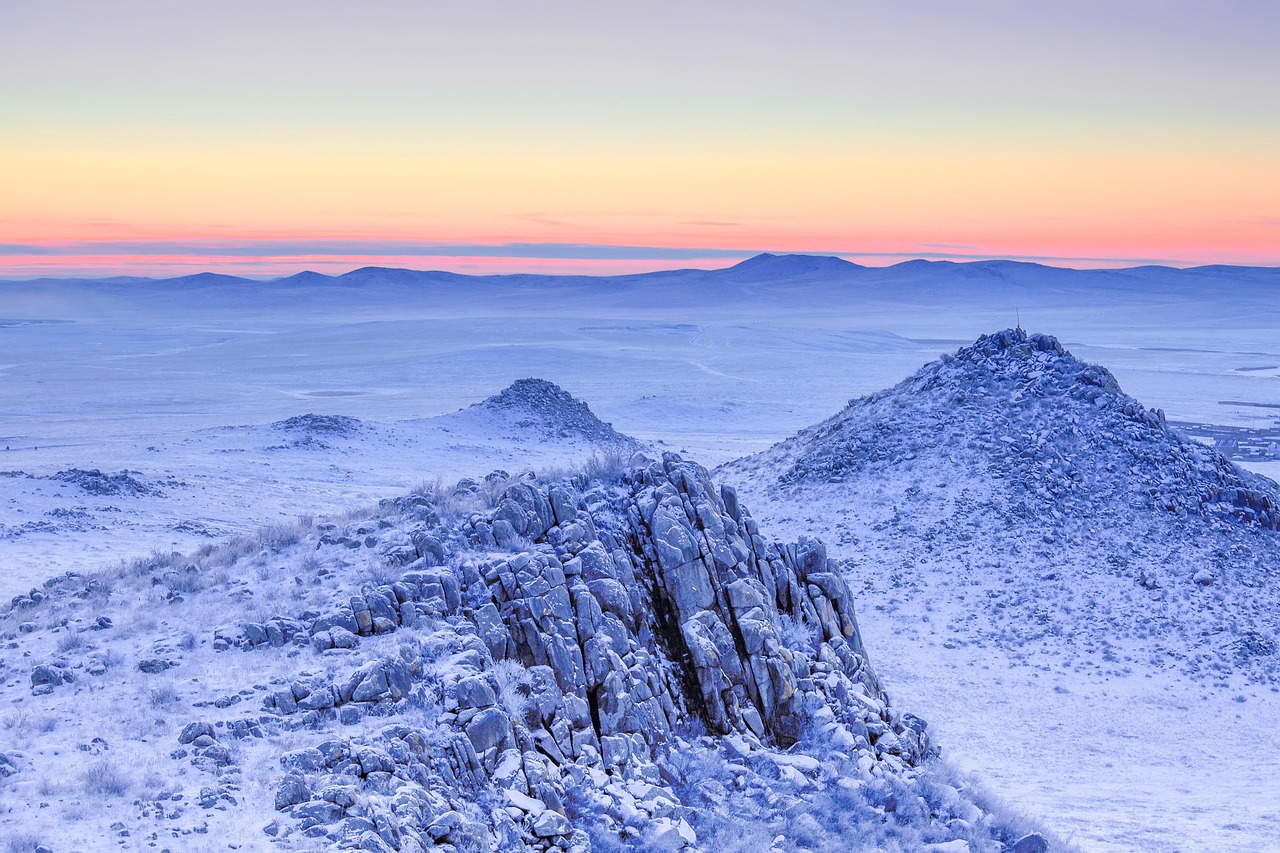
Gobi Gurvansaikhan National Park Travel Guide
Plan a visit to Gobi Gurvansaikhan National Park: getting there by flight to Dalanzadgad or by road from Ulaanbaatar, park fees and rules, Yolyn…
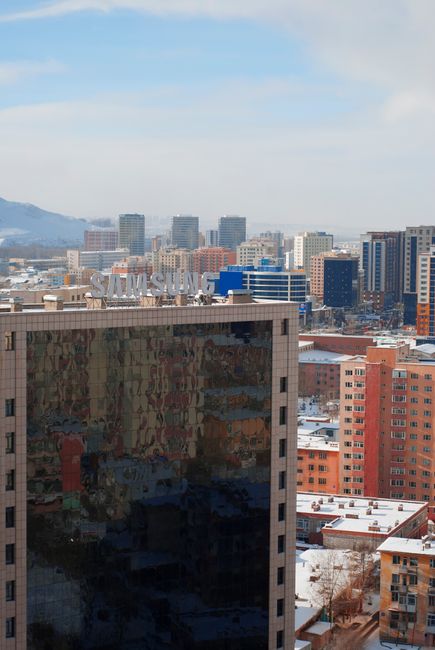
Ulaanbaatar Travel Guide
Plan a trip to Ulaanbaatar: districts and where to stay, Sükhbaatar Square, Gandan Monastery, the Chinggis Khaan National Museum, Choijin Lama Temple and the…
Best time to visit Mongolia
Mongolia has an extreme continental climate, with long, very cold, dry winters and short, warm summers; most of the year’s rain falls in July and August. The main travel season is June to September, when the steppe is green, ger camps are open and roads are passable; July is the peak, with Naadam. Late May and September are quieter and pleasant but cooler, with cold nights. Winter, from November to March, is severe: Ulaanbaatar’s average January temperature is about −21 °C (−6 °F), and nights can fall below −35 °C (−31 °F); a few specialist tours run in winter for the Ice Festival on Khövsgöl and the reindeer herders.
The table shows average monthly temperatures and precipitation from the 1991–2020 climate normals of Mongolia’s National Agency for Meteorology and Environmental Monitoring, as submitted to the World Meteorological Organization (WMO), for one station in each main region. Days in summer are much warmer than these averages, and nights much colder.
| Area (station) | January average | July average | Precipitation a year | Wettest months |
|---|---|---|---|---|
| Ulaanbaatar | −21.3 °C (−6 °F) | 19.0 °C (66 °F) | about 270 mm (11 in) | July and August |
| Gobi: Dalanzadgad | −13.9 °C (7 °F) | 23.0 °C (73 °F) | about 130 mm (5 in) | July and August |
| Orkhon/Khangai: Tsetserleg | −15.1 °C (5 °F) | 16.3 °C (61 °F) | about 330 mm (13 in) | July and August |
| North: Khatgal (Lake Khövsgöl) | −23.3 °C (−10 °F) | 13.2 °C (56 °F) | about 310 mm (12 in) | July and August |
| West: Ölgii | −17.1 °C (1 °F) | 17.8 °C (64 °F) | about 120 mm (5 in) | June to August |
Mongolia month by month
| Month | Weather | Highlights | Crowds and prices |
|---|---|---|---|
| January | Extremely cold and dry | Winter landscapes; specialist tours | Very low |
| February | Very cold | Tsagaan Sar, the lunar new year (date varies, January or February) | Low |
| March | Cold; windy | Khövsgöl Ice Festival; camel festivals in the Gobi | Low |
| April | Cold to cool; dust storms | The steppe starts to thaw | Low |
| May | Cool; windy | Spring migration; camps open late in the month | Low to moderate |
| June | Warm days, cool nights | Green steppe; good for all regions | Moderate |
| July | Warm; summer showers | Naadam (July 11–15) and local naadams | Very high |
| August | Warm; the wettest month | Good for all regions; rivers high | High |
| September | Cool, clear, golden | Autumn colors; fewer visitors | Moderate |
| October | Cold; first snow | Golden Eagle Festival in Bayan-Ölgii (early October) | Low |
| November | Very cold | Camps closed; quiet season | Very low |
| December | Extremely cold | Winter in the capital | Very low |
Naadam and other festivals
- Naadam: Mongolia’s national festival, a public holiday from July 11 to 15, celebrates the “three manly games” of wrestling, horse racing and archery. In Ulaanbaatar, it opens on July 11 with a ceremony at the National Sports Stadium, followed by wrestling and archery, while the horse races, run by child jockeys over distances of 10–30 km (6–19 miles), take place on the steppe at Khui Doloon Khudag outside the city. Smaller local naadams in towns and villages across the country in July are more intimate. Hotels, flights and tours fill up months ahead, and prices rise.
- Tsagaan Sar: the lunar new year, in January or February, a family festival of visits, dumplings (buuz) and greetings.
- Golden Eagle Festival: in Bayan-Ölgii in early October, with Kazakh eagle hunters competing on horseback.
- Khövsgöl Ice Festival: in early March on the frozen lake, with ice sculptures, horse sledding and skating.
Extreme cold, wind and dust
Winter cold is the defining feature of Mongolia’s climate: in Ulaanbaatar, temperatures below −30 °C (−22 °F) are common in January, and in the capital, winter smog from coal and stove heating is among the worst in the world. Spring brings strong winds and dust storms, especially in the Gobi, and snow is possible in any month in the mountains. In summer, thunderstorms can turn dirt roads to mud and swell rivers.
How long to stay: sample itineraries
- 5–6 days: Ulaanbaatar (2 nights), Terelj (1) and a flight to Dalanzadgad for the Gobi (2–3).
- 10 days: a classic road trip from Ulaanbaatar to the Gobi (Yolyn Am, Khongoryn Els, the Flaming Cliffs), returning via the Ongi monastery ruins, Kharkhorin and the Orkhon Valley.
- 14 days: add Lake Khövsgöl in the north, or the Khangai and Tsenkher hot springs.
- Three weeks: combine the Gobi, central Mongolia and Khövsgöl, or fly west to Ölgii for the Altai and the eagle hunters; Mongolia also combines with Kazakhstan and the Trans-Mongolian Railway from Russia.
Entry, money and costs
Visas (last reviewed October 2026)
According to Mongolia’s Consular Department, citizens of many countries can visit without a visa. Under bilateral agreements, citizens of the United States can stay up to 90 days; citizens of Canada, Germany, Japan, Turkey, Israel, Russia, Malaysia, Singapore, Thailand, the United Arab Emirates, Uzbekistan, Vietnam and some others up to 30 days; citizens of Kazakhstan, Kyrgyzstan, Belarus, Brazil, Argentina, Chile, Peru, Ecuador, Paraguay and Macao up to 90 days; citizens of the Philippines up to 21 days; and Hong Kong up to 14 days. South Korean citizens can visit for tourism visa-free for up to 90 days until December 31, 2026. In addition, the government has temporarily exempted citizens of 34 countries, including the United Kingdom, France, Italy, Spain, the Netherlands, Australia, New Zealand, Switzerland, Norway and most other EU countries, from tourist visas for stays of up to 30 days until the end of 2026; check whether the exemption is extended for 2027. Ordinary passport holders from China and some other countries need a visa, available from embassies or, for some nationalities, as an e-visa through the official e-visa portal. Your passport must be valid for at least six months after arrival, and make sure it is stamped on entry.
Registration
Your hotel, ger camp or landlord registers you with the Immigration Agency of Mongolia, using an app. If you travel independently or stay with friends, you must register yourself with the Immigration Agency, which you can do without going in person, according to the UK government. Long stays have additional rules, so check with the agency.
Border zones
Mongolia takes border security seriously: zones of up to 100 km (60 miles) inside the border can be treated as border areas, and visiting them requires permission from the State Frontier Guard Authority. Tour operators arrange permits for areas such as parts of the Gobi near the Chinese border and Altai Tavan Bogd. Only a few land border crossings are open to foreigners, including Zamiin-Üüd (road and rail to China) and Sükhbaatar and Altanbulag (rail and road to Russia).
Customs and rules to know
You must declare cash or travelers’ checks worth US$10,000 or more. It is illegal to photograph or film police, police escorts or military personnel. Buying, selling or exporting protected wildlife or its parts, and exporting antiques and fossils, including dinosaur bones, is illegal without a license; buy souvenirs with receipts. Drug offenses carry very long sentences. Always carry your passport, as police do not accept copies. Animal-disease controls, such as those during foot-and-mouth outbreaks in some western provinces, can restrict travel between regions at short notice.
Money and cards
The currency is the tögrög (MNT). In early October 2026, the rate was about 3,600 tögrög to the US dollar; prices on this site use 3,600. Cards are widely accepted in Ulaanbaatar, including in shops, restaurants and taxis, and ATMs are common there and in provincial centers. In the countryside, carry cash in tögrög for small shops, guesthouses, park fees and herders. US dollars and euros are easy to exchange in the capital. Most visitors pay for countryside tours in advance.
Tipping
Tipping is not traditional, but drivers, guides and cooks on tours expect a tip at the end, and in Ulaanbaatar restaurants, 10% is appreciated where service is not included.
What a trip costs
Prices are approximate, for October 2026, converted at about 3,600 tögrög to the US dollar.
| Item | Typical cost |
|---|---|
| Bowl of tsuivan or plate of buuz in a canteen | 12,000–20,000 MNT (about US$3.30–5.60) |
| Dinner in a mid-range restaurant in Ulaanbaatar | 40,000–80,000 MNT (about US$11–22) per person |
| Taxi across central Ulaanbaatar | 10,000–25,000 MNT (about US$2.80–7) |
| Flight Ulaanbaatar–Dalanzadgad, one way | 250,000–500,000 MNT (about US$70–140) |
| Night in a ger camp with meals | 150,000–350,000 MNT (about US$42–97) per person |
| National park entry | 3,000–10,000 MNT (about US$0.85–2.80) |
| Organized countryside tour with driver, guide, fuel and camps | 360,000–720,000 MNT (about US$100–200) per person per day |
| Mid-range hotel double in Ulaanbaatar, per night | 250,000–500,000 MNT (about US$70–140) |
Getting there and getting around
Airports
The main gateway is Chinggis Khaan International Airport (UBN), opened in 2021 about 50 km (30 miles) south of Ulaanbaatar, with flights from Seoul, Tokyo, Beijing, Hong Kong, Istanbul, Frankfurt, Almaty and other cities; see our South Korea, Japan, Hong Kong and Istanbul guides. MIAT Mongolian Airlines, Hunnu Air and Aero Mongolia fly domestic routes to Dalanzadgad (for the Gobi), Mörön (for Khövsgöl), Ölgii and other provincial centers; flights are limited and weather-dependent. Because the new airport is far from the city, allow about an hour for the transfer by taxi or airport bus, and more at rush hour, when Ulaanbaatar’s traffic jams are notorious; many hotels and tour operators include an airport pickup. In summer, international and domestic flights fill up around Naadam, so book early, and keep a buffer day before international departures after a countryside trip, as domestic flights and road travel can be delayed by weather.
The Trans-Mongolian Railway
The Trans-Mongolian Railway crosses the country from the Russian border at Sükhbaatar through Ulaanbaatar to Zamiin-Üüd and China, part of the classic rail journey between Moscow and Beijing; see our Russia and Moscow guides. Domestic trains also run from Ulaanbaatar to Darkhan, Erdenet and Sainshand. Check current international services, which have changed in recent years.
Road trips and tours
Most visitors explore the countryside on an organized tour with a driver, often in a Russian UAZ van or a Japanese 4×4, a guide and a cook, staying in ger camps or with herding families. Only a minority of roads outside the capital are paved, and many routes are dirt tracks across the steppe, with no signs, so a local driver is essential; days on the road are long. Public buses link Ulaanbaatar with provincial centers from the Dragon bus station, but are of little use for reaching sights.
Choosing a tour
Most countryside travel is with a local operator, from budget guesthouse tours shared with other travelers to private trips with an English-speaking guide. Before you book, check the vehicle (a well-maintained UAZ van or Land Cruiser with seat belts), the driver’s experience, the daily distances, whether the price includes fuel, park fees, camps, meals and the guide’s costs, and what happens if a vehicle breaks down far from help. Daily drives of five to eight hours are common, so a route that tries to cover too much can mean little time at the sights. Small groups can share a vehicle to cut costs; guesthouses in Ulaanbaatar often match travelers.
Driving
Mongolians drive on the right. You need a 1968 international driving permit with your license. Accidents are frequent because of speeding, poor vehicles and difficult terrain, and driving in Ulaanbaatar’s traffic is chaotic; in the countryside, research your route, take backup communication and plenty of water and fuel, and share your plans.
National parks and World Heritage Sites
Mongolia’s UNESCO World Heritage Sites include:
- Uvs Nuur Basin: a vast closed basin of lakes, desert and taiga shared with Russia, inscribed in 2003.
- Orkhon Valley Cultural Landscape: pastures and the remains of imperial capitals, including Karakorum and Erdene Zuu, inscribed in 2004.
- Petroglyphic Complexes of the Mongolian Altai: rock art spanning 12,000 years, inscribed in 2011.
- Great Burkhan Khaldun Mountain and its surrounding sacred landscape: the sacred mountain associated with Chinggis Khaan, inscribed in 2015.
- Landscapes of Dauria: steppe and wetlands shared with Russia, inscribed in 2017.
- Deer Stone Monuments, Heart of Bronze Age Culture: carved standing stones, inscribed in 2023.
The country’s protected areas, such as Gobi Gurvansaikhan, Terelj, Khustai, Khövsgöl and Altai Tavan Bogd, charge small entry fees. See our hiking guide.
Culture, food and everyday etiquette
Food
Mongolian food is designed for a cold climate and a herding life: meat, especially mutton, dairy and flour. Try buuz, steamed meat dumplings; khuushuur, fried meat pastries, especially at Naadam; tsuivan, fried noodles with meat; khorkhog, mutton cooked with hot stones in a sealed pot; boodog, goat or marmot roasted from the inside with hot stones; and süütei tsai, salty milk tea. In summer, herders make airag, fermented mare’s milk, and dried curds (aaruul). Vegetarians will find more choice in Ulaanbaatar than in the countryside.
Staying in a ger
A night in a ger, the round felt tent of the herders, is a highlight of any trip. Tourist ger camps have beds, a wood stove, shared bathrooms and a restaurant ger; staying with a herding family is simpler. Gers have traditions: enter with your right foot, without stepping on the threshold; move clockwise inside; don’t point your feet at the hearth or altar; accept food and drink with your right hand, supported by the left; and take at least a small taste of what is offered.
Nomadic life
About a third of Mongolians still live by herding the “five snouts”: horses, cattle (including yaks), camels, sheep and goats. Families move their gers between summer and winter pastures, and you will see herds everywhere on the steppe. The herding year is shaped by the weather: a dzud, a summer drought followed by a harsh winter, can kill millions of animals, as happened in the winter of 2023–2024, and pushes many families to migrate to the ger districts on the edge of Ulaanbaatar. Horses are central to the culture: children ride from an early age, and fermented mare’s milk is the drink of summer. Visiting a herding family is a privilege; go with a guide who knows them, and bring a small gift such as fruit, sweets or useful supplies.
Horse riding and trekking
Riding is the most authentic way to see the steppe. Short rides are offered at most ger camps, and multi-day horse treks run in Terelj and Gorkhi-Terelj, the Orkhon Valley, around Lake Khövsgöl and in the Khentii mountains, with a horseman, a support vehicle and camping. Mongolian horses are small, sturdy and semi-wild, and saddles are different from Western ones, so tell your operator about your experience and ask for a Western-style saddle if you prefer. Hiking is excellent in Terelj, the Khangai, Khövsgöl and the Altai, though trails are rarely marked.
A few words of Mongolian
English is spoken in Ulaanbaatar’s hotels and by guides. A few words of Mongolian go a long way: sain baina uu (hello), bayarlalaa (thank you), bayartai (goodbye), tiim (yes), ügüi (no) and khed ve? (how much?).
Responsible travel
Stay on existing tracks to avoid scarring the fragile steppe, carry out your trash, use toilets at camps, and don’t disturb wildlife or herds. Choose operators who pay herding families fairly and respect animal welfare. Don’t buy fossils, protected animal products or antiques without export papers. Ask before photographing people, and respect monasteries and sacred sites, such as ovoo stone cairns, which you walk around clockwise.
Etiquette
Mongolians are hospitable and direct. Accept tea or food when offered, with your right hand. Don’t step over a lasso, hat or anyone’s legs, and if you accidentally touch someone’s foot with yours, shake their hand. In monasteries, walk clockwise, don’t touch sacred objects and ask before taking photos.
Safety, health and connectivity
Mongolia is generally safe, but distances, roads and weather need respect. These are the main things to know:
- Roads: road accidents are common because of speeding, poorly maintained vehicles and difficult terrain; wear seat belts where available, and travel with experienced drivers.
- Extreme cold: winter temperatures in Ulaanbaatar and the countryside fall below −30 °C (−22 °F); dress in proper winter gear and follow forecasts. Weather warnings for dust storms, blizzards, floods and heatwaves are issued all year.
- Remoteness: large areas have no mobile coverage, and medical facilities in the countryside are very basic; carry backup communications on independent trips and have insurance that covers evacuation.
- Crime: pickpockets operate in Ulaanbaatar’s markets and crowded places, especially during Naadam and Tsagaan Sar, and foreigners have been assaulted and robbed in the capital at night; use registered taxis or apps such as UBCab after dark.
- Border areas: permits are required in border zones; stay on your agreed route.
- Photography: don’t photograph police or military personnel.
- Health: plague occasionally occurs in marmots and other rodents in summer; don’t handle or eat marmot, and follow local quarantine notices. Rabies is present in dogs. Ulaanbaatar’s winter air pollution is severe.
- Emergencies: call 102 for police, 103 for an ambulance and 101 for fire; or 105 for the emergency management agency.
Mobile coverage is good in Ulaanbaatar and provincial centers and along main roads, but absent in much of the countryside. SIM cards from Mobicom, Unitel, Skytel and G-Mobile are sold with your passport; Wi-Fi is common in the capital and in many ger camps.
Things to do: gers, horses, dunes and festivals
Sleep in a ger on the steppe, ride horses or camels, climb the singing dunes of Khongoryn Els, walk the ice canyon of Yolyn Am, hunt for fossils (with your eyes only) at the Flaming Cliffs, watch the wrestling and horse racing of Naadam, visit Erdene Zuu Monastery at Kharkhorin, see wild takhi horses in Khustai, kayak on Lake Khövsgöl, and meet the eagle hunters of the Altai. See our hiking, city sightseeing and cycling guides. Mongolia combines naturally with Kazakhstan, Russia by the Trans-Mongolian Railway, and South Korea or Japan by air.
Mongolia travel FAQ
Do I need a visa to visit Mongolia?
Many nationalities don’t. US citizens can stay 90 days visa-free; Canadian, German and Japanese citizens 30 days; and citizens of 34 countries, including the UK, France, Italy, Spain, Australia and New Zealand, 30 days for tourism under a temporary exemption until the end of 2026.
Is the visa exemption for the UK and EU countries permanent?
No. The 30-day tourist exemption for 34 countries runs until the end of 2026; check with the Mongolian Consular Department or an embassy whether it has been extended before you book for 2027.
When is Naadam?
The national Naadam festival is held from July 11 to 15 every year, opening in Ulaanbaatar on July 11; local naadams take place in towns across the country in July.
What is the best time to visit Mongolia?
June to September, when the steppe is green and ger camps are open; July is the peak, with Naadam. Winters are extremely cold.
How cold is Mongolia in winter?
Very cold: Ulaanbaatar’s average January temperature is about −21 °C (−6 °F), and nights can drop below −35 °C (−31 °F).
How do I get to the Gobi Desert?
By domestic flight from Ulaanbaatar to Dalanzadgad and then by 4×4, or on a road trip of about 550–600 km on a mostly paved road to Dalanzadgad, as part of a tour.
Do I need a tour to travel in Mongolia?
Not legally, but for the countryside, a driver and guide are strongly recommended: tracks are unmarked, distances huge and services few.
What currency is used in Mongolia?
The tögrög, about 3,600 to the US dollar in early October 2026. Cards work widely in Ulaanbaatar; carry cash in the countryside.
Is Mongolia safe for tourists?
Yes, generally. The main risks are road accidents, extreme weather, remoteness from medical care and petty crime in the capital.
Do I need to register in Mongolia?
Your hotel or camp registers you. If you travel independently or stay with friends, you must register yourself with the Immigration Agency.
How many days do I need in Mongolia?
At least a week for Ulaanbaatar and the Gobi; ten days to two weeks for the Gobi, Kharkhorin and the Orkhon Valley or Lake Khövsgöl.
Can I take dinosaur fossils home from the Gobi?
No. Exporting fossils, including dinosaur bones and eggs, is illegal; look, photograph and leave them in place.
What is a ger camp like?
Tourist ger camps have felt gers with beds, a wood or dung stove that keeps them warm at night, and shared shower and toilet blocks, with meals in a larger restaurant ger. Electricity may be limited to the evening, and nights are cold even in summer.
Sources and last review
Researched and last reviewed on 4 October 2026. The visa-free list, stay lengths, dates of agreements, the South Korean tourism exemption to December 31, 2026, and the temporary 30-day exemption for 34 countries until the end of 2026: Mongolia’s Consular Department (consul.mn) and the Immigration Agency of Mongolia; registration, border zones and permits, open border points, cash declarations, photography of police and military, wildlife, foot-and-mouth controls, crime, taxis, road conditions, driving permits, weather warnings and the emergency number for police: the UK government’s factual entry and safety pages; climate normals: the National Agency for Meteorology and Environmental Monitoring via the World Meteorological Organization’s 1991–2020 normals (average temperatures and precipitation). The exchange rate is from market data because the Bank of Mongolia’s rate page could not be read automatically (flagged). Naadam dates follow the national holiday calendar (general reference); population, area, history, UNESCO inscriptions, festivals, airport and road details, other emergency numbers and typical prices are general references or estimates, flagged for checking. Rules change, so check the official sites before you go.
Plugs and power in Mongolia
Mongolia uses 230 V, 50 Hz and these plugs (left) and wall sockets (right):
All plug types and voltages by country → · Check what you need to pack →
Plan your trip
Partner links: TravelerCenter may earn a commission if you book, at no extra cost to you.
🇲🇳 Useful Mongolian phrases for Mongolia
All 38 Mongolian phrases: restaurant, hotel, emergencies, romance (printable) →