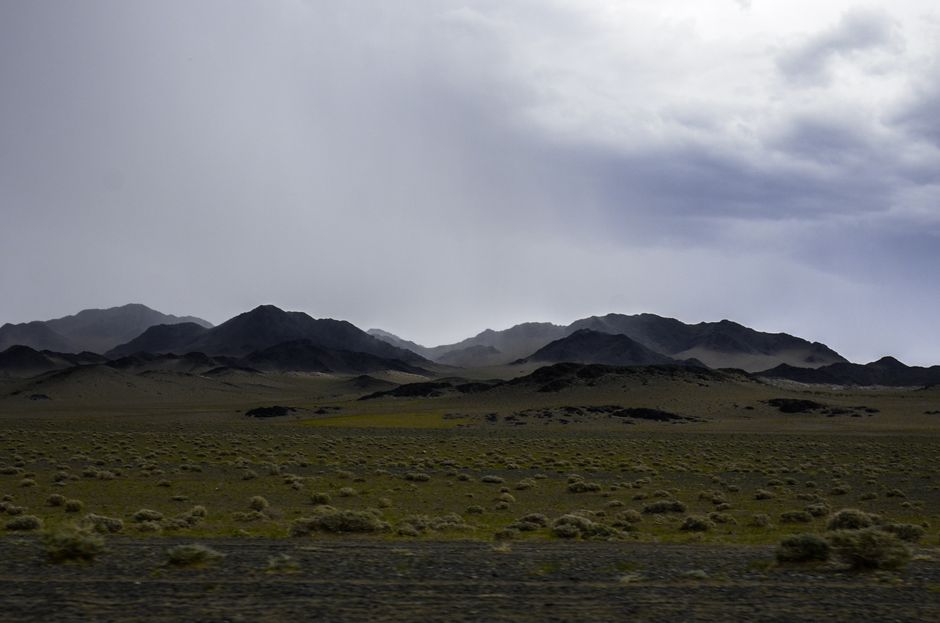
Gobi Gurvansaikhan National Park, in Ömnögovi province in the south of Mongolia, is the Gobi Desert’s best-known park and the destination of almost every Gobi trip. Named after the “Three Beauties” (Gurvan Saikhan), the three ridges of the Gobi-Altai mountains that run through it, it covers about 27,000 km² (10,400 sq miles), the largest national park in Mongolia, and contains far more than sand: gravel plains, saxaul scrub, rocky mountains up to about 2,800 m (9,200 ft), narrow gorges, oases and, along its southern side, the towering dunes of Khongoryn Els, the “singing sands.” Its highlights are the shaded gorge of Yolyn Am, where ice can linger into early summer, the dunes, and the ancient landscapes nearby where explorers found the first dinosaur eggs at the Flaming Cliffs of Bayanzag. Wildlife includes argali sheep, Siberian ibex, goitered gazelles, the rare snow leopard and the lammergeier, while herders graze Bactrian camels, goats and horses. Most visitors arrive on a tour, by flight to Dalanzadgad or by road from Ulaanbaatar, and stay in ger camps. The best months are May to September; summer days are hot, nights cool, and spring brings strong winds and dust storms.
Right now in Gobi Gurvansaikhan National Park (Yolyn Am)
- Thu5–11°C42–51°FCloudy
- Fri1–9°C34–49°FClear
- Sat2–10°C35–49°FClear
Top tours in Gobi Gurvansaikhan National Park
See all tours for Gobi Gurvansaikhan National Park →
From local operators, with prices and reviews; you check availability and book on Viator, our partner. We may earn a commission at no extra cost to you. How we earn money
Gobi Gurvansaikhan at a glance
- Best for: desert landscapes, sand dunes, canyons, camel rides, dinosaur sites, ger camps and starry skies.
- How long: 3–4 days for Yolyn Am, Khongoryn Els and the Flaming Cliffs from Dalanzadgad; 7–10 days on a road trip from Ulaanbaatar.
- Best time: May to September; June and September are the most comfortable; July and August are hot by day, and spring is windy.
- Getting there: by domestic flight from Ulaanbaatar to Dalanzadgad, about 1.5 hours, or by road, about 550–600 km (340–370 miles) and 8–10 hours.
- Getting around: by 4×4 or Russian UAZ van with a driver; there is no public transport within the park.
- Good to know: distances inside the park are long, tracks are unpaved, and mobile coverage is patchy.
- Before you go: visa-free entry, registration, money and general safety are in our Mongolia travel guide.
Fees, permits and rules (as of October 2026)
The park is a state protected area administered from Dalanzadgad, the capital of Ömnögovi province, about 60 km (37 miles) east of Yolyn Am. Foreign visitors pay a small protected-area entry fee, usually collected at the entrance to Yolyn Am and at other sites, and some sites charge separately for parking, museum entry or camel rides; tours usually include the fees. Keep your tickets, as rangers may check them.
Border zones and permits
Mongolia treats zones of up to 100 km (60 miles) inside its borders as border areas, where permission from the State Frontier Guard Authority is required. Parts of the southern and western Gobi near the Chinese border fall into these zones, including some remote canyons beyond the main tourist route. Reputable tour operators arrange any permits needed; if you travel independently, check with the park administration in Dalanzadgad before heading off the main tracks.
The park’s key rules
- Stay on existing tracks; driving across the desert crust and steppe leaves scars that last for decades.
- Don’t collect fossils, rocks, plants or archaeological finds: removing or exporting fossils, including dinosaur bones and eggs, is illegal.
- Don’t disturb wildlife or herds, and don’t feed animals.
- Take all trash with you, and use toilets at camps.
- Camp only where allowed, and don’t light fires except in designated places; saxaul wood is protected.
- Respect herding families: ask before entering a ger or photographing people.
The main areas of the park
The park in brief
The Gobi is a cold desert: it lies on a high plateau, mostly 1,000–1,500 m (3,300–4,900 ft) above sea level, in the rain shadow of the Tibetan Plateau, so it is dry, windy and swings between scorching summers and frozen winters. Only a small part of it is sand; most is gravel plain, rock and sparse steppe grazed by herders’ animals. Gobi Gurvansaikhan was established in 1993 and later enlarged to protect the mountain ecosystems of the Gobi-Altai and the dunes along their foot. Its rocks are famous among paleontologists: Late Cretaceous sediments in the region, around 70–80 million years old, have yielded some of the world’s best dinosaur fossils, including nests of eggs, Velociraptor and the “fighting dinosaurs,” a Velociraptor locked in combat with a Protoceratops, now one of Mongolia’s national treasures.
Yolyn Am
Yolyn Am (“Lammergeier Valley,” named after the bearded vulture) is a deep, narrow gorge in the Zuun Saikhan (eastern) ridge, about 60 km (37 miles) west of Dalanzadgad. A small natural history museum stands near the entrance, and from the parking area, a walk of about 2–3 km (1.2–2 miles) leads along a stream between sheer rock walls, which in places close to a few meters apart. In shaded parts of the gorge, a thick field of ice used to last until midsummer; in recent years, it has often melted by June. Look for pikas, ibex on the cliffs and birds of prey overhead. Horse rides are offered at the entrance.
Khongoryn Els
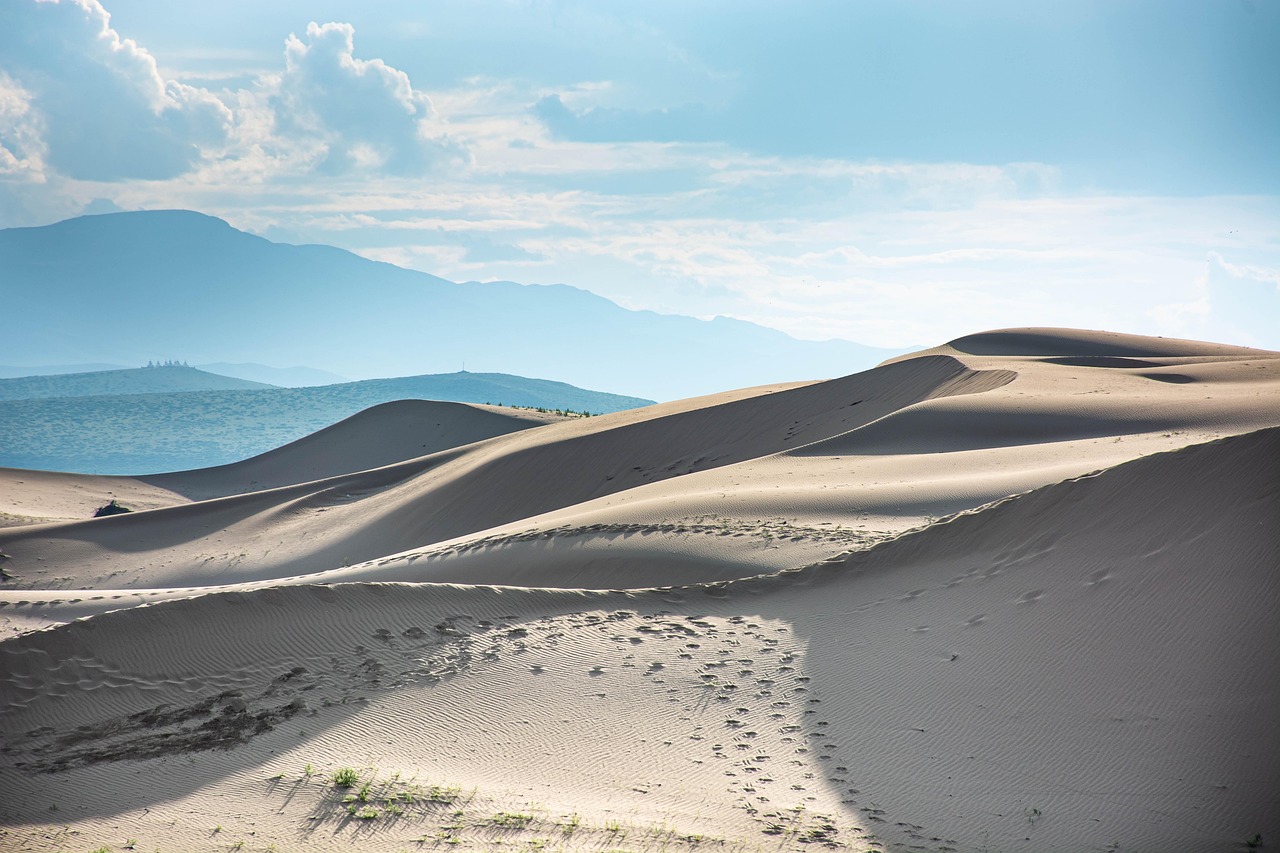
On the park’s southern side, about 180 km (110 miles) west of Dalanzadgad, Khongoryn Els is one of Mongolia’s largest dune fields, stretching about 100 km (60 miles) along the foot of the mountains, with dunes rising up to about 300 m (980 ft). Known as the “singing sands,” the dunes produce a low hum when the sand slides in the wind or under your feet. Climbing the highest dunes takes about an hour of hard work in soft sand and is best in the late afternoon for sunset. Along the northern edge, the Khongor River feeds a green oasis, and herding families offer camel rides on two-humped Bactrian camels.
The Flaming Cliffs (Bayanzag)
Northwest of Dalanzadgad, near the park, the red and orange sandstone cliffs of Bayanzag were named the Flaming Cliffs by the American explorer Roy Chapman Andrews, whose expeditions found the first scientifically recognized dinosaur eggs here in the early 1920s, along with fossils of *Protoceratops* and *Velociraptor*. The cliffs glow at sunset. Nearby, a grove of saxaul trees struggles in the sand.
Dungenee Am and other gorges
- Dungenee Am: a narrow canyon in the mountains near Yolyn Am, quieter than its famous neighbor.
- Khavtsgait petroglyphs: Bronze Age rock carvings of animals and hunters on a hillside in the eastern part of the park.
- Khermen Tsav: a remote canyon of eroded red cliffs in the far west, known for dinosaur finds; it requires a long 4×4 journey and may be in a border zone.
Other stops near the park
- Tsagaan Suvarga: eroded, colored cliffs that look like a ruined city, about 4–5 hours north, often visited on the way from Ulaanbaatar.
- Baga Gazryn Chuluu: granite outcrops in the Middle Gobi, on the road from the capital.
- Ongi monastery ruins: the remains of two large monasteries on the Ongi River, on the way back toward Kharkhorin.
Wildlife, activities and seasons
Wildlife-watching
The mountains of Gobi Gurvansaikhan are a refuge for argali, the world’s largest wild sheep, Siberian ibex and goitered gazelles, as well as lammergeiers, cinereous vultures, golden eagles and saker falcons. The elusive snow leopard lives in the high ridges but is very rarely seen. Pikas and gerbils are common in the gorges and plains, and herds of domestic Bactrian camels roam the dunes. Early morning and late afternoon are the best times to watch wildlife; bring binoculars.
Things to do
Hike Yolyn Am, climb the dunes of Khongoryn Els at sunset, ride a camel with a herding family, walk the Flaming Cliffs, visit a herding family’s ger to taste camel’s milk and dried curds, and watch the stars, which are spectacular in the clear, dry air. Some camps offer horse riding, sandboarding and visits to dinosaur sites with paleontology guides. See our hiking guide.
Ger camps
Tourist ger camps near Yolyn Am, Khongoryn Els and Bayanzag offer gers with beds and wood stoves, shared showers and toilets, and a restaurant ger; a few upscale camps have private bathrooms. Most camps open from about May to September. Staying with a herding family is simpler and more personal, often arranged by tour operators.
Around the Gobi
- Dalanzadgad: the provincial capital, with the airport, shops, fuel and the South Gobi Museum; a useful stop for supplies.
- Ulaanbaatar: the start and end of most trips. See our Ulaanbaatar guide.
- Kharkhorin and the Orkhon Valley: often combined with the Gobi on a 10- to 14-day road trip. See our Mongolia guide.
Getting there
By air
The fastest way is a domestic flight from Ulaanbaatar’s Chinggis Khaan International Airport to Dalanzadgad, about 1.5 hours, operated in recent years by airlines such as MIAT, Hunnu Air and Aero Mongolia; flights are more frequent in summer, can be canceled by wind and dust, and have strict baggage limits. Your tour’s driver meets you at the airport.
By road
The road from Ulaanbaatar to Dalanzadgad, about 550–600 km (340–370 miles), is now mostly paved, taking about 8–10 hours; buses run from the capital’s Dragon bus station. Most visitors come on a road trip with a driver over two or three days, stopping at Baga Gazryn Chuluu and Tsagaan Suvarga on the way. From Dalanzadgad, the sights are reached on dirt tracks.
Getting around: practical details
Inside the park, there is no public transport, and the distances between the main sights are long: Dalanzadgad to Yolyn Am is about 1 hour, Yolyn Am to Khongoryn Els about 4–5 hours on rough tracks, and Khongoryn Els to Bayanzag about 4–5 hours. A 4×4 or UAZ van with an experienced driver is essential; tracks fork without signs, sand and mud can trap vehicles, and fuel stations are few. Tour operators in Ulaanbaatar and Dalanzadgad provide vehicles, drivers, guides, cooks and camps. If you drive yourself, carry spare fuel, water, food, a satellite phone and GPS, and share your route.
When to go and how long to stay
The Gobi has an extreme continental desert climate. Summer, from June to August, brings hot days, often 30–35 °C (86–95 °F) or more in the afternoon, cool nights and the year’s little rain in brief storms. Late spring (May) and early autumn (September) are the most comfortable, with warm days and cold nights, though spring is the season of strong winds and dust storms. Winter, from November to March, is very cold, with average January temperatures around −14 °C (7 °F), and most camps are closed. There is no long-term official weather station in the park, so the table uses the 1991–2020 climate normals for the Dalanzadgad station of Mongolia’s National Agency for Meteorology and Environmental Monitoring, about 60 km (37 miles) east of Yolyn Am at 1,460 m (4,790 ft), as submitted to the World Meteorological Organization (WMO): average monthly temperature, which combines day and night, and total precipitation. Afternoon highs in summer are about 10–12 °C (18–22 °F) above these averages.
| Month | Average temperature | Precipitation | What to expect |
|---|---|---|---|
| January | −13.9 °C (7 °F) | 2 mm (0.1 in) | Very cold; camps closed |
| February | −9.2 °C (15 °F) | 3 mm (0.1 in) | Cold; camel festivals in some years |
| March | −1.1 °C (30 °F) | 4 mm (0.2 in) | Cold and windy |
| April | 8.0 °C (46 °F) | 4 mm (0.2 in) | Windy; dust storms |
| May | 14.7 °C (58 °F) | 11 mm (0.4 in) | Warm days; windy; camps open |
| June | 20.4 °C (69 °F) | 22 mm (0.9 in) | Warm to hot; good |
| July | 23.0 °C (73 °F) | 33 mm (1.3 in) | The hottest month; storms |
| August | 21.0 °C (70 °F) | 29 mm (1.1 in) | Hot days; cool nights |
| September | 14.8 °C (59 °F) | 15 mm (0.6 in) | Pleasant; clear skies |
| October | 5.8 °C (42 °F) | 5 mm (0.2 in) | Cool; camps closing |
| November | −3.9 °C (25 °F) | 3 mm (0.1 in) | Cold |
| December | −11.7 °C (11 °F) | 3 mm (0.1 in) | Very cold |
Dalanzadgad receives only about 130 mm (5 in) of precipitation a year, mostly in July and August.
Three or four days from Dalanzadgad
Day one, fly to Dalanzadgad and visit Yolyn Am. Day two, drive to Khongoryn Els, with a camel ride and the dunes at sunset. Day three, drive to the Flaming Cliffs for sunset. Day four, return to Dalanzadgad and fly back to Ulaanbaatar.
A week or more by road
Add Baga Gazryn Chuluu and Tsagaan Suvarga on the way south, and return via the Ongi monastery ruins, Kharkhorin and the Orkhon Valley.
Where to stay
Most visitors stay in ger camps near Yolyn Am, Khongoryn Els and the Flaming Cliffs, from simple camps with shared facilities to comfortable lodges with private bathrooms; book through your tour operator, especially in July. Dalanzadgad has hotels and guesthouses for the night before or after a flight. Many tours also include a night or two with a herding family in their own ger, or camping in tents near the dunes.
What a trip to the Gobi costs
Prices are approximate, for October 2026, converted at about 3,600 tögrög to the US dollar.
| Item | Typical cost |
|---|---|
| Flight Ulaanbaatar–Dalanzadgad, one way | 250,000–500,000 MNT (about US$70–140) |
| Protected-area entry fee | 3,000–10,000 MNT (about US$0.85–2.80) per person |
| Yolyn Am museum or parking | 3,000–10,000 MNT (about US$0.85–2.80) |
| Camel ride at Khongoryn Els, 1–2 hours | 30,000–70,000 MNT (about US$8–19) |
| Night in a ger camp with meals | 150,000–350,000 MNT (about US$42–97) per person |
| 4×4 or UAZ with driver, per day, fuel included | 400,000–700,000 MNT (about US$110–195) per vehicle |
| Organized Gobi tour from Ulaanbaatar, all-inclusive | 360,000–720,000 MNT (about US$100–200) per person per day |
Practical tips for the Gobi
- Book with a reputable operator: check vehicles, daily distances and what is included.
- Fly one way: flying to Dalanzadgad and driving back via central Mongolia saves a long day on the road.
- Bring cash: ATMs are in Dalanzadgad, but not at the camps or sites.
- Protect your gear: fine dust gets everywhere; use bags for cameras and phones.
- Climb the dunes in the evening: midday sand is hot and the light flat.
- Pack for cold nights: even in summer, desert nights can be chilly.
Safety
The main risks in the Gobi are remoteness and weather. Medical facilities are basic, and help can be many hours away, so have insurance that covers evacuation and carry a first-aid kit. Dehydration and heat are real in summer: drink plenty of water and cover up from the sun. Dust storms and strong winds can arise suddenly, especially in spring; seek shelter in a vehicle or ger. Flash floods can follow storms in the gorges and dry riverbeds, so don’t camp in them. Vehicles break down and get stuck, so travel with an experienced driver and, on remote routes, more than one vehicle. Take care on steep dune faces and slippery rocks in the gorges. Don’t handle marmots or other rodents, which can occasionally carry plague. In an emergency, call 103 for an ambulance or 105 for the emergency management agency, if you have coverage.
What to pack for the Gobi
Sun hat, sunglasses and high-factor sunscreen, a scarf or buff against dust, light long-sleeved clothes, a warm fleece and jacket for nights, sturdy shoes for gorges and dunes, sandals, a headlamp, a refillable water bottle, wet wipes, a dust cover for your camera, a power bank (electricity at camps can be limited) and cash. Mongolia uses 230 V, with round two-pin plugs. See our hiking shoes and travel adapters guides.
Gobi Gurvansaikhan travel FAQ
How do I get to Gobi Gurvansaikhan National Park?
By domestic flight from Ulaanbaatar to Dalanzadgad, about 1.5 hours, then by 4×4; or by road, about 550–600 km and 8–10 hours to Dalanzadgad.
How much is the entry fee?
Foreign visitors pay a small protected-area fee, a few thousand tögrög, collected at Yolyn Am and other sites; tours usually include it.
Is there still ice in Yolyn Am?
Sometimes in spring and early summer, but in recent years the ice field has often melted by June.
How high are the dunes of Khongoryn Els?
Up to about 300 m (980 ft); climbing the highest dunes takes about an hour in soft sand.
Can I see dinosaur fossils in the Gobi?
You can visit the Flaming Cliffs, where the first dinosaur eggs were found, and see fossils in museums in Dalanzadgad and Ulaanbaatar; collecting fossils is illegal.
What is the best time to visit the Gobi?
May to September; June and September are the most comfortable, while spring is windy and dusty.
Do I need a tour to visit the Gobi?
In practice, yes, or at least a vehicle with an experienced driver: there is no public transport in the park, and tracks are unmarked.
Where do I stay in the Gobi?
In tourist ger camps near the main sights, with a herding family, or in hotels in Dalanzadgad.
Do I need a permit for the Gobi?
The national park requires an entry fee, and some remote areas near the Chinese border are border zones requiring permits, which tour operators arrange.
How many days do I need for the Gobi?
Three or four days from Dalanzadgad by air; a week or more on a road trip from Ulaanbaatar.
Plan your trip
Partner links: TravelerCenter may earn a commission if you book, at no extra cost to you.
🇲🇳 Useful Mongolian phrases for Gobi Gurvansaikhan National Park
All 38 Mongolian phrases: restaurant, hotel, emergencies, romance (printable) →
Sources · last reviewed 4 October 2026
Researched and last reviewed on 4 October 2026. Visa-free entry: Mongolia’s Consular Department; border zones and permits from the State Frontier Guard Authority, wildlife and fossil export rules, road conditions and weather warnings: the UK government’s factual entry and safety pages; climate normals: the National Agency for Meteorology and Environmental Monitoring via the World Meteorological Organization’s 1991–2020 normals for the Dalanzadgad station. The exchange rate is from market data (the Bank of Mongolia’s page could not be read automatically). The park’s area, establishment and peaks, dune height and length, distances, the Yolyn Am ice, the history of the dinosaur finds, wildlife, airline names, entry fees and typical prices are general references or estimates, flagged for checking. Prices and rules change, so check with your operator before you go. For entry rules, money and general safety, see our Mongolia travel guide.
Data: Weather: MET Norway (CC BY 4.0) · Rates: ECB · Costs: World Bank ICP and price levels · Wikidata (CC0)