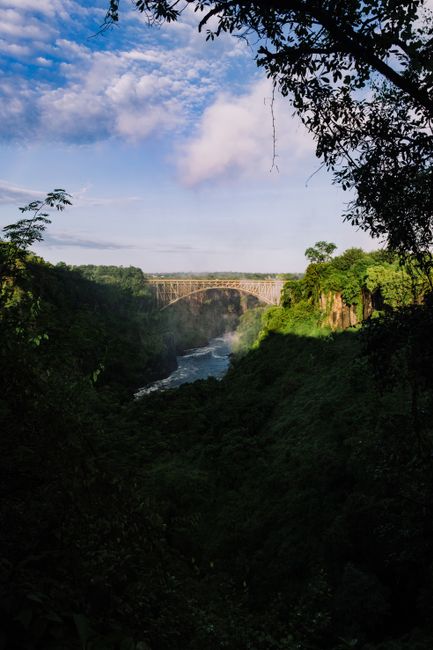
Zimbabwe is home to one of the natural wonders of the world, Victoria Falls, where the Zambezi River plunges over a basalt cliff more than 1.7 km (1 mile) wide into a chain of gorges, sending up spray visible from miles away. Most visitors start there, in the friendly town of the same name, with its rainforest walks, sunset cruises, white-water rafting and the bungee jump from the historic Victoria Falls Bridge. But Zimbabwe offers much more. Hwange National Park, a couple of hours away, is the country’s largest park and one of Africa’s best places to see elephants, with lions, painted dogs and sable antelope among its teak woodlands and pans. In the north, Mana Pools on the Zambezi is famous for walking and canoe safaris, and Lake Kariba for houseboats and sunsets. The south has the granite hills and rock art of Matobo, and the stone walls of Great Zimbabwe, the ruined capital of a medieval kingdom that gave the country its name. The Eastern Highlands bring cool forests and mountain views. Zimbabwe’s guides are among the most highly trained on the continent, and its parks are often wonderfully uncrowded. Many visitors need a visa, available online or on arrival, and the US dollar is widely used. The best season for safaris is the dry winter, from about June to October.
Right now in Zimbabwe
- Wed 15–26°C 60–80°F 1 mm Partly cloudy
- Thu 16–26°C 62–79°F 2 mm Showers
- Fri 16–26°C 61–79°F 1 mm Mostly clear
Weather: MET Norway (CC BY 4.0) · Air quality: OpenAQ
Multi-day tours of Zimbabwe
Multi-day tours from local operators. You check dates and book on Viator, our partner; we may earn a commission at no extra cost to you. How we earn money
Zimbabwe at a glance
Zimbabwe covers about 390,800 km² (150,900 square miles), a little larger than Montana or Germany. It is a landlocked country of high plateaus: a broad Highveld ridge runs from the southwest to the northeast at about 1,200 to 1,500 m (3,900 to 4,900 ft), with the capital, Harare, and the second city, Bulawayo. Below it lie the hotter Lowveld of the south and southeast, along the Limpopo and Save rivers, and the Zambezi Valley in the north, with Lake Kariba and Mana Pools. The Eastern Highlands on the border with Mozambique rise to 2,592 m (8,504 ft) at Mount Nyangani, the country’s highest point. Zimbabwe borders Zambia, Mozambique, South Africa and Botswana. Its 2022 census counted about 15.2 million people.
Zimbabwe has 16 official languages; English is widely used in government, business and tourism, and Shona and Ndebele are the most widely spoken home languages. The time zone is Central Africa Time (UTC+2) all year, with no daylight saving. Electricity is 220–240 V, with British-style type G sockets and some older type D sockets. Driving is on the left.
Zimbabwe’s regions for travelers
- Victoria Falls and Hwange: the falls and the town, the Zambezi National Park, and Hwange National Park with its private concessions.
- Lake Kariba and the Zambezi Valley: Kariba town, houseboats and island lodges, Matusadona National Park, and Mana Pools, a UNESCO World Heritage Site.
- Harare and the north: the capital’s galleries, markets and gardens, and nearby game parks and rock art.
- Bulawayo and Matobo: the colonial-era city, the Matobo Hills (UNESCO) with San rock art and rhino tracking, and the Khami ruins (UNESCO).
- The south and Lowveld: Great Zimbabwe (UNESCO) near Masvingo, Lake Mutirikwi, and Gonarezhou National Park’s red sandstone cliffs.
- The Eastern Highlands: Nyanga, the Bvumba mountains near Mutare, and Chimanimani, for hiking, trout fishing and cool mountain air.
Where to go: falls, safari and history
A classic first trip combines Victoria Falls with two or three nights in Hwange, often with Botswana’s Chobe a short drive away. With more time, add Mana Pools or Lake Kariba, or head south to Bulawayo, Matobo and Great Zimbabwe. See our guides to each place:
- Victoria Falls: the rainforest walk along the falls, sunset cruises, rafting, helicopter flights and the Victoria Falls Bridge.
- Hwange National Park: Zimbabwe’s largest park, with large elephant herds, lions and painted dogs, about two to three hours from Victoria Falls.
Other highlights include Mana Pools, Lake Kariba and Matusadona, the Matobo Hills, Great Zimbabwe, Gonarezhou and the Eastern Highlands. Across the Zambezi, see our Livingstone guide for the Zambian side of the falls, and our Chobe National Park guide for day trips into Botswana.
Mana Pools and Lake Kariba
Mana Pools National Park, on the floodplain of the lower Zambezi, is one of Africa’s most beautiful wild places: old oxbow lakes, groves of winterthorn and mahogany trees, and elephants that stand on their hind legs to reach the pods. It is a UNESCO World Heritage Site together with the Sapi and Chewore safari areas, and one of the few parks where visitors may walk unguided in parts, though most go with a professional guide. Canoe safaris drift down the Zambezi past hippos and elephants. Upstream, Lake Kariba, created by the Kariba Dam in the late 1950s, is a vast inland sea with drowned trees, spectacular sunsets and the wildlife-rich shores of Matusadona National Park; houseboats, island lodges and tigerfish angling are the attractions.
Great Zimbabwe, Matobo and the south
Great Zimbabwe, near Masvingo, was the capital of a trading kingdom between about the 11th and 15th centuries. Its massive dry-stone walls, conical tower and hilltop enclosures are the largest ancient stone structures south of the Sahara, and the site’s soapstone birds became national symbols. The Matobo Hills near Bulawayo are a landscape of balancing granite boulders with thousands of San rock paintings, the graves at World’s View, and white and black rhinos that can be tracked on foot with rangers. In the southeast, Gonarezhou National Park has the red Chilojo Cliffs and big elephant herds, with very few visitors.
The Eastern Highlands
Along the Mozambique border, the Eastern Highlands are green, misty and cool: hike to the top of Mount Nyangani, see the waterfalls of Nyanga, walk in the forests of the Bvumba, or explore the dramatic peaks of Chimanimani. Trout fishing, golf, tea estates and old-fashioned country hotels make it a relaxing contrast to the hot lowlands.
Harare and Bulawayo
Harare, the capital, is a green city of jacaranda-lined avenues, especially beautiful when they flower in October. Visit the National Gallery of Zimbabwe for contemporary art and Shona stone sculpture, the sculpture gardens and craft markets, the National Botanic Gardens, and the Mukuvisi Woodlands on the city’s edge. Bulawayo, the second city, has wide streets laid out for ox-wagons, colonial-era buildings, the Natural History Museum and the Railway Museum, and is the gateway to Matobo and the Khami ruins. Both cities make good overnight stops on a road trip, with comfortable guesthouses and lively restaurants.
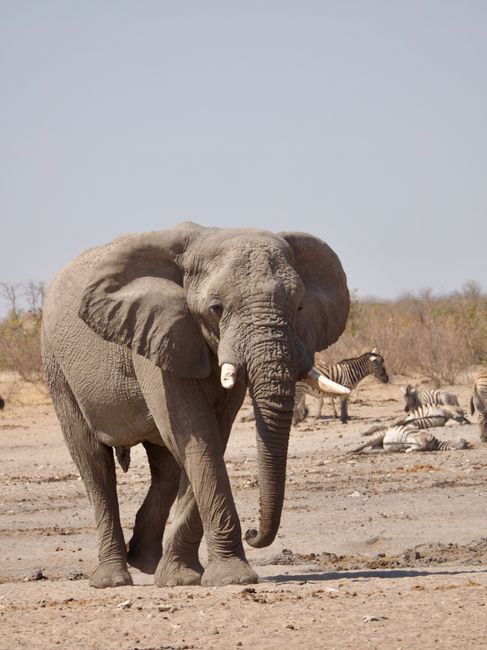
Hwange National Park Travel Guide
Plan a Hwange National Park safari: ZimParks conservation fees, Main Camp, Sinamatella and Robins, the southeast concessions, waterholes and elephants, painted dogs, walking safaris,…
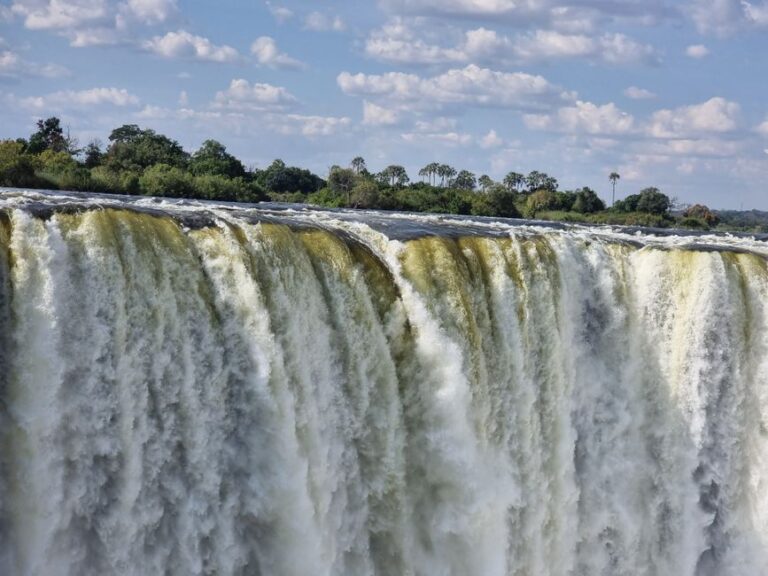
Victoria Falls Travel Guide
Plan a trip to Victoria Falls, Zimbabwe: high-water and low-water months, Zambezi flow, rainforest viewpoints and 2026 entry fees, lunar rainbows, rafting, bungee and…
Best time to visit Zimbabwe
Zimbabwe has three broad seasons. The cool, dry season from about May to August has sunny days and cold nights, especially on the Highveld and in Hwange, where early mornings can approach freezing. The hot, dry season in September and October is the peak for game viewing, with temperatures often above 30 °C (86 °F), and in the Zambezi Valley above 35 °C (95 °F). The rainy season, from about November to March, brings thunderstorms, green landscapes and newborn animals. The table shows rounded averages from Zimbabwe’s Meteorological Services Department (1961–1990), as published by the World Meteorological Organization (WMO).
| Region (station) | January high / low | July high / low | October high / low | Rain a year |
|---|---|---|---|---|
| — | — | — | — | — |
| Victoria Falls | 30 °C (85 °F) / 18 °C (65 °F) | 25 °C (77 °F) / 6 °C (42 °F) | 33 °C (92 °F) / 17 °C (63 °F) | about 660 mm (26 in), mostly November to March |
| Hwange | 29 °C (85 °F) / 18 °C (65 °F) | 24 °C (75 °F) / 5 °C (40 °F) | 32 °C (90 °F) / 16 °C (61 °F) | about 560 mm (22 in), mostly November to March |
| Harare | 26 °C (79 °F) / 16 °C (60 °F) | 22 °C (71 °F) / 6 °C (44 °F) | 29 °C (84 °F) / 14 °C (58 °F) | about 840 mm (33 in), mostly November to March |
| Bulawayo | 28 °C (82 °F) / 16 °C (62 °F) | 22 °C (71 °F) / 7 °C (45 °F) | 29 °C (85 °F) / 15 °C (59 °F) | about 575 mm (23 in), mostly November to March |
| Lake Kariba | 31 °C (88 °F) / 22 °C (71 °F) | 26 °C (79 °F) / 11 °C (52 °F) | 35 °C (95 °F) / 23 °C (74 °F) | about 765 mm (30 in), mostly November to March |
Victoria Falls follows the Zambezi’s flow rather than the local rain. The river rises after the rains upstream in Zambia and Angola, so the falls are at their fullest from about March to May, when the spray can hide the view and soak you on the rainforest path, and lowest in about October and November, when parts of the cliff are bare. On October 5, 2026, the Zambezi River Authority measured the flow at Victoria Falls at 343 m³ per second, against a long-term annual average of 1,100 m³/s. Safari season in Hwange, Mana Pools and Gonarezhou peaks from July to October; Mana Pools is usually closed to most visitors in the heart of the rainy season.
Zimbabwe month by month
| Month | Weather | Highlights | Crowds and prices |
|---|---|---|---|
| — | — | — | — |
| January | Hot; frequent storms | Green landscapes; birding; rising falls | Low; green-season rates |
| February | Hot; rainy | Falls filling up; lush Hwange | Low |
| March | Warm; rains easing | Falls approaching peak flow | Low to moderate |
| April | Warm days, cooler nights | Falls at or near peak; spectacular spray | Moderate; busy at Easter |
| May | Dry; pleasant | High water at the falls; lunar rainbows | Moderate |
| June | Dry; cold nights | Safari season begins; clear views at the falls | Rising |
| July | Coolest; frosty mornings inland | Excellent game viewing; good falls views | High |
| August | Dry; warming | Peak safari; rafting season begins | High |
| September | Hot and dry | Game concentrates at water; low-water rafting | High |
| October | Hottest month | Dramatic sightings; lowest falls flow | High; very hot |
| November | Hot; first storms | Migrant birds; falls at their lowest | Shoulder season |
| December | Hot; rainy | Newborn animals; festive season | Low at lodges; busy at Christmas |
Public holidays
Zimbabwe’s public holidays include New Year’s Day, the Robert Gabriel Mugabe National Youth Day (February 21), Good Friday to Easter Monday, Independence Day (April 18), Workers’ Day (May 1), Africa Day (May 25), Heroes’ Day and Defence Forces Day (in mid-August), National Unity Day (December 22), Christmas Day and Boxing Day. Local visitors fill park lodges over Easter, in August and around Christmas.
How long to stay: sample itineraries
- 4 days: Victoria Falls (2 nights) and a day trip to Chobe in Botswana, or Victoria Falls and Hwange (2 nights).
- 7 days: Victoria Falls (2 nights), Hwange (3 nights) and Chobe or Livingstone (2 nights).
- 10 days: Victoria Falls (2), Hwange (3), Lake Kariba or Matusadona (2) and Mana Pools (3), with light-aircraft transfers.
- 14 days by road: Victoria Falls, Hwange, Bulawayo and Matobo, Great Zimbabwe, the Eastern Highlands and Harare.
Entry, money and costs
Entry and visas (last reviewed October 2026)
Zimbabwe’s Department of Immigration groups nationalities into three categories. Category A nationals, including those of South Africa, Botswana, Namibia, Zambia, Mozambique, Kenya, Malaysia, Singapore and Hong Kong, don’t need a visa. Category B nationals need a visa but can get it on arrival at the port of entry or apply online in advance at evisa.gov.zw; this group includes the United States, Canada, the United Kingdom, Ireland, Australia, New Zealand, Japan, most European countries, China and India. Category C nationals must obtain a visa before traveling. The department’s fee schedule lists an ordinary single-entry visa at US$30, online or at the border; British nationals pay US$55 for a single entry and US$70 for a double entry; a multiple-entry visa costs US$55, and other nationalities may pay different fees, so check the amount for your passport. The immigration department also encourages travelers to complete the online Zimbabwe Entry Declaration Form before arrival.
KAZA UNIVISA: the joint tourist visa of Zimbabwe and Zambia is still issued, according to both countries’ immigration departments. It costs US$50, covers multiple entries to Zimbabwe and Zambia for up to 30 days, and also covers day trips into Botswana through the Kazungula border. It is available at Harare and Victoria Falls international airports, the Victoria Falls border and the Kazungula border, and online for some arrival points. It is only useful if you need a visa for Zimbabwe; since many nationalities no longer need a visa for Zambia, a regular Zimbabwe visa may be cheaper.
Customs and what not to bring
Declare large amounts of foreign currency on arrival. Ivory, rhino horn and other products from protected species are strictly controlled, and unlicensed drones are not allowed; drone use needs approval from the Civil Aviation Authority of Zimbabwe. Don’t photograph government buildings, police, military sites or airports.
Money, cards and cash
Zimbabwe uses a multi-currency system. The national currency is the Zimbabwe Gold (ZiG, ZWG), issued by the Reserve Bank of Zimbabwe; on October 5, 2026, the Reserve Bank’s interbank rate was about ZiG 26.8 to the US dollar. In practice, the US dollar is used for most tourism prices, hotels, activities, park fees, visas and fuel, and many shops accept both. For visitors, the practical points are:
- Bring US dollars in cash, in small denominations ($1, $5, $10 and $20) and in good condition, as torn or old notes may be refused. Change is often in short supply, and you may receive small change in ZiG or as a credit note.
- Cards (Visa and Mastercard) are accepted at most hotels, lodges, larger restaurants and activity operators in Victoria Falls and Harare, sometimes with a surcharge; in smaller towns and markets, cash is king.
- ATMs are not reliable for withdrawing US dollars with foreign cards, so don’t count on them; bring enough cash for your trip.
- Fuel is sold in US dollars at stations in towns; fill up when you can on long drives.
National parks: conservation fees
The Zimbabwe Parks and Wildlife Management Authority (ZimParks) runs the national parks and charges a daily conservation fee per person, with separate rates for Zimbabweans, SADC nationals and international visitors, plus vehicle and accommodation fees. ZimParks’ published schedule on its website (2023) lists these international rates; in 2026, value-added tax was added to tourism services and ZimParks raised its fees, with the Victoria Falls Rainforest reported at US$58 for international day visitors:
| Site (international visitors) | Day visitor, per day | Staying overnight in the park, per day |
|---|---|---|
| — | — | — |
| Victoria Falls Rainforest, main gate (2026, as reported) | US$58 | — |
| Victoria Falls Rainforest, main gate (2023 schedule) | US$50 | — |
| Hwange National Park (2023 schedule) | US$20 | US$10 |
| Zambezi National Park (2023 schedule) | US$15 | US$8 |
| Mana Pools (2023 schedule; 2026 reported at US$24) | US$20 | US$20 |
| Matobo National Park (2023 schedule) | US$15 | US$8 |
Check current fees with ZimParks before you go; prices are in US dollars, and local visitors may pay in ZiG. Many lodges and tour operators include fees in their rates.
Taxes and tipping
Value-added tax applies to most goods and services, including, since 2026, tourism services. Tipping is customary: about 10% in restaurants, US$1–2 for porters, and, on safari, a daily tip for your guide and a contribution to the staff box, in US dollars.
What a trip costs
Prices are typical ranges for October 2026; official fees are noted. Prices are generally quoted in US dollars.
| Item | Typical cost |
|---|---|
| — | — |
| Victoria Falls Rainforest entry, international visitor (2026, as reported) | US$58 |
| Hwange conservation fee, international day visitor (ZimParks 2023 schedule) | US$20 |
| Ordinary single-entry visa (official) | US$30 |
| KAZA UNIVISA (official) | US$50 |
| Coffee in a café in Victoria Falls | US$2–4 |
| Main course in a mid-range restaurant | US$10–20 |
| Zambezi sunset cruise | US$60–100 |
| Helicopter flight over the falls, 12–15 minutes | US$170–220 |
| Mid-range hotel in Victoria Falls, double, per night | US$120–250 |
| Safari lodge in Hwange, per person per night, all-inclusive | US$300–1,200 |
A mid-range trip with hotels in Victoria Falls, a few activities and a lodge-based safari in Hwange costs roughly US$300–500 per person per day; budget travelers using guesthouses and self-catering park chalets can spend far less.
Getting there and getting around
Airports
Victoria Falls International Airport (VFA), about 20 km (12 miles) south of town, has direct flights from Johannesburg, Cape Town, Nairobi, Addis Ababa and other African hubs, and is the main gateway for tourists. Robert Gabriel Mugabe International Airport (HRE) serves Harare, and Joshua Mqabuko Nkomo International Airport (BUQ) serves Bulawayo. Domestic and charter flights connect Harare, Victoria Falls, Hwange, Kariba and the Mana Pools airstrips.
Driving
The main highways, such as Victoria Falls–Bulawayo–Harare and Harare–Mutare, are paved, but quality varies and potholes are common on some stretches. Self-drive is possible, but most visitors use transfers, tours or fly-in packages. Carry your license, passport and vehicle papers; police roadblocks are frequent, and vehicles must carry reflective triangles and other safety equipment, which rental companies provide. Avoid driving at night, when unlit vehicles, pedestrians, cattle and wildlife are on the roads.
Transfers and fly-in safaris
Most safari lodges in Hwange, Mana Pools, Matusadona and Gonarezhou arrange road transfers or light-aircraft flights as part of a package. Road transfers from Victoria Falls to Hwange take two to three hours; flights to Mana Pools or Kariba from Harare or Victoria Falls save a long day on the road. Luggage on light aircraft is usually limited to about 15–20 kg (33–44 lb) in a soft bag, so check your operator’s limits before you pack.
Buses and trains
Intercity coaches link Harare, Bulawayo and Victoria Falls. Passenger trains are slow and infrequent; the overnight train between Bulawayo and Victoria Falls has a nostalgic appeal but is not reliable for tight schedules.
Border crossings
The Victoria Falls Bridge links Zimbabwe with Livingstone in Zambia, and you can walk across it. The Kazungula border, about an hour west of Victoria Falls, leads to Kasane and Chobe in Botswana. Beitbridge on the Limpopo is the main crossing to South Africa and is very busy at holiday times.
Culture, food and everyday etiquette
Food and drink
The staple is sadza, a stiff maize porridge eaten with the hands, served with relishes such as stewed beef or chicken, muriwo (leafy greens with peanut butter), beans or kapenta, tiny dried fish from Lake Kariba. Grilled meat is popular, and Victoria Falls restaurants offer game such as kudu, impala and warthog; adventurous diners can try mopane worms. Zimbabwe grows tea and coffee in the Eastern Highlands, and local beers and the traditional sorghum brew are widely available. Drink bottled or filtered water.
Where to stay
Choices range from colonial-era hotels and riverside lodges in Victoria Falls to safari lodges and tented camps in Hwange, Mana Pools and Gonarezhou, houseboats on Lake Kariba, and ZimParks lodges, chalets and campsites in the national parks, which are basic but good value.
Guides and walking safaris
Zimbabwe’s professional guides train for years and pass demanding exams before they can lead walking safaris, and many visitors come specifically to walk with them in Mana Pools, Hwange and Matusadona. A walking safari is a different experience from a game drive: you learn to read tracks, notice the smaller animals and plants, and approach elephants or buffalo quietly on foot, always downwind and under the guide’s control. Ask your lodge whether its walks are led by a fully licensed professional guide.
Traveling with children
Victoria Falls is very family-friendly, with the rainforest walk, gentle cruises, the crocodile ranch and craft markets. Safari lodges often set minimum ages, commonly around 6 to 12, for game drives, canoeing and walking, and some offer family units. Consider malaria prevention carefully for children, or plan dry-season trips when the risk is lower.
Etiquette
- Greetings: Zimbabweans greet warmly and at length; say hello and ask how someone is before getting to business.
- Respect: address older people respectfully, and dress modestly away from tourist areas.
- Photos: ask before photographing people, and don’t photograph officials, police, government buildings or military sites.
- On safari: follow your guide’s instructions exactly, especially on walking safaris.
Safety, health and connectivity
Most visits to Zimbabwe’s tourist areas are trouble-free, and the people are known for their friendliness. The main risks for visitors are practical ones: wild animals, malaria, the river, heat and road conditions.
- River safety at the falls: stay on marked paths in the rainforest, keep behind the fences and away from cliff edges, and take care on slippery wet paths in the high-water months. Never swim in the Zambezi above the falls except where licensed operators supervise, and keep well away from the river’s edge, where hippos and crocodiles live.
- Wildlife: elephants, buffalo and warthogs wander through Victoria Falls town, especially at dawn and dusk; keep your distance and don’t walk at night. Lodges and camps in the parks are often unfenced, so follow staff instructions.
- Malaria: Victoria Falls, Hwange, Kariba, Mana Pools and the low-lying north and southeast are malaria areas, with the highest risk in the rainy season, from about November to April; the Highveld, including Harare and Bulawayo, is lower-risk. Talk to a travel-health professional about prevention.
- Roads: potholes, unlit vehicles and animals make night driving risky; travel by day and keep to the speed limits.
- Heat: October temperatures in the Zambezi Valley often exceed 35 °C (95 °F); drink plenty of water.
- Power cuts: scheduled power cuts can happen; hotels and lodges in tourist areas usually have generators or solar power. Carry a power bank and flashlight.
- Belongings: in Harare and Bulawayo, keep valuables out of sight, use hotel-arranged taxis at night, and watch your belongings in crowded markets.
- Health: private clinics in Victoria Falls, Harare and Bulawayo handle routine problems; serious cases are usually evacuated to South Africa, so carry travel insurance with evacuation cover.
- Emergencies: the general emergency number is 999; police can be reached on 995. Your hotel or lodge can help.
Connectivity: prepaid SIM cards from Econet and NetOne are available in towns, with registration by passport. Coverage is good in towns but patchy or absent in the national parks. Many hotels and lodges have Wi-Fi.
Things to do: falls, safari and history
- Victoria Falls: the rainforest walk, helicopter flights, sunset cruises, rafting in the gorges, the bridge bungee and swing.
- Safari: game drives in Hwange and Gonarezhou; walking and canoe safaris in Mana Pools; boat safaris and houseboats on Lake Kariba. See our boat trips guide.
- Rhino tracking: on foot with rangers in the Matobo Hills.
- Hiking: the Chimanimani mountains, Nyanga and Mount Nyangani, and the Bvumba forests. See our hiking guide.
- History: Great Zimbabwe, Khami, and the San rock paintings of Matobo. See our city sightseeing guide.
- Fishing: tigerfish on Lake Kariba and the Zambezi, and trout in Nyanga.
What to pack for Zimbabwe
Bring neutral-colored clothes for safari, warm layers and a jacket for cold winter mornings and evenings on the Highveld and in Hwange, a light rain jacket or poncho for the falls’ spray from February to July and for the rainy season, quick-dry clothes and sandals with straps for the rainforest walk and rafting, a sun hat, sunglasses and SPF 50 sunscreen, insect repellent, binoculars, a camera with a waterproof cover, a power bank, an adapter for type G sockets, and enough small US dollar bills. See our rain jackets, water shoes and travel adapters guides.
Zimbabwe travel FAQ
Do I need a visa to visit Zimbabwe?
It depends on your nationality. Category A nationals, such as South Africans, need no visa. Category B nationals, including those from the US, Canada, the UK, Ireland, Australia and most of Europe, can get one on arrival or online at evisa.gov.zw. Category C nationals must apply in advance.
How much is a Zimbabwe visa?
An ordinary single-entry visa costs US$30, online or at the border; British nationals pay US$55 for a single entry and US$70 for a double entry, and a multiple-entry visa costs US$55. Fees vary by nationality.
Is the KAZA UNIVISA still available?
Yes. Zimbabwe and Zambia still issue it for US$50. It allows multiple entries to both countries for up to 30 days, plus day trips to Botswana through Kazungula, and is available at Harare and Victoria Falls airports and at the Victoria Falls and Kazungula borders.
What currency is used in Zimbabwe?
The Zimbabwe Gold (ZiG) is the national currency, but the US dollar is widely used for tourism, hotels, activities and park fees. Bring US dollars in small, clean notes; cards are accepted at most hotels and larger businesses.
Can I use ATMs in Zimbabwe?
Don’t rely on them for US dollars with a foreign card. Bring enough cash for tips, markets and small purchases, and use cards for larger bills where accepted.
When is the best time to see Victoria Falls?
For the fullest flow and most spray, from about March to May; for clearer views and rafting, from about August to December, when the water is lower. June and July balance good flow and views.
How much is the Victoria Falls entry fee in Zimbabwe?
In 2026, ZimParks raised the Rainforest entry fee for international day visitors to US$58, as reported when VAT was added to park fees; the schedule on ZimParks’ website (2023) still shows US$50.
When is the best time for a safari in Zimbabwe?
From July to October, when the bush is dry and animals gather at water in Hwange, Mana Pools and Gonarezhou. The rainy season from November to March is green and good for birds.
Is there malaria in Zimbabwe?
Yes, especially in Victoria Falls, Hwange, Kariba, the Zambezi Valley and the southeast, mostly from about November to April. Ask a travel-health professional about prevention.
Can I visit Zambia from Victoria Falls?
Yes. Walk or drive across the Victoria Falls Bridge to Livingstone. Many nationalities no longer need a visa for Zambia; otherwise, consider the KAZA UNIVISA.
What plug type does Zimbabwe use?
Mostly type G (the British three-flat-pin plug), with some type D sockets; the voltage is 220–240 V.
Is Zimbabwe safe for tourists?
Most visits to Victoria Falls, Hwange and the other tourist areas are trouble-free. Keep valuables out of sight in cities, avoid night driving, respect wildlife, stay on marked paths at the falls and protect yourself against malaria.
How many days do I need in Zimbabwe?
At least four days for Victoria Falls and Hwange; seven to ten days to add Chobe, Lake Kariba or Mana Pools; two weeks for a road trip including Matobo and Great Zimbabwe.
Sources and last review
Researched and last reviewed on 5 October 2026. Visa categories, visa fees and the entry declaration: Zimbabwe’s Department of Immigration and its e-visa portal; the KAZA UNIVISA: the Zambia Department of Immigration and Zimbabwe’s e-visa portal; the exchange rate: the Reserve Bank of Zimbabwe’s interbank rate; Zambezi flow at Victoria Falls: the Zambezi River Authority; park fees: ZimParks’ published 2023 schedule, with 2026 increases as reported by the travel trade press after VAT was applied (flagged for checking); falls dimensions: ZimParks; climate: the Meteorological Services Department’s 1961–1990 averages via the World Meteorological Organization. The population, high- and low-water months, customs, driving, airports, malaria seasons, emergency numbers, public holidays, tipping and typical prices are general references or estimates, flagged for checking. Rules and prices change, so check official sites before you go.
Plugs and power in Zimbabwe
Zimbabwe uses 220 V, 50 Hz and these plugs (left) and wall sockets (right):
All plug types and voltages by country → · Check what you need to pack →
Plan your trip
Partner links: TravelerCenter may earn a commission if you book, at no extra cost to you.