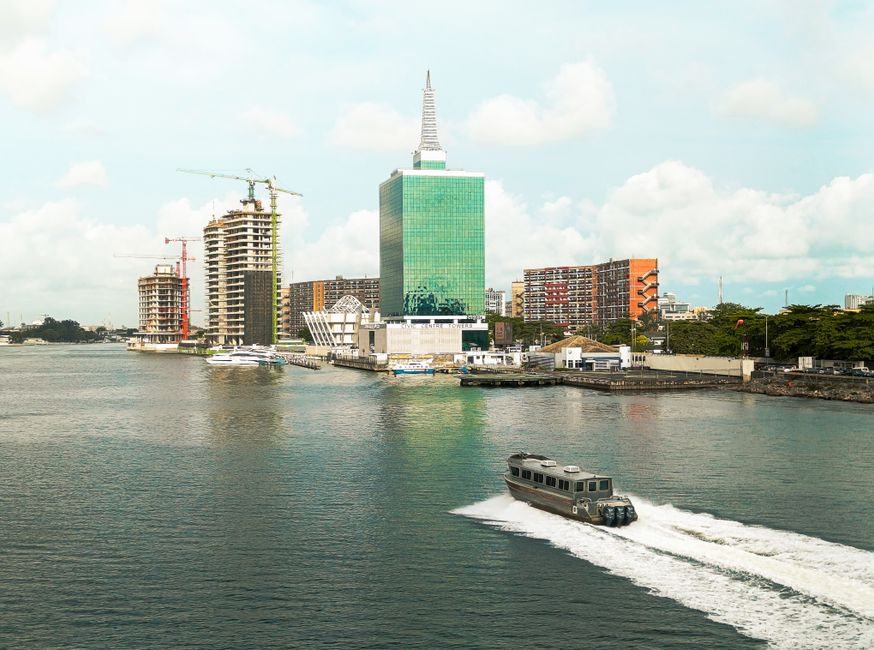
Lagos is Africa’s biggest and most electrifying city, a sprawling megacity of islands, lagoons and creeks on Nigeria’s Atlantic coast, and the beating heart of the country’s business, music, fashion and film. It’s not a city of grand monuments; its appeal is its sheer energy. Here you can browse world-class contemporary art at Nike Art Gallery, walk a canopy walkway through the forest at the Lekki Conservation Centre, explore colonial-era Lagos Island and the former prison turned cultural park at Freedom Park, visit Fela Kuti’s former home at the Kalakuta Museum, take a boat to the beach at Tarkwa Bay, eat spicy suya at midnight, and dance until dawn to Afrobeats, especially in December, when “Detty December” brings concerts, parties and returning Nigerians from around the world. Lagos is also intense: traffic jams can last hours, power cuts are routine, the heat and humidity are constant, and the city takes planning and local contacts to enjoy. But for travelers who like big, creative, fast-moving cities, few places in the world are as exciting. Most visitors stay on Victoria Island, Ikoyi or in Lekki, where hotels, restaurants and galleries are concentrated.
Right now in Lagos
- Wed25–28°C77–82°F4 mm rain
- Thu24–28°C76–82°F4 mm rain
- Fri25–28°C77–83°F9 mm rain
Top tours in Lagos
See all tours for Lagos →
From local operators, with prices and reviews; you check availability and book on Viator, our partner. We may earn a commission at no extra cost to you. How we earn money
Lagos at a glance
- Best for: music and nightlife, contemporary art, food, fashion, beach clubs and business travel.
- How long: 3–4 days; add a day or two for Badagry or Abeokuta.
- Best time: November to March, the dry season; December is the liveliest (and busiest) month.
- Getting there: fly into Murtala Muhammed International Airport (LOS) in Ikeja on the mainland.
- Getting around: ride-hailing apps, a car with a driver, lagoon ferries and the Blue Line and Red Line trains.
- Good to know: apply online for a Nigerian e-visa before you travel and carry a yellow fever certificate.
- Before you go: visas, money and general safety are in our Nigeria travel guide.
Lagos’s areas and where to stay
Lagos is split between the mainland, where most people live and the airport is located, and the islands to the south, which hold the old city center and the upscale districts. Bridges, including the long Third Mainland Bridge, link them, and traffic between them can be heavy.
Lagos Island
The historic center, Lagos Island, has the Marina waterfront, the business district around Broad Street, Tinubu Square, the Anglican Cathedral Church of Christ, the old Brazilian Quarter built by freed slaves who returned from Brazil, the National Museum at Onikan, Freedom Park and the vast Balogun Market. It’s crowded and fascinating by day; few visitors stay here.
Ikoyi
Ikoyi, east of Lagos Island, is a leafy, upscale residential district with boutique hotels, restaurants, embassies and clubs. The cable-stayed Lekki-Ikoyi Link Bridge connects it to Lekki and is a popular spot for an evening walk.
Victoria Island
Victoria Island (VI) is Lagos’s main business and hotel district, with international chain hotels, banks, restaurants, bars, beach clubs and the waterfront. To the south, the new district of Eko Atlantic is being built on land reclaimed from the ocean.
Lekki
East of VI, the long Lekki Peninsula has newer housing estates, malls, beach clubs, art galleries, the Lekki Conservation Centre and Elegushi Beach. It’s popular with young professionals and visitors, but traffic along the Lekki-Epe Expressway is notoriously slow.
Ikeja and the mainland
On the mainland, Ikeja, the Lagos State capital, has the airport, malls, hotels, the Kalakuta Museum and the New Afrika Shrine music venue. Yaba is the university and tech district, and Surulere has the National Stadium.
Where to stay in Lagos
- Victoria Island: international hotels, restaurants and nightlife, close to business offices.
- Ikoyi: quieter boutique hotels and serviced apartments in a green, upscale area.
- Lekki: apartments, beach clubs, galleries and newer hotels, but more traffic.
- Ikeja: convenient for the airport, early flights and the Shrine.
Top things to see in Lagos
Lekki Conservation Centre
Run by the Nigerian Conservation Foundation, the Lekki Conservation Centre protects a patch of wetland and forest on the Lekki Peninsula, with boardwalks, monkeys, birds and a long canopy walkway, often described as the longest in Africa, suspended high above the trees. Go early in the morning to avoid the heat and the crowds; there’s an entrance fee, with a separate charge for the canopy walk.
Nike Art Gallery
In Lekki, the four-story Nike Art Gallery, founded by the artist Nike Davies-Okundaye, displays thousands of paintings, sculptures, textiles and beadwork by Nigerian artists, from adire cloth to contemporary art. Entry is generally free, and you can buy art directly.
Freedom Park
On Lagos Island, Freedom Park was built on the site of the colonial-era Broad Street Prison, where independence leaders were once held. Today, it’s a peaceful cultural space with a memorial, a museum, an amphitheater, art exhibitions, concerts and food stalls, and a good stop when exploring the island.
The Kalakuta Museum and the New Afrika Shrine
In Ikeja, the Kalakuta Museum is the former home of Fela Kuti, the creator of Afrobeat, with his clothes, instruments and photographs, and a rooftop bar. Nearby, the New Afrika Shrine, run by his children, hosts live Afrobeat concerts, especially on Thursday and weekend nights, and is the center of Felabration, the festival held around Fela’s birthday in October.
Lagos Island and the National Museum
Explore Lagos Island with a guide: see the colonial-era buildings and Afro-Brazilian houses of the old Brazilian Quarter, the Cathedral Church of Christ, Tinubu Square and the busy streets of Balogun Market, one of West Africa’s largest textile markets. The National Museum at Onikan has collections of Nigerian art and history, including ancient sculptures and masks.
Lekki Arts and Crafts Market
Also known as the Jakande market, the Lekki Arts and Crafts Market is the best place in Lagos to buy carvings, masks, textiles, beads, leather and paintings from across Nigeria. Bargain patiently and with good humor.
Beaches
Lagos’s best beaches are reached by boat. Tarkwa Bay, a sheltered beach near the harbor entrance, has calm water, beach huts and surf on the other side; Lighthouse Beach and the beaches around Ilashe have private beach houses that can be rented for the day. On the mainland side, Elegushi Beach in Lekki and Landmark Beach on Victoria Island are lively, with music, food and drinks, especially on Sundays. The Atlantic here has strong currents, so take care. See our beaches guide.
Other things to do in Lagos
Food and drink
Lagos is one of Africa’s great food cities. Try jollof rice (often with fried plantain and grilled chicken), suya (spicy grilled beef skewers) from roadside grills at night, pepper soup, pounded yam and egusi soup, amala with ewedu and gbegiri, and ofada rice with spicy stew. Bukas (local canteens) serve home-style food at low prices, while Victoria Island, Ikoyi and Lekki have upscale Nigerian, Lebanese, Asian and fusion restaurants and rooftop bars. Drink zobo (hibiscus), fresh palm wine, Nigerian beers or a Chapman mocktail.
Music and nightlife
Lagos’s nightlife is famous across Africa. Clubs on Victoria Island and in Lekki play Afrobeats, amapiano and hip-hop until dawn, beach clubs host Sunday parties, live-music bars feature highlife and jazz, and the New Afrika Shrine is the place for Afrobeat. In December, the city hosts a packed season of concerts and festivals, known as “Detty December”; book flights and hotels months ahead.
Art, fashion and film
Beyond Nike Art Gallery, Lagos has many contemporary galleries, mostly in Ikoyi, VI and Lekki, and art fairs and fashion weeks, usually in November. Nollywood films are shown in modern cinemas in the malls.
Boat trips
Ferries and private boats cross the lagoon between the islands and the mainland, and boats from Victoria Island and Lagos Island go to Tarkwa Bay and the beaches beyond. Use licensed operators and wear a life jacket. See our boat trips guide.
Shopping
Shop for fabric at Balogun Market, crafts at the Lekki market, Nigerian designer fashion in boutiques in Ikoyi and Lekki, and everything else in malls such as Ikeja City Mall and those on Victoria Island and Lekki.
Day trips from Lagos
- Badagry: about 60 km (37 miles) west, with slave-trade heritage museums, the “Point of No Return” and the site of Nigeria’s first storey building.
- Abeokuta: about 100 km (62 miles) north, with Olumo Rock and adire cloth workshops; 2–3 hours by road, depending on traffic.
- Ibadan: by the standard-gauge train from Lagos, for the university, Bower’s Tower and Yoruba culture.
- Epe and the Lekki lagoon: fishing towns, markets and lagoon scenery east of Lagos.
- Osogbo: the UNESCO-listed Osun-Osogbo Sacred Grove, about 230 km (145 miles) northeast; better as an overnight trip. See our Nigeria travel guide.
Getting there and getting around
By air
Murtala Muhammed International Airport (LOS), in Ikeja on the mainland, is Nigeria’s busiest airport, with direct flights from Europe, North America, the Middle East and across Africa, including London, Paris, Amsterdam, Dubai, Doha, Istanbul, Johannesburg and Atlanta. Domestic flights to Abuja, Benin City, Calabar, Port Harcourt and other cities leave from the nearby domestic terminals. Allow at least one to two hours to reach Victoria Island or Lekki, and much more at rush hour; pre-arrange a pickup with your hotel or a trusted contact, and if someone meets you, make sure they identify themselves properly before you leave the airport.
Getting around Lagos
- Ride-hailing apps: Uber, Bolt and similar apps are the easiest way to get around, with upfront fares. Check the car and driver before getting in.
- Car with a driver: for a full day of sightseeing, hire a car and driver through your hotel or a trusted company.
- Lagos Rail Mass Transit: the Blue Line runs between Marina on Lagos Island and Mile 2 on the mainland, with about 94 trips a day and trains every 10 minutes at peak times, according to the Lagos Metropolitan Area Transport Authority (LAMATA); an extension to Okokomaiko is planned by 2027. The Red Line runs between Agbado and Oyingbo, through Ikeja and Oshodi, on weekdays. Pay with a Cowry card.
- BRT buses: Lagos’s bus rapid transit lines run on dedicated lanes along some main roads.
- Ferries: lagoon ferries link Lagos Island, Ikoyi, VI and mainland jetties and can beat the traffic.
- Danfos, kekes and okadas: the yellow minibuses (danfos) and tricycles (kekes) are cheap but crowded; motorbike taxis (okadas) are banned on many major roads.
When to go and how long to stay
Lagos is hot and humid all year, with highs of 28–34 °C (82–93 °F). The dry season from about November to March is the best time to visit, though the harmattan brings dusty haze from December to February. The rainy season runs from about April to October, with torrential downpours that can flood streets and worsen traffic, especially in June, the wettest month. August brings a short break in the rains, the “little dry season,” before they return in September and October. The table uses the 1991–2020 climate normals for the Ikeja (Lagos airport) station of the Nigerian Meteorological Agency (NiMet), as published by the World Meteorological Organization (WMO): average daily highs and lows, total precipitation, and days with at least 1 mm of rain.
| Month | Average high / low | Rain (days with 1 mm or more) | What to expect |
|---|---|---|---|
| January | 33 °C (92 °F) / 24 °C (74 °F) | 24 mm (0.9 in), 1 day | Dry and hot; harmattan haze |
| February | 34 °C (93 °F) / 25 °C (77 °F) | 44 mm (1.7 in), 2 days | Hottest month; dry |
| March | 34 °C (93 °F) / 25 °C (78 °F) | 71 mm (2.8 in), 5 days | Hot; first storms |
| April | 33 °C (91 °F) / 25 °C (77 °F) | 142 mm (5.6 in), 7 days | Rains begin |
| May | 32 °C (89 °F) / 24 °C (76 °F) | 205 mm (8.1 in), 11 days | Heavy rain |
| June | 30 °C (86 °F) / 23 °C (73 °F) | 291 mm (11.5 in), 15 days | Wettest month; flooding |
| July | 29 °C (84 °F) / 23 °C (73 °F) | 195 mm (7.7 in), 11 days | Rainy and cloudy |
| August | 29 °C (84 °F) / 23 °C (73 °F) | 72 mm (2.9 in), 7 days | “Little dry season” |
| September | 29 °C (85 °F) / 22 °C (72 °F) | 206 mm (8.1 in), 13 days | Rains return |
| October | 31 °C (87 °F) / 22 °C (72 °F) | 183 mm (7.2 in), 12 days | Rainy; Felabration |
| November | 32 °C (90 °F) / 22 °C (72 °F) | 94 mm (3.7 in), 6 days | Drying out; art and fashion weeks |
| December | 33 °C (92 °F) / 23 °C (74 °F) | 23 mm (0.9 in), 2 days | Dry; “Detty December” |
Lagos receives about 1,550 mm (61 in) of rain a year.
Three days in Lagos
Spend the first day on Lagos Island, with Freedom Park, the Brazilian Quarter, Balogun Market and the National Museum, then dinner on Victoria Island. On day two, visit the Lekki Conservation Centre early, then Nike Art Gallery and the Lekki crafts market, with sunset on the Lekki-Ikoyi Link Bridge. On day three, take a boat to Tarkwa Bay for a beach day and end with live music at the New Afrika Shrine.
Four or five days
Add a day trip to Badagry or Abeokuta, a gallery tour in Ikoyi, or the train to Ibadan.
What a trip to Lagos costs
Prices are approximate, for October 2026, converted at about ₦1,330 to the US dollar (Central Bank of Nigeria).
| Item | Typical cost |
|---|---|
| Ride-hailing trip, VI to Lekki | ₦6,000–15,000 (about US$4.50–11) |
| Ride-hailing or transfer, airport to VI | ₦20,000–45,000 (about US$15–34) |
| Suya or jollof from a local spot | ₦3,000–8,000 (about US$2.25–6) |
| Mid-range restaurant dinner | ₦25,000–60,000 (about US$19–45) |
| Boat to Tarkwa Bay, return | ₦5,000–15,000 (about US$3.75–11) |
| Cocktail in a VI bar | ₦8,000–15,000 (about US$6–11) |
| Mid-range hotel double, per night | ₦130,000–280,000 (about US$98–210) |
Practical tips for Lagos
- Plan around traffic: group sights by area and avoid crossing between the mainland and the islands at rush hour.
- Use trusted transport: ride-hailing apps, hotel cars or drivers recommended by local contacts.
- Pay digitally: bank transfers and cards are widely accepted; carry some cash for tips and small purchases.
- Book December early: flights, hotels and concert tickets sell out months ahead.
- Carry a power bank: power cuts are frequent, though most hotels have generators.
Safety in Lagos
Lagos can be enjoyed safely with planning, local advice and sensible precautions. Street crime, including phone snatching, pickpocketing and muggings, is a risk across the city, particularly in crowded areas, markets and on the mainland, so keep valuables out of sight, don’t wear expensive jewelry, and carry only the cash you need. Be careful around banks and ATMs, especially at night, and keep your card in sight when paying. Use ride-hailing apps or trusted drivers, keep car doors locked and windows up in traffic, and limit travel after dark outside the main districts. At the airport, beware of people posing as greeters. Protests sometimes take place and can turn tense; avoid crowds and follow local news. The Atlantic off Lagos has powerful rip currents and undertows, and people drown every year, so swim only at sheltered spots such as Tarkwa Bay and follow local advice. On lagoon boats, insist on a life jacket. In the rainy season, avoid flooded roads. Malaria is present, so use repellent and take any preventive medicine prescribed. In an emergency, call 112.
What to pack for Lagos
Light, breathable clothes plus smart outfits for restaurants, clubs and events (Lagosians dress up), sandals and comfortable shoes, a compact umbrella or light rain jacket from April to October, swimwear for beach days, a hat and high-factor sunscreen, insect repellent, your yellow fever certificate and e-visa printouts, a power bank and a UK-style type G plug adapter. See our rain jackets and travel adapters guides.
Lagos travel FAQ
Is Lagos worth visiting?
Yes, for music, nightlife, art, food and the energy of Africa’s largest city. Plan carefully, as traffic and logistics take time.
Where should I stay in Lagos?
Victoria Island, Ikoyi or Lekki, where most hotels, restaurants, galleries and nightlife are. Ikeja is convenient for the airport.
How do I get from Lagos airport to Victoria Island?
Pre-arrange a hotel pickup or use a ride-hailing app; the trip takes one to two hours or more, depending on traffic.
Do I need a visa to visit Lagos?
Most non-ECOWAS visitors need a Nigerian e-visa, applied for online before travel; visas on arrival are no longer issued. See our Nigeria travel guide.
What is Detty December?
The festive season in Lagos, roughly mid-December to early January, packed with concerts, parties and beach events.
Does Lagos have a metro?
Yes. The Blue Line runs between Marina and Mile 2, and the Red Line between Agbado and Oyingbo, operated under the Lagos Metropolitan Area Transport Authority.
What are the best beaches near Lagos?
Tarkwa Bay and Lighthouse Beach, reached by boat, and Elegushi and Landmark beaches for music and beach clubs.
Can you swim at Lagos beaches?
Only with care. Rip currents are strong on the open Atlantic; sheltered Tarkwa Bay is the safest choice.
What is the best time to visit Lagos?
November to March, the dry season. December is the liveliest month, while June is the wettest.
Is Lagos safe for tourists?
Many visitors enjoy Lagos without problems by using trusted transport, staying in the main districts, avoiding displays of wealth and following local advice.
Plan your trip
Partner links: TravelerCenter may earn a commission if you book, at no extra cost to you.
Sources · last reviewed 5 October 2026
Researched and last reviewed on 5 October 2026. Blue Line and Red Line routes, trips and frequencies: the Lagos Metropolitan Area Transport Authority (LAMATA); visas and landing cards: the Nigeria Immigration Service; street crime, ATMs, airport greeters, protests, rip currents and the emergency number: the UK government’s factual entry and safety pages, used for practical facts only; malaria and yellow fever: the US CDC; the exchange rate: the Central Bank of Nigeria; climate normals: the Nigerian Meteorological Agency via the World Meteorological Organization’s 1991–2020 normals (Ikeja station). Attractions, neighborhoods, distances, events and typical prices are general references or estimates, flagged for checking. Prices and rules change, so check locally before you go. For visas, money and general safety, see our Nigeria travel guide.
Data: Weather: MET Norway (CC BY 4.0) · Sea temperature: NOAA CoastWatch · Air quality: OpenAQ · Rates: ECB · Costs: World Bank ICP and price levels · Wikidata (CC0)