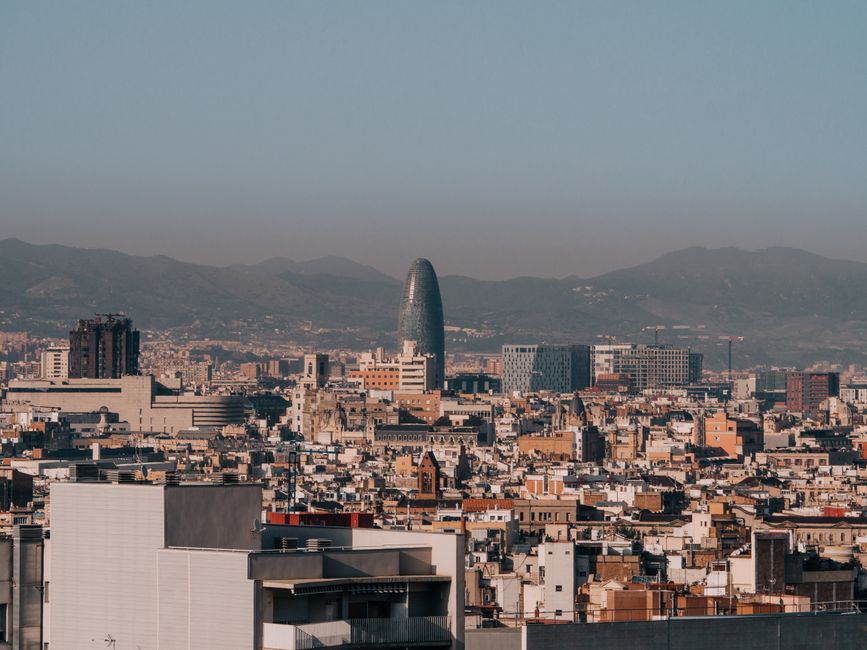
Barcelona lets you see Gaudí’s buildings in the morning, eat tapas at a long lunch, swim in the afternoon and dine late in the lanes of the old town, all on foot or by metro. It sits between the Mediterranean and the Collserola hills, with Montjuïc rising over the port. Give it four or five days, one of them for Montserrat or the coast.
Right now in Barcelona
- Wed18–24°C64–74°F3 mm rain
- Thu16–20°C60–68°F7 mm rain
- Fri16–19°C61–67°F1 mm rain
- Mon 12 Oct National Day of Spain (Fiesta Nacional de España)
Top tours in Barcelona
See all tours for Barcelona →
From local operators, with prices and reviews; you check availability and book on Viator, our partner. We may earn a commission at no extra cost to you. How we earn money
Barcelona at a glance
- Best for: Gaudí and modernista architecture, the Gothic Quarter, food markets and tapas, city beaches, art museums and easy day trips.
- How long: 3 days for the highlights, 5 to add a beach day and Montserrat, 7 for a slower pace with Girona or the Costa Brava.
- Best time: May, June and September (warm, sea for swimming, fewer rainy days). Late September for La Mercè, the city’s big festival.
- Getting in: Josep Tarradellas Barcelona-El Prat airport, with the Aerobús, the R2 Nord train and metro line L9 Sud into town; trains from Madrid in about 3 hours.
- Book ahead: the Sagrada Família (online only) and Park Güell (timed entry). Summer slots sell out days in advance.
- Tourist tax: from €6 to €12 per person per night in Barcelona city depending on where you stay, from age 17, up to 7 nights (as of October 2026).
- Before you go: entry rules, money and general safety are on our Spain travel guide.
Barcelona’s neighbourhoods and who each one suits
The old town, Ciutat Vella, runs from Plaça de Catalunya to the port, split by La Rambla. North of it is the Eixample grid, then former villages such as Gràcia; the beaches stretch north-east from Barceloneta.
Barri Gòtic (Gothic Quarter)
The medieval heart: stone lanes around the Cathedral, Plaça del Rei and Plaça Sant Jaume, with Roman walls in places. Atmospheric, central and crowded. Good for a first visit if you want everything on foot and don’t mind noise at night.
El Born
Across Via Laietana, El Born has the Picasso Museum, Santa Maria del Mar and Ciutadella park, plus independent shops, cocktail bars and good restaurants. It suits couples who want the old town with a little less chaos.
El Raval
West of La Rambla, El Raval is the most multicultural part of the centre, with the MACBA art museum, cheap eats from around the world and late bars. Lively and real, but some streets feel rough at night; it suits travellers at ease in big cities.
Eixample
The 19th-century grid of wide streets where the modernista architects built: Casa Batlló and La Pedrera on Passeig de Gràcia, and the Sagrada Família further east. Calmer than the old town, well connected, with the widest choice of hotels and restaurants. Families and first-timers do well here.
Gràcia
A former village of small squares, bakeries and vermouth bars, close to Park Güell and great for evenings on terraces. Stay here to feel like a resident, and take the metro to the sights.
Barceloneta
The old fishermen’s quarter by the port: narrow streets, seafood restaurants and the best-known beach. Fun for a beach trip, but busy and loud in summer.
Poblenou
Former factories turned into lofts and studios, with a tree-lined Rambla and quieter beaches nearby. A good base for families and repeat visitors who want the sea without the crowds.
Sant Antoni and Poble-sec
Two favourite food neighbourhoods. Sant Antoni, around its iron market hall, is full of brunch spots and vermouth bars; Poble-sec, below Montjuïc, has Carrer de Blai and its pintxo bars. Both are a short walk from the old town.
Top things to see in Barcelona
Prices and hours were checked on the official sites in October 2026; many sights use timed or dynamic tickets.
Sagrada Família
Gaudí’s basilica is the one sight nobody skips: columns branch like trees and the stained glass throws pools of colour across the nave, best in late afternoon. 2026 marks a hundred years since Gaudí’s death on 10 June 1926, and the central Tower of Jesus Christ, the tallest, was completed and blessed during Pope Leo XIV’s visit in June. As of October 2026 that tower is not part of the visit.
Tickets are sold online only, for a set time. As of October 2026 a basic ticket with the audio guide app is €26, a guided tour €30, and the basilica plus one of the towers €36; under-11s go free. In October it opens 9:00–19:00 (Saturdays to 18:00, Sundays from 10:30); from April to September weekdays run to 20:00, and from November to February it closes at 18:00. Metro L2 and L5 stop outside.
Park Güell
Gaudí’s hillside garden, with the mosaic lizard, the serpentine bench and views to the sea. The Monumental Zone needs a timed ticket: €18 as of October 2026, €13.50 for ages 7–12 and over-65s, free up to 6, with slots from 9:30 to 19:30. You have 30 minutes to enter and can’t re-enter. The walk up from Lesseps or Vallcarca (L3) is steep.
Casa Batlló and La Pedrera
Two Gaudí houses on Passeig de Gràcia. Casa Batlló, with bone-like balconies and a dragon-scale roof, is the more theatrical: its general visit is from €29 online (prices rise closer to the date; free up to 12), entries 9:00–19:45, as of October 2026. La Pedrera (Casa Milà) has the famous rooftop of warrior-like chimneys; its day visit is from €29 (€14.50 for ages 12–17, free up to 11), with sunset and night visits too. Pick Batlló for the interior, La Pedrera for the rooftop.
Gothic Quarter and the Cathedral
Wander from the Cathedral, with its cloister of 13 white geese, to Plaça del Rei and Plaça de Sant Felip Neri. The Cathedral’s tourist visit costs €16 as of October 2026 (€14 for students up to 25), weekdays 9:30–18:30, Saturdays 9:30–17:15 and Sundays 14:00–17:00. Cover shoulders and knees.
Picasso Museum
In medieval palaces on Carrer de Montcada, the museum is strongest on Picasso’s early years. As of October 2026 a ticket is €12 online (€13 at the desk), free under 18; it closes on Mondays and opens 10:00–19:00 until late March. Entry is free on Thursdays 16:00–19:00 (Thursday to Saturday 19:00–21:00 in summer) and on the first Sunday of the month, booked online from four days ahead.
Palau de la Música Catalana
Domènech i Montaner’s modernista concert hall, with a stained-glass skylight like an upside-down sun. Visits last about 50 minutes: €24 guided or €20 self-guided as of October 2026, free for under-10s, and €2 more at the box office. Better still, book a concert. Metro: Urquinaona (L1, L4).
Montjuïc and the MNAC
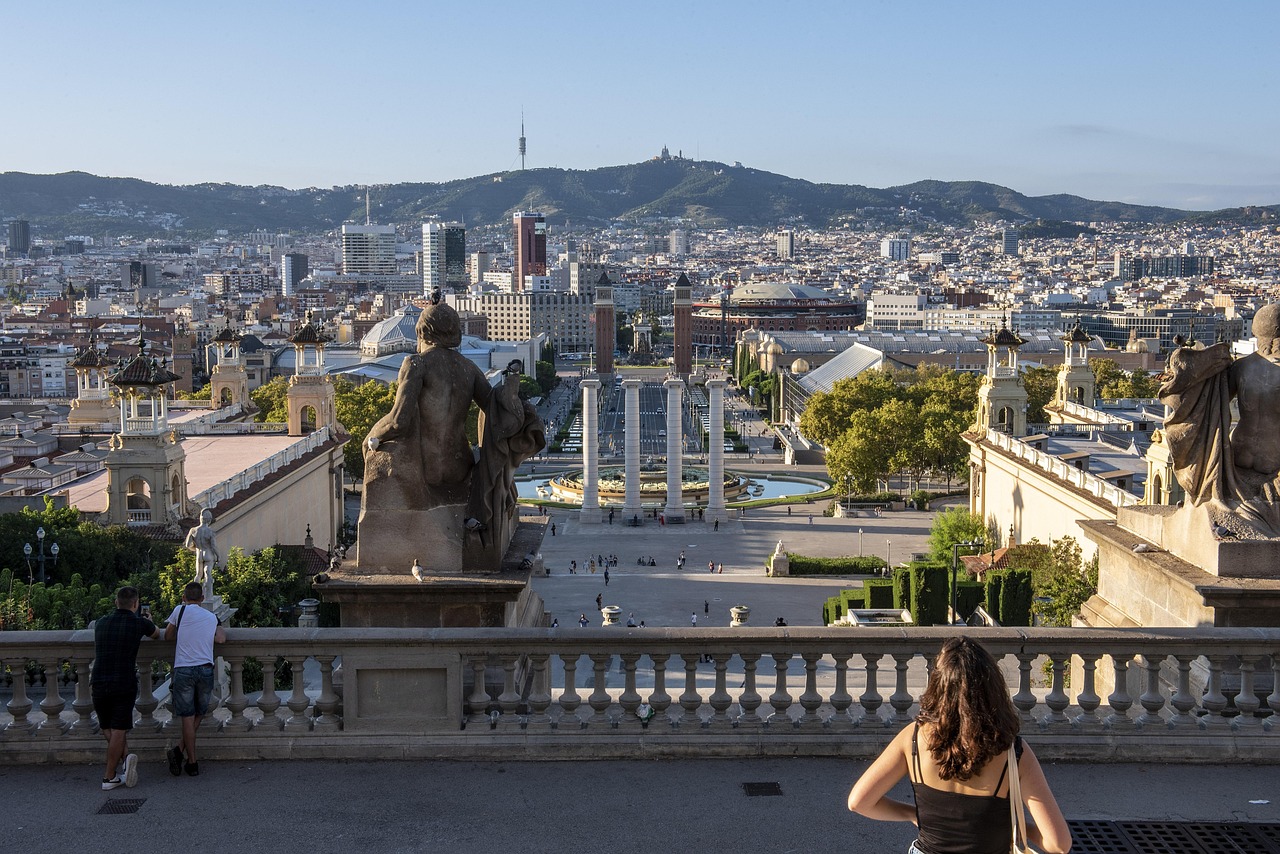
The green hill above the port holds gardens, the Fundació Joan Miró, the castle and the Museu Nacional d’Art de Catalunya (MNAC), famous for its Romanesque murals. As of October 2026 MNAC entry is €12 (valid on two days within a month), or €2 for just the building and rooftop viewpoint; it is free on Saturdays from 15:00, on the first Sunday of the month (book online), and for under-16s and over-65s. It closes on Mondays, and on Sundays at 15:00. Ride the Montjuïc cable car to the castle for the views (from €13 on TMB’s official Hola Barcelona store, October 2026).
La Boqueria
The famous food market off La Rambla: fruit, jamón, seafood and tiny counter bars. Go in the morning and eat at a stall. It is closed on Sundays; Santa Caterina and Sant Antoni markets are calmer.
Spotify Camp Nou
FC Barcelona’s stadium is being rebuilt, and works are still going on as of October 2026. The club museum is open, with tickets from €28 that include a viewpoint over the construction. For match tickets and the latest on the stadium, check FC Barcelona’s official site.
Monuments
- Casa Batlló
- Casa Milà
- Sagrada Família
- Barcelona Cathedral
- Palau de la Música Catalana
Other sights
- La Rambla
Parks and gardens
Barcelona’s beaches and the sea
Few big cities let you finish sightseeing and be in the sea twenty minutes later. The beaches run for kilometres from the port to the Fòrum, with a promenade, beach bars (chiringuitos) and lifeguards in the bathing season. The water is warmest from July to September. For more ideas along the Spanish coast, see our beaches guide.
Which city beach?
Barceloneta and Sant Sebastià, closest to the old town, are the busiest; come early on summer weekends. Past the Olympic Port the beaches get wider and calmer: Nova Icària is popular with families, Bogatell with locals after work, and Mar Bella has a small naturist section. Llacuna and Poblenou (L4) are the nearest metro stops.
Swimming safely
Follow the lifeguard flags: green is fine, yellow means care, red means no swimming. After heavy rain, bathing can be closed for a day or two. Don’t leave valuables on the sand while you swim, as these beaches are a favourite with thieves.
Out on the water
From Port Vell and the Olympic Port you can join a catamaran cruise, a sunset sail or a harbour trip on the Golondrinas, and rent paddleboards in summer. See our boat trips guide.
Beaches beyond the city
For clearer water and more space, take the train: Castelldefels, south of the airport, has a long sandy beach, and the Maresme coast north of the city (R1 line) has quieter beaches at towns such as Sant Pol de Mar.
Activities and best months
- Beaches and swimmingThe official Spain tourism site lists relaxing on the city beaches among Barcelona's main plans, next to the old town's cafés and guided tours.
Other things to do in Barcelona
Walk the modernista route
Gaudí was not alone. On Passeig de Gràcia, Casa Batlló stands beside Casa Amatller and Casa Lleó Morera, and further out the Sant Pau Art Nouveau Site has tiled pavilions by Domènech i Montaner. The façades are free to admire on a self-guided walk.
Eat and drink like a local
Barcelona eats late: lunch from about 14:00, dinner from 21:00, with good-value set lunches (menú del dia) on weekdays. Try pa amb tomàquet, bombas (Barceloneta’s meat-and-potato croquette), patatas bravas and seafood paella or fideuà. On weekend mornings locals meet for vermut with olives and crisps.
Find the best viewpoints
The Bunkers del Carmel, old anti-aircraft emplacements on Turó de la Rovira, give a free 360-degree view to the sea; go for sunset. Tibidabo, the highest point of the hills, has a church and an old amusement park on top.
Day trips from Barcelona
Montserrat
The saw-toothed mountain with its Benedictine monastery is the classic day out. Take the FGC R5 train from Plaça d’Espanya, then either the rack railway (Cremallera) from Monistrol de Montserrat or the Aeri de Montserrat cable car from its own station. As of October 2026 the Aeri’s return ticket starts from €12.50, with combined tickets that add the museum, lunch or the train. At the top, see the Black Madonna (La Moreneta), hear the boys’ choir and walk the trails. Go early and bring a layer.
Sitges
A seaside town with whitewashed lanes, a church on the promontory, many small beaches and a welcoming LGBTQ+ scene, about 40 minutes away on the R2 Sud.
Girona
A medieval city of coloured houses over the River Onyar, with walkable walls and a well-preserved Jewish quarter. High-speed trains from Sants take under an hour.
Costa Brava
Pine-backed coves and fishing villages north of the city. Tossa de Mar, with its walled old town, is the easiest by bus; for Cadaqués or the coastal paths, rent a car or stay a night.
Penedès wine country
The home of cava is under an hour west. Sant Sadurní d’Anoia, on the R4 line, has cellars within walking distance of the station; book visits ahead. See our wine tasting guide.
Nearby destinations
- Sitges35 km
- Girona85 km
- Costa Daurada112 km
- Costa Brava112 km
- Andorra la Vella136 km
- Peñíscola187 km
- Carcassonne204 km
- Mallorca208 km
Getting there and getting around
From the airport
Josep Tarradellas Barcelona-El Prat, run by AENA, is about 15 km south-west of the centre and handled some 57.5 million passengers in 2025. It has two terminals, T1 and T2, linked by a free shuttle bus.
- Aerobús: the official airport bus, run by Monbus: A1 from T1 and A2 from T2 to Plaça de Catalunya. Tickets are valid 90 days and under-4s ride free; check fares on aerobusbarcelona.es.
- Train (R2 Nord): Rodalies trains from the station by T2 (shuttle from T1) to Sants and Passeig de Gràcia, on a zone 1 ticket or T-casual. Rodalies had serious disruption in 2026, so check its status first.
- Metro (L9 Sud): serves both terminals but needs a change for the centre and the €5.90 airport ticket (October 2026); the T-casual isn’t valid there, the Hola Barcelona card is.
- Taxi: only black-and-yellow taxis are official. As of October 2026 a trip from the airport costs at least €21 including supplements (the airport supplement is €4.60).
By train, ferry and road
High-speed trains from Madrid reach Barcelona Sants in about 3 hours as of autumn 2026, a little slower than usual because of speed restrictions after the January 2026 accident; see our Madrid guide. Trains also run down the coast to Valencia, and ferries sail from the port to the Balearics (see our Mallorca guide). Don’t drive in the city: parking is scarce and expensive.
Getting around the city
- Metro and bus (TMB): fast and frequent; the whole city is in fare zone 1. As of October 2026 a single ticket is €2.90 and the T-casual (ten journeys for one person, also valid on trams, FGC and Rodalies in zone 1) is €13.
- Hola Barcelona travel card: unlimited travel for 1 to 5 days, including the metro to and from the airport. As of October 2026 TMB lists it from €12.50 for 24 hours, with a 10% discount online.
- Walking: the old town, Eixample and waterfront are easy on foot; Park Güell, the Bunkers and Montjuïc are steep.
When to go and how long to stay
Barcelona has a mild Mediterranean climate: humid, hot summers and cool, mostly sunny winters. The table uses AEMET’s official 1981–2010 climate normals for the Barcelona Aeropuerto station on the coast: average daily highs and lows, and the number of days with at least 1 mm of rain.
| Season | Average high / low | Rainy days per month | What it’s like |
|---|---|---|---|
| Spring (Mar–May) | 16–21 °C / 7–13 °C | 4–5 | Pleasant for walking; the sea is still cold; Sant Jordi in April |
| Summer (Jun–Aug) | 25–28.5 °C / 17–20 °C | 2–4 | Hot and humid, beach weather; very busy; short thunderstorms in August |
| Autumn (Sep–Nov) | 26 °C falling to 17 °C / 17 °C falling to 9 °C | 5–6 | September is lovely and the sea is at its warmest; October is the wettest month |
| Winter (Dec–Feb) | 14 °C / 5–6 °C | 4 | Cool, often sunny and quiet; good for museums and lower prices |
The station records about 588 mm of rain a year, and October is the wettest month (about 91 mm), often in short, heavy downpours. July is the sunniest, with about 305 hours of sun. The best months for a mix of sightseeing and swimming are June and September.
Big days to plan around: Sant Jordi (23 April), with streets full of books and roses; Primavera Sound at the Parc del Fòrum in late May or early June; Sant Joan night (23 June), with bonfires, fireworks and beach parties; the Festa Major de Gràcia in mid-August, with hand-decorated streets; and La Mercè around 24 September (23–27 September in 2026), with human towers (castells), giants and free concerts.
Barcelona in 3 days
Day 1: the Gothic Quarter, La Boqueria, El Born and the Picasso Museum, then Barceloneta at dusk. Day 2: the Sagrada Família at opening, Casa Batlló or La Pedrera, dinner in Gràcia. Day 3: Park Güell, a beach afternoon at Bogatell, sunset at the Bunkers del Carmel.
Barcelona in 5 days
Add a day on Montjuïc (MNAC, Miró, the cable car, tapas in Poble-sec), a day at Montserrat and a concert at the Palau de la Música.
Barcelona in 7 days
Add Girona, a beach day in Sitges, and a Penedès cava visit or a night on the Costa Brava, with one free day for markets, a sail and a long lunch.
Weather month by month
Where to stay in Barcelona
- Eixample: the best all-round base, with wide streets, good transport and the widest range of hotels at every level.
- Gothic Quarter and El Born: for atmosphere and walking everywhere; ask for a quiet room, as the lanes are noisy at night.
- Gràcia: a local, village feel with terraces and small hotels, close to Park Güell.
- Barceloneta and Poblenou: for beach holidays; Poblenou is calmer and good for families.
- Sant Antoni and Poble-sec: for food lovers on a mid-range budget, close to Montjuïc and the old town.
Tourist flats are tightly regulated. Book only flats that show a Generalitat registration number (it starts with HUTB) and check it before you pay. The city has said it will not renew existing tourist-flat licences when they expire in November 2028, so the supply will keep shrinking.
On top of the room rate you pay the Catalan tourist tax (Impost sobre les estades en establiments turístics) plus Barcelona’s city surcharge. On 1 April 2026 Catalan Law 2/2026 roughly doubled the regional tax, and the city surcharge rose to €5. As of October 2026, per person per night in Barcelona city:
| Where you stay | Catalan tax | City surcharge | Total per night |
|---|---|---|---|
| 5-star hotel, grand luxury, luxury campsite | €7.00 | €5.00 | €12.00 |
| 4-star and 4-star superior hotel | €3.40 | €5.00 | €8.40 |
| Tourist flat (HUT) | €4.50 | €5.00 | €9.50 |
| Other hotels, guesthouses and campsites | €2.00 | €5.00 | €7.00 |
| Youth hostel | €1.00 | €5.00 | €6.00 |
| Cruise passengers, stop over 12 hours | €4.00 | €5.00 | €9.00 |
| Cruise passengers, stop of 12 hours or less | €6.00 | €5.00 | €11.00 |
Under-17s are exempt, and the tax is charged for a maximum of 7 nights per stay. The city surcharge goes up by €1 each April: €6 from 1 April 2027 and €7 from 1 April 2028. If you book and pay in advance, the rate in force when you pay applies.
Practical tips
- Watch out for pickpockets: the UK government warns that thieves work in teams and use distraction. Keep your phone off café tables and your bag in front on the metro and La Rambla.
- Cover up away from the beach: walking around the streets in swimwear or bare-chested is banned in Barcelona and can mean a fine. Put on a T-shirt and shorts to leave the sand.
- No drinking in the street: drinking alcohol in public spaces is against city rules and can bring an on-the-spot fine. Don’t buy cans from street sellers either.
- Book the big sights early: the Sagrada Família, Park Güell, Casa Batlló and the free museum slots all work on timed tickets. Book as soon as your dates are fixed.
- Mondays and Sundays: many museums, including the Picasso Museum and the MNAC, close on Mondays. On Sundays La Boqueria and most shops are shut, but the first Sunday of the month brings free entry to several museums.
What to pack for Barcelona
Comfortable walking shoes come first. In summer bring light clothes, a sun hat, sunscreen and a reusable water bottle, plus swimwear and a cover-up for the walk back from the beach, and a layer for churches. From October to April add a warm jacket and a compact umbrella. A zipped cross-body bag is the best defence against pickpockets.
What to pack
- Day packs and anti-theft bagsCarries water, towel and sunscreen down the long stairways to Algarve coves.
- Dry bags and phone pouchesProtects phones and cameras from sand and spray on beaches reached by ferry or steep paths.
- Quick-dry beach towelsA sand-shedding quick-dry towel packs small for beach days and lido visits.
- Reef-friendly sunscreenSummer UV is strong on Portuguese beaches and there is little shade below the cliffs.
- Water shoesRocky coves, lava pools and weever fish in shallow sand make water shoes useful.
- WetsuitsOn the west and north coasts the sea stays around 16–18 °C even in summer, so a thin suit helps for long swims.
Barcelona travel FAQ
How many days do you need in Barcelona?
Three days covers the Gaudí sights, the old town and a beach afternoon. Five adds Montjuïc and Montserrat; a week adds Girona, Sitges or the Costa Brava.
What is the best time to visit Barcelona?
May, June and September, with average highs of about 21–26 °C and few rainy days. September has the warmest sea and the La Mercè festival. July and August are hot and crowded; winter is mild, quiet and good for museums.
How much is the tourist tax in Barcelona?
As of October 2026, from €6 (youth hostel) to €12 (5-star hotel) per person per night, including the city surcharge; €9.50 in a tourist flat. It applies from age 17, for up to 7 nights, and the surcharge rises by €1 in April 2027 and April 2028.
Do I need to book the Sagrada Família in advance?
Yes. Tickets are sold online only, for a set time slot, and they sell out in busy periods. As of October 2026 a basic ticket is €26 and a ticket with tower access €36; under-11s go free.
Can you visit the new Tower of Jesus Christ?
Not as of October 2026. The central tower was completed and blessed in June 2026, for the centenary of Gaudí’s death, but it is not part of the visit. Tower tickets take you up one of the other towers.
Is Park Güell free?
No. The Monumental Zone with Gaudí’s terrace and the mosaic lizard needs a timed ticket: €18 as of October 2026, €13.50 for ages 7–12 and over-65s, and free up to age 6. Book online, because slots sell out.
What is the best way from Barcelona airport to the city centre?
The Aerobús is the simplest, straight to Plaça de Catalunya from both terminals. The R2 Nord train from T2 is cheapest if you already have a T-casual. The L9 Sud metro needs the €5.90 airport ticket and a change. A taxi costs at least €21 from the airport as of October 2026.
Is the Hola Barcelona card worth it?
Often, if you take the airport metro. The 24-hour card is from €12.50 as of October 2026 and includes the airport stations, which cost €5.90 on their own. For a few rides a day in the city, a T-casual (€13 for ten journeys) is usually cheaper.
Is Barcelona safe for tourists?
Violent crime is rare, but pickpocketing is common on La Rambla, the metro, the beaches and around major sights. Keep valuables zipped and in front of you.
Can you swim at Barcelona’s beaches?
Yes. The city beaches have lifeguards in the bathing season and the sea is warmest from July to September. Follow the flags; bathing can close after heavy rain.
When is the Picasso Museum free?
As of October 2026, on Thursdays from 16:00 to 19:00 from late September to late March (Thursday to Saturday 19:00–21:00 in summer), on the first Sunday of each month, and always for under-18s. Free slots must be booked online; they open four days ahead.
Plan your trip
Partner links: TravelerCenter may earn a commission if you book, at no extra cost to you.
🇪🇸 Useful Spanish phrases for Barcelona
All 38 Spanish phrases: restaurant, hotel, emergencies, romance (printable) →
Traveler centers in Barcelona
Tourist information offices, visitor centers and travel agencies in Barcelona, from OpenStreetMap.
- Travel agency
Catalan Trails - Hiking Experiences from Barcelona
- Travel agency
Arcadia Viajes Barcelona
- Travel agency
Atlassib Barcelona
- Travel agency
B the Travel Band
- Tourist information office
Centre d'Informació del Parc
- Travel agency
Directia Travel
Sources · last reviewed 3 October 2026
Researched and last reviewed on 3 October 2026. Climate figures come from AEMET’s 1981–2010 normals for Barcelona Aeropuerto; the tourist tax from the Agència Tributària de Catalunya; fares from TMB, Aerobús and AMB taxi rates; and hours and prices from the official sites of each sight. Prices, hours and timetables change, so check the official links before you go.
Also: spain.info · AEMET normals 1991–2020, Barcelona Aeropuerto (climate)
Data: Weather: MET Norway (CC BY 4.0) · Sea temperature: NOAA CoastWatch · Rates: ECB · Holidays: Nager.Date · Costs: World Bank ICP and price levels · © OpenStreetMap contributors (ODBL) · Wikidata (CC0)