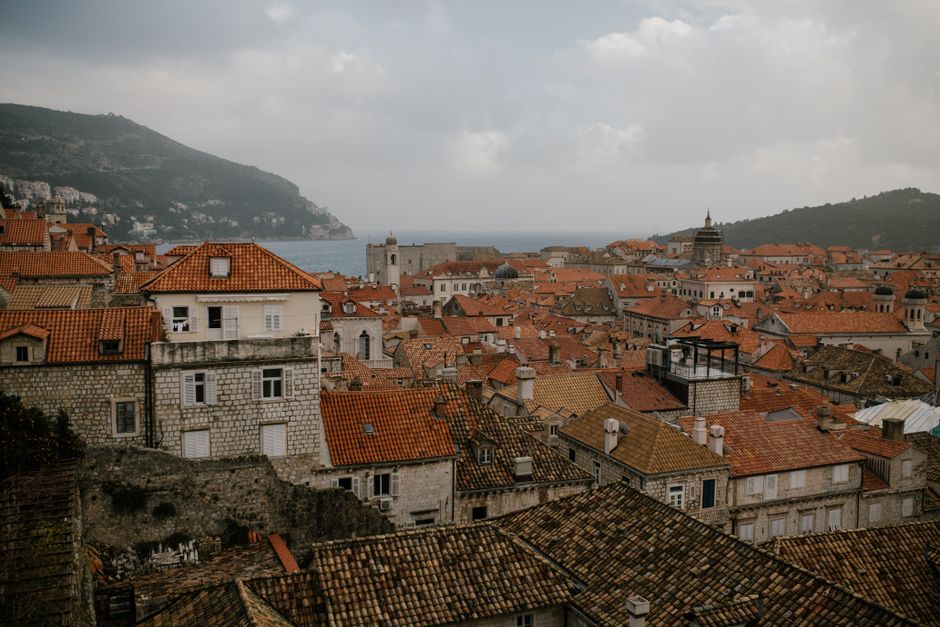
Dubrovnik is the walled city at the southern tip of Croatia: a perfectly preserved medieval port of pale limestone streets, Baroque churches and terracotta roofs, wrapped in almost 2 km of massive walls above the Adriatic. For over four centuries it was the capital of the Republic of Ragusa, a merchant state that rivalled Venice, and its old town has been a UNESCO World Heritage Site since 1979. Walk the walls, swim off the rocks below them, ride the cable car up Mount Srđ at sunset and take a boat to Lokrum or the Elaphiti islands. It is also one of the most crowded small cities in Europe in summer, so timing matters: come in May, June, September or October, and walk the walls early in the morning. Three days is the right length; five with day trips.
Right now in Dubrovnik
- Wed12–24°C54–75°FMostly clear
- Thu15–22°C58–72°F13 mm rain
- Fri17–23°C62–73°F39 mm rain
Top tours in Dubrovnik
See all tours for Dubrovnik →
From local operators, with prices and reviews; you check availability and book on Viator, our partner. We may earn a commission at no extra cost to you. How we earn money
Dubrovnik at a glance
- Best months: May–June and September–October. Mean temperatures run from about 19 °C in May to 25 °C in July and August (Croatian Meteorological and Hydrological Service, DHMZ, Dubrovnik station). Winters are mild but wet.
- Days needed: 2 for the old town and the walls; 3–5 with Lokrum, the cable car, Cavtat, the Elaphiti islands or Ston.
- Getting there: Dubrovnik airport (DBV) is about 20 km south-east of the city; buses meet flights. Catamarans arrive from Split, Hvar and Korčula in season.
- Getting around: on foot inside the walls (no cars); Libertas city buses link the old town (Pile Gate) with Gruž port, Lapad and Babin Kuk.
- Budget level: the most expensive city in Croatia, especially in July and August. See our Croatia guide for money, entry rules and costs.
Dubrovnik’s areas and who each one suits
- The old town (Grad): inside the walls, car-free, with the Stradun, churches, palaces and restaurants on stepped lanes. Magical at night once the day visitors have gone, but noisy in places, full of stairs and expensive.
- Ploče: just east of the Ploče Gate, a hillside of hotels and apartments with the classic view back over the old town and Lokrum, and Banje beach below. Ideal for couples.
- Pile and Boninovo: just west of the Pile Gate, near Fort Lovrijenac and the bus hub; good value and a short walk to the old town.
- Lapad and Babin Kuk: a green peninsula 3–4 km west with the city’s best-known beaches, a pedestrian promenade and big resort hotels. Best for families and beach lovers; a 15-minute bus ride to the old town.
- Gruž: the ferry and cruise port, with the market and cheaper rooms. Practical rather than pretty.
- Cavtat: a small, calmer harbour town 20 km south, near the airport, linked to Dubrovnik by boat in summer.
Top things to see in Dubrovnik
Prices and hours below are as of October 2026 and come from the official sites of the Society of Friends of Dubrovnik Antiquities (city walls), the Lokrum Reserve and Dubrovnik’s city authorities, plus the press where marked in our sources.
The city walls
The walls are Dubrovnik’s great experience: a 1,940 m loop around the whole old town, with 16 towers, bastions and fortresses, up to 25 m high on the land side. They took their present shape in the 13th century and were strengthened until 1660. From the top you look down into courtyards, gardens and onto the roofs, many of them replaced after the shelling of 1991–92, and out to Lokrum and the open sea. The walk takes 1.5–2 hours with stops, and there is very little shade.
How to visit (as of October 2026): the walls are run by the Society of Friends of Dubrovnik Antiquities, a non-profit that spends the ticket money on restoring them. A main-season adult ticket is €40 and a ticket for children aged 7–18 and students is €15; under-7s go free. Prices are lower in winter. The ticket also covers Fort Lovrijenac, the fortress on its own rock outside the Pile Gate. Buy at the entrances or on the Society’s official webshop (citywallsdubrovnik.hr): no booking is needed, but online tickets are tied to a date. The walls are open every day except 25 December, from 08:00 in summer with closing between about 17:30 and 19:30 depending on the month, and 09:00–15:00 from November to March; the closing time is the last entry. There are three entrances: by the Pile Gate (busiest), near the Ploče Gate and by St John’s Fortress at the old port. You walk one way round, and you cannot leave and come back in on the same ticket. Go at opening time or in the last two hours, and take water, a hat and sun cream.
The Stradun and the old town
The Stradun (Placa), the polished limestone main street, runs 300 m from the Pile Gate to the Luža square, lined with identical stone houses rebuilt after the great earthquake of 1667. At the Pile end is Onofrio’s Great Fountain (1438) and the Franciscan Monastery, whose cloister holds one of the oldest working pharmacies in Europe. At the Luža end are the Sponza Palace, the Orlando Column, the Baroque church of St Blaise, the city’s patron, and the bell tower. Beyond them stand the Gothic-Renaissance Rector’s Palace, once the seat of the Republic’s government and now the Cultural History Museum, and the Cathedral with its treasury. Climb the side lanes to the Jesuit stairs, modelled on Rome’s Spanish Steps, and the Dominican Monastery near the Ploče Gate. Many museums are covered by the Dubrovnik Pass (see below).
Fort Lovrijenac and the Game of Thrones locations
Fort Lovrijenac (St Lawrence) stands on a 37 m rock just west of the walls, with the inscription “Freedom is not sold for all the gold in the world” over its gate. It is included in the city walls ticket. Dubrovnik played King’s Landing in the TV series Game of Thrones, and the Jesuit stairs, the walls, Lovrijenac and Lokrum were all film locations; guided walking tours run daily in season.
Mount Srđ and the cable car
The cable car climbs from just above the old town to the top of Mount Srđ (412 m) in about four minutes. The view over the walls, Lokrum and the Elaphiti islands is the best in the city, especially at sunset. Up top is the Napoleonic Fort Imperial, with a museum of the 1991–95 war, and a restaurant. A return adult ticket costs about €27–30 in 2026; queues at sunset can be long, so buy online or go up earlier. You can also walk up a zigzag path from the main road in about an hour, which is hot work in summer.
Lokrum island
Lokrum is a wooded nature reserve 15 minutes by boat from the old port: botanical gardens, a ruined Benedictine monastery, peacocks, a small salt lake called the Dead Sea, rocky swimming spots and a naturist area. As of October 2026, a visit costs €30 per person, which includes the return boat from the old port’s Luža pier and the reserve entry, according to the Lokrum Reserve’s official site; if you come by private boat or water taxi you pay the same entrance fee on arrival. Nobody may stay overnight, and the last boat back is in the early evening. Bring water shoes, a picnic and a towel.
Monuments
- Dubrovnik City Walls
Historic centres
- Stradun
Other sights
- Lovrijenac
- Rector's Palace
Peaks and mountains
- Mount Srđ
Nature
- Lokrum
Nature reserves
- Trsteno Arboretum
Beaches and swimming
Dubrovnik’s beaches are mostly pebble or rock, with ladders into deep, clear water. Banje, just outside the Ploče Gate, is the city beach with the view of the walls; part of it is a beach club with loungers. Locals swim off the rocks below the walls at the two Buža bars, reached through small openings in the walls on the south side. Lapad has the sheltered bay of Uvala Lapad and quieter coves along the promenade towards Babin Kuk, including Copacabana beach. Šulići and Danče are small local spots west of the old town. For more space, take a boat to Lokrum, to the sandy Šunj beach on Lopud, or drive to the coves near Cavtat. Water shoes help on the rocks and with sea urchins. Swimwear is for the beach only: walking around the old town in a bikini or without a shirt can be fined (see the rules below).
Boat trips, kayaking and day trips
- Sea kayaking: guided half-day trips paddle around the walls to Lokrum and a small cave on its far side; the classic sunset paddle is lovely.
- The Elaphiti islands: Koločep, Lopud and Šipan are car-free islands north-west of the city. Jadrolinija’s local ferries from Gruž are cheap; organised boat trips visit all three with lunch.
- Cavtat: a pretty harbour, a seafront walk and the Račić family mausoleum. Boats run from the old port in season, or take the bus.
- Ston and Mali Ston: an hour north-west, the Walls of Ston, about 5.5 km long in all and among the longest defensive walls in Europe, are run by the same Society as Dubrovnik’s walls. Mali Ston Bay is famous for oysters and mussels. Combine with the Pelješac peninsula’s wineries.
- Mljet: a green island with a national park of two saltwater lakes and a monastery on an islet; catamarans from Gruž take about 1.5–2 hours.
- Montenegro and Bosnia: Kotor and Perast are about 2–2.5 hours’ drive south, and Mostar about 2.5–3 hours north. These are outside the EU and Schengen: carry your passport, check your own visa rules and expect queues at the borders, where non-EU visitors are also registered in the EU’s Entry/Exit System on the way back.
Activities and best months
- Beaches and swimmingPopular city beaches are Banje by the old town, Copacabana and Lapad Bay; Lokrum's small salt lake (the 'Dead Sea') suits children and non-swimmers, and Lopud in the Elaphiti has the sandy bay of Šunj.
- Boat tripsAprMayJunJulAugSepOctThe official Lokrum boat leaves the Old City Harbour for the island reserve (about ten minutes), with tickets at the Luža office (EUR 30 including the reserve entry); boats for the Elaphiti islands (Koločep, Lopud, Šipan) leave from Gruž port, where Jadrolinija sells tickets. Lokrum is open daily from 29 March, weather permitting.
- City sightseeingThe city walls run 1,940 m around the old town, with five fortresses and sixteen towers and bastions, and are open all year; there are three entrances (by St Luke's Church, by the Big Onofrio Fountain at Pile, and at St John's Fortress), and the walls ticket also covers Fort Lovrijenac.
- Wine tastingDay trip to the Pelješac peninsula (Ston is about 55 km north-west): Plavac mali covers almost 90% of its vineyards, with the steep south-facing Dingač and Postup slopes; the Pelješac Wine Road links wineries and tasting rooms, and the Ston tourist board recommends a winery visit around Ston.
Cruise ships, crowds and the “Respect the City” rules
Dubrovnik’s old town has only a few hundred permanent residents and receives millions of visitors a year. Since 2019 the city has run a programme called “Respect the City” to spread the crowds. It limits cruise calls to two large ships a day, which are asked to stay longer so that passengers do not all arrive at once, and it aims to keep the number of cruise passengers in the old town at around 4,000 at a time. The port authority turns away ships that ask for days already full. Tour coaches drop passengers outside the centre.
In practice, the old town is busiest from about 09:00 to 14:00 on days with two ships in port. Check the port’s cruise calendar before you plan your wall walk, and on busy days visit the walls at opening time or late in the afternoon, and spend the middle of the day on Lokrum, at a beach or in Lapad.
The city also fines bad behaviour in public places. As reported in October 2026, walking around the old town in swimwear or without a shirt can cost a €150 fine; drinking alcohol in the street, sitting or climbing on monuments, and noise or drunkenness also bring fines, which can reach several hundred euros. Dress normally in town, keep beach clothes for the beach, and cover shoulders and knees in churches.
Nearby destinations
- Herceg Novi41 km
- Kotor59 km
- Međugorje70 km
- Budva72 km
- Mostar82 km
- Durmitor National Park95 km
- Makarska Riviera103 km
- Hvar124 km
Getting there and getting around
Flights and ferries
Dubrovnik airport (DBV) at Čilipi has direct flights from much of Europe in summer and links to Zagreb all year. Airport buses run to Pile Gate and the main bus station at Gruž in about 30–40 minutes; taxis are much more expensive. In season, catamarans connect Dubrovnik with Korčula, Hvar and Split (Jadrolinija, Krilo and TP Line run different routes and times) and Jadrolinija sails to Mljet and the Elaphiti islands. Overnight ferries run from Bari in Italy. See our Split guide for island hopping up the coast.
By road
The drive from Split takes about 3 hours on the motorway and coast road. Since July 2022 the Pelješac Bridge lets you bypass the short stretch of Bosnia and Herzegovina at Neum, so you no longer need to cross two borders. Buses from Split take about 4–5 hours. Parking near the old town is limited and expensive: leave your car at your hotel and use buses or taxis.
City buses and taxis
Libertas runs the city buses. Lines from Pile Gate serve Lapad, Babin Kuk and Gruž port; buy tickets at kiosks, from the driver for a little more, or use the bus pass included in the Dubrovnik Pass. Taxis and ride-hailing apps work but are pricey in summer.
The Dubrovnik Pass
The Dubrovnik Pass, sold by the city tourist board, bundles the city walls with a set of city museums (the Rector’s Palace, the Maritime Museum, the Ethnographic Museum and several galleries) and city buses. As of 2026 it is reported to cost about €40 for one day, €50 for three days and €60 for seven days. If you plan to walk the walls and see two or three museums, it pays for itself; check the current price and inclusions on the official site before buying.
When to go and how long to stay
Dubrovnik has hot, dry, very sunny summers and mild, wet winters. July and August average about 350 hours of sunshine a month and only four or five days with rain, but they are also the hottest and most crowded months, with the Dubrovnik Summer Festival of theatre and music from about 10 July to 25 August. May, June, September and early October are ideal: warm, sunny and calmer, with the sea warm enough to swim from June to October. In winter many restaurants and hotels close, but the old town feels like a real city again, and the walls are cheap and empty. The feast of St Blaise on 3 February is the city’s great festival.
| Season | Mean temperature | Days with rain a month | What it’s like |
|---|---|---|---|
| Spring (Mar–May) | 12–19 °C | 10–11 | Fresh and green; good for walking and sightseeing; sea cool until late May. |
| Summer (Jun–Aug) | 23–25 °C | 4–7 | Hot, sunny and dry; peak crowds, cruise ships and prices; Summer Festival. |
| Autumn (Sep–Nov) | 22 °C falling to 14 °C | 7–13 | September and October are lovely, with the warmest sea; November turns wet. |
| Winter (Dec–Feb) | 9–11 °C | 11–13 | Mild, rainy and quiet; some hotels closed; the walls are cheap and empty. |
Figures are the Croatian Meteorological and Hydrological Service’s (DHMZ) long-term monthly averages for the Dubrovnik station, 1961–2024. They are mean temperatures over day and night: afternoon highs in July and August are usually around 29–30 °C. Dubrovnik gets about 1,100 mm of rain a year, almost all of it between October and April, and about 2,600 hours of sunshine.
Weather month by month
2 days in Dubrovnik
Day 1: the walls at 08:00, the Stradun, the Franciscan Monastery and the Rector’s Palace, a swim at Banje or the Buža rocks, and the cable car to Mount Srđ for sunset. Day 2: Lokrum in the morning, Fort Lovrijenac in the afternoon, dinner in the old town after the day visitors have left.
4–5 days in Dubrovnik
Add a sea-kayak trip, a day on the Elaphiti islands, a day in Ston and on the Pelješac peninsula, and an afternoon in Cavtat. With more time, continue north by catamaran to Korčula and Hvar, or cross to Kotor in Montenegro for a night.
Where to stay in Dubrovnik
- First visit, no car: an apartment or small hotel inside the walls or in Ploče or Pile, within walking distance of everything.
- Couples who want the view: the hotels of Ploče, looking back at the old town and Lokrum.
- Families and beach lovers: Lapad or Babin Kuk, with beaches, a promenade and pools, a short bus ride from the old town.
- Budget: Gruž and the streets above it, near the ferry port and buses.
- Quiet and near the airport: Cavtat.
Croatia charges a tourist tax per person per night, usually added to the bill. In the City of Dubrovnik in 2026 it is €2.65 per adult per night from 1 April to 30 September and €1.85 the rest of the year (€1.95 and €1.30 at campsites), set by the Dubrovnik-Neretva County Assembly. Children under 12 pay nothing and young people aged 12–18 pay half.
Practical tips for Dubrovnik
- Beat the crowds: do the walls at opening time, and check the cruise calendar.
- Steps: the old town is built on a slope with long flights of stairs; pack light and use a backpack rather than a wheeled case if you are staying inside the walls.
- Heat: the walls and the Stradun’s stone get very hot; carry water and avoid midday in July and August.
- Money: Croatia uses the euro; restaurants on the Stradun are the most expensive, so eat in the side streets or in Lapad and Gruž.
- Respect the rules: no swimwear or bare chests in town, no drinking in the street, and quiet after midnight.
- Border trips: take your passport for Montenegro and Bosnia.
- Emergencies: call 112.
What to pack for Dubrovnik
For summer, pack light, breathable clothes, a sun hat, sunglasses, high-factor sunscreen and a refillable water bottle for the walls. Bring a swimsuit, a quick-dry towel and water shoes for the rocky beaches, and a snorkel mask for Lokrum. Comfortable shoes with grip are a must on the polished limestone and the steps. Add a light scarf or shirt to cover shoulders in churches, and a light jacket for boat trips and spring or autumn evenings. In winter, pack a waterproof jacket and an umbrella. Take your passport for day trips to Montenegro or Bosnia.
What to pack
- City walking shoesLisbon and Porto are steep, with polished limestone cobbles that get slippery, so grippy soles matter.
- Day packs and anti-theft bagsCarries water, towel and sunscreen down the long stairways to Algarve coves.
- Dry bags and phone pouchesProtects phones and cameras from sand and spray on beaches reached by ferry or steep paths.
- Fleeces and warm layersIt is cooler at sea than on land, especially on morning whale-watching trips.
- Quick-dry beach towelsA sand-shedding quick-dry towel packs small for beach days and lido visits.
- Rain jacketsA windproof, waterproof shell keeps you warm on open boats, where wind and spray cool you quickly.
- Reef-friendly sunscreenSummer UV is strong on Portuguese beaches and there is little shade below the cliffs.
- Travel adapters and convertersPortugal uses Type C and F sockets at 230 V, so most visitors from outside Europe need an adapter.
- Water shoesRocky coves, lava pools and weever fish in shallow sand make water shoes useful.
- WetsuitsOn the west and north coasts the sea stays around 16–18 °C even in summer, so a thin suit helps for long swims.
- Wine bottle travel protectorsPort and Douro wines bought at the quintas travel home safely in checked luggage with padded bottle protectors.
Dubrovnik travel FAQ
How much are the Dubrovnik city walls?
As of October 2026, a main-season adult ticket is €40 and a ticket for children aged 7–18 and students is €15; under-7s go free. Prices are lower in winter. The ticket includes Fort Lovrijenac.
What are the opening hours of the Dubrovnik walls?
Every day except 25 December, from 08:00 in summer, closing between about 17:30 and 19:30 depending on the month, and 09:00–15:00 from November to March. The closing time is the last entry.
When is the best time to walk the walls?
At opening time, before the heat and the cruise passengers, or in the last two hours before closing. Avoid late morning on days with two cruise ships in port.
Do I need to book the Dubrovnik walls in advance?
No reservation is needed. You can buy at the entrances or on the official webshop of the Society of Friends of Dubrovnik Antiquities; online tickets are for a chosen date.
How many days do you need in Dubrovnik?
Two days for the old town, the walls, Lokrum and the cable car; four or five with day trips to the Elaphiti islands, Ston, Cavtat or Kotor.
How many cruise ships can dock in Dubrovnik?
The city limits calls to two large cruise ships a day and aims to keep cruise passengers in the old town to around 4,000 at a time. Ships that ask for full days are turned away.
What is the tourist tax in Dubrovnik?
In 2026 it is €2.65 per adult per night from April to September and €1.85 from October to March in hotels and private rooms. Children under 12 are exempt; 12- to 18-year-olds pay half.
Can you wear swimwear in Dubrovnik’s old town?
No. Walking around the old town in swimwear or without a shirt is against city rules and can be fined. Keep beachwear for the beach.
How do I get to Lokrum?
Take the official boat from the Luža pier in the old port, about 15 minutes. As of October 2026 the €30 ticket includes the return boat and the reserve entry. Nobody may stay overnight.
Is the Dubrovnik Pass worth it?
Yes, if you will walk the walls and visit a few museums and use the buses. It is reported at about €40 for one day in 2026. It does not include the cable car or Lokrum.
How do I get from Split to Dubrovnik?
By catamaran in season (about 4–5 hours with stops at Hvar and Korčula), by bus in about 4–5 hours, or by car in about 3 hours via the Pelješac Bridge, which avoids the Bosnian border at Neum.
Can you do a day trip from Dubrovnik to Montenegro?
Yes. Kotor and Perast are about 2–2.5 hours’ drive each way, plus border queues in summer. Take your passport; non-EU travellers are registered by the EU’s Entry/Exit System on the way back.
Plan your trip
Partner links: TravelerCenter may earn a commission if you book, at no extra cost to you.
🇭🇷 Useful Croatian phrases for Dubrovnik
All 38 Croatian phrases: restaurant, hotel, emergencies, romance (printable) →
Sources · last reviewed 4 October 2026
Researched and last reviewed on 4 October 2026. City walls information comes from the official site of the Society of Friends of Dubrovnik Antiquities; Lokrum prices from the Lokrum Reserve’s official site; tourist tax from the Dubrovnik-Neretva County Assembly’s 2026 decision; climate from the Croatian Meteorological and Hydrological Service (DHMZ). Ticket prices for the walls, the cable car and the Dubrovnik Pass, the cruise limits and the behaviour fines come from published reports and are flagged for checking. Prices, timetables and rules change, so check the official sites before you travel.
Also: tzdubrovnik.hr · citywallsdubrovnik.hr · ston.hr · IHMS Montenegro normals 1991–2020, Herceg Novi (Montenegro) (temperature); DHMZ Dubrovnik 1961–2024 averages (rain, sun) (climate)
Data: Weather: MET Norway (CC BY 4.0) · Sea temperature: NOAA CoastWatch · Air quality: OpenAQ · Rates: ECB · Costs: World Bank ICP and price levels · © OpenStreetMap contributors (ODBL) · Wikidata (CC0)