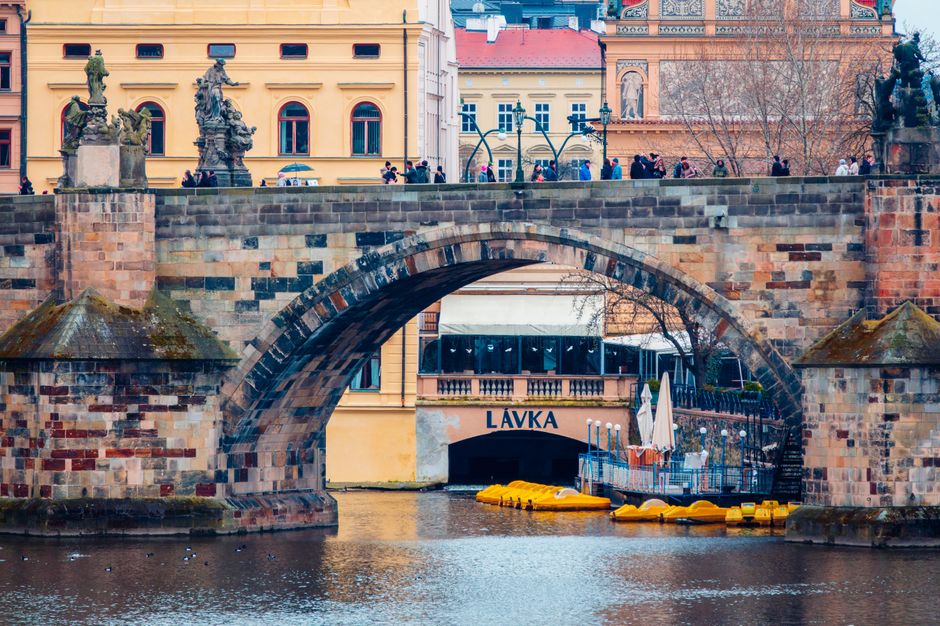
The Czech Republic, or Czechia for short, is one of Europe’s easiest and most rewarding countries to travel: a compact land of castle-topped hills, Gothic and baroque towns, forests, spa resorts and some of the best beer in the world, all at the heart of the continent. Most visitors start in Prague, with its castle, Charles Bridge and Old Town Square, and many never leave. They should: fairy-tale Český Krumlov on its loop of the Vltava, the colonnades of Karlovy Vary, the modernist villas and wine cellars of Brno and South Moravia, and the sandstone gorges of Bohemian Switzerland are all within two to three hours of the capital by train or bus. The currency is the Czech koruna, not the euro. May, June and September are the best months; December brings Christmas markets. Give it a week for Prague plus two or three other places, ten days to two weeks to see both Bohemia and Moravia.
Right now in Czechia
- Wed 8–21°C 47–69°F Partly cloudy
- Thu 10–20°C 50–68°F 6 mm Cloudy
- Fri 7–14°C 45–57°F Partly cloudy
Weather: MET Norway (CC BY 4.0) · Air quality: OpenAQ · Rates: ECB
Key facts
| Currency | Czech koruna (CZK, Kč), not the euro; cards and contactless widely accepted; never change money on the streetSource: visitczechia.com · Last reviewed 4 Oct 2026 |
|---|---|
| Languages | Czech; Slovak is understood everywhere, and English (often German) works in tourist areasSource: visitczechia.com · Last reviewed 4 Oct 2026 |
| Plugs and voltage | Type C and E · 230 V, 50 HzSource: visitczechia.com · Last reviewed 4 Oct 2026 |
| Emergency number | 112 (all emergencies); also 155 ambulance, 158 police, 150 fire, 156 municipal policeSource: visitczechia.com · Last reviewed 4 Oct 2026 |
| Driving side | On the right; lights on all day; zero alcohol; 50 in towns, 90 outside, 130 on motorways; e-vignette needed for motorways (eDalnice.cz)Source: visitczechia.com · Last reviewed 4 Oct 2026 |
| Tap water | Safe to drink (99.65% of analyses met the limits in 2022)Source: mzd.gov.cz · Last reviewed 4 Oct 2026 |
| Tipping | Not required; up to 10% is customary in restaurantsSource: visitczechia.com · Last reviewed 4 Oct 2026 |
| Calling code | +420 (dial 00 for international calls)Source: visitczechia.com · Last reviewed 4 Oct 2026 |
| Time zones | CET (UTC+1), summer time CEST (UTC+2) from the last Sunday in March to the last Sunday in OctoberSource: transport.ec.europa.eu · Last reviewed 4 Oct 2026 |
| Entry summary | Schengen and EU. Most visitors from outside the EU stay visa-free for up to 90 days in 180 and register in the EU Entry/Exit System at the airport; ETIAS is not yet in operation. Carry your passport or ID card.Source: visitczechia.com · Last reviewed 4 Oct 2026 |
Multi-day tours of Czechia
Multi-day tours from local operators. You check dates and book on Viator, our partner; we may earn a commission at no extra cost to you. How we earn money
Czechia at a glance: Bohemia, Moravia and Silesia
The Czech Republic is a landlocked country of about 10.9 million people (according to the Czech Statistical Office, at the end of June 2026), bordered by Germany, Poland, Slovakia and Austria. It has existed in its present form since 1 January 1993, when Czechoslovakia split peacefully into two countries. Since 2016, “Czechia” has been the official short name in English, though “the Czech Republic” is still used more often; both are correct, and you will see both on this page.
The country is made up of three historic lands. Bohemia, the larger, western part, is a basin ringed by low mountains, with Prague at its centre. Moravia, to the east, is centred on Brno and has the country’s vineyards, rolling farmland and a slightly different dialect and identity. A small corner of Czech Silesia, around Ostrava and Opava, borders Poland. Locals identify strongly with their region: a Moravian is not a Bohemian, and the two will happily tell you why their wine or their beer is better.
Time zone: Czechia runs on Central European Time (UTC+1) in winter and Central European Summer Time (UTC+2) from the last Sunday in March to the last Sunday in October, the same as Germany, Austria and Poland.
Czechia’s regions
- Prague and Central Bohemia: the capital and its day trips: Kutná Hora with its cathedral and bone chapel, Karlštejn Castle, the Terezín memorial and the Křivoklát forests.
- South Bohemia: Český Krumlov and its castle, the brewing city of České Budějovice (home of Budweiser Budvar), the fishponds around Třeboň and the Šumava mountains on the border with Germany and Austria.
- West Bohemia: the spa triangle of Karlovy Vary, Mariánské Lázně and Františkovy Lázně, all part of the UNESCO-listed Great Spa Towns of Europe, and Plzeň, the birthplace of Pilsner lager.
- North Bohemia: the sandstone towers and gorges of Bohemian Switzerland National Park, the rock towns of the Bohemian Paradise (Český ráj) and the Krkonoše (Giant Mountains), with the country’s highest peak, Sněžka (1,603 m).
- Moravia: Brno, the country’s second city; the wine villages and chateaux of South Moravia, including the UNESCO-listed Lednice–Valtice landscape; Olomouc’s baroque squares; and the caves of the Moravian Karst.
Regions
- Central Bohemian Region
- Hradec Králové Region
- Karlovy Vary Region
- Liberec Region
- Moravian-Silesian Region
- Olomouc Region
- Pardubice Region
- Plzeň Region
- South Bohemian Region
- South Moravian Region
- Vysočina Region
- Zlín Region
- Ústí nad Labem Region
Where to go: Prague, castles, spas and nature
Most first trips are Prague plus one or two side trips. With a week or more, combine Prague with Český Krumlov in the south, Karlovy Vary in the west, Bohemian Switzerland in the north or Brno and the Moravian wine country in the east. Distances are short: nothing in this section is more than about three hours from Prague.
Prague
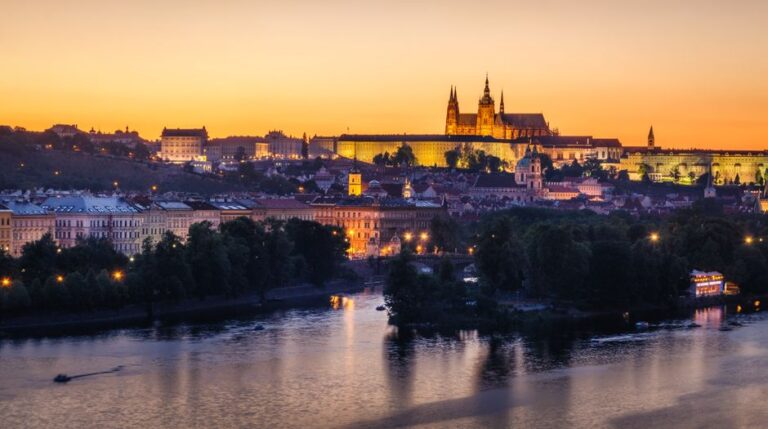
The capital is one of the best-preserved historic cities in Europe, spared heavy bombing in the Second World War. Walk from the Old Town Square and its Astronomical Clock across the statue-lined Charles Bridge to Malá Strana and up to Prague Castle, the largest castle complex in the world, with St Vitus Cathedral at its heart. Add the Jewish Quarter, the views from Petřín and Vyšehrad, the Art Nouveau Municipal House and an evening in a traditional pub. Read our Prague guide for 2026 castle ticket prices, the Jewish Museum, public transport fares, the Airport Express bus and how to avoid the classic tourist traps.
Český Krumlov
Český Krumlov is the postcard of Czechia: a UNESCO-listed medieval town in a tight bend of the Vltava, below a huge castle with a painted tower, a baroque theatre and a bear moat. It gets very busy by day with coach tours from Prague, Vienna and Salzburg, so stay at least one night to see it quiet in the morning and evening. Castle tours run from April to October.
Karlovy Vary and the spa towns
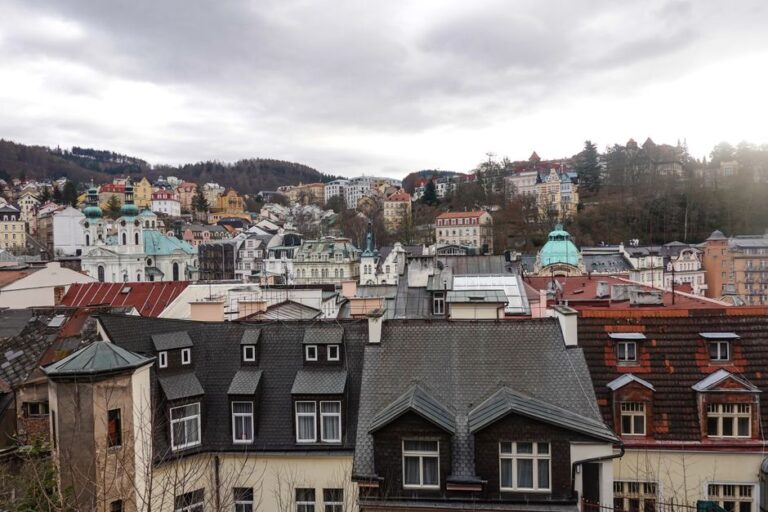
Karlovy Vary (Carlsbad) is the grandest of the Bohemian spa towns: a valley of pastel hotels and colonnades where visitors sip warm mineral water from spouted porcelain cups, and where the Vřídlo hot spring spouts up to 12 m inside its own colonnade. It hosts the Karlovy Vary International Film Festival every July. Smaller, greener Mariánské Lázně (Marienbad) is close by.
Brno and South Moravia
Brno, the country’s second city, is a lively university town with a castle-prison, a vast ossuary, an underground labyrinth and the modernist Villa Tugendhat, a UNESCO site that sells out weeks ahead. It is also the gateway to South Moravia’s wine villages, the Lednice and Valtice chateaux and Mikulov. Vienna is only about 1 hour 30 minutes away by train.
Bohemian Switzerland
Bohemian Switzerland National Park, on the German border north of Prague, is a landscape of sandstone towers, deep gorges and pine forest. Its icon is the Pravčická brána, the largest natural sandstone arch in Europe, and you can ride flat-bottomed boats through the gorges of the Kamenice river. Fires in 2022 and May 2026 closed parts of the park, so check which trails are open before you go. Across the border lies Saxon Switzerland and the Bastei, an easy add-on with Dresden.
More places worth the trip
Kutná Hora, an hour from Prague, has the Gothic Cathedral of St Barbara and the Sedlec Ossuary, decorated with the bones of tens of thousands of people. Plzeň is a must for beer lovers, with the Pilsner Urquell brewery tour. Olomouc has a UNESCO-listed Holy Trinity Column and few tourists. Telč, in the Vysočina highlands, has a square of Renaissance houses, and Třebíč a Jewish quarter and basilica, both UNESCO-listed. Hikers head to the Krkonoše and Šumava mountains.
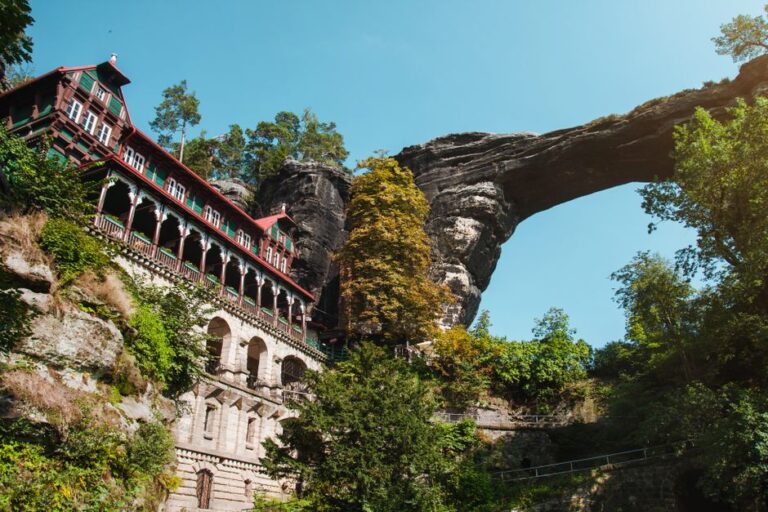
Bohemian Switzerland Travel Guide
Plan a visit to Bohemian Switzerland National Park: what is open after the 2022 fire and the May 2026 fire, the Pravčická brána with…
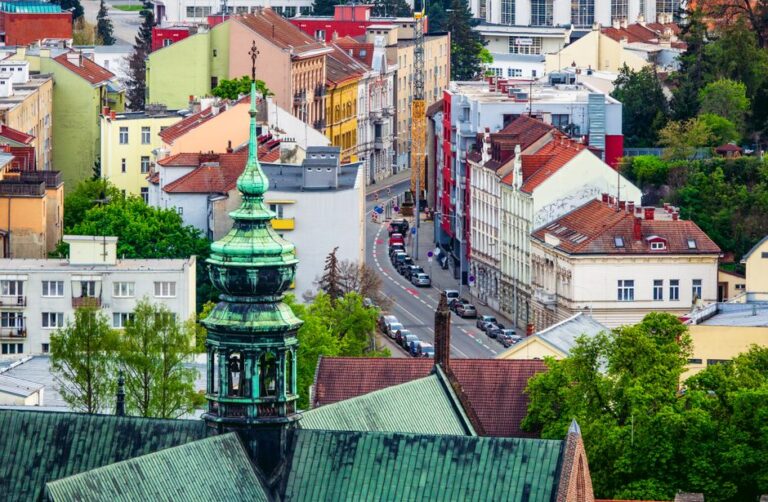
Brno Travel Guide
Plan a trip to Brno: how to book Villa Tugendhat with 2026 tour prices, Špilberk Castle and its casemates, the cathedral's 11:00 noon bells,…
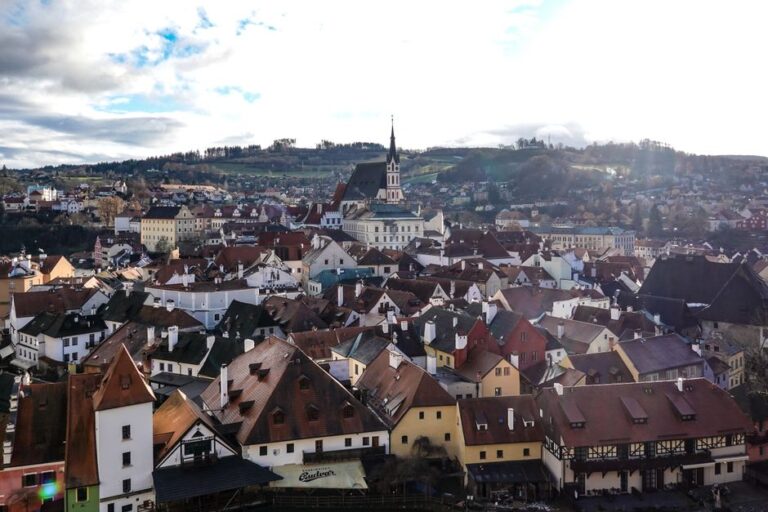
Český Krumlov Travel Guide
Plan a visit to Český Krumlov: castle tours with 2026 prices and seasons (Route I, Route II, the baroque theatre, the tower), the bear…
Karlovy Vary Travel Guide
Plan a trip to Karlovy Vary: the Hot Spring, Mill, Market and Park colonnades and how to drink the free spa water, the Vřídlo…
Prague Travel Guide
Plan a trip to Prague: 2026 Prague Castle ticket prices and hours, the changing of the guard, Charles Bridge and its tower, the Astronomical…
Best time to visit the Czech Republic
The Czech Republic has a central European climate: cold, often grey winters around freezing, warm summers and four distinct seasons. Most rain falls in summer, often in short thunderstorms, and Prague lies in a rain shadow, so it is relatively dry. The table shows rounded average daily highs and rainfall a year for one place in each region, from the 1991–2020 averages of the Czech Hydrometeorological Institute (ČHMÚ).
| Place | Spring highs (Mar–May) | Summer highs (Jun–Aug) | Autumn highs (Sep–Nov) | Winter highs (Dec–Feb) | Rain a year |
|---|---|---|---|---|---|
| Prague (city centre) | 10–21 °C | 24–27 °C | 20 °C falling to 9 °C | 4–6 °C | about 450–500 mm |
| Brno and South Moravia | 10–22 °C | 25–28 °C | 21 °C falling to 8 °C | 2–5 °C | about 520 mm |
| South Bohemia (České Budějovice) | 10–20 °C | 24–26 °C | 20 °C falling to 8 °C | 3–5 °C | about 660 mm |
| West Bohemia (Karlovy Vary airport) | 7–17 °C | 21–23 °C | 17 °C falling to 5 °C | 1–2 °C | about 570 mm |
| North Bohemia (Děčín) | 10–21 °C | 24–26 °C | 20 °C falling to 8 °C | 3–6 °C | about 600 mm |
Winter nights are usually below freezing everywhere, and snow is reliable in the mountains from December to March, when the Krkonoše and Šumava become ski areas. Recent summers have brought more heatwaves above 30 °C, especially in Prague and South Moravia. In June it stays light until after 21:00; in December it is dark by about 16:00.
Crowds and prices through the year
- May, June and September: the best all-round months, with mild to warm weather, long days and everything open. Prague is busy at weekends but manageable midweek.
- July and August: warm and busy, especially in Prague, Český Krumlov and Karlovy Vary during the film festival. Locals head to their country cottages and to the lakes; rafting on the Vltava is at its peak.
- October: golden forests, the end of the wine harvest in Moravia and the last month of the season for many castles, which close from November to March.
- Late November to early January: Christmas markets in Prague, Brno and every town square, with mulled wine (svařák) and carp sold from tubs before Christmas Eve. Cold, short days; hotels are busy at weekends and over New Year.
- January to March: the cheapest and quietest time in the cities, and ski season in the mountains. Many castles and chateaux are closed.
Festivals and events
- Spring: Easter markets and the custom of pomlázka on Easter Monday, when boys playfully whip girls with braided willow switches; the Prague Spring international music festival from 12 May; witch-burning bonfires on 30 April.
- Summer: the Five-Petalled Rose Festival in Český Krumlov (18–20 June 2027), the Karlovy Vary International Film Festival (2–10 July 2027), open-air concerts and beer festivals.
- Autumn: wine harvest festivals (vinobraní) across South Moravia in September and the young wine (burčák) season; St Martin’s Day young wine on 11 November.
- Winter: Christmas markets (Prague’s main markets run from 28 November 2026 to 6 January 2027), Advent concerts, New Year’s Eve fireworks and carnival (masopust) parades in villages in February.
Public holidays and shop closures
On public holidays, banks and offices close and transport runs a Sunday timetable. By law, shops larger than 200 m² must close on some holidays (marked * below) and close at noon on 24 December; small shops, petrol stations, pharmacies and shops at stations and airports may open. On other holidays, most supermarkets stay open. The next holidays, from October 2026:
| Holiday | Date |
|---|---|
| Independent Czechoslovak State Day* | Wednesday 28 October 2026 |
| Struggle for Freedom and Democracy Day | Tuesday 17 November 2026 |
| Christmas Eve, Christmas Day*, St Stephen’s Day* | 24, 25 and 26 December 2026 |
| New Year’s Day* | Friday 1 January 2027 |
| Good Friday and Easter Monday* | 26 and 29 March 2027 |
| Labour Day and Liberation Day* | 1 and 8 May 2027 |
| Saints Cyril and Methodius, Jan Hus Day | 5 and 6 July 2027 |
| St Wenceslas Day (Czech Statehood Day)* | Tuesday 28 September 2027 |
Municipal and Senate elections take place on 9–10 October 2026, with Senate run-offs on 16–17 October; some schools and public buildings are used as polling stations, but daily life carries on normally.
Weather month by month
Averages from ČHMÚ normals 1991–2020, Praha-Ruzyně (airport) · Last reviewed 4 Oct 2026
How long to stay: sample itineraries
Czech trains and buses are cheap and frequent, so it is easy to travel without a car. Base yourself in Prague and add one or two overnight stops rather than doing everything as day trips.
4–5 days: Prague and Kutná Hora
Three days for Prague Castle, Charles Bridge, the Old Town and the Jewish Quarter, plus a day trip to Kutná Hora (about an hour by train) or to the Terezín memorial. Add Karlštejn Castle or a Plzeň brewery tour if you have a fifth day.
7 days: Prague, Český Krumlov and Karlovy Vary
Four days in Prague, then the bus or train south to Český Krumlov for a night or two, and back via Prague to Karlovy Vary for a night of spa colonnades. Or swap Karlovy Vary for Bohemian Switzerland in the north.
10 days: Bohemia and Moravia
Prague (four days), Bohemian Switzerland (one or two nights), Český Krumlov (two nights), then east to Brno (two nights) with a day in the South Moravian wine country, and continue to Vienna.
14 days: Central Europe by train
Czechia sits at the crossroads of Central Europe. Combine Prague with Dresden and Berlin to the north, Vienna and Salzburg to the south, or Kraków in Poland to the east, which you can reach by direct train from Prague in about six hours. See our Kraków guide and our Austria guide to plan the next leg.
Entry, money and costs
Entry: Schengen, EES and ETIAS (last reviewed October 2026)
The Czech Republic is part of the European Union and the Schengen area. Citizens of the EU, the European Economic Area and Switzerland can enter with a valid passport or national ID card and stay without limit. Visitors from many other countries, including the United States, Canada, the UK, Australia and New Zealand, can visit without a visa for up to 90 days in any 180-day period across the whole Schengen area; others need a Schengen visa.
- Entry/Exit System (EES): the EU’s digital border system has been fully running at all Schengen external borders since 10 April 2026. Non-EU visitors give fingerprints and a facial photo the first time they enter the Schengen area, instead of getting a passport stamp; registration is free. Prague’s Václav Havel Airport is the main external border for most visitors; allow extra time at passport control, especially when leaving.
- ETIAS: the EU’s planned online travel authorisation (fee €20) is not in operation as of October 2026, and no start date has been officially announced. You don’t need one yet; ignore websites selling “ETIAS applications”.
- Passport validity: non-EU passports must have been issued within the last 10 years and be valid for at least three months after the day you plan to leave the Schengen area.
- Border checks: the Czech Republic itself has no internal border checks in force, but Germany and Austria both run temporary checks on their land borders, including those with Czechia, until at least 15 March 2027. If you travel on by train, bus or car to Dresden, Berlin or Vienna, carry your passport or ID card.
Check the official pages before you travel: the European Commission’s EES and ETIAS pages, the Czech Ministry of Foreign Affairs and your own government’s travel information.
Language
Czech is the official language, a Slavic language close to Slovak and related to Polish. English is widely spoken in Prague, in hotels and by younger people, and German by many older people near the borders; outside the tourist centres, a few words help a lot: Dobrý den (good day, the standard greeting when entering a shop), Na shledanou (goodbye), Děkuji (thank you), Prosím (please, and here you are), Promiňte (excuse me), Pivo, prosím (a beer, please), Zaplatím (I’d like to pay) and Na zdraví! (cheers). Look people in the eye when you clink glasses.
Money: the Czech koruna, not the euro
The currency is the Czech koruna (crown, CZK, written Kč). The Czech Republic does not use the euro. Some hotels, souvenir shops and restaurants in Prague take euros, but at poor exchange rates, with change given in koruna. Cards and contactless payments are accepted almost everywhere, including transport ticket machines, most pubs and market stalls, but carry some cash for small village shops, toilets and tips.
- Cash machines: use ATMs that belong to a bank (inside or attached to a bank branch). Free-standing machines in tourist areas often charge high fees. When an ATM or card terminal offers to charge you in your home currency or in euros, always choose koruna; the “conversion” offered is almost always a worse rate.
- Exchange offices: avoid them if you can. If you do change money, ask how many koruna you will receive in total before handing over your cash, and keep the receipt. Czech law bans commission charges at exchange offices (with a few exceptions such as coins) and gives you the right to cancel an exchange within three hours, free of charge, for amounts up to the equivalent of €1,000, at the same office: you get your money back. Never change money with people on the street; the notes are often fake or out of circulation.
Tipping
Service is not included in prices. In sit-down restaurants and cafés, round up or add about 10% for good service. As in Germany, say the total you want to pay when the server brings the bill, or tell them how much to charge your card, rather than leaving coins on the table. Round up for taxis and drinks at the bar. Check the bill for extras such as a cover charge, bread or nibbles you didn’t order, and send back anything you don’t want.
Accommodation taxes
Towns charge a fee per person per night on hotel stays, added to the bill. Prague and Český Krumlov charge 50 Kč per person per night, and Brno’s central district 40 Kč; children are often exempt.
Typical travel costs
The Czech Republic is cheaper than Germany or Austria, though Prague’s centre is not the bargain it was. A half-litre of draught beer still costs less than a coffee in some places. These estimates per person per day are a planning guide as of October 2026:
| Style | Estimated cost per day | What that looks like |
|---|---|---|
| Budget | about 1,500–2,500 Kč | Hostel bed or budget guesthouse, bakery breakfasts, pub lunches and supermarket picnics, public transport and buses between towns |
| Mid-range | about 3,500–6,000 Kč | 3- or 4-star hotel room shared by two, restaurant meals with beer or wine, two paid sights a day, trains between cities |
| High-end | about 9,000 Kč+ | Boutique or luxury hotel, fine dining, private guides, spa treatments, car hire |
The figures are our estimates, not official statistics. Prices in Prague’s historic centre are much higher than elsewhere.
Getting there and getting around
Arrival airports and trains from abroad
- Prague Václav Havel Airport (PRG): the country’s main airport, 17 km west of the centre, with direct flights from across Europe and some long-haul routes. The Airport Express (AE) bus runs to the main railway station, and trolleybus 59 runs to the metro. Details are in our Prague guide.
- Brno (BRQ): a small airport with a handful of routes, mainly in summer; many travellers to Moravia fly into Vienna instead.
- By train: direct trains link Prague with Dresden (about 2 hours 15 minutes), Berlin (about 4 hours 15 minutes), Vienna (about 4 hours), Bratislava, Budapest, Munich, Kraków and Warsaw; night trains run to Kraków, Warsaw, Budapest, Zurich and beyond.
- By bus: FlixBus and RegioJet run cheap coaches to Prague from all over Europe.
Trains: České dráhy, RegioJet and Leo Express
The national railway is České dráhy (ČD), whose website (cd.cz) and app, Můj vlak, sell tickets in English, often with cheaper advance fares on fast trains. Two private companies compete on main lines: RegioJet, with its yellow trains and coaches (regiojet.com), and Leo Express (leoexpress.com). Fares are low by Western European standards, and seat reservations are cheap or included. Typical fastest times: Prague to Brno about 2 hours 30 minutes, Prague to Plzeň about 1 hour 30 minutes, Prague to Ostrava about 3 hours 30 minutes and Prague to Děčín, for Bohemian Switzerland, about 1 hour 30 minutes. Trains are generally comfortable and punctual, but track works can add time, so check the app on the day.
For some trips, the bus is better. RegioJet and FlixBus coaches from Prague reach Karlovy Vary in about 2 hours and Český Krumlov in about 3 hours, faster or more direct than the train.
City transport
Prague has an excellent metro, tram and bus network (PID): buy tickets in the PID Lítačka app, at machines or at newsagents, and validate paper tickets when you board or enter the metro. As of October 2026, a 30-minute ticket costs 36 Kč in the app (39 Kč on paper) and a 24-hour ticket 140 Kč in the app. Brno, Plzeň, Ostrava and other cities have their own trams and buses.
Driving: e-vignette, rules and winter tyres
A car is useful for South Bohemia, the Moravian wine villages and the national parks, but unnecessary in Prague, where parking is expensive and zones in the centre are for residents. Czechia drives on the right.
- Motorway e-vignette: cars need an electronic vignette (dálniční známka) to use most motorways and expressways. As of October 2026 it costs 230 Kč for 1 day, 300 Kč for 10 days, 480 Kč for 30 days and 2,570 Kč for a year for a petrol, diesel or LPG car, linked to your number plate. Buy it only on the official website, edalnice.cz, or at official points of sale: the Ministry of Transport warns that look-alike websites charge extra fees. Czech hire cars normally have one; check. Electric cars are exempt, and plug-in hybrids pay a reduced rate.
- Speed limits: 50 km/h in towns, 90 km/h outside, 110 km/h on expressways and 130 km/h on motorways, unless signed otherwise.
- Zero alcohol: the drink-drive limit is zero, and fines are heavy.
- Lights: dipped headlights are compulsory day and night, all year.
- Winter tyres: from 1 November to 31 March, winter tyres are required whenever there is, or may be, snow, ice or frost on the road, and always where a “winter equipment” sign is posted.
Buses, bikes and boats
RegioJet and FlixBus run fast, cheap coaches between cities, and regional buses reach almost every village. Cycling is popular along the Vltava, the Elbe (Labe) and in the South Moravian wine country, which has a network of signposted wine cycle trails. River boats run in Prague and along the Elbe, and canoeists and rafters paddle the Vltava from Vyšší Brod through Český Krumlov in summer.
Culture, food and everyday etiquette
Czech food is hearty and meaty, made for cold winters and good beer. Try svíčková (beef sirloin in a creamy vegetable sauce with bread dumplings and cranberries), goulash with dumplings, roast pork with sauerkraut and dumplings, fried cheese (smažený sýr) with tartar sauce, potato pancakes (bramboráky), garlic soup and pickled sausages (utopenci) in the pub. For dessert there are fruit dumplings, koláče pastries and apple strudel. The spiral trdelník cake sold all over Prague is a recent tourist favourite rather than an old Czech tradition.
Beer is a national institution. Czechs drink more beer per person than anyone else in the world, and the golden Pilsner style was invented in Plzeň in 1842. Order velké pivo (a large, half-litre beer) or malé (0.3 l); in traditional pubs a new glass often arrives automatically until you put a beer mat on top. Try unpasteurised “tank” beer (tankové pivo) and the hundreds of craft breweries. Moravia makes good white wine, especially Grüner Veltliner, Riesling and Pálava. The herbal liqueur Becherovka comes from Karlovy Vary.
Etiquette: say Dobrý den when you walk into a small shop, café or lift. In homes, take your shoes off at the door. Sharing tables in busy pubs is normal; ask “Je tu volno?” (“Is this free?”). Smoking is banned inside restaurants and pubs. Prague and other cities ban drinking alcohol in many public spaces, and night-time pub crawls are banned in central Prague; see our Prague guide for the rules.
Tap water
Tap water is safe to drink throughout the country. Restaurants serve bottled water by default; ask for kohoutková voda (tap water), though not every place will bring it free.
Safety, health, accessibility and connectivity
Safety
The Czech Republic is a safe country. The main problems for visitors in Prague are pickpockets on trams (especially the number 22 to the castle), in the metro and at crowded sights, overcharging taxis, and money scams. Use taxi apps or official dispatch numbers; never change money on the street; and be wary of plain-clothes “police” who ask to check your cash: real police don’t. In the mountains and national parks, weather changes quickly and trails can be closed by fallen trees, so check conditions before you go.
Emergency numbers: 112 (general emergency, with English-speaking operators), 155 ambulance, 150 fire, 158 police.
Health
Healthcare is good. EU visitors should bring their European Health Insurance Card (EHIC); everyone else needs travel insurance. Pharmacies (lékárna) are plentiful, with some open around the clock in big cities. Ticks in forests and long grass from spring to autumn can carry Lyme disease and tick-borne encephalitis; check yourself after walks.
Accessibility
Newer metro stations, trams and buses in Prague and Brno are step-free, but many older metro stations, castles, cobbled streets and historic towns are not. Prague Castle’s grounds are partly accessible; Český Krumlov’s steep lanes are hard going.
Connectivity and power
EU mobile plans work at home prices. Visitors from elsewhere can buy an eSIM or a prepaid SIM from O2, T-Mobile or Vodafone. Czechia uses 230 V and type E sockets, with two round pins and an earth pin in the socket; type C and F (European) plugs fit, but UK, US and Australian plugs need an adapter.
Things to do: city sightseeing, hiking, cycling, wine and boat trips
- City sightseeing: Prague, Brno, Český Krumlov, Kutná Hora, Olomouc, Telč and the spa towns, with a castle or chateau in almost every district.
- Hiking: Bohemian Switzerland’s gorges and rock arches, the rock towns of the Bohemian Paradise, the Krkonoše and Šumava mountains, with the country’s famous network of colour-coded, signposted trails maintained by the Czech Tourist Club.
- Cycling: the Elbe and Vltava cycle routes, the wine trails of South Moravia and the flat paths around the Lednice–Valtice landscape and the Třeboň fishponds.
- Wine tasting: South Moravia around Mikulov, Valtice and Znojmo, with cellar lanes (vinné sklepy) and harvest festivals in September.
- Boat trips: Vltava cruises in Prague, the gorge boats of Bohemian Switzerland and canoeing on the Vltava through Český Krumlov.
What to pack
Comfortable shoes with a good grip come first: Prague and Český Krumlov are built on hills paved with slippery cobbles. Pack layers and a light waterproof from spring to autumn, sunglasses and a hat in summer, and a warm coat, hat, gloves and waterproof boots from November to March. For Bohemian Switzerland and the mountains, bring proper hiking shoes. Add a type E/F plug adapter, a small amount of koruna in cash, a refillable water bottle and a phone with the PID Lítačka and Můj vlak or RegioJet apps installed.
Czech Republic travel FAQ
Is it Czechia or the Czech Republic?
Both. The Czech Republic is the full official name; Czechia has been the official short name since 2016, in the same way that France is the short name of the French Republic.
Does the Czech Republic use the euro?
No. The currency is the Czech koruna (CZK, Kč). Some tourist businesses in Prague accept euros, but at poor rates. Pay by card or withdraw koruna from a bank ATM, and always choose to be charged in koruna.
What is the best time to visit the Czech Republic?
May, June and September for warm weather without the summer crowds; late November and December for Christmas markets. Castles and chateaux outside Prague are mostly open from April to October only.
How many days do you need in the Czech Republic?
Three or four days for Prague, a week to add Český Krumlov and Karlovy Vary or Kutná Hora, and ten days to two weeks to include Bohemian Switzerland, Brno and the Moravian wine country.
Do I need a vignette to drive in the Czech Republic?
Yes, for most motorways and expressways. As of October 2026 an e-vignette costs 230 Kč for one day, 300 Kč for 10 days, 480 Kč for 30 days and 2,570 Kč for a year. Buy it on the official site, edalnice.cz, to avoid reseller fees.
Do I need ETIAS to visit the Czech Republic?
Not yet. As of October 2026 ETIAS is not in operation and has no official start date. Non-EU visitors are registered in the EU’s Entry/Exit System at the border, and visa-free visitors can stay up to 90 days in any 180 across Schengen.
How do I get around the Czech Republic without a car?
By train and bus. České dráhy, RegioJet and Leo Express run frequent, inexpensive trains between Prague, Brno, Plzeň and Ostrava, and RegioJet and FlixBus coaches are often the quickest way to Český Krumlov and Karlovy Vary.
How much should I tip in the Czech Republic?
Round up or add about 10% in restaurants for good service, telling the server the total when you pay. Check the bill for extras you did not order.
Is it safe to change money in Prague?
Use bank ATMs instead if you can. If you use an exchange office, ask for the final amount in koruna before you hand over money and keep the receipt: by law you can cancel the exchange within three hours for amounts up to €1,000. Never change money on the street.
Is tap water safe to drink in the Czech Republic?
Yes, everywhere. Restaurants will serve bottled water unless you ask for tap water.
Are shops open on Sundays and holidays in the Czech Republic?
Yes, on Sundays most shops and supermarkets are open. On some public holidays, including 28 October, 25 and 26 December and 1 January, shops larger than 200 m² must close, and on 24 December they close at noon.
Is the Czech Republic expensive?
Less so than Germany or Austria, especially for beer, food and transport. Prague’s historic centre has tourist prices; eat a few streets away from the main squares for better value.
Can I combine the Czech Republic with Vienna, Dresden or Kraków?
Easily. Direct trains run from Prague to Dresden (about 2 hours 15 minutes), Vienna (about 4 hours, or 1 hour 30 minutes from Brno) and Kraków (about 6 hours).
Sources
- Natural Earth · Public domain · fetched 4 Oct 2026
- © OpenStreetMap contributors · ODbL · fetched 4 Oct 2026
- Wikidata · CC0 · fetched 4 Oct 2026
Sources and last review
Researched and last reviewed on 4 October 2026. Population from the Czech Statistical Office (CZSO); currency exchange rules from the Czech National Bank; e-vignette prices and winter tyre rules from the Czech Ministry of Transport; train times from České dráhy; Prague transport fares from PID; EES and ETIAS from the European Commission; border checks from the European Commission’s list of temporary border controls; safety advice from the UK Foreign Office; Christmas market dates in Brno from Brno’s tourist information centre; KVIFF dates from the City of Karlovy Vary and the festival. Climate figures are 1991–2020 averages of the Czech Hydrometeorological Institute (ČHMÚ) as published in secondary sources; holiday dates, shop-closure rules, tipping, Prague Christmas market dates, accommodation taxes and some journey times come partly from secondary sources and are flagged for checking. Daily costs are our estimates. Prices, timetables and rules change, so check the official links before you travel. Neighbouring countries: our Germany, Austria and Poland guides.
Plugs and power in Czechia
Czechia uses 230 V, 50 Hz and these plugs (left) and wall sockets (right):
All plug types and voltages by country → · Check what you need to pack →
Plan your trip
Partner links: TravelerCenter may earn a commission if you book, at no extra cost to you.
🇨🇿 Useful Czech phrases for Czechia
All 38 Czech phrases: restaurant, hotel, emergencies, romance (printable) →