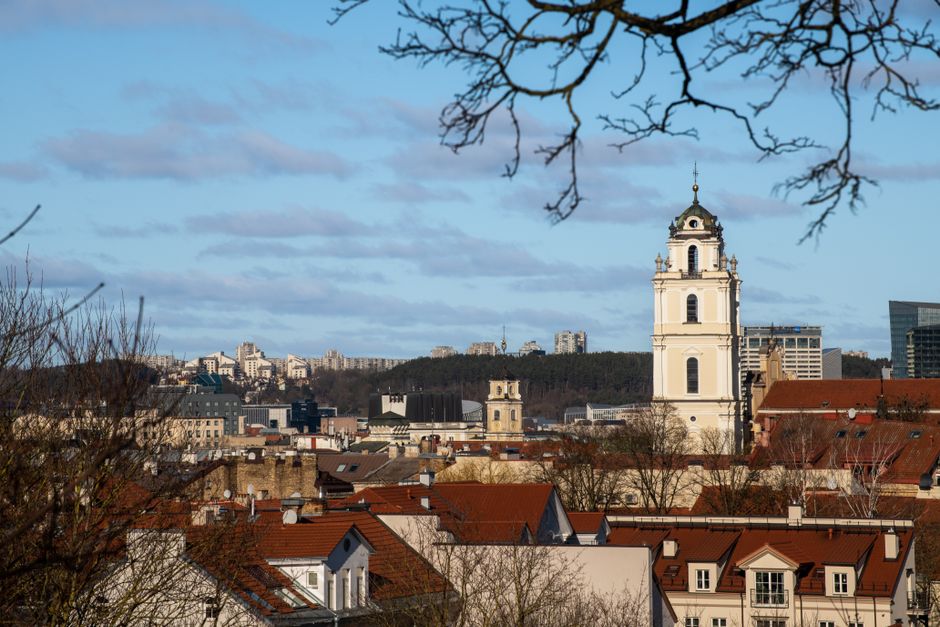
Vilnius is a green, hilly capital where the Vilnia river meets the Neris, with one of the largest surviving old towns in Central and Eastern Europe at its heart. Baroque church towers rise above cobbled lanes, courtyards open behind every archway, and the whole Old Town is a UNESCO World Heritage Site. Climb to Gediminas Castle Tower for the view, walk from the Cathedral to the Gates of Dawn, drop into the self-declared Republic of Užupis, and look into the city’s harder past at the former KGB prison. Vilnius is relaxed, affordable and easy to walk, with good coffee and a lively food scene. Come in late spring and summer for long, light evenings and terraces, or in December for the Christmas tree on Cathedral Square. Give it three days for the city, four or five to add Trakai Island Castle and Kernavė.
Right now in Vilnius
- Wed 10–17°C 50–62°F Mostly clear
- Thu 12–19°C 54–67°F Mostly clear
- Fri 11–15°C 52–59°F 4 mm Rain
Weather: MET Norway (CC BY 4.0) · Rates: ECB
Top tours in Vilnius
See all tours for Vilnius →
From local operators, with prices and reviews; you check availability and book on Viator, our partner. We may earn a commission at no extra cost to you. How we earn money
Vilnius at a glance
- Best for: a baroque Old Town on foot, churches and courtyards, castle views, history from the Grand Duchy to the Soviet years, cafés and good-value food, and an easy day trip to Trakai.
- How long: 2–3 days for the Old Town, Gediminas Hill, Užupis and the museums; 4–5 days to add Trakai, Kernavė or Kaunas.
- Best time: May to September for warm, long days and outdoor terraces; late November and December for the Christmas tree and market; early March for the Kaziukas crafts fair.
- Getting in: Vilnius Airport is only about 6 km from the centre, around 20 minutes by bus 3G or a few minutes by train to the railway station. Trains from Kaunas take about an hour.
- Getting around: walk the Old Town; buses and trolleybuses cover the rest. As of October 2026, a 30-minute ticket costs €1.00, bought in an app or by tapping a contactless bank card.
- Budget: cheaper than most EU capitals, with lunch deals in cafés and many free churches and viewpoints. Hotels add a city tax of €2 per person per night.
Vilnius, area by area
Most of what visitors want is within a 30-minute walk of Cathedral Square. The Old Town is hilly in places and paved with cobbles, so wear comfortable shoes.
Cathedral Square and Gediminas Hill
The wide square in front of the white, columned Cathedral is the city’s meeting point, with the free-standing bell tower, the Palace of the Grand Dukes behind and Gediminas Hill rising above, crowned by the brick castle tower. The Neris embankment and the park of Kalnai, with the Hill of Three Crosses, are just beyond. Best for: first impressions, views and the main museums.
The Old Town (Senamiestis)
Pilies street runs south from the Cathedral into the heart of the Old Town, past Vilnius University and the Presidential Palace, to Town Hall Square, Didžioji street and the Gates of Dawn. Side lanes such as Literatų, Stiklių and Šv. Jono are full of small galleries, craft shops and cafés. Best for: atmosphere, churches and evening strolls; it is busiest on summer afternoons.
Užupis
Across the little Vilnia river, the old craftsmen’s quarter declared itself an independent “republic” on 1 April 1997, complete with a tongue-in-cheek constitution displayed on mirrored plates in many languages on Paupio street. Today it is a mix of artists’ studios, courtyards, riverside cafés and steep lanes, with the Angel of Užupis statue in its small square. Best for: a slow wander and a coffee by the river.
Naujamiestis and Gedimino prospektas
West of the Cathedral, the 19th-century boulevard of Gedimino prospektas is the main shopping street, with the Parliament (Seimas) at its far end and the Museum of Occupations and Freedom Fights halfway along. South-west of the Old Town, the former industrial district of Naujamiestis has converted factories, food halls and some of the best-value hotels. Best for: shopping, modern food and nightlife.
Across the Neris: Šnipiškės and Žvėrynas
The glass towers of the business district rise on the north bank of the Neris, next to the old wooden houses of Šnipiškės and the Lithuanian National Gallery of Art. Leafy Žvėrynas, with its wooden villas and a small Kenesa (Karaite prayer house), is a short walk west. Best for: modern architecture, riverside paths and quieter stays.
Top things to see in Vilnius
Prices and hours below were checked on the official sites in October 2026. They change, so check before you go. Many national museums are free for everyone on the last Sunday of the month.
Vilnius Cathedral and the bell tower
The Cathedral of St Stanislaus and St Ladislaus stands where pagan Lithuania’s temple is believed to have been. Its present white classical front dates from the late 18th century, and inside, the baroque Chapel of St Casimir, Lithuania’s patron saint, glows with marble and stucco. Entry to the church is free outside services. The separate bell tower on the square, once part of the lower castle’s walls, can be climbed for a view over the square in the warmer months. In the paving between the Cathedral and the tower, look for the tile marked stebuklas (“miracle”), the end point of the 1989 Baltic Way human chain, and make a wish while turning round on it.
Gediminas Castle Tower
The red-brick tower on Gediminas Hill is the last standing part of the upper castle and the symbol of the city. Inside, a small National Museum of Lithuania exhibition tells the story of Vilnius and the Grand Duchy, and from the top you see the whole Old Town, the Neris and the new towers across the river. The hill is steep: walk up the path from the Old Arsenal side, or take the short funicular from the courtyard by the museum.
Tickets and hours. As of October 2026, the National Museum of Lithuania lists the tower as open every day from 10:00 to 20:00 (the ticket office closes 30 minutes earlier). Adults pay €8 and concessions €4; the “Historical Triangle” ticket, adding the Old Arsenal and the Castellan’s House, costs €15. The funicular costs €2 each way. Entry is free for everyone on the last Sunday of the month, and the Vilnius Pass covers it. There is also a free lift to the hilltop plaza for visitors with reduced mobility, though the tower itself is not step-free.
The Palace of the Grand Dukes of Lithuania
Behind the Cathedral, the rebuilt Renaissance palace of the grand dukes reopened in 2013 on the original foundations. Route I takes you through the archaeology of the castle site, Route II through reconstructed Gothic, Renaissance and baroque state rooms, and Route III through weapons, music and everyday life at court; Route IV is the temporary exhibition centre. Allow two hours for the full visit.
Tickets and hours. As of October 2026, the museum’s ticket page gives €17 for adults for all four routes (single routes €4–10), with 50% off for students and seniors and free entry for children under 7 and for everyone on the last Sunday of the month. From September to May it opens Tuesday, Wednesday, Friday and Saturday 10:00–18:00, Thursday until 20:00 and Sunday until 16:00, and is closed on Mondays; in June to August it opens every day, until 20:00 from Thursday to Saturday. Tickets are sold at the museum’s box office.
Pilies street, Vilnius University and the Gates of Dawn
Walk from the Cathedral down Pilies and Didžioji streets to see the Old Town’s main axis. Vilnius University, founded in 1579, is built around a series of arcaded courtyards, with the high baroque Church of St Johns and its bell tower; a small entry fee lets you into the courtyards and the frescoed library rooms. Further on, Town Hall Square has the classical Town Hall, and at the southern end the Gates of Dawn (Aušros vartai), the only surviving gate of the city walls, hold a chapel with a revered icon of the Virgin Mary. Pilgrims come from Lithuania and Poland, so be quiet and respectful inside. The chapel is free.
St Anne’s Church and the Bernardine ensemble
The flamboyant red-brick facade of St Anne’s, from around 1500, is one of the finest pieces of late Gothic architecture in the region; Napoleon is said to have wanted to carry it back to Paris. It stands next to the larger Bernardine Church, at the edge of the Bernardine Gardens along the Vilnia, a pleasant park with a musical fountain. Both churches are free to visit outside services.
The Museum of Occupations and Freedom Fights
In the former KGB headquarters on Aukų street, this museum, still widely known as the KGB Museum, tells the story of the Nazi and Soviet occupations, the deportations and the armed resistance after 1944. The basement prison, with its cells, padded room and execution chamber, is sobering, and it is not suitable for young children. As of October 2026, Go Vilnius lists it as open Wednesday to Saturday 10:00–18:00 and Sunday 10:00–17:00, closed on Mondays, Tuesdays and national holidays, with tickets at €6 for adults and €3 for students and pensioners (free with the Vilnius Pass).
MO Museum and the National Gallery of Art
The private MO Museum, in a white building by architect Daniel Libeskind on the edge of the Old Town, shows Lithuanian art from the 1960s to today, with a roof terrace and good shop and café. As of October 2026 it opens daily 10:00–20:00 except Tuesdays, and while its main exhibition is being installed, a standard ticket costs €5. Across the Neris, the Lithuanian National Gallery of Art covers 20th-century and contemporary art, including works from the Soviet period.
Churches and cathedrals
- St Anne's Church, Vilnius
- Vilnius Cathedral
Museums
- Gediminas' Tower
- MO Museum
- Museum of Occupations and Freedom Fights
- Palace of the Grand Dukes of Lithuania
Other sights
- Gate of Dawn
More museums and city experiences
- Hill of Three Crosses: a short, steep climb through Kalnai Park to white crosses and the best free sunset view over the Old Town.
- Jewish Vilnius: before the Second World War, Vilnius was a great centre of Jewish learning, the “Jerusalem of Lithuania”. Walk the lanes of the former ghetto around Žydų and Gaono streets, and visit the Vilna Gaon Museum of Jewish History’s branches and the memorial at Paneriai, where tens of thousands were murdered.
- Food and markets: try cepelinai (potato dumplings with meat or curd), šaltibarščiai (pink cold beetroot soup) in summer, and rye bread with garlic; the Hales Market near the railway station and the food halls of Naujamiestis are good for a casual meal.
- Hot-air balloons: Vilnius is one of the few capitals where balloons fly over the Old Town, on calm summer mornings and evenings.
- Walks and views: the Old Town is perfect for city sightseeing on foot; for longer walks, follow the Neris and the forested hills of Pavilniai Regional Park. See our hiking guide for more ideas.
Festivals and seasons in Vilnius
Christmas in Vilnius
The season opens with the lighting of the city Christmas tree on Cathedral Square, traditionally on the last Saturday of November (in 2025 it was on 29 November at 19:00, and the tree stayed until 6 January). The 2026 programme had not been published on the official “Christmas in Vilnius” site at the start of October, so check the date before you plan around it. A Christmas market with crafts, mulled wine and food runs on the square through December. The sun sets before 16:00 in mid-December, so the lights come on early.
Kaziukas Fair, Midsummer and summer
The Kaziukas Fair (Kaziuko mugė), Lithuania’s biggest crafts fair, fills the Old Town streets for a weekend around St Casimir’s Day (4 March), with wickerwork, wooden toys and the dried-flower palms called verbos. National holidays bring flags and events: Statehood Restoration Day on 16 February, Independence Restoration Day on 11 March and Statehood Day on 6 July, when people across the country sing the national anthem together at 21:00. Midsummer (Joninės or Rasos, 23–24 June) is celebrated with bonfires and wreaths outside the city, and from June to August the Old Town’s courtyards fill with concerts and outdoor terraces.
Activities and best months
- City sightseeingGo Vilnius: everything worth seeing in Vilnius is within walking distance, from one of the largest Old Towns in Europe, with its UNESCO-listed streets, baroque churches and cobbled lanes, to galleries, glass towers and riverside walks; the city centre is 15 minutes from the airport. An audio guide in English, Lithuanian, Polish, German or Russian with a map of the top sights is rented at the tourist information centre on Pilies g. 7 (EUR 10, free with the Vilnius Pass), and daily walking tours leave from Cathedral Square. · source
- CyclingGo Vilnius lists city and mountain-bike rental (Velotakas: Trek city bikes and Scott MTBs, with mountain-bike trails of different difficulty around the city) and guided private and group bike tours of Vilnius and its surroundings (FeelZcity, Bike Baltic, Baltic Blues). · source
- HikingThe 100 km trail around Vilnius, mostly an off-road path on soft ground, loops through the city's forests and little-known places for walkers and trail runners; it officially starts on Stalo kalnas hill in the centre, but can be joined anywhere or walked in sections, with routes of different difficulty on the map. · source
- WaterKayaking through the city: on the narrow Vilnelė, trees and boulders make it lively, past forests, parks, new districts and the Old Town, and night kayaking tours with headlamps run on the Neris; Go Vilnius says no special skills or experience are needed, and lists several kayak rental firms. Stand-up paddleboarding, gondola rides and catamaran trips on the Neris are also offered; SUP is possible in any season as long as there is no ice. · source
Day trips from Vilnius
- Trakai Island Castle: a red-brick castle on an island in Lake Galvė, about 28 km west, reached by a wooden footbridge. Trakai is also home of the Karaim (Karaite) community, whose wooden houses line Karaimų street; try their pastries, kibinai. As of October 2026, the castle opens Tuesday to Sunday 10:00–18:00 in March, October and November, Wednesday to Sunday 10:00–18:00 from December to February, and daily 10:00–19:00 from April to September; adult tickets cost €12 from October to March and €14 from April to September (students and seniors half price). Trains and buses from Vilnius take about 35–45 minutes; in summer you can rent a pedal boat or take a boat trip on the lakes.
- Kernavė: grassy hill forts above the Neris valley, the medieval capital of Lithuania and a UNESCO World Heritage Site, about 35 km north-west; best by car or tour, with a small museum.
- Kaunas: Lithuania’s second city, with its Old Town, modernist interwar architecture (a UNESCO World Heritage Site since 2023) and the Ninth Fort memorial, about an hour by train.
- Europos Parkas: an open-air sculpture park in the forest about 20 km north of the city, near one of the places that claims to be the geographical centre of Europe.
- The Hill of Crosses: near Šiauliai in the north, a hill covered with tens of thousands of crosses; a long day trip of about 2.5–3 hours each way by road or train and bus.
Getting to Vilnius
By air. Vilnius Airport (VNO) is about 6 km south of the centre, with direct flights from most European capitals and many low-cost routes. Kaunas Airport, about 100 km away, has more Ryanair flights. As of October 2026, the options from Vilnius Airport into town are:
- Bus 3G or 88: city buses from outside the terminal to the centre in about 15–20 minutes, on an ordinary €1.00 30-minute ticket. Bus 3G runs past the Old Town and on to the north bank.
- Train: LTG Link trains run about 16 times a day between the airport and Vilnius railway station in about 7–9 minutes, for under €1.
- Taxi or ride-hailing: Go Vilnius puts a taxi to the Old Town at about €10; ride-hailing apps such as Bolt are widely used and often cheaper.
By train and bus. LTG Link runs fast trains to Kaunas (about 1–1¼ hours, several an hour at peak times) and Klaipėda (about 4 hours). A direct LTG Link train links Vilnius with Riga once a day in each direction, taking about 4 hours (seat reservations are compulsory). For Warsaw and Kraków, take LTG Link to Mockava on the Polish border and change to a Polish train; the whole trip to Warsaw takes about 8–9 hours. Rail Baltica, the new standard-gauge line to Poland, is still under construction. Long-distance coaches (Lux Express, FlixBus and others) run from the bus station next to the railway station to Riga in about 4 hours, Tallinn, Warsaw and Berlin.
By car. The A1 motorway links Vilnius with Kaunas and Klaipėda. Parking in the Old Town is limited and paid by zone; leave the car at your hotel or a park-and-ride. Vilnius is only about 30 km from the Belarus border, but overland travel to Belarus and Russia is not a practical tourist route, and crossings can close at short notice.
Getting around Vilnius, tickets and the Vilnius Pass
Walking is the best way to see the Old Town and Užupis. For longer hops, Vilnius has buses and trolleybuses run by the city, but no metro or trams. As of October 2026, according to JUDU, the city’s transport company, single tickets cost €1.00 for 30 minutes and €1.25 for 60 minutes, with free transfers within that time; a 24-hour ticket costs €7.50 and a 72-hour ticket €13.50. Buy them in the JUDU or m.Ticket apps, on a JUDU card, or simply tap a contactless bank card on the reader when you board. Electric scooters and city bikes are everywhere in summer, and ride-hailing is cheap.
Vilnius Pass. Go Vilnius sells a 24-, 48- or 72-hour Vilnius Pass that gives free entry to more than 30 museums and attractions, including Gediminas Castle Tower, the Old Arsenal and the Museum of Occupations and Freedom Fights, plus discounts elsewhere; one version adds 24 hours of public transport. It activates at the first sight you scan it at. It suits a busy museum day; if you only plan two or three sights, buy separate tickets, or come on the last Sunday of the month, when many national museums are free.
When to go and how long to stay
Vilnius has a continental climate: warm summers, cold and often snowy winters, and fast-changing springs and autumns. It is the coldest of Lithuania’s big cities in winter, being furthest from the sea. The table uses the Lithuanian Hydrometeorological Service’s (LHMT) official 1991–2020 station data for Vilnius.
| Season | Average daily high | Average nightly low | Rain per month | What it’s like |
|---|---|---|---|---|
| Winter (Dec–Feb) | −1 to 0 °C | −6 to −4 °C | 41–51 mm | Short, dark days, snow and frost; Christmas tree and market; cosy cafés |
| Spring (Mar–May) | 5 °C rising to 19 °C | −3 to 8 °C | 41–56 mm | Kaziukas Fair in March; trees in blossom and terraces open in May |
| Summer (Jun–Aug) | 22–24 °C | 11–14 °C | 64–91 mm | Long, warm days with some heavy showers; balloons, concerts and lakes |
| Autumn (Sep–Nov) | 18 °C falling to 4 °C | 9 °C falling to 0 °C | 47–59 mm | Golden September in the parks, then grey and damp November |
Vilnius gets about 680 mm of rain and snow a year, with July the wettest month thanks to summer thunderstorms, and about 1,770 hours of sunshine. July is the warmest month, with highs around 24 °C; January the coldest, with nights around −6 °C and cold snaps well below −15 °C in some winters. On the shortest days the sun is up for only about 7 hours 15 minutes; around Midsummer, for about 17 hours 20 minutes. May, June and September offer the best balance of weather, prices and crowds.
Vilnius in 3 days
Day 1: Cathedral Square, the Palace of the Grand Dukes and Gediminas Castle Tower in the morning; then Pilies street, Vilnius University and Town Hall Square, ending at the Gates of Dawn. Day 2: St Anne’s and the Bernardine Gardens, Užupis, and sunset from the Hill of Three Crosses; dinner in Naujamiestis. Day 3: the Museum of Occupations and Freedom Fights in the morning, the MO Museum or the Jewish heritage sites in the afternoon, and a walk along Gedimino prospektas.
Vilnius in 5 days
Add a day trip to Trakai Island Castle on day 4, with lunch of kibinai by the lake, and on day 5 either Kernavė and Europos Parkas by car, or the train to Kaunas for its Old Town and modernist centre. In summer, swap a museum for a hot-air balloon flight or a swim in one of the lakes outside the city.
Weather month by month
Averages from LHMT daily station data 1991–2020 (monthly means computed), Vilnius · Last reviewed 4 Oct 2026
Where to stay in Vilnius
- Old Town: historic hotels and apartments in courtyards near Pilies street; the most atmospheric choice, a walk from everything.
- Užupis and the Vilnia riverside: boutique hotels and guesthouses, quieter at night but still five minutes from the Cathedral.
- Naujamiestis and the station area: modern and good-value hotels, handy for the airport train, buses and day trips.
- Across the Neris: business hotels in the towers of the new centre, often cheaper at weekends.
All hotels, guesthouses and rentals add Vilnius’s city tax of €2 per person per night (under-18s are exempt). Book ahead for the Kaziukas Fair weekend and for big concerts and sports events.
Practical tips for Vilnius
- Money: Lithuania uses the euro. Cards and phones are accepted almost everywhere, including on buses; carry a little cash for markets and church donations.
- Check closing days: many museums close on Mondays (the MO Museum on Tuesdays, the KGB museum on Mondays and Tuesdays) and on national holidays.
- Buying alcohol: shops sell alcohol only from 10:00 to 20:00 Monday to Saturday and 10:00 to 15:00 on Sundays, and you must be 20 to buy it; bars and restaurants serve later.
- Dress for churches: cover shoulders in churches and keep quiet in the Gates of Dawn chapel, which is an active place of pilgrimage.
- Language: English is widely spoken by younger people and in hotels; a labas (hello) and ačiū (thank you) go a long way.
What to pack for Vilnius
Comfortable shoes with a good grip for cobbles and hills, layers and a light rain jacket in every season, as summer thunderstorms are common. In winter, bring a proper warm coat, hat, gloves and boots for snow and ice. Sockets are type C and F at 230 V, so visitors from the UK, North America and Australia need a travel adapter. A contactless bank card covers buses and almost every shop.
What to pack
- City walking shoesLisbon and Porto are steep, with polished limestone cobbles that get slippery, so grippy soles matter.
- Day packs and anti-theft bagsA small zipped or anti-theft bag makes crowded trams and viewpoints less stressful.
- Fleeces and warm layersSummits like Pico do Areeiro averaged about 11 °C over 2024, so a fleece is needed even in summer.
- HeadlampsLevada routes such as PR1 and PR9 pass through long, dark, wet tunnels.
- Hiking shoes and bootsMadeira's levadas and the Azores' crater rims are wet, rocky and slippery, so grippy shoes matter more than anywhere else in Portugal.
- Rain jacketsFrom October to April Porto and Lisbon see rain on roughly a third of days.
- Travel adapters and convertersPortugal uses Type C and F sockets at 230 V, so most visitors from outside Europe need an adapter.
- Trekking polesLong stone staircases and steep descents on Madeira's peaks and the Azores' crater rims are easier on the knees with poles.
- Water bottles and hydration packsRiding in the Algarve and Alentejo heat needs more water than you expect.
Vilnius travel FAQ
How many days do you need in Vilnius?
Two or three days for the Old Town, Gediminas Hill, Užupis and the main museums; four or five to add Trakai Island Castle, Kernavė or a day in Kaunas.
How do I get from Vilnius Airport to the Old Town?
Take bus 3G or 88 from outside the terminal (about 15–20 minutes, €1.00 for a 30-minute ticket as of October 2026, paid by contactless card or app), or the LTG Link train to the railway station in about 7–9 minutes. A taxi to the Old Town costs around €10.
How much does Gediminas Castle Tower cost?
As of October 2026, €8 for adults and €4 for concessions, with free entry for everyone on the last Sunday of the month and with the Vilnius Pass. The funicular up the hill costs €2 each way, or you can walk up in about 10 minutes.
Is Trakai worth a day trip from Vilnius?
Yes. The island castle in Lake Galvė is one of Lithuania’s most photographed sights, and the Karaim village and lakes make an easy half or full day. Trains and buses take about 35–45 minutes. As of October 2026, castle tickets cost €12 for adults from October to March and €14 from April to September; it is closed on Mondays outside summer, and on Mondays and Tuesdays from December to February.
Is there a tourist tax in Vilnius?
Yes. Vilnius charges a city tax of €2 per person per night on all accommodation, collected by the hotel or rental platform. Under-18s are exempt.
How much is a bus ticket in Vilnius?
As of October 2026, €1.00 for 30 minutes or €1.25 for 60 minutes, with transfers allowed; a 24-hour ticket costs €7.50 and a 72-hour ticket €13.50. Tap a contactless bank card on the reader or buy in the JUDU or m.Ticket app.
What is the Republic of Užupis?
An artists’ quarter across the Vilnia river that declared itself a “republic” on 1 April 1997 as a playful celebration of creative freedom. Its humorous constitution, with articles such as the right to be idle, is displayed in many languages on Paupio street. There is no real border, just cafés, studios and the Angel statue.
Is Vilnius safe?
Yes, Vilnius is generally safe, including at night in the centre. Watch for pickpockets in crowds and keep an eye on drinks in late-night bars. The real risks are icy pavements in winter and fast traffic on the main roads. The emergency number is 112.
When is the best time to visit Vilnius?
May to September, with highs of 19–24 °C in late spring and summer, long evenings and outdoor terraces. December is lovely for the Christmas tree and market if you dress for cold and short days, and early March brings the Kaziukas Fair.
Do I need cash in Vilnius?
Rarely. Cards and phone payments work in shops, restaurants, museums and on buses. A little cash in euros is useful for market stalls, small cafés and church donations.
Sources
- © OpenStreetMap contributors · ODbL · fetched 4 Oct 2026
- Wikidata · CC0 · fetched 4 Oct 2026
Sources and last review
Researched and last reviewed on 4 October 2026. Gediminas Castle Tower and funicular prices and hours: the National Museum of Lithuania (lnm.lt); Palace of the Grand Dukes: valdovurumai.lt; Trakai Island Castle: the Trakai History Museum (trakaimuziejus.lt); MO Museum: mo.lt; Museum of Occupations and Freedom Fights, airport transfers, taxi price, Vilnius Pass and city tax: Go Vilnius, the city’s official tourism agency; public transport fares: JUDU (vilniustransport.lt); Christmas tree: the official “Christmas in Vilnius” programme; climate: the Lithuanian Hydrometeorological Service’s 1991–2020 station data for Vilnius. Airport train times and fares, LTG Link routes to Kaunas, Klaipėda, Riga and Warsaw, the Kaziukas Fair dates, the 2026 Christmas tree date, alcohol sale hours and the KGB museum’s hours come partly from secondary sources and are flagged for checking. Prices, timetables and rules change, so check the official links before you go. For another Baltic Sea capital, see our Stockholm and Warsaw guides.
Plan your trip
Partner links: TravelerCenter may earn a commission if you book, at no extra cost to you.
🇱🇹 Useful Lithuanian phrases for Vilnius
All 38 Lithuanian phrases: restaurant, hotel, emergencies, romance (printable) →