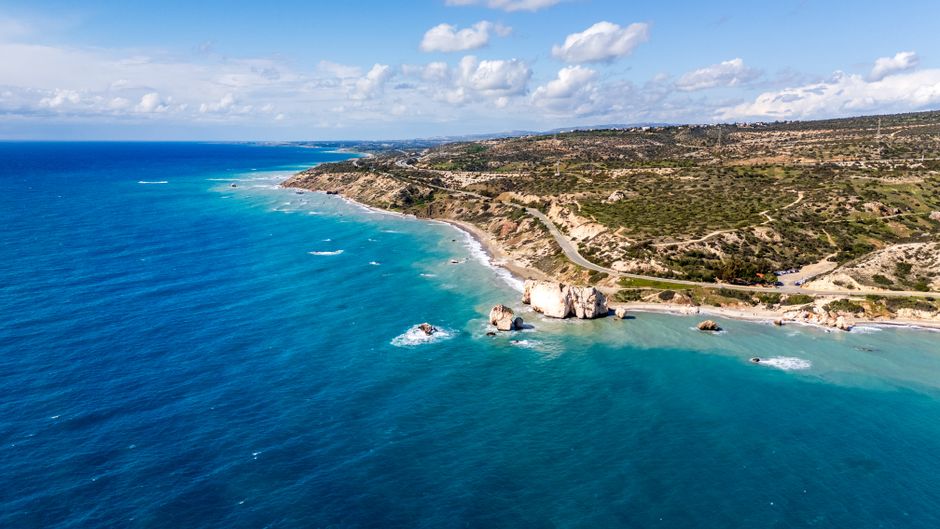
Cyprus is the sunniest island in the Mediterranean: a place of long, warm seasons, clear blue water, Greek and Roman ruins, Byzantine churches painted from floor to ceiling, and pine-covered mountains where it snows in winter. Base yourself in Paphos for the mosaics and the wild Akamas peninsula, in Limassol for a lively seafront, wine villages and ancient Kourion, in Larnaca for an easy-going town by the airport, or in Ayia Napa and Protaras for sandy beaches and turquoise coves. Spend a day or two in the Troodos mountains and the divided capital, Nicosia. Cyprus is in the EU and uses the euro, but it is not in the Schengen area, and traffic drives on the left. April to June and September to November are the sweet spots; a week covers the highlights, ten days lets you slow down.
Right now in Cyprus
- Wed 15–25°C 59–77°F 2 mm Showers
- Thu 14–26°C 57–79°F Clear
- Fri 17–27°C 63–81°F Clear
Weather: MET Norway (CC BY 4.0) · Air quality: OpenAQ
Multi-day tours of Cyprus
Multi-day tours from local operators. You check dates and book on Viator, our partner; we may earn a commission at no extra cost to you. How we earn money
Cyprus at a glance: overview and geography
Cyprus is the third-largest island in the Mediterranean, after Sicily and Sardinia, lying in the far east of the sea, about 75 km south of Turkey and about 100 km west of Syria and Lebanon. Two mountain ranges frame the island: the high, forested Troodos massif in the centre-west, which rises to 1,952 m at Mount Olympus (Chionistra), and the narrow Pentadaktylos (Kyrenia) range along the north coast. Between them lies the broad, dry Mesaoria plain, with Nicosia at its heart. The Republic of Cyprus’s 2021 census counted about 920,000 people in the areas under the government’s control.
History is everywhere: Neolithic Choirokoitia, ancient city-kingdoms, the sanctuary of Aphrodite, who in Greek myth was born from the sea off Paphos, Roman Paphos and Kourion, Byzantine monasteries, Lusignan castles, Venetian walls, Ottoman mosques and British colonial buildings. Cyprus became independent from Britain in 1960, joined the European Union in 2004 and adopted the euro in 2008. Two UK Sovereign Base Areas, Akrotiri near Limassol and Dhekelia between Larnaca and Ayia Napa, remain British territory; main roads pass through them without checks.
Since 1974 the island has been divided. The Government of the Republic of Cyprus controls the south, where Paphos, Limassol, Larnaca, Ayia Napa and the Troodos lie. The north is not under the effective control of the Government of the Republic of Cyprus; most of the Turkish Cypriot community lives there. A United Nations buffer zone, often called the Green Line, runs between the two parts and through the middle of Nicosia. Visitors can cross at official crossing points (see “Visiting the north” below), and although the whole island joined the EU in 2004, EU law is suspended in the north until a settlement is reached.
Time zone: Cyprus runs on Eastern European Time (UTC+2, UTC+3 in summer), the same as Greece, one hour ahead of most of continental Europe.
The regions
- Paphos and the west: Kato Paphos with its Roman mosaics and the Tombs of the Kings, Coral Bay, the Akamas peninsula, Polis and Latchi, and Aphrodite’s Rock (Petra tou Romiou) on the coast road east.
- Limassol and the south coast: the island’s second city and busiest port, with the ancient sites of Kourion and Amathus, Kolossi castle, the Akrotiri peninsula and wine villages on the slopes behind.
- Larnaca: the main airport town, with the palm-lined Finikoudes seafront, the church of St Lazarus, the salt lake and Hala Sultan Tekke, plus Lefkara lace village and Choirokoitia inland.
- Ayia Napa and Protaras (Famagusta District): the island’s best sandy beaches, Cape Greco’s sea caves and cliffs, and the island’s best-known nightlife.
- Troodos mountains: pine forests, hiking trails, waterfalls, mountain villages, Kykkos Monastery and ten UNESCO-listed painted churches.
- Nicosia (Lefkosia): the capital, inside star-shaped Venetian walls, with the Cyprus Museum and pedestrian crossings to the north of the city.
Where to go: coast, mountains and capital
Cyprus is compact: the motorway runs along the south coast from Paphos through Limassol to Larnaca and on to Ayia Napa, and no place in the south is much more than two hours’ drive from another. Most first-time visitors pick one or two coastal bases and make day trips into the mountains and to Nicosia.
Paphos
Paphos has the richest ancient sites on the island, all part of one UNESCO World Heritage listing: the Kato Paphos Archaeological Park, with some of the finest Roman floor mosaics anywhere, the rock-cut Tombs of the Kings by the sea, and the sanctuary of Aphrodite at Kouklia (Palaepaphos). Add the harbour fort, sunsets over the sea, Coral Bay’s sandy beach and boat trips to the Akamas peninsula and its Blue Lagoon. Paphos has its own airport.
Limassol
Limassol is the island’s busiest and most cosmopolitan city: a long seafront promenade, the Old Port and a smart marina, a medieval castle in the old town, and excellent restaurants. Kourion, a Greco-Roman city on a cliff with a restored theatre, is 20 minutes west, and the wine villages and the Troodos are within an hour.
Larnaca
Larnaca is where most visitors land. It is a relaxed, walkable seaside town with a palm-lined promenade (Finikoudes), the 9th-century church of St Lazarus, a small seafront fort, and a salt lake that turns pink with flamingos in winter, with the Ottoman shrine of Hala Sultan Tekke on its shore. Divers come for the Zenobia ferry wreck, one of the best wreck dives in the Mediterranean.
Ayia Napa and Protaras
At the south-eastern tip of the island, Ayia Napa has golden sand, very clear water and a famous party scene in summer, around a quiet 16th-century monastery. Cape Greco, just east, has sea caves, cliff paths and coves, and neighbouring Protaras is calmer and family-friendly, with Fig Tree Bay and dozens of Blue Flag beaches.
The Troodos mountains
The Troodos is the cool green heart of Cyprus: pine and cedar forests, nature trails such as the Artemis and Caledonia trails, waterfalls, apple and cherry orchards, stone villages such as Omodos, Kakopetria and Platres, the great Kykkos Monastery, and ten small Byzantine churches covered in frescoes, listed by UNESCO. In winter there is often snow on Mount Olympus and a small ski area.
Nicosia
The last divided capital in Europe sits inside 16th-century Venetian walls. Visit the Cyprus Museum, the island’s main archaeological collection, the old town’s churches, mansions and cafés, and Ledra Street, a pedestrian shopping street that leads to a crossing point to the north of the city. It is an easy day trip by bus or car from Larnaca or Limassol.
A few more worth your time
Polis and Latchi on the quiet north-west coast, the starting point for Akamas boat trips; Lefkara, a hill village famous for its lace and silver; Choirokoitia, a Neolithic settlement on the UNESCO list; Omodos and the wine villages above Limassol; Kolossi castle, where the sweet Commandaria wine was first made; and the Akrotiri peninsula’s salt lake and wetlands.
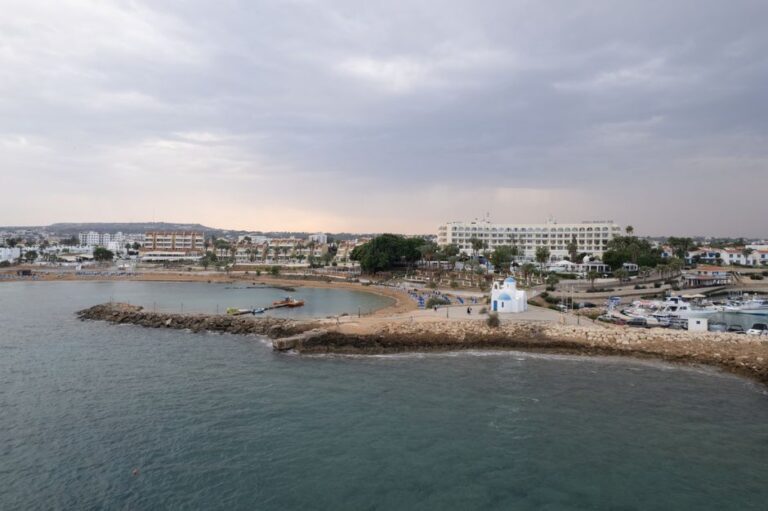
Ayia Napa Travel Guide
Plan a trip to Ayia Napa: Nissi beach and the sandy bays, Cape Greco National Forest Park, the sea caves and Konnos Bay with…
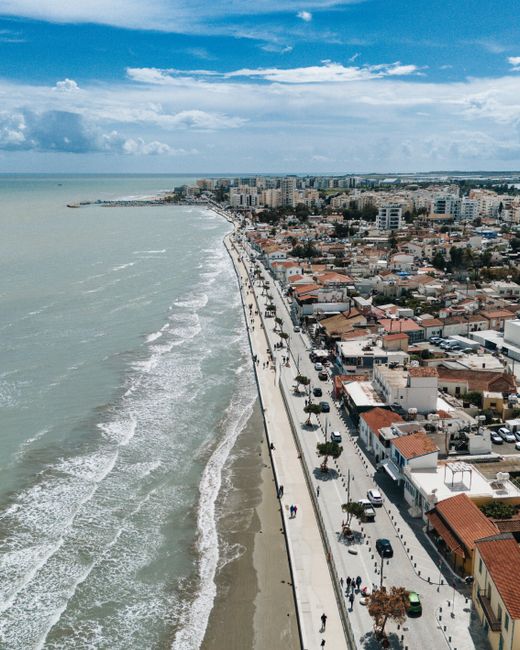
Larnaca Travel Guide
Plan a trip to Larnaca: the church of St Lazarus, Finikoudes and the castle, the salt lake flamingos and Hala Sultan Tekke with 2026…
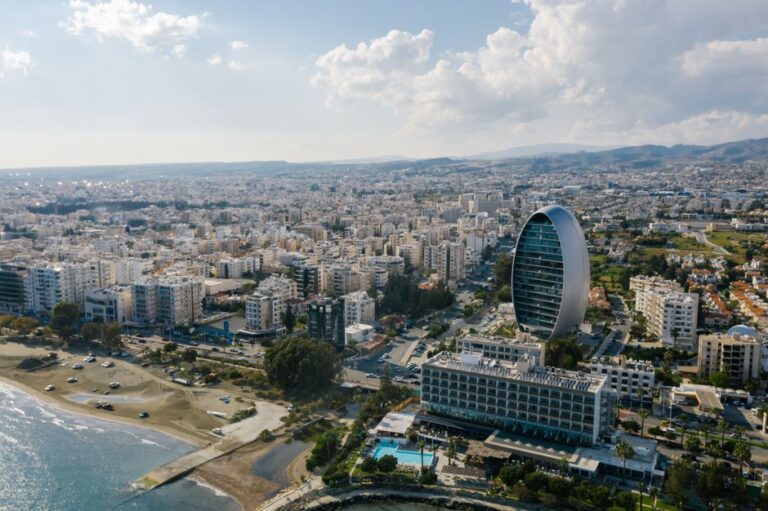
Limassol Travel Guide
Plan a trip to Limassol: the castle and Cyprus Medieval Museum, the old town, Old Port, marina and Molos seafront, Kourion, Kolossi and Amathus…
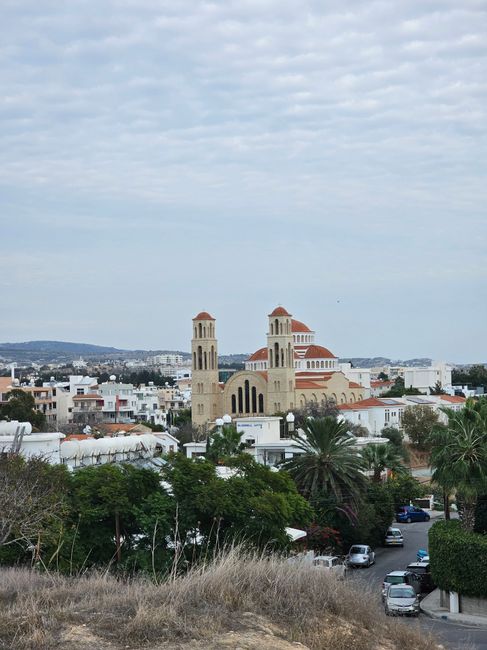
Paphos Travel Guide
Plan a trip to Paphos: the Kato Paphos Archaeological Park and its Roman mosaics, the Tombs of the Kings, the harbour castle and old…
Best time to visit Cyprus
Cyprus has a hot Mediterranean climate: long, dry, very sunny summers from June to September, and short, mild winters when most of the year’s rain falls, between November and March. The coast is moderated by the sea; inland Nicosia is much hotter in summer and a little cooler in winter, and the Troodos is cooler again, with snow on the high ground in January and February. The table shows average afternoon highs from the official 1991–2020 climate normals that the Cyprus Department of Meteorology reported to the World Meteorological Organization.
| Area (station) | Spring (Mar–May) | Summer (Jun–Aug) | Autumn (Sep–Nov) | Winter (Dec–Feb) | Best months |
|---|---|---|---|---|---|
| Larnaca and the east (Larnaca airport) | 20–27 °C | 31–33 °C | 31 °C falling to 23 °C | 17–19 °C | April–June, late September–November |
| Paphos and the west (Paphos airport) | 19–25 °C | 28–31 °C | 29 °C falling to 23 °C | 17–19 °C | April–June, September–November |
| Nicosia and the inland plain (Athalassa) | 20–30 °C | 34–38 °C | 34 °C falling to 23 °C | 16–18 °C | March–May, October–November |
Night-time lows on the coast are about 8–10 °C in January and 21–23 °C in August. Cyprus gets about 3,300 hours of sunshine a year at Larnaca, Paphos and Nicosia, among the highest totals in Europe, and almost no rain from June to September: the coast receives only about 350–400 mm a year. The sea is warm enough for most swimmers from about May to November, and warmest, around 27–28 °C, in August and September.
Heat, winds and the shoulder seasons
Summer heat is the main thing to plan for. Afternoon highs in July and August average 33 °C at Larnaca and 37–38 °C in Nicosia, and heatwaves above 40 °C have become more frequent inland. The Department of Meteorology issues yellow, orange and red warnings for high temperatures; on those days do your sightseeing early, rest in the afternoon and keep out of the midday sun at open archaeological sites, which have little shade. The west coast around Paphos is usually a few degrees cooler and breezier than the east. Spring brings wildflowers; autumn the warmest sea and fewer crowds; and winter days on the coast are often sunny and 17–19 °C.
Crowds and prices through the year
July and August are the busiest and most expensive months, when European families and Cypriots on holiday fill the beaches. Easter (Orthodox) and the October half-term holidays are also busy. Cyprus has a longer season than most of the Mediterranean, with many hotels open from March to November and the big towns lively all year. In winter, some beach resorts, particularly Ayia Napa and Protaras, become very quiet, and many of their hotels and bars close from November to March.
Festivals and public holidays
The biggest celebration is Orthodox Easter, with candlelit midnight services, bonfires and lamb on the spit; in 2027 it falls on 2 May. Limassol’s carnival fills the ten days before Green Monday (15 March 2027), Kataklysmos (the Festival of the Flood) brings fairs to the seafronts, especially in Larnaca, at Pentecost, and wine festivals are held in Limassol and the villages in late summer. Public holidays in the Republic of Cyprus: New Year’s Day, Epiphany (6 January), Green Monday (15 March 2027), Greek Independence Day (25 March), Cyprus National Day (1 April), Good Friday (30 April 2027), Easter Sunday and Monday (2–3 May 2027), Labour Day (1 May), Kataklysmos (21 June 2027), the Assumption (15 August), Cyprus Independence Day (1 October), Ochi Day (28 October) and Christmas (24–26 December). Museums and archaeological sites close on some of these days.
How long to stay: sample itineraries
Distances are short and the south-coast motorway is fast, so you can see a lot from one or two bases. A car makes everything easier, especially for the Troodos and the Akamas.
7 days: Paphos, Limassol and the Troodos
Fly into Paphos. Three nights in Paphos for the archaeological park, the Tombs of the Kings and a boat trip to the Akamas; a day in the Troodos via Omodos; then three nights in Limassol, with Kourion, Kolossi and Aphrodite’s Rock on the way and a day trip to Nicosia. Fly home from Larnaca.
10 days: the whole south coast
Paphos (three nights), the Troodos (one night in Platres or Kakopetria), Limassol (two nights), Larnaca (two nights, with Nicosia and Lefkara as day trips) and Ayia Napa or Protaras (two nights) for the beaches and Cape Greco.
Entry, money, fees and costs
Entry and visas (last reviewed October 2026)
Cyprus is a member of the European Union but not part of the Schengen area, so there are passport or ID checks on every arrival, including flights from other EU countries. Citizens of EU and EEA countries and Switzerland can enter with a national ID card or passport. Visitors from many other countries, including the United States, Canada, the UK and Australia, can stay without a visa for up to 90 days in any 180-day period. That limit is counted for Cyprus on its own: days in Cyprus do not count towards your Schengen 90 days, and days in Schengen countries do not count towards your time in Cyprus. Others need a Cyprus visa; check the Cyprus Ministry of Foreign Affairs.
- Entry/Exit System (EES): the EU’s digital border system has been fully running at the Schengen area’s external borders since 10 April 2026, but Cyprus does not use EES, because it is outside Schengen. Your passport is stamped on entry and exit instead; the UK government advises checking that it is. You will be registered in EES when you next enter a Schengen country, for example on a flight from Larnaca to Athens.
- ETIAS: the EU’s planned online travel authorisation (fee €20) will apply to Cyprus as well as the Schengen countries once it starts, according to the European Commission, but it is not in operation as of October 2026. The Commission has said it is scheduled for the last quarter of 2026, with the exact date to be announced; no date has been published, and press reports point to 2027. Until then you don’t need one, and you should ignore websites selling “ETIAS applications”.
- Passports: for UK visitors, the UK government says your passport must have been issued less than 10 years before you arrive and be valid for at least 3 months after the day you plan to leave. Canada advises six months’ validity; check your own government’s advice and your airline’s rules.
- Arrive through the Republic’s ports and airports: the legal points of entry are Larnaca and Paphos airports and the seaports of the government-controlled area, such as Limassol and Larnaca. If you enter the island through an airport or port in the north, such as Ercan airport, the Republic of Cyprus considers this an illegal entry: you could be fined, refused entry or exit, or prevented from crossing between the two parts.
Rules change, so check the official pages before you travel: the European Commission’s EES and ETIAS pages, the Cyprus Ministry of Foreign Affairs and your own government’s travel information.
Visiting the north: crossing the Green Line
Many visitors cross into the north for a few hours or a day. It is straightforward if you follow the rules:
- Use an official crossing point. According to the Cyprus Customs and Excise Department, the crossings open to the public are Ledra Street and Ledra Palace in Nicosia (both for pedestrians only), Agios Dometios (Nicosia, vehicles), Astromeritis–Zodia, Lefka–Apliki and Kato Pyrgos–Karavostasi in the west, and Deryneia, Pergamos and Strovilia in the east. Pergamos and Strovilia lie in the UK’s Dhekelia base area; some governments advise non-EU visitors to use the other crossings. Crossing anywhere else, or entering the buffer zone outside the designated civil-use areas, is illegal.
- Carry your passport (EU citizens can use an ID card). It is checked on both sides. The UK government says time spent in the north counts towards your 90 days in Cyprus.
- Car insurance: insurance bought in the Republic, including on most hire cars, is not valid in the north. You need separate cover, which can be bought at some crossing points such as Agios Dometios, and many hire companies do not allow their cars to be taken north at all. Check your rental contract first.
- Goods you bring back: under the EU’s Green Line Regulation, goods for personal use worth up to €260 per person may be brought back from the north, but tobacco and alcohol limits are strict: 40 cigarettes and 1 litre of spirits per person, and nothing for anyone under 17. Bringing back loose or rolling tobacco is prohibited, as are meat, dairy and other animal products. Customs officers check at the crossings and can confiscate goods and fine you.
- Health cover and help: the European Health Insurance Card is not valid in the north, so make sure your travel insurance covers it. Consular help there can be limited. The emergency number in the north is 112 or 155 for police.
- Money and property: the Turkish lira is used in the north, although euros are widely accepted. Several governments warn that buying or renting property in the north can lead to legal action in the Republic because of claims by owners displaced in 1974.
Greek and English basics
Greek and Turkish are the official languages, and most people in the south speak Greek, with a strong Cypriot dialect. English is spoken almost everywhere, a legacy of British rule, and road signs are in Greek and English. Place names often have two spellings, such as Pafos and Paphos, or Lemesos and Limassol. A few Greek words are always welcome: yia sou (hello), kalimera (good morning), efcharistó (thank you), parakaló (please, you’re welcome), ne (yes; it sounds like “no”), óchi (no) and yiamas (cheers).
The euro, cash and tipping
Cyprus has used the euro since 1 January 2008, when it replaced the Cyprus pound. Cards and phone payments are widely accepted, but carry some cash for village tavernas, kiosks, buses (cash fares are paid on board), beach loungers and small churches that ask for a donation. When a cash machine or card terminal offers to charge you in your home currency, choose euros. Many restaurants include a service charge; if not, leave about 10% for good service and round up taxi fares.
Tourist tax
As of October 2026, Cyprus has no national tourist tax per night like those in Greece or Croatia. A “green” fee on overnight stays has been discussed for years but, as far as we could confirm, not introduced by law. Some hotels and local authorities add small charges of their own, so check the final price on your booking. We could not confirm the details on an official site, so treat this as something to check before you travel.
Typical travel costs
Cyprus is mid-priced for the Mediterranean: cheaper than the Greek islands’ hotspots in summer, more expensive than Turkey’s coast. Limassol is the priciest city; Paphos and Larnaca are good value, and village tavernas are excellent value. These estimates, per person per day, are a planning guide as of October 2026:
| Style | Estimated cost per day | What that looks like |
|---|---|---|
| Budget | about €60–90 | Hostel or simple apartment, bakery breakfasts and souvlaki, buses, free beaches and a few site tickets |
| Mid-range | about €120–190 | 3- or 4-star hotel or apartment shared by two, taverna meals with meze, a hire car for a few days, boat trips and museums |
| High-end | about €300+ | Resort or boutique hotel, fine dining, private tours, yacht or catamaran trips |
Ancient sites are cheap: as of October 2026, most cost €2.50–€4.50 according to the Deputy Ministry of Tourism, and the Department of Antiquities sells one-, three- and seven-day passes to all its sites and museums. The figures in the table are our estimates, not official statistics.
Getting there and getting around
Arrival airports
Cyprus has two international airports, both run by Hermes Airports: Larnaca (LCA), the main one, just south of Larnaca town, and Paphos (PFO), about 15 km south-east of Paphos. Direct flights link them with most of Europe, the UK, Israel and the Gulf, with many more routes in summer. Fly into Paphos for the west and Larnaca for Larnaca, Ayia Napa, Protaras and Nicosia; Limassol lies in between. Open-jaw tickets (in at one, out at the other) save backtracking.
Ferries
There are no regular ferries between Cyprus and its neighbours year-round. A summer car ferry has linked Limassol with Piraeus, the port of Athens, in recent years; in 2026 it was reported to run from late May to early September, taking about 31 hours. See our Greece guide if you want to combine the two countries; flights between Larnaca or Paphos and Athens take under two hours.
Buses
Cyprus has no railway. Buses are cheap and cover the whole south: Intercity Buses link Nicosia, Limassol, Larnaca, Paphos and Ayia Napa several times a day, and airport buses run from both airports to the main towns. Each district has its own city and village buses: Cyprus Public Transport in Nicosia and Larnaca, EMEL in Limassol, Pafos Buses (OSYPA) in Paphos and OSEA in the Famagusta District (Ayia Napa and Protaras). As of October 2026, a single city fare is €2.00–€2.70, depending on the district and whether you pay cash or use a travel card. The official journey planner and timetables are on cyprusbybus.com. Services are thinner in the evenings, on Sundays and to mountain villages.
Driving
A hire car is the best way to see the Troodos, the Akamas, the wine villages and the quieter beaches. Cyprus drives on the left, like the UK, and hire cars have red number plates that mark them out to other drivers. Speed limits are 100 km/h on motorways (minimum 65 km/h), usually 80 km/h on other roads outside towns and 50 km/h in built-up areas, and fixed and mobile speed cameras are common. The blood alcohol limit is 0.5 g/l, and much lower for drivers who have held a licence for less than three years. Seat belts are compulsory in all seats, and using a hand-held phone while driving is banned. The UK government notes that driving standards are poor and road deaths higher than in the UK, so drive defensively. Never hand over your passport as a deposit on a hire car, scooter or quad bike; it is illegal for companies to ask. Most hire contracts exclude off-road tracks such as those in the Akamas, and cover in the north (see above).
Beaches, the sea and safety in the water
Cyprus has some of the cleanest bathing water in Europe. In 2026, 56 beaches and two marinas were awarded the Blue Flag, many of them around Protaras and Ayia Napa in the east; the City of Limassol and Amathus did not apply this year after pollution incidents in 2025, according to the press. The best sand is in the east: Nissi, Makronissos and Landa in Ayia Napa, Fig Tree Bay and Konnos Bay at Protaras. The west has Coral Bay and Lara near Paphos, and the north-west coast around Latchi and Polis; elsewhere, many beaches are of fine shingle or pebbles. Most organised beaches have lifeguards in summer, loungers and showers. See our beaches guide, plus snorkeling, diving and boat trips.
- Turtles: loggerhead and green turtles nest on the beaches of Lara and Toxeftra in the Akamas and elsewhere from June to August; follow the signs, don’t use lights or umbrellas on nesting beaches at night, and leave nests alone.
- Jellyfish: in some summers, large nomad jellyfish and other species reach the coast; stings are painful but rarely dangerous. Ask lifeguards and get out of the water if you see them.
- Currents and wind: some west-coast beaches, including around Aphrodite’s Rock, can have strong waves and currents when the wind blows. Swim where there are lifeguards and respect red flags.
- Cliffs: jumping from the cliffs and sea caves at Cape Greco and elsewhere causes serious injuries every year; check the depth and never jump alone.
- Sea urchins: common on rocky shores; water shoes help.
Safety, wildfires, health and connectivity
Safety
Cyprus is a safe country with low crime. Watch for bag-snatching and pickpocketing in busy resorts, keep an eye on your drinks in nightlife areas such as Ayia Napa, and take care on scooters and quad bikes. Drug laws are very strict, including for cannabis and laughing gas. Emergency number: 112 (also 199).
Military areas, the buffer zone and photography
Do not photograph military bases, installations, personnel or equipment, anywhere on the island, or anything inside the UN buffer zone, and obey “no photography” signs; police on both sides enforce the rules, and you could be arrested. Some areas of the buffer zone are still mined. Stay out of fenced military areas around the UK Sovereign Base Areas and on Mount Olympus.
Heat and wildfire rules
Wildfires are a serious risk from April to October, especially in dry summers. The Department of Forests bans lighting fires in state forests and within 2 km of them, except in the barbecue areas of official picnic sites. According to the department, the use of spark-producing equipment without a permit is banned from 1 June to 30 September with a €2,000 fine, and causing a fire in or near a forest can bring up to 12 years in prison and fines of up to €100,000. Never throw away cigarettes, don’t park on dry grass, register your phone to receive emergency alerts, follow police and firefighters’ instructions and call 112 to report a fire. In the heat, drink plenty of water, avoid hiking and sightseeing at midday, and remember that archaeological sites and the Akamas trails have little shade.
Health
Tap water in Cyprus is generally safe to drink, but much of it is desalinated and many people prefer bottled water for taste. EU visitors should carry a European Health Insurance Card, valid in the government-controlled areas; everyone else needs travel insurance, which should also cover any trip to the north. Pharmacies are well stocked and pharmacists speak English. Use strong sunscreen: the UV index is very high from April to September.
Accessibility
Newer hotels, promenades and many Blue Flag beaches are accessible, some with ramps and floating chairs for bathers with disabilities. Archaeological sites are on uneven ground, and mountain villages are steep. Check with each site before you go.
Connectivity and power
Mobile coverage and 4G/5G are good across the south. EU visitors roam at home rates under EU rules; others can buy a local SIM or eSIM. EU roaming does not apply in the north, where you may pick up networks charged at non-EU rates; check your settings. Plugs are the British three-pin type (type G), at 240 V: bring an adapter if you come from continental Europe or North America. See our travel adapters guide.
Food, wine and culture
Cypriot food is a delicious mix of Greek, Middle Eastern and Turkish traditions. Order a meze, a long parade of 15–30 small dishes from dips and salads to grilled halloumi, lountza (smoked pork), sheftalia (sausages wrapped in caul fat), souvlaki, slow-baked lamb kleftiko and fish by the sea. Halloumi, the squeaky grilling cheese, has EU protected status. Try loukoumades (honey doughnuts), soutzoukos (grape-must and almond sweets) and strong Cypriot coffee. Cyprus has one of the oldest wine traditions in the world: Commandaria, a sweet dessert wine from the villages above Limassol, has been made for centuries, and the local grapes Xynisteri (white) and Maratheftiko (red) are worth seeking out in the wine villages. Zivania is the local grape spirit. The Greek Orthodox Church is central to life in the south: dress modestly in churches and monasteries, covering shoulders and knees, and note that some monasteries, such as Stavrovouni, admit men only. See our wine tasting guide and our city sightseeing guide.
Things to do: beaches, boats, hiking and diving
- Beaches and swimming: warm water from May to November, sandy coves in the east and quieter shingle bays in the west.
- Boat trips: from Latchi to the Akamas and the Blue Lagoon, from Ayia Napa and Protaras to Cape Greco’s sea caves, and glass-bottom boats from Paphos.
- Diving: the Zenobia wreck off Larnaca, the caves of Cape Greco and the reefs and wrecks off Paphos and Protaras.
- Hiking: the Troodos nature trails, the Akamas’s Aphrodite and Adonis trails, Avakas Gorge and the cliff path at Cape Greco; best from October to May. See our hiking guide.
- Cycling: seafront paths in Larnaca and Limassol and mountain roads in the Troodos. See our cycling guide.
- Ancient sites: Kato Paphos, the Tombs of the Kings, Kourion, Amathus, Choirokoitia, Palaepaphos and Kition.
- Wine villages: Omodos, Vasa, Lofou and the Commandaria villages above Limassol.
What to pack
For summer, bring light, loose clothes, a wide-brimmed hat, sunglasses, high-factor sunscreen and a refillable water bottle; it is hot even at night. Pack swimwear, a quick-dry towel, a snorkel mask and water shoes for rocky coves and sea urchins. Add good walking shoes or hiking shoes for the Troodos and the Akamas, a shirt or scarf to cover shoulders in churches, and a British-style plug adapter. In spring and autumn, a light jacket for evenings and the mountains; in winter, a warm layer and a rain jacket, more for the Troodos, where it can snow. Carry your passport if you plan to cross to the north.
Cyprus travel FAQ
When is the best time to visit Cyprus?
April to June and September to November: warm, sunny weather, a warm sea from May and fewer crowds than in July and August, when it is very hot. Winter is mild and good for walking and sightseeing.
How many days do you need in Cyprus?
A week for Paphos, Limassol and a day in the Troodos; ten days to add Larnaca, Nicosia and Ayia Napa; two weeks to slow down in the mountains and the Akamas.
Is Cyprus in the Schengen area?
No. Cyprus is in the EU and uses the euro, but it is not in Schengen. There are passport or ID checks on arrival, and the 90-in-180-day limit for visa-free visitors is counted separately from Schengen.
Do I need to register with EES or get ETIAS for Cyprus?
Not as of October 2026. Cyprus does not use the EU’s Entry/Exit System, so your passport is stamped instead. ETIAS will apply to Cyprus once it starts, but it is not running yet and no start date has been set.
Do they drive on the left in Cyprus?
Yes. Cyprus drives on the left, like the UK, and plugs are the British three-pin type at 240 V. Hire cars have red number plates.
Can I visit the north of Cyprus?
Yes, at official crossing points such as Ledra Street in Nicosia, with your passport. Hire-car insurance from the south is not valid in the north, and limits apply to goods you bring back, including 40 cigarettes and 1 litre of spirits.
Can I fly into the north and cross to the south?
The Republic of Cyprus considers entry through airports or ports in the north, such as Ercan, to be an illegal entry. You could be fined or refused entry. Fly into Larnaca or Paphos instead.
Is there a tourist tax in Cyprus?
There is no national per-night tourist tax as of October 2026, unlike in Greece or Croatia. Some hotels and local authorities add small charges, so check the final price when you book.
Which is the best base in Cyprus?
Paphos for ancient sites and the Akamas, Limassol for city life, food and wine, Larnaca for a short break near the airport, and Ayia Napa or Protaras for the best sandy beaches.
Are Cyprus beaches sandy?
Many are. The best sand is around Ayia Napa and Protaras in the east, and at Coral Bay and Lara in the west. In 2026, 56 Cyprus beaches were awarded the Blue Flag.
How do I get around Cyprus without a car?
By bus: Intercity Buses link the main towns and the airports, and each district has city buses. A car is much easier for the Troodos, the Akamas and the wine villages.
Can I light a barbecue in Cyprus?
Only in the barbecue areas of official picnic sites. Lighting fires in forests or within 2 km of them is banned, and the penalties are severe; wildfire risk is high from April to October.
Can I combine Cyprus with Greece?
Yes. Flights link Larnaca and Paphos with Athens in under two hours, and a summer ferry has run between Limassol and Piraeus. See our Greece guide and our Athens guide.
Sources and last review
Researched and last reviewed on 4 October 2026. Entry rules come from the European Commission and the UK government’s travel information, with Irish and Canadian government advice; crossing points and the Green Line allowances from the Cyprus Customs and Excise Department; climate normals from the Cyprus Department of Meteorology via the World Meteorological Organization (1991–2020); site prices and hours from the Deputy Ministry of Tourism and the Department of Antiquities; bus fares from Cyprus Public Transport and Pafos Buses; driving rules from the Deputy Ministry of Tourism’s driving guide. The wildfire penalties, the 2026 Blue Flag figures, the Cyprus–Greece ferry and the tourist-tax situation come from press reports and are flagged for checking. Daily costs are estimates. Prices, timetables and rules change, so check the official sites before you travel.
Plugs and power in Cyprus
Cyprus uses 230 V, 50 Hz and these plugs (left) and wall sockets (right):
All plug types and voltages by country → · Check what you need to pack →
Plan your trip
Partner links: TravelerCenter may earn a commission if you book, at no extra cost to you.
🇬🇷 Useful Greek phrases for Cyprus
All 38 Greek phrases: restaurant, hotel, emergencies, romance (printable) →