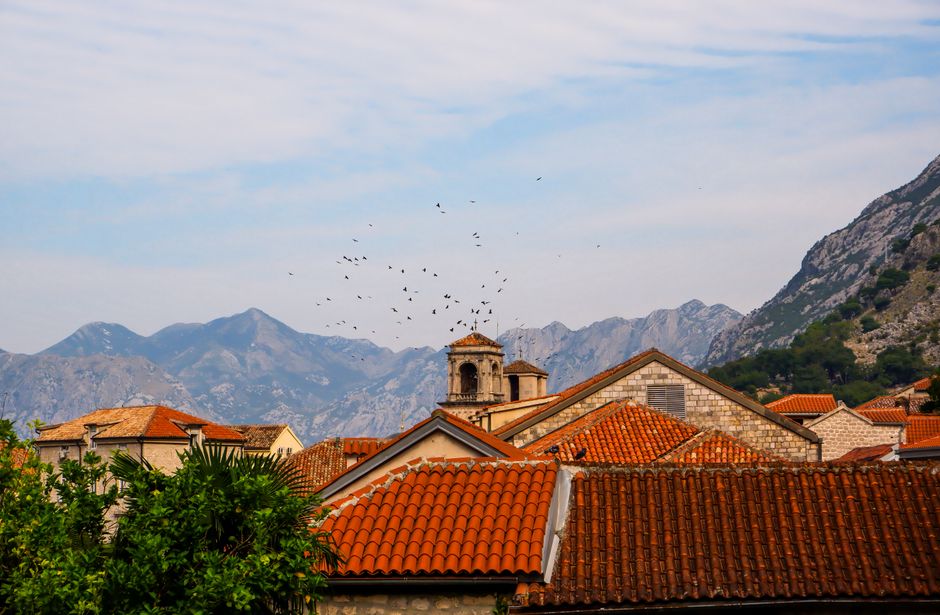
Kotor is a small walled town at the innermost end of the Bay of Kotor, where the water runs deep into the mountains like a southern fjord. Inside its triangle of walls are marble-paved squares, Romanesque and Baroque churches, Venetian palaces and a famous population of cats; above it, the fortifications zigzag up a sheer mountainside to the fortress of San Giovanni, with one of the great views of the Adriatic. The town and the inner bay, including Perast and its island churches, have been a UNESCO World Heritage Site since 1979. Climb to the fortress early, take a boat to Our Lady of the Rocks, drive the hairpins up to Lovćen, and stay at least one night so you see Kotor after the cruise passengers leave. Two to three days is ideal.
Right now in Kotor
- Wed 15–23°C 58–73°F Partly cloudy
- Thu 16–20°C 61–67°F 72 mm Heavy rain
- Fri 18–21°C 64–69°F 87 mm Rain
Weather: MET Norway (CC BY 4.0) · Sea temperature: NOAA CoastWatch · Air quality: OpenAQ
Top tours in Kotor
See all tours for Kotor →
From local operators, with prices and reviews; you check availability and book on Viator, our partner. We may earn a commission at no extra cost to you. How we earn money
Kotor at a glance
- Best months: May–June and September–October. Average highs on the bay run from about 24 °C in May to 31–32 °C in July and August (WMO 1991–2020 normals for Herceg Novi, the nearest official station). Winters are mild but very wet.
- Days needed: 1 for the old town and the fortress; 2–3 with Perast, a boat trip and Lovćen.
- Getting there: Tivat airport (TIV) is about 15–20 minutes by road; Podgorica (TGD) about 1.5 hours; Dubrovnik (DBV) in Croatia about 2 hours plus the border.
- Getting around: the old town is car-free and small enough to cross in ten minutes; local buses and taxis run around the bay.
- Key ticket: the city walls and San Giovanni fortress cost €15 for foreign visitors (Municipality of Kotor). See our Montenegro guide (coming soon) for entry rules, money and costs.
Kotor’s areas and who each one suits
- The old town (Stari grad): inside the walls, with apartments and small hotels in old stone houses. Atmospheric and central, but bells, bars and cruise crowds make it lively, and there is no car access.
- Dobrota: a long waterfront of captains’ houses just north of the old town, with swimming platforms and a promenade. Quieter, good for couples and families, a 20–30 minute walk into town.
- Muo and Prčanj: villages on the opposite shore, with views back to the walls and calm water for swimming.
- Perast: 12 km up the bay, a tiny Baroque town of palaces and churches. Romantic and peaceful in the evening; busy with tour boats by day.
- Risan and Morinj: further round the bay, simpler and cheaper, with Roman mosaics at Risan.
Top things to see in Kotor
Prices and hours below are as of October 2026 and come from the Municipality of Kotor and the operators where marked in our sources; some are from published reports and flagged for checking.
The city walls and San Giovanni fortress
Kotor’s defences run for about 4.5 km, from the sea gates up the slope of Mount San Giovanni (St John, Sveti Ivan) to the fortress at the top, about 260–280 m above the bay. Most of what you see was built or rebuilt by Venice between the 15th and 18th centuries on older foundations. The path is a long stairway of roughly 1,350 uneven stone steps and ramps, passing the little church of Our Lady of Health (Gospa od Zdravlja) about halfway up, and the views over the roofs and the bay improve with every turn. Allow 1.5–2 hours up and back with stops, take water, and wear shoes with grip: the stones are polished and there is little shade.
Tickets (as of October 2026): the Municipality of Kotor charges €15 for foreign visitors to walk the walls and fortress, a price set by the Municipal Assembly in October 2023 (it was previously €8); residents of Montenegro go free. Tickets are sold at two entrances: at Parilo, behind the church of St Mary (Blessed Ozana) near the North Gate, and at Škaljari square near the South Gate. Ticket booths are reported to be staffed from early morning to the evening in season, roughly 07:00–20:00, and closed in mid-winter; children are reported to go free, but check at the booth. Start at opening time in summer: by 10:00 the steps are hot and crowded. Experienced walkers sometimes reach the fortress from the back via the Ladder of Kotor path, but the fee is still due to walk the walls.
The old town: squares, churches and cats
Enter through the Sea Gate (Main Gate) onto the Square of Arms (Trg od oružja), with its clock tower and the old Venetian arsenal. Kotor’s lanes are a maze on purpose, built to confuse attackers; you will get lost, which is part of the fun. Don’t miss the Cathedral of St Tryphon, consecrated in 1166 and rebuilt after earthquakes, with a small treasury and frescoes; the Orthodox Church of St Nicholas and the tiny Romanesque Church of St Luke on the same square, once shared by Catholics and Orthodox; the Maritime Museum in a Baroque palace, telling the story of the Boka’s seafaring families; and the many cats, which have their own small museum and souvenir trade. Small entry fees apply to the cathedral and museums. As of October 2026 we found no official fee for simply entering the old town.
Perast and Our Lady of the Rocks
Perast, 12 km north-west along the bay, is a single waterfront of 16 Baroque palaces and 17 churches from the town’s golden age as a seafaring republic under Venice. Climb the bell tower of St Nicholas for the view, visit the town museum in the Bujović Palace, and have lunch by the water. Offshore lie two islets: St George (Sveti Đorđe), a natural island with a Benedictine abbey and cypresses, usually seen only from the water; and Our Lady of the Rocks (Gospa od Škrpjela), an artificial island built up by sailors who, according to legend, dropped stones on a reef where an icon was found in 1452. Its church is full of votive silver plaques and paintings. Small boats shuttle across from Perast’s waterfront in a few minutes, for a few euros each way, and there is a small charge for the church museum. Every 22 July, locals row out in a procession called the Fašinada to drop more stones around the island.
Lovćen, Njeguši and the cable car
Behind Kotor, the old serpentine road climbs 25 hairpin bends to the village of Njeguši, where you can taste smoked pršut ham and cheese, and on into Lovćen National Park, where 461 steps lead to the mausoleum of the poet-prince Petar II Petrović-Njegoš on Jezerski vrh. On a clear day you can see much of Montenegro. Allow half a day by car, or combine with Cetinje. An easier way up the mountain is the Kotor–Lovćen cable car, which climbs to about 1,350 m in around 11 minutes. As of 4 October 2026, its official webshop lists autumn prices of €20 return or €12 one way for adults and €5 return for children aged 2–12; summer prices are higher. The top station has a viewing platform, an alpine coaster and other attractions.
Swimming in the Bay of Kotor
Kotor has no big beach. Locals swim from the concrete platforms and small pebble coves along the bay: along the promenade in Dobrota, at Muo and Prčanj across the water, and from the jetties in Perast and Risan. The water in the inner bay is calm, warm and often slightly cooler near the springs that feed it. For proper beaches, head to the open sea: Jaz and the Budva Riviera are about 30–40 minutes away, and boat trips run to the coves of the Luštica peninsula. Bring water shoes for the rocks. Don’t walk around the old town in swimwear.
Boat trips, kayaking and day trips
- Bay boat trips: speedboats from Kotor’s waterfront visit Perast and Our Lady of the Rocks, the former Yugoslav submarine tunnels on Luštica, the island of Mamula and the Blue Cave, where you can swim in glowing blue water. Half-day trips are the norm; choose an operator with life jackets and a sensible group size. See our boat trips guide.
- Kayaking: calm water and views of the walls make the bay ideal for a guided paddle, especially at sunrise or sunset.
- Tivat and Porto Montenegro: 20 minutes away, a marina town with a seafront promenade, cafés and a naval heritage museum.
- Budva and Sveti Stefan: about 40 minutes south, for the old town, beaches and the famous island village.
- Cetinje: the old royal capital beyond Lovćen, with its monastery and museums.
- Dubrovnik: about 2–2.5 hours by road plus the border; an easy day trip in shoulder season. Take your passport. See our Dubrovnik guide.
Cruise ships and crowds
Kotor is one of the busiest cruise ports on the Adriatic. Ships berth or anchor right in front of the Sea Gate, and on many days from spring to autumn two or three large ships are in port at once; the small old town then fills from mid-morning to mid-afternoon. As of October 2026 we found no official daily cap on cruise passengers in Kotor, though the issue is regularly debated locally. In practice:
- Check a cruise schedule for your dates and plan the old town for early morning or after about 17:00 on heavy days.
- Climb the fortress at opening time, before the ships’ tours arrive.
- Spend the middle of the day in Perast, Dobrota, on a boat or up at Lovćen.
- Stay overnight: the old town is calm and lovely in the evening.
Nearby destinations
- Budva17 km
- Herceg Novi19 km
- Dubrovnik59 km
- Durmitor National Park84 km
- Međugorje123 km
- Mostar129 km
- Durrës136 km
- Tirana150 km
Getting there and getting around
Flights
Tivat airport (TIV), on the other side of the Vrmac ridge, is the closest: about 15–20 minutes by taxi, or by local bus from the main road. It has many summer flights from across Europe and fewer in winter. Podgorica (TGD) has more year-round flights and is about 1.5 hours away. Dubrovnik (DBV) in Croatia is also popular: about 2 hours, plus the border at Karasovići–Debeli Brijeg, where non-EU travellers are registered in the EU’s Entry/Exit System when they cross back into Croatia.
Buses and driving
Kotor’s bus station is a 5–10 minute walk south of the old town. Buses run often to Budva (about 40 minutes), Tivat, Herceg Novi and Podgorica, and daily to Dubrovnik in season; buy a ticket at the station and expect a small luggage charge. Local buses run along the bay to Dobrota, Perast and Risan. If you drive, parking by the old town is limited and paid; leave the car at your accommodation where you can. The Kamenari–Lepetane car ferry shortens the trip to Herceg Novi and Croatia, and the tunnel under Vrmac links Kotor with Tivat and the airport.
Taxis and boats
Taxis are reasonably priced if you use a registered company and agree the price or check the meter. Taxi boats and tour boats leave from the waterfront by the old town and from Perast.
When to go and how long to stay
Kotor has hot, sunny summers and mild winters with a lot of rain: the mountains around the bay catch storms from the sea, and November and December are the wettest months. July and August are hot and crowded, with festivals and the Fašinada on 22 July. May, June, September and October are ideal for walking the walls and swimming. Winter is quiet and atmospheric, with the Kotor winter carnival in February, but some hotels and restaurants close and the fortress booths may be shut.
| Season | Average high / low | Days with rain a month | What it’s like |
|---|---|---|---|
| Spring (Mar–May) | 16–24 °C / 7–14 °C | 8–10 | Green and fresh; great for the fortress climb and Lovćen; sea cool until late May. |
| Summer (Jun–Aug) | 28–32 °C / 18–21 °C | 3–5 | Hot and sunny; peak crowds and cruise ships; warm sea. |
| Autumn (Sep–Nov) | 27 °C falling to 18 °C / 17–10 °C | 7–11 | September and early October are lovely; heavy rain from late October. |
| Winter (Dec–Feb) | 13–14 °C / 5–6 °C | 10–12 | Mild, very wet and quiet; carnival in February. |
Figures are the WMO 1991–2020 climate normals for Herceg Novi, about 20 km away at the mouth of the bay, the nearest station with official published normals, from Montenegro’s Institute of Hydrometeorology and Seismology. Kotor itself is enclosed by mountains, so it gets less wind, a little more rain and an earlier sunset in winter, when the sun drops behind the mountains in the afternoon. Herceg Novi averages about 1,800 mm of rain a year, most of it from October to April.
1 day in Kotor
Fortress climb at opening time, then breakfast in the old town; the cathedral, the Maritime Museum and the lanes before the crowds peak; afternoon in Perast with a boat to Our Lady of the Rocks; back to Kotor for dinner on a quiet square.
2–3 days in Kotor
Add a morning boat trip to the Blue Cave, a half-day drive or cable car up to Lovćen with a stop in Njeguši, and an evening in Dobrota or Prčanj. With a fourth day, visit Cetinje or Budva and Sveti Stefan, or cross to Herceg Novi on the way to Dubrovnik.
Where to stay in Kotor
- First visit, no car: an apartment or small hotel inside the old town walls.
- Couples and swimmers: Dobrota, Muo or Prčanj, with the water at your door.
- Romance and quiet evenings: Perast.
- Budget: guesthouses near the bus station or in Škaljari, just south of the old town.
Your host must register you with the local tourist organisation within 24 hours and will add a small tourist tax per adult per night, around €1 in most coastal towns; children under 12 are exempt. Keep the registration slip.
Practical tips for Kotor
- Beat the crowds: walls at opening time; check the cruise schedule.
- Cash: carry euros for small boats, cafés and some ticket booths.
- Shoes: polished marble in town and uneven steps on the walls; wear grippy soles.
- Heat: carry water on the fortress climb; there is almost no shade.
- Cats: they are well looked after by locals; don’t take them home.
- Border trips: take your passport for Dubrovnik.
- Emergencies: call 112 (police 122, fire 123, ambulance 124).
What to pack for Kotor
Bring light, breathable clothes, a sun hat, sunscreen and a refillable water bottle for the fortress; shoes with good grip for the steps and polished streets; swimwear, a quick-dry towel and water shoes for the rocky swimming spots; a scarf to cover shoulders in churches; and a light jacket for boat trips and evenings. From October to April, add a proper rain jacket: Kotor gets heavy downpours. Take your passport if you are going to Croatia.
Kotor travel FAQ
How much does it cost to climb Kotor fortress?
As of October 2026, €15 for foreign visitors, set by the Municipality of Kotor in 2023. Residents of Montenegro go free. Tickets are sold at the Parilo entrance near the North Gate and at Škaljari square near the South Gate.
How long does the Kotor fortress climb take?
About 1.5–2 hours up and back, with stops, on roughly 1,350 steps. Go at opening time in summer and take water.
Is there an entry fee for Kotor old town?
As of October 2026 we found no official fee for walking into the old town; a few blogs mention one, so check locally. You pay €15 to walk the walls and fortress, and small fees for the cathedral and museums.
How do I get to Our Lady of the Rocks?
Take one of the small boats from Perast’s waterfront, a few minutes each way for a few euros, or join a boat trip from Kotor. There is a small charge for the church museum.
How many days do you need in Kotor?
One day for the old town and fortress; two or three to add Perast, a boat trip to the Blue Cave and Lovćen.
When are the cruise ships in Kotor?
Mostly from April to November, with the busiest days in summer and autumn, when two or three ships can be in port. Passengers fill the old town from mid-morning to mid-afternoon.
Does Kotor have a beach?
Not a big one. People swim from platforms and pebble coves in Dobrota, Muo, Prčanj and Perast. For sandy or long beaches, go to Jaz or the Budva Riviera, 30–40 minutes away.
How much is the Kotor cable car?
As of early October 2026, €20 return for adults and €5 for children aged 2–12 on the official webshop, with higher summer prices. The ride to about 1,350 m takes around 11 minutes.
Can you do a day trip from Kotor to Dubrovnik?
Yes, about 2–2.5 hours each way plus the border. Take your passport; non-EU travellers are registered by the EU’s Entry/Exit System on entering Croatia.
Which airport is closest to Kotor?
Tivat (TIV), about 15–20 minutes by road. Podgorica is about 1.5 hours away and Dubrovnik about 2 hours plus the border.
Is Kotor worth visiting in winter?
Yes, if you like quiet: the old town is calm and mild, with a carnival in February. Expect heavy rain, some closed restaurants and limited fortress ticket hours.
Sources and last review
Researched and last reviewed on 4 October 2026. The fortress ticket price and entrances come from the Municipality of Kotor; cable car prices from the operator’s official webshop; registration and tourist tax from the Tivat Tourist Organisation; climate from Montenegro’s Institute of Hydrometeorology and Seismology (WMO 1991–2020 normals for Herceg Novi). Fortress booth hours, boat prices to Our Lady of the Rocks and cruise-ship patterns come from published reports and are flagged for checking. Prices, timetables and rules change, so check the official sites before you travel.
Plan your trip
Partner links: TravelerCenter may earn a commission if you book, at no extra cost to you.
🇷🇸 Useful Serbian phrases for Kotor
All 38 Serbian phrases: restaurant, hotel, emergencies, romance (printable) →