Luxembourg is one of Europe’s smallest countries and one of its most surprising: a green Grand Duchy of wooded valleys, castles, vineyards and sandstone gorges squeezed between Belgium, France and Germany, with a capital built on cliffs above two river valleys. Walk the fortress tunnels and the “most beautiful balcony in Europe” in Luxembourg City, hike the rock labyrinths of the Mullerthal, climb to the fairy-tale castle of Vianden, taste crémant along the Moselle, and see where the Schengen Agreement was signed. The whole country is about 82 km from north to south, every train, tram and bus in second class is free, and you can sleep in one place and see most of it on day trips. Late spring to early autumn is the best time for walking and wine; December brings Christmas markets. Give it three to five days, or a weekend for the capital alone.
Right now in Luxembourg
- Wed 9–21°C 48–70°F 9 mm Rain
- Thu 10–15°C 50–58°F 4 mm Mostly clear
- Fri 5–11°C 41–51°F 1 mm Cloudy
Weather: MET Norway (CC BY 4.0) · Air quality: OpenAQ
Multi-day tours of Luxembourg
Multi-day tours from local operators. You check dates and book on Viator, our partner; we may earn a commission at no extra cost to you. How we earn money
Luxembourg at a glance: overview and geography
The Grand Duchy of Luxembourg covers 2,586 km², about 82 km from north to south and 57 km from east to west, according to the Luxembourg City Tourist Office (LCTO). Its population was 690,959 on 1 January 2026, and almost half of the people living here are foreign nationals; on weekdays more than 200,000 cross-border commuters add to that. The landscape divides into two very different halves. The north, the Éislek, is part of the Ardennes uplands: high plateaus, deep, winding river valleys, forests, slate villages and lakes. The south, the Guttland (“good land”), is gentler and more fertile, with farmland, the capital, the vine-covered Moselle valley along the German border and the old iron-mining Minett in the south-west. The highest point is 559 m and the lowest 130 m.
Luxembourg grew around a castle built in 963 on the Bock rock above the Alzette. Its strategic position made it one of Europe’s great fortresses, the “Gibraltar of the North”, fought over and rebuilt by Burgundians, Spaniards, the French under Vauban, Austrians and Prussians until the Treaty of London ordered the fortress dismantled in 1867. The country was occupied in both world wars and saw fierce fighting in the north in the Battle of the Bulge in winter 1944–45. Today it is a constitutional monarchy, the world’s only grand duchy, with Grand Duke Guillaume as head of state since his father Henri stepped down in October 2025. Luxembourg was a founding member of what became the European Union, hosts the EU’s Court of Justice, the European Investment Bank and parts of the Commission and Parliament, and gave its name to the 1985 Schengen Agreement, signed on a boat on the Moselle at Schengen.
Three languages are official: Luxembourgish (Lëtzebuergesch), French and German. French dominates signs and menus in the capital, German the newspapers, and you will hear Portuguese and English everywhere; English is widely spoken in hotels, shops and restaurants. Time zone: Central European Time (UTC+1, UTC+2 in summer), the same as Belgium, France and Germany.
The regions
- Luxembourg City: the capital, with its UNESCO-listed old town and fortifications, the Grund and Pfaffenthal quarters in the valleys, and the modern European district on the Kirchberg plateau.
- Mullerthal (Mëllerdall), “Little Switzerland”: forests, sandstone cliffs and narrow gorges in the east, the 112 km Mullerthal Trail, and Echternach, the oldest town in the country. The area is a UNESCO Global Geopark.
- Éislek (the Luxembourg Ardennes): the hilly north with Vianden, Clervaux, Wiltz, Esch-sur-Sûre, Bourscheid Castle and the Upper Sûre lake.
- The Moselle: the wine valley along the German border, from Schengen and Remich to Grevenmacher and Wasserbillig, plus the spa town of Mondorf-les-Bains.
- Guttland: the farming heartland around the capital, with the “Valley of the Seven Castles” along the Eisch and Mamer rivers.
- Minett: the “land of the red rocks” in the south-west, with Esch-sur-Alzette, the blast furnaces of Belval, mining heritage and nature reserves on old open-cast mines; a UNESCO Biosphere Reserve since 2020.
Where to go: the capital, castles, gorges and vineyards
Most visitors stay in Luxembourg City and take day trips, which is easy because public transport is free and nothing is much more than an hour or so away. If you like hiking or a quieter base, stay a night or two in the Mullerthal or the Ardennes as well.
Luxembourg City
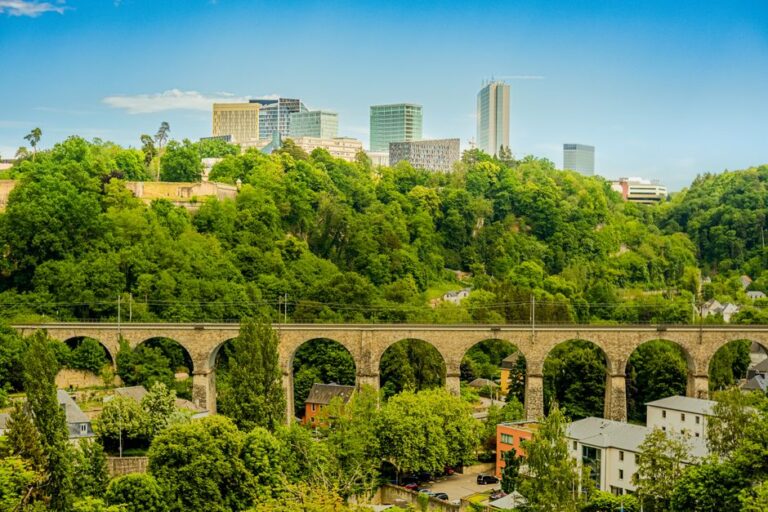
The capital is the highlight: an old town on a rocky plateau, deep green valleys below, and kilometres of fortress walls and tunnels. Walk the Chemin de la Corniche, go underground in the Bock and Pétrusse casemates, see the Grand Ducal Palace and Notre-Dame Cathedral, ride the free panoramic lift down to Pfaffenthal, and cross to Kirchberg for the Mudam modern art museum and the EU buildings. Our separate Luxembourg City guide has full details, prices and walking plans.
Vianden
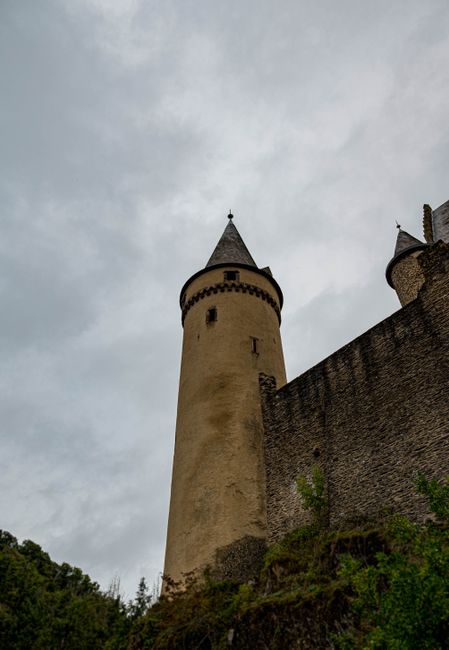
Vianden is a small town in the Our valley on the German border, overlooked by one of the largest and most complete castles of the Romanesque and Gothic period west of the Rhine. The castle is open every day from 10:00 (to 18:00 from April to September, shorter hours in winter); adult tickets cost €13, students €7 and children aged 6–12 €4, including €1 local tourist tax (as of October 2026). It closes on 1 January, 2 November and 25 December. A seasonal chairlift climbs above the town for views over the castle, and Victor Hugo’s house in the town is now a small museum. In late July and early August the castle hosts a medieval festival (25 July–2 August in 2026), when normal prices and guided tours don’t apply.
Mullerthal and Echternach
The Mullerthal, nicknamed “Luxembourg’s Little Switzerland”, is a region of dense beech woods, mossy streams and towering sandstone formations cut by narrow ravines and caves. The 112 km Mullerthal Trail, certified as a “Leading Quality Trail – Best of Europe”, is split into three loops that you can walk in sections; the stretch around Berdorf and Consdorf, with the Hohllay and Schiessentümpel waterfall, is the most famous. Echternach, the country’s oldest town, has a great abbey and basilica of St Willibrord, a Roman villa and a lake. Every Whit Tuesday, thousands of people dance through its streets in the Hopping Procession, on UNESCO’s list of intangible cultural heritage since 2010; in 2027 Whit Tuesday falls on 18 May.
Clervaux, Wiltz and the Ardennes
In the north, Clervaux castle houses The Family of Man, the famous 1955 photo exhibition assembled by Luxembourg-born Edward Steichen and listed in UNESCO’s Memory of the World register. It is open from 18 March 2026 to 1 January 2027, Wednesday to Sunday from 12:00 to 18:00 (closed Mondays and Tuesdays except public holidays); tickets cost €6, reduced €4, and there is a free guided tour every Sunday at 16:00. Nearby, Bourscheid is the country’s largest castle ruin, high above the Sûre; Esch-sur-Sûre is a village wrapped around a castle hill in a river loop; and the Upper Sûre lake is the place for summer swimming, kayaking and walks, with the 70 m Belvédère Burfelt viewing tower near the Belgian border. Wiltz and Diekirch have museums on the Battle of the Bulge, and General Patton is buried at the American war cemetery at Hamm, on the edge of the capital.
The Moselle and Schengen
The Luxembourg Moselle is a 42 km ribbon of terraced vineyards facing Germany across the river. The main grapes are Riesling, Auxerrois, the Pinots, Rivaner and Elbling, and the region is best known for its crémant sparkling wine. Base yourself in Remich or Grevenmacher, cycle the riverside path, visit wine cellars, take a river cruise in summer, or relax in the thermal spa at Mondorf-les-Bains. At the southern tip, the village of Schengen sits where Luxembourg, France and Germany meet. Its Schengen Museum tells the story of border-free Europe, and the boat on which the 1985 agreement was signed, the Princesse Marie-Astrid (today the Prinzessin Marie-Astrid Europa), is now part of the experience.
The Minett and the south
The south-west was the heart of Luxembourg’s steel industry, and the red, iron-rich soil gave the Minett its name. In Esch-sur-Alzette, the country’s second city, two restored blast furnaces stand among the university buildings at Belval and can be visited. The Minett Park Fond-de-Gras includes a steam railway, a mining train and the village of Lasauvage, and the 90 km Minett Trail links nature reserves on former open-cast mines. It is a fascinating, little-visited side of the country.
A few more worth your time
- The Valley of the Seven Castles: a walking and cycling route past castles such as Mersch, Schoenfels, Hollenfels, Ansembourg and Septfontaines, west of the capital.
- Larochette and Beaufort: two castle ruins in the Mullerthal; Beaufort also has a Renaissance castle next to its medieval ruin.
- Mondorf-les-Bains: the country’s only spa town, with thermal baths and a casino.
- Grevenmacher: a butterfly garden and big wine cellars on the Moselle.
Luxembourg City Travel Guide
Plan a trip to Luxembourg City: the Bock and Pétrusse casemates with 2026 prices and seasonal hours, the Chemin de la Corniche, the Grand…
Best time to visit Luxembourg
Luxembourg has a temperate, changeable Western European climate: mild summers, cool and often grey winters, and rain spread through the whole year. The table uses MeteoLux’s 1991–2020 averages for Luxembourg Airport at Findel, the national weather station, a few kilometres from the capital; afternoon highs come from the Luxembourg City Tourist Office’s climate figures. The north is a little cooler and wetter, the Moselle valley a little warmer and sunnier.
| Season (Findel, 1991–2020) | Mean temperature | Typical afternoon high | Rain a month | Sunshine a month | What it’s like |
|---|---|---|---|---|---|
| Spring (Mar–May) | 6–14 °C | about 13 °C in April | 50–75 mm | 140–225 hours | Fresh and green; blossom in April, forests at their best in May; showers and cold snaps still likely. |
| Summer (Jun–Aug) | 17–19 °C | about 25 °C in July | about 72 mm | 240–260 hours | Warm, sometimes hot; thunderstorms; best for hiking, cycling, lakes and outdoor festivals. |
| Autumn (Sep–Nov) | 14 °C falling to 5 °C | about 17 °C in October | 67–76 mm | 175 hours falling to 50 | Golden forests and the wine harvest in September–October; fog and drizzle by November. |
| Winter (Dec–Feb) | 1–2 °C | about 6 °C in January | 60–90 mm | 40–80 hours | Cold, grey and short days; occasional snow, especially in the north; Christmas markets. |
The yearly average at Findel is 9.8 °C with about 830 mm of rain and 1,800 hours of sunshine. Fog is common from October to February, with ten or more foggy days a month in midwinter at the airport, and most thunderstorms come between May and August. Pack layers and a rain jacket in any season.
When to go
- May to September is the best time for hiking, cycling and castles, with long evenings and outdoor events. July and August are the busiest months and the time of summer holidays in neighbouring countries, but Luxembourg rarely feels crowded outside Vianden and the capital’s old town.
- September and October bring the grape harvest on the Moselle, autumn colours in the Ardennes and quieter trails.
- Late November to early January is Christmas-market season. Luxembourg City’s markets run from 20 November 2026 to 3 January 2027.
- Weekdays vs weekends: business hotels in the capital are often cheaper at weekends, while country hotels fill up at weekends in summer.
Festivals and public holidays
- National Day (23 June): the Grand Duke’s official birthday. The capital celebrates on the evening of 22 June with a changing of the guard, a torchlight procession, fireworks from the Adolphe Bridge and street parties all night; 23 June brings a military parade and a Te Deum in the cathedral. In 2027, 23 June is a Wednesday.
- Schueberfouer: a huge funfair founded in 1340, held on the Glacis in Luxembourg City from late August to mid-September; in 2027 it runs from 20 August to 8 September, daily from 12:00 to 01:00.
- Octave and Mäertchen: a pilgrimage to Notre-Dame Cathedral with a market on Place Guillaume II, 17 April to 2 May 2027.
- Echternach Hopping Procession: every Whit Tuesday (18 May 2027).
- Buergbrennen: bonfires across the country on the first Sunday of Lent to drive out winter.
- Éimaischen: a pottery market in the capital’s old town on Easter Monday.
- Public holidays in 2026: 1 January, Easter Monday (6 April), Europe Day (9 May), Ascension (14 May), Whit Monday (25 May), National Day (23 June), Assumption (15 August), All Saints (1 November), Christmas (25 December) and St Stephen’s Day (26 December). Many museums and shops close on these days.
How long to stay: sample itineraries
3 days: the capital and a castle
Spend the first day in Luxembourg City’s old town: the Corniche, the Bock Casemates, the Grand Ducal Palace from outside, the cathedral and the Grund. On day two, see the Pétrusse Casemates and the national history and art museum, then take the panoramic lift and funicular to Kirchberg for Mudam. On day three, take the train to Ettelbruck and the bus to Vianden for the castle, or the bus to Echternach for a short walk in the Mullerthal.
5 days: the best of the country
Two days in the capital, then a day in the Mullerthal (Berdorf and the Schiessentümpel waterfall, ending in Echternach), a day in the north (Vianden and Clervaux for The Family of Man, open Wednesday to Sunday) and a day on the Moselle (Schengen, Remich, a cellar visit and the riverside cycle path). With a car you can add Bourscheid, Esch-sur-Sûre and the Upper Sûre lake in one loop.
7–10 days: walking and slow travel
Walk two or three days on the Mullerthal Trail or the Escapardenne Lee Trail in the Ardennes, using luggage transport or bus connections back to your base. Add the Minett for industrial heritage and a ride on the Fond-de-Gras steam train (on summer Sundays), and finish with crossings into Trier in Germany, Metz in France or the Belgian Ardennes. Luxembourg also combines well with Belgium, Strasbourg and Alsace or the Middle Rhine Valley.
Entry, money, fees and costs
Entry and visas (last reviewed October 2026)
Luxembourg is a member of the European Union and of the Schengen area, so there are no routine passport checks at its land borders with Belgium, France and Germany. Citizens of EU and EEA countries and Switzerland can enter with a national ID card or passport. Visitors from many other countries, including the United States, Canada, the UK and Australia, can stay without a visa for up to 90 days in any 180-day period, counting time in all Schengen countries together.
- Entry/Exit System (EES): the EU’s digital border system has been fully running at all Schengen external borders since 10 April 2026. If you fly into Luxembourg Airport from outside the Schengen area, for example from London, your passport details, a photo and fingerprints are recorded at your first entry instead of a passport stamp; children under 12 are not fingerprinted. Registration is free and lasts three years. If you arrive overland from another Schengen country, you will already have been registered at your first Schengen entry point.
- ETIAS: the EU’s planned online travel authorisation (fee €20) is not in operation as of October 2026. No start date has been published and press reports point to 2027. Some tourism pages still mention old target dates; until the EU confirms a date, you don’t need one, and you should ignore websites selling “ETIAS applications”.
- Passports: for non-EU visitors, your passport should have been issued less than 10 years before you arrive and be valid for at least 3 months after the day you plan to leave the Schengen area.
- Carry ID: police checks near borders are occasional, so keep your passport or ID card with you on day trips into Belgium, France or Germany.
Check the European Commission’s EES and ETIAS pages and your own government’s travel information before you travel.
Language basics
You can get by in English, French or German. A few words of Luxembourgish are always appreciated: moien (hello, used all day), äddi (goodbye), merci (thank you), wann ech gelift (please) and prost (cheers).
The euro, cards and tipping
Luxembourg uses the euro. Cards and phone payments are accepted almost everywhere, including at museums and the tourist office. Tipping is not expected because service is included, but rounding up or leaving 5–10% for good service in a restaurant is common. If a card terminal or cash machine offers to charge you in your home currency, choose euros.
Tourist tax
There is no national tourist tax in Luxembourg. A few communes charge a small local tax; Vianden, for example, includes €1 of local tourist tax in the castle ticket, and some hotels add a commune tax to the bill. In September 2026 the government said it was studying a possible tourist tax for visitors from outside the EU, but nothing had been decided at the time of writing.
Typical travel costs
Luxembourg is one of Europe’s most expensive countries for hotels and eating out, but free public transport and the fairly cheap museums help a lot. These estimates, per person per day, are a planning guide as of October 2026:
| Style | Estimated cost per day | What that looks like |
|---|---|---|
| Budget | about €80–120 | Youth hostel or campsite, supermarket picnics and a simple lunch menu, free transport, free walks and lifts, one museum |
| Mid-range | about €160–260 | 3- or 4-star hotel shared by two, lunch and dinner in restaurants, two paid sights or a LuxembourgPass, a wine tasting |
| High-end | about €350+ | Boutique hotel in the old town or a castle hotel, gourmet dining, guided tours and first-class train travel |
The LuxembourgPass (the digital successor to the Luxembourg Card) gives free entry or discounts at many museums, castles and attractions across the country. As of October 2026 it costs €23 for one person for one day, €33 for two days and €39 for three days; a two-person pass costs €39, €49 or €55, and a pass for a group of three to five costs €55, €66 or €71. It works as a QR code on your phone and each day is valid until midnight. It pays off if you plan two or three paid sights a day. These daily cost figures are our estimates, not official statistics.
Getting there and getting around
Arrival by air
Luxembourg Airport (Findel) is about 6 km from the city centre and served by the national airline Luxair and around a dozen other airlines. The tram (line T1) has run right to the terminal since 2 March 2025, linking it with Kirchberg, the old town (Hamilius) and the central station; buses 16 and 29 also run to the city centre and the central station. All are free. Larger airports within reach include Frankfurt, Frankfurt-Hahn, Brussels and Charleroi; buses link some of them with Luxembourg.
By train and bus
Luxembourg’s central station (Gare Centrale) is about 10–15 minutes’ walk from the old town. The TGV takes about 2 hours 10 minutes from Paris Gare de l’Est, and direct trains run to Strasbourg (about 1 hour 33 minutes), Metz, Nancy, Trier, Koblenz, Liège and Brussels. Brussels takes roughly three hours, sometimes more during engineering works. Long-distance coaches link Luxembourg with many cities in neighbouring countries.
Free public transport
Since 1 March 2020, all trains, trams and buses inside Luxembourg have been free in second class, for residents and visitors alike, and you don’t need a ticket. Only first class on CFL trains is paid: as of October 2026 a two-hour ticket costs €3 and a day ticket €6, and first-class tickets are not valid on international trains. Two things to remember:
- Crossing the border: free travel stops at the border. You need a ticket from the last stop in Luxembourg; on cross-border RegioZone bus lines a single costs €3 and a day ticket €5, and international trains need a normal international ticket from CFL or the neighbouring railway.
- Planning: use the mobiliteit.lu journey planner or app, which covers trains, buses and trams nationwide. Rural buses can be infrequent on Sundays.
Useful routes: trains run from the capital to Ettelbruck (for buses to Vianden and Diekirch), Clervaux, Wiltz, Mersch, Esch-sur-Alzette, Wasserbillig on the Moselle; buses serve Echternach, the Mullerthal villages, Remich and Schengen.
Driving and cycling
A car is useful for castle-hopping in the north and the Mullerthal, but you won’t need one in the capital, where parking is expensive and the old town is largely pedestrianised. Luxembourg drives on the right, and the “priority to the right” rule applies at unmarked junctions. Motorways have a limit of 130 km/h (110 km/h in the wet); motorways and tunnels are toll-free for cars. The drink-drive limit is 0.5 g/l (0.2 g/l for drivers with less than two years’ experience), phone calls are only allowed hands-free, and winter tyres are compulsory when roads are wintry. Fuel is usually cheaper than in the neighbouring countries. Luxembourg is also excellent for cycling: there are hundreds of kilometres of signposted cycle paths along the Moselle, Sûre, Alzette and old railway lines, and bikes travel free on trains when there is space.
Hiking, cycling and the outdoors
Luxembourg is a superb walking country: the trails are well marked, short distances mean you can always reach a bus or train, and the scenery changes every few kilometres. See our hiking guide for gear and planning.
- Mullerthal Trail: 112 km in three loops through the sandstone gorges and forests of “Little Switzerland”, plus shorter ExtraTours. Paths can be muddy and slippery, with steps and narrow passages between rocks.
- Escapardenne Trail: a cross-border long-distance route in the Ardennes; its first section, the 52 km Lee Trail, has rocky ridges and big river views.
- Minett Trail: 90 km through the former mining country of the south, linking railway stations.
- Moselle: vineyard walks such as the Wine and Nature Trails, plus premium loops on the Saar-Hunsrück side.
- Cycling: flat riverside paths along the Moselle and Sûre, and harder climbs in the Ardennes. Rental schemes such as RentaBike in the Mullerthal, Moselle and Ardennes let you collect and return bikes at different points.
- Water: swimming, kayaking and sailing on the Upper Sûre lake, and canoeing on the Sûre and Our in summer.
Safety, health and connectivity
Safety
Luxembourg is one of the safest countries in Europe. The usual city precautions apply: watch for pickpockets around the central station, at the Schueberfouer and on busy trams, and keep valuables out of sight in parked cars at trailheads. Emergency number: 112 for ambulance and fire, 113 for police.
Health
EU visitors should bring their European Health Insurance Card; everyone else should have travel insurance. Pharmacies are marked with a green cross, and a rota of duty pharmacies covers nights and weekends. Tap water is safe to drink. In the forests, protect yourself against ticks from spring to autumn.
Accessibility
The capital’s old town sits on a plateau above steep valleys, but the free Pfaffenthal panoramic lift, the lift down to the Grund and the Kirchberg funicular make the levels easier. Trams and most city buses are low-floor. The casemates and castles involve stairs and uneven floors; contact the tourist office before booking if you need help.
Connectivity and power
Mobile coverage is excellent, and EU roaming rules apply on EU SIM cards. Many cafés, the tourist office and some public spaces have free Wi-Fi. Sockets are type F (Schuko) and C, at 230 V and 50 Hz; see our plug adapter guide.
Food, wine and culture
Luxembourg’s cooking is hearty and close to that of its neighbours, with French refinement and German portions. Try Judd mat Gaardebounen (smoked pork collar with broad beans, the national dish), Bouneschlupp (green bean soup), Gromperekichelcher (crisp potato fritters sold at fairs and markets), Rieslingspaschtéit (pâté in pastry with Riesling jelly), Kniddelen (dumplings), Friture de la Moselle (small fried river fish) and Kachkéis, a soft cooked cheese spread on bread. In late summer, look for Quetschentaart, a plum tart. The country also has an unusually high number of Michelin-starred restaurants for its size.
Drink Moselle wines, especially Riesling, Auxerrois, Pinot Gris and crémant, local beers such as Bofferding, Diekirch and Simon, and fruit brandies (eau-de-vie, or Quetsch from plums). Many wineries offer tastings; see our wine tasting guide. Lunchtime set menus (plat du jour) are the best value in restaurants. Culture is lively for such a small place: the Philharmonie and the Grand Théâtre in the capital, the Rockhal in Esch-sur-Alzette, and contemporary art at Mudam and the Casino Luxembourg.
Things to do: fortresses, castles, gorges and wine
- Fortress tunnels: the Bock and Pétrusse casemates in the capital, part of a once-vast network of underground galleries.
- Castles: Vianden, Bourscheid, Clervaux, Beaufort, Larochette and the Valley of the Seven Castles.
- Hiking and rocks: the Mullerthal Trail, the Lee Trail and short walks to viewpoints over the Sûre.
- Wine: tastings, cellar tours and cycling on the Moselle, with the grape harvest in September and October.
- European history: Schengen, the EU district on Kirchberg and the Battle of the Bulge museums and war cemeteries.
- Photography and art: The Family of Man in Clervaux, Mudam and the national museums.
- City sightseeing: see our city sightseeing guide for planning city breaks, then combine Luxembourg City with Brussels, Cologne or Paris by train.
What to pack
Bring layers whatever the season, a waterproof jacket, comfortable shoes with grip for cobbles, steps and the casemates, and proper hiking shoes for the Mullerthal, where paths are often muddy and rocky. In summer add sun protection and swimwear for the Upper Sûre lake; in winter, a warm coat, hat and gloves. A smart outfit is useful for the capital’s better restaurants and concerts.
Luxembourg travel FAQ
When is the best time to visit Luxembourg?
May to September for hiking, castles and outdoor events; September and October for the wine harvest and autumn colours; late November to early January for Christmas markets. Winters are cold and grey.
How many days do you need in Luxembourg?
Two days for the capital, three to five to add Vianden, the Mullerthal and the Moselle, and a week or more if you want to hike.
Is public transport really free in Luxembourg?
Yes. Since 1 March 2020, second-class travel on all trains, trams and buses inside the country has been free for everyone, with no ticket needed. First class costs €3 for two hours or €6 for a day, and you need a ticket for any journey across the border.
How do I get from Luxembourg Airport to the city centre?
Take the free T1 tram from the terminal, or buses 16 or 29, to the old town and the central station. The airport is only about 6 km from the centre.
Is Luxembourg in the Schengen area and the EU?
Yes to both, and it uses the euro. The Schengen Agreement itself was signed in 1985 at the village of Schengen on the Luxembourg Moselle.
Do I need ETIAS to visit Luxembourg?
Not as of October 2026: ETIAS is not running and no start date has been published. If you fly in from outside Schengen as a non-EU visitor, you will be registered in the EES at the airport.
What languages are spoken in Luxembourg?
Luxembourgish, French and German are official, and English is widely spoken in hotels, restaurants and shops.
Is there a tourist tax in Luxembourg?
There is no national tourist tax. Some communes charge a small local tax, for example €1 included in the Vianden castle ticket.
Is the LuxembourgPass worth it?
It is if you visit two or three paid attractions a day. As of October 2026 it costs €23 for one day for one person, with cheaper rates per person for two people and groups.
Can I visit Vianden as a day trip from Luxembourg City?
Yes. Take the free train to Ettelbruck and a bus to Vianden, or drive in under an hour. The castle is open daily from 10:00, and adult tickets cost €13.
What is the Mullerthal?
A region of forests and sandstone gorges in the east, nicknamed “Luxembourg’s Little Switzerland”, crossed by the 112 km Mullerthal Trail. Echternach is its main town.
Is Luxembourg expensive?
Yes for hotels and restaurants, among the priciest in Europe. Free transport, picnics, free walks and lifts, and lunchtime set menus keep costs down.
Can I combine Luxembourg with neighbouring countries?
Easily. Trains reach Trier and Metz in about an hour, Strasbourg in about an hour and a half and Paris in just over two hours. See our Belgium guide, our France guide and our Germany guide.
Sources and last review
Researched and last reviewed on 4 October 2026. Entry rules come from the European Commission; population, area and the head of state from the Luxembourg City Tourist Office; free transport, first-class and cross-border fares from mobiliteit.lu (the Public Transport Administration); the airport tram from transports.public.lu and the airport bus lines from lux-Airport; climate averages from MeteoLux (Findel, 1991–2020) and the Luxembourg City Tourist Office; regions, trails, the LuxembourgPass, road rules and public holidays from Visit Luxembourg; Vianden prices and hours from Vianden Castle; The Family of Man from the CNA; event dates from the Luxembourg City Tourist Office. Brussels train times, the proposed non-EU tourist tax and some festival details come from secondary sources and are flagged for checking. Daily costs are estimates. Prices, timetables and rules change, so check the official sites before you travel.
Plugs and power in Luxembourg
Luxembourg uses 230 V, 50 Hz and these plugs (left) and wall sockets (right):
All plug types and voltages by country → · Check what you need to pack →
Plan your trip
Partner links: TravelerCenter may earn a commission if you book, at no extra cost to you.
🇫🇷 Useful French phrases for Luxembourg
All 38 French phrases: restaurant, hotel, emergencies, romance (printable) →