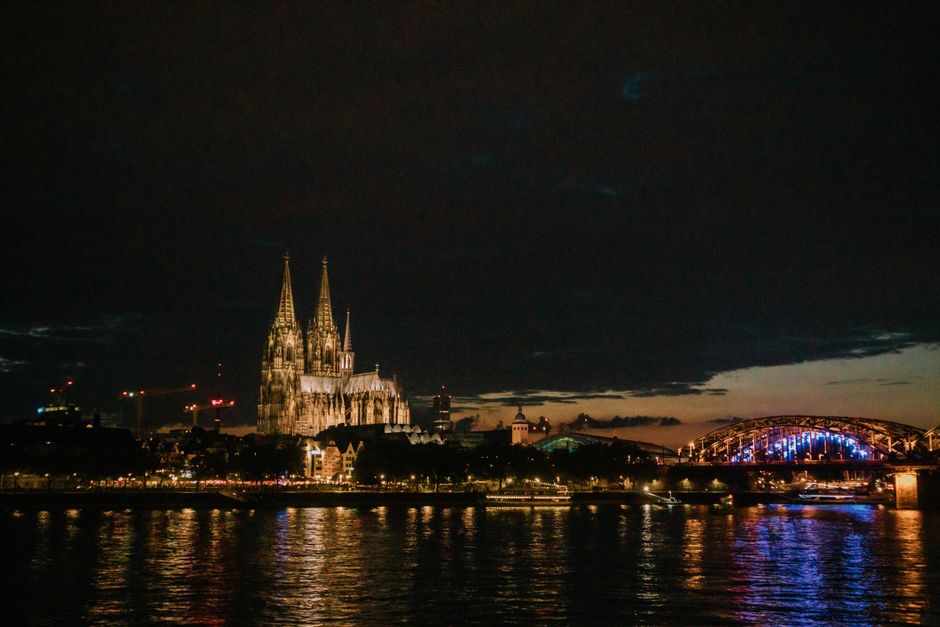
Cologne (Köln) is one of Germany’s oldest and friendliest cities, founded by the Romans on the Rhine almost 2,000 years ago. Its twin-spired Gothic cathedral greets you the moment you step out of the main station, and the old town around it is full of Romanesque churches, brewery taverns serving Kölsch in small glasses, and museums of Roman treasures, modern art and chocolate. Locals are famously chatty and love a party, above all at carnival, which officially begins on 11 November at 11:11 and peaks in February. Give it two days for the city, three or four to add Bonn, Aachen or a boat trip on the Middle Rhine.
Right now in Cologne
- Wed 10–22°C 49–71°F 10 mm Mostly clear
- Thu 11–15°C 53–59°F 7 mm Light showers
- Fri 8–12°C 47–54°F 5 mm Rain
Weather: MET Norway (CC BY 4.0) · Air quality: OpenAQ · Rates: ECB
Top tours in Cologne
See all tours for Cologne →
From local operators, with prices and reviews; you check availability and book on Viator, our partner. We may earn a commission at no extra cost to you. How we earn money
Cologne at a glance
- Best for: the cathedral and Romanesque churches, museums, beer-hall culture, carnival, Christmas markets and Rhine trips.
- How long: 2 days for the city, 3–4 with Bonn, Aachen, Brühl or the Middle Rhine.
- Best time: May to September for the riverside; late November to 23 December for the Christmas markets; February for carnival.
- New in 2026: since 1 July 2026, sightseeing inside Cologne Cathedral costs €12 (€6 reduced, under-14s free); services and prayer remain free.
- Getting in: the S19 S-Bahn or regional trains from Cologne Bonn Airport to the main station in about 15 minutes.
- Before you go: the Deutschlandticket, money, Sunday closing and entry rules are on our Germany travel guide.
Cologne’s neighbourhoods and who each one suits
Cologne is Germany’s fourth-largest city, with about 1.1 million people. The centre lies on the west (left) bank of the Rhine, inside a semicircle of boulevards called the Ring that follows the medieval walls; the cathedral and main station sit right next to the river. Across the Hohenzollern Bridge, the east bank (Deutz) has the trade fair grounds and the best view back over the city.
Altstadt (the old town)
The cathedral, the Roman-Germanic and Ludwig museums, the town hall, the colourful riverfront houses around Great St Martin’s Church, and the squares of Alter Markt and Heumarkt with their brewery taverns. Central and atmospheric; busy with day-trippers and river-cruise groups.
Rheinauhafen and the Südstadt
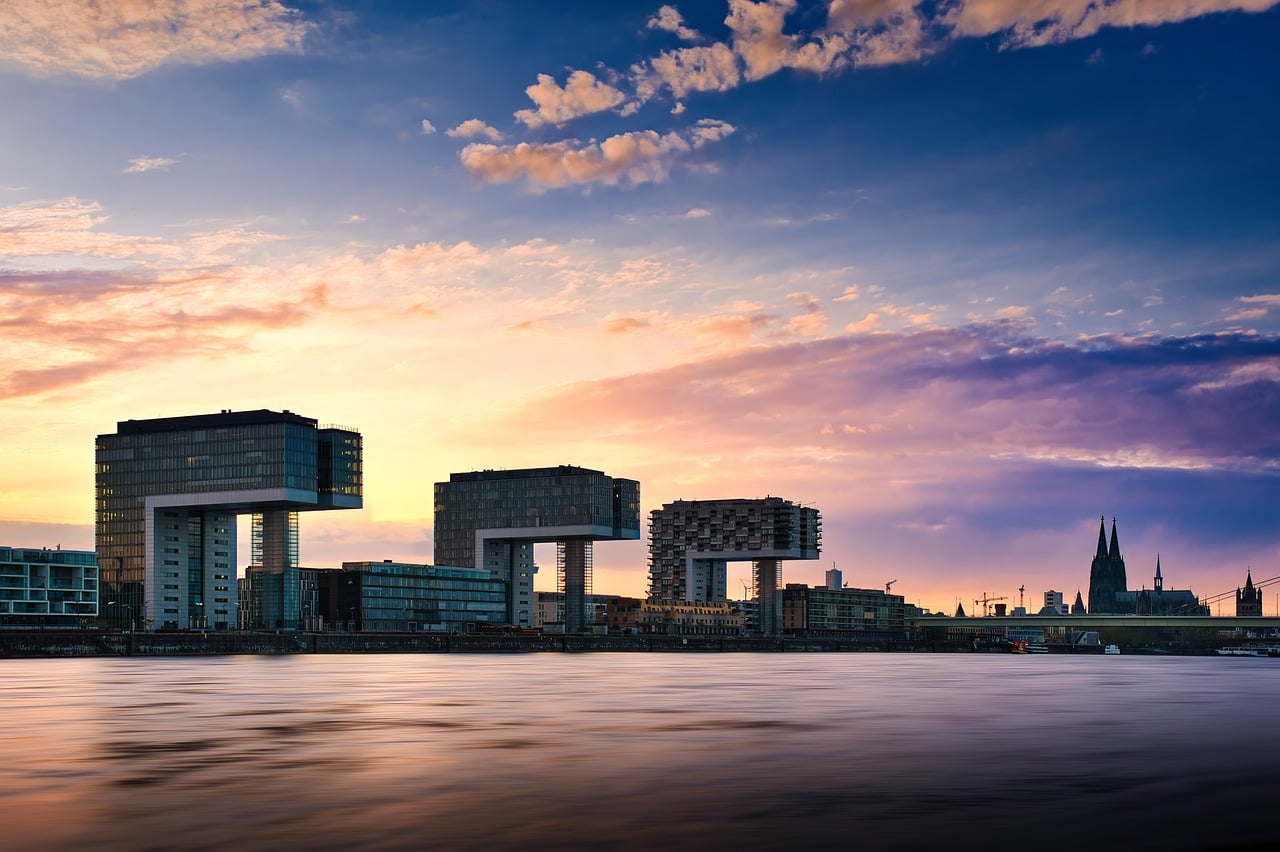
South of the old town, the old harbour has been rebuilt with the Chocolate Museum and the striking “Crane Houses”, three upside-down-L-shaped office towers. Behind it, the Südstadt (around Chlodwigplatz) is a down-to-earth area of pubs, cafés and the Severinstraße shopping street.
The Belgian Quarter and Ehrenfeld
West of the Ring, the Belgian Quarter (Belgisches Viertel) has boutiques, galleries and bars in handsome 19th-century streets; further out, Ehrenfeld is multicultural and creative, with street art, clubs and cheap eats. Good for a younger crowd and nightlife.
Deutz
On the east bank, Deutz has the Koelnmesse trade fair grounds, many business hotels and the KölnTriangle tower, whose viewing platform looks straight across at the cathedral. Handy for fairs and for trains from Köln Messe/Deutz station; one bridge from the old town.
Top things to see in Cologne
Prices and hours were checked on the official sites in October 2026; check again before you go.
Cologne Cathedral: the new €12 ticket
The Cathedral of St Peter (Kölner Dom) is one of the largest Gothic churches in the world and a UNESCO World Heritage Site. Begun in 1248 and finished only in 1880, it has two spires 157 metres high, soaring stained-glass windows and, behind the high altar, the golden Shrine of the Three Kings, said to hold the relics of the Magi. It was long free to enter, but with maintenance costs of tens of thousands of euros a day, the cathedral introduced a sightseeing ticket on 1 July 2026. As of October 2026:
- Cathedral ticket: €12 for adults and €6 reduced (students and young people from 14, trainees); free for children under 14 and for people with a severe disability and their companion. Buy online at koelner-dom.de or on site.
- Sightseeing hours: usually daily from 10:00 to 17:45 (last entry 17:30), and from 13:30 to 16:30 on Sundays and church holidays (last entry 16:15). Services and construction work can close parts of the cathedral at short notice.
- Still free: attending services, praying and lighting a candle. The north transept is open free of charge from 06:00 to 20:00 as a space for prayer and quiet; it is not a route to see the whole cathedral.
- Dress and behaviour: it is a working church, so dress respectfully, speak quietly and don’t walk around during services.
The tower climb and the treasury
For the view, climb 533 steps up a narrow spiral staircase in the south tower to a viewing platform about 100 metres up, passing the cathedral’s huge bells on the way; there is no lift. The tower climb has its own ticket, separate from the cathedral ticket: as of October 2026 it costs €8 (€4 reduced, free for children up to 13), or €12 combined with the treasury (€6 reduced). The tower is open from 09:00 to 18:00 from March to October and from 09:00 to 16:00 from November to February, with last entry 30 minutes before closing; it closes on 1 January, 11 November, 24, 25 and 31 December and on the main carnival days. The treasury (Domschatzkammer), in vaulted cellars beside the cathedral, shows gold reliquaries, vestments and Roman finds, and is open daily from 10:00 to 18:00 (last entry 17:30).
Roman Cologne and the Romanesque churches
Colonia Claudia Ara Agrippinensium was a Roman provincial capital, and its remains are everywhere: a stretch of Roman wall, a Roman tower, and the remains of the governor’s palace (the Praetorium) under the town hall, now part of the MiQua museum project under construction on the town hall square. The Roman-Germanic Museum, famous for its Dionysus mosaic, is closed for renovation and shows highlights in a temporary exhibition. Cologne also has twelve great Romanesque churches, built between about 1000 and 1250; don’t miss Great St Martin’s on the riverfront, St Gereon’s with its ten-sided dome, and St Maria im Kapitol.
Museums
- Museum Ludwig: next to the cathedral, one of Europe’s best collections of 20th-century art, with Pop Art, German Expressionism and a large Picasso collection.
- Wallraf-Richartz-Museum: medieval Cologne painting through Rembrandt to the Impressionists.
- Chocolate Museum (Schokoladenmuseum): in the Rheinauhafen, with a working production line and a three-metre chocolate fountain; very popular with families, so book ahead at weekends.
- NS-Dokumentationszentrum (EL-DE Haus): the former Gestapo headquarters, with cells and wall inscriptions left by prisoners, and an exhibition on Cologne under the Nazis.
- Farina Fragrance Museum: the birthplace of Eau de Cologne, in a house opposite the town hall where the original perfume has been made since 1709.
The Hohenzollern Bridge and the riverfront
Walk across the Hohenzollern Bridge, the railway bridge behind the cathedral whose fences are covered in tens of thousands of “love locks”, to the Rhine boulevard in Deutz. The steps there are the best spot in town for the classic view of the cathedral, especially at sunset. Back on the west bank, the Rhine promenade runs past the old town’s colourful houses to the Rheinauhafen.
Monuments
- Cologne Cathedral
Museums
- Chocolate Museum (Schokoladenmuseum)
- Farina Fragrance Museum
- Museum Ludwig
- Wallraf–Richartz Museum
Churches and cathedrals
- St. Gereon's Basilica
Zoos and aquariums
- Cologne Zoological Garden
Activities and best months
- City sightseeingCologne Cathedral is 157 m tall, the world's third-largest Gothic cathedral and a UNESCO World Heritage Site; it took 632 years to finish (1880) and holds the Shrine of the Three Kings and a 2007 Gerhard Richter window of 11,263 coloured squares. Cologne Tourism notes that from 1 July 2026 visitors need admission tickets, and it also promotes the 12 Romanesque churches, its brewhouses and its Christmas markets. · source
Other things to do in Cologne
Kölsch and the brewery taverns
Cologne’s local beer, Kölsch, is a light, crisp top-fermented ale served in slim 0.2-litre glasses called Stangen. In a traditional brewery tavern (Brauhaus) such as Früh am Dom, Gaffel am Dom, Peters Brauhaus or Päffgen, a waiter called a Köbes, in a blue apron, brings a fresh glass as soon as yours is empty and marks it on your beer mat; to stop, put the mat on top of your glass. Eat Halve Hahn (which, confusingly, is a rye roll with cheese, not half a chicken), Himmel un Ääd (black pudding with mashed potato and apple sauce) or a pork knuckle.
Carnival
Cologne carnival is one of Europe’s biggest street parties. The season opens on 11 November at 11:11, when tens of thousands of costumed revellers fill the old town and the Zülpicher Straße student quarter. The street carnival proper runs from Weiberfastnacht (Thursday 4 February 2027), when women cut off men’s ties, to Rose Monday (Rosenmontag, 8 February 2027), with a huge parade through the city throwing sweets and flowers to the crowds. Wear a costume, learn the cry “Kölle Alaaf!“, book accommodation months ahead and expect closures and crowds on the main days.
Rhine cruises and riverside walks
One-hour panorama cruises leave from the old-town piers near the cathedral from spring to autumn, and in summer longer boat trips run upriver to Bonn and the Siebengebirge hills. Hire a bike for cycling the flat riverside paths, or relax on the Rhine beaches and in the city parks, such as the Rheinpark in Deutz, on a summer evening.
Cologne’s Christmas markets in 2026
Cologne is one of the best cities in Germany for Christmas markets, with seven or more within walking distance of each other, each with its own theme. Dates for 2026, as published by the organisers and the city’s official site:
| Market | 2026 dates | What it’s like |
|---|---|---|
| Christmas market at the cathedral (Roncalliplatz) | 16 November – 23 December (closed Sunday 22 November) | The most famous, beneath the cathedral, with a giant tree and a starry canopy of lights |
| Neumarkt (“Market of Angels”) | 16 November – 23 December | White-clad stalls and angels; good crafts |
| Rudolfplatz (Nikolausdorf) | 16 November – 23 December | A St Nicholas village by the medieval Hahnentor gate |
| Heavenue (city centre) | 16 November – 23 December | An LGBTQ+-friendly market with pink lights and drag shows |
| Old town (Heinzels Wintermärchen, Heumarkt and Alter Markt) | 23 November 2026 – 10 January 2027 | The largest by area, with an ice rink and the gnome-themed “Heinzelmännchen” of Cologne legend |
| Harbour Christmas market (Rheinauhafen) | 13 November 2026 – 3 January 2027 | Maritime theme by the Chocolate Museum, in white tents |
| Chlodwigplatz and MediaPark | 19 November – 23 December | Smaller neighbourhood markets |
As of October 2026, the cathedral market opens from 11:00 to 21:00 Sunday to Wednesday, 11:00 to 22:00 on Thursday and Friday, and 10:00 to 22:00 on Saturday. Weekends and the days when river-cruise ships arrive are very crowded; go on a weekday afternoon. Mugs carry a deposit, and many smaller stalls prefer cash.
Day trips from Cologne
Cologne sits in the middle of one of Germany’s densest rail networks, and most of these trips are covered by the Deutschlandticket on regional trains.
The Middle Rhine Valley
The most beautiful stretch of the Rhine, between Koblenz and Bingen, is a UNESCO World Heritage Site of castles, vineyards and half-timbered wine villages, past the Lorelei rock. Take a regional train to Koblenz (about an hour) and continue by train or boat to Boppard, St Goar or Bacharach; ride one way by boat and return by train along the riverbank. It is also great for wine tasting and hiking on the Rheinsteig. See our Middle Rhine Valley guide for boats and castles.
Bonn, Brühl and Aachen
Bonn, the former West German capital and Beethoven’s birthplace, is about 20–30 minutes away by train, with the Beethoven House and a museum mile. The Rococo palaces of Augustusburg and Falkenlust at Brühl, a UNESCO World Heritage Site, are 15 minutes by train. Aachen, Charlemagne’s capital, about 40 minutes by ICE or an hour by regional train, has an extraordinary cathedral with an octagonal chapel from around 800, and hot springs.
Düsseldorf and beyond
Düsseldorf, Cologne’s friendly rival, is about 25 minutes by train, with its riverside old town, the “longest bar in the world” serving dark Altbier, and the elegant Königsallee. Further afield, Trier and the Moselle valley are about three hours away, and high-speed trains reach Brussels in under two hours, Amsterdam in under three and Paris in about three and a half.
Nearby destinations
- Düsseldorf34 km
- Middle Rhine Valley79 km
- Maastricht90 km
- Frankfurt153 km
- Luxembourg City159 km
- Utrecht180 km
- Antwerp181 km
- Brussels183 km
Getting there and getting around
From the airports
- Cologne Bonn Airport (CGN): the S19 S-Bahn and regional trains run from the station under the terminals to Köln Hauptbahnhof in about 15 minutes. The airport is inside Cologne’s city fare zone, so a single ticket (price level 1b) costs €4.00 as of October 2026; the Deutschlandticket is valid too. A taxi takes about 20 minutes.
- Düsseldorf Airport (DUS): the region’s bigger airport, with more long-haul flights. Regional and ICE trains from the airport’s long-distance station reach Cologne in about 30–45 minutes.
- Frankfurt Airport (FRA): ICE trains from the airport’s long-distance station reach Cologne in under an hour on the high-speed line, making Frankfurt a practical arrival airport for long-haul flights.
By train
Köln Hauptbahnhof, right beside the cathedral, is one of Germany’s busiest stations: ICE trains run to Frankfurt (about an hour), Hamburg and Berlin (about four hours each) and Munich (about 4 hours 30 minutes), and international trains to Brussels, Amsterdam and Paris. Some ICEs use Köln Messe/Deutz across the river instead, a five-minute walk over the Hohenzollern Bridge. Construction work around Cologne often changes timetables, so check the DB Navigator app on the day.
Trams, U-Bahn and buses (KVB)
Cologne’s transport company, KVB, runs trams (some underground in the centre) and buses, and the regional VRS tariff also covers S-Bahn and regional trains. The old town is compact enough to walk. As of October 2026, a single ticket within Cologne (price level 1b) costs €4.00 and is valid for 90 minutes; a short-trip ticket costs €2.90; and a 24-hour ticket for Cologne costs €9.60 for one person or €19.20 for up to five. Validate paper tickets on board or on the platform. The Deutschlandticket covers all of it, plus trips to Bonn, Düsseldorf and the Rhine.
Driving
You don’t need a car in Cologne. Most of the city is an environmental zone where cars need a green Umweltplakette sticker, parking is expensive, and traffic and roadworks are heavy. If you are touring the Rhine and Moselle by car, pick it up as you leave.
When to go and how long to stay
The Rhineland has one of Germany’s mildest climates: warm summers, mild and damp winters with little snow, and rain spread through the year. The table uses averages calculated from the German Weather Service’s (DWD) monthly records for 1991–2020 at the Köln/Bonn station, at the airport.
| Season | Average high / low | Rain per month | What it’s like | Good for |
|---|---|---|---|---|
| Winter (Dec–Feb) | 6–7 °C / 0–1 °C | 54–69 mm | Mild for Germany, grey and damp; snow is rare | Christmas markets, museums, carnival |
| Spring (Mar–May) | 11–20 °C / 2–8 °C | 48–62 mm | Early blossom, sunny spells and showers | City walks, the first beer-garden days, Rhine cruises from April |
| Summer (Jun–Aug) | 23–25 °C / 11–13 °C | 83–87 mm | Warm, with thunderstorms; heatwaves top 30 °C | Riverside evenings, Rhine trips, cycling, wine villages |
| Autumn (Sep–Nov) | 20 °C falling to 10 °C / 10 °C falling to 4 °C | 64–67 mm | Mild September, wine harvest, then wetter | Sightseeing, the Middle Rhine, carnival opening on 11 November |
Cologne gets about 800 mm of rain a year, with the most in summer, often as short downpours. Big trade fairs at the Koelnmesse, such as gamescom in August and Art Cologne, push hotel prices up, so check the fair calendar before booking.
Events worth planning around
- February: street carnival from Weiberfastnacht (4 February 2027) to Rose Monday (8 February 2027).
- Spring and summer: Rhine cruises and riverside beer gardens; the Cologne Lights fireworks on the Rhine in summer; Cologne Pride (ColognePride and its huge CSD parade) in early July, one of Europe’s biggest.
- August: gamescom, the world’s biggest video-game fair.
- November and December: the carnival season opens on 11 November at 11:11, and the Christmas markets run from 13 or 16 November to late December or early January.
How long to stay: 2-, 3- and 4-day plans
2 days: Day 1, the cathedral (ticket booked online) and the tower climb in the morning, the treasury, the old town, Great St Martin’s and a Brauhaus lunch, then the Hohenzollern Bridge and the Deutz riverbank at sunset. Day 2, Museum Ludwig or the Wallraf-Richartz, the Rheinauhafen and the Chocolate Museum, and an evening in the Belgian Quarter.
3 days: add a day on the Middle Rhine by train and boat. 4 days: add Bonn and Brühl, or Aachen, or Düsseldorf’s old town.
Weather month by month
Averages from DWD normals 1991–2020, Köln/Bonn (airport) · Last reviewed 4 Oct 2026
Where to stay in Cologne and the accommodation tax
- Altstadt and around the cathedral: walk to everything and close to the main station; busy and more expensive.
- Inside the Ring (Friesenviertel, Neumarkt): central, with more choice and good tram links.
- Belgian Quarter: stylish and lively, with boutique hotels and apartments.
- Deutz: business hotels near the trade fair, with a cathedral view across the river.
A central 3- or 4-star double often costs €100–180 a night, but prices can double or triple during big trade fairs and carnival. Cologne adds a culture tax (Kulturförderabgabe) of 5% of the room price to hotel bills, as of October 2026.
Practical tips for Cologne
- Book the cathedral online: the €12 ticket can be bought on site, but booking online saves queuing, especially on weekends and in December.
- Order Kölsch, not other beers: in a Brauhaus, it’s the only beer on tap, and the Köbes keeps it coming until you cover your glass with the beer mat.
- Check the fair calendar: hotel prices soar during big trade fairs.
- Mind the station area: the cathedral square and main station are crowded day and night; watch for pickpockets.
- Sundays: shops close, but the cathedral (from 13:30 for sightseeing), museums and Brauhäuser are open.
What to pack for Cologne
Comfortable shoes for cobbled streets and the 533 tower steps (no heels on the spiral staircase), a light waterproof jacket or umbrella in any season, layers for spring and autumn, and a warm coat, hat and gloves for the Christmas markets, where you’ll be standing outside for hours. For carnival, bring or buy a costume and old shoes you don’t mind getting sticky. Pack clothes that cover the shoulders for the cathedral, a type F/C plug adapter if you need one and some cash for market stalls.
What to pack
- City walking shoesLisbon and Porto are steep, with polished limestone cobbles that get slippery, so grippy soles matter.
- Day packs and anti-theft bagsA small zipped or anti-theft bag makes crowded trams and viewpoints less stressful.
- Rain jacketsFrom October to April Porto and Lisbon see rain on roughly a third of days.
- Travel adapters and convertersPortugal uses Type C and F sockets at 230 V, so most visitors from outside Europe need an adapter.
Cologne travel FAQ
How many days do you need in Cologne?
Two days covers the cathedral and its tower, the old town, a couple of museums and a Brauhaus evening. Add a day for the Middle Rhine and another for Bonn, Aachen or Düsseldorf.
Is Cologne Cathedral free to visit?
Not for sightseeing any more. Since 1 July 2026, a cathedral ticket costs €12 (€6 reduced), and children under 14 are free. Attending services, praying and lighting a candle remain free, and the north transept is open for prayer from 06:00 to 20:00.
How much does it cost to climb the Cologne Cathedral tower?
€8 (€4 reduced), or €12 combined with the treasury, as of October 2026; this is separate from the cathedral ticket. It’s 533 steps to the platform about 100 metres up, with no lift.
What are the cathedral’s opening hours for visitors?
For sightseeing, usually 10:00 to 17:45 daily, and 13:30 to 16:30 on Sundays and church holidays. The tower opens 09:00 to 18:00 from March to October and 09:00 to 16:00 from November to February.
When are the Cologne Christmas markets in 2026?
The cathedral market runs from 16 November to 23 December 2026 (closed 22 November). The harbour market runs from 13 November to 3 January 2027 and the old-town market from 23 November to 10 January 2027.
When is Cologne carnival in 2027?
The season opens on 11 November 2026 at 11:11. The street carnival runs from Weiberfastnacht on Thursday 4 February to Rose Monday, 8 February 2027, with the big parade on Rose Monday.
What is the best time to visit Cologne?
May to September, with highs of about 20–25 °C and life on the river. December is magical for the Christmas markets, and February for carnival; winters are mild, with highs of 6–7 °C.
How do I get from Cologne Bonn Airport to the city?
Take the S19 or a regional train to Köln Hauptbahnhof in about 15 minutes. A single ticket within Cologne costs €4.00 as of October 2026, and the Deutschlandticket is valid.
Is there a tourist tax in Cologne?
Yes. As of October 2026, Cologne adds a culture tax of 5% of the room price to hotel bills, including for business travellers.
What is Kölsch and where should I drink it?
Cologne’s light local beer, served in small 0.2-litre glasses. Try it in a traditional Brauhaus in the old town, where the waiter (Köbes) refills your glass until you put your beer mat on top.
Can I visit the Middle Rhine from Cologne as a day trip?
Yes. Take a regional train to Koblenz (about an hour), then continue by train or boat to Boppard, St Goar or Bacharach. See our Middle Rhine Valley guide.
What are the best day trips from Cologne?
The Middle Rhine Valley, Bonn, the Brühl palaces, Aachen and Düsseldorf. Brussels, Amsterdam and Paris are within a few hours by high-speed train.
Sources
- © OpenStreetMap contributors · ODbL · fetched 4 Oct 2026
- Wikidata · CC0 · fetched 4 Oct 2026
Sources and last review
Researched and last reviewed on 4 October 2026. Climate: averages calculated from the German Weather Service’s (DWD) 1991–2020 monthly records for Köln/Bonn; the cathedral, tower and treasury: koelner-dom.de; the cathedral ticket price: press reports confirmed by the cathedral’s own ticket rules; Christmas markets: the cathedral market’s organiser and the city’s official site, koeln.de; fares: KVB; the Deutschlandticket: Deutsche Bahn. The airport’s fare zone, the accommodation tax, the Roman-Germanic Museum’s status, carnival dates (calculated from Easter 2027) and journey times come partly from search summaries or general knowledge and are flagged for checking. Prices, hours and timetables change, so check the official links before you go. For entry rules, money and general safety, see our Germany travel guide.
Plan your trip
Partner links: TravelerCenter may earn a commission if you book, at no extra cost to you.
🇩🇪 Useful German phrases for Cologne
All 38 German phrases: restaurant, hotel, emergencies, romance (printable) →