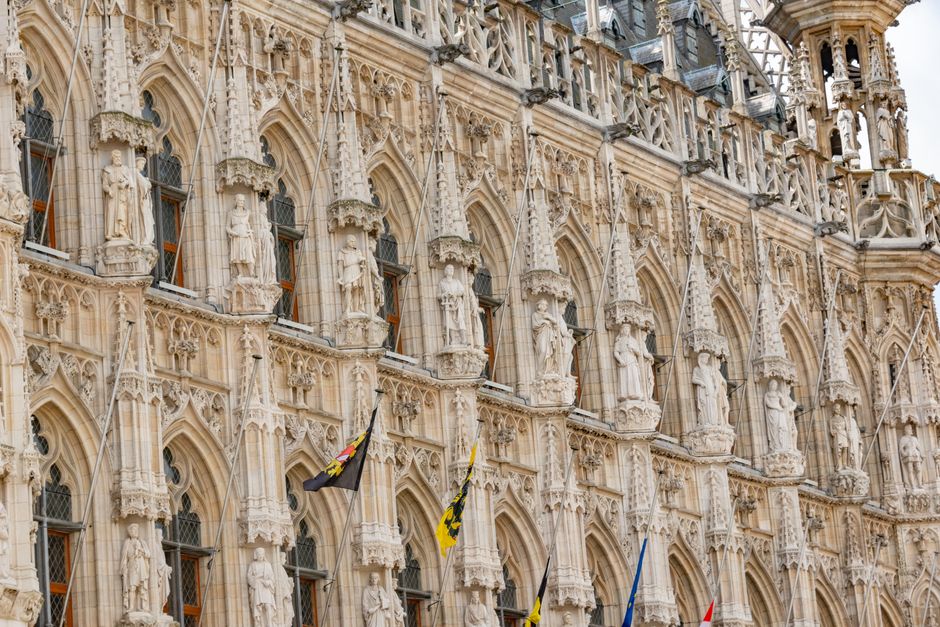
Belgium is small enough to cross by train in under three hours, yet it packs in some of Europe’s finest medieval cities, world-class art and a food and beer culture that makes every meal an event. Brussels has the Grand-Place, Art Nouveau houses, comic-strip murals and the EU quarter; Bruges and Ghent are canal cities of belfries, guildhalls and Flemish masterpieces; Antwerp brings Rubens, diamonds, fashion and a lively port city feel; and the coast offers 67 km of sandy beach linked by a tram, with Ostend as its seaside capital. In the south, French-speaking Wallonia hides the green hills, rivers, castles and caves of the Ardennes. Trains are frequent and cheap, distances are short, and English is widely spoken in the north and in Brussels. Spring and late summer are lovely, and December brings Christmas markets everywhere. Give it four or five days for Brussels, Bruges and Ghent, and a week to ten days to add Antwerp, the coast and the Ardennes.
Right now in Belgium
- Wed 10–23°C 49–73°F 16 mm Rain
- Thu 10–15°C 50–58°F 6 mm Mostly clear
- Fri 8–13°C 47–55°F 3 mm Light rain
Weather: MET Norway (CC BY 4.0) · Rates: ECB
Key facts
| Currency | Euro (EUR, €); cash and major debit and credit cards accepted in most places; every business must offer at least one electronic payment methodSource: visitflanders.com · Last reviewed 4 Oct 2026 |
|---|---|
| Languages | Dutch in Flanders, French in Wallonia, German in the far east; Brussels is bilingual French-Dutch; English is widely spokenSource: taipei.diplomatie.belgium.be · Last reviewed 4 Oct 2026 |
| Plugs and voltage | Type C and E · 230 V, 50 HzSource: wikidata.org · Last reviewed 4 Oct 2026 |
| Emergency number | 112 (ambulance, fire, all emergencies); 101 police; 1733 out-of-hours doctorSource: 112.be · Last reviewed 4 Oct 2026 |
| Driving side | On the right; 120 km/h on motorways, 70 (Flanders) or 90 (Wallonia) outside towns, 50 in towns, 30 in most of Brussels; foreign cars must register for the Brussels, Antwerp and Ghent low-emission zonesSource: brussels.be · Last reviewed 4 Oct 2026 |
| Tap water | Safe to drink (99.56% of analyses in Flanders met the standards in 2024)Source: vmm.vlaanderen.be · Last reviewed 4 Oct 2026 |
| Tipping | Not required (service included); 5-10% in restaurants for good service, round up in cafésSource: visitbruges.be · Last reviewed 4 Oct 2026 |
| Calling code | +32 (dial 00 for international calls)Source: wikidata.org · Last reviewed 4 Oct 2026 |
| Time zones | CET (UTC+1), summer time CEST (UTC+2) from the last Sunday in March to the last Sunday in OctoberSource: transport.ec.europa.eu · Last reviewed 4 Oct 2026 |
| Entry summary | Schengen and EU. Most visitors from outside the EU stay visa-free for up to 90 days in 180 and register in the EU Entry/Exit System at the border; ETIAS is not yet in operation.Source: home-affairs.ec.europa.eu · Last reviewed 4 Oct 2026 |
Multi-day tours of Belgium
Multi-day tours from local operators. You check dates and book on Viator, our partner; we may earn a commission at no extra cost to you. How we earn money
Belgium at a glance: three regions, three languages
Belgium is a federal kingdom in north-west Europe, between the Netherlands, Germany, Luxembourg, France and the North Sea. It has about 11.9 million inhabitants (11.87 million at the start of 2026, according to the national statistics office, Statbel), which makes it one of the most densely populated countries in Europe. Brussels is the capital of the country, of Flanders and, in practice, of the European Union, with the European Commission, the Council and much of the European Parliament’s work based there, and NATO’s headquarters on the edge of the city.
The country is divided into three regions. Flanders in the north speaks Dutch (often called Flemish), and holds most of the famous art cities: Bruges, Ghent, Antwerp, Leuven and Mechelen, plus the whole coast. Wallonia in the south speaks French, and is greener and hillier, with the Meuse valley, Namur, Dinant, Durbuy and the Ardennes. Brussels-Capital Region is officially bilingual, French and Dutch, though French is the language you will hear most, alongside dozens of others in one of Europe’s most international cities. A small German-speaking community lives in the east, around Eupen and Sankt Vith, so Belgium has three official languages: Dutch, French and German.
For visitors this matters in small ways: place names change with the language (Brussels is Brussel or Bruxelles, Antwerp is Antwerpen or Anvers, Liège is Luik, Mechelen is Malines, Leuven is Louvain), road signs in Flanders show only the Dutch name of a French-speaking town and vice versa, and it is polite to start in English rather than the “wrong” local language if you do not speak the right one. Time zone: Belgium uses Central European Time (UTC+1) in winter and Central European Summer Time (UTC+2) from the last Sunday in March to the last Sunday in October, the same as the Netherlands, France and Germany and one hour ahead of the UK.
The regions at a glance
- Brussels: the capital region of 19 municipalities: the Grand-Place and the old centre, royal Brussels and the art museums on the Mont des Arts, Art Nouveau Saint-Gilles and Ixelles, the EU quarter, the Atomium and the Sonian Forest on its southern edge.
- Flanders (Vlaanderen): the Flemish art cities of Bruges, Ghent, Antwerp, Leuven and Mechelen; the North Sea coast from De Panne to Knokke-Heist; the First World War battlefields and cemeteries around Ypres (Ieper); and the flat, cycle-friendly countryside of the polders, the Flemish Ardennes hills and the Kempen heaths.
- Wallonia (Wallonie): Namur, the regional capital, on the Meuse; Dinant under its citadel; Durbuy, Bouillon and La Roche-en-Ardenne in the wooded Ardennes; the spa town of Spa and the Hautes Fagnes moors; the caves of Han-sur-Lesse; Liège and Mons; and the battlefield of Waterloo just south of Brussels.
- The East Cantons (Ostbelgien): the small German-speaking area around Eupen and Sankt Vith, close to the German border and the Hautes Fagnes, quiet and good for walking and cycling.
Regions
- East Flanders
- Flemish Brabant
- Hainaut
- Limburg
- Province of Antwerp
- Province of Liège
- Province of Luxembourg
- Province of Namur
- Walloon Brabant
- West Flanders
Where to go: art cities, coast and Ardennes
Most first trips combine Brussels with Bruges and Ghent, which are less than an hour apart by train. Because Belgium is so compact, you can stay in one or two bases and see most of the country on day trips. With more time, add Antwerp, a day or two at the coast, and a few nights in the Ardennes, where a car helps.
Brussels
The capital is more varied than its “grey EU city” reputation suggests. The Grand-Place, ringed by gilded guildhalls and the Gothic Town Hall, is one of the most beautiful squares in Europe and a UNESCO World Heritage Site. Around it are the glass-roofed Royal Saint-Hubert Galleries, the tiny Manneken Pis, chocolate shops and the restaurant lanes of the Îlot Sacré. Up the hill, the Royal Museums of Fine Arts hold Bruegel and the Magritte Museum, the Musical Instruments Museum sits in an Art Nouveau department store, and the Royal Palace opens to visitors in summer. Further out, the Atomium, the Horta Museum, the comic-strip walls and the European Parliament’s free Parlamentarium are all worth the trip. Brussels is also the best place to try everything Belgium is famous for: fries from a friterie, waffles, pralines and hundreds of beers in the old cafés.
Bruges
Bruges (Brugge) is the fairy-tale one: a remarkably complete medieval trading city of canals, cobbled streets, step-gabled houses and almshouses, all a UNESCO World Heritage Site. Climb the 366 steps of the Belfry above the Markt, take a canal boat, see the Flemish Primitives in the Groeninge Museum and Memling’s works in the old Saint John’s Hospital, and visit the Begijnhof, a quiet enclosure of white houses, early in the morning. It is very busy in summer and on weekends, with day-trippers and cruise passengers, so stay overnight to enjoy it in the evening, when the crowds leave. Bruges is about an hour from Brussels by train and 15 minutes from the coast.
Ghent
Ghent (Gent) has towers and canals to rival Bruges, but it is a working university city, livelier and less touristy. Its great treasure is the van Eyck brothers’ Adoration of the Mystic Lamb (the Ghent Altarpiece) in Saint Bavo’s Cathedral, one of the most important paintings in Europe. Walk the Graslei and Korenlei quays, climb the Belfry, explore the medieval Gravensteen castle, and spend an evening in the bars of the Patershol district. In July, the ten-day Gentse Feesten turns the whole centre into a free street festival.
Antwerp
Antwerp (Antwerpen), Belgium’s second city and one of Europe’s largest ports, mixes Old Masters with fashion and street life. Look up at the soaring Cathedral of Our Lady, which holds four Rubens altarpieces, and at the guildhalls of the Grote Markt; visit the Plantin-Moretus Museum, a 16th-century printing house on the UNESCO list; and see the restored Royal Museum of Fine Arts (KMSKA). The Central Station, a grand “railway cathedral”, is worth seeing even if you do not catch a train there. The MAS museum’s free rooftop looks over the docks. From December 2026, some Eurostar trains from London will stop in Antwerp on their way to Amsterdam (see Getting there).
Ostend and the Belgian coast
Belgium’s coast is one long sandy beach backed by dunes and resort towns, from De Panne near the French border to Knokke-Heist near the Netherlands, all linked by the Coast Tram (Kusttram), one of the longest tram lines in the world. Ostend (Oostende) is the biggest town on the coast: a seaside promenade, fish stalls and seafood restaurants, the Mu.ZEE art museum and the house of the painter James Ensor, the sailing ship Mercator and, just outside town, the Atlantic Wall open-air museum. Other favourites are chic Knokke-Heist, family-friendly De Haan with its Belle Époque villas, and De Panne’s wide beaches and dunes. Summer weekends are busy; spring and September are quieter and still pleasant for long beach walks.
The Ardennes and the Meuse valley
Southern Belgium feels like a different country: forested hills, deep river valleys, castles and stone villages. Namur, the capital of Wallonia, sits where the Sambre meets the Meuse under a huge citadel, reached by cable car. Upriver, Dinant is squeezed between cliffs, with its onion-domed collegiate church, a citadel above it and a museum to Adolphe Sax, inventor of the saxophone, who was born here; kayaking on the Lesse river from nearby is a classic summer day out. Durbuy, which calls itself “the smallest town in the world”, is a pretty cluster of stone houses in the Ourthe valley, popular for weekends and outdoor activities. Further south and east are the caves and wildlife park of Han-sur-Lesse, the castle of Bouillon, La Roche-en-Ardenne, the Hautes Fagnes moors and Spa, the town that gave its name to spas everywhere. The Ardennes are best for walking, cycling, kayaking and good food, and a car makes them much easier to explore.
Leuven, Mechelen and other easy day trips
Leuven, 20–25 minutes from Brussels by train, is a lively university town with a flamboyant Gothic Town Hall, the Oude Markt, often called the longest bar in Europe, and the home of one of the world’s largest brewers. Mechelen, halfway between Brussels and Antwerp, has Saint Rumbold’s Cathedral tower with its carillon and views, and a quieter, family-friendly centre. Also worth your time: Ypres (Ieper) and the First World War sites of Flanders Fields, where the Last Post is played at the Menin Gate every evening at 20:00; the battlefield of Waterloo, with its memorial and Lion’s Mound; Liège, a gritty, friendly city with the striking Guillemins station; and Mons, with its belfry and the Doudou festival.
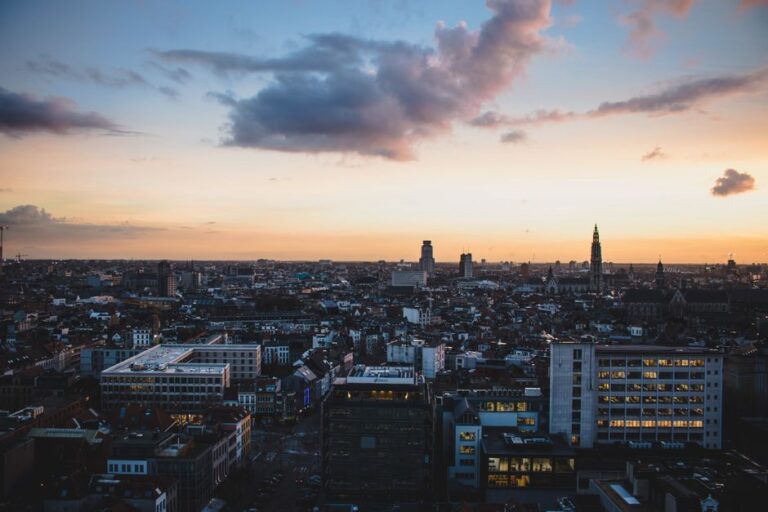
Antwerp Travel Guide
Plan a trip to Antwerp: the Cathedral of Our Lady and its Rubens paintings, the Rubens House restoration (house closed until at least 2030;…
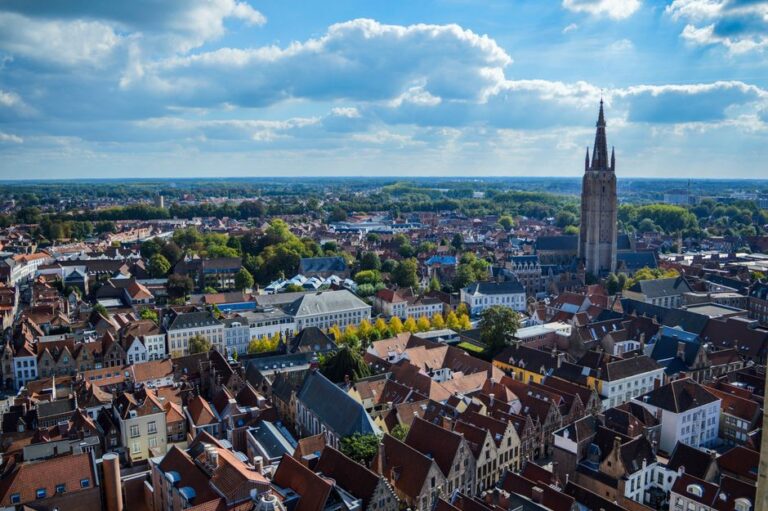
Bruges Travel Guide
Plan a trip to Bruges: Belfry tickets and time slots, the Church of Our Lady and Michelangelo's Madonna, the Groeninge Museum before its January…
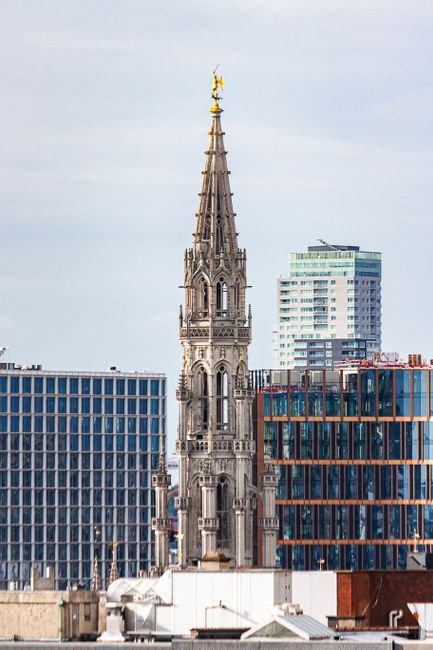
Brussels Travel Guide
Plan a trip to Brussels: the Grand-Place and Manneken Pis, Atomium tickets and the 2027 maintenance closure, the Royal Museums of Fine Arts and…
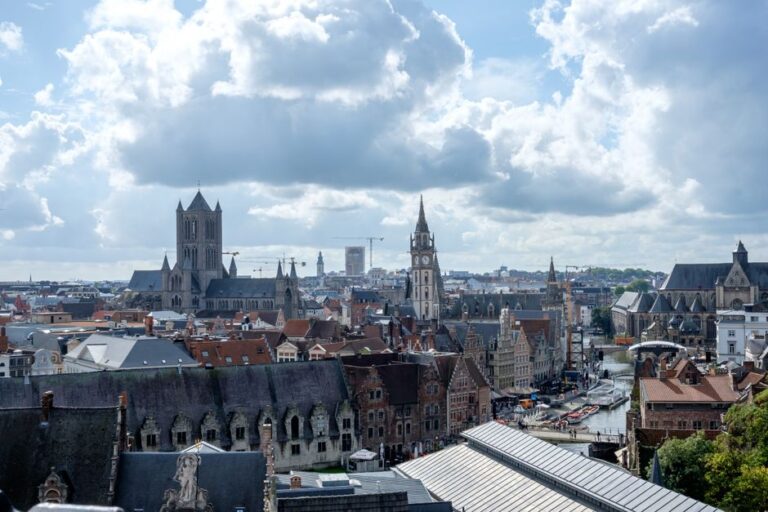
Ghent Travel Guide
Plan a trip to Ghent: Ghent Altarpiece tickets, the AR tour and the restoration until spring 2027, the Gravensteen, the Belfry, the Graslei and…
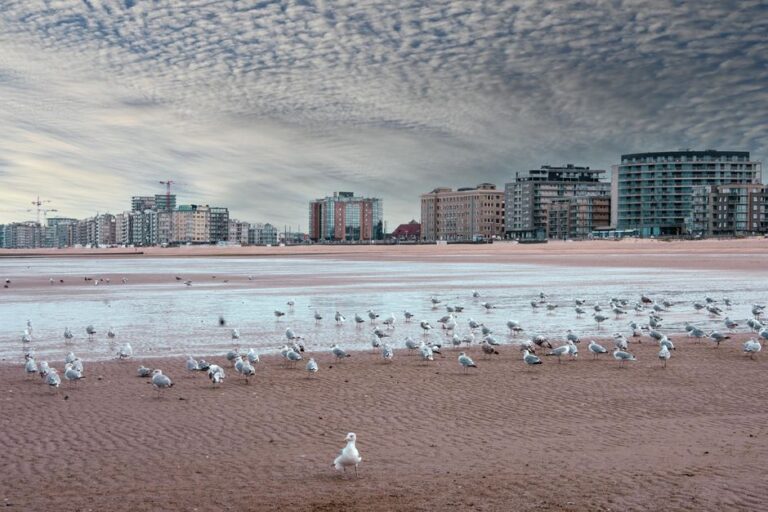
Ostend Travel Guide
Plan a trip to Ostend on the Belgian coast: the beach and promenade, lifeguard seasons and dog rules, Mu.ZEE at the Venetian Galleries during…
Best time to visit Belgium
Belgium has a mild, damp sea climate, similar to the Netherlands and southern England: cool summers, mild winters, and rain spread through the year, often as showers. The coast is breezier, sunnier and a little cooler in summer; the inland cities are slightly warmer; and the Ardennes are clearly cooler and wetter, with frost and some snow in winter. The table shows rounded average daily highs from the official 1991–2020 climate normals of the Royal Meteorological Institute (KMI/IRM), published through the World Meteorological Organization, at one station per area, and the number of days a year with at least 1 mm of rain.
| Area (station) | Spring highs (Mar–May) | Summer highs (Jun–Aug) | Autumn highs (Sep–Nov) | Winter highs (Dec–Feb) | Rainy days a year |
|---|---|---|---|---|---|
| Brussels (Uccle) | 11–18 °C | 21–23 °C | 20 °C falling to 10 °C | 6–7 °C | about 133 |
| Ghent and inland Flanders (Semmerzake) | 11–19 °C | 21–24 °C | 20 °C falling to 10 °C | 7–8 °C | about 133 |
| Antwerp (Antwerp Deurne) | 11–19 °C | 22–24 °C | 20 °C falling to 10 °C | 7–8 °C | about 128 |
| Ostend and the coast (Ostend Airport) | 10–16 °C | 19–22 °C | 19 °C falling to 10 °C | 7 °C | about 125 |
| Namur and the Meuse valley (Florennes) | 10–17 °C | 20–23 °C | 19 °C falling to 9 °C | 5–6 °C | about 135 |
| High Ardennes (Saint-Hubert) | 8–16 °C | 19–21 °C | 17 °C falling to 7 °C | 3–4 °C | about 155 |
Annual rainfall is about 800–850 mm in the lowlands and around 1,100 mm in the high Ardennes, where winter nights average just below freezing. April is the driest month everywhere, and July the sunniest; the coast gets the most sunshine, about 1,840 hours a year at Ostend against about 1,600 in Brussels. Summer days are long, light until about 22:00 in late June, while in December it is dark by about 16:30. Pack a rain jacket in any season. Recent summers have brought more heatwaves, with days above 30 °C, than these long-term averages suggest.
Crowds and prices through the year
- April to June: one of the best times: spring blossom, the bluebells of the Hallerbos forest near Brussels in late April, long days and pleasant walking weather. Easter and the May holiday weekends are busy in Bruges and at the coast.
- July and August: the warmest weather, festivals almost every weekend, and the busiest time at the coast, in Bruges and in the Ardennes during the Belgian, Dutch and German school holidays.
- September and October: often settled weather, fewer crowds, autumn colours in the Ardennes and the game season in Walloon restaurants.
- November to February: short, grey days, but cosy cafés and Christmas markets from late November to early January. Outside the holidays it is the cheapest time to visit, though some coastal and Ardennes attractions close or cut their hours.
Festivals and events 2026–2027
- Christmas markets: Brussels’ Winter Wonders (Plaisirs d’Hiver / Winterpret) runs from Friday 27 November 2026 to Sunday 3 January 2027 around the Grand-Place, the Bourse, Place Sainte-Catherine and the Fish Market, with chalets, a Ferris wheel, a skating rink and a sound-and-light show on the Grand-Place. Bruges, Ghent, Antwerp, Leuven and Liège hold their own markets from late November or early December to around New Year; check each city’s dates.
- Carnival: the Carnival of Binche, on UNESCO’s intangible heritage list, peaks on 7, 8 and 9 February 2027 (Sunday to Shrove Tuesday), when the Gilles in wax masks and ostrich-feather hats dance through the town and throw oranges. Aalst holds its own boisterous carnival on the same days.
- Spring: the Royal Greenhouses of Laeken open for a few weeks in April and May (dates are announced each year); the bluebells of the Hallerbos in late April; and Bruges’s Procession of the Holy Blood on Ascension Day, 6 May 2027.
- Summer: the Ommegang, a Renaissance pageant on the Grand-Place in Brussels, in the first days of July (it was on 1 and 3 July in 2026; 2027 dates to be confirmed); the Gentse Feesten, a ten-day street festival in Ghent, from 16 to 25 July 2027; the Tomorrowland electronic music festival in Boom, between Antwerp and Brussels, usually on the last two weekends of July (2027 dates not yet announced as of October 2026); National Day parades and fireworks in Brussels on 21 July; and many beer, music and folk festivals.
- The Flower Carpet: every two years, in mid-August, the Grand-Place is covered by a 70 m by 24 m carpet of begonias and dahlias. The 2026 carpet (13–16 August 2026) has already been and gone; the next is due in August 2028, so there is none in 2027.
- Autumn: Heritage Days open historic buildings for free in September (Flanders, Wallonia and Brussels each set their own weekends), and Armistice Day ceremonies on 11 November are especially moving at the Menin Gate in Ypres.
Public holidays
Belgium has ten national public holidays. Banks, offices and many shops close, museums often stay open, and trains run a weekend timetable; holiday weekends are busy at the coast and in the Ardennes. When a holiday falls on a Sunday, it is not moved for the general public. Each language community also has its own day, observed mainly by public services and schools: the Flemish Community on 11 July, the French Community on 27 September and the German-speaking Community on 15 November.
| Holiday | Date |
|---|---|
| All Saints’ Day | Sunday 1 November 2026 |
| Armistice Day | Wednesday 11 November 2026 |
| Christmas Day (26 December is not a national holiday) | Friday 25 December 2026 |
| New Year’s Day | Friday 1 January 2027 |
| Easter Monday | 29 March 2027 |
| Labour Day | Saturday 1 May 2027 |
| Ascension Day | Thursday 6 May 2027 |
| Whit Monday | 17 May 2027 |
| National Day | Wednesday 21 July 2027 |
| Assumption Day | Sunday 15 August 2027 |
Weather month by month
Averages from RMI normals 1991–2020, Uccle (Brussels) · Last reviewed 4 Oct 2026
How long to stay: sample itineraries
Distances are short. From Brussels, Ghent is about 30–35 minutes by fast train, Antwerp about 40–50 minutes, Bruges about an hour, Ostend about 1 hour 15 minutes and Namur about an hour. Most travellers need no car, except for the Ardennes villages and countryside.
3–4 days: Brussels, Bruges and Ghent
Two days in Brussels for the Grand-Place, the art museums, Art Nouveau and the food, then a night in Bruges and a day in Ghent on the way back. If you only have a long weekend, Bruges and Ghent both work as day trips from Brussels, but an overnight stay in Bruges is much more atmospheric.
7 days: the art cities and the coast
Two nights in Brussels (with a half-day in Leuven or Mechelen), two in Ghent or Bruges, one at the coast in Ostend or De Haan, and two in Antwerp. This route follows the main railway lines, so you can do it all by train and finish in Antwerp for onward trains to Rotterdam and Amsterdam.
10 days: add Wallonia and the Ardennes
Follow the seven-day route, then head south: a night in Namur, two or three in the Ardennes around Dinant, Durbuy or La Roche-en-Ardenne for walking, kayaking and castles, with a stop at Waterloo on the way. Rent a car in Namur or Brussels for this part, or use trains and local buses with more patience.
14 days: Belgium and its neighbours
Belgium is a natural hub. Combine it with the Netherlands (Antwerp to Maastricht or Zeeland is easy), with Paris, about 1 hour 20 minutes from Brussels by high-speed train, with Cologne, under two hours away, or with London, two hours by Eurostar. A classic two-week loop is London, Brussels, Bruges, Ghent, Antwerp and Amsterdam, or Paris, Brussels, the Ardennes and Luxembourg.
Entry, money and costs
Entry: Schengen, EES and ETIAS (last reviewed October 2026)
Belgium is part of the European Union and the Schengen area. Citizens of the EU, the European Economic Area and Switzerland can enter with a valid passport or national ID card and stay without limit. Visitors from many other countries, including the United States, Canada, the UK, Australia and New Zealand, can visit without a visa for up to 90 days in any 180-day period across the whole Schengen area; others need a Schengen visa before travelling.
- Entry/Exit System (EES): the EU’s digital border system has been fully running at all Schengen external borders since 10 April 2026. The first time you enter, non-EU visitors give fingerprints and a facial photo at a kiosk or border desk instead of getting a passport stamp; children under 12 are not fingerprinted. Registration is free, and the record lasts three years. Eurostar passengers from London go through these checks at St Pancras before departure; allow extra time there and at Brussels Airport.
- ETIAS: the EU’s planned online travel authorisation (fee €20) is not in operation as of October 2026, and no start date has been officially announced. You don’t need one yet. Ignore websites selling “ETIAS applications” before then.
- Passport validity: non-EU passports must have been issued within the last 10 years and be valid for at least three months after the day you plan to leave the Schengen area. Border officers may ask for a return ticket, proof of accommodation and proof of funds.
- Border checks with neighbours: as of October 2026, Belgium itself does not run temporary checks at its internal borders, but several neighbours do: Germany checks arrivals at all its land borders, including from Belgium, until at least 15 March 2027, and France has checks at its internal borders, renewed every six months. The Netherlands also ran checks on its borders with Belgium and Germany until 30 September 2026. Always carry your passport or ID card on trains, buses and drives across the border, even on a day trip to Lille, Maastricht or Aachen.
Rules change, so check the official pages before you travel: the European Commission’s EES and ETIAS pages, the Belgian Immigration Office and foreign affairs ministry (FPS Foreign Affairs) and your own government’s travel information.
Language
Dutch is spoken in Flanders, French in Wallonia and mostly French in Brussels, and German in the small eastern cantons. English is widely spoken in Flanders and Brussels, especially by younger people and in tourism, and menus in Bruges or Ghent often come in four languages. In Wallonia and the Ardennes, English is less common, so a little French helps. Useful words: in Dutch, hallo (hello), dank u or merci (thank you; Flemings use both), alstublieft (please, or “here you are”) and schol (cheers); in French, bonjour, merci, s’il vous plaît and santé. Belgians are courteous and a little reserved; say hello when you enter a small shop or café.
Money: cards, Bancontact and cash
The currency is the euro (€). Since 1 July 2022, Belgian law requires every shop, café, restaurant and other business that sells to consumers to offer at least one electronic way to pay, and businesses must still accept cash, except for large amounts or other legitimate reasons. In practice, contactless cards and phone wallets work in most hotels, restaurants, supermarkets, museums and on public transport. The catch is that the electronic option a small business chooses may be Bancontact, the Belgian debit-card system, or a payment app, rather than international Visa or Mastercard, so in small cafés, market stalls, chip shops and village bakeries, ask before you order and carry €30–50 in cash. Cash machines are fewer than they were but easy to find in towns. When a card machine offers to charge you in your home currency, choose euros; it is usually the better rate.
Tipping
Service and VAT are included in Belgian menu prices, and staff are paid a proper wage, so tipping is optional. In restaurants, people round up or leave 5–10% for good service; in cafés and bars, rounding up is enough. Taxi drivers do not expect more than rounding up. Toilet attendants in cafés, stations and motorway services often ask for €0.50–1, which is a fee rather than a tip. Card machines sometimes suggest a tip; you can choose zero.
VAT, city taxes and tax-free shopping
Prices include VAT: 21% on most goods, 12% on restaurant meals (drinks are 21%) and 6% on some basics. Hotel stays became more expensive in 2026, when VAT on accommodation rose from 6% to 12% on 1 March 2026. Most towns also charge a city tax on overnight stays, either per room or per person per night; it is usually a few euros and is often added at check-in rather than included in the booking price. As examples, Bruges charges €3.75 plus VAT per adult per night in hotels in 2026, with a rise to €5.60 announced for 2028 and a new charge on coach and cruise day-trippers planned from 2027, and Brussels hotels add a city tax per room that depends on the hotel’s category. Visitors who live outside the EU can reclaim VAT on goods taken home unused; ask the shop for tax-free paperwork and have it validated by customs when you leave the EU.
Typical travel costs
Belgium is a little cheaper than the Netherlands and similar to France or Germany. Brussels and Bruges are the priciest for hotels; Ghent, Antwerp and Wallonia are better value. Rough prices as of October 2026:
| Item | Typical price |
|---|---|
| Coffee in a café | €3–4.50 |
| Cone of fries with sauce from a friterie | €4–6 |
| Waffle from a stall | €3–7, depending on toppings |
| Belgian beer in a bar | €3.50–7 |
| Lunch (dish of the day) | €15–22 |
| Dinner main course in a mid-range restaurant (mussels and fries, stew) | €22–35 |
| Brussels public transport single ticket (STIB/MIVB) | €2.40 (since February 2026) |
| Major museum or attraction | €10–20 |
| Mid-range double room, Brussels or Bruges | €120–220 |
Plan on roughly €120–200 a day per person for a mid-range trip, less if you travel at weekends on discounted trains, eat a hearty lunch menu and picnic from supermarkets. Many churches, the Grand-Place, the canals and the beaches are free.
Getting there and getting around
Arrival: airports, Eurostar and international trains
Brussels Airport (Zaventem) is the main gateway, with a railway station under the terminal and direct trains to Brussels’ three main stations in about 15–20 minutes, and onward to Ghent, Bruges, Antwerp, Leuven and Mechelen; a small station supplement (the “Diabolo” fee) is added to train tickets to and from the airport. Brussels South Charleroi, used by low-cost airlines, is about 50 km south of Brussels and linked by shuttle bus; Liège, Antwerp and Ostend have small airports.
By train: Brussels-Midi/Zuid is the hub for international trains. Eurostar runs from London St Pancras to Brussels in about two hours, around ten times a day on weekdays, and also links Brussels with Paris (about 1 hour 20 minutes), Amsterdam and Rotterdam, and Cologne. Eurostar no longer sells “any Belgian station” tickets, so buy a separate Belgian train ticket for the onward journey to Bruges, Ghent or Antwerp. From 14 December 2026, four Eurostar trains a weekday from London are due to stop at Antwerp-Central on their way to Rotterdam and Amsterdam, but in that direction only: trains to London do not stop there, because the UK border checks happen at Brussels-Midi. Bruges and Ghent have no Eurostar stop. German ICE trains run from Brussels to Cologne and Frankfurt, and there are trains from Antwerp and Brussels to the Netherlands and from Brussels to Luxembourg and Lille.
By ferry and car from the UK: the quickest routes are the Channel Tunnel and the Dover–Calais and Dover–Dunkirk ferries, about an hour’s drive from the Belgian coast, or the overnight Hull–Rotterdam ferry, about two hours’ drive from Antwerp.
Trains: SNCB/NMBS fares and discounts
The national railway, SNCB in French and NMBS in Dutch, runs frequent InterCity trains linking every city in the country, usually every 30 minutes or hourly on the main lines. There are no seat reservations on domestic trains; just buy a ticket and board any train on your route. In October 2025 SNCB replaced its old ticket range with a distance-based system, and this changed what visitors should buy:
- Standard tickets are priced by distance, with a cap on the longest journeys of a little over €21 in second class (as of October 2026, after a 2.14% rise on 1 February 2026). Buy them in the SNCB app, on the website or at station machines; a ticket bought on board costs extra.
- Weekend discount: adults travel 30% cheaper on Saturdays, Sundays and public holidays, the easiest saving for visitors.
- Under 26s and over 65s: always 40% off the standard fare, on any day and at any time.
- Children under 12 travel free with an accompanying adult (limits apply to the number of children per adult).
- Old passes are gone: the 10-journey Standard Multi (formerly the Rail Pass) and Youth Multi were withdrawn on 15 October 2025. Frequent travellers can instead buy the Train+ discount card (about €6 a month), which gives discounts outside the rush hours and at weekends; check whether it pays for your trip. Groups of four or more get discounts at off-peak times and weekends.
- Rail passes: Interrail and Eurail passes are valid on SNCB trains.
As a guide, a standard second-class single from Brussels to Bruges costs somewhere around €15–20, less at weekends, and shorter hops such as Brussels to Leuven or Mechelen cost a few euros; check the exact fare in the SNCB app before you travel.
City transport and the Coast Tram
Brussels has a metro, trams and buses run by STIB/MIVB: a single ticket costs €2.40 (since February 2026), and you can simply tap a contactless bank card or phone on the reader when you board to pay a single fare. In Flanders, trams and buses (including Antwerp’s and Ghent’s trams and the Coast Tram) are run by De Lijn, and in Wallonia by TEC, where a standard “Classique” ticket costs €2.80 since February 2026. Buy De Lijn tickets in its app or at machines before boarding; day passes are good value for the Coast Tram, which runs along the whole coast every 10–20 minutes in summer. Cities are compact and walkable, and the historic centres of Bruges and Ghent are largely car-free.
Cycling
Flanders is flat and has a dense network of cycle paths and numbered junction routes (fietsknooppunten), much like the Netherlands; the ride from Bruges to the coast through the polders and along the canal to Damme is a favourite. Wallonia’s Ravel network follows old railway lines and towpaths along the Meuse and through the Ardennes, which are hilly enough to make an e-bike welcome. Bikes are easy to rent in every town, and Brussels has shared bikes and scooters. Cycle paths can be narrower and less separated than in the Netherlands, especially in Brussels, so take care. See our cycling guide for tips.
Driving and low-emission zones
Traffic drives on the right, there are no motorway tolls or vignettes for cars, and the motorway speed limit is 120 km/h. Outside built-up areas, the default limit is 70 km/h on Flemish regional roads and 90 km/h in Wallonia unless signs say otherwise, and 50 km/h in towns. Since 2021, most of Brussels is a 30 km/h zone, with 50 km/h or more only on signed main roads, and many Flemish town centres are 30 km/h too. Watch out for the priority-to-the-right rule: at junctions without signs, traffic coming from your right has priority, even from a small side street. Speed cameras and average-speed checks are common, and fines are high.
Brussels, Antwerp and Ghent have low-emission zones (LEZ) enforced by number-plate cameras 24 hours a day:
- Brussels: the LEZ covers the whole Brussels-Capital Region. Since 1 January 2026, diesel cars up to Euro 5 and petrol cars up to Euro 2 are no longer allowed, with fines of €350 from July 2026, and stricter steps are planned towards phasing out diesel cars in 2030. Foreign-registered vehicles must be registered online, free, even if they comply (Dutch plates are checked automatically); otherwise you risk a €150 fine. A small number of paid day passes (€35) are available for non-compliant cars.
- Antwerp and Ghent (Flanders): a planned tightening for 2026 was cancelled by the Flemish government, so as of October 2026 diesel cars from Euro 5 and petrol cars from Euro 2 can generally enter, with older vehicles banned or allowed only with a paid pass (Antwerp sells up to 12 day passes a year at €45). Foreign vehicles must be registered free of charge, no later than the day after you enter; one registration covers all Flemish LEZs, but not Brussels. Fines start at €150.
Rules are tightening step by step, so check the official LEZ websites of Brussels, Antwerp and Ghent before you drive. In the cities, a Park + Ride with a train or tram into the centre is usually easier than city-centre parking.
Culture, food and everyday etiquette
Belgians take food seriously, and the country has a long list of Michelin-starred restaurants for its size. Eat moules-frites (mussels and fries, best from about September to February), carbonnade flamande or stoofvlees (beef stewed in beer), waterzooi (a creamy chicken or fish stew from Ghent), shrimp croquettes and grey North Sea shrimps on the coast, chicons au gratin (chicory with ham and cheese), Liège meatballs, and, in the Ardennes, smoked ham, trout and game. Fries, twice-fried and served in a paper cone with mayonnaise or another sauce, come from a frietkot or friterie. Then there are waffles (the light, rectangular Brussels kind and the sweet, chewy Liège kind), speculoos biscuits and pralines from chocolatiers large and small.
Belgian beer culture is on UNESCO’s intangible heritage list. Hundreds of breweries produce everything from Trappist ales brewed in abbeys (Westmalle, Westvleteren, Orval, Chimay, Rochefort, Achel) to sour lambics and gueuze from around Brussels, wheat beers and strong blonds. Each beer is served in its own glass, and many are 7–10% alcohol, so sip slowly. Drinking alcohol is legal from 16 for beer and wine and from 18 for spirits.
Belgians are polite, practical and fairly formal at first. Greet shopkeepers, shake hands when meeting someone, and in Wallonia and Brussels expect a single cheek kiss among friends. Lunch is usually 12:00–14:00 and dinner from about 18:30 to 21:30; many restaurants close one or two days a week, often Sunday evening and Monday, and kitchens in small towns close early. Shops generally open Monday to Saturday from about 10:00 to 18:00 and many close on Sunday, though bakeries and tourist shops often open.
Safety, health, accessibility and connectivity
Safety
Belgium is generally safe. The main risk for visitors is pickpocketing and bag snatching, especially at Brussels-Midi, Brussels-Nord and Brussels-Central stations, on the metro and around the Grand-Place; keep valuables zipped away and be careful at night around Brussels-Midi and Brussels-Nord. Watch for trams and cyclists, and look carefully before stepping onto cycle paths. Belgium’s terrorism threat level is set by the national crisis centre and published online. The emergency number is 112 (ambulance and fire, from any phone), and 101 reaches the police.
Health
Healthcare is very good. EU visitors should bring their European Health Insurance Card (UK visitors a GHIC), and everyone should have travel insurance, as you usually pay first and claim back. Pharmacies (apotheek / pharmacie) are marked with a green cross, and a rota pharmacy is always open at night and on Sundays. For a doctor out of hours, call 1733. Tap water is safe to drink, though restaurants usually serve bottled water unless you ask. In the Ardennes and woods, check for ticks after walks.
Accessibility
Modern museums, new trams and most stations are accessible, and SNCB offers free assistance for passengers with reduced mobility if booked in advance. Historic centres are a different story: cobbles, kerbs, steep streets in Brussels’ upper town and the Ardennes towns, and belfries with hundreds of narrow steps. Older Brussels metro stations do not all have lifts, so check the STIB accessibility information before you go.
Connectivity and power
Mobile coverage is good, though patchy in deep Ardennes valleys, and EU phone plans roam at no extra charge. Free Wi-Fi is common in hotels and cafés. Plugs are the European type E (two round pins with a protruding earth pin) at 230 V and 50 Hz; standard two-pin European plugs (type C) fit too, while the German type F works in practice in most sockets. Visitors from the UK, the US and elsewhere need an adapter.
Things to do: city sightseeing, cycling, hiking, beaches and boat trips
Belgium is best known for city sightseeing: the Grand-Place and museums of Brussels, the canals and belfries of Bruges and Ghent, and Antwerp’s cathedral and Rubens paintings. Take boat trips on the canals of Bruges and Ghent, around the port of Antwerp or along the Meuse from Namur and Dinant. Go cycling through the polders between Bruges and the coast, along the Flemish Ardennes hills of the Tour of Flanders, or on Wallonia’s Ravel paths. In the Ardennes, the Hautes Fagnes and the valleys of the Lesse, Ourthe and Semois offer some of the best hiking in the Low Countries, with kayaking in summer. In summer, the long sandy beaches of the coast fill with families, and Ostend and Bredene have surf and kite schools for when the North Sea wind picks up; see our surfing page for tips.
What to pack
A waterproof jacket with a hood and an umbrella for city days, layers for changeable weather, comfortable shoes with good grip for cobbles and wet stone steps, a contactless bank card plus some cash for small cafés and chip shops, a type E/C plug adapter and, for the Ardennes, walking boots and insect repellent against ticks. In summer, add swimwear, sun cream and a windproof layer for the coast; in winter, a warm coat, hat and gloves for evenings at the Christmas markets.
Belgium travel FAQ
When is the best time to visit Belgium?
May, June and September bring mild weather, long days and fewer crowds than July and August. Summer is best for the coast, festivals and the Ardennes, and late November to early January for Christmas markets. April is usually the driest month.
How many days do you need in Belgium?
Three or four days covers Brussels, Bruges and Ghent; a week adds Antwerp, Leuven or Mechelen and the coast; ten days lets you add Namur, Dinant, Durbuy and the Ardennes.
Should I visit Bruges or Ghent?
Both, if you can: they are only 25 minutes apart by train. Bruges is the more perfectly preserved and romantic, but very busy by day; Ghent is a bigger, livelier university city with the Ghent Altarpiece, a castle and great bars, and fewer tour groups.
What languages are spoken in Belgium?
Dutch in Flanders (the north), French in Wallonia (the south) and mostly French in bilingual Brussels, plus German in a small area in the east. English is widely spoken in Flanders and Brussels; in Wallonia, some French helps.
Do I need ETIAS to visit Belgium?
Not as of October 2026: ETIAS is not running yet, and no start date has been officially announced. Non-EU visitors are registered in the EU’s Entry/Exit System (fingerprints and photo) at the Schengen border, fully in operation since 10 April 2026; Eurostar passengers do this at St Pancras.
Does Eurostar stop in Bruges or Antwerp?
Not in Bruges: change at Brussels-Midi for a domestic train of about an hour, with a separate Belgian ticket, since “any Belgian station” tickets are no longer sold. From 14 December 2026, some Eurostar trains from London to Amsterdam are due to stop in Antwerp, but only in that direction; to London you must board in Brussels.
Is there still a Belgian rail pass for 10 journeys?
No. SNCB stopped selling the Standard Multi (the former Rail Pass) and the Youth Multi on 15 October 2025. Fares are now based on distance, with 30% off for adults at weekends and on public holidays and 40% off at all times for under 26s and over 65s.
Can I pay by card everywhere in Belgium?
Almost. By law every business must offer an electronic payment option, but in small cafés, chip shops and market stalls that may be the Belgian Bancontact card or an app rather than Visa or Mastercard. Carry a little cash; businesses must accept it too.
Should I tip in Belgium?
It is not expected, as service is included. Round up or leave 5–10% in restaurants for good service, and small change in cafés and taxis.
Can I drive my car into Brussels, Antwerp or Ghent?
Yes, if it meets the low-emission-zone rules and, for foreign-registered cars, is registered online free of charge. Brussels has been stricter since January 2026 (no diesel up to Euro 5 or petrol up to Euro 2), and its registration is separate from the one that covers all Flemish zones.
When is the Brussels Christmas market in 2026?
Winter Wonders runs from Friday 27 November 2026 to Sunday 3 January 2027, around the Grand-Place, the Bourse, Place Sainte-Catherine and the Fish Market, with a skating rink, a Ferris wheel and a light show on the Grand-Place.
When is the next Brussels Flower Carpet?
The carpet is laid every two years in mid-August. The latest was on 13–16 August 2026, so the next is due in August 2028; there is none in 2027.
Is Belgium expensive?
Mid-range for Western Europe: cheaper than the Netherlands, similar to France and Germany. Hotels in Brussels and Bruges cost the most, and hotel VAT rose to 12% in March 2026; trains, especially at weekends, are good value. Plan on about €120–200 a day for a mid-range trip.
What plugs are used in Belgium?
Type E sockets (with a protruding earth pin) at 230 V; two-pin European plugs fit. Bring an adapter if your devices use UK, US or other plugs.
Sources
- Natural Earth · Public domain · fetched 4 Oct 2026
- © OpenStreetMap contributors · ODbL · fetched 4 Oct 2026
- Wikidata · CC0 · fetched 4 Oct 2026
Sources and last review
Researched and last reviewed on 4 October 2026. Population: Statbel, the Belgian statistics office; EES, ETIAS and internal border controls: the European Commission; climate: 1991–2020 climate normals of the Royal Meteorological Institute of Belgium (KMI/IRM) for the stations named in the table, published through the World Meteorological Organization; low-emission zones: the Brussels LEZ service and the City of Antwerp; events: Winter Wonders Brussels, the City of Brussels, the Carnival of Binche, the Ommegang and the City of Ghent; train fares and products: SNCB/NMBS and Belgian press reports; Brussels public transport fares: STIB/MIVB, via Belgian press. Prices, timetables and rules change, so check the official links before you go. For a neighbouring trip, see our Netherlands travel guide, France travel guide or Germany travel guide.
Plan your trip
Partner links: TravelerCenter may earn a commission if you book, at no extra cost to you.
🇳🇱 Useful Dutch phrases for Belgium
All 38 Dutch phrases: restaurant, hotel, emergencies, romance (printable) →