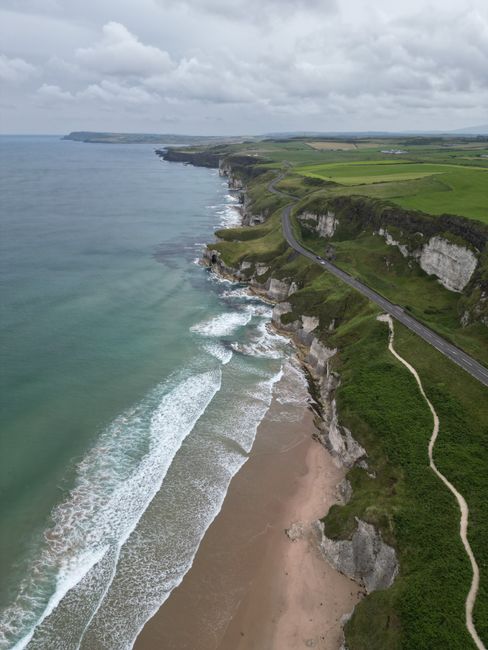
The Causeway Coast is the wild, beautiful north shore of County Antrim in Northern Ireland: a run of black basalt and white chalk cliffs, golden beaches, ruined castles and little harbours between Portstewart and Ballycastle, facing the Atlantic and, on clear days, the islands of Scotland. Its star is the Giant’s Causeway, some 40,000 stone columns left by volcanic eruptions and Northern Ireland’s only UNESCO World Heritage Site. Around it you can cross the swaying Carrick-a-Rede Rope Bridge, explore the clifftop ruins of Dunluce Castle, taste whiskey at Bushmills, walk under the twisted beeches of the Dark Hedges, surf at Portrush and take the ferry to Rathlin Island for puffins. It is about 1 hour 15 minutes’ drive from Belfast and an easy add-on to a trip to Dublin. Give it two days for the highlights, or four to walk, swim and slow down.
Right now in Causeway Coast (Giant's Causeway)
- Wed8–12°C47–53°F6 mm rain
- Thu10–15°C50–59°F7 mm rain
- Fri11–15°C51–59°F4 mm rain
Top tours in Causeway Coast
See all tours for Causeway Coast →
From local operators, with prices and reviews; you check availability and book on Viator, our partner. We may earn a commission at no extra cost to you. How we earn money
Causeway Coast at a glance
- Best for: spectacular coastal scenery, cliff walks, geology, castles, Game of Thrones locations, beaches and surfing, golf, whiskey and road trips.
- How long: 1 long day from Belfast for the Giant’s Causeway, Carrick-a-Rede and Dunluce; 2–3 days to add Rathlin Island, the beaches and the Causeway Coast Way; 4 days with Mussenden Temple and the Glens of Antrim.
- Best time: May to September for long days, the rope bridge and puffins on Rathlin; April, May and September are the driest and quietest. It is windy in every season.
- Getting in: by car from Belfast (about 1 hour 15 minutes) or Derry~Londonderry (about 1 hour); by train to Coleraine or Portrush and then local buses; or on a day tour from Belfast or Dublin.
- Getting around: a car is easiest; without one, use the coast buses that the National Trust lists for the Causeway, some of them seasonal. Distances are short: the Giant’s Causeway is 2 miles from Bushmills and 13 miles from Ballycastle.
- Before you go: Northern Ireland is part of the United Kingdom, so most visitors need a UK ETA (£20), even on a day trip from Dublin across the open border. See our United Kingdom travel guide and the section below.
The Causeway Coast, area by area
The coast runs for about 50 km from the mouth of the River Bann to Ballycastle, with the Causeway Coastal Route continuing south through the Glens of Antrim towards Belfast.
Portrush and Portstewart
The two seaside resorts at the western end are the coast’s liveliest bases. Portrush sits on a narrow headland between two beaches, with the golden sand of Whiterocks backed by chalk cliffs to the east, surf schools, amusements, good restaurants and Royal Portrush, the links that has hosted The Open. Portstewart, a few minutes west, has a Victorian promenade and Portstewart Strand, a long National Trust beach in the dunes. Best for: beaches, surfing, golf, restaurants and nightlife.
Bushmills and the Giant’s Causeway
Bushmills, home of the distillery, is 2 miles from the Giant’s Causeway and makes a quiet base. Between them and Portrush, Dunluce Castle teeters on a cliff, and the White Park Bay and Causeway headlands offer some of the best clifftop walking in Ireland. Best for: the Causeway early or late in the day, whiskey and walking.
Ballintoy and Carrick-a-Rede
East of the Causeway the road climbs past Dunseverick Castle and the great sweep of White Park Bay to Ballintoy, a hilltop village with a tiny white church and a picture-book harbour below, used as the Iron Islands in Game of Thrones. Carrick-a-Rede Rope Bridge is half a mile from the village. Best for: photographers, the rope bridge and quiet cottages.
Ballycastle and Rathlin Island
Ballycastle, at the eastern end, is a friendly market town with a beach, a harbour and the ferry to Rathlin Island. To the east rises Fair Head, a huge cliff with views to Scotland, and the road continues into the Glens of Antrim. Best for: Rathlin, Fair Head walks and a gentler pace.
Coleraine, Castlerock and Downhill
West of Portstewart, across the River Bann, the clifftop Mussenden Temple and the ruins of Downhill House overlook the long beach of Downhill Strand. Coleraine, the main town and rail hub, is the place to change trains for Portrush, and the railway line west towards Derry~Londonderry is one of the most scenic in Ireland. Best for: Mussenden Temple, a long beach walk and onward travel to Derry and Donegal.
Top things to see on the Causeway Coast
Prices and hours below were checked on the official sites in October 2026. They change, so check before you go.
The Giant’s Causeway
About 60 million years ago, lava cooled and cracked into some 40,000 interlocking columns, most of them hexagonal, that step down into the sea like a giant’s pavement; legend says Finn McCool built them to reach Scotland. You can walk to the stones for free along the coast paths, and the National Trust’s four trails across the site include the Red Trail along the clifftops and the Shepherd’s Steps down to the shore.
Tickets and parking. The car park next to the visitor centre is only for people with a Visitor Experience ticket and National Trust members. As of October 2026, the Visitor Experience cost from £16 for adults, £8 for children aged 5–17 (under-5s free), £40 for a family of two adults and up to three children and £24 for a one-adult family, with the best rates online in advance, which the National Trust strongly recommends. It includes reserved parking, the visitor centre exhibition, an audio guide in 11 languages, hourly guided walks and the electric shuttle bus down to the stones. The visitor centre opens 9:00–17:00 and the coastline from dawn to dusk. Walkers who want to park without a ticket can use the Causeway Coast Way car park at Innisfree Farm, 60 Causeway Road, for £12 per vehicle through the JustPark app, or the park and ride from Bushmills, which includes the bus fare and entry. The National Trust also runs a guided 5-mile Clifftop Experience hike. Go early or late to beat the crowds.
Carrick-a-Rede Rope Bridge
Salmon fishermen first strung a rope bridge to the little island of Carrick-a-Rede in 1755. Today’s bridge crosses a 20-metre chasm almost 100 feet (30 m) above the sea, a 1 km walk from the car park on a path with steps. Crossing is by timed ticket only, and the National Trust says pre-booking is essential. As of October 2026, peak-time prices were from £16 for adults, £8 for children, £40 for a family and £24 for a one-adult family, including parking. On 4 October 2026 the bridge opened 9:00–16:30; hours change with the season, and it closes in high winds. Dogs cannot cross. The Weighbridge Tearoom is by the car park, and Larrybane Quarry next to it was a Game of Thrones location.
Dunluce Castle
The romantic ruins of Dunluce Castle, home of the MacDonnell clan, cling to the edge of a basalt cliff between Portrush and Bushmills; legend says the kitchen fell into the sea during a storm. It is cared for by the Department for Communities’ Historic Environment Division, with a small visitor centre and archaeology of a 17th-century town beside it. Admission was about £6 for adults and £4 for children, opening 9:30–17:00 with last entry at 16:30, though we could not confirm this on an official page, so check before you go. The best free view is from the roadside lay-by just east of the castle.
Old Bushmills Distillery
Bushmills, which traces its licence to 1608, still triple-distils its malt whiskey in copper pot stills in the village. Guided tours end with a tasting; book online in summer and at weekends, and note that children under 8 cannot join. Standard tours were reported from about £15, with premium tastings costing more.
The Dark Hedges
An avenue of beech trees planted in the 18th century along Bregagh Road near Armoy, their branches twisting together into a tunnel, became famous as the King’s Road in Game of Thrones. To protect the roots, the road has been closed to traffic since 2017: park at the Hedges Hotel nearby and walk. Many of the old trees have been lost to age and storms, so the avenue is thinner than in old photos.
Mussenden Temple and Downhill Demesne
On a clifftop above Downhill Strand, the little domed Mussenden Temple was built in 1785 as a summer library by the eccentric Earl Bishop, beside the ruins of his mansion, Downhill House. The National Trust looks after the estate; the grounds and the clifftop walk to the temple are open from dawn to dusk, but the temple itself opens only on set days and events, so check the National Trust website. Parking for non-members was reported at £10 a day.
Rathlin Island
Rathlin, Northern Ireland’s only inhabited island, lies 10 km off Ballycastle, with a pub, a few B&Bs and huge cliffs full of seabirds. From about mid-April to July, puffins, guillemots and razorbills nest at the RSPB’s West Light Seabird Centre at the western tip, a walk or minibus ride from the harbour. Ferries leave from Ballycastle; as of October 2026 an adult return cost £16.80 (single £8.40), a child return £8.40, and you must pre-book online. The 2026 summer timetable ran from 3 April to 30 September, with fewer sailings in winter, and crossings can be cancelled in rough seas.
Walking the Causeway Coast and staying safe
The Causeway Coast Way, part of the Ulster Way, follows the shore for 33 miles (about 53 km) from Portstewart to Ballycastle, along beaches, clifftops and quiet lanes. The finest stretch is the 18 km from the Giant’s Causeway to Ballintoy, past the amphitheatre-like bays of the Causeway headlands, Dunseverick Castle and White Park Bay.
Cliffs, waves and weather
- Stay on the paths: cliff edges are crumbly and unfenced in many places, and the grass is slippery after rain.
- Watch the sea: at the Giant’s Causeway and on rocky shores, waves can wash over the lower rocks without warning; keep well back in rough weather and never turn your back on the sea.
- Check the wind: the coast is exposed, and gusts on the clifftops can be strong enough to knock you off balance; the rope bridge and Rathlin ferry close in high winds.
- Swim with care: swim only where lifeguards patrol in summer, such as Portrush’s West Strand and Whiterocks and Portstewart Strand, between the red and yellow flags. Rip currents are common.
- In an emergency: call 999 or 112 and ask for the Coastguard if someone is in trouble at sea or on the cliffs.
See our hiking guide and beaches guide for gear and more ideas.
Things to do on the Causeway Coast
Surf, paddle and coasteer
Portrush and Portstewart have the coast’s surf schools, with the best waves from autumn to spring; summer is better for beginners. Paddleboarding, kayaking and coasteering trips run too. See our surfing guide.
Take a boat trip
Sea safaris from Portrush and Ballycastle show the cliffs, the Causeway and Rathlin from below. See our boat trips guide.
Follow the Game of Thrones trail
Ballintoy Harbour, Larrybane Quarry by Carrick-a-Rede, the Dark Hedges and Cushendun Caves further south were all filming locations. Tours from Belfast visit several in a day, and the Game of Thrones Studio Tour is in Banbridge, south of Belfast; see our Belfast guide.
Eat and drink like a local
Try an Ulster fry with soda farls and potato bread, seafood chowder, fish and chips by the harbour, dulse (dried seaweed) and yellowman, a honeycomb toffee sold at Ballycastle’s Ould Lammas Fair in late August. Finish with a dram of Bushmills or a local gin.
Getting to the Causeway Coast
From Belfast. Drive about 1 hour 15 minutes on the A26 via Ballymena, or take the scenic Causeway Coastal Route through the Glens of Antrim in about 2 hours 30 minutes without stops. Translink trains run from Belfast Grand Central to Coleraine, where you change for Portrush; Goldline coach 221 links Belfast with the Giant’s Causeway. Belfast’s two airports and its ferry port are the nearest international gateways; see our Belfast guide.
From Dublin. The drive from Dublin to the Giant’s Causeway takes about 3 hours 30 minutes by motorway via Belfast. Without a car, take the Enterprise train from Dublin Connolly to Belfast Grand Central (a little over two hours, about hourly) and continue by train or coach, or join one of the many day tours from Dublin. See our Dublin guide.
From Derry~Londonderry and Donegal. Derry is about an hour’s drive from the Causeway, and trains run from Derry to Coleraine along Lough Foyle and the coast. From Donegal in the Republic, you drive across the border near Derry without stopping.
By ferry from Britain. Ferries sail from Cairnryan in Scotland to Belfast and Larne, and from Liverpool to Belfast.
Crossing the border: the UK ETA, money and speed limits
Northern Ireland is part of the United Kingdom, while the rest of the island is the Republic of Ireland, an EU member. There are no passport or customs checks on the land border, and roads and trains cross it freely, often without a sign. But each country’s entry rules still apply.
- UK ETA: visitors who need an Electronic Travel Authorisation to visit the UK need one to enter Northern Ireland, including on a day trip by car, coach or train from Dublin or Donegal. As of October 2026 it cost £20, covered multiple visits of up to six months over two years, and had to be applied for on the official UK ETA app or gov.uk. British and Irish citizens do not need one, and nor do non-visa nationals who legally live in Ireland, if they carry proof of residence. Details are in our United Kingdom travel guide.
- Ireland’s rules: if you continue into the Republic, check Ireland’s own entry rules; see our Ireland travel guide.
- Money: Northern Ireland uses the pound sterling (£); the Republic uses the euro (€). Some places near the border and big attractions accept euros, at a poor rate; pay by card in pounds.
- Speed limits: in Northern Ireland they are in miles per hour (60 mph on most single-carriageway roads, 30 mph in towns); in the Republic they are in kilometres per hour. Watch the signs change when you cross.
- Hire cars and phones: tell your hire company if you will drive across the border, and check your phone’s roaming, as it may switch networks near the border.
Getting around and parking
By car. The A2 Causeway Coastal Route links all the sights, and the distances are short: the Giant’s Causeway is 2 miles from Bushmills, 11 from Coleraine and 13 from Ballycastle, and Carrick-a-Rede is 7 miles east of Bushmills. Roads are narrow and busy with coaches in summer, and car parks at the Giant’s Causeway, Carrick-a-Rede and Ballintoy Harbour fill by late morning. At the Giant’s Causeway, book a Visitor Experience ticket to park on site, or use the £12 walkers’ car park or the park and ride from Bushmills. Carrick-a-Rede’s tickets include parking.
By bus. The National Trust lists Ulsterbus 172 (Coleraine to Ballycastle via Portrush, Bushmills and the Causeway), Goldline 221 from Belfast, the Causeway Rambler 402, the open-top Causeway Coast 177 and the Antrim Coaster 252; the Rambler and the open-top bus run in season only, so check Translink timetables. Translink’s Bus Rambler ticket gives a day of unlimited Ulsterbus and Goldline travel for £10 on Sundays and every day in school holiday periods (as of October 2026, next from 30 October to 6 November 2026 and 19 December 2026 to 3 January 2027).
By train. Northern Ireland Railways runs from Belfast and Derry to Coleraine, with a branch line to Portrush; from Portrush and Coleraine, buses continue along the coast.
When to go and how long to stay
The Causeway Coast has a mild, windy maritime climate: cool summers, damp winters that are rarely frosty by the sea, and rain spread through the year. The table uses the Met Office 1991–2020 averages for Portrush, on the coast about 12 km west of the Giant’s Causeway.
| Season | Average high / low | Rainy days per month | What it’s like |
|---|---|---|---|
| Spring (Mar–May) | 10–15 °C / 4–8 °C | 12–14 | The sunniest months, May has about 225 hours of sun; lambs and spring flowers on the clifftops, puffins arrive on Rathlin |
| Summer (Jun–Aug) | 17–18 °C / 10–13 °C | 13–15 | Long days until after 22:00, busiest roads and car parks, lifeguards on the main beaches, sea about 14–15 °C |
| Autumn (Sep–Nov) | 17 °C falling to 11 °C / 11 °C falling to 6 °C | 14–18 | Quieter, golden light, bigger surf, wetter and stormier from October |
| Winter (Dec–Feb) | 8–9 °C / 3–4 °C | 15–19 | Short days, dramatic storms and empty beaches, some cafés and attractions keep shorter hours |
Portrush records about 975 mm of rain a year, falling on about 181 days; November to January are the wettest months, with about 90–110 mm each, and April and May the driest, with under 60 mm. In practice, May, June and September are the sweet spot: long days, the rope bridge open in full and fewer crowds than in July and August.
Causeway Coast in 2 days
Day 1: the Giant’s Causeway first thing, the Red Trail along the clifftops, then lunch in Bushmills and a distillery tour, and sunset at Dunluce Castle. Day 2: Carrick-a-Rede Rope Bridge, Ballintoy Harbour and White Park Bay, the Dark Hedges, and dinner in Ballycastle or Portrush.
Causeway Coast in 4 days
Add a day on Rathlin Island for the seabirds, a surf lesson or a beach day at Portrush and Portstewart, the walk from the Giant’s Causeway to Ballintoy on the Causeway Coast Way, Mussenden Temple and Downhill Strand, and the Glens of Antrim on the way back to Belfast.
Where to stay on the Causeway Coast
- Portrush and Portstewart: the most hotels, guesthouses and holiday apartments, plus restaurants and nightlife; busy in summer.
- Bushmills: small hotels, inns and B&Bs closest to the Giant’s Causeway.
- Ballintoy and Ballycastle: cottages, B&Bs and a few hotels for Carrick-a-Rede, Rathlin and Fair Head.
- Coleraine and Castlerock: good-value options near the station and Downhill.
There is no tourist tax in Northern Ireland. Book well ahead for July and August and for big golf events, when the whole coast fills up.
Practical tips for the Causeway Coast
- Pre-book: the Giant’s Causeway Visitor Experience if you want to park on site, and Carrick-a-Rede, where booking is essential.
- Go early or late: coach tours arrive at the Causeway from late morning; the stones are free and open from dawn to dusk.
- Bring your ETA: most non-British, non-Irish visitors need one, even when driving up from Dublin.
- Pay in pounds: Northern Ireland uses sterling; cards work almost everywhere.
- Watch the weather: wind closes the rope bridge and cancels Rathlin ferries; check before you set off.
What to pack for the Causeway Coast
A windproof and waterproof jacket, warm layers and a hat even in summer, walking shoes or boots with good grip for the wet basalt and clifftop paths, binoculars for the seabirds, a swimsuit and towel (or a wetsuit for longer swims), sunscreen and a small day pack with water and snacks.
Causeway Coast travel FAQ
Is the Giant’s Causeway free?
Yes, you can walk to the stones for free. The on-site car park is reserved for Visitor Experience ticket holders and National Trust members; as of October 2026 the Visitor Experience cost from £16 for adults and included parking, the exhibition, an audio guide and guided walks.
Do I need to book Carrick-a-Rede Rope Bridge?
Yes. The National Trust says pre-booking a timed crossing is essential. As of October 2026 peak-time adult tickets started at £16, including parking. The bridge closes in high winds.
How long do you need at the Giant’s Causeway?
Allow 2 to 3 hours to see the stones and walk one of the clifftop trails, and a full day to combine it with Carrick-a-Rede, Dunluce and Bushmills.
How do I get to the Giant’s Causeway without a car?
Take the train to Coleraine and the Ulsterbus 172, the Goldline 221 coach from Belfast, or a day tour from Belfast or Dublin. In season, the Causeway Rambler and the open-top Causeway Coast bus also run along the coast.
Do I need a UK ETA to visit the Giant’s Causeway from Dublin?
Yes, if you are a visitor who needs an ETA for the UK. There are no checks at the border, but the rule still applies on a day trip. As of October 2026 it cost £20. British and Irish citizens are exempt, as are non-visa nationals legally living in Ireland with proof of residence.
Is there a border between Northern Ireland and Ireland?
There is an international border, but it is open: no passport or customs checks, and roads cross it freely. Northern Ireland uses pounds and miles per hour; the Republic uses euros and kilometres per hour.
Can you drive on the Dark Hedges?
No. Bregagh Road has been closed to traffic since 2017 to protect the trees. Park at the Hedges Hotel nearby and walk.
How much is the Rathlin Island ferry?
As of October 2026, an adult return from Ballycastle cost £16.80 and a child return £8.40. You must pre-book online, and sailings can be cancelled in rough weather.
When can you see puffins on Rathlin Island?
From about mid-April to July, at the RSPB West Light Seabird Centre at the western end of the island. They leave the cliffs by early August.
Can you swim on the Causeway Coast?
Yes, at beaches such as Portrush’s West Strand and Whiterocks, Portstewart Strand, Benone and Ballycastle. Lifeguards patrol the main beaches in summer; swim between the flags. The sea is cool, about 14–15 °C at best in late summer.
When is the best time to visit the Causeway Coast?
May, June and September for long days and fewer crowds. July and August are warmest but busiest; winter is wild and quiet, with short days.
Nearby destinations
- Belfast77 km
- Glasgow159 km
- Dublin207 km
- Edinburgh224 km
- Lake District233 km
- Isle of Skye239 km
- Scottish Highlands240 km
- Galway271 km
Plan your trip
Partner links: TravelerCenter may earn a commission if you book, at no extra cost to you.
Sources · last reviewed 4 October 2026
Researched and last reviewed on 4 October 2026. Giant’s Causeway and Carrick-a-Rede prices, hours, parking and bus routes: the National Trust; Rathlin Island ferry fares: nidirect (Northern Ireland Government) and the Department for Infrastructure; Bus Rambler ticket: Translink; the UK ETA: gov.uk; climate: Met Office 1991–2020 averages for Portrush. Some details, including Dunluce Castle, Bushmills Distillery and Mussenden Temple prices and hours, the Dark Hedges and the 2026 Rathlin timetable, come from secondary sources or search summaries and are flagged for checking. Prices, timetables and entry rules change, so check the official links before you go. For entry rules, money and general safety, see our United Kingdom travel guide; for the city and the Titanic, our Belfast guide; and for the south of the island, our Ireland travel guide and Dublin guide.
Data: Weather: MET Norway (CC BY 4.0) · Sea temperature: NOAA CoastWatch · Rates: ECB · Costs: World Bank ICP and price levels · Wikidata (CC0)