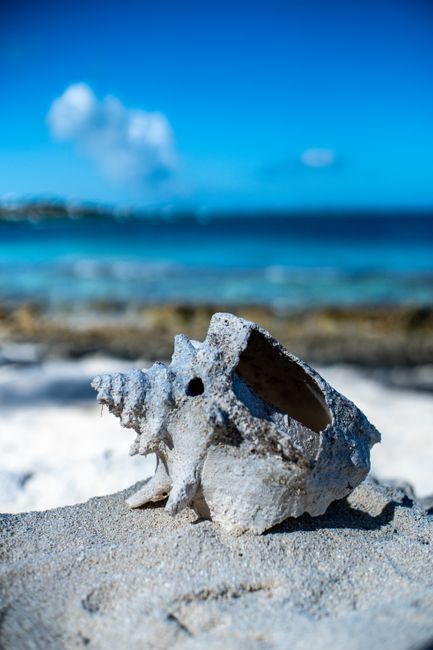
The Turks and Caicos Islands are a low, sunny string of limestone islands and cays on the southern edge of the Bahamas bank, about 920 km (570 miles) southeast of Miami. Most visitors come for one thing, and it does not disappoint: water in every shade of turquoise over white sand, starting with Grace Bay on Providenciales, one of the most praised beaches in the Caribbean. Around it you can paddle the milky-blue lagoon of Chalk Sound, snorkel the reefs of Princess Alexandra National Park, take the ferry to quiet North and Middle Caicos with their caves and flamingo ponds, and fly over to Grand Turk, the small, old-fashioned capital island with its whitewashed lanes, wall diving and winter humpback whales. The islands are a British Overseas Territory that uses the US dollar, the flight from Florida takes about an hour and a half, and English is spoken everywhere. December to April is the classic dry, breezy season, but late spring is warmer and cheaper. Give it five days for Providenciales alone, a week or more to add the outer islands.
Right now in Turks and Caicos Islands
- Tue 28–30°C 83–85°F 1 mm Clear
- Wed 29–29°C 84–85°F Clear
- Thu 29–29°C 84–85°F 1 mm Cloudy
- Mon 12 Oct National Heritage Day
Weather: MET Norway (CC BY 4.0) · Holidays: Nager.Date
Multi-day tours of Turks and Caicos
Multi-day tours from local operators. You check dates and book on Viator, our partner; we may earn a commission at no extra cost to you. How we earn money
Turks and Caicos at a glance: overview and geography
The territory is made of two island groups separated by the Turks Island Passage, a deep-water channel more than 2,000 m (6,500 feet) deep in places. To the west lie the larger Caicos Islands: Providenciales, West Caicos, North Caicos, Middle Caicos, East Caicos and South Caicos, plus dozens of small cays. To the east are the Turks Islands: Grand Turk, home of the capital, Cockburn Town, and tiny Salt Cay. Of around 40 islands and cays, only about eight are inhabited, and most of the population and nearly all the big hotels are on Providenciales, known to everyone as “Provo”. The islands are flat and dry, with scrub, salt ponds, mangrove creeks and long beaches, surrounded by one of the larger barrier-reef and wall systems in the region. The highest point is under 60 m (200 feet).
The history is small-scale but layered. The Lucayan people lived here before Europeans arrived; Grand Turk is one of several places that claim to be Christopher Columbus’s first landfall in 1492. From the late 1600s, Bermudian salt rakers worked the salt ponds of Grand Turk, Salt Cay and South Caicos, and salt remained the main export until the 1960s. After the American Revolution, Loyalist planters brought enslaved Africans to grow cotton on the Caicos Islands; the ruins of Cheshire Hall on Provo and Wade’s Green on North Caicos survive from that period. The islands were long administered from Jamaica and then the Bahamas, and became a separate British colony in 1973. In 1962 John Glenn’s Friendship 7 capsule splashed down nearby and he was brought ashore on Grand Turk. Tourism took off on Provo from the 1980s and now dominates the economy.
Time zone: the Turks and Caicos follow US Eastern Time with daylight saving, UTC−5 in winter and UTC−4 from March to November, the same as New York and Miami.
The islands and areas
- Providenciales, Grace Bay side: the north shore of Provo, with Grace Bay Beach, most resorts, restaurants and shops, the Bight and Leeward at its eastern end, and Turtle Cove marina to the west.
- Providenciales, south and west: Chalk Sound National Park, Sapodilla Bay and Taylor Bay, quieter villas, Long Bay on the southeast coast for kiteboarding, and the main harbor at South Dock.
- The cays east of Provo: uninhabited Little Water Cay (Iguana Island), Water Cay and Pine Cay, reached by boat from Leeward.
- North and Middle Caicos: the greenest islands, joined by a causeway, with small settlements, Flamingo Pond, Wade’s Green plantation, Mudjin Harbor and the Conch Bar Caves. A short ferry ride from Provo.
- South Caicos: a fishing island with a small town, salt ponds, great wall diving and a slowly growing resort scene.
- Grand Turk and Salt Cay: the capital, Cockburn Town, with colonial buildings and the national museum, the cruise ship center at the island’s south end, and sleepy Salt Cay, a short hop away, with its old salt works and whale watching in winter.
Where to go: Providenciales, Grand Turk and the outer islands
Almost every trip starts on Providenciales, where the international flights land and the beaches and restaurants are. From there, the outer islands are a ferry ride or a short domestic flight away, and each feels like a step back in time. Distances on Provo itself are short: Grace Bay to Chalk Sound is about 15 km (9 miles), but there is no real public transport, so plan on taxis, a hire car or bikes.
Grace Bay Beach
Grace Bay is the reason many people come: about 5 km (3 miles) of soft white sand on Provo’s north shore, with calm, clear water protected by the barrier reef offshore. The beach and the sea in front of it are part of Princess Alexandra National Park, and all beaches in the territory are public, so you can walk the whole length even past the big resorts. Mornings are calmest. The western end near the Bight has the Coral Gardens snorkel area just off the sand, and the eastern end toward Leeward is quieter, with views of the cays.
Chalk Sound and the southwest beaches
Chalk Sound National Park is a shallow lagoon of startling milky turquoise, dotted with small rocky islets, on Provo’s southwestern tip. It is best seen from a kayak or paddleboard, or from the road that runs along its southern edge. Next door, Sapodilla Bay is a sheltered, shallow beach that suits small children, and a short climb up Sapodilla Hill leads to rock carvings left by shipwrecked sailors and salt traders. Taylor Bay, just beyond, has knee-deep water that stays shallow far out from shore.
Princess Alexandra National Park and the cays
Princess Alexandra National Park covers Provo’s northeastern shore from Grace Bay to Leeward, plus the reef and the uninhabited cays offshore. Boat trips from Leeward and Turtle Cove visit Little Water Cay, better known as Iguana Island, where boardwalks let you see the endangered Turks and Caicos rock iguana up close, and then stop to snorkel on the reef or at sandbars. Smith’s Reef near Turtle Cove and the Bight Reef (Coral Gardens) are the two easy shore snorkel sites. Fishing, collecting shells or coral, and jet skis are not allowed in the park.
North Caicos and Middle Caicos
A 25-minute ferry from Provo’s Leeward area brings you to North Caicos, the “garden island”, with farms, small settlements such as Bottle Creek and Kew, Flamingo Pond, where flocks of flamingos often feed, and the ruins of the Wade’s Green cotton plantation. A causeway links it to Middle Caicos, the largest island in the territory but one of the least populated. Here you will find Mudjin Harbor, a dramatic limestone cliff coast with a hidden beach reached through a cave, and the Conch Bar Caves, a large dry cave system with bats and stalactites that you can visit with a local guide. Hire a car at the ferry dock for the day; there is very little traffic and few services, so carry water and cash.
Grand Turk and Cockburn Town
Grand Turk, about 120 km (75 miles) east of Provo, is small enough to drive around in an hour. Cockburn Town, the capital, has a seafront of old Bermudian-style houses, stone walls, donkeys and salt ponds, and the Turks and Caicos National Museum, which covers the Lucayans, salt raking, shipwrecks and the space-race splashdown. The west coast drops off into a deep wall just a few hundred meters offshore, one of the best and easiest dive sites in the region. Cruise ships dock at the Grand Turk Cruise Center at the south end, so the beach there and Governor’s Beach can be busy on ship days; the town is quietest when no ship is in. Boat trips go to Gibbs Cay, where stingrays come into the shallows, and from about January to March humpback whales pass through the Turks Island Passage.
Salt Cay and South Caicos
Salt Cay, south of Grand Turk, is a tiny island of salt ponds, old windmills and a few dozen houses, with a handful of small guesthouses; people come for the silence, diving and, in winter, whale watching. South Caicos, between Provo and Grand Turk, is a working fishing island with the territory’s main lobster and conch harbor, a small town, flamingos in the old salt ponds and excellent diving on its wall. Both have small airports with domestic flights, and South Caicos now also has a twice-weekly ferry from Provo.
A few more worth your time
Long Bay on Provo’s southeast coast for kiteboarding lessons in steady trade winds; the Cheshire Hall plantation ruins in central Provo; the sunset from the cliffs near Northwest Point; West Caicos and French Cay, uninhabited and visited only by dive boats; and the Grand Turk lighthouse on the island’s northern tip, built in 1852.
Best time to visit Turks and Caicos
The Turks and Caicos have a warm, dry tropical climate, cooled by the northeast trade winds for most of the year. They are among the drier islands in the Caribbean: rain usually comes as short showers rather than long wet days. The table below shows averages for Providenciales that we calculated from NOAA’s daily airport observations for 2010–2024, because no official 1991–2020 normals for the islands are published; treat it as a guide.
| Season (Providenciales, 2010–2024) | Average afternoon high | Average night low | Rain | What it’s like |
|---|---|---|---|---|
| Winter and spring (Dec–Apr) | 27–29 °C (81–84 °F) | 23–24 °C (73–76 °F) | Little; occasional showers with winter cold fronts | Dry, sunny and breezy; peak season and prices; sea about 25–26 °C (77–79 °F). |
| Early summer (May–Jun) | 30–31 °C (86–88 °F) | 25–27 °C (78–80 °F) | A few showers | Warmer and calmer; good value; the sea is warming fast. |
| High summer (Jul–Aug) | 32 °C (89 °F) | 27 °C (81 °F) | Short showers; tropical storms possible | Hot and humid, with steady breezes; family holidays; warmest sea. |
| Autumn (Sep–Nov) | 32 °C falling to 29 °C (89 °F falling to 84 °F) | 27 °C falling to 25 °C (80 °F falling to 77 °F) | The wettest stretch, though still modest | Peak hurricane risk in September and October; quiet, with some places closed. |
The sea is warm all year, from about 25 °C (77 °F) in February to around 29–30 °C (84–86 °F) in late summer. Winter cold fronts from North America can bring a day or two of cooler, windier, cloudier weather between December and March, when the north shore can get choppy.
Hurricane season
The Atlantic hurricane season runs from 1 June to 30 November, with the highest risk from August to October, and the Turks and Caicos lie in the main path of storms that track west and northwest past the Leeward Islands and Hispaniola. In September 2017, Hurricanes Irma and Maria hit within two weeks of each other and caused serious damage, especially on South Caicos, Grand Turk and Salt Cay; the airport on Grand Turk only reopened fully refurbished in July 2019. Hurricane Ike in 2008 was another hard hit on Grand Turk. In late October 2025, Hurricane Melissa, after devastating Jamaica and eastern Cuba, brought tropical storm warnings, rough seas and squalls to the islands, but no major damage was reported. Through early October 2026 the season had been quiet, with no hurricanes in the Atlantic and no storm watches or warnings for the islands, according to the US National Hurricane Center. If you travel between August and October, book flexible rates, take out travel insurance that covers hurricanes, and follow the Bahamas Department of Meteorology, which issues tropical cyclone warnings for the islands, and the territory’s Department of Disaster Management and Emergencies.
Sargassum seaweed
Floating sargassum seaweed drifts into the Caribbean in large amounts in most years, usually from about March to September, and piles up on east- and southeast-facing shores. In the Turks and Caicos the exposed windward coasts of Grand Turk, Middle Caicos and East Caicos and some beaches on South Caicos get the most. Grace Bay and the other north-shore beaches of Provo are sheltered by the reef and usually see much less, though some weed does wash in, and resorts rake it away in the early morning. 2026 has been a heavy sargassum year across the region; the University of South Florida’s September 2026 bulletin says amounts are falling and should keep falling until about November.
Crowds and prices through the year
Peak season runs from mid-December to April, with the highest prices over Christmas and New Year, Presidents’ Day weekend and US spring break in March. Late April to June is the sweet spot for many people: warm, calm, sunny and noticeably cheaper. July and early August are busy with families. September and October are the quietest and cheapest months, but some restaurants, dive shops and even resorts close for a few weeks for maintenance.
Festivals and public holidays
The best-known events are the Turks and Caicos Conch Festival on Provo in late November, with conch dishes and local music, and the weekly Island Fish Fry at the Bight Children’s Park on Thursday evenings, with food stalls, rake-and-scrape bands and Junkanoo dancers. Other dates to know: JAGS Day and National Heroes Day, Emancipation Day on 1 August, National Youth Day and National Day of Thanksgiving in autumn, and Christmas and Boxing Day. Exact holiday dates move from year to year, so check the government calendar if you need banks or offices.
How long to stay: sample itineraries
The Turks and Caicos are a beach destination at heart, and many visitors happily stay on Provo the whole time. To see the islands’ quieter side, add a day on North and Middle Caicos or a night or two on Grand Turk.
4 days: Providenciales
Base yourself in the Grace Bay area. Day 1: Grace Bay Beach and snorkeling at Coral Gardens. Day 2: a half-day boat trip to Iguana Island and the reef, then sunset in Turtle Cove. Day 3: Chalk Sound by kayak, Sapodilla Bay and Taylor Bay. Day 4: the Thursday fish fry if it falls right, a kiteboarding lesson at Long Bay or one more lazy beach day.
7 days: Provo, North and Middle Caicos and Grand Turk
Four nights on Provo as above, adding a full day trip by ferry and hire car to North and Middle Caicos for Flamingo Pond, Wade’s Green, Mudjin Harbor and the Conch Bar Caves. Then fly to Grand Turk for three nights: wall diving or snorkeling off the west coast, Cockburn Town and the national museum, Gibbs Cay, and the lighthouse at sunset.
10 days: slow islands and diving
Add two nights on Salt Cay or South Caicos for empty beaches, diving and, from January to March, humpback whales, and a dive or snorkel day to West Caicos or French Cay from Provo. If you are flying via Florida, it is easy to add a few days in Miami or Fort Lauderdale on the way.
Entry, money, fees and costs
Entry and visas (last reviewed October 2026)
The Turks and Caicos are a British Overseas Territory with their own immigration rules, run by the Turks and Caicos Islands Border Force. Citizens of the United States, Canada, the United Kingdom, the countries of the European Union and many others do not need a visa for a holiday. Nationals of other countries also enter without a visa if they are lawful residents of the UK, the US or Canada, or hold a valid visa for one of those three countries; everyone else needs a visa in advance.
- Passports: everyone needs a passport, including babies. For US, UK and Canadian passport holders it must be valid for the length of your stay; other nationalities should have at least six months’ validity.
- Arrival form: there is no official online entry form or entry fee for visitors arriving by air. You fill in a paper immigration (embarkation/disembarkation) card, handed out on the plane, and give it to the officer on arrival. Ignore websites that charge for a “TCI entry form”.
- Length of stay and tickets: you need a return or onward ticket. Visitors are usually admitted for 30 days, which can be extended at an immigration office.
- Customs: you may bring in up to US$1,000 of goods that will stay on the islands duty-free; above that, the head of the family fills in a customs declaration. Firearms and ammunition are strictly controlled, and cannabis products are not allowed.
- Children: Border Force officers may ask about minors traveling without both parents, so carry a signed consent letter with the parents’ contact details.
- By yacht: private boats must give at least 24 hours’ notice of arrival through the SailClear system and clear in at a port of entry.
Rules change, so check the Border Force website and your own government’s travel information before you go.
The US dollar, cards and tipping
The currency is the US dollar. Visa and Mastercard are accepted almost everywhere on Provo and in Cockburn Town, and there are cash machines on both islands, but carry cash for taxis, small cafés, roadside conch stands, the outer islands and tips. Note that some operators, including the North Caicos ferry, do not take American Express. Many hotels and restaurants add a service charge, often 10–15%, on top of the 12% government tax; when it has been added, an extra tip is optional. Where it has not, tip 15–20% in restaurants, about 10–15% for taxi drivers and US$2–5 a bag for porters.
Taxes and departure charges
The territory’s Hotel and Tourism Taxation Ordinance charges 12% on accommodation, on designated restaurants and bars, and on other tourism services such as water sports and beach equipment rental, bicycle rental and photography. Resorts and villa owners add it to the bill, together with any service charge, so the final price can be 20–25% higher than the advertised room rate. Departure charges for international flights are built into airline tickets: the Airports Authority lists a US$29 departure tax, an US$8 security charge and a US$3 terminal fee, plus an airport development charge that local press reported rose to US$35 in February 2024, and a US$10 destination fee has been added since. You do not pay anything extra at the airport.
National parks and marine rules
There is no entrance fee for Princess Alexandra National Park, Chalk Sound or the other parks; tour operators pay for their licenses. What matters is the rules, set out by the government’s environment department: no fishing of any kind in protected areas, including catch and release; no taking coral, shells, sand or wildlife, alive or dead, including conch shells; no feeding fish, birds or reptiles, and no lifting stingrays out of the water; no jet skis or similar craft inside protected areas; a 15 mph boat speed limit in marine parks; and no anchoring on coral or seagrass. On Grand Turk, the dive moorings may only be used by boats with a national parks license. Use reef-safe sunscreen or a rash guard, and keep off the sand dunes and away from nesting birds on the cays.
Typical travel costs
The Turks and Caicos are one of the more expensive Caribbean destinations: almost everything is imported, and hotels on Grace Bay are aimed at the top of the market. These estimates, per person per day, are a planning guide as of October 2026:
| Style | Estimated cost per day | What that looks like |
|---|---|---|
| Budget | about US$150–220 | A simple condo or guesthouse away from the beach shared by two, self-catering from the supermarket, conch stands and the fish fry, a hire car or bikes, free beaches and snorkeling from shore |
| Mid-range | about US$300–500 | A condo-style hotel on or near Grace Bay shared by two, restaurant meals, a half-day boat trip or two dives, taxis or a hire car |
| High-end | about US$800+ | A beachfront resort or private villa, fine dining, private boat charters, spa treatments and domestic flights to the outer islands |
Remember to add 12% tax and any service charge to hotel and restaurant prices. Groceries cost well above US mainland prices. The figures are our estimates, not official statistics.
Getting there and getting around
Flights and airports
Nearly all international flights land at Providenciales, at the airport now called Howard Hamilton International Airport (code PLS). There are frequent nonstop flights from the US, including Miami and Fort Lauderdale (about 1 hour 30 minutes), Atlanta, Charlotte, New York, Boston and Philadelphia, seasonal flights from other US cities, flights from Toronto and Montreal, and a British Airways service from London. Regional flights link Provo with the Bahamas, the Dominican Republic, Haiti and Jamaica. Grand Turk’s JAGS McCartney International Airport (GDT) mainly handles domestic flights and some regional routes. Lines at immigration on Provo can be long on busy Saturdays; allow time.
Between the islands: flights and ferries
- Domestic flights: interCaribbean Airways and Caicos Express Airways fly small planes from Provo to Grand Turk (about 30 minutes), South Caicos (XSC, Norman B. Saunders Sr. International Airport) and Salt Cay (SLX). North Caicos’s airport (NCA) has charter flights only.
- Provo–North Caicos ferry (TCI Ferry, run by Caribbean Cruisin’, from Walkin Marina in Leeward, about 25 minutes): from 1 September to 15 November there are three crossings a day each way, leaving Provo at 8:00, 14:00 and 16:00; from 16 November to 1 April there are five a day Monday to Saturday and three on Sundays. Adult fares are US$40 one way or US$70 return, children US$30 or US$50, with one bag and a carry-on included. Book ahead; Visa and Mastercard only.
- Provo–South Caicos ferry: since March 2026 the same company runs a Monday and Friday service, leaving Provo at 16:00 and South Caicos at 17:15.
- Grand Turk–Salt Cay: a small passenger ferry runs a few days a week, weather permitting; ask locally or fly.
Driving, taxis and bikes
Traffic drives on the left, although most cars are imported from the US with the steering wheel on the left, which takes some getting used to, especially at the many roundabouts on Provo’s Leeward Highway. A hire car is the easiest way to explore Provo and is essential on North and Middle Caicos; your home license is normally accepted for a short visit, and the speed limit is 40 mph on highways and 20 mph in settlements. There is no public bus system for visitors. Taxis are plentiful on Provo but expensive, with fares set by zone and per person, so agree the price before you set off. In the Grace Bay area, bicycles, scooters and walking work well for short trips.
Beaches, the sea and safety in the water
The beaches are the stars: Grace Bay, Leeward and the Bight on Provo’s north shore; Sapodilla Bay and Taylor Bay in the southwest; Long Bay for kiteboarding; Malcolm’s Road Beach and Northwest Point for wilder snorkeling; Whitby Beach on North Caicos; Mudjin Harbor and Bambarra Beach on Middle Caicos; and Governor’s Beach and Pillory Beach on Grand Turk. The water is clear because there are no rivers to carry sediment, and the reef keeps the north shore calm on most days. See our beaches guide, plus snorkeling, diving and boat trips.
- Boats: swimmers and snorkelers should stay out of boat lanes and, when snorkeling away from the beach, wear a bright snorkel vest so boats can see you.
- Currents: currents can be strong near reef cuts and at Mudjin Harbor and Northwest Point; most beaches have no lifeguards.
- Sun: the white sand and shallow water reflect strong sunlight; wear a rash guard and reef-safe sunscreen and drink plenty of water.
- Marine life: don’t touch coral, sea urchins or fire coral; give stingrays, nurse sharks and turtles space, and never feed them.
- Rocky shores: water shoes help at rocky entries such as Smith’s Reef and on the ironshore cliffs of Middle Caicos.
Safety, health and connectivity
Safety
Tourist areas are generally calm, but Provo has seen an increase in crime in recent years, including burglaries, robberies and some gun violence, mostly in residential areas away from the resorts. Use the hotel safe, lock villa doors and windows, don’t leave valuables on the beach or in a parked car, and take a registered taxi at night rather than walking along dark roads. The islands have very strict laws on firearms: bringing even a single round of ammunition in your luggage, often forgotten from a hunting trip, can lead to arrest, heavy fines and prison. Emergency number: 911 (999 also works) for police, fire and ambulance.
Health
Cheshire Hall Medical Center on Provo and Cockburn Town Medical Center on Grand Turk are the two main public hospitals, and there are private clinics on Provo. Serious cases are flown to Nassau or Miami, so travel insurance with medical evacuation cover is strongly recommended. Most tap water comes from desalination and is safe in hotels, but many people drink bottled or filtered water. Mosquitoes can carry dengue: use repellent, especially at dusk and on the outer islands.
Connectivity and power
Mobile coverage is good on Provo and Grand Turk and patchier on the outer islands; the local networks are Digicel and Flow, and many US plans include the Turks and Caicos for roaming, but check first. Wi-Fi is standard in hotels. Electricity is 120 V, 60 Hz, with US-style type A and B sockets, so visitors from North America need no adapter; others need a travel adapter.
Food, music and culture
Conch is the national food: cracked (fried) conch, conch fritters, spicy conch salad with lime and peppers, and conch chowder, served everywhere from Da Conch Shack at Blue Hills to the stalls at the Thursday fish fry. Spiny lobster is in season from August to March, and fresh grouper, snapper and mahi-mahi are on every menu. Try peas and rice, johnnycake, macaroni pie and, on North Caicos, local fruit such as sapodilla and sugar apple. Turk’s Head is the local beer. The traditional music is rake and scrape, played on a goatskin drum, an accordion and a carpenter’s saw scraped with a knife. Islanders, known as Belongers, are often churchgoing and courteous: say good morning before asking a question, and cover up away from the beach. Many residents are from Haiti or the Dominican Republic, and Haitian Creole is widely heard. See our city sightseeing guide for tips on exploring small towns like Cockburn Town.
Things to do: reefs, boats, kites and quiet islands
- Snorkeling: Coral Gardens at the Bight and Smith’s Reef from the shore, or by boat to the barrier reef and sandbars. See our snorkeling guide.
- Diving: walls that drop into the deep blue a short ride from shore, at Grand Turk, West Caicos, French Cay, Northwest Point and South Caicos, with sharks, eagle rays and turtles.
- Boat trips: Iguana Island and the cays, sunset cruises, glass-bottom boats and private charters from Leeward and Turtle Cove.
- Kiteboarding and paddling: lessons at Long Bay, and kayaks and paddleboards on Chalk Sound and through the mangroves.
- Whale watching: humpback whales off Grand Turk and Salt Cay from about January to March.
- Exploring the outer islands: caves, plantations and flamingos on North and Middle Caicos, and walking and cycling on Grand Turk. See our hiking guide and our cycling guide.
What to pack
Pack light: swimwear, a rash guard, a wide-brimmed hat, sunglasses, reef-safe sunscreen, insect repellent, a refillable water bottle, sandals and water shoes for rocky entries and cave visits. Bring your own snorkel mask if you like a good fit. Add a light long-sleeved layer for air-conditioned restaurants and winter evenings, a smart-casual outfit for dinner at the better resorts, and a compact rain jacket in autumn. Check that no ammunition is anywhere in your luggage before you leave home.
Turks and Caicos travel FAQ
When is the best time to visit Turks and Caicos?
December to April for dry, breezy, sunny weather, and late April to June for warm, calm days and lower prices. September and October are cheapest but carry the highest hurricane risk, and some businesses close.
Do I need a passport to visit Turks and Caicos?
Yes, everyone needs a passport, including US citizens and children. US, UK and Canadian passports must be valid for your whole stay; other nationalities should have six months’ validity. Visitors from the US, Canada, the UK and the EU do not need a visa.
Is there an online entry form for Turks and Caicos?
No. Air passengers fill in a paper immigration card, handed out on the plane, and there is no entry fee for visitors. Websites charging for an online form are not official.
Do I have to pay departure tax at the airport?
No. The departure tax, security and airport development charges are included in airline tickets.
How much is the hotel tax in Turks and Caicos?
12% on accommodation, designated restaurants and bars, and many tourist services. Most hotels and restaurants also add a service charge of around 10–15%, so check whether prices include them.
What currency is used in Turks and Caicos?
The US dollar. Cards are widely accepted on Provo, but carry some cash for taxis, small places and the outer islands.
Which side of the road do they drive on?
The left, even though most cars have the steering wheel on the left. Take care at roundabouts on Provo.
How do I get from Providenciales to North and Middle Caicos?
By the TCI Ferry from Walkin Marina in Leeward, about 25 minutes, US$40 one way or US$70 return for adults. Hire a car at the North Caicos dock and drive across the causeway to Middle Caicos.
How do I get to Grand Turk?
Domestic flights from Provo take about 30 minutes, with several a day on interCaribbean and Caicos Express. Many people also see Grand Turk on a cruise, as ships dock at the cruise center at the island’s south end.
Is Grace Bay Beach public?
Yes. All beaches in the Turks and Caicos are public, and there are public access paths between the resorts along Grace Bay.
Does Grace Bay get sargassum seaweed?
Much less than the exposed east-facing coasts, because the reef shelters it, though some weed does wash in during heavy years. It is most likely from about March to September.
Is Turks and Caicos safe for tourists?
Most visits are trouble-free. Crime has risen on Provo, mostly away from the resorts, so lock up, use the safe and take taxis at night. Never pack ammunition: even one bullet can lead to arrest. Call 911 in an emergency.
Is Turks and Caicos expensive?
Yes, it is one of the pricier Caribbean destinations. Self-catering condos, conch stands, the fish fry and visiting between late April and June keep costs down.
Sources and last review
Researched and last reviewed on 4 October 2026. Entry rules come from the Turks and Caicos Islands Border Force; the 12% tax from the government’s Revenue Department; airport names and departure charges from the Turks and Caicos Islands Airports Authority; national park rules from the government’s environment department; ferry times and fares from TCI Ferry (Caribbean Cruisin’); the 2026 hurricane season from the US National Hurricane Center; and the sargassum outlook from the University of South Florida. The climate averages are our own calculation from NOAA daily observations at Providenciales airport, not official normals. The 2024 airport development charge and destination fee, the arrival card and customs allowance details, Melissa’s effects, crime trends, the driving rules and some holiday details come from secondary sources and are flagged for checking. Daily costs are estimates. Prices, timetables and rules change, so check the official sites before you travel.
Plugs and power in Turks and Caicos Islands
Turks and Caicos Islands uses 120 V, 60 Hz and these plugs (left) and wall sockets (right):
All plug types and voltages by country → · Check what you need to pack →
Plan your trip
Partner links: TravelerCenter may earn a commission if you book, at no extra cost to you.