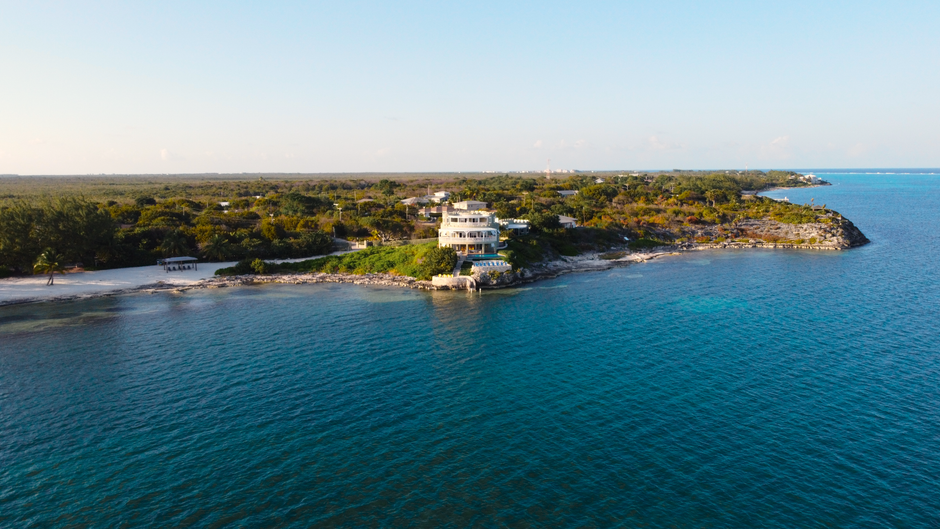
The Cayman Islands are three low coral islands in the western Caribbean, about 730 km (455 miles) south of Miami, best known for clear, calm water, world-class diving and one of the Caribbean’s most polished beach strips. Most visitors stay on Grand Cayman: on Seven Mile Beach, a long sweep of soft sand and gentle sea on the island’s west coast, close to the small capital, George Town. From there, boats run out to Stingray City and the Sandbar, where southern stingrays glide around your legs in waist-deep water; the north coast has Rum Point, Starfish Point and a glowing bioluminescent bay; and the wild east end has blowholes, shipwrecks and quiet beaches. A short flight away, Cayman Brac and Little Cayman offer cliffs, caves, seabirds and some of the best wall diving in the world. The islands are a safe, well-organized British Overseas Territory with their own dollar, US dollars are accepted everywhere, and prices are high. December to April is the dry season. Give it five days for Grand Cayman, a week or more to add the Sister Islands.
Right now in Cayman Islands
- Tue 28–29°C 82–84°F 1 mm Mostly clear
- Wed 28–29°C 82–84°F 1 mm Mostly clear
- Thu 28–29°C 82–85°F Clear
Weather: MET Norway (CC BY 4.0)
Multi-day tours of Cayman Islands
Multi-day tours from local operators. You check dates and book on Viator, our partner; we may earn a commission at no extra cost to you. How we earn money
Cayman Islands at a glance: overview and geography
The three islands are the tops of underwater mountains on the Cayman Ridge, with the deep Cayman Trench to the south, which is why the reefs drop off into deep blue water so close to shore. Grand Cayman, the largest, is about 35 km (22 miles) long and flat, with the shallow North Sound lagoon biting into its northern side. Cayman Brac and Little Cayman lie about 145 km (90 miles) to the northeast, separated from each other by a channel only about 8 km (5 miles) wide. The Brac is known for the Bluff, a limestone ridge that rises to about 43 m (140 feet) at its eastern end, and Little Cayman is a nature reserve in all but name, with more iguanas and seabirds than people. The Economics and Statistics Office estimates the population at about 91,000, almost all on Grand Cayman, and more than half of residents were born overseas.
Columbus sighted the Sister Islands in 1503 and named them Las Tortugas for the sea turtles that crowded their beaches; for two centuries, sailors stopped here to catch turtles for food. Permanent settlement began in the 1700s, and the islands were governed from Jamaica until 1962, when Jamaica became independent and Cayman chose to remain British. In 1794 ten merchant ships wrecked on the reef off the East End, a story still told as the Wreck of the Ten Sail. Fishing, turtling, rope-making and seafaring were the main livelihoods until the 1960s, when banking, finance and tourism transformed the islands into one of the most prosperous places in the Caribbean. In September 2004, Hurricane Ivan caused the worst damage in living memory on Grand Cayman, and the rebuilding shaped much of what you see today.
Time zone: the Cayman Islands stay on UTC−5 all year, with no daylight saving. That is the same as New York and Miami in winter and one hour behind them from March to November.
The islands and areas
- George Town: the capital and cruise port on Grand Cayman’s southwest corner, with the waterfront, duty-free shops, the national museum, banks and offices; the airport is just to the east.
- Seven Mile Beach: the resort corridor north of George Town, with most hotels, condos and restaurants, and the Camana Bay shopping and dining district.
- West Bay: the island’s northwestern tip, with Cemetery Beach, Barkers National Park, the turtle conservation park at Boatswain’s Beach and the black rock formations of Hell.
- Bodden Town and the East End: the old capital and the quiet south and east coasts, with Pedro St. James, Spotts Beach, the blowholes, the Wreck of the Ten Sail and small dive resorts.
- North Side and Rum Point: the sleepy north coast, with Rum Point, Starfish Point, Kaibo, the botanic park and the Crystal Caves.
- Cayman Brac and Little Cayman: the Sister Islands, with a few small hotels and dive resorts, caves and climbing on the Brac, and Bloody Bay Wall and the booby colony on Little Cayman.
Where to go: Seven Mile Beach, Stingray City and the Sister Islands
Grand Cayman is small and the roads are good, so you can stay on Seven Mile Beach and reach almost anywhere on the island in under an hour, traffic permitting: the East End is about 45 minutes away, Rum Point about 50. For a quieter stay, consider the East End or North Side, but you will need a car.
Seven Mile Beach
Despite the name, Seven Mile Beach is about 10 km (6 miles) of continuous soft white sand, facing west across calm water that is usually flat enough for paddleboarding and swimming. It is public along its whole length, with public access paths between the resorts, and the busiest stretch, with beach bars and water-sports rentals, is around the Public Beach in the middle. At the northern end, Cemetery Beach is quieter and has good snorkeling on a shallow reef a short swim offshore. Sunsets here are the evening ritual.
Stingray City and the Sandbar
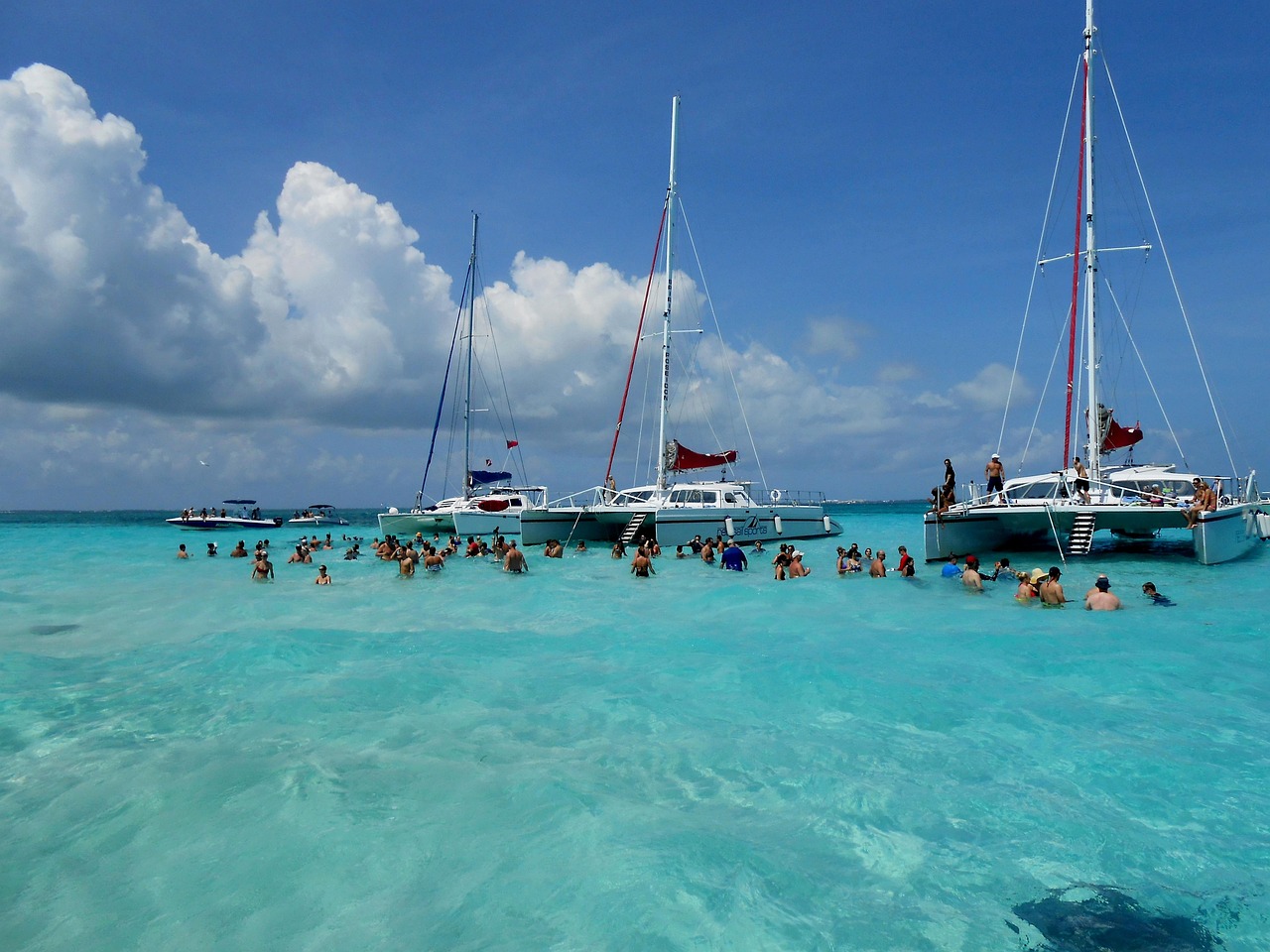
In the North Sound, boats stop at a shallow sandbar inside the reef where dozens of southern stingrays gather, used for decades to being fed by fishermen cleaning their catch. Visitors stand in waist-deep water while guides hand out squid and show how to hold and stroke the rays gently. Nearby Stingray City is a slightly deeper site, about 4 m (12 feet), visited by snorkelers and divers. Both are official Wildlife Interaction Zones, the only places in Cayman where touching and feeding wildlife is allowed, and only operators holding an annual permit, shown by a dated sticker on both sides of the boat, can bring visitors. Go early or on a day with fewer cruise ships in port, and choose a small-group operator.
George Town
The capital is small, clean and busiest on cruise days, when ships anchor offshore and tender passengers to the waterfront. Visit the Cayman Islands National Museum in the old courthouse, the remains of Fort George, the National Gallery near Seven Mile Beach, and Elmslie Memorial Church. South of town, Eden Rock and Devil’s Grotto are popular shore dives and snorkel sites among grottoes and tunnels, and Smith Barcadere (Smith Cove) is a pretty little beach for an afternoon swim.
Rum Point, Starfish Point and the north coast
Rum Point is a laid-back beach on the far side of the North Sound, with hammocks, shallow water and a beach bar, reached by car or by boat. Nearby Starfish Point has calm, shallow water where red cushion sea stars rest on the sand: look, photograph and leave them in the water, because lifting them out can kill them. At night, guided kayak and boat tours visit the Bioluminescent Bay, where the water glows when you move your hand, best on dark nights around the new moon. Inland, the Crystal Caves in North Side have guided walks through forest and limestone caverns.
The East End and Bodden Town
The east is Grand Cayman at its most traditional. Pedro St. James, a restored 18th-century great house above the sea in Savannah, is where Cayman’s first elected assembly was formed in 1831. Spotts Beach often has green sea turtles feeding in the shallows. Further east are the Blowholes, where waves shoot spray through the ironshore, the Wreck of the Ten Sail memorial park, and the Queen Elizabeth II Botanic Park in North Side, home of the Blue Iguana Recovery Program, where you may see the endemic blue iguana, once close to extinction.
Cayman Brac
The Brac is about 19 km (12 miles) long, with a few small hotels and dive resorts and a strong community feel. The Bluff, rising along the middle and east of the island, has hiking trails, caves once used as hurricane shelters, nesting brown boobies and some of the best rock climbing in the Caribbean. Offshore, the Russian-built frigate renamed the MV Captain Keith Tibbetts was sunk as an artificial reef in 1996 and is a favorite wreck dive.
Little Cayman
Little Cayman has only a few hundred residents, one main road, a grass-and-gravel airstrip and a handful of lodges. Divers come for Bloody Bay Wall, a vertical reef wall that starts in shallow water and drops into the deep, often named among the finest dives in the Caribbean. On land, the Booby Pond Nature Reserve has a large colony of red-footed boobies and magnificent frigatebirds, rock iguanas have right of way on the roads, and Point of Sand at the eastern tip is an empty, perfect beach looking across to the Brac.
A few more worth your time
The USS Kittiwake, a former US Navy submarine rescue ship sunk in 2011 as an artificial reef off the north end of Seven Mile Beach, with its top close enough to the surface for snorkelers; the Mastic Trail through old-growth dry forest; Camana Bay’s waterfront and observation tower; Barkers National Park in West Bay; and a sunset sail across the North Sound.
Best time to visit the Cayman Islands
The Cayman Islands are warm all year, with a dry season from about December to April and a wetter, more humid season from May to November, when most rain falls in heavy afternoon showers and thunderstorms. The table shows the official 1991–2020 averages for Owen Roberts International Airport on Grand Cayman, as reported by the Cayman Islands National Weather Service to the World Meteorological Organization.
| Season (Owen Roberts Airport, 1991–2020) | Average afternoon high | Average night low | Rain a month | Days with rain a month | What it’s like |
|---|---|---|---|---|---|
| Dry season (Dec–Apr) | 28–30 °C (83–87 °F) | 23–24 °C (73–76 °F) | 30–62 mm (1.2–2.4 in) | 4–7 | Sunny and breezy, the occasional cooler “Nor’wester” front; peak season and prices. |
| Early wet season (May–Jun) | 31–32 °C (88–89 °F) | 25–26 °C (77–79 °F) | 150–160 mm (5.9–6.3 in) | 8–11 | Hotter and more humid, with showers; calm seas and good value. |
| High summer (Jul–Aug) | 32 °C (90 °F) | 26 °C (79 °F) | 144–147 mm (5.7–5.8 in) | 10–12 | Hot, humid and often glassy calm; superb visibility for diving. |
| Autumn (Sep–Nov) | 32 °C falling to 30 °C (89 °F falling to 86 °F) | 26 °C falling to 24.5 °C (78 °F falling to 76 °F) | 152–239 mm (6.0–9.4 in) | 10–14 | The wettest months, with the highest hurricane risk in September and October; quietest and cheapest. |
The airport records about 1,420 mm (56 in) of rain a year, more than half of it from September to November and in May and June. The sea is warm enough for swimming all year, from about 26 °C (79 °F) in February to 29–30 °C (84–86 °F) in late summer, and underwater visibility is often 30 m (100 feet) or more.
Hurricane season
The Atlantic hurricane season runs from 1 June to 30 November, with the highest risk from August to October; storms that form in the western Caribbean can also affect the islands late in the season, into November. Hurricane Ivan in September 2004 flooded and damaged most of Grand Cayman, and Hurricane Paloma in November 2008 hit Cayman Brac and Little Cayman hard. In July 2024 Hurricane Beryl passed just south of Grand Cayman, causing power cuts and some damage, and in late October 2025 the islands prepared for Hurricane Melissa, which stayed to the east on its way to Jamaica and Cuba; diving stopped for a few days on the Sister Islands, but Cayman was largely spared. Through early October 2026 the season had been quiet, with no hurricanes in the Atlantic and no storm watches or warnings for the islands, according to the US National Hurricane Center. If you travel from August to November, book flexible rates, buy insurance that covers hurricanes and follow Hazard Management Cayman Islands and the Cayman Islands National Weather Service.
Sargassum seaweed
Sargassum seaweed drifts into the Caribbean in most years, mainly from about March to September. On Grand Cayman it tends to pile up on the east- and south-facing shores of the East End, Bodden Town and Frank Sound, while Seven Mile Beach on the sheltered west coast is rarely affected. 2026 has been a heavy sargassum year across the region; the University of South Florida’s September 2026 bulletin says amounts are falling and should keep falling until about November.
Crowds and prices through the year
Mid-December to mid-April is high season, most expensive over Christmas, New Year and US spring break. From May to mid-December, hotel rates drop sharply, the sea is at its calmest and dive visibility is excellent, though it is hotter, more humid and wetter. Cruise ships call at George Town on most days in winter, so Stingray City, the Sandbar and the town are busiest from late morning to mid-afternoon on ship days; check the cruise schedule and go early.
Festivals and public holidays
Highlights include the Cayman Cookout food festival in January, Cayman Carnival Batabano in May, with costumed bands parading along the West Bay Road, the Taste of Cayman food festival, and Pirates Week in November, a long-running festival of heritage days, parades, fireworks and a mock pirate landing. Public holidays include New Year’s Day, National Heroes Day in January, Ash Wednesday, Good Friday and Easter Monday, Emancipation Day in May, the King’s Birthday in June, Constitution Day in July, Remembrance Day in November, Christmas Day and Boxing Day; the exact dates move, so check the government calendar for banks and offices.
How long to stay: sample itineraries
Grand Cayman is easy to see in a few days, and many visitors simply stay put on Seven Mile Beach. Divers and nature lovers should plan time for the Sister Islands, which need a flight and at least two nights.
4 days: Grand Cayman highlights
Base yourself on Seven Mile Beach. Day 1: the beach, snorkeling at Cemetery Beach and sunset. Day 2: an early boat to the Sandbar and Stingray City, then Rum Point and Starfish Point. Day 3: drive the east: Pedro St. James, Spotts Beach, the Blowholes, the Wreck of the Ten Sail and the botanic park. Day 4: George Town, Eden Rock snorkeling and, after dark, the Bioluminescent Bay.
7 days: Grand Cayman and Little Cayman
Four nights on Grand Cayman as above, adding a dive or snorkel on the Kittiwake. Then fly to Little Cayman for three nights of diving or snorkeling on Bloody Bay Wall, cycling the island, birdwatching at Booby Pond and a picnic at Point of Sand.
10 days: all three islands
Add three nights on Cayman Brac for the Bluff trails, caves, climbing and the Captain Keith Tibbetts wreck, with a day trip to Little Cayman. Many flights to Grand Cayman go via Miami or Tampa, so it is easy to add a few days in Florida or a road trip down the Florida Keys.
Entry, money, fees and costs
Entry and visas (last reviewed October 2026)
The Cayman Islands are a British Overseas Territory with their own border rules, run by Cayman Islands Customs and Border Control (CBC). Citizens of the United States, Canada, the United Kingdom, the countries of the European Union and many other countries do not need a visa for a holiday; nationals of some countries do, and should check the CBC visa list before booking.
- Passports: you need a passport (or another accepted travel document) that is valid beyond the date of your return ticket. CBC says it does not have to be valid for six months if your stay is shorter.
- Tickets and funds: you need a paid return or onward ticket, and officers may ask you to show you have enough money for your stay.
- Length of stay: visitors can be admitted for up to six months, and extensions can be requested from CBC.
- Arrival forms: there is no online pre-arrival form for tourists. Every arriving passenger, or the head of a family, completes a paper customs declaration card, handed out on the plane or ship. Online customs systems on government sites are for cargo importers, not travelers.
- Drugs: CBC warns that Cayman has zero tolerance for illegal and controlled substances. Cannabis in any form, including THC and CBD products such as gummies, vapes and edibles, is illegal to bring in and can lead to arrest, fines or prison, and screening on arrival is thorough.
- Duty-free allowances: adults may bring in limited alcohol (for example 1 liter of spirits or 4 liters of wine) and tobacco (for example 200 cigarettes) duty-free, plus reasonable personal effects.
Rules change, so check the CBC website and your own government’s travel information before you go.
The Cayman dollar, US dollars and tipping
The currency is the Cayman Islands dollar (CI$ or KYD), fixed by the Cayman Islands Monetary Authority at CI$1 = US$1.20. US dollars are accepted everywhere, usually at a rate of CI$0.80 for each US$1, and change is often given in Cayman dollars. Prices may be shown in either currency, so check which before you pay: a menu price of CI$25 is about US$30. Cards are accepted almost everywhere and ATMs often dispense both currencies. Many restaurants add a service charge of 10–15% to the bill; if they have, an extra tip is optional. Where none is added, tip around 15%, round up for taxis and give porters about US$2 a bag.
Accommodation tax and departure tax
Under the Tourist Accommodation (Taxation) Act, hotels, guesthouses, condos and villas rented to tourists must charge a government tax of 13% on the room charges, collected by the property and paid to the Department of Tourism. Most hotels also add a service charge, often 10% or more, so the final bill can be around 25% above the quoted room rate; check what is included when you book. The departure tax and airport fees for international flights, including a passenger facility charge of about US$20, are built into airline tickets, so there is nothing to pay at the airport.
Marine parks and wildlife rules
There are no entry fees for the marine parks, but the rules are strictly enforced by the Department of Environment’s conservation officers. Since 2021, marine parks cover around half of Cayman’s coastal waters, with zones where fishing, anchoring and taking any marine life are restricted or banned; the department’s free CaymanDoE app shows the boundaries and rules wherever you are. Touching, feeding or harming stingrays or any other wildlife is illegal anywhere outside the two Wildlife Interaction Zones at Stingray City and the Sandbar; feeding sharks has been illegal everywhere since 2002; sea turtles are protected at all times; and lifting stingrays or sea stars out of the water harms them. Don’t stand on coral, wear water shoes only where the water is too shallow to swim, and use reef-safe sunscreen.
Typical travel costs
Cayman is one of the most expensive places in the Caribbean: rents and wages are high and nearly everything is imported. These estimates, per person per day, are a planning guide as of October 2026:
| Style | Estimated cost per day | What that looks like |
|---|---|---|
| Budget | about US$180–250 | A simple guesthouse or condo away from the beach shared by two, supermarket meals and casual lunch spots, public buses, free beaches and shore snorkeling |
| Mid-range | about US$350–550 | A condo or mid-range hotel on Seven Mile Beach shared by two, restaurant dinners, a Stingray City trip or two dives, a hire car |
| High-end | about US$900+ | A beachfront resort, fine dining, private charters, spa days and flights to the Sister Islands |
Remember to add the 13% tax and any service charge to accommodation prices. A Stingray City half-day trip typically costs around US$60–100 per adult, and a two-tank boat dive more. The figures are our estimates, not official statistics.
Getting there and getting around
Flights and airports
Owen Roberts International Airport (GCM), on the edge of George Town, is the main gateway, a few minutes’ drive from Seven Mile Beach. Cayman Airways, the national carrier, and several US airlines fly nonstop from cities including Miami (about 1 hour 15 minutes), Fort Lauderdale, Tampa, Atlanta, Charlotte, Houston, Dallas, New York and Boston, with seasonal routes from other US cities and Canada, and British Airways connects Grand Cayman with London. Cayman Airways also flies to Jamaica, Cuba and Honduras. The Sister Islands have their own small airports: Charles Kirkconnell International Airport (CYB) on Cayman Brac and Edward Bodden Airfield (LYB) on Little Cayman.
Between the islands
There is no regular passenger ferry between Grand Cayman and the Sister Islands. Cayman Airways Express flies small propeller planes from Grand Cayman to Cayman Brac (about 40 minutes) and Little Cayman several times a day, with a short hop between the Brac and Little Cayman; luggage limits are lower than on jets, which matters for dive gear. Book ahead in high season.
Driving, buses and taxis
Traffic drives on the left, and roundabouts are common. Hiring a car is the best way to explore Grand Cayman beyond Seven Mile Beach; rental companies issue the temporary visitor’s driving permit you need, for a small fee, when you show your home license. Rush-hour traffic between George Town, Seven Mile Beach and Bodden Town can be heavy. Public minibuses, run by private operators and recognizable by their blue license plates, leave from the depot in George Town and run along the main roads to West Bay, Bodden Town, the East End and North Side, at low fixed fares. Taxis are plentiful at the airport, the cruise terminal and hotels and charge fixed rates by route, published by the government; confirm the fare before you get in. On the Sister Islands, rent a car, scooter or bicycle.
Beaches, the sea and safety in the water
The best beaches are Seven Mile Beach and Cemetery Beach on the west coast, Smith Barcadere south of George Town, Rum Point, Kaibo and Starfish Point on the north coast, and Spotts Beach and the long, empty sands of the East End. On the Sister Islands, try Point of Sand and Owen Island on Little Cayman, and the south coast beaches of Cayman Brac. The west coast is calm most days; the north and east coasts are more exposed when the wind is up. See our beaches guide, plus snorkeling, diving and boat trips.
- Boats: stay close to shore or within marked swimming areas, and use a brightly colored snorkel vest or float, especially around Eden Rock, Cemetery Beach and the Kittiwake, where boats pass.
- Nor’westers: winter cold fronts can turn the usually calm west coast rough for a day or two, with strong currents.
- Lifeguards: there are very few; swim with a buddy and watch children closely.
- Marine life: don’t touch fire coral, sea urchins or lionfish, whose spines are venomous. Lionfish are an invasive species, culled under license.
- Ironshore: the sharp limestone shore of the East End and the Sister Islands cuts feet easily; wear water shoes for shore entries.
Safety, health and connectivity
Safety
The Cayman Islands have relatively low crime, and most visits are trouble-free. Petty theft from cars, beaches and unlocked condos does happen, so keep valuables out of sight and use the safe. Drug laws are strict and include CBD products, and firearms and ammunition are tightly controlled: never pack them. Drink-driving penalties are tough. Emergency number: 911 for police, fire and ambulance.
Health
Healthcare is good. The Cayman Islands Hospital in George Town is the main public hospital, Health City Cayman Islands in the East End is a large private hospital, and Faith Hospital serves Cayman Brac; serious cases may be flown to Miami. Medical care is expensive, so travel insurance with evacuation cover is a must, and divers should make sure theirs covers diving. Grand Cayman has a hyperbaric chamber for decompression illness. Tap water, mostly desalinated, is safe to drink. Use insect repellent, especially in the rainy season, when mosquitoes are most active.
Connectivity and power
Mobile coverage is good on all three islands, from Flow and Digicel, and Wi-Fi is standard in hotels and cafés; check roaming charges with your provider or buy a local SIM or eSIM. Electricity is 120 V, 60 Hz, with US-style type A and B sockets, so visitors from North America need no adapter; others will need a travel adapter.
Food, drink and culture
Grand Cayman likes to call itself the culinary capital of the Caribbean, with more than 200 restaurants for a small island, from beach shacks to fine dining at Camana Bay and along Seven Mile Beach. Traditional Caymanian dishes include Cayman-style fish, stewed with tomatoes, onions and peppers; fish rundown, simmered in coconut milk with breadfruit and cassava; conch stew and conch fritters; and heavy cake, a dense cassava and coconut dessert. Turtle stew is a traditional dish made with meat from the turtle farm, but many visitors choose not to eat it. The Tortuga rum cake is the classic souvenir, Seven Fathoms is a local rum aged underwater, and Caybrew is the local beer. Caymanians are courteous and fairly conservative: greet people before asking a question, and cover up when you leave the beach, as swimwear is not worn in town. Sundays are quiet, and churchgoing is common. See our city sightseeing guide for tips on exploring small capitals like George Town.
Things to do: diving, stingrays, wildlife and boats
- Diving: walls, wrecks and reefs right off the shore, including Bloody Bay Wall, the Kittiwake, the Captain Keith Tibbetts, Eden Rock and the North Wall. Cayman is one of the best places in the Caribbean to learn. See our diving guide.
- Snorkeling: Cemetery Beach, Eden Rock and Devil’s Grotto, Smith Barcadere, Spotts Beach and the Sandbar.
- Boat trips: Stingray City and the Sandbar, sunset and catamaran sails on the North Sound, fishing charters and night tours of the Bioluminescent Bay.
- Wildlife: blue iguanas at the botanic park, boobies and frigatebirds on Little Cayman, turtles at Spotts Beach and parrots in the Mastic Forest.
- Walking and climbing: the Mastic Trail on Grand Cayman and the Bluff trails and caves on Cayman Brac. See our hiking guide.
- Paddling and cycling: kayaks and paddleboards on the calm west coast and through the mangroves, and bikes on flat Little Cayman. See our cycling guide.
What to pack
Bring swimwear, a rash guard, a sun hat, sunglasses, reef-safe sunscreen, insect repellent, a refillable water bottle and water shoes for ironshore entries. Divers should pack a certification card and logbook, and consider a light wetsuit or skin for multiple dives. Add smart-casual clothes for dinner, a light layer for air-conditioned restaurants and winter evenings, and a compact rain jacket from May to November. Leave CBD products, firearms and ammunition at home.
Cayman Islands travel FAQ
When is the best time to visit the Cayman Islands?
December to April for dry, sunny, breezy weather. May, June and early December are good value with calm seas; September to November is the wettest period with the highest hurricane risk.
Do I need a passport or visa for the Cayman Islands?
You need a passport valid beyond your return date and a return or onward ticket. Visitors from the US, Canada, the UK and the EU do not need a visa and can be admitted for up to six months.
Is there an online entry form for the Cayman Islands?
No. Passengers fill in a paper customs declaration card on arrival. Online customs systems on government sites are for importers, not tourists.
Can I use US dollars in the Cayman Islands?
Yes, everywhere, usually at CI$0.80 per US$1, but change often comes in Cayman dollars. The official rate is CI$1 = US$1.20, so check which currency a price is quoted in.
How much is the hotel tax in the Cayman Islands?
The government tourist accommodation tax is 13% of the room charges. Most hotels add a service charge of around 10% on top.
Do I pay departure tax at the airport?
No. Departure tax and airport fees are included in airline tickets.
Is it safe to visit Stingray City?
Yes, with a licensed operator. The rays are used to people; shuffle your feet, follow the guide’s handling instructions and never lift a ray out of the water. Touching or feeding rays is only legal inside the Wildlife Interaction Zones.
Is Seven Mile Beach public?
Yes. You can walk the whole beach, and there are public access paths and the Public Beach park in the middle.
How do I get to Cayman Brac and Little Cayman?
By Cayman Airways Express flights from Grand Cayman, about 40 minutes to the Brac. There is no regular passenger ferry.
Which side of the road do they drive on?
The left. Rental companies issue the temporary driving permit visitors need when you show your home license.
Can I bring CBD products to the Cayman Islands?
No. Customs and Border Control says all cannabis products, including CBD and THC gummies, vapes and edibles, are illegal and can lead to arrest.
Is the Cayman Islands expensive?
Yes, among the most expensive destinations in the Caribbean. Condos with kitchens, supermarket meals, public buses and visiting from May to mid-December help.
Is the Cayman Islands safe for tourists?
Yes, crime is relatively low. Lock up valuables, watch out for boats when snorkeling and respect the strict drug and firearm laws. Call 911 in an emergency.
Sources and last review
Researched and last reviewed on 4 October 2026. Entry rules and the drug warning come from Cayman Islands Customs and Border Control; the 13% accommodation tax from the Tourist Accommodation (Taxation) Act and the Department of Tourism; the exchange rate from the Cayman Islands Monetary Authority; marine park and wildlife rules from the Department of Environment; airline fees from Cayman Airways; the climate averages (Owen Roberts International Airport, 1991–2020) from the WMO normals archived by NOAA; the 2026 hurricane season from the US National Hurricane Center; and the sargassum outlook from the University of South Florida. The population estimate, duty-free allowances, departure tax details, bus and taxi details, driving permit, recent storm effects and festival dates come from secondary sources and are flagged for checking. Daily costs are estimates. Prices, timetables and rules change, so check the official sites before you travel.
Plugs and power in Cayman Islands
Cayman Islands uses 120 V, 60 Hz and these plugs (left) and wall sockets (right):
All plug types and voltages by country → · Check what you need to pack →
Plan your trip
Partner links: TravelerCenter may earn a commission if you book, at no extra cost to you.