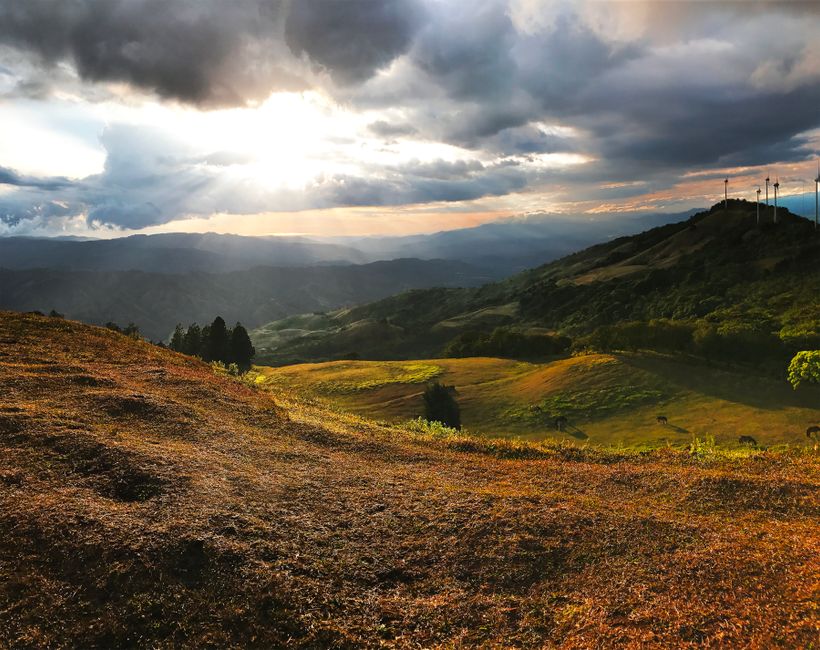
San José is Costa Rica’s capital and its crossroads: almost every trip passes through it, on the way from the airport to the volcanoes, cloud forests and beaches. Set in the Central Valley at about 1,150 m (3,800 ft), surrounded by green mountains and coffee farms, it is a busy, low-rise city of about a third of a million people, with more than a million more in the suburbs that run into Alajuela, Heredia and Cartago. It is not a beautiful city at first sight, but it has the country’s best museums, including a treasure of pre-Columbian gold under the main square, a jewel-box 19th-century theater, a maze of a central market, leafy old neighborhoods with good restaurants, and easy day trips to the active Poás and Irazú volcanoes. Spend one or two days here, or stay near the airport and dip in.
Right now in San José
- Tue 18–27°C 64–81°F 6 mm Rain
- Wed 16–27°C 61–81°F 12 mm Heavy rain
- Thu 17–26°C 63–79°F 16 mm Heavy showers
Weather: MET Norway (CC BY 4.0) · Air quality: OpenAQ
Top tours in San José
See all tours for San José →
From local operators, with prices and reviews; you check availability and book on Viator, our partner. We may earn a commission at no extra cost to you. How we earn money
San José at a glance
- Best for: museums and history, food markets and restaurants, a first or last night near the airport, and day trips to volcanoes, coffee farms and the Orosi Valley.
- How long: one full day for the center; two or three days to add Poás or Irazú and a coffee tour.
- Best time: the dry season, December to April, with sunny days of about 29–31 °C (84–89 °F); from May to November most afternoons bring rain.
- Getting there: Juan Santamaría International Airport (SJO) is in Alajuela, about 20 km (12 miles) west of downtown, 30 minutes to an hour by road depending on traffic.
- Getting around: walk the compact center, use official red taxis or ride-hailing apps, and take tours or shuttles out of the city.
- Before you go: entry rules, the departure tax, money and park tickets are in our Costa Rica travel guide.
San José’s neighborhoods: where things are
Downtown (the center)
The center is a grid of numbered avenues (running east to west) and streets (north to south), crossed by the pedestrian Avenida Central. The Plaza de la Cultura, the National Theatre and the Gold Museum are at its heart, with the cathedral and Central Park a few blocks west and the National Museum and Plaza de la Democracia a few blocks east. Addresses are traditionally given by landmarks (“100 meters north of the church”), so use a map app.
Barrio Amón and Barrio Otoya
Just north of the center, the old coffee barons’ quarter has wooden and brick mansions, some now boutique hotels and galleries, the Metallic School (Edificio Metálico), a prefabricated iron building shipped from Belgium, and the Jade Museum nearby. Quiet by day, lively in a few bars at night.
Barrio Escalante and Los Yoses
East of downtown, these leafy residential neighborhoods have become the city’s restaurant and café district, with craft beer, Costa Rican fusion and good coffee, and guesthouses on quiet streets. A good base for a short stay.
Escazú, Santa Ana and Alajuela
Escazú and Santa Ana, on the hills to the west, are upscale suburbs of malls, international hotels and restaurants. Alajuela, the country’s second city, surrounds the airport and is the most convenient place to sleep before an early flight or before heading to Poás, La Fortuna or the Pacific.
Top things to see in San José
Prices and hours below were checked on the official sites in October 2026; check again before you go. At about ₡460 to the US dollar, ₡10,000 is a little over US$20.
The National Theatre (Teatro Nacional)
Costa Rica’s most beautiful building, paid for by a tax on coffee exports in the late 19th century, has a marble foyer, gilded auditorium and ceiling paintings, including the famous allegory of coffee and bananas that once appeared on the five-colón note. Guided visits and the box office run from 9 a.m. to 4 p.m., and an evening concert, opera or dance performance is the best way to see it; check the theater’s calendar and buy tickets online. The café inside is a classic stop.
The Pre-Columbian Gold Museum
Under the Plaza de la Cultura, the Central Bank’s museums hold more than a thousand gold pieces made by Indigenous goldsmiths before the Spanish arrived, such as frogs, eagles, jaguars and shamans, plus a coin and banknote museum. According to the Central Bank museums, they open daily from 9 a.m. to 4:30 p.m., and foreign visitors pay ₡8,800 (about US$19), or ₡6,950 for students; children under 12 enter free, and everyone enters free on International Museum Day, May 18.
The National Museum
The National Museum fills the old Bellavista barracks, still scarred by bullets from the 1948 civil war, after which the army was abolished. It covers pre-Columbian stone spheres and pottery, colonial history and the country’s democracy, and has a butterfly garden at the entrance. As of 2026, foreign adults pay US$11 (US$6 for students), and it opens Tuesday to Saturday from 8:30 a.m. to 4:30 p.m. and Sunday from 9 a.m. to 4:30 p.m.; the entrance is on the Plaza de la Democracia.
The Central Market and the food scene
The Mercado Central, a covered warren of stalls a few blocks west of the cathedral, sells coffee, spices, herbs, leather and souvenirs, and its tiny sodas serve casados, chicharrones and arroz con pollo at counters. Try a fruit shake or the traditional “churchill”, shaved ice with syrup, condensed milk and ice cream. For a modern meal, head to Barrio Escalante.
More to see
- Jade Museum (Museo del Jade): a modern building near the National Museum with the largest collection of pre-Columbian American jade.
- Metropolitan Cathedral and Central Park: the heart of old San José, with the Melico Salazar theater nearby.
- La Sabana Park: the city’s big green space, once its airport, with the Costa Rican Art Museum in the old terminal building and the national stadium.
- Plaza de la Democracia: a terraced square with views of the mountains and a craft market on its west side.
Other things to do in San José
Walk the center on a weekday morning, when it is busiest and most local. Coffee tours on farms in the hills of Heredia and Alajuela explain how the beans that built the country are grown, picked and roasted. In the evening, catch a performance at the National Theatre or the Melico Salazar, or eat and drink in Barrio Escalante. Sunday is quieter, with families in La Sabana. See our city sightseeing guide for general tips.
Food and drink in San José
San José is the best place in Costa Rica to eat well for little money and, increasingly, to eat very well. The classic city meal is a casado at a soda, a counter or small diner with a set plate of rice, beans, salad, plantain and a main; breakfast is gallo pinto with eggs, natilla and tortillas, and mid-morning snacks are empanadas, tamal asado (a sweet corn cake) and pastries from the bakeries. The Central Market and the newer Borbón market streets are the places to see the city’s food at its most local, along with the Saturday farmers’ markets (ferias del agricultor) held in several neighborhoods.
For modern Costa Rican cooking, coffee and craft beer, head to Barrio Escalante, where the streets around Calle 33 are lined with restaurants, bakeries and bars; it is busiest from Thursday to Saturday nights. Specialty coffee shops serving beans from Tarrazú, the West Valley and other regions are all over the center and the eastern neighborhoods, and many sell bags to take home. San Pedro, by the University of Costa Rica, has cheap student bars and live music, and Escazú has upscale restaurants and international chains. Order tap water freely: it is drinkable in the city, according to the ICT. Restaurant prices include 13% VAT and the 10% service charge.
Day trips from San José
- Poás Volcano National Park: one of the most active volcanoes in the country, with a huge crater and an acid lake, at 2,708 m (8,885 ft) north of Alajuela. According to SINAC, it opens daily from 8 a.m. to 4 p.m. with last entry at 2 p.m., tickets are sold only online through SINAC’s booking system for a set time, and foreign adults pay US$16.95 (US$5.65 for children 2–12). Clouds often roll in by late morning, so book an early slot, and follow rangers’ instructions: visits are short and can be suspended when the volcano is active.
- Irazú Volcano National Park: Costa Rica’s highest volcano, at 3,432 m (11,260 ft), 31 km (19 miles) from Cartago, with a moonscape of craters and, on clear mornings, views to both oceans. Open daily from 8 a.m. to 4 p.m., including holidays; US$16.95 for foreign adults; it averages only 5–9 °C (41–48 °F), so bring a jacket.
- Cartago and the Orosi Valley: the old capital’s Basilica of Our Lady of the Angels draws hundreds of thousands of pilgrims on August 2; beyond it, the Orosi Valley has coffee fields, the country’s oldest working church and the ruins of Ujarrás, whose viewpoints the ICT has recently restored.
- Braulio Carrillo National Park: rainforest on the highway to the Caribbean, just 30–40 minutes from the city, with the Barva Volcano sector bookable online.
- Coffee farms, Sarchí and waterfalls: coffee tours in Heredia and Alajuela, the painted oxcarts of Sarchí, and private waterfall and wildlife parks on the road to Poás.
- Further afield: La Fortuna and Arenal (about three hours), Manuel Antonio (157 km, about three hours), and the Caribbean coast are all reachable by shuttle; see our La Fortuna and Manuel Antonio guides.
Nearby destinations
- Manuel Antonio National Park62 km
- Tortuguero National Park84 km
- La Fortuna86 km
- Monteverde90 km
- Puerto Viejo de Talamanca148 km
- Tamarindo192 km
- Bocas del Toro211 km
- Boquete222 km
Getting there and getting around
From the airport
Juan Santamaría International Airport (SJO) is in Alajuela. Official airport taxis, which are orange, are sold at a counter outside arrivals; ride-hailing apps, hotel transfers and shared shuttles are the alternatives, and public buses to downtown San José stop on the highway outside. The drive takes about 30 minutes without traffic and an hour or more at rush hour. Many travelers skip San José entirely and head straight from the airport to La Fortuna or the coast by shuttle. Remember the US$29 departure tax when you fly out, usually included in your ticket; see our Costa Rica guide.
Getting around the city
Downtown is walkable. For longer trips, take an official red taxi with a yellow triangle on the door, which should use the meter, or a ride-hailing app. City buses are cheap but confusing for visitors. A commuter train links San José with Heredia, Alajuela and Cartago on weekdays. Driving in the city is stressful, and on weekdays private cars, including rental cars, are banned from central San José at peak hours depending on the last digit of the license plate.
Leaving San José
Shared and private tourist shuttles pick up from hotels for all the main destinations. Public buses leave from several different terminals depending on the company and region, so check where yours departs. SANSA’s domestic flights leave from Juan Santamaría for La Fortuna, Quepos, Tamarindo, Tortuguero and other strips.
When to go and how long to stay
San José is warm by day and pleasant at night all year, thanks to its altitude. The table uses the World Meteorological Organization’s 1991–2020 climate normals for the Tobías Bolaños airport station in Pavas, on the city’s west side at 997 m (3,271 ft): average daily highs and lows, and days with at least 1 mm of rain.
| Season | Average high / low | Rainy days per month | What it’s like |
|---|---|---|---|
| Dry season (Dec–Feb) | 29–30 °C (84–87 °F) / 16 °C (60–61 °F) | 1–4 | Sunny and breezy; the holiday season |
| Late dry season (Mar–Apr) | 31–32 °C (88–89 °F) / 16–17 °C (61–62 °F) | 2–7 | The warmest weeks; first showers in April |
| Rainy season (May–Aug) | 30–31 °C (86–87 °F) / 17 °C (62–63 °F) | 14–18 | Sunny mornings, afternoon downpours; a drier spell in July |
| Wettest months (Sep–Nov) | 29–30 °C (84–86 °F) / 16–17 °C (61–62 °F) | 22 in September, 12 in November | Heavy afternoon rain, easing in November |
The station records about 1,670 mm (66 in) of rain a year, almost none from December to March and about 296 mm (12 in) in September, the wettest month. Mornings are the best time for sightseeing and volcano trips in every season.
San José month by month
| Month | Weather | Crowds and prices | Why go |
|---|---|---|---|
| January | Dry, sunny and breezy | Busy early in the month | Volcanoes with clear mornings |
| February | Dry and sunny | High season | Coffee farms after the harvest, day trips |
| March | Warm and dry | High season | City walks, Poás and Irazú |
| April | The warmest weeks; first showers | Quiet in the city during Holy Week, when many businesses close | Museums, early volcano trips |
| May | Rainy season begins | Quieter; lower rates | Museums, theater |
| June | Sunny mornings, afternoon rain | Moderate | Morning sightseeing |
| July | A drier spell some years | Busier with school holidays | Day trips, Orosi Valley |
| August | Afternoon rain | Moderate; August 2 pilgrimage to Cartago’s basilica fills the roads | Cultural events |
| September | The wettest month; heavy afternoon rain | Quiet; Independence Day on September 15 with lantern parades on the 14th | Independence celebrations |
| October | Very wet | Quiet | Museums, food, theater |
| November | Rain easing | Quiet | Clearer mornings return |
| December | Dry season returns; windy | Festive; the Festival de la Luz parade in December and the holiday season | Christmas lights, parades |
One day in San José
Start at the National Theatre and the Gold Museum on the Plaza de la Cultura, walk the Avenida Central to the Central Market for lunch, and see the cathedral. In the afternoon, visit the National Museum or the Jade Museum, then walk through Barrio Amón and finish with dinner in Barrio Escalante.
Two or three days
Add an early trip to Poás or Irazú, combined with a coffee farm or the Orosi Valley, and a performance at the National Theatre. Then move on to La Fortuna, Monteverde or the coast.
Where to stay in San José and the hotel taxes
- Downtown and Barrio Amón: historic boutique hotels and budget options within walking distance of the museums; quieter at night.
- Barrio Escalante and Los Yoses: guesthouses and small hotels near the best restaurants.
- Escazú and Santa Ana: international chains, resorts and apartments in the western suburbs.
- Alajuela and near the airport: convenient for arrival and departure nights, with garden hotels among the coffee farms.
Hotel rooms carry Costa Rica’s 13% value-added tax, and restaurant bills add a 10% service charge, according to the tourism board (ICT). Many hotels quote rates before tax, so compare totals. There is no separate city tourist tax.
What a day in San José costs
San José is cheaper than the beach and cloud forest towns, especially for food and transport. Hotels quote in US dollars; sodas, markets, buses and taxis charge in colones. These are our estimates for 2026, not official prices, converted at about ₡460 to US$1, close to the Central Bank’s reference rate in early October 2026; museum prices are the official ones above.
| Item | Colones (₡) | About (US$) |
|---|---|---|
| Gold Museum, foreign adult (Central Bank museums) | ₡8,800 | about US$19 |
| National Museum, foreign adult | about ₡5,100 | US$11 |
| Casado at a soda or market counter | ₡3,500–5,500 | US$8–12 |
| Specialty coffee | ₡1,800–3,000 | US$4–6.50 |
| Craft beer in Barrio Escalante | ₡3,000–4,500 | US$6.50–10 |
| City bus ride | ₡300–600 | under US$1.50 |
| Taxi or app ride across the center | ₡2,500–5,000 | US$5–11 |
| Hostel dorm bed | ₡6,500–11,000 | US$14–24 |
| Mid-range double room | ₡32,000–60,000 | US$70–130 |
Budget travelers can manage on about US$40 to US$60 (₡18,000–28,000) a day with a dorm bed, sodas and buses; mid-range travelers with a boutique hotel, a museum, a coffee tour and dinner in Escalante should plan on US$150 to US$220 (₡69,000–101,000).
Practical tips for San José
- Money: dollars are accepted in hotels and many restaurants, but carry colones for the market, buses and taxis; use ATMs inside banks or malls.
- Go early: book the first time slots for Poás and Irazú, before the clouds arrive.
- Water: tap water is drinkable in the city, according to the ICT.
- Safety: pickpocketing and bag snatching happen in the crowded center, at bus terminals and on buses. Keep phones out of sight, carry a copy of your passport, take taxis or app rides after dark rather than walking, and never leave anything in a parked car.
- Emergencies: call 911.
What to pack for San José
Bring comfortable walking shoes, light layers for warm days and cool evenings, a compact umbrella or light rain jacket from May to November, and a warm fleece, hat and gloves for the volcano summits, where it can be near freezing at dawn. A small daypack with a zip, sunscreen and a refillable water bottle are useful. Plugs are the US type.
San José travel FAQ
Is San José worth visiting?
For a day or two, yes: the National Theatre, the Gold Museum, the National Museum and the Central Market are the best introduction to Costa Rican history and food, and Poás and Irazú are close by.
How far is the airport from downtown San José?
Juan Santamaría airport is in Alajuela, about 20 km (12 miles) west, or 30 minutes to an hour by taxi depending on traffic. Use the orange airport taxis or an app ride.
How much is the Gold Museum in San José?
₡8,800 (about US$19) for foreign adults and ₡6,950 for students as of 2026; children under 12 are free. It opens daily from 9 a.m. to 4:30 p.m.
Do I need to book Poás Volcano in advance?
Yes. Poás tickets are sold only online through SINAC’s system for a set time slot, at US$16.95 for foreign adults. The park opens 8 a.m. to 4 p.m., with last entry at 2 p.m.
Is the National Museum open on Mondays?
No. It opens Tuesday to Saturday from 8:30 a.m. to 4:30 p.m. and Sunday from 9 a.m. to 4:30 p.m.; foreign adults pay US$11.
When does it rain in San José?
Mostly from May to November, usually in the afternoon; September and October are the wettest months. December to April is dry and sunny.
Where should I stay in San José?
Barrio Amón or downtown for the museums, Barrio Escalante for restaurants, Escazú for international hotels, or Alajuela if you only need a night near the airport.
Can I drive a rental car in San José?
Yes, but traffic is heavy and central San José bans cars on weekdays at peak times by license plate number, rental cars included. Many visitors pick up a car on their way out of town.
What should I eat in San José?
A casado at a soda or a Central Market counter, gallo pinto for breakfast, a churchill shaved-ice dessert and a cup of Costa Rican specialty coffee. For modern cooking and craft beer, go to Barrio Escalante.
How much does a day in San José cost?
By our estimates, about US$40 to US$60 a day on a budget and US$150 to US$220 mid-range. The Gold Museum costs ₡8,800 for foreign adults and the National Museum US$11.
Sources and last review
Researched and last reviewed on 4 October 2026. Gold Museum prices and hours: the Central Bank of Costa Rica museums; National Museum prices and hours: the National Museum of Costa Rica; National Theatre hours: the National Theatre; Poás and Irazú hours, fees, altitude and online tickets: SINAC; the distance to Manuel Antonio: SINAC; exchange rate: the Central Bank reference rate via the Ministry of Finance; VAT, service charge and tap water: the Costa Rica Tourism Board (ICT); the Orosi and Ujarrás viewpoints: the ICT; climate: the WMO 1991–2020 normals for Tobías Bolaños airport (archived by NOAA NCEI); plate restrictions: the UK government’s Costa Rica pages. City population, airport distance and driving times, neighborhood descriptions, the commuter train, taxi colors and the history of the buildings come from secondary sources or general knowledge and are flagged for checking. Prices and hours change, so check the official sites before you go. For entry rules, money and park tickets, see our Costa Rica travel guide. The food notes, the month-by-month table and its festival dates come from general knowledge and are flagged for checking; the daily costs are our own estimates, converted at about ₡460 to US$1.
Plan your trip
Partner links: TravelerCenter may earn a commission if you book, at no extra cost to you.
🇪🇸 Useful Spanish phrases for San José
All 38 Spanish phrases: restaurant, hotel, emergencies, romance (printable) →