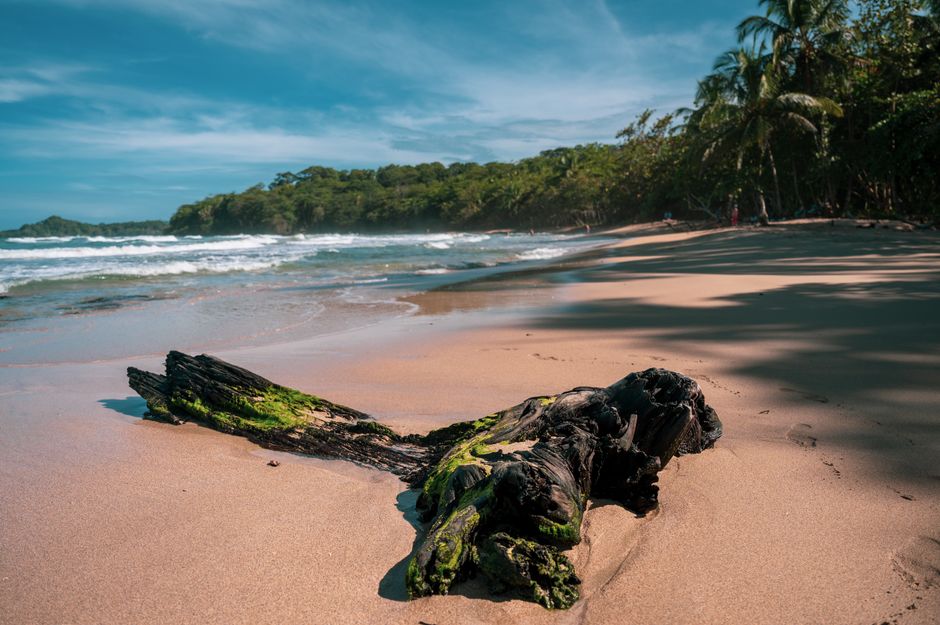
Puerto Viejo de Talamanca is the laid-back heart of Costa Rica’s South Caribbean coast, a small, colorful beach town where the rainforest runs down to the sea. Its culture is different from the rest of the country: descendants of Afro-Caribbean families who came from Jamaica and other islands in the late 19th and early 20th centuries speak English Creole as well as Spanish, cook rice and beans in coconut milk, and play calypso and reggae, while the Indigenous BriBri people live in the Talamanca mountains behind. Around town are some of the most beautiful beaches in Costa Rica, from Cocles and Punta Uva to Manzanillo, coral reefs in Cahuita National Park and the Gandoca-Manzanillo refuge, a famous reef break called Salsa Brava, and an easy rhythm of cycling, swimming and eating well. It is also the gateway to Panama’s Bocas del Toro islands, across the border at Sixaola.
Right now in Puerto Viejo de Talamanca (Puerto Viejo)
- Wed23–30°C73–86°F14 mm rain
- Thu23–30°C73–86°F3 mm rain
- Fri23–30°C74–86°F2 mm rain
Top tours in Puerto Viejo de Talamanca
See all tours for Puerto Viejo de Talamanca →
From local operators, with prices and reviews; you check availability and book on Viator, our partner. We may earn a commission at no extra cost to you. How we earn money
Puerto Viejo at a glance
- Best for: Caribbean beaches and snorkeling, surfing, cycling, wildlife in Cahuita, Afro-Caribbean food, chocolate and Indigenous culture.
- How long: three or four days for the beaches, Cahuita and Manzanillo; a week to slow down or add Tortuguero or Bocas del Toro.
- Best time: September and October, the driest months on this coast and the wettest on the Pacific, and February to April.
- Getting there: about four and a half to five hours by road or bus from San José, via Limón; there is no airport in town.
- Before you go: entry rules, money and park tickets are in our Costa Rica travel guide.
Puerto Viejo’s areas: where things are
The town of Puerto Viejo sits on a small bay with a black-sand beach, a few blocks of bars, sodas, surf shops and hostels, and the Salsa Brava reef just offshore. A single coastal road runs about 13 km (8 miles) south-east from town through a string of beaches and jungle lodges, Playa Cocles, Playa Chiquita and Punta Uva, to the village of Manzanillo at the end of the road, inside the Gandoca-Manzanillo refuge. Cahuita and its national park are about 20 minutes north-west.
Each stretch has its own pace. Town is the social hub, with the bus stop, banks, supermarkets and nightlife, but music carries late at weekends. Cocles, a 10-minute ride south, mixes surf schools and mid-range hotels with quieter nights. Playa Chiquita and Punta Uva are spread out among the trees, with lodges set back from the road, howler monkeys at dawn and the calmest water, but you will cycle or take a taxi to dinner. Manzanillo is a small village at the end of the road with a few family restaurants, the refuge trail and almost no nightlife. North-west, Cahuita is a slower, smaller alternative to Puerto Viejo, with its own black-sand beach and direct access to the national park.
Top things to see around Puerto Viejo
Park fees and hours below were checked with SINAC in October 2026; check again before you go.
The beaches: Cocles, Punta Uva and Manzanillo
Playa Cocles, just south of town, is a long surf beach with lifeguard towers in places and strong currents. Further on, Playa Chiquita and Punta Uva have calm, clear water in a palm-fringed cove, among the best swimming spots on the coast. At the end of the road, Manzanillo has yellow sand and turquoise water, according to SINAC, with reefs offshore and forest trails behind. Swim only where the water is calm, and watch for rip currents, especially at Cocles.
Cahuita National Park
Cahuita protects a coral reef, a point of rainforest and white-sand beaches. It was created as a national monument in 1970 to protect the reef and declared a national park in 1978, one of the first in the country, according to SINAC, and is co-managed with the community of Cahuita. A flat coastal trail of about 8 km (5 miles) links its two entrances through the forest, with sloths, howler and white-faced monkeys, raccoons and snakes, and snorkeling over the reef is allowed only with a certified local guide.
- Playa Blanca entrance (next to Cahuita village): open daily from 8 a.m. to 4 p.m.; entry is a voluntary cash contribution, invested in the Cahuita community and the park.
- Puerto Vargas entrance (south, with parking): open daily from 8 a.m. to 4 p.m.; foreign visitors and children pay US$5.65, VAT included; credit cards accepted.
Gandoca-Manzanillo Wildlife Refuge
Created in 1985, the refuge covers about 10,450 hectares (40 sq miles) of land and sea between Manzanillo and the Panamanian border, with rainforest, coral reefs, a lagoon and turtle-nesting beaches, according to SINAC. It is unusual because people live inside it, under a 2014 law that recognizes the rights of its residents. SINAC lists it as open Monday to Sunday from 8 a.m. to 4 p.m., with no entry charge, and with drinking water, toilets, trails and parking. A trail from Manzanillo village follows the coast to viewpoints over coves and Punta Mona; go with a guide to go further.
Salsa Brava
Puerto Viejo’s famous wave breaks hard and fast over a shallow reef right in front of town, mostly from December to March when Caribbean swells arrive. It is for experienced surfers only; beginners take lessons at Playa Cocles. Watching from the bars on shore at sunset is a local tradition. See our surfing guide.
Other things to do in Puerto Viejo
- Cycling: bicycles are the local way to get around; rent one in town and ride the flat coast road to the beaches, with care on the narrow road.
- Snorkeling: the reefs at Cahuita (with a guide) and at Punta Uva and Manzanillo on calm days, usually best in September and October. See our snorkeling guide.
- Wildlife rescue centers: sanctuaries near Playa Chiquita care for injured sloths, monkeys and other animals, with guided visits.
- Chocolate tours: small cacao farms show how chocolate is made, from pod to bar.
- BriBri culture: visits with Indigenous BriBri communities in the Talamanca hills, arranged with community tourism groups, with waterfalls, medicinal plants and traditional cacao.
- Caribbean food: rice and beans in coconut milk, rondón seafood stew, jerk chicken, patí pastries and ginger drinks at local sodas and family restaurants.
Food and drink in Puerto Viejo
Food is one of the best reasons to come. The Afro-Caribbean kitchen is built on coconut, allspice, thyme and Panamanian-style hot peppers: rice and beans cooked in coconut milk (not to be confused with the gallo pinto of the rest of the country), usually served with Caribbean chicken, fish or pork; rondón (“run down”), a stew of fish, seafood, root vegetables and green banana simmered in coconut milk; patí, spicy turnovers sold from bakeries and bicycles; and sweets such as pan bon, a dark spiced bread, and coconut drops. Wash it down with homemade ginger beer, agua de sapo (a lime and ginger drink with tapa de dulce) or fresh coconut water.
Rice and beans is traditionally a weekend dish, so the best selection is from Friday to Sunday. The town also has a wide choice of international cooking, including Italian, Argentine, Asian, vegan and bakery cafés, many run by people who came from abroad and stayed. Several farms near Punta Uva and Manzanillo grow cacao and sell bars and hot chocolate made on site. Bars along the seafront fill up for sunset over Salsa Brava, and reggae and calypso nights run late at weekends; Monday and Tuesday are quieter.
Day trips and next stops
- Cahuita: the national park, the village’s Caribbean restaurants and its black-sand beach, 20 minutes away by bus or car.
- Bocas del Toro, Panama: cross the border at Sixaola–Guabito, about an hour south-east, and continue by road to Almirante and a water taxi to the islands; shuttle companies sell the whole trip. You need your passport, the Costa Rican departure stamp and Panama’s entry requirements.
- Keköldi Indigenous territory: a small BriBri and Cabécar territory in the hills near Hone Creek, a few minutes inland, where community guides lead forest walks; from about September to November, a local project counts the huge flocks of migrating hawks and vultures from a lookout tower.
- Limón: the Caribbean’s main port city, about an hour north-west, with a seafront park, a lively market and the October carnival; worth a few hours on the way to or from San José.
- Tortuguero: by road via Limón and a private boat from Moín, or back through Guápiles to the La Pavona dock; see our Tortuguero National Park guide.
Nearby destinations
- Bocas del Toro66 km
- Boquete104 km
- Tortuguero National Park118 km
- San José148 km
- Manuel Antonio National Park155 km
- La Fortuna226 km
- Monteverde236 km
Getting there and getting around
From San José, the drive to Puerto Viejo takes about four and a half to five hours via Route 32 through Braulio Carrillo National Park to Limón, then south along the coast. Direct public buses leave several times a day from the capital, and shared tourist shuttles run from San José, La Fortuna and the Tortuguero docks. The road through Braulio Carrillo is sometimes closed by landslides after heavy rain, so check conditions. The nearest airport with scheduled flights is Limón (LIO), about an hour away, served by SANSA from San José.
Around town, rent a bicycle, use the local bus that runs along the coast road to Manzanillo, or take a taxi. Use lights and reflective clothing if you cycle after dark, which falls early, around 5:30 to 6 p.m. all year.
When to go and how long to stay
The Caribbean coast has its own seasons. According to Costa Rica’s National Meteorological Institute (IMN), it has no true dry season, but the coast has two relatively dry periods, February to March and September to October, while the wettest period runs from November to January, when northern cold fronts arrive, with a second rainy peak in July. The table uses the World Meteorological Organization’s 1991–2020 normals for Puerto Limón, about 60 km (37 miles) north-west on the same coast.
| Season | Average high / low | Rain per month | What it’s like |
|---|---|---|---|
| Winter (Dec–Jan) | 31 °C (87–88 °F) / 19–20 °C (65–67 °F) | 320–465 mm | Wet, with cold fronts; big surf at Salsa Brava |
| Late winter and spring (Feb–Apr) | 31–32 °C (87–90 °F) / 19–20 °C (65–68 °F) | 220–270 mm | A drier spell; good beach weather |
| Early summer (May–Aug) | 32 °C (89–90 °F) / 21–22 °C (70–71 °F) | 290–505 mm | Hot and humid; July is very wet |
| Fall (Sep–Oct) | 33 °C (91 °F) / 21 °C (70 °F) | 143–178 mm | The driest months; calm, clear sea for snorkeling |
| November | 32 °C (90 °F) / 20 °C (68 °F) | About 430 mm | Heavy rain returns |
Puerto Limón records about 3,790 mm (149 in) of rain a year on about 188 days. The Atlantic hurricane season, from June 1 to November 30 according to NOAA’s National Hurricane Center, rarely brings storms directly here, but distant systems can cause heavy rain and floods.
Puerto Viejo month by month
| Month | Weather | Crowds and prices | Why go |
|---|---|---|---|
| January | Wet, with cold-front rain some days | Busy early in the month | Big surf at Salsa Brava |
| February | Drier spell begins | High season | Beaches, surfing, Cahuita trail |
| March | One of the drier months; hot | High season | Beaches, wildlife |
| April | Hot; showers return late in the month | Very busy in Holy Week | Beaches; book rooms early |
| May | Hot and humid, rain picking up | Quiet | Chocolate tours, rescue centers |
| June | Rainy spells | Quiet | Green forest, low rates |
| July | Very wet; a rainy peak | Busier with school holidays | Caribbean food, culture |
| August | Wet, with some breaks | Moderate; Afro-Costa Rican culture celebrations (August 31 is the national day of the Black person and Afro-Costa Rican culture) | Culture and music |
| September | The driest months begin; calm, clear sea | Quiet but popular with those in the know | Snorkeling at Cahuita and Punta Uva |
| October | Dry and calm | Moderate; Limón carnival around October 12 | Snorkeling, raptor migration at Keköldi |
| November | Heavy rain returns | Quiet | Low prices, raptor migration |
| December | Wet, with cold fronts | Busy at Christmas and New Year | Surf season starts at Salsa Brava |
3 days in Puerto Viejo
Day one, cycle to Cocles and Punta Uva for a swim and an evening of Caribbean food in town. Day two, Cahuita National Park’s coastal trail and a guided snorkel on the reef. Day three, Manzanillo and the refuge trail, a chocolate tour or a wildlife rescue center.
A week in Puerto Viejo
Add surf lessons, a BriBri community visit, and a few slow beach days, then continue to Bocas del Toro across the border or to Tortuguero.
Where to stay in Puerto Viejo and the hotel taxes
- Puerto Viejo town: hostels, cabinas and small hotels near bars and restaurants; lively and sometimes noisy at night.
- Playa Cocles: mid-range hotels and bungalows close to the surf beach, a short ride from town.
- Playa Chiquita and Punta Uva: jungle lodges and boutique hotels near the calmest beaches.
- Manzanillo and Cahuita: quieter villages with guesthouses, close to the parks.
Rooms carry Costa Rica’s 13% value-added tax, and restaurant bills include a 10% service charge, according to the tourism board (ICT). Check whether quotes include tax.
What a day in Puerto Viejo costs
Puerto Viejo is one of the more affordable beach areas in Costa Rica, especially if you eat at sodas and travel by bike. Hotels and tours usually quote in US dollars; sodas, buses and bike rentals often charge in colones. These are our estimates for 2026, not official prices, converted at about ₡460 to US$1, close to the Central Bank’s reference rate in early October 2026. The Cahuita fee is SINAC’s official price.
| Item | Colones (₡) | About (US$) |
|---|---|---|
| Rice and beans with chicken at a soda | ₡4,500–6,500 | US$10–14 |
| Patí from a bakery | ₡700–1,200 | US$1.50–2.60 |
| Bike rental, per day | ₡2,500–5,000 | US$5–11 |
| Local bus, town to Manzanillo | ₡500–1,000 | US$1–2 |
| Cahuita National Park, Puerto Vargas entrance (SINAC) | about ₡2,600 | US$5.65 |
| Hostel dorm bed | ₡7,000–12,000 | US$15–26 |
| Mid-range cabina or bungalow, double | ₡28,000–55,000 | US$60–120 |
| Surf lesson (about 2 hours) | ₡18,000–28,000 | US$40–60 |
| Guided snorkel at Cahuita | ₡14,000–23,000 | US$30–50 |
A budget day with a dorm bed, sodas and a rented bike costs about US$45 to US$60 (₡21,000–28,000); a mid-range day with a beach bungalow, a tour and dinners out is more like US$150 to US$220 (₡69,000–101,000) per person.
Practical tips for Puerto Viejo
- Money: ATMs are in Puerto Viejo and Cahuita but can run out at weekends; carry some colones for sodas, buses and the Cahuita donation.
- Safety: the UK government notes that muggings and theft are significant problems on the Caribbean coast. Lock bikes and rooms, use the hotel safe, don’t leave bags on the beach, avoid dark beach paths and empty roads at night, and take a taxi home late.
- Drugs: you may be offered them; penalties in Costa Rica are severe, and the drug trade is behind much local crime.
- Swimming: rip currents are strong at Cocles and other open beaches; swim at calm coves such as Punta Uva and never alone.
- Insects: use repellent, especially at dusk; dengue occurs on this coast in the rainy months.
- Emergencies: call 911.
What to pack for Puerto Viejo
Bring swimwear, a rash guard, reef-safe sunscreen, a hat, insect repellent, light rain gear in any month, sandals and water shoes for rocky entries, a dry bag, a snorkel mask, a bike lock and lights if you plan to cycle, and a headlamp. Plugs are the US type.
Puerto Viejo travel FAQ
When is the best time to visit Puerto Viejo?
September and October, the driest months on the Caribbean coast, and February to April. November to January is the wettest period.
How much is Cahuita National Park?
At the Playa Blanca entrance by Cahuita village, entry is a voluntary cash donation. At the Puerto Vargas entrance, foreign visitors pay US$5.65, according to SINAC. Both open daily from 8 a.m. to 4 p.m.
Is the Gandoca-Manzanillo refuge free?
Yes. SINAC lists no entry charge; it is open daily from 8 a.m. to 4 p.m.
How do I get from San José to Puerto Viejo?
By direct public bus, shuttle or car, about four and a half to five hours via Limón. The closest scheduled flights land at Limón, about an hour away.
Can I go from Puerto Viejo to Bocas del Toro?
Yes. Cross the border at Sixaola–Guabito, about an hour away, then continue to Almirante and a water taxi to the islands; shuttle companies sell the whole journey.
Can you snorkel in Puerto Viejo?
Yes, at Cahuita’s reef with a certified guide, and at Punta Uva and Manzanillo on calm days, best in September and October.
Is Puerto Viejo good for surfing?
Yes. Salsa Brava is a powerful reef break for experts, mostly December to March; beginners learn at Playa Cocles.
Where should I stay in Puerto Viejo?
In town for nightlife and buses, Playa Cocles for surfing, Playa Chiquita or Punta Uva for calm beaches and jungle lodges, and Manzanillo or Cahuita for quiet villages near the parks. A bicycle links them all.
What food is Puerto Viejo known for?
Afro-Caribbean dishes: rice and beans cooked in coconut milk, rondón seafood stew, Caribbean chicken, spicy patí turnovers and pan bon, with ginger drinks. Rice and beans is traditionally served at weekends.
Is Puerto Viejo expensive?
Less than most Pacific beach towns. By our estimates, budget travelers spend about US$45 to US$60 a day with a dorm bed, sodas and a rented bike; mid-range travelers spend about US$150 to US$220.
Plan your trip
Partner links: TravelerCenter may earn a commission if you book, at no extra cost to you.
🇪🇸 Useful Spanish phrases for Puerto Viejo de Talamanca
All 38 Spanish phrases: restaurant, hotel, emergencies, romance (printable) →
Sources · last reviewed 4 October 2026
Researched and last reviewed on 4 October 2026. Cahuita National Park’s entrances, hours, fees, history and co-management, and the Gandoca-Manzanillo refuge’s size, history, hours, services and free entry: SINAC; Caribbean seasons: the National Meteorological Institute (IMN); climate normals: the WMO 1991–2020 normals for Puerto Limón (archived by NOAA NCEI); hurricane season: NOAA’s National Hurricane Center; theft on the Caribbean coast: the UK government’s Costa Rica pages; SANSA’s Limón route: SANSA; VAT and service charge: the Costa Rica Tourism Board (ICT). Afro-Caribbean and BriBri history, beach descriptions, Salsa Brava’s season, the Cahuita trail length and guided-snorkel rule, travel times, the border crossing, rescue centers and road closures come from secondary sources or general knowledge and are flagged for checking, as do the area descriptions, the food notes, Keköldi, Limón, the festival dates and the month-by-month table. The daily costs are our own estimates, with colón amounts converted at about ₡460 to US$1, close to the Central Bank’s reference rate in early October 2026. Prices and rules change, so check the official sites before you go. For entry rules and money, see our Costa Rica travel guide.
Data: Weather: MET Norway (CC BY 4.0) · Sea temperature: NOAA CoastWatch · Rates: ECB · Costs: World Bank ICP and price levels · Wikidata (CC0)