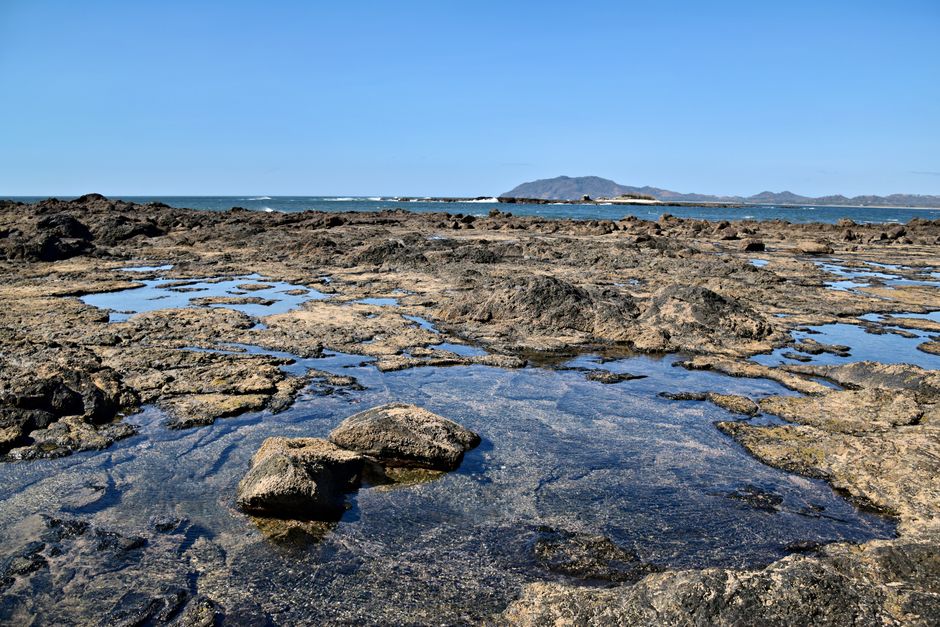
Tamarindo is the liveliest beach town on Costa Rica’s North Pacific coast, in the dry, sunny province of Guanacaste. A former fishing village on a wide, curving bay, it has grown into a busy resort of surf schools, beach bars, restaurants, condos and hotels, with famous sunsets and easy waves for beginners. Across the estuary to the north, Playa Grande and the beaches of Las Baulas Marine National Park protect one of the Pacific’s important nesting sites for the giant leatherback turtle, and within an hour or so are quieter surf beaches, the white shell sand of Playa Conchal, and the volcanic mud pots and hot springs of Rincón de la Vieja. Guanacaste has the country’s longest and most reliable dry season, from December to April, and its own international airport at Liberia, about an hour away.
Right now in Tamarindo
- Wed24–32°C75–89°F13 mm rain
- Thu24–31°C74–88°F10 mm rain
- Fri24–30°C75–87°F2 mm rain
Top tours in Tamarindo
See all tours for Tamarindo →
From local operators, with prices and reviews; you check availability and book on Viator, our partner. We may earn a commission at no extra cost to you. How we earn money
Tamarindo at a glance
- Best for: learning to surf, sunsets, beach bars and restaurants, boat and snorkel trips, and a base for the Guanacaste coast and volcanoes.
- How long: three or four days for the beach, a surf lesson and a day at Rincón de la Vieja; a week to explore the nearby beaches.
- Best time: December to April, the dry season, when it almost never rains; July and August often bring a drier spell in the rainy season.
- Getting there: about an hour and a quarter by road from Liberia’s Guanacaste Airport (LIR), about four and a half to five hours from San José, or a SANSA flight to Tamarindo’s airstrip (TNO).
- Before you go: entry rules, the departure tax and money are in our Costa Rica travel guide.
Tamarindo’s areas: where things are
The town follows one main road along the beach, with a small circle (the “rotonda”) at its center and side streets running inland. The northern end, near the estuary mouth, has the busiest surf break, bars and nightlife; the southern end, toward Playa Langosta, is quieter, with more condos and boutique hotels. Across the estuary, reached by a short boat ride or a long drive around, is Playa Grande, a long, quiet beach inside Las Baulas Marine National Park.
Inland, the road from Tamarindo climbs to Villarreal and Huacas, small Guanacaste towns about 5–10 km (3–6 miles) away, where long-stay visitors and locals live, with supermarkets, hardware stores and cheaper rentals; you need a car or the local bus. The main road through town is busy with traffic, quad bikes and dust in the dry season, and has few sidewalks, so walking on the beach between the north and south ends is often more pleasant. At high tide the beach narrows, and in places you must climb onto the path behind it.
Top things to see in Tamarindo
Tamarindo Beach and surfing
Tamarindo’s sandy-bottom waves are gentle and consistent, which makes the town one of the best places in Costa Rica to learn to surf; dozens of schools rent boards and teach group and private lessons, usually timed with the tide. Experienced surfers head to the river-mouth break, to Playa Grande and Playa Langosta, or south to Avellanas and Playa Negra. See our surfing guide for general advice.
Las Baulas Marine National Park and Playa Grande
Las Baulas protects the beaches of Playa Grande, Langosta and Ventanas, the Tamarindo estuary and a wide strip of sea, about 175 km² (68 sq miles) in all, mostly marine. According to SINAC, it was created for the leatherback turtle (baula), a species in critical danger of extinction, which nests on Playa Langosta, Playa Grande and Playa Ventanas; olive ridley and black (east Pacific green) turtles also visit. The park is open every day from 6 a.m. to 6 p.m., except during the nesting season from October to February, when you may stay on the beach only until 5 p.m. to protect the nests.
Turtle watching: as of October 2026, SINAC’s page for the park says there is no turtle observation at present, and that visits to the estuary are made with local guides and need no reservation. Leatherback numbers in the eastern Pacific have fallen sharply, so check with SINAC or the park office before you plan around turtles. Playa Grande itself is open by day for walks and surfing, with no hotels on the sand.
The Tamarindo estuary
Behind the beach, the estuary and its mangroves, five kinds of mangrove according to SINAC, are part of the park and rich in birds, crabs and crocodiles. Local guides run boat and kayak trips at high tide. Don’t swim in the estuary or near its mouth.
More beaches nearby
- Playa Langosta: just south of town, quieter, with tide pools and a river mouth.
- Playa Conchal: about 30 minutes north, with sand made of crushed shells and clear water for snorkeling.
- Playa Flamingo and Potrero: calm bays and a marina to the north, with boat trips to the Catalina Islands.
- Avellanas and Playa Negra: surf beaches to the south, with a laid-back feel.
- Playa Carbón: inside Las Baulas, which SINAC lists as a spot for shallow snorkeling.
Other things to do in Tamarindo
- Sunset sails: catamaran trips along the coast with snorkeling stops. See our boat trips guide.
- Diving and snorkeling: the Catalina Islands, about 30 minutes off Flamingo, are known for manta and eagle rays; Bat Islands further north for bull sharks in season. See our diving guide.
- Sportfishing: charters from Tamarindo and Flamingo for sailfish, marlin and tuna.
- Food and nightlife: beach bars, Guanacaste-style grills and international restaurants; the weekly night market is a local favorite.
- Yoga and wellness: studios and retreats around town and in nearby Avellanas.
Food and drink in Tamarindo
Tamarindo has the widest choice of restaurants on the North Pacific coast. Local sodas a block or two off the beach serve the casado, arroz con pollo and fish of the day at local prices, and the Guanacaste kitchen adds corn dishes such as rosquillas (crunchy corn and cheese rings), tanelas and chorreadas, sweet corn pancakes, plus sopa de albóndigas (meatball soup) and slow-cooked beef. Seafood is the star: ceviche of corvina or mahi-mahi with lime, onion and cilantro, whole fried red snapper, and tuna from the sportfishing boats.
Along the main road and the beach you’ll also find Italian, Argentine grills, sushi, taco bars, vegan cafés and smoothie stands, many run by people from abroad who settled here. The beach bars at the north end are the place for sunset drinks, with live music and DJs on weekend nights; a weekly night market with food, crafts and music runs in town in the high season. Imported goods are pricey, so a local imperial or pilsen beer is far cheaper than wine. Restaurant bills include 13% VAT and a 10% service charge.
Day trips from Tamarindo
- Rincón de la Vieja Volcano National Park: fumaroles, bubbling mud pots, waterfalls and hot springs about two hours north-east, near Liberia. According to SINAC, the Pailas sector opens Tuesday to Sunday from 8 a.m. to 3 p.m. (closed Mondays) and the Santa María sector Thursday to Monday from 8 a.m. to 3:30 p.m.; foreign adults pay US$16.95, and tickets are sold through SINAC’s online system. Private ranches nearby add hot springs, zip lines and horse riding.
- Palo Verde and the Tempisque River: boat trips through wetlands with crocodiles and thousands of waterbirds in the dry season.
- Santa Rosa National Park: dry forest and historic battlefield north of Liberia, with remote surf beaches.
- Santa Cruz and Guaitil: Guanacaste’s “folklore city”, about 30 minutes inland, has cowboy and marimba traditions and a big fiesta in January; nearby Guaitil is a Chorotega village where families make and sell pottery fired in traditional kilns, with clays and patterns going back to pre-Columbian times.
- Nosara and Sámara: about two hours south on partly unpaved roads, Nosara is a quiet surf and yoga town next to the Ostional turtle refuge, and Sámara has a calm, reef-protected bay that is good for swimming and families.
- Monteverde and La Fortuna: each about three hours inland; see our Monteverde and La Fortuna guides.
Nearby destinations
- San Juan del Sur107 km
- Monteverde108 km
- La Fortuna128 km
- Granada183 km
- San José192 km
- Manuel Antonio National Park209 km
- Tortuguero National Park252 km
Getting there and getting around
By air
Guanacaste Airport (LIR) in Liberia is the closest international airport, about 70 km (45 miles) or an hour and a quarter by road, with many seasonal direct flights from the United States and Canada; shuttles, taxis and car rental desks meet flights. SANSA also flies from San José to Tamarindo’s small airstrip (TNO), north of town, in under an hour. When you leave, the US$29 departure tax is usually in your ticket; if not, pay at the Banco de Costa Rica counter in Liberia’s terminal before check-in, according to the airport.
By road
From San José, the drive takes about four and a half to five hours via the Inter-American Highway and the Tempisque bridge; shared shuttles and direct public buses make the trip daily. Shuttles also link Tamarindo with La Fortuna, Monteverde and Manuel Antonio. Roads to the main beaches are paved; some coastal tracks to the south are dirt and need a high-clearance car in the rainy season.
Getting around
Tamarindo is walkable along the beach and main road. Taxis and ride-hailing cover short hops, and a rental car or golf cart is useful for the other beaches. Water taxis cross the estuary to Playa Grande. Don’t leave anything in a parked car at beaches.
When to go and how long to stay
Guanacaste is Costa Rica’s driest region. The table uses the World Meteorological Organization’s 1991–2020 climate normals for Liberia airport, about 70 km (45 miles) inland at 70 m (230 ft); the coast at Tamarindo is a few degrees cooler thanks to the sea breeze, but follows the same seasons.
| Season | Average high / low | Rain per month | What it’s like |
|---|---|---|---|
| Dry season (Dec–Mar) | 34–37 °C (94–99 °F) / 16–18 °C (61–64 °F) | Almost none (2–12 mm) | Sunny and windy; the landscape turns brown; peak season |
| April | 38 °C (100 °F) / 19 °C (67 °F) | About 31 mm | The hottest month; first showers |
| Early rainy season (May–Aug) | 35–37 °C (94–99 °F) / 21–22 °C (69–71 °F) | 146–234 mm | Green again; afternoon storms; a drier spell in July |
| Wettest months (Sep–Oct) | 33–34 °C (92–94 °F) / 21 °C (70 °F) | About 370 mm | Heavy rain most days; quiet and cheap |
| November | 33 °C (92 °F) / 19 °C (66 °F) | About 119 mm | Rains easing, windy toward December |
Liberia records about 1,740 mm (69 in) of rain a year on about 95 days. According to Costa Rica’s National Meteorological Institute (IMN), the North Pacific’s dry season lasts five or six months from December, about half the year’s rain falls from May to August and most of the rest from September to November. SINAC’s figures for Las Baulas are similar: about 1,810 mm a year, 95% of it from May to November.
Tamarindo month by month
| Month | Weather | Crowds and prices | Why go |
|---|---|---|---|
| January | Dry, sunny and windy | Peak season; busiest early in the month | Beaches, sailing, sunsets |
| February | Dry and windy | Peak season | Beaches, Catalina Islands diving |
| March | Dry and hot | Peak season | Surf lessons, beach days |
| April | The hottest month; first showers | Very busy in Holy Week | Beaches; book early |
| May | Rainy season begins; landscape turns green | Quiet; lower rates | Surf picks up, quieter beaches |
| June | Afternoon storms | Quiet | Good surf, green countryside |
| July | Often a drier spell (veranillo) | Busier with school and North American holidays; Guanacaste Day on July 25 | Surf, beaches, local fiestas |
| August | Rain returns | Moderate | Surf, whales offshore |
| September | Very wet | Very quiet; some businesses close | Big swells for experienced surfers |
| October | Very wet | Very quiet | Low prices |
| November | Rains easing | Shoulder season | Green landscape, quiet beaches |
| December | Dry season returns; windy | Busy and pricier at Christmas and New Year | Holidays; book well ahead |
3 days in Tamarindo
Day one, a surf lesson in the morning and sunset on the beach. Day two, an estuary boat trip at high tide and an afternoon at Playa Grande or Langosta. Day three, a catamaran sail or a day trip to Rincón de la Vieja.
A week in Tamarindo
Add Playa Conchal, a dive trip to the Catalina Islands, Palo Verde’s wetlands and a road trip south to Avellanas and Playa Negra, then continue inland to Monteverde or La Fortuna.
Where to stay in Tamarindo and the hotel taxes
- Central Tamarindo: hostels, surf camps and mid-range hotels close to the beach, bars and restaurants; lively and sometimes noisy.
- Playa Langosta: boutique hotels and condos south of town, quieter, a short walk or ride to the center.
- Playa Grande: a few small hotels behind the park’s beach, for nature lovers and surfers.
- Conchal, Flamingo and the Papagayo Gulf: large all-inclusive and luxury resorts, closer to Liberia airport.
Hotel rooms carry Costa Rica’s 13% value-added tax, and restaurant bills include a 10% service charge, according to the tourism board (ICT). Resort and condo prices are usually quoted in US dollars before tax, so check the total.
What a day in Tamarindo costs
Tamarindo is one of Costa Rica’s more expensive beach towns, with prices close to those in the United States in many restaurants. Hotels, tours and many restaurants quote in US dollars; sodas, buses and supermarkets charge in colones. These are our estimates for 2026, not official prices, converted at about ₡460 to US$1, close to the Central Bank’s reference rate in early October 2026.
| Item | Colones (₡) | About (US$) |
|---|---|---|
| Casado at a soda | ₡4,500–6,500 | US$10–14 |
| Ceviche or fish tacos at a beach restaurant | ₡6,000–9,000 | US$13–20 |
| Local beer at a beach bar | ₡1,800–3,000 | US$4–6.50 |
| Surfboard rental, per day | ₡7,000–9,500 | US$15–20 |
| Group surf lesson (about 2 hours) | ₡23,000–32,000 | US$50–70 |
| Water taxi across the estuary to Playa Grande | ₡1,500–4,500 | US$3–10 |
| Hostel dorm bed | ₡9,000–16,000 | US$20–35 |
| Mid-range double room | ₡46,000–92,000 | US$100–200 |
| Sunset catamaran sail | ₡37,000–55,000 | US$80–120 |
Budget travelers can get by on about US$60 to US$80 (₡28,000–37,000) a day with a dorm bed, sodas and a rented board; with a mid-range hotel, a surf lesson or sail and restaurant dinners, plan on about US$200 to US$280 (₡92,000–129,000) per person.
Practical tips for Tamarindo
- Money: banks and ATMs are in town; dollars are widely used, but carry some colones.
- Sun: the dry-season sun is intense; surf in the morning and late afternoon, and wear a rash guard.
- Swimming safety: rip currents are common, especially near the estuary mouth and at Playa Grande; there are few lifeguards. Never swim in the estuary or river mouths, where crocodiles live.
- Theft: don’t leave bags on the sand or anything in a car; lock rental doors and use the hotel safe.
- Turtle nests: from October to February, leave Las Baulas’s beaches by 5 p.m. and never use lights on nesting beaches at night.
- Emergencies: call 911.
What to pack for Tamarindo
Pack light: swimwear, a rash guard, reef-safe sunscreen, a hat and sunglasses, flip-flops and sandals, light cotton or linen clothes, insect repellent for dusk, and a refillable water bottle. Add a light rain jacket from May to November and closed shoes for a day at Rincón de la Vieja. Plugs are the US type.
Tamarindo travel FAQ
How far is Tamarindo from Liberia airport?
About 70 km (45 miles), or an hour and a quarter by shuttle, taxi or rental car.
Is Tamarindo good for beginner surfers?
Yes. Its sandy-bottom waves are gentle most of the year, and dozens of surf schools give lessons. Experienced surfers have Playa Grande, Langosta and Avellanas nearby.
Can you see leatherback turtles in Tamarindo?
Leatherbacks nest at Las Baulas, but as of October 2026 SINAC says there is no turtle observation at present. Check with SINAC before planning around turtles.
What are Las Baulas National Park’s hours?
Every day from 6 a.m. to 6 p.m., according to SINAC; from October to February, you may stay on the beach only until 5 p.m. to protect turtle nests.
When is the best time to visit Tamarindo?
December to April, Guanacaste’s dry season, when it almost never rains. September and October are the wettest months.
How much is Rincón de la Vieja?
US$16.95 for foreign adults, according to SINAC. The Pailas sector is closed on Mondays, and the Santa María sector on Tuesdays and Wednesdays.
Is it safe to swim in Tamarindo?
Usually, in calm conditions away from the estuary mouth. Watch for rip currents, swim where others swim, and never swim in the estuary.
Do I need a car in Tamarindo?
Not in town, which is walkable along the beach and main road, with taxis for short hops. A rental car helps for Playa Conchal, Avellanas, Rincón de la Vieja and other beaches, and some southern coastal roads need a high-clearance car in the rainy season.
Is Tamarindo expensive?
It is one of the pricier beach towns in Costa Rica. By our estimates, budget travelers spend about US$60 to US$80 a day, and mid-range travelers about US$200 to US$280, with many restaurants charging close to US prices.
What is there to do in Tamarindo when it rains?
Rain usually falls in the afternoon or evening, so surf and sightsee in the morning. On wet days, try a cooking class, yoga, a spa, a trip to the Guaitil pottery village or the Rincón de la Vieja hot springs.
Plan your trip
Partner links: TravelerCenter may earn a commission if you book, at no extra cost to you.
🇪🇸 Useful Spanish phrases for Tamarindo
All 38 Spanish phrases: restaurant, hotel, emergencies, romance (printable) →
Sources · last reviewed 4 October 2026
Researched and last reviewed on 4 October 2026. Las Baulas Marine National Park’s size, hours, nesting-season rule, turtle species and nesting beaches, the current turtle-viewing status, the mangroves, surf and snorkeling spots and rainfall: SINAC; Rincón de la Vieja’s hours, fees and online tickets: SINAC; climate normals: the WMO 1991–2020 normals for Liberia airport (archived by NOAA NCEI); North Pacific seasons: the National Meteorological Institute (IMN); the departure tax: Guanacaste Airport; SANSA’s Tamarindo route: SANSA; VAT and service charge: the Costa Rica Tourism Board (ICT). Distances and drive times, beach descriptions, dive sites, Palo Verde, Santa Rosa, crocodiles in the estuary and the night market come from secondary sources or general knowledge and are flagged for checking. Rules and prices change, so check the official sites before you go. For entry rules and money, see our Costa Rica travel guide. Villarreal and Huacas, the food notes, Santa Cruz and Guaitil, Nosara and Sámara, Guanacaste Day and the month-by-month table come from general knowledge and are flagged for checking; the daily costs are our own estimates, with colón amounts converted at about ₡460 to US$1, close to the Central Bank’s reference rate in early October 2026.
Data: Weather: MET Norway (CC BY 4.0) · Sea temperature: NOAA CoastWatch · Rates: ECB · Costs: World Bank ICP and price levels · Wikidata (CC0)