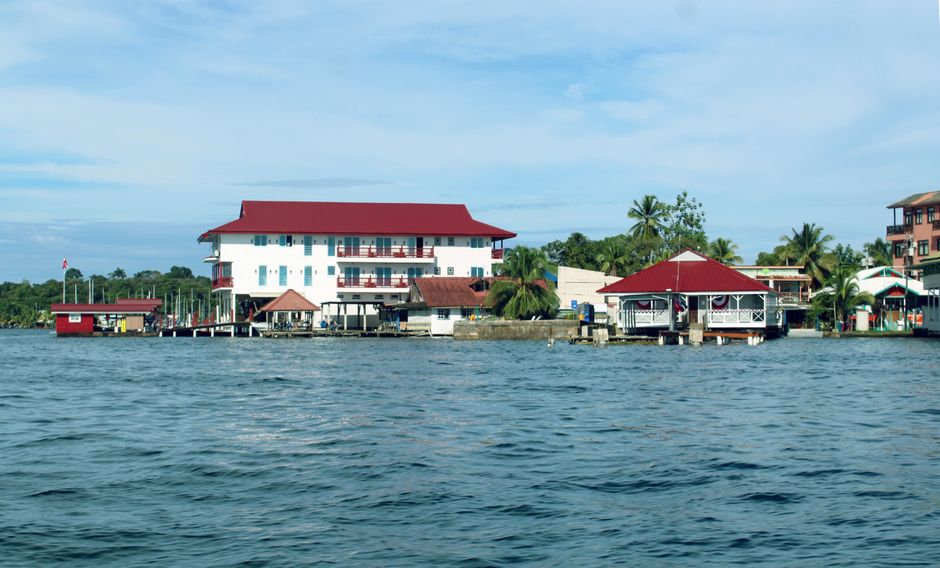
Bocas del Toro is Panama’s Caribbean playground: an archipelago of nine main islands and many small cays near the Costa Rican border, with mangrove-lined channels, coral reefs, white and golden beaches, surf breaks and a laid-back Afro-Caribbean culture. Most visitors base themselves in Bocas Town on Isla Colón, a small town of wooden houses and overwater hotels, bars and dive shops, and get around by water taxi to Isla Carenero, Isla Bastimentos and the cays of Bastimentos Island National Marine Park. Days are for snorkeling over reefs, looking for starfish, surfing, spotting dolphins and sloths, and lazing on Red Frog or Zapatilla beaches; nights are lively in town or quiet in jungle lodges. It is a 45-minute flight from Panama City, according to Panama’s tourism authority (ATP), and an easy overland trip from Costa Rica.
Right now in Bocas del Toro (Bocas Town)
- Tue 26–29°C 78–84°F 21 mm Rain
- Wed 26–29°C 78–84°F 11 mm Partly cloudy
- Thu 25–28°C 78–83°F 10 mm Partly cloudy
Weather: MET Norway (CC BY 4.0) · Sea temperature: NOAA CoastWatch
Top tours in Bocas del Toro
See all tours for Bocas del Toro →
From local operators, with prices and reviews; you check availability and book on Viator, our partner. We may earn a commission at no extra cost to you. How we earn money
Bocas del Toro at a glance
- Best for: island hopping, snorkeling and diving, surfing, beaches, turtles and dolphins, and Caribbean nightlife.
- How long: three or four days for the main island trip, Starfish Beach and Red Frog; a week to dive, surf and slow down.
- Best time: August to October, when the ATP says the sea is calm, and February to April. It can rain in any month.
- Getting there: a 45-minute flight from Panama City’s Albrook airport to Isla Colón, or overland to the port of Almirante and a 35-minute water taxi.
- Before you go: entry rules, money and the departure tax are in our Panama travel guide.
The islands: where things are
Isla Colón and Bocas Town
The largest island holds the airport and Bocas Town, the center of the archipelago, where most tours, boats and public transport leave from, according to the ATP. A road crosses the island to Boca del Drago and Starfish Beach in the north-west and to the long surf beach of Bluff in the east, whose coral sand is almost orange.
Isla Carenero
Just two minutes from Bocas Town by water taxi, according to the ATP, this small island has a path around it that you can walk in about an hour, passing beaches, bars, hotels and surf breaks for all levels.
Isla Bastimentos
A larger, greener island with the Afro-Caribbean village of Old Bank, jungle trails, Red Frog Beach, and wild surf beaches such as Wizard Beach and Playa Larga, much of it inside the national marine park. Several eco-lodges and a resort are here.
Isla Solarte, Isla San Cristóbal and the mainland
Smaller islands with overwater lodges, Ngäbe villages and quiet bays; Solarte is one of the best areas for snorkeling and diving, according to the ATP. On the mainland are the port of Almirante, the banana town of Changuinola, and the border with Costa Rica at Guabito.
Top things to see in Bocas del Toro
Bastimentos Island National Marine Park
One of Panama’s most important protected areas, the park covers 132.3 km² (13,266 hectares) of beaches, mangroves, coral reefs and tropical forest on Isla Bastimentos and nearby cays, according to the ATP. It protects nesting sea turtles, monkeys, birds and colorful poison dart frogs. Its highlights are the Cayos Zapatilla, two small, palm-covered cays with white beaches that the ATP describes as picture-postcard, and the reefs around them. The park is run by Panama’s Ministry of Environment, which charges a small entry fee, usually collected by boat operators on the day trip; carry cash.
Red Frog Beach
On Isla Bastimentos, reached by water taxi and a short walk, this golden beach backed by forest has bars and restaurants and a short trail to the island’s highest point, where you may see the tiny red frogs it is named after, according to the ATP. Waves can be strong, so swim with care.
Starfish Beach and Boca del Drago
At the north-west tip of Isla Colón, Boca del Drago is a calm beach for kayaking and gentle waves, and a path leads on to Starfish Beach (Playa Estrella), famous for the starfish in its shallow water. The ATP asks visitors not to touch them or take them out of the water. Boats from Boca del Drago go to Isla Pájaros (Bird Island) for seabirds and snorkeling. Buses and taxis run from Bocas Town in about 30 to 40 minutes.
Dolphin Bay and the classic boat tour
The most popular day trip from Bocas Town combines Dolphin Bay, where bottlenose dolphins are often seen, snorkeling over coral gardens, lunch on stilts at a reef restaurant, and an afternoon on the Zapatilla cays or Red Frog Beach. Boats should keep their distance from dolphins and not chase them.
Other things to do in Bocas del Toro
- Snorkeling and diving: according to the ATP, Bocas’s waters hold 95% of the coral species found in Panama’s Caribbean, with turtles, dolphins, rays, moray eels and sponges, and water around 26 °C (78 °F) all year. You must be certified to book a dive, but shops offer Discover Scuba courses to a maximum of 6 m (20 ft). See our snorkeling and diving guides.
- Surfing: reef and beach breaks at Carenero, Bluff, Paunch, Wizard Beach and Silverbacks, best in the winter swell season, from about December to March; beginners take lessons on calmer days. See our surfing guide.
- Turtle watching: according to the ATP, turtles nest in Bocas from May to October, busiest in July and August. Leatherbacks nest from mid-February to July, best in May, especially at Playa Chiriquí on the mainland; hawksbills nest year-round, with more than 1,500 nests a year; green turtles from May to November. At the San San Pond Sak wetland near Changuinola, a community foundation (AAMVECONA) runs night patrol tours from 8 p.m. to 2 a.m.; go to its office on the Changuinola–Guabito road.
- Chocolate and culture: cacao farm tours, Ngäbe community visits, and the Afro-Caribbean food, music and guari-guari dialect of Bocas Town.
- Isla Escudo de Veraguas: a remote island two to three hours by boat from Isla Colón, according to the ATP, for adventurous travelers on calm days.
Getting there and getting around
By air
Air Panama flies from Panama City’s Marcos A. Gelabert (Albrook) airport to Isla Colón’s Captain José Ezequiel Hall International Airport, in Bocas Town, in about 45 minutes, according to the ATP. SANSA flies to Bocas del Toro from San José, Costa Rica. The airport is a short walk or taxi ride from the town’s hotels. Luggage allowances on these small planes are limited.
By road and boat from Panama City or Boquete
All overland routes end at the port of Almirante, from where a water taxi takes about 35 minutes to Isla Colón, according to the ATP. By car from Panama City, take the Pan-American Highway to Chiriquí (about six hours), turn off toward Gualaca and continue about three hours more over the mountains to Almirante; by bus, go from the Albrook terminal to David and change for Almirante. From Boquete, Almirante is about three and a half hours by car, and shared shuttles make the trip daily.
From Costa Rica
From Puerto Viejo or Cahuita on Costa Rica’s Caribbean coast, cross the border at Sixaola–Guabito, then take a taxi or bus to Almirante and a water taxi. Shuttle companies sell the whole journey, about four to five hours including the border. You’ll need your passport, Panama’s entry requirements, including proof of onward travel and funds, which officers check at this crossing according to the UK government, and the Costa Rican exit formalities.
Getting around the islands
Water taxis wait at docks along Bocas Town’s waterfront and are the main transport between islands; agree on the fare and the pick-up time before you go, and wear a life jacket. On Isla Colón, bicycles and taxis cover the town, and a bus runs to Boca del Drago. Seas can be rough in the open-water crossings, especially in the winter months; keep valuables in a dry bag.
Food and drink in Bocas del Toro
Bocas eats Caribbean. Look for rice and beans cooked in coconut milk, rondón (“run down”), a coconut stew of fish, shellfish and root vegetables, fried fish with patacones (twice-fried green plantain), and Johnny cake, the coconut bread sold in the mornings in Bocas Town and Old Bank. Lobster and conch appear on menus too, but both have closed seasons in Panama, so ask whether they are in season and pass them up if not. Cacao grows on the islands and the mainland, and small farms sell chocolate made on site.
Bocas Town has the widest choice, from cheap fondas (simple local diners) and food stands near the park to overwater restaurants serving Thai, Italian, sushi and vegetarian dishes, and a supermarket for self-catering. Out on the islands, lodges often provide all meals, and the reef restaurants on the classic boat tour serve fresh fish on stilts above the water. Nightlife centers on Bocas Town’s waterfront bars, with themed nights and bar-hopping, and water-taxi parties to bars on the outer islands; drink in moderation and never swim at night or after drinking.
Day trips and next stops
- Boquete: Panama’s highland coffee town, about four hours by water taxi and road over the mountains via Almirante and Gualaca; see our Boquete travel guide.
- Puerto Viejo de Talamanca, Costa Rica: Caribbean beaches, reefs and Cahuita National Park across the Sixaola–Guabito border; see our Puerto Viejo travel guide.
- Changuinola and San San Pond Sak: on the mainland near the border, the San San Pond Sak wetland protects mangroves, a turtle-nesting beach and manatees in its rivers, visited on guided boat trips.
- Panama City: an hour’s flight from Isla Colón; see our Panama City travel guide.
Nearby destinations
- Boquete65 km
- Puerto Viejo de Talamanca66 km
- Tortuguero National Park183 km
- Manuel Antonio National Park207 km
- San José211 km
- La Fortuna291 km
When to go and how long to stay
Bocas del Toro is on Panama’s Caribbean side, which doesn’t follow the Pacific’s clear dry and rainy seasons: it can rain at any time of year, often in short, heavy showers. According to the ATP, air temperatures stay between 25 and 30 °C (77 and 86 °F) all year and the sea averages 26 °C (78–79 °F), and between August and October the sea is calm, the best time for swimming, snorkeling and trips to the more exposed spots. In 2026, Panama’s meteorological institute (IMHPA) has reported above-normal rain in parts of Bocas del Toro during September and forecasts near- or above-normal rain there in October, while most of the country is drier than normal.
| Months | What it’s like | Good for |
|---|---|---|
| December–March | Northern swells and wind; showers come and go; busy in the holidays | Surfing; turtles from mid-February |
| April–July | Warm; mixed sun and rain | Leatherbacks (best in May), Zapatilla turtle season from April |
| August–October | Calm, clear sea, according to the ATP | Snorkeling, diving, island hopping, hawksbill and green turtles |
| November | Often the rainiest period on this coast | Lower prices; check sea conditions |
Bocas del Toro month by month
| Month | Weather and sea | Crowds and prices | Why go |
|---|---|---|---|
| January | Windy, with northern swells and passing showers | Busy early in the month | Surfing at Bluff, Carenero and Wizard Beach |
| February | Windy; sunnier spells | Busy around Carnival | Surfing; leatherbacks from mid-month |
| March | Drier spells; swells easing | High season | Beaches, turtles, surf |
| April | Warm, often sunny | Busy in Holy Week | Zapatilla turtle season begins; island hopping |
| May | Mixed sun and showers | Quiet | Leatherback nesting at its best |
| June | Warm; showers | Quiet | Turtles, diving |
| July | Showery; can be wet | Moderate | Turtle nesting at its busiest |
| August | Calm, clear sea | Moderate | Turtles, snorkeling, diving |
| September | Calm, clear sea; often sunny | Quiet | Snorkeling, diving, island hopping |
| October | Calm, clear sea | Quiet | The best water visibility; hawksbill and green turtles |
| November | Often the rainiest period | Quiet; independence holidays bring Panamanian visitors early in the month | Low prices; check sea conditions |
| December | Swells and wind return | Busy at Christmas and New Year | Surf season; book rooms early |
There is no official climate normal for Bocas del Toro in the WMO dataset we use; the descriptions above follow the ATP and general patterns for Panama’s Caribbean coast.
3 days in Bocas del Toro
Day one, settle into Bocas Town and cross to Carenero for sunset. Day two, the classic boat tour: Dolphin Bay, coral snorkeling and the Zapatilla cays. Day three, Boca del Drago and Starfish Beach by bus, or Red Frog Beach and the Bastimentos trails.
A week in Bocas del Toro
Add two days of diving or surfing, a night or two in a jungle or overwater lodge on Bastimentos or Solarte, a cacao farm, and a turtle tour in season.
Where to stay in Bocas del Toro and the hotel taxes
- Bocas Town (Isla Colón): hostels, overwater hotels and guesthouses close to restaurants, bars and water taxis; lively and noisy at night.
- Isla Carenero: small hotels and bungalows two minutes from town, quieter and close to surf breaks.
- Isla Bastimentos: eco-lodges in the forest, guesthouses in Old Bank and a resort near Red Frog Beach.
- Bluff and the outer islands: remote lodges, some solar-powered and reachable only by boat, for peace and nature.
Lodging in Panama is taxed at 10% ITBMS, compared with the standard 7%, according to the tax authority (DGI). Many lodges quote before tax; check the total and whether boat transfers are included.
What a day in Bocas del Toro costs
Panama uses the US dollar alongside its balboa (B/.), which is fixed at par, so prices below apply in either. Bocas is moderately priced for the Caribbean, but boat transport adds up quickly. These are our estimates for 2026, not official prices.
| Item | Price (US$ = B/.) |
|---|---|
| Water taxi, Bocas Town to Carenero | US$1–3 per person |
| Water taxi, Bocas Town to Red Frog or Old Bank | US$5–10 per person |
| Bus from Bocas Town to Boca del Drago | US$2.50–3 |
| Classic full-day boat tour (Dolphin Bay, snorkeling, Zapatilla) | US$35–50, plus lunch and park fee |
| Lunch at a local fonda | US$6–10 |
| Dinner at a waterfront restaurant | US$15–30 |
| Beer at a bar | US$2–4 |
| Hostel dorm bed | US$15–28 |
| Mid-range double room or overwater cabin | US$80–160 |
| Two-tank dive | US$90–120 |
A backpacker can manage on about US$50 to US$70 a day with a dorm bed, fondas and one group tour; a mid-range traveler with a hotel on the water, a boat trip and restaurant dinners should plan on US$150 to US$220 per person.
Practical tips for Bocas del Toro
- Cash: Bocas Town has ATMs, which can run low on busy weekends; the other islands have none, and water taxis, park fees and small restaurants take cash. Bring small US bills.
- Water: follow local advice on drinking water on the islands; many lodges provide filtered water.
- Protect the reefs: don’t stand on or touch coral or starfish, and use reef-safe sunscreen.
- Safety: petty theft happens in town and on beaches; keep valuables in your room’s safe, walk in groups at night, and use licensed water taxis with life jackets. Rip currents are strong at Bluff, Wizard and Red Frog beaches. In May and June 2025, protests in the province closed roads for weeks and led to a temporary state of emergency, lifted at the end of June 2025; check local news before traveling overland.
- Emergencies: call 911; for an ambulance, 103. Medical facilities on the islands are basic.
What to pack for Bocas del Toro
Bring swimwear and a rash guard, reef-safe sunscreen, a hat, insect repellent (sandflies bite at dusk on some beaches), a dry bag for water taxis, a light rain jacket, sandals and water shoes, a snorkel mask, a headlamp for islands with patchy power, and small US dollar bills. Plugs are the US type.
Bocas del Toro travel FAQ
How do I get from Panama City to Bocas del Toro?
Fly from Albrook airport to Isla Colón in about 45 minutes, or travel overland via David to Almirante (about nine hours by car) and take a 35-minute water taxi.
When is the best time to visit Bocas del Toro?
August to October for calm seas and snorkeling, according to the tourism authority, and February to April. December to March brings surf.
Can you see starfish in Bocas del Toro?
Yes, at Starfish Beach (Playa Estrella) near Boca del Drago on Isla Colón. Look but don’t touch them or lift them out of the water.
When is turtle season in Bocas del Toro?
Turtles nest from May to October, busiest in July and August, according to the ATP. Leatherbacks come from mid-February to July and hawksbills all year.
Can I travel from Costa Rica to Bocas del Toro?
Yes. Cross at Sixaola–Guabito, then go by road to Almirante and water taxi to Isla Colón. Bring proof of onward travel and funds for Panama’s border check.
Are there ATMs in Bocas del Toro?
Yes, in Bocas Town on Isla Colón only. Bring enough cash for the other islands, water taxis and park fees.
What is the hotel tax in Bocas del Toro?
Panama taxes lodging at 10% ITBMS, according to the tax authority. Check whether quotes include it.
What currency is used in Bocas del Toro?
The US dollar, as everywhere in Panama; the balboa is fixed at par and exists only as coins. Bring small bills, since water taxis, fondas and many tours take cash only.
How much does a day in Bocas del Toro cost?
By our estimates, about US$50 to US$70 a day on a budget and US$150 to US$220 mid-range. Water taxis, park fees and tours add up quickly, so carry cash.
What food should I try in Bocas del Toro?
Caribbean dishes: rice and beans in coconut milk, rondón seafood stew, fried fish with patacones and Johnny cake coconut bread, plus chocolate from island cacao farms. Skip lobster and conch in their closed seasons.
Sources and last review
Researched and last reviewed on 4 October 2026. The islands, Bocas Town, Carenero, Solarte, Starfish Beach, Boca del Drago, Bird Island, Bluff, Red Frog, Bastimentos Island National Marine Park and the Zapatilla cays, diving and snorkeling facts, sea and air temperatures, the calm-sea months, turtle seasons and the San San Pond Sak tours, Escudo de Veraguas, flight and boat times and overland routes: Panama’s tourism authority (ATP); domestic routes: Air Panama and SANSA; 2026 rainfall: Panama’s Institute of Meteorology and Hydrology (IMHPA); the lodging tax: the tax authority (DGI); border checks, protests and emergency numbers: the UK government’s Panama pages. The national park’s fee and its collection, Dolphin Bay, surf spots and seasons, travel time from Costa Rica, ATMs, water taxis, rip currents and sandflies come from secondary sources or general knowledge and are flagged for checking. Prices and rules change, so check before you go. For entry rules and money, see our Panama travel guide. The food notes, the extra day trips, the month-by-month table and the daily costs come from general knowledge or our own estimates and are flagged for checking.
Plan your trip
Partner links: TravelerCenter may earn a commission if you book, at no extra cost to you.
🇪🇸 Useful Spanish phrases for Bocas del Toro
All 38 Spanish phrases: restaurant, hotel, emergencies, romance (printable) →