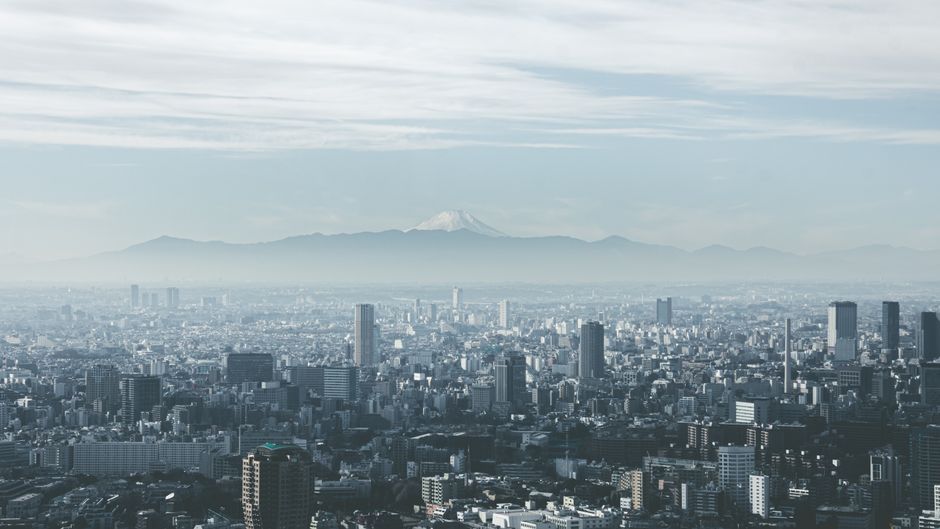
Tokyo is the world’s biggest metropolitan area and one of its easiest big cities to visit: clean, punctual and safe, with a station a few minutes’ walk from almost everything. It is a cluster of very different neighborhoods, from the neon of Shinjuku and the crossing in Shibuya to the temple streets of Asakusa, the museums of Ueno and the anime stores of Akihabara. Come for the food above all, then the shrines, gardens and towers, and day trips to Mount Fuji and Hakone. The best weather is in spring (late March to May) and fall (October to early December); June and early July are the rainy season, July and August are hot and humid, and typhoons are most likely from August to October.
Right now in Tokyo
- Wed16–22°C61–71°FCloudy
- Thu14–23°C57–73°FClear
- Fri14–23°C58–74°FClear
- Mon 12 Oct Sports Day (スポーツの日)
Top tours in Tokyo
See all tours for Tokyo →
From local operators, with prices and reviews; you check availability and book on Viator, our partner. We may earn a commission at no extra cost to you. How we earn money
Tokyo at a glance
- Best for: food of every kind and price, first trips to Japan, temples and shrines, shopping, nightlife, museums, design and pop culture, and day trips to Mount Fuji and Hakone.
- How long: 4–5 days for the main neighborhoods; a week to add Hakone, the Fuji Five Lakes or a day on the coast.
- Best time: late March to May and October to early December, with highs of about 14–24 °C (57–75 °F). Cherry blossoms usually open around late March; fall colors peak in late November and early December.
- Getting there: Haneda Airport (HND) is about 30 minutes from central Tokyo; Narita Airport (NRT) is about an hour away by express train. Shinkansen bullet trains arrive at Tokyo and Shinagawa stations from Kyoto, Osaka and the rest of Japan.
- Getting around: JR trains, Tokyo Metro and Toei subway lines and buses, all paid with an IC card such as Suica or PASMO, or a phone.
- Fees to know: Tokyo’s accommodation tax is ¥100 or ¥200 per person per night on rooms from ¥10,000, and it changes to 3% from April 1, 2027. Since July 2026 Japan’s departure tax is ¥3,000, usually included in your air fare.
- Before you go: entry rules, the JR Pass, money and general safety are in our Japan travel guide; for nearby trips see our Hakone and Fuji Five Lakes guides.
Tokyo’s neighborhoods and where to stay
Visitors spend most of their time inside or near the loop of JR’s Yamanote Line, which links Tokyo Station, Shinjuku, Shibuya, Ikebukuro and Ueno. Trains are so fast that where you sleep matters less than in most big cities, but stay within a short walk of a station.
Shinjuku
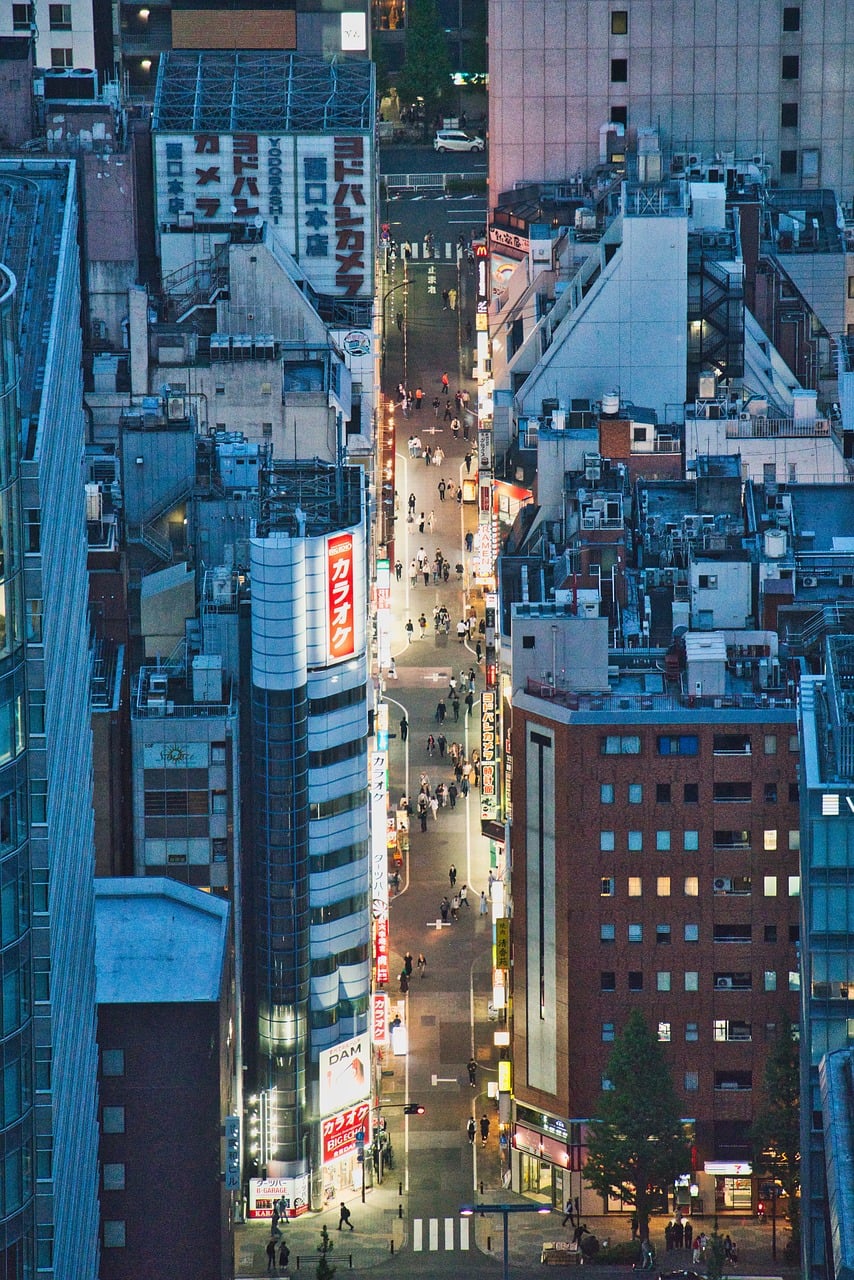
The world’s busiest station, skyscraper hotels on the west side, and the bars of Kabukicho, Omoide Yokocho and Golden Gai on the east. Good for nightlife and direct buses and trains to Mount Fuji and Hakone.
Shibuya and Harajuku
Young and crowded, with the scramble crossing, rooftop viewpoints and late-night bars; Harajuku next door has Takeshita Street, the Omotesando avenue and Meiji Jingu.
Ginza, Marunouchi and Tokyo Station
Smart, central and calm at night: flagship shops in Ginza, the Imperial Palace beside Marunouchi, and Tokyo Station for the shinkansen. Mostly upscale hotels.
Asakusa and Ueno
Old Tokyo in the northeast: Senso-ji and Tokyo Skytree in Asakusa, parks and museums in Ueno, and the Skyliner to Narita. Cheaper hotels and quieter nights.
Other areas
- Akihabara: electronics, anime, manga and game shops, between Ueno and Tokyo Station.
- Roppongi and Akasaka: art museums, embassies, international restaurants and nightlife.
- Odaiba and Toyosu: reclaimed islands in Tokyo Bay with waterfront malls, teamLab and the Toyosu fish market.
- Yanaka and Shimokitazawa: low-rise, village-like streets of old wooden houses, cafés and vintage shops.
Top things to see in Tokyo
Most big shrines, temples and parks are free; museums and towers charge a few hundred to a few thousand yen. Check opening days before you go, because many museums close on Mondays, or the next day when Monday is a public holiday.
Senso-ji and Asakusa
Tokyo’s oldest temple, reached through the Kaminarimon gate with its giant red lantern and the Nakamise shopping street. The grounds are free and always open; go early or after dark, when the buildings are lit and the crowds have gone.
Meiji Jingu and Harajuku
A Shinto shrine to Emperor Meiji in a forest planted a century ago behind Harajuku Station; free, and you may see a wedding procession at weekends. Bow at the torii gates, keep to the sides of the path and rinse your hands at the water basin before praying.
Shibuya Crossing and the views
Thousands of people cross outside Shibuya Station with every green light; watch from the station walkways or the paid rooftop decks nearby. For free city views, go up the Tokyo Metropolitan Government Building in Shinjuku, where clear winter mornings show Mount Fuji.
The Imperial Palace and its gardens
The emperor’s residence stands on the site of Edo Castle, ringed by moats and stone walls. The free East Gardens, with the old castle foundations, open most days except Mondays and Fridays; the path around the moat is about 5 km (3 miles).
Ueno Park and its museums
Ueno Park holds the Tokyo National Museum, Japan’s largest, with samurai armor, swords and Buddhist art; the National Museum of Western Art, in a Le Corbusier building on the UNESCO list; and Ueno Zoo. The Ameyoko market runs under the tracks next door.
Tokyo Skytree and Tokyo Tower
Tokyo Skytree, 634 m (2,080 ft) high, is Japan’s tallest tower; the red-and-white Tokyo Tower near Roppongi is older and closer to the center. Book timed tickets online and go near sunset.
More classic sights
- Shinjuku Gyoen National Garden: a large paid garden mixing French, English and Japanese styles, one of the best places for cherry blossoms and fall colors; alcohol is not allowed.
- Tsukiji Outer Market and Toyosu Market: the wholesale fish market moved to Toyosu in 2018, where you can watch the tuna auction from viewing galleries; the old outer market at Tsukiji still has stalls and sushi counters for breakfast.
- teamLab Planets and teamLab Borderless: immersive digital art museums in Toyosu and Azabudai Hills; timed tickets usually sell out, so book ahead.
- Yanaka: a quiet old neighborhood of temples, cemeteries and small shops that largely escaped the 1923 earthquake and the 1945 air raids.
Monuments
- Tokyo Metropolitan Government Building
Parks and gardens
- Shinjuku Gyoen
- Ueno Park
Churches and cathedrals
- Meiji Jingū
- Sensō-ji Temple
Other sights
- Shibuya Crossing
Palaces
- Tokyo Imperial Palace
Viewpoints
- Tokyo Skytree
- Tokyo Tower
Museums
- Tokyo National Museum
Other things to do in Tokyo
Food and drink
Some of Tokyo’s best food is cheap: ramen counters with ticket machines, standing sushi bars, tonkatsu and tempura, office-district set lunches and the food halls (depachika) in department store basements. In the evening, izakaya pubs serve shared plates with beer or sake; try the lanes of Omoide Yokocho or the bars under the tracks at Yurakucho. Tipping is not expected; some bars add a small cover charge (otoshi) with a snack.
Shopping
Ginza and Omotesando for flagship stores, Shibuya and Harajuku for fashion, Akihabara and Nakano Broadway for anime and electronics, and Kappabashi for kitchen knives. Many shops offer tax-free shopping for visitors on purchases of ¥5,000 or more; the system changes on November 1, 2026, when you pay the full price in the shop and receive the tax back after customs checks your goods at the airport (see our Japan travel guide).
Culture, sport and nightlife
Watch sumo at the Ryogoku Kokugikan in the January, May and September tournaments, baseball at Tokyo Dome, or kabuki at the Kabukiza in Ginza, which sells single-act tickets. Trains stop around midnight, so check your last train.
Parks, walks and festivals
In spring, picnics under the cherry blossoms (hanami) fill Ueno Park, Yoyogi Park, Shinjuku Gyoen and the Chidorigafuchi moat. Summer brings neighborhood festivals and the Sumida River fireworks in late July; fall colors light up the ginkgo avenue at Meiji Jingu Gaien in late November. For walking ideas, see our guide to city sightseeing.
Day trips from Tokyo
- Hakone: hot springs, the Hakone Ropeway over the volcanic valley of Owakudani, a boat on Lake Ashi and views of Mount Fuji, about 80 minutes from Shinjuku on the Odakyu Romancecar. See our Hakone guide.
- The Fuji Five Lakes: Lake Kawaguchi and the Chureito Pagoda, the classic views of Mount Fuji, about two hours by direct bus from Shinjuku. In the climbing season (July to September 10), you can also climb Mount Fuji. See our Fuji Five Lakes guide.
- Kamakura: an old seaside capital about an hour south by JR, with the Great Buddha, Zen temples and hiking trails between them.
- Nikko: ornate shrines and temples in cedar forests, a UNESCO World Heritage site, about two hours north by train.
- Yokohama: Japan’s second-largest city, 30 minutes away, with a big Chinatown, a waterfront and the Cup Noodles Museum.
Nearby destinations
- Yokohama27 km
- Kamakura43 km
- Hakone73 km
- Fuji Five Lakes80 km
- Nikko115 km
- Takayama225 km
- Nagoya259 km
- Shirakawa-go260 km
Getting there and getting around
From Haneda and Narita airports
Haneda (HND) is in the city, about 30 minutes from central Tokyo by the Keikyu line (towards Shinagawa) or the Tokyo Monorail (towards Hamamatsucho), and handles many long-haul flights. Narita (NRT) is about 60 km (37 miles) east. From Narita, the Keisei Skyliner reaches Ueno in about 45 minutes, JR’s Narita Express (N’EX) runs to Tokyo Station, Shinagawa and Shinjuku, and cheaper Keisei Access Express trains and airport limousine buses also run to the center. Taxis from Narita are expensive; from Haneda they are reasonable for a group.
Trains, subways and IC cards
Tokyo’s trains are run by JR East (including the Yamanote loop), Tokyo Metro and Toei (the subway) and private lines such as Odakyu and Keio. Fares are by distance. The easiest way to pay is an IC card, Suica or PASMO: tap in and out and top up at any machine; the same cards work on buses, in convenience stores and on most trains across Japan. Visitors can buy a Welcome Suica or a Tourist PASMO, valid for 28 days, but any money left on a Tourist PASMO is not refunded. You can also add Suica or PASMO to an iPhone or some Android phones. Visitors can buy 24-, 48- and 72-hour Tokyo Subway Tickets valid on all Tokyo Metro and Toei lines.
Avoid weekday rush hours (about 7:30–9:30 a.m. and 5:30–7:30 p.m.) with big luggage, or send it ahead with a delivery service (takkyubin).
The JR Pass in Tokyo
The nationwide Japan Rail Pass covers JR trains in Tokyo, including the Yamanote Line and the Narita Express, but not the subway or private lines. As of October 2026, a 7-day pass costs ¥50,000 (about US$315) when bought on the official website, so it pays off only if you also travel long distances, such as Tokyo to Kyoto and back. See our Japan travel guide for prices and alternatives.
Taxis and walking
Taxis are clean and safe, with automatic doors; apps such as GO and Uber call licensed taxis. Many neighborhoods are best explored on foot between stations.
When to go and how long to stay
Tokyo has four distinct seasons. The table uses the Japan Meteorological Agency’s (JMA) 1991–2020 climate normals for its Tokyo station in central Tokyo: average daily highs and lows, total rain and days with at least 1 mm of rain.
| Month | Average high / low | Rain (days with 1 mm or more) | What to expect |
|---|---|---|---|
| January | 10 °C (50 °F) / 1 °C (34 °F) | 60 mm (2.4 in), 4 days | Cold, dry and very sunny; New Year closures on Jan 1–3 |
| February | 11 °C (52 °F) / 2 °C (36 °F) | 56 mm (2.2 in), 5 days | Coldest nights; plum blossoms; clearest Fuji views |
| March | 14 °C (58 °F) / 5 °C (41 °F) | 116 mm (4.6 in), 9 days | Mild and windy; cherry blossoms usually open around Mar 24 (JMA normal) |
| April | 19 °C (67 °F) / 10 °C (50 °F) | 134 mm (5.3 in), 10 days | Full bloom around the end of March or early April; peak crowds and prices |
| May | 24 °C (74 °F) / 15 °C (58 °F) | 140 mm (5.5 in), 10 days | Warm and pleasant; Golden Week holidays (about Apr 29–May 5) are very busy |
| June | 26 °C (79 °F) / 18 °C (65 °F) | 168 mm (6.6 in), 12 days | Rainy season usually starts around June 7 (JMA normal); hydrangeas |
| July | 30 °C (86 °F) / 22 °C (72 °F) | 156 mm (6.1 in), 10 days | Rainy season usually ends around July 19, then hot and humid; fireworks |
| August | 31 °C (88 °F) / 24 °C (74 °F) | 155 mm (6.1 in), 8 days | The hottest month; heatstroke risk; Obon holidays in mid-August |
| September | 28 °C (82 °F) / 20 °C (69 °F) | 225 mm (8.9 in), 11 days | Still hot, wettest month; typhoons most likely |
| October | 22 °C (72 °F) / 15 °C (59 °F) | 235 mm (9.2 in), 10 days | Pleasant and clear; typhoons possible early in the month |
| November | 17 °C (62 °F) / 9 °C (48 °F) | 96 mm (3.8 in), 7 days | Crisp, sunny days; fall colors from late November |
| December | 12 °C (54 °F) / 4 °C (39 °F) | 58 mm (2.3 in), 5 days | Cold, dry and sunny; colors linger into early December; illuminations |
Tokyo gets about 1,600 mm (63 in) of rain a year, mostly from June to October. The rainy season (tsuyu) brings grey, humid weeks rather than constant rain; the JMA’s normal for the Kanto-Koshin region is June 7 to July 19 (in 2026, about June 2 to July 19).
Weather month by month
Cherry blossom and fall color timing: the JMA’s normal date for the first cherry blossoms in Tokyo is March 24, with full bloom around March 31; in 2026 they opened on March 19 and reached full bloom on March 28. Maples at the JMA’s Tokyo station normally turn red around November 28. Dates move by a week or more from year to year, so watch the forecasts in February and October.
Crowds and prices: hotels are fullest and most expensive in the cherry blossom weeks, Golden Week (late April to early May), the Obon holidays in mid-August and over New Year, when many shops and museums close for a few days. January, February, June and November are often good value.
4 days in Tokyo
Day one, Senso-ji early, Tokyo Skytree, then Ueno Park and the Ameyoko lanes. Day two, Meiji Jingu, Harajuku and Shibuya, then Shinjuku at night. Day three, the Imperial Palace East Gardens and Ginza, then teamLab. Day four, Tsukiji for breakfast, Akihabara and Yanaka.
A week in Tokyo and around
Add a night in Hakone for hot springs and the Owakudani ropeway, a day at the Fuji Five Lakes, and a day trip to Kamakura or Nikko. With more time, continue to Kyoto by shinkansen; see our Kyoto guide.
Where to stay in Tokyo and the accommodation tax
- Shinjuku: the most convenient base for nightlife and for buses and trains to Hakone and Mount Fuji; every price level.
- Shibuya: stylish mid-range and design hotels, great for first-timers who like a lively area.
- Ginza and Tokyo Station: upscale hotels, quiet evenings and the easiest base for day trips by shinkansen.
- Asakusa and Ueno: cheaper hotels, ryokan-style inns and hostels with an old-town feel, plus the Skyliner from Narita.
- Shinagawa and Hamamatsucho: business hotels with quick links to Haneda and the shinkansen.
Rooms are small, especially in business hotels, so check the floor area and bed size when you book.
Tokyo charges an accommodation tax per person per night: according to the Tokyo Metropolitan Government’s Bureau of Taxation, as of October 2026 it is ¥100 for rooms costing ¥10,000 to ¥14,999 per person per night and ¥200 from ¥15,000, with no tax below ¥10,000. From April 1, 2027, Tokyo will switch to 3% of the room rate, with stays under ¥13,000 per person per night exempt, and the tax will also apply to private rentals (minpaku). Japan’s 10% consumption tax is usually included in quoted prices; luxury hotels may add a service charge of 10–15%.
What a trip to Tokyo costs
Prices are approximate, for October 2026, converted at about ¥158 to the US dollar (Federal Reserve rate, late September 2026). Hotel rates vary hugely by season.
| Item | Typical cost |
|---|---|
| Bowl of ramen or a set lunch | ¥1,000–1,800 (about US$6.3–11) |
| Conveyor-belt sushi meal | ¥1,500–3,000 (about US$9.5–19) |
| Izakaya dinner with drinks | ¥4,000–7,000 (about US$25–44) |
| Coffee | ¥400–700 (about US$2.5–4.4) |
| Subway or JR ride in the center | ¥180–330 (about US$1.1–2.1) |
| Senso-ji, Meiji Jingu, Imperial Palace East Gardens | free |
| Business hotel double, per night | ¥12,000–25,000 (about US$76–160) |
| Mid-range or design hotel, per night | ¥25,000–50,000 (about US$160–315) |
| Accommodation tax (room ¥10,000–14,999 per person) | ¥100 (about US$0.63) per person per night |
A mid-range budget is roughly ¥25,000–40,000 (about US$160–255) per person per day with a shared double room.
Practical tips for Tokyo
- Cash and cards: cards and phone payments are accepted almost everywhere, but carry some cash for small restaurants, shrines and markets. Convenience store ATMs (7-Eleven, Lawson, FamilyMart) and Japan Post Bank ATMs accept most foreign cards.
- Etiquette: stand on the left of escalators in Tokyo, queue for trains and avoid phone calls on board.
- Trash: public bins are rare, so carry your rubbish back to your hotel or a convenience store.
- Visitor hotline: the Japan National Tourism Organization’s (JNTO) Japan Visitor Hotline, 050-3816-2787, answers in English 24 hours a day.
Safety
Tokyo has very low crime, and visitors rarely have problems; keep an eye on your bags in crowded places and be wary of touts offering drinks in Kabukicho or Roppongi, where some bars overcharge. The bigger risks are natural. Earthquakes happen often; most are small, and buildings are built to strict standards. If you feel strong shaking, take cover under a table, stay away from windows and follow staff instructions; the JMA sends earthquake early warnings to phones, and the JNTO’s free Safety Tips app gives alerts in English. Typhoons are most likely from August to October and can stop trains and flights for a day; the JMA’s normals count about 3 approaching the Kanto-Koshin region a year. Heat in July and August is a real health risk: drink water, rest in air conditioning and follow the JMA’s heatstroke alerts. In an emergency, call 110 for the police or 119 for an ambulance or fire.
What to pack for Tokyo
Comfortable shoes that slip on and off easily (you remove them in temples and ryokan), layers for air-conditioned trains, a folding umbrella from June to October, a hat in summer, a warm coat from December to February and a coin purse. Japan uses 100 V and two-pin type A plugs like the US; travelers from elsewhere need an adapter.
Tokyo travel FAQ
How many days do I need in Tokyo?
Four to five days covers the main neighborhoods at a comfortable pace. Add two or three days for Hakone, the Fuji Five Lakes or a day trip to Kamakura or Nikko.
Which is better, Haneda or Narita?
Haneda is much closer to the center, about 30 minutes by train or monorail. Narita is about an hour away by the Skyliner or Narita Express, but often has cheaper flights.
Where should I stay in Tokyo for the first time?
Shinjuku or Shibuya for energy and transport links, Ginza or near Tokyo Station for a calmer, central base, and Asakusa or Ueno for lower prices and an old-town feel.
Is the JR Pass worth it for Tokyo?
Not for Tokyo alone, because many lines are subway or private railways it does not cover. It pays off when you add long shinkansen trips, such as a round trip to Kyoto, Osaka or Hiroshima, within 7 days.
How do I pay for trains in Tokyo?
Use an IC card such as Suica or PASMO, or add one to your phone, and tap at the gates. Visitors can buy a Welcome Suica or a Tourist PASMO, valid for 28 days.
How much is Tokyo’s accommodation tax?
As of October 2026 it is ¥100 per person per night for rooms of ¥10,000 to ¥14,999 and ¥200 from ¥15,000; cheaper rooms are exempt. From April 1, 2027 it becomes 3% of the rate, with stays under ¥13,000 exempt.
When is cherry blossom season in Tokyo?
The JMA’s normal date for the first blossoms is March 24, with full bloom around March 31; the best week usually falls between late March and early April, varying with the weather.
Can I see Mount Fuji from Tokyo?
Yes, on clear winter mornings from high viewpoints such as the Tokyo Metropolitan Government Building. For close-up views, go to Hakone or the Fuji Five Lakes.
Do I need cash in Tokyo?
Less than before: cards and phone payments work almost everywhere, but carry some yen for small restaurants, shrines and markets. Convenience store ATMs accept most foreign cards.
What should I do if there is an earthquake?
Take cover under a sturdy table, keep away from windows and follow staff instructions. The JNTO Safety Tips app gives alerts in English.
Plan your trip
Partner links: TravelerCenter may earn a commission if you book, at no extra cost to you.
🇯🇵 Useful Japanese phrases for Tokyo
All 38 Japanese phrases: restaurant, hotel, emergencies, romance (printable) →
Sources · last reviewed 4 October 2026
Researched and last reviewed on 4 October 2026. Accommodation tax: the Tokyo Metropolitan Government and its Bureau of Taxation; climate normals, rainy season, typhoon statistics and cherry blossom and maple dates: the Japan Meteorological Agency (JMA); JR Pass prices: the official Japan Rail Pass website; IC cards: PASMO; departure tax: Japan’s National Tax Agency; tax-free shopping: the Japan Tourism Agency; visitor hotline: the Japan National Tourism Organization (JNTO); exchange rate: the US Federal Reserve. Journey times, neighborhood descriptions, typical prices and opening patterns are general references or estimates, flagged for checking. Prices and timetables change, so check the official sites before you go. For entry rules, money and general safety, see our Japan travel guide.
Also: JMA normals 1991–2020, Tokyo (climate)
Data: Weather: MET Norway (CC BY 4.0) · Sea temperature: NOAA CoastWatch · Air quality: OpenAQ · Rates: ECB · Holidays: Nager.Date · Costs: World Bank ICP and price levels · © OpenStreetMap contributors (ODBL) · Wikidata (CC0)