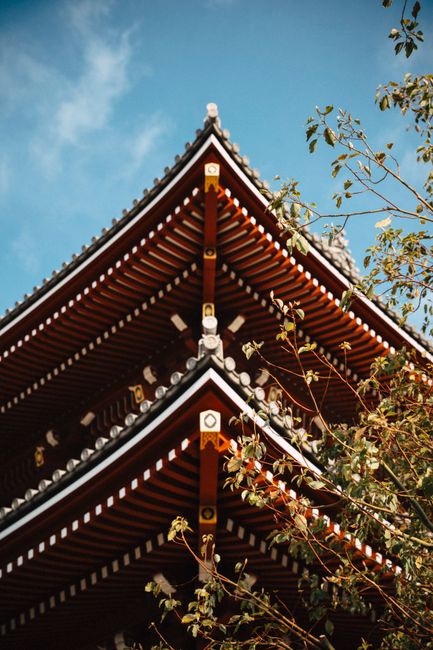
Sensō-ji, also called Asakusa Kannon, is Tokyo’s oldest temple, in the old-town district of Asakusa by the Sumida River. According to the temple, it dates back to 628, when two fishermen found a small statue of Kannon, the bodhisattva of compassion, in their net. You enter through the Kaminarimon, the “Thunder Gate,” with its giant red lantern, and walk up Nakamise, a lane of about 90 small shops, to the Hōzōmon gate, the five-story pagoda and the Main Hall. The temple says it draws some 30 million visitors a year. There is no admission charge. The Main Hall is open 6:00–17:00 (from 6:30 between October and March), and the main buildings are lit up every evening from sunset until about 23:00. Allow one to two hours.
Right now in Sensō-ji Temple
- Sun14–23°C57–73°FMostly clear
- Mon19–27°C66–80°FPartly cloudy
- Tue21–27°C71–80°FMostly clear
Why Sensō-ji matters
The temple’s history begins on the morning of March 18, 628, when the brothers Hinokuma Hamanari and Takenari pulled a statue of Kannon from the river. The village headman, Haji no Nakatomo, turned his house into a temple to hold it. In 645 the priest Shōkai built a hall for the statue and, after a dream, decided it should never be shown; it remains a hidden image to this day, kept in an ornate miniature shrine inside the Main Hall. In the mid-ninth century the priest Ennin carved a stand-in statue, which is itself shown only once a year. Asakusa grew from a fishing village into one of the great pilgrimage places of eastern Japan, and in 1590 Tokugawa Ieyasu chose Sensō-ji as a temple for the shogunate’s prayers. In the Edo period it became the center of a lively district of theaters and entertainment.
Most of what you see is a careful rebuilding. The Main Hall built by the third shogun, Tokugawa Iemitsu, in 1649 was a national treasure until it burned in the air raid on Tokyo of March 10, 1945, together with the pagoda and the main gate. The Main Hall was rebuilt in reinforced concrete in 1958 with donations from across Japan, following the old design, and was reroofed with light titanium tiles in 2010. The Kaminarimon gate, lost to fire in 1865, was rebuilt in 1960 with a donation from Konosuke Matsushita, founder of today’s Panasonic. Next door, Asakusa Shrine, built in 1649, survived and is an Important Cultural Property.
What you’ll see
- Kaminarimon (Thunder Gate): the temple’s outer gate, guarded by statues of Fūjin, god of wind, and Raijin, god of thunder. Its red lantern is 3.9 meters tall and weighs about 700 kg; look under it for the carved dragon.
- Nakamise: the approach to the temple, about 250 meters of red-painted shops from the Kaminarimon to the Hōzōmon, selling sweets, rice crackers, toys and souvenirs. It dates from around 1685 and is one of the oldest shopping streets in Japan.
- Hōzōmon gate: the two-story inner gate, rebuilt in 1964, with guardian statues on each side and another huge lantern. Its upper floor stores the temple’s treasures, including a Yuan-dynasty set of Buddhist scriptures.
- The Main Hall (Kannon-dō): the heart of the temple, 34.5 meters wide with a strikingly tall, steep roof. Visitors wave incense smoke from the large burner in front over themselves for good health, then pray before the offertory box.
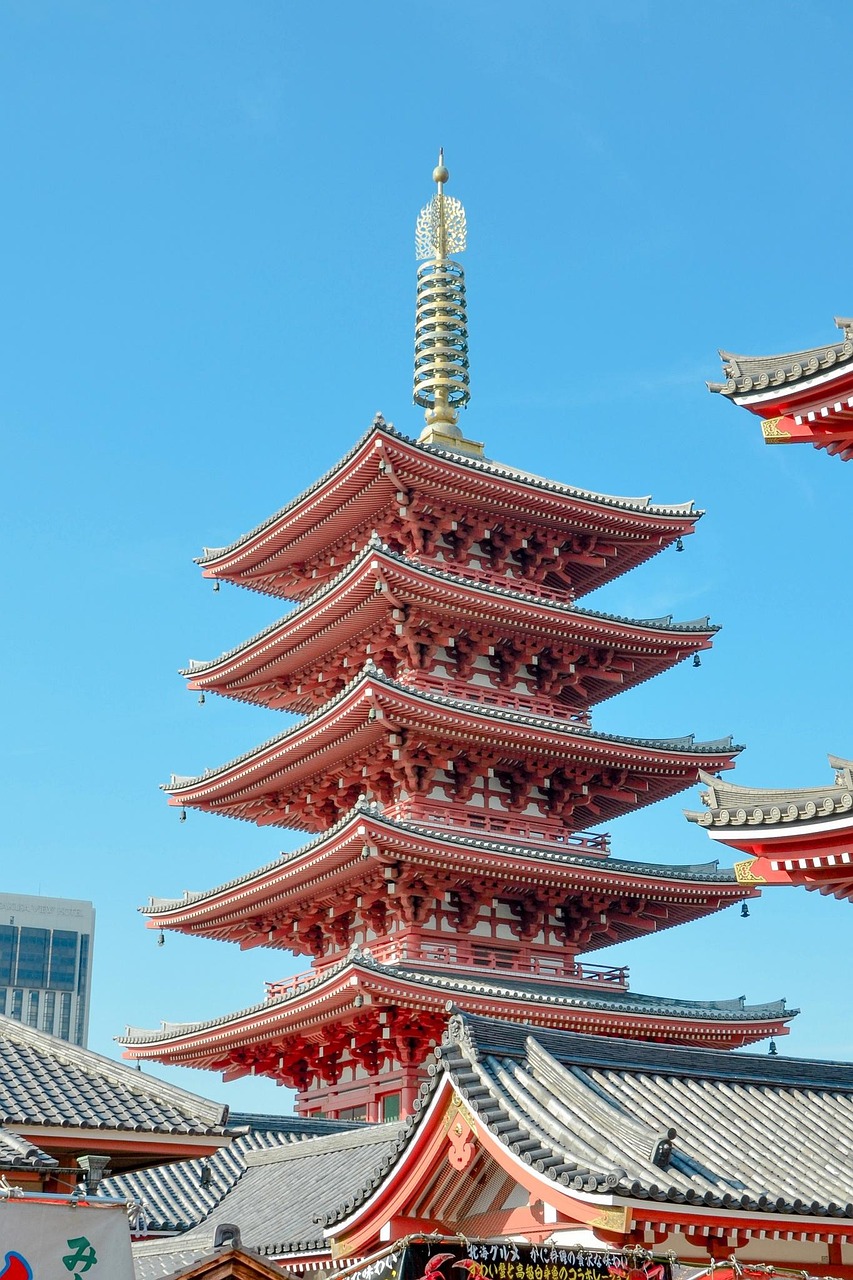
- The five-story pagoda: 53 meters tall, rebuilt in 1973, with Buddha relics from the Isurumuniya temple in Sri Lanka at the top.
- Around the grounds: the Yōgōdō hall, where you can buy goshuin temple seals; the Awashimadō hall, which served as the temporary Main Hall after the war; the 1649 Nitenmon gate on the east side, an Important Cultural Property; and Asakusa Shrine just behind the Main Hall. The Denbōin garden is closed to the public.
Try an omikuji fortune from the stalls by the Main Hall: shake a numbered stick from the box, return the stick to its container, and take your paper slip. The temple is known for its many “bad luck” fortunes, which it says are simply the old wording; if you draw one, tie it to the racks provided in the grounds.
Hours, festivals and how to visit
From the temple’s official website, as of October 2026:
- Price: visiting the temple is free. Fortunes, amulets and goshuin seals are paid for at the counters.
- Hours: the Main Hall opens 6:00–17:00 from April to September and 6:30–17:00 from October to March. For the other halls, the temple asks visitors to contact it (phone 03-3842-0181, 9:00–16:30 except Sundays and holidays).
- Evening light-up: since 2003 the Main Hall, the pagoda, the Hōzōmon and the Kaminarimon have been lit every day from sunset until about 23:00.
- How to pray: the temple suggests putting your palms together and saying “Namu Kanzeon Bosatsu” (“I place my trust in Kannon”).
- Main yearly events: New Year visits, January 1–7; Setsubun bean-throwing, around February 3; the festival of the statue’s appearance, March 18; the Buddha’s birthday, April 8; the Sanja Matsuri of Asakusa Shrine, the Thursday to Sunday nearest May 18, with about 100 portable shrines carried through the streets; the Hōzuki (lantern plant) market, July 9–10; and the Hagoita (decorated paddle) market, December 17–19. On December 13 at 14:00 the stand-in Kannon statue is shown for its once-a-year viewing.
How long to allow and when to go
One to two hours covers the gates, Nakamise, the Main Hall and the pagoda, longer if you browse the shops and the streets around. Asakusa is busiest from late morning on weekends and holidays, and during festivals and the first days of January. For quiet photos, come soon after the Main Hall opens, before most Nakamise shops are open, or in the evening, when the buildings are lit and the crowds have thinned.
Accessibility
The grounds are flat, and the temple is working to remove steps. An elevator to the left of the Main Hall (as you face it) takes visitors who cannot manage the stairs up to the hall. Multipurpose restrooms, with handrails for wheelchair users, a diaper-changing table and a baby chair, are to the right of the Hōzōmon and behind the Main Hall; there are no facilities for ostomates. GO TOKYO also lists a wheelchair ramp and a nursing room.
Getting there
The address is 2-3-1 Asakusa, Taitō City. Asakusa Station on the Tokyo Metro Ginza Line, the Tobu Skytree Line and the Tsukuba Express is a five-minute walk, as is the Toei Asakusa Line station from exit A4. From Tokyo Station, take the JR Yamanote Line to Kanda and the Ginza Line to Asakusa (about 20 minutes); from Shinjuku, the JR Chūō Line to Kanda and the Ginza Line (about 35 minutes). Water buses on the Sumida River leave from a pier about three minutes’ walk from Asakusa Station.
Combine it with
Tokyo Skytree is about 1.4 km away across the Sumida River, and the Azuma-bashi bridge gives a classic view of it. Kappabashi Kitchenware Town, with its plastic food models, and the museums of Ueno Park are a short ride away. From Asakusa Station, Tobu limited express trains run to Nikko in about 1 hour 50 minutes. For the rest of the city, see our Tokyo travel guide and our city sightseeing guide; for entry rules and rail passes, see our Japan travel guide, and for more temples, Kyoto and Kamakura.
Sensō-ji FAQ
Is Sensō-ji free to visit?
Yes. There is no admission charge for the gates, the grounds or the Main Hall. You only pay for fortunes, amulets and goshuin seals.
What are Sensō-ji’s opening hours?
The Main Hall is open 6:00–17:00 from April to September and 6:30–17:00 from October to March. The main buildings are lit up from sunset until about 23:00 every day.
Can you see the statue of Kannon?
No. The original statue has been a hidden image since 645 and is never shown. Its stand-in statue is shown once a year, on December 13 at 14:00.
Is it Sensō-ji or Asakusa-dera?
The temple’s name is read “Sensō-ji,” not “Asakusa-dera”; it is also known as Asakusa Kannon.
When is the Sanja Matsuri?
Every year from Thursday to Sunday on the weekend nearest May 18. It is the festival of Asakusa Shrine, next to the temple, and on the third day about 100 neighborhood portable shrines are carried through Asakusa.
Is Sensō-ji wheelchair accessible?
Largely. The grounds are flat, an elevator beside the Main Hall reaches the hall, and there are multipurpose restrooms by the Hōzōmon gate and behind the Main Hall.