Short answer: For a beach without the big-resort crowds, try Aruba, Ambergris Caye in Belize or Vieques in Puerto Rico. For a city break, Lisbon, Charleston and Mexico City all have mild, mostly dry spring weather. For nature, hike Zion National Park or soak in the hot springs below Arenal Volcano in Costa Rica, and to keep costs down, look at Cartagena in Colombia or Bacalar in Mexico.
Spring break does not have to mean the same crowded strip of beach. Most of the trip ideas below are at their best in March and April, when the Caribbean is in its dry season, the deserts of the American Southwest are cool enough to hike and southern Europe is warming up before the summer rush. In 2027 Easter falls on 28 March, so Holy Week, from 21 to 28 March, is a big holiday week across Latin America and parts of Europe; expect busier beaches and fuller hotels in those places that week.
For each idea you get why it works for spring break, typical March weather, one or two things to do and a practical note. Weather figures are long-term averages from official weather services and describe what is normal, not a forecast. Where we call a place budget-friendly, we lean on our Travel costs by country scale, which compares hotel, restaurant and transport prices with the United States (US = 100).
Beaches beyond the usual
1. Aruba
Why it works: Aruba sits at the southern edge of the Caribbean, and its dry season runs from February to May, according to the regional weather service for the ABC islands. That makes March and April some of the most reliable beach weeks of the year, with steady trade winds and calm, clear water on the west coast.
Best things to do: spend lazy days on the long white beaches of the west coast, snorkel the calm bays, and take a day to explore Arikok National Park, which covers about a fifth of the island, with caves, desert landscapes and a wild, rocky north coast.
Practical note: every visitor fills in Aruba’s online ED card before travel and pays the $20 Sustainability Fee, charged once every 365 days; children under 8 are exempt. Resorts and restaurants often add service charges, so read the bill before you tip. See our Aruba travel guide.
2. Ambergris Caye, Belize
Why it works: an easygoing island on the Belize Barrier Reef, with sandy streets, golf carts instead of cars and some of the best snorkeling and diving in the Caribbean. March is one of the driest months on the Belize coast.
Typical weather: at Belize City’s airport, the nearest long-term station, March highs average around 86°F (30°C) and lows around 72°F (22°C), with about 1.6 inches (41 mm) of rain on four or so days.
Best things to do: snorkel Hol Chan Marine Reserve, Belize’s first marine protected area, created in 1987 a few miles south of San Pedro, and the nearby Shark Ray Alley, where nurse sharks and rays gather. Divers can join a day trip to the Great Blue Hole.
Practical note: the water taxi from Belize City to San Pedro takes about 1 hour 30 minutes, and short flights are also available. If the island books up, quieter Caye Caulker is close by. Belize scores 59 on our cost scale. See our Ambergris Caye travel guide and Belize travel guide.
3. Vieques, Puerto Rico
Why it works: wild, quiet beaches, free-roaming horses and one of the world’s brightest bioluminescent bays, all a short ferry ride from the main island. For US citizens it is also one of the easiest island escapes there is: Puerto Rico is a US territory, so no passport is needed.
Typical weather: at the Ceiba ferry terminal, the nearest long-term station, March highs average around 84°F (29°C) and lows around 72°F (22°C), with about 1.8 inches (47 mm) of rain. It is one of the driest months.
Best things to do: paddle a kayak at night on Mosquito Bay, where tiny organisms light up the water with every stroke, and spend the days on the beaches of the island’s protected south and east.
Practical note: the ferry from Ceiba to Vieques costs $2 for adults, takes about an hour and asks you to arrive an hour early with photo ID; non-residents can buy ahead only on the operator’s website or app. Bio bay tours run with licensed operators, and swimming in the bay is not allowed. See our Vieques travel guide and Puerto Rico travel guide.
City breaks
4. Lisbon, Portugal
Why it works: Lisbon is one of the sunniest capitals in Europe and one of the best-value in Western Europe, scoring 72 on our cost scale. In spring the hills, viewpoints and riverside are pleasant for walking all day, well before the summer crowds.
Typical weather: mild, with March highs around 66°F (19°C), lows around 52°F (11°C) and rain on about eight days.
Best things to do: ride tram 28E up through Graça and the Alfama to the viewpoints at Santa Luzia, then spend a morning in Belém at the Jerónimos Monastery and the Belém Tower (standard ticket €15).
Practical note: a tram ride paid on board costs €3.30, while a 24-hour pass for Carris buses, trams and the Metro costs €7.25, so the pass pays for itself quickly. The monastery and tower close on Mondays and on Easter Sunday. See our Lisbon travel guide and Portugal travel guide.
5. Charleston, South Carolina, United States
Why it works: a walkable Southern city of pastel houses, church steeples and great restaurants, at its prettiest in spring when the gardens bloom. It is a good pick for groups who want food and history more than nightlife.
Typical weather: March highs average around 70°F (21°C) and lows around 47°F (8°C), with about 3.4 inches (85 mm) of rain.
Best things to do: take the ferry to Fort Sumter, where the Civil War began, and visit Boone Hall Plantation (adults $30). Spend an evening walking the historic streets south of Broad.
Practical note: the National Park Service charges no entrance fee for Fort Sumter itself, but you reach it only by the authorized ferry, which charges its own fare. Fort Moultrie across the harbor costs $10 for adults and takes cards only. See our Charleston travel guide.
6. Mexico City, Mexico
Why it works: one of the world’s great food cities and a huge choice of museums, at prices well below most US cities: Mexico scores 69 on our cost scale. March is in the dry season, and the city’s altitude keeps days warm rather than hot.
Typical weather: March highs average around 79°F (26°C) and lows around 52°F (11°C), with only about half an inch (12 mm) of rain on four or so days.
Best things to do: spend a morning at the National Museum of Anthropology (MXN 210 for foreign visitors) and an afternoon in Chapultepec Park, then eat your way through the street stalls and markets of the historic center.
Practical note: many museums close on Mondays, and the Frida Kahlo Museum sells tickets online only, so book ahead. Holy Week is a major local holiday. See our Mexico City travel guide and Mexico travel guide.
Nature and the outdoors
7. Zion National Park, Utah, United States
Why it works: spring is one of the best times to hike Zion’s red-rock canyon, before the summer heat. The walls glow at sunrise, the river runs through the canyon floor and the trails are cool enough to enjoy all day.
Typical weather: in Zion Canyon, March highs average around 66°F (19°C) and lows around 39°F (4°C), with about 2 inches (51 mm) of rain and the odd dusting of snow.
Best things to do: walk the Riverside Walk toward The Narrows, and hike up to Scout Lookout for a view down the canyon. The final chains section of Angels Landing needs a permit won in a lottery.
Practical note: a private vehicle pays $35 for a seven-day pass. Visitors aged 16 and over who are not US residents pay an extra $100 each unless they hold an annual pass, so international groups may save with the America the Beautiful pass. Check the park’s conditions page for the river and trail status before you go. See our Zion National Park travel guide, and pair it with the Grand Canyon.
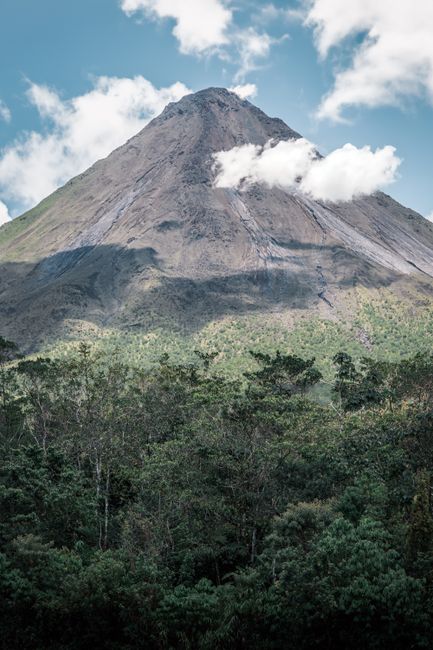
8. La Fortuna and Arenal Volcano, Costa Rica
Why it works: rainforest, waterfalls, hanging bridges and hot springs at the foot of a perfect volcanic cone. Costa Rica’s weather service notes that rainfall in the Northern Zone drops from February to April, which makes spring break a good window for this usually rainy region.
Best things to do: hike the lava-flow trails of Arenal Volcano National Park (US$16.95 for foreign adults), swim below the La Fortuna Waterfall, and finish the day in a hot spring heated by the volcano.
Practical note: the park is open daily from 8 a.m. to 4 p.m. Costa Rica scores 67 on our cost scale, and restaurant bills usually include 13% VAT and a 10% service charge. See our La Fortuna travel guide and Costa Rica travel guide.
Budget-friendly picks
9. Cartagena, Colombia
Why it works: a Caribbean port city with a walled old town on UNESCO’s World Heritage list, colorful streets and island beaches nearby, in a country that scores just 50 on our cost scale, half the US level. March is right in the dry season.
Typical weather: hot and almost rainless, with March highs around 88°F (31°C), lows around 77°F (25°C) and well under an inch of rain in the whole month.
Best things to do: walk the old city walls, about 8 kilometers long and built between 1586 and 1796, at sunset, explore the street art of Getsemaní and visit the San Felipe fortress.
Practical note: take a boat day trip to the Rosario Islands national park for clear water and snorkeling, and carry sun protection and water; the midday heat is strong. See our Cartagena travel guide and Colombia travel guide.
10. Bacalar, Mexico
Why it works: a freshwater lagoon more than 40 kilometers long, famous for its seven shades of blue, with a relaxed small-town feel and none of the sargassum seaweed that can reach the Caribbean beaches. It is a calm, lower-cost alternative to the busier resorts of the Mexican Caribbean.
Typical weather: at the nearest long-term station, March highs average around 89°F (32°C) and lows around 65°F (19°C), with about 1.2 inches (31 mm) of rain.
Best things to do: take a boat tour across the lagoon to the Pirates’ Channel and Bird Island, swim at the lagoon’s balnearios, and visit the 18th-century Fort of San Felipe and its museum.
Practical note: Bacalar has a stop on the Tren Maya, the train line between Cancún and Chetumal. The town charges a small environmental fee per room per night, and lagoon tours include a per-person fee with the boat ticket. See our Bacalar travel guide.
How to choose
- For a pure beach week: Aruba for reliable sun, Ambergris Caye for reef snorkeling, Vieques for wild, quiet beaches.
- For a city with great food: Mexico City or Lisbon on a budget, Charleston without a passport.
- For hiking and nature: Zion for desert canyons, La Fortuna for rainforest and volcanoes.
- For the lowest costs: Cartagena or Bacalar.
- For a group of friends: pick a place with lots of activities in one base, such as La Fortuna, Ambergris Caye or Mexico City.
Plan your spring break
Plan your trip: our free trip planner can turn any of these ideas into a day-by-day plan from our guides. Check typical weather for your dates with the Destination weather tool, convert prices with the Money exchange tool, and build a packing list with the packing list tool.
Frequently asked questions
Where can I go for spring break without a passport?
US citizens need no passport for Puerto Rico, so Vieques and the rest of the island are easy picks. Within the mainland, Charleston and Zion National Park are good alternatives to the usual beach towns.
When is Easter 2027?
Easter Sunday is 28 March 2027, so Holy Week runs from 21 to 28 March. It is a major holiday week in Mexico, Central and South America, so book early if your spring break falls then.
What is the cheapest spring break destination on this list?
On our cost scale, which compares hotel, restaurant and transport prices with the United States, Colombia scores 50, Belize 59, Costa Rica 67, Mexico 69 and Portugal 72, against 100 for the US. Cartagena and Bacalar are the easiest on the wallet.
Where is warm and dry in March?
Aruba, Cartagena, Mexico City and Ambergris Caye are all in their dry season in March. Cartagena averages well under an inch of rain for the whole month.
Is March a good time to visit Zion National Park?
Yes. March highs in Zion Canyon average around 66°F (19°C), comfortable for hiking. Nights are cold, the odd snow shower is possible, and you should check river conditions before walking in The Narrows.
Travel guides in this post
Keep reading
Before you go: guidebooks and travel gear
Affiliate links: we may earn a commission at no extra cost to you. As an Amazon Associate we earn from qualifying purchases. We pick items for the place, not for the commission. How we earn money