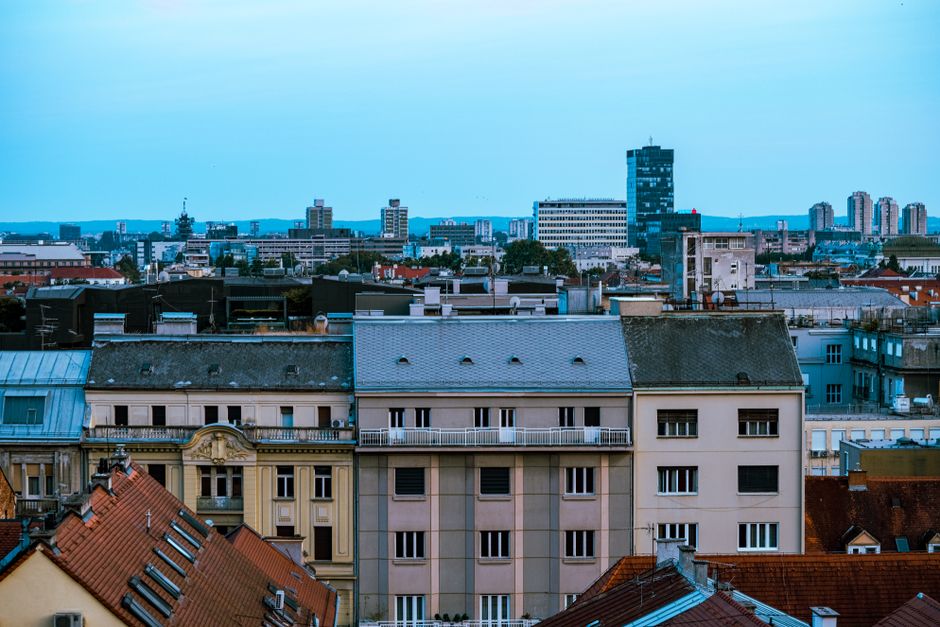
Zagreb, Croatia’s capital, is a relaxed Central European city of cafés, trams, parks and museums, closer in spirit to Vienna and Budapest than to the Dalmatian coast. Its medieval Upper Town, on a hill, has cobbled lanes, a church with a famous tiled roof and a cannon that fires every day at noon; below it spreads the grand Austro-Hungarian Lower Town, with its horseshoe of parks and squares. Zagreb is still repairing the damage of the March 2020 earthquake: the cathedral reopened in April 2026, but its towers are still under scaffolding, and some museums remain closed. It is the gateway to Plitvice and a great city break in its own right, especially in December, when its Advent market is one of the best in Europe. Two or three days is ideal.
Right now in Zagreb
- Wed 9–22°C 49–71°F Clear
- Thu 12–24°C 54–75°F 5 mm Showers
- Fri 13–16°C 55–60°F 3 mm Cloudy
Weather: MET Norway (CC BY 4.0) · Air quality: OpenAQ · Rates: ECB
Top tours in Zagreb
See all tours for Zagreb →
From local operators, with prices and reviews; you check availability and book on Viator, our partner. We may earn a commission at no extra cost to you. How we earn money
Zagreb at a glance
- Best months: May–June and September for café terraces and walking; late November to early January for Advent. Mean temperatures run from about 1 °C in January to 22 °C in July (DHMZ, Zagreb-Grič station).
- Days needed: 2 for the Upper and Lower Towns and a few museums; 3–4 with Mirogoj, Medvednica or a day trip.
- Getting there: Zagreb airport (ZAG) is about 17 km south-east; trains from Ljubljana, Vienna and Budapest, buses from all over Croatia.
- Getting around: on foot in the centre; blue ZET trams cover the city; the funicular links the Lower and Upper Towns.
- Budget level: good value compared with the coast, and busy all year rather than only in summer. See our Croatia guide for money, entry rules and costs.
Zagreb’s areas and who each one suits
- Upper Town (Gornji grad) and Kaptol: the two medieval hilltop settlements that grew into Zagreb, with the cathedral, St Mark’s Church and the Stone Gate. Atmospheric and quiet at night.
- Lower Town (Donji grad): the 19th-century grid around Ban Jelačić Square, with the “Green Horseshoe” of parks, museums, the theatre and most hotels. The obvious base.
- Tkalčićeva and around: a lane of bars and cafés between the two hills, the heart of nightlife in the old centre.
- Maksimir and the east: a big historic park, the zoo and the football stadium; quieter residential streets.
- Novi Zagreb: the modern city south of the Sava river, with the Museum of Contemporary Art and the Arena.
Top things to see in Zagreb
Status and prices below are as of October 2026. Several of Zagreb’s museums and churches were damaged in the earthquake of 22 March 2020, and repairs are still under way, so check before you go.
Ban Jelačić Square and the Dolac market
The main square, with its statue of the 19th-century governor Josip Jelačić on horseback, is where everyone meets “under the clock”. Just above it, up a flight of steps, is Dolac, the city’s main market since 1930, with red umbrellas over stalls of fruit, vegetables, flowers and cheese, and an indoor hall for meat and fish. Go in the morning; it is busiest on Saturdays.
Zagreb Cathedral (status as of October 2026)
The neo-Gothic cathedral, with its twin spires that once reached about 105 m, is the city’s landmark. The 2020 earthquake broke off the top of the south spire and badly damaged the building. After six years of repairs, the cathedral reopened to visitors on 17 April 2026, as reported by the Croatian press, with the nave walkable again and the structure reinforced against future earthquakes. Work on the towers continues: they remain partly under scaffolding and are being rebuilt lower than before 2020. It is free to enter outside services; dress modestly.
The Upper Town: St Mark’s, the Stone Gate and Lotrščak Tower
The Upper Town is the most charming part of Zagreb. St Mark’s Church, on St Mark’s Square, has a roof of coloured tiles showing the coats of arms of Croatia, Dalmatia and Slavonia and of the city of Zagreb; the square is flanked by the Croatian Parliament and the government. The Stone Gate, the only surviving medieval gate, shelters a chapel with a painting of the Virgin that survived a great fire in 1731; locals light candles there. At the Lotrščak Tower, a 13th-century defence tower, a cannon is fired every day at noon. Next to it, the Strossmayer Promenade has the best view over the Lower Town’s roofs.
The funicular
Zagreb’s funicular (uspinjača), opened in 1890, climbs 66 m of track from Tomićeva street off Ilica to the Lotrščak Tower in about a minute; it is often called the shortest public funicular in the world. After a 16-month restoration, it reopened on 19 May 2026, according to press reports, with new cabins and modernised systems but its original look.
The Lower Town and the Green Horseshoe
The Lower Town’s “Green Horseshoe” is a U-shaped chain of seven squares and parks laid out in the late 19th century, lined with grand buildings: the Art Pavilion, the yellow Croatian National Theatre, the university, the botanical garden and the railway station. Zrinjevac park, with its plane trees, music pavilion and weather station, is the centre of Advent in winter.
Museums
- Museum of Broken Relationships: in the Upper Town, a collection of everyday objects donated by people around the world, each with the story of a love that ended. Funny, sad and unique.
- Croatian Museum of Naïve Art: a small museum of Croatia’s celebrated self-taught painters, in the Upper Town.
- Museum of Contemporary Art: in Novi Zagreb, with Croatian and international art since the 1950s and a long slide inside.
- Technical Museum Nikola Tesla: trains, planes, a planetarium and a mock mine, great with children.
- Closed for post-earthquake work: as of October 2026, the main buildings of the Museum of Arts and Crafts (expected to reopen around 2027, with only its gallery open) and the Croatian History Museum remain closed, and the Mimara Museum was still being renovated. Check the museums’ own sites before you go.
Mirogoj Cemetery
Mirogoj, a 20-minute bus ride north of the centre, is one of Europe’s most beautiful cemeteries: long ivy-covered arcades and domed pavilions designed by Hermann Bollé, set in a park. Tombs of all faiths lie side by side.
Other sights
- Ban Jelačić Square
- Mirogoj Cemetery
Churches and cathedrals
- St Mark's Church
- Zagreb Cathedral
Monuments
- Lotrščak Tower
Museums
- Croatian Natural History Museum
- Museum of Broken Relationships
Advent in Zagreb
From the end of November to early January, Zagreb becomes one big Christmas market, consistently voted among the best in Europe. Each part of the city has its own atmosphere: an ice rink on King Tomislav Square, food stalls and lights in Zrinjevac park, the Fuliranje street party on Strossmayer Square, the European Square, and the Upper Town’s Strossmayer Promenade with views and mulled wine. Expect sausages, fritule (small doughnuts), mulled wine and concerts every evening. Weekends are very busy; go on a weekday evening. Check the dates and programme on the official Advent Zagreb site.
Parks, Medvednica and Lake Jarun
- Maksimir Park: a 19th-century landscape park of oaks, lakes and pavilions, with the city zoo.
- Medvednica and Sljeme: the mountain on the city’s northern edge, with forest trails, the medieval Medvedgrad fortress and the Sljeme summit at 1,033 m, where Zagreb sometimes hosts World Cup ski races in January. Buses and a hiking path climb from the city.
- Lake Jarun: a lake in the south-west used for swimming, rowing and summer festivals.
Activities and best months
- City sightseeingZagreb's tourist board walking tour covers the Upper Town, St Mark's Square and its church, Lotrščak Tower (the Grič cannon fires at noon every day) and the cathedral; the funicular, running since 1890, climbs from the Lower Town in 55 seconds. · source
- HikingMedvednica (Sljeme, 1,033 m), the nature park on the city's northern edge, has about 70 marked trails for walkers and cyclists, mountain lodges and Veternica cave; it is reached on foot, by car, by bus or by the cable car. · source
The 2020 earthquakes: what you will notice
On 22 March 2020, a magnitude 5.5 earthquake struck just north of Zagreb, the strongest to hit the city since 1880. It damaged thousands of buildings in the historic centre, including the cathedral, parliament, many churches and museums. In December 2020 a stronger earthquake hit Petrinja, about 50 km south, adding more damage. By 2026 many façades have been repaired, but you will still see scaffolding, closed courtyards and buildings under reconstruction in the Upper and Lower Towns. The city is safe to visit; it is just a work in progress. Check the status of any museum or church you particularly want to see.
Food, cafés and nightlife
Zagreb’s food mixes Central European and Mediterranean influences. Try zagorski štrukli, dough filled with fresh cheese and boiled or baked with cream, purica s mlincima (roast turkey with baked flatbread soaked in its juices), sausages and grilled meat, and cakes such as kremšnita and the walnut and poppy-seed rolls of the bakeries. Buy cheese, cream and seasonal fruit from the farmers at Dolac market, where women from the villages still sell fresh cheese and cream (sir i vrhnje). Zagreb has a strong coffee culture, with terraces packed from spring to autumn, and a growing craft-beer and natural-wine scene. Nightlife centres on Tkalčićeva street and the bars around Bogovićeva and Preradovićev trg, and in summer moves outdoors to Lake Jarun.
Hidden corners: the Grič Tunnel and Zagreb 360
The Grič Tunnel, built as an air-raid shelter during the Second World War, runs under the Upper Town between Mesnička and Radićeva streets; it is now a free pedestrian passage and a venue for exhibitions and Advent events. For a view over the whole city, the Zagreb 360 observation deck at the top of the Zagreb Eye skyscraper on Ban Jelačić Square has a panoramic terrace and café.
Zagreb with children
Children enjoy the funicular and the noon cannon, Dolac market, the Technical Museum’s trains and planetarium, the zoo in Maksimir Park, the long slide at the Museum of Contemporary Art and, in winter, the ice rink on King Tomislav Square. Trams are fun and easy, and the parks of the Green Horseshoe have playgrounds and space to run.
A walk through the Upper Town
A good loop takes two or three hours. Start at Ban Jelačić Square, climb the steps to Dolac market, and continue to the cathedral on Kaptol. Walk down to Tkalčićeva, the old stream bed now lined with cafés, then up through the Stone Gate to St Mark’s Square. Stroll along the Upper Town’s quiet lanes past the Museum of Broken Relationships and the Croatian Museum of Naïve Art to the Lotrščak Tower, ideally arriving before noon for the cannon. Enjoy the view from the Strossmayer Promenade, then ride the funicular down to Ilica, Zagreb’s main shopping street, and walk back to the square. In the evening, the Upper Town’s gas lamps are still lit by hand by lamplighters, one of the city’s small pleasures.
Nearby destinations
Getting there and getting around
Arriving
Zagreb airport (ZAG) is about 17 km south-east of the centre; airport buses run to the main bus station in about 30 minutes, and taxis take about 20–30 minutes. Trains connect Zagreb with Ljubljana (about 2.5 hours), Vienna and Budapest, and run to Split and Rijeka; buses are often faster within Croatia. The main railway station faces the Lower Town’s Green Horseshoe; the main bus station is about 20 minutes’ walk south-east.
In the city
ZET trams run day and night across the city; buy tickets at kiosks or on board and validate them. The centre is compact and walkable, with the Upper Town reached by stairs or the funicular. Driving in the centre is slow and parking is zoned; you do not need a car in town.
Day trips from Zagreb
- Plitvice Lakes: about 2 hours by road; go early. See our Plitvice guide.
- Samobor: a pretty small town 25 km west, famous for its custard cake, kremšnita.
- Varaždin: the Baroque former capital, 1 hour north-east, with a castle and a street-performer festival in late August.
- Trakošćan Castle: a romantic castle on a lake in the Zagorje hills.
- Ljubljana: Slovenia’s capital is about 2–2.5 hours by train or car.
When to go and how long to stay
Zagreb has a continental climate: warm, sometimes hot, summers with thunderstorms, cold winters with occasional snow and fog, and lovely springs and autumns. It is a year-round city with its main events in winter (Advent) and summer (open-air festivals and concerts). May, June and September are the best months for walking and café life; December is busy and festive.
| Season | Mean temperature | Days with rain a month | What it’s like |
|---|---|---|---|
| Spring (Mar–May) | 7–17 °C | 10–14 | Fresh and green; café terraces reopen; changeable weather. |
| Summer (Jun–Aug) | 20–22 °C | 10–14 | Warm to hot, with afternoon storms; open-air events; quieter as locals go to the coast. |
| Autumn (Sep–Nov) | 17 °C falling to 7 °C | 10–12 | Pleasant September and October; foggy November. |
| Winter (Dec–Feb) | 1–3 °C | 6–9 | Cold, sometimes snowy; Advent market until early January. |
Figures are DHMZ long-term monthly averages for the Zagreb-Grič station in the Upper Town (1861–2024). They are means over day and night: summer afternoons reach about 27–30 °C, and winter nights often fall below freezing. Zagreb gets about 890 mm of rain a year, spread through the year.
Weather month by month
Averages from DHMZ normals 1991–2020, Zagreb-Maksimir · Last reviewed 4 Oct 2026
2 days in Zagreb
Day 1: Ban Jelačić Square, Dolac market, the cathedral, Tkalčićeva, the Upper Town, the Stone Gate, St Mark’s and the noon cannon at Lotrščak, then the Museum of Broken Relationships. Day 2: the Green Horseshoe, a museum or two in the Lower Town, Mirogoj in the afternoon and dinner in the centre.
3–4 days
Add a morning on Medvednica, an afternoon in Maksimir and a day trip to Plitvice, Samobor or Varaždin.
Where to stay in Zagreb
- First visit: the Lower Town near Ban Jelačić Square or the Green Horseshoe.
- Atmosphere: a guesthouse or apartment in the Upper Town or near Tkalčićeva.
- Early trains or buses: near the railway station or the bus station.
- Advent: book early for December weekends.
A tourist tax per person per night is added to most bills; children under 12 are exempt, and 12- to 18-year-olds pay half.
Practical tips for Zagreb
- Noon cannon: it is loud; stand back from Lotrščak Tower at 12:00.
- Coffee culture: Saturday-morning špica is when everyone sits on the café terraces of the centre; join in.
- Museum status: check opening before you go; post-earthquake works continue.
- Trams: validate your ticket on board; inspectors fine people without one.
- Sundays: many shops close on Sundays in Croatia.
- Emergencies: call 112.
What to pack for Zagreb
Pack comfortable walking shoes for the cobbled Upper Town, a light jacket or sweater for spring and autumn evenings and an umbrella for summer storms. In winter, bring a warm coat, hat, gloves and boots for Advent evenings, which are cold and sometimes snowy. Smart-casual clothes suit the city’s cafés and theatres. Add hiking shoes if you plan to walk on Medvednica.
What to pack
- City walking shoesLisbon and Porto are steep, with polished limestone cobbles that get slippery, so grippy soles matter.
- Day packs and anti-theft bagsA small zipped or anti-theft bag makes crowded trams and viewpoints less stressful.
- Fleeces and warm layersSummits like Pico do Areeiro averaged about 11 °C over 2024, so a fleece is needed even in summer.
- HeadlampsLevada routes such as PR1 and PR9 pass through long, dark, wet tunnels.
- Hiking shoes and bootsMadeira's levadas and the Azores' crater rims are wet, rocky and slippery, so grippy shoes matter more than anywhere else in Portugal.
- Rain jacketsFrom October to April Porto and Lisbon see rain on roughly a third of days.
- Travel adapters and convertersPortugal uses Type C and F sockets at 230 V, so most visitors from outside Europe need an adapter.
- Trekking polesLong stone staircases and steep descents on Madeira's peaks and the Azores' crater rims are easier on the knees with poles.
- Water bottles and hydration packsAlgarve and Alentejo trails are hot and exposed with few refill points.
Zagreb travel FAQ
Is Zagreb Cathedral open after the earthquake?
Yes. It reopened to visitors on 17 April 2026 after six years of repairs, as reported by the Croatian press. Work on the towers continues, and they remain partly under scaffolding.
Is Zagreb worth visiting?
Yes, for two or three days: the Upper Town, cafés, markets, museums and parks make it a relaxed, good-value city break, and it is the gateway to Plitvice.
Which Zagreb museums are closed in 2026?
As of October 2026, the main buildings of the Museum of Arts and Crafts and the Croatian History Museum were still closed for post-earthquake reconstruction, and the Mimara Museum was being renovated. Check each museum’s site before you go.
When is Advent in Zagreb?
Usually from the end of November to early January, with markets, an ice rink, concerts and food stalls across the city centre. Check the dates on the official Advent Zagreb site.
Is the Zagreb funicular running?
Yes. It reopened on 19 May 2026 after a 16-month restoration, according to press reports. The ride takes about a minute.
How many days do you need in Zagreb?
Two days for the main sights; three or four with Mirogoj, Medvednica and a day trip to Plitvice or Varaždin.
How do I get from Zagreb to Plitvice?
By car in about 2 hours, or by bus towards Zadar or Split, which stops at the park entrances. Day tours also run from Zagreb.
What time is the cannon fired in Zagreb?
Every day at noon, from the Lotrščak Tower in the Upper Town.
What food should I try in Zagreb?
Zagorski štrukli (cheese-filled dough baked with cream), roast turkey with mlinci, sausages from Dolac market and kremšnita custard cake from nearby Samobor.
Is Zagreb good for families?
Yes. The funicular, the noon cannon, the Technical Museum, the zoo in Maksimir, the parks and, in winter, the Advent ice rink all appeal to children.
How do I get from Zagreb airport to the city?
By airport bus to the main bus station, about 30 minutes, or by taxi in about 20–30 minutes.
Sources
- © OpenStreetMap contributors · ODbL · fetched 4 Oct 2026
- Wikidata · CC0 · fetched 4 Oct 2026
Sources and last review
Researched and last reviewed on 4 October 2026. City and attraction information comes from the Zagreb Tourist Board (infozagreb.hr) and the official Advent Zagreb site; climate from the Croatian Meteorological and Hydrological Service (DHMZ). The cathedral’s reopening date, the funicular’s reopening and the status of the Mimara and other museums come from press reports and are flagged for checking. Opening hours, prices and repair works change, so check the official sites before you travel.
Plan your trip
Partner links: TravelerCenter may earn a commission if you book, at no extra cost to you.
🇭🇷 Useful Croatian phrases for Zagreb
All 38 Croatian phrases: restaurant, hotel, emergencies, romance (printable) →