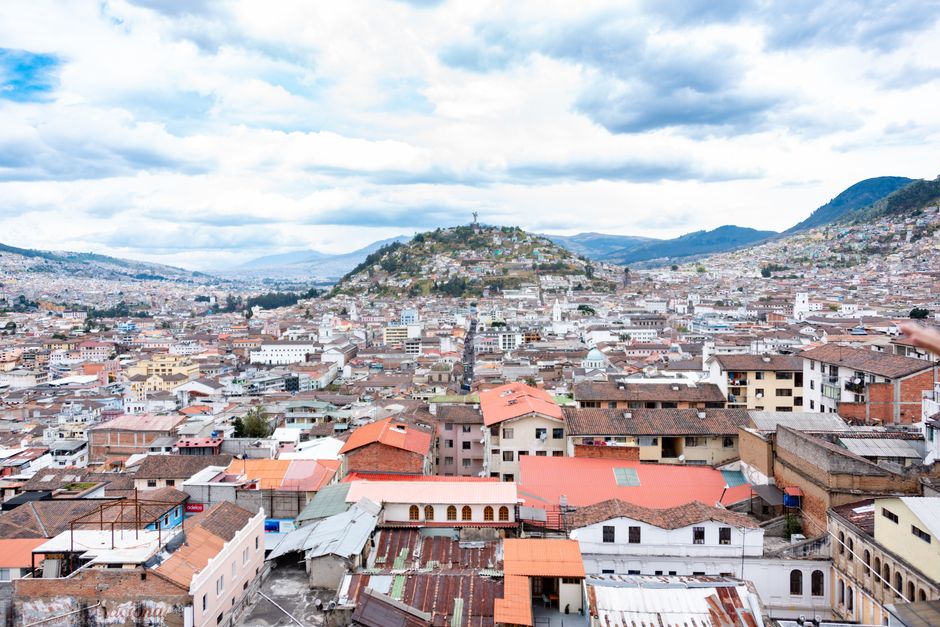
Quito, the capital of Ecuador, stretches for miles along a narrow Andean valley at about 2,850 m (9,350 ft), hemmed in by the slopes of Pichincha volcano and ringed on clear days by snowy peaks such as Cotopaxi and Cayambe. At its heart is one of the largest and best-preserved colonial centers in the Americas, a maze of white-walled streets, plazas, monasteries and gilded churches that was among the first places in the world declared a World Heritage Site by UNESCO, according to Ecuador’s Ministry of Tourism, which describes the city as the country’s political, cultural and artistic center. Quito is also the gateway to the Galápagos, the Avenue of the Volcanoes, Otavalo’s market and the cloud forests of Mindo, and the equator line lies just north of the city. Its mild days and cool nights make it pleasant all year, but the altitude takes a day or two to get used to.
Right now in Quito
- Tue 10–21°C 49–70°F 2 mm Light showers
- Wed 10–20°C 50–68°F 6 mm Showers
- Thu 11–19°C 51–66°F 24 mm Light showers
- Fri 9 Oct Independence of Guayaquil (Independencia de Guayaquil)
Weather: MET Norway (CC BY 4.0) · Holidays: Nager.Date
Top tours in Quito
See all tours for Quito →
From local operators, with prices and reviews; you check availability and book on Viator, our partner. We may earn a commission at no extra cost to you. How we earn money
Quito at a glance
- Best for: colonial architecture and churches, museums, markets, volcano views, day trips to the Andes and cloud forest.
- How long: two days for the historic center and the TelefériQo; four or five with Otavalo, Cotopaxi or Mindo.
- Best time: June to September, the drier months; it can rain on any afternoon.
- Altitude: about 2,850 m (9,350 ft); rest on your first day.
- Getting there: Mariscal Sucre International Airport (UIO), in Tababela, about 45 minutes to an hour and a quarter from the city.
- Before you go: entry rules, Galápagos fees and money are in our Ecuador travel guide.
Quito’s layout: where things are
Quito is long and thin, about 40 km (25 miles) from north to south but only a few kilometers wide. The historic center (Centro Histórico) is in the middle, around the Plaza Grande. North of it is La Mariscal, with its hostels, bars and the Plaza Foch, and the modern districts of La Floresta, with cafés and restaurants, and La Carolina, with the big park and business hotels. The TelefériQo cable car rises from the western slopes of Pichincha above the city. The Middle of the World monument is about 45 minutes north, and the airport about 45 minutes to over an hour east.
Top things to see in Quito
Most of the old town’s sights are within walking distance of the Plaza Grande. Churches charge small entrance fees, and many close at lunchtime and on Sunday afternoons.
Plaza Grande and the historic center
The Plaza Grande (Plaza de la Independencia) is surrounded by the Metropolitan Cathedral, the Carondelet Palace (the seat of government), the archbishop’s palace and city hall. From here, walk to the vast San Francisco church and monastery, one of the oldest in the Americas, on its own cobbled plaza, and to the Plaza and church of Santo Domingo.
La Compañía de Jesús
The Jesuit church of La Compañía is the most dazzling in Quito, its interior covered in gold leaf, carved altars and baroque decoration. It is a few steps from the Plaza Grande.
The Basílica del Voto Nacional
A neo-Gothic basilica begun in the late 19th century, decorated with gargoyles in the shape of Ecuadorian animals such as tortoises and iguanas. Visitors can climb its towers, via steep ladders and a walkway across the roof, for a view over the old town.
La Ronda and El Panecillo
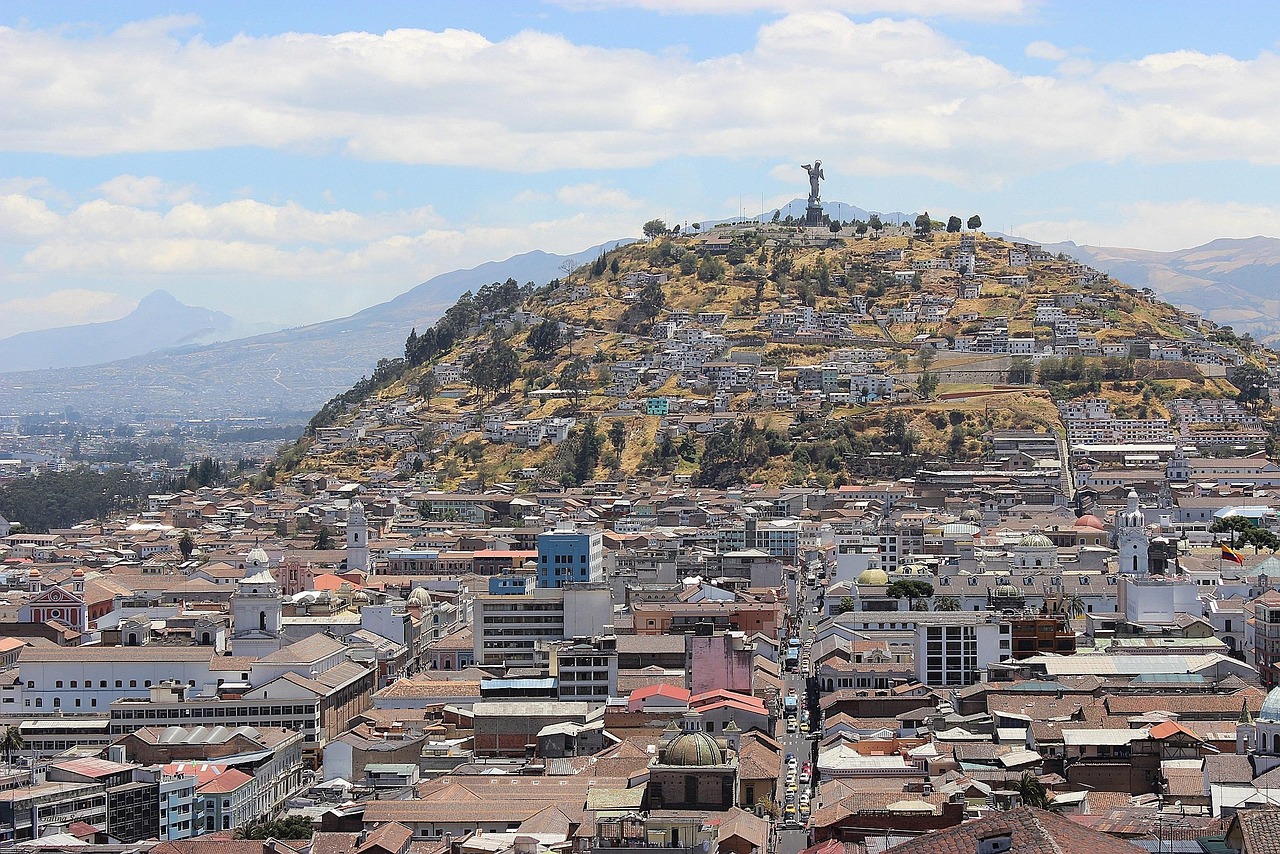
La Ronda is a restored colonial street of balconies, craft workshops and cafés, lively in the evening; the Quito tourism board highlights efforts to keep traditional crafts alive there. Above the old town, the hill of El Panecillo is topped by a large aluminum statue of the Virgin of Quito; go by taxi rather than on foot.
Other things to do in Quito
- The TelefériQo: a cable car from the edge of the city up the slopes of Pichincha to Cruz Loma, at 4,050 m (13,290 ft), according to the UK government, with sweeping views; from there, trails climb toward Rucu Pichincha.
- Museums: the Casa del Alabado for pre-Columbian art, the Museo de la Ciudad and the Capilla del Hombre, with works by the painter Oswaldo Guayasamín.
- Middle of the World: the Mitad del Mundo monument and the Intiñan museum, about 45 minutes north, on or near the equator line.
- Markets: the Mercado Central for fruit, soups and juices, and the artisan market in La Mariscal.
- Food and chocolate: try locro de papa, empanadas de viento and Ecuadorian chocolate; Quito hosted the first edition of The Global Coffee Fair in September 2026, according to the Quito tourism board.
- Walking tours: see our city sightseeing guide.
Food and drink in Quito
Quito’s food is Andean comfort cooking, with produce from every region of Ecuador in its markets.
- Locro de papa: a creamy potato and cheese soup served with avocado, the classic highland starter.
- Hornado and fritada: slow-roasted and fried pork with mote (hominy), llapingachos (potato patties) and pickled onions; try them at the Mercado Central or in the nearby town of Sangolquí.
- Empanadas de viento: huge, puffy fried cheese pastries dusted with sugar, eaten with a cup of canelazo or hot chocolate.
- Seco de chivo: a goat or lamb stew with rice, and caldo de patas, a hearty broth for the brave.
- Colada morada and guaguas de pan: the spiced purple-corn drink and bread figures of the Day of the Dead season, around November 2.
- Chocolate and coffee: Ecuador grows some of the world’s finest cacao, and the historic center and La Floresta have chocolate shops and specialty cafés; Quito hosted the first Global Coffee Fair in September 2026, according to Quito Turismo.
- Canelazo: a hot cinnamon and fruit drink, often spiked with aguardiente, served in La Ronda’s bars on cold evenings.
Set lunches (almuerzos) of soup, a main dish and juice are the best value in town, served in small restaurants and market stalls around noon.
Day trips from Quito
Otavalo
About two hours north, Otavalo is known for its Indigenous culture and the Plaza de los Ponchos, which the Ministry of Tourism calls the largest Indigenous market in Latin America. Saturday is the biggest market day. Nearby are Lake San Pablo, the Peguche waterfall, the Parque Cóndor and Imbabura volcano.
Cotopaxi National Park
About an hour and a half south, Cotopaxi’s perfect snow cone rises above the páramo. Day trips include walks to the refuge, cycling and horseback riding. High mountaineering is restricted and must follow national park rules, and climbing a glaciated mountain without an official accredited guide is illegal, according to the UK government. Lahars are a known risk around glaciated volcanoes such as Cotopaxi. See our hiking and cycling guides.
Mindo and the Chocó Andino
About two hours northwest, the cloud forest around Mindo is ideal for birdwatching, orchids and butterflies, according to the Ministry of Tourism, with rafting, tubing, waterfalls and chocolate tours.
The Quilotoa crater lake
A turquoise lake in a volcanic crater, about three to four hours south; it is a long day trip, better as an overnight with a hike along the rim.
Papallacta hot springs
About an hour and a half east, over a high pass of more than 4,000 m (13,100 ft) on the road to the Amazon, the thermal pools of Papallacta are fed by volcanic springs and surrounded by páramo and cloud. It is a popular day trip to soak in hot water at high altitude, especially after hiking; bring warm clothes for the drive and the cold air between pools.
Pululahua crater and the cloud forest road
Just beyond the Middle of the World monument, a viewpoint looks down into the Pululahua crater, one of the few inhabited volcanic craters in the world, with farms on its floor and a geobotanical reserve; a steep trail leads down. The road continues northwest into the cloud forests of the Chocó Andino toward Mindo, past birdwatching lodges and the archaeological site of Tulipe, according to Ecuador’s Ministry of Tourism.
Getting there and getting around
From the airport
Mariscal Sucre International Airport (UIO) is in Tababela, east of the city; the drive takes about 45 minutes to an hour and a quarter depending on traffic and where you stay. Use the authorized taxi booth in arrivals, according to the UK government, a hotel transfer, or the airport bus to the city. There are nonstop flights from Miami, Fort Lauderdale, Houston, Atlanta and New York, and connections through Panama City. Galápagos flights leave from here, usually with a stop in Guayaquil; see our Galápagos Islands travel guide.
Onward travel
Flights to Cuenca take about 50 minutes; by bus, the trip takes about nine to ten hours through the Andes. Buses leave from the Quitumbe terminal (south) and Carcelén terminal (north). See our Cuenca travel guide.
Getting around Quito
The Quito Metro runs north–south through the city and is the quickest way to cross it; trolleybuses and the Ecovía bus lines are cheap but crowded and favored by pickpockets. Registered yellow taxis should have a municipal sticker, orange plates (or white plates with an orange strip) and cameras inside, and the driver should reset the meter, according to the UK government; book through your hotel or a radio taxi company rather than hailing one in the street. Take taxis at night, even for short distances.
Neighborhoods at a glance
- Centro Histórico: churches, plazas, museums and restored colonial hotels; lively by day and quieter at night.
- San Marcos and La Ronda: traditional streets on the edge of the old town, with crafts, cafés and evening bars.
- La Mariscal: the traveler hub around Plaza Foch, with hostels, agencies and nightlife.
- La Floresta and Guápulo: artsy residential neighborhoods with independent cafés, and Guápulo’s colonial church in a valley below.
- La Carolina and González Suárez: modern business hotels, the big park and views over the eastern valleys.
- Cumbayá and Tumbaco: warmer, lower valleys to the east, on the way to the airport.
When to go and how long to stay
Quito has spring-like days all year, usually 18–22 °C (64–72 °F), and cool nights around 8–10 °C (46–50 °F). The drier season runs from about June to September, with sunny, windy days and the clearest views of the volcanoes; October to May is wetter, with sunny mornings and rain in the afternoon. The UK government notes that Ecuador’s rainy season can last until June, and that a red alert is in place for the forecast 2026–2027 El Niño. The sun is very strong at this altitude even when it feels cool.
| Season | What it’s like | Good for |
|---|---|---|
| June–September | Drier, sunny and windy | Volcano views, Cotopaxi, the TelefériQo |
| October–November | Rainier afternoons | Museums and churches; Day of the Dead on November 2 |
| December | Rainy spells; Fiestas de Quito in early December | Festivities and Christmas |
| January–May | Wettest, especially March to May | Indoor sights, Holy Week processions |
Quito month by month
- January: sunny mornings and afternoon showers; quiet after the holidays.
- February: wetter; Carnival (February 8–9, 2027) brings water fights and travel out of the city.
- March: one of the rainiest months; Holy Week processions in the old town.
- April: the wettest month; plan sightseeing for the mornings.
- May: rain begins to ease late in the month.
- June: the dry season starts; Inti Raymi solstice festivals around Otavalo.
- July: dry, sunny and windy; clear volcano views; busy with visitors heading to the Galápagos.
- August: the driest and windiest month; kite flying in the parks; best for Cotopaxi and the TelefériQo.
- September: mostly dry and sunny.
- October: afternoon rains return.
- November: rainy afternoons; Day of the Dead on November 2.
- December: rainy spells; the Fiestas de Quito in early December celebrate the city’s founding, followed by Christmas.
2 days in Quito
Day one, the historic center: the Plaza Grande, La Compañía, San Francisco, the Basílica del Voto Nacional and an evening in La Ronda. Day two, the TelefériQo in the clear morning, then the Middle of the World monument, and dinner in La Floresta.
4 to 5 days in Quito
Add a Saturday at Otavalo’s market, a day at Cotopaxi National Park, and a night in the Mindo cloud forest or at the Quilotoa crater lake.
Where to stay in Quito and the taxes
- The historic center: restored colonial hotels close to the sights; quiet and less safe after dark, so take taxis at night.
- La Floresta: a leafy, relaxed neighborhood with independent cafés and restaurants.
- La Mariscal: hostels and nightlife around Plaza Foch; lively but with more petty crime.
- La Carolina and the north: business hotels near the park, convenient for the Metro.
- Near the airport (Tumbaco and Puembo): handy for early flights to the Galápagos.
Hotel prices include Ecuador’s 15% value-added tax, and many add a 10% service charge; check whether quoted rates include both.
Costs in Quito
Quito is good value by South American standards, and Ecuador uses the US dollar. These per-person estimates are a planning guide as of October 2026:
| Item | Typical price |
|---|---|
| Hostel dorm bed | about US$12–20 |
| Mid-range hotel double room in the old town or La Floresta | about US$70–140 |
| Boutique colonial hotel | about US$180–350 |
| Set lunch (almuerzo) | about US$4–7 |
| Dinner for two in a good restaurant | about US$50–100 |
| Taxi within the city | about US$3–8 |
| Taxi from the airport to the center | about US$25–35 |
| Day tour to Cotopaxi or Otavalo | about US$50–120 |
The figures are our estimates, not official statistics.
Practical tips for Quito
- Altitude: altitude sickness is a risk in the Andes, according to the UK government. Rest on your first day, drink plenty of water, limit alcohol, and save the TelefériQo and hikes for later in your stay.
- Pichincha: there have been accidents and deaths from hypothermia on the route to Rucu Pichincha above the TelefériQo; go with an accredited guide, start early, take warm, waterproof clothing and high-factor sunscreen, according to the UK government.
- Safety: mugging and pickpocketing are common in the old town and at transport hubs, and thieves use distraction tricks such as spilling liquid on you, according to the UK government. Carry only what you need, wear your backpack on the front in crowds, and use ATMs inside banks or malls. Pichincha province was among those under the state of emergency declared on September 15, 2026, with more police and military on the streets. Emergencies: 911; Quito has tourism police units in the north, the old town, the airport and bus terminals.
- Water: drink boiled, filtered or bottled water.
- Money: Ecuador uses the US dollar; bring small bills.
What to pack for Quito
Pack layers: a warm fleece or light down jacket, a waterproof jacket, long pants and closed shoes, plus a hat, sunglasses and high-factor sunscreen for the intense high-altitude sun. For the TelefériQo or Cotopaxi, add gloves and a warm hat. A secure daypack, a refillable water bottle and small US dollar bills are useful. Plugs are the US type.
Quito travel FAQ
How high is Quito?
About 2,850 m (9,350 ft) in the city, and 4,050 m (13,290 ft) at the top of the TelefériQo. Take your first day slowly.
How do I get from Quito airport to the city?
By authorized taxi from the booth in arrivals, hotel transfer or airport bus, in about 45 minutes to an hour and a quarter.
What is the best time to visit Quito?
June to September, the drier months, for clear volcano views. The rest of the year usually has sunny mornings and afternoon rain.
Is Quito’s historic center a UNESCO World Heritage Site?
Yes. It was declared for being among the best-preserved historic centers in the region, according to Ecuador’s Ministry of Tourism.
How do I get to the equator from Quito?
The Middle of the World monument is about 45 minutes north of the city by taxi, tour or bus.
Can I visit Otavalo from Quito in a day?
Yes. Otavalo is about two hours north; go on a Saturday for the biggest market.
Is Quito safe for tourists?
Most visits pass without trouble, but petty crime is common in the old town and at bus stations. Use booked taxis, especially at night, and keep valuables hidden.
How many days do I need in Quito?
Two days for the city; four or five to add Otavalo, Cotopaxi or Mindo.
What food should I try in Quito?
Locro de papa, hornado, llapingachos, empanadas de viento with canelazo, and Ecuadorian chocolate; around November 2, colada morada and guaguas de pan.
How much does Quito cost per day?
Roughly US$40–60 on a budget and US$120–200 for a mid-range trip, by our estimates.
Sources and last review
Researched and last reviewed on 4 October 2026. The UNESCO listing and Quito’s role, Otavalo’s Plaza de los Ponchos, Mindo and the Chocó Andino: Ecuador’s Ministry of Tourism; La Ronda and the September 2026 coffee fair: the Quito tourism board (Quito Turismo); the TelefériQo’s height, Pichincha accidents, mountaineering rules, Cotopaxi and lahars, crime in the old town, bus station tricks, taxis, the airport taxi booths, tourism police, the state of emergency, altitude, El Niño and drinking water: the UK government; the altitude figure: Wikidata. Church and museum details, the city’s layout, temperatures and seasons, travel times, the Metro, US flight routes and the 15% IVA and service charge come from secondary sources or general knowledge and are flagged for checking. The food, neighborhood, getting-around, month-by-month and cost sections draw on secondary sources, general knowledge and our own estimates, except where an official source is named, and are flagged for checking. Prices and rules change, so check before you go. For entry rules and money, see our Ecuador travel guide.
Plan your trip
Partner links: TravelerCenter may earn a commission if you book, at no extra cost to you.
🇪🇸 Useful Spanish phrases for Quito
All 38 Spanish phrases: restaurant, hotel, emergencies, romance (printable) →