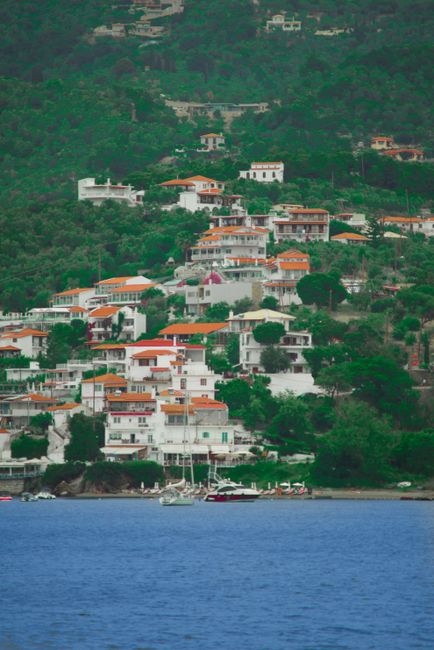
Skiathos is the greenest and liveliest of the Sporades, a small island off the coast of Thessaly covered in pine forest and ringed by more than 60 sandy beaches. It is the closest of the islands to the mainland, really a continuation of the wooded Pelion peninsula, and it packs a lot into about 50 square kilometres: a busy harbour town split in two by the pine-covered Bourtzi peninsula, the house of the writer Alexandros Papadiamantis, the golden sand and pine-fringed lagoon of Koukounaries, the white-pebble cove of Lalaria that you can only reach by boat, and the ruined medieval town of Kastro on a rock above the north coast. Planes land so low over the road at the end of the runway that the airport has become a pilgrimage for plane spotters. Fast boats link Skiathos with Volos and with its neighbours Skopelos, where Mamma Mia! was filmed, and Alonissos, at the heart of a national marine park. Come from late May to early October, and give it four days to a week.
Right now in Skiathos (Skiathos Town)
- Wed 21–22°C 70–71°F Mostly clear
- Thu 21–22°C 69–72°F Clear
- Fri 21–23°C 70–73°F Clear
Weather: MET Norway (CC BY 4.0) · Sea temperature: NOAA CoastWatch · Air quality: OpenAQ · Rates: ECB
Top tours in Skiathos
See all tours for Skiathos →
From local operators, with prices and reviews; you check availability and book on Viator, our partner. We may earn a commission at no extra cost to you. How we earn money
Skiathos at a glance
- Best months: June and September, with late May and early October for quieter days. Average highs run from about 22 °C in May to 29 °C in July and August, and winters are cool and wet, around 11–13 °C by day (HNMS normals 1991–2020, Skiathos station). The sea is warm enough for swimming from June to early October.
- Days needed: 2 for the town, Koukounaries and a boat trip round the island; 4–7 to add Kastro, Evangelistria, more beaches and day trips to Skopelos and Alonissos.
- Getting there: fly into Skiathos airport (JSI), with direct flights from many European cities in season; or come by fast boat or ferry from Volos (from about 1 hour 20 minutes), or by summer boats from Mantoudi on Evia and from Thessaloniki.
- Getting around: the island bus runs along the south coast from the town and port to Koukounaries, with branch lines to Asselinos, Xanemos and Evangelistria; boats and water taxis go to the north-coast beaches; a car or scooter helps for the rest.
- Budget level: mid-range, with plenty of family hotels and rooms, and a few luxury resorts on the south coast. Like everywhere in Greece, a climate resilience fee is added per room per night (€2–€15 from April to October, depending on the type of accommodation). See our Greece guide for money, entry rules and daily costs.
Skiathos’s areas, and who each one suits
- Skiathos Town: the island’s only town, on the south-east coast, built in 1829–1830 on two seaside hills where the ancient town stood. It has the port, the old harbour with its fish tavernas, the Bourtzi, the Papadiamantis House and a busy nightlife along the waterfront and Papadiamantis Street. The best base without a car.
- The south coast (Megali Ammos to Troulos): a string of sandy bays west of town, including Vasilias, Achladies, Kanapitsa, Vromolimnos, Kolios, Platanias (Agia Paraskevi) and Troulos, all on the bus route, with hotels, apartments and water sports. Good for families and beach holidays.
- Koukounaries and the south-west: the island’s famous beach, the Strofylia lagoon and pine forest, the two Banana beaches and Agia Eleni, at the end of the bus line about 30 minutes from town. Beautiful but busy in July and August; best for beach lovers and sunsets.
- The north coast: wilder and greener, with Mandraki, Elias, Asselinos and Kechria beaches, Kastro and the boat-only coves towards Lalaria. Few places to stay; for a quieter holiday with a car.
Top things to see in Skiathos
Skiathos’s sights are small and mostly run by the municipality, the Church or local foundations rather than the Ministry of Culture, so tickets are cheap and hours change with the season. Check opening times locally, especially outside July and August.
Skiathos Town and the Bourtzi
The town sits on a sheltered south-facing bay divided by the Bourtzi, a small pine-covered peninsula that once held a Venetian fort and now joins the old port with the new. On it, the building of the island’s first primary school (1906) houses the Museum of Maritime and Cultural Tradition, with more than 600 exhibits on two centuries of shipbuilding and seafaring, and a feature on the Greek submarine Lambros Katsonis, sunk off Skiathos in 1943. The town was bombed at the end of the Second World War and rebuilt quickly, but it kept its whitewashed houses with tiled roofs, a mix of island and Pelion styles. Climb the lanes behind the old port to the churches of Agios Nikolaos and the Three Hierarchs for the views, and walk the waterfront at sunset.
The Papadiamantis House
Alexandros Papadiamantis (1851–1911), one of the greatest Greek writers, grew up and died in this modest house, built by his father, a priest, in 1860, just off the main street that now bears his name. It is a listed building, kept as it was in the writer’s last days: upstairs are his rooms with the family’s furniture and belongings, and the ground floor has an exhibition of his books. You climb an outside wooden staircase to go in. How to visit: a small entrance fee; it opens in the morning and again in the evening in summer and is usually closed on Mondays (check locally). The house is tiny, so it takes 20–30 minutes.
Koukounaries beach and the Strofylia lagoon
Koukounaries is the island’s most famous beach: a long curve of fine golden sand on the south-west coast, backed by tall stone pines (koukounaries) that give it its name. It has a Blue Flag every year, sunbeds, water sports and tavernas, and it is the last stop on the bus line. Behind the beach, the Strofylia lagoon and its pine forest are protected: “Koukounaries and the wider marine area”, about 88 hectares of land and sea, is a Natura 2000 site and a Special Protection Area, with a wildlife refuge, and the bay is an Area of Outstanding Natural Beauty. Walk the paths round the lake for birds and turtles, keep to the tracks, and don’t light fires or barbecues anywhere in the forest.
Lalaria, the boat-only beach
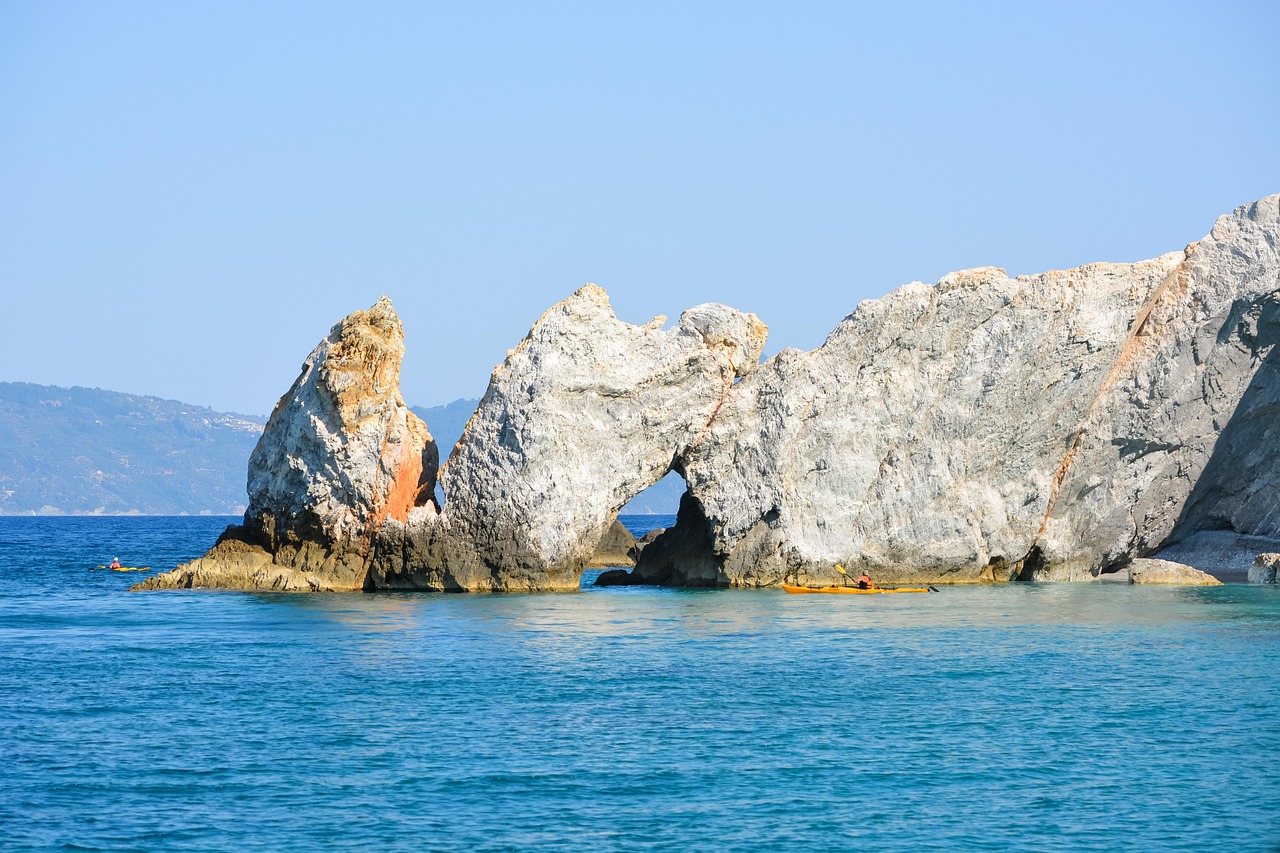
Lalaria, on the north-east coast, is the picture on most Skiathos postcards: a cove of perfectly smooth white pebbles (the lalaria) under steep white cliffs, with a natural arch in the rock, Trypia Petra, and very clear water. It can only be reached by sea, and boats go only when the sea is calm. There are no facilities at all, and taking pebbles away is strictly forbidden. Most round-the-island boats stop here for a swim and pass the sea caves nearby (see below).
Kastro, the old capital
Around 1360, to escape pirate raids, the islanders abandoned the ancient town and built a new one on a rocky headland on the north coast, a natural fortress above the sea, reached by a wooden drawbridge. They lived there until the 1820s, when they moved back to the present town. Today Kastro is a ruin among wild flowers, with a few restored churches, including Christos sto Kastro (the Nativity of Christ), the old cathedral, with its 17th–18th-century wall paintings. Below is a small beach. How to visit: the easiest way is by boat from the old port. By road, the drive takes under an hour, and you park and walk about half an hour; in summer 2026 the bus line to Evangelistria was extended to Profitis Ilias and the Kastro junction, from where you walk.
The Monastery of Evangelistria
The fortified monastery of the Annunciation, founded in 1797 by monks from Mount Athos, stands in the woods about 5 km north of town, at around 200 m. It is the island’s only working monastery and is linked with the War of Independence: the first Greek flag is said to have been raised here. The church has a fine carved iconostasis, and a small museum shows icons, manuscripts and church treasures. Dress modestly (shoulders and knees covered). How to visit: the Evangelistria bus line runs from the port, or walk up on the old cobbled path from town in about an hour. Paths continue to Kastro and the north coast; see our hiking guide.
The airport and plane spotting
Skiathos “Alexandros Papadiamantis” airport lies on a narrow strip of flat land between two bays, right next to the town, and its runway ends just metres from a public road. Planes land and take off so close that it has become one of Europe’s best-known plane-spotting places, often compared with St Maarten in the Caribbean, and the municipality says it plans proper viewing areas. Take it seriously: warning signs at the runway end say that jet blast from departing aircraft is dangerous, and people standing behind planes on take-off have been knocked over and badly hurt. Watch landings from the side, stay outside the barriers and off the road behind the runway, and keep children, scooters and loose belongings well back.
Beaches in Skiathos
Skiathos’s beaches are mostly sandy and backed by pines. The south coast is sheltered and on the bus route; the north coast is wilder and often windy in summer, when the north wind, the meltemi, blows.
- Koukounaries: the classic, with fine sand, pines and every facility; go early or late in high summer.
- Big and Little Banana (Krasa): two golden coves over the headland from Koukounaries, about 14 km from town, reached by a short dirt road. Big Banana has beach bars and water sports; Little Banana is quieter and naturist-friendly.
- Agia Eleni and Mandraki: west-facing beaches for the sunset, and a short walk from the Koukounaries road to the dunes of Mandraki on the north side.
- Vromolimnos, Kolios, Platanias and Troulos: organised south-coast beaches on the bus line, good for families.
- Lalaria and Kastro: north-coast coves reached by boat (Kastro also on foot), unorganised and spectacular.
- Tsougrias: the largest of the islets opposite the old port, a protected wetland and bird area with a sandy beach, reached by small boats from the harbour in summer.
Under Greece’s coastal law, part of every organised beach must be left free of sunbeds and you can always reach the water and spread your own towel. See our beaches guide, and our snorkeling guide for the clearest coves.
Boat trips, diving and walking
- Round-the-island boat trips: caiques and day cruises leave the old port every morning in summer, sailing along the north coast to Lalaria, the sea caves of Skotini and Galazia, and Kastro, with swimming stops, and back past the south-coast beaches. Trips to Tsougrias, and sailing and fishing trips, also leave from the harbour. See our boat trips guide.
- Diving and snorkelling: licensed dive centres take beginners and certified divers to reefs, walls and caves around Skiathos and the nearby islets. See our diving guide.
- Walking: an old network of paths links the town, Evangelistria, Kastro and the north-coast beaches through pine and oak woods. Walk in spring or autumn, start early in summer, carry water, and avoid the forest on high fire-risk days.
- Water sports: jet skis, paddleboards, kayaks and boat hire on the big south-coast beaches; small boats can be rented without a licence for coastal trips on calm days.
Food in Skiathos
Eat fish and seafood at the old port, and look for Sporades dishes such as Skopelos cheese pie (a coiled, fried pie), goat and lamb from the island’s farms, and spoon sweets and honey from the pine forests. Tavernas in the countryside and at Kastro beach are more traditional than the busy waterfront.
Day trips from Skiathos
Skopelos and the Mamma Mia chapel
Skopelos, the next island east, is greener and quieter, with a white amphitheatre town above its harbour, more than 300 churches, plum orchards and long pebble beaches. The chapel of Agios Ioannis sto Kastri, on a rock above the sea on the north-east coast, became famous as the wedding chapel in the film Mamma Mia!; about 100 steps lead up to it. In summer 2026 Aegean Flying Dolphins ran a daily morning boat from Skiathos to Glossa (about 20 minutes) and Skopelos Town (about 55 minutes), returning in the early evening, which makes an easy day trip; hire a car or take the local bus to reach the chapel.
Alonissos and the marine park
Alonissos, about 1½ hours away by fast boat, sits in the National Marine Park of Alonissos and the Northern Sporades, created in 1992 to protect the Mediterranean monk seal, one of Europe’s rarest mammals, and the islands’ seabirds and dolphins. Boat trips from Patitiri, the port of Alonissos, cruise past the smaller islands of the park, with swimming stops. Rules are strict in the core zone: the islet of Piperi, the seals’ main breeding area, is closed to visitors, and entry to the park’s most sensitive zone requires a ticket, normally arranged by the licensed boat operator. Never approach seals or enter sea caves where they rest. Alonissos is a long day from Skiathos; it is better to stay a night or two.
Volos, Pelion and the mainland
Volos, the mainland port, is a lively university city with seafront tsipouro bars, and the base for the mountain villages and beaches of the Pelion peninsula. From Volos, the Meteora monasteries and Thessaloniki are each a few hours away by road, so Skiathos combines well with a trip through central and northern Greece.
Nearby destinations
Getting there and getting around
Flights
Skiathos airport “Alexandros Papadiamantis” (JSI), run by Fraport Greece, is on the edge of town, a few minutes from the port. From spring to October there are direct flights from many European cities, many of them charters and low-cost airlines; domestic links to Athens vary from year to year. The season winds down in late October: in October 2026 the terminal opened daily 8:00–20:00 until 24 October. The island bus stops at the curbside south of the control tower, and taxis wait outside arrivals.
Ferries and fast boats
- From Volos: the main gateway. From June to October 2026, Aegean Flying Dolphins ran two fast passenger boats a day each way between Volos and Skiathos (about 1 hour 20 minutes), continuing to Glossa, Skopelos and Alonissos. Slower car ferries and other high-speed boats also sail from Volos in season. Volos is about 4 hours from Athens and 2–2½ hours from Thessaloniki by road.
- From Mantoudi (Evia): in summer, high-speed boats and a ferry link Mantoudi on Evia’s north-east coast with Skiathos, a crossing of under an hour on the fastest boat. It is the shortest drive from Athens (about 2½ hours).
- From Thessaloniki and Agios Konstantinos: a summer high-speed service has linked Thessaloniki with the Sporades in recent years. Agios Konstantinos, once the usual port from Athens, had no Skiathos sailings listed for 2026, so check before planning around it.
Book on the operator’s own site or app or a comparison platform, especially in July and August, and keep a buffer day before an international flight: the Coast Guard can ban sailings in strong winds, and the small fast boats are the first to stop.
Buses, boats and cars
Skiathos Transports runs the island buses. The main line follows the south coast from the town and port, via the airport, to Koukounaries, with numbered stops; in high summer 2026 buses left every 20 minutes from 7:00 until midnight, taking about 30 minutes, and a new, less frequent timetable began on 1 October. Other lines go to Asselinos, Agia Paraskevi, Xanemos and Evangelistria (extended to the Kastro junction). Single tickets cost €2.20 or €3.00 depending on the route and are sold at ticket kiosks, by card, at the port, at stop 4 (Akropoli) and at the Koukounaries terminus; keep your ticket until you get off. Water taxis and caiques from the old port serve the north-coast beaches. A car, scooter or quad helps for the north coast and Kastro; you need a licence valid for the vehicle (from outside the EU, usually with an International Driving Permit), helmets are compulsory on scooters and quads, and your travel insurance may not cover quads.
When to go and how long to stay
Skiathos has warm, dry summers and cool, wet winters, and it is greener and a little cooler than the southern islands. July and August are hot, busy and expensive, with the meltemi often blowing on the north coast. June and September have warm days, a warm sea and fewer people, and are the best months overall; late May and early October are quieter still, with some boats and hotels closing from mid-October. From November to April the island is quiet, rainy and local, with few flights.
| Season | Average high / low | What it’s like |
|---|---|---|
| Spring (Mar–May) | 14–22 °C / 8–15 °C | Green and flowery; good for walking; sea still cool; Easter is a big celebration; season opens in May. |
| Summer (Jun–Aug) | 27–29 °C / 20–23 °C | Hot, sunny and dry; busy beaches and boats; windy on the north coast in July and August. |
| Autumn (Sep–Nov) | 17–26 °C / 11–20 °C | Warm sea in September and early October, quieter beaches; first rain from October; most hotels close by November. |
| Winter (Dec–Feb) | 11–13 °C / 6–7 °C | Cool and rainy, with the occasional cold north wind; few visitors and services. |
Temperatures are the 1991–2020 climate normals of the Hellenic National Meteorological Service (HNMS) for its Skiathos station. Most rain falls from October to March. Greece’s wildfire season runs from 1 May to 31 October: on days of high fire risk (category 4–5 on the daily map of the Ministry of Climate Crisis and Civil Protection), forests and protected areas may be closed and any outdoor fire is banned, which matters on an island this wooded. Call 112 if you see a fire.
3 days in Skiathos
Day 1: Skiathos Town, the Bourtzi and its museum, the Papadiamantis House, and dinner at the old port. Day 2: a round-the-island boat trip to Lalaria, the sea caves and Kastro. Day 3: the bus to Koukounaries for the beach and the Strofylia lagoon, Banana or Agia Eleni in the afternoon, and the sunset on the west coast.
5–7 days in Skiathos
Add Evangelistria and the walk on to Kastro, a north-coast beach day at Mandraki or Asselinos, a day trip to Skopelos and the Mamma Mia chapel, a dive or snorkel trip, and one or two nights on Alonissos for the marine park. Then sail back to Volos and carry on to Meteora or Thessaloniki, or drive back to Athens.
Where to stay in Skiathos
- Without a car: Skiathos Town, close to the port, the boats and the start of the bus line, with the most restaurants and nightlife.
- Families and beach time: the south-coast bays from Achladies to Troulos, on the bus line, with sandy beaches and larger hotels.
- Beach and nature: Koukounaries, near the lagoon and the best sunsets, with a campsite nearby.
- Quiet: villas and small hotels in the hills or on the north coast, with a car.
Greece adds a climate resilience fee per room per night, set by type of accommodation, usually paid at the property (from April to October €2 for 1–2-star hotels and rooms up to €15 for 5-star hotels; campsites and youth hostels are exempt). Cruise passengers who go ashore pay a separate cruise passenger fee, usually added to the cruise bill (€5 from June to September at ports other than Santorini and Mykonos).
Practical tips for Skiathos
- Plane spotting safely: never stand behind a departing plane at the runway end; jet blast can throw people and scooters across the road.
- Lalaria depends on the sea: boats only go in calm weather, so plan it early in your stay and keep a spare day.
- Buy bus tickets first: use the kiosks at the port, Akropoli or Koukounaries, and keep the ticket until you get off.
- Fire risk: no barbecues, campfires or cigarettes in the pine forest; follow 112 alerts.
- Emergencies: call 112; tourist police 1571; coast guard 108.
What to pack for Skiathos
Pack light summer clothes, a sun hat, sunglasses, high-factor sunscreen and a refillable water bottle. Bring a swimsuit, a snorkel mask, water shoes for the pebble coves, and a dry bag for boat trips. Add comfortable walking shoes for Kastro and the forest paths, a light windproof layer for windy evenings on deck, a warmer jacket and rain gear from October to April, and a scarf or long sleeves to cover your shoulders in Evangelistria and other churches.
Skiathos travel FAQ
How many days do you need in Skiathos?
Two or three days covers the town, Koukounaries and a boat trip round the island. Four to seven days lets you add Kastro, Evangelistria, more beaches and day trips to Skopelos and Alonissos.
How do you get to Skiathos from Athens?
Drive or take the bus or train to Volos (about 4 hours) and the fast boat to Skiathos (about 1 hour 20 minutes), or drive to Mantoudi on Evia (about 2½ hours) for the summer boats. Flights from Athens run in some years; check the airlines.
Can you get to Lalaria beach by land?
No. Lalaria can only be reached by boat, and boats go only when the sea is calm. Round-the-island trips from the old port usually stop there for a swim. Taking pebbles from the beach is forbidden.
Is plane spotting at Skiathos airport safe?
Watching landings from the side is fine, but standing behind the runway end during take-off is dangerous: warning signs mark the jet-blast zone, and people have been knocked over and injured. Stay outside the barriers and off the road behind the runway.
How do I get from Skiathos Town to Koukounaries?
By the island bus, which runs along the south coast from the town and port to Koukounaries in about 30 minutes, every 20 minutes in high summer. Tickets cost €2.20–€3.00 and are sold at kiosks by card. Taxis and boats also go there.
Can you do a day trip from Skiathos to Skopelos?
Yes. Fast boats take about 20 minutes to Glossa and under an hour to Skopelos Town, with morning departures and early-evening returns in summer. Hire a car or take the bus on Skopelos to reach the Mamma Mia chapel of Agios Ioannis sto Kastri.
Can you see monk seals in the Alonissos marine park?
Sometimes, but sightings are a matter of luck. The park protects the Mediterranean monk seal; its core islet, Piperi, is closed to visitors, and boats must keep their distance. Go with a licensed operator from Alonissos and never approach seals or enter their caves.
Do I need a car in Skiathos?
Not if you stay in town or on the south coast: the bus and boats reach most beaches. A car or scooter is useful for the north coast, Kastro and quieter coves.
When is the best time to visit Skiathos?
June and September: warm, sunny and less crowded than July and August, with the sea warm enough for swimming. Late May and early October are quieter, but some boats and hotels close from mid-October.
Was Mamma Mia filmed on Skiathos?
Partly. The famous wedding chapel, Agios Ioannis sto Kastri, is on neighbouring Skopelos, and other scenes were shot on Skopelos and on the Pelion coast. Skiathos is the usual gateway, with its airport and boats to Skopelos.
Sources and last review
Researched and last reviewed on 4 October 2026. Descriptions of the town, museums, Kastro, Evangelistria, beaches, protected areas and plane spotting come from the Municipality of Skiathos; the marine park from the Natural Environment and Climate Change Agency (NECCA); airport bus, taxi and terminal information from Skiathos airport (Fraport Greece); bus routes, timetables and fares from Skiathos Transports; and Volos, Skopelos and Alonissos boat times from Aegean Flying Dolphins’ 2026 timetable. The climate resilience fee is set by Greek tax law and collected by the Independent Authority for Public Revenue (AADE). Climate figures are the HNMS 1991–2020 normals for Skiathos. Boat times and museum hours change by season, so check the operators and the museums before you travel.
Plan your trip
Partner links: TravelerCenter may earn a commission if you book, at no extra cost to you.
🇬🇷 Useful Greek phrases for Skiathos
All 38 Greek phrases: restaurant, hotel, emergencies, romance (printable) →