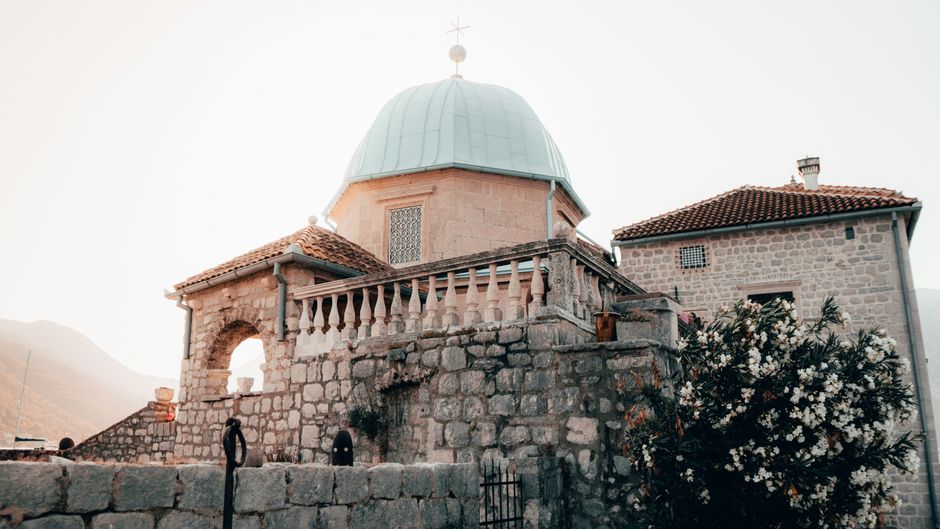
Montenegro packs an astonishing amount into a country smaller than Wales or Connecticut: a fjord-like bay ringed by Venetian towns, a short, sunny coast of beaches and walled resorts, and, only a couple of hours inland, limestone mountains, glacial lakes and one of the deepest river canyons in Europe. Start with the Bay of Kotor, where Kotor and Perast sit under sheer grey mountains; add the old town and beaches of Budva and the island village of Sveti Stefan; go up to Lovćen and the old royal capital Cetinje; then head north to Durmitor National Park for hiking, the Black Lake and rafting on the Tara. Montenegro uses the euro, but it is outside the EU and the Schengen area, so you show your passport at the border. June and September are the sweet spots. Give it a week for the coast, ten days to add the mountains.
Right now in Montenegro
- Wed 12–26°C 54–79°F Clear
- Thu 15–20°C 59–67°F 22 mm Showers
- Fri 17–19°C 63–66°F 78 mm Heavy rain
Weather: MET Norway (CC BY 4.0) · Air quality: OpenAQ
Multi-day tours of Montenegro
Multi-day tours from local operators. You check dates and book on Viator, our partner; we may earn a commission at no extra cost to you. How we earn money
Montenegro at a glance: overview and geography
Montenegro (Crna Gora, “Black Mountain”) lies on the southern Adriatic between Croatia and Albania, with Bosnia and Herzegovina to the north-west, Serbia to the north-east and Kosovo to the east. The coast is less than 300 km long, yet the land climbs from sea level to above 2,500 m in the Durmitor and Prokletije mountains. That makes it a country of sharp contrasts: you can swim in the morning near Budva and walk past snow patches above Žabljak the same afternoon. The 2023 census counted about 620,000 people, roughly a third of them in and around the capital, Podgorica.
History is everywhere. Illyrians, Greeks and Romans settled the coast; Venice ruled the Bay of Kotor and much of the shore for almost four centuries and left its towers, lions and palaces; the Ottomans held the interior and the south; and the mountain heartland around Cetinje stayed largely independent under its prince-bishops, the Petrović-Njegoš dynasty. Montenegro was a kingdom until 1918, then part of Yugoslavia, and it became independent again in 2006 after a referendum. It joined NATO in 2017 and is negotiating to join the European Union. The country is mostly Orthodox Christian, with Catholic communities around the Bay of Kotor and Muslim communities in the south and north-east, and you will see churches, monasteries and mosques side by side.
Time zone: Montenegro runs on Central European Time (UTC+1, UTC+2 in summer), the same as Croatia, Italy and Austria.
The regions
- The Bay of Kotor (Boka Kotorska): a deep, winding bay of four connected basins, with Herceg Novi at its mouth, Perast and Kotor at its innermost end and the marina town of Tivat on its south side. Kotor’s old town and the bay are a UNESCO World Heritage Site.
- The Budva Riviera: the busiest stretch of coast, from Jaz beach past Budva’s walled old town, Bečići, Pržno and Sveti Stefan to the fishing village of Petrovac.
- The southern coast: the port of Bar with its ruined hill town of Stari Bar, and Ulcinj near the Albanian border, with long sandy beaches, kitesurfing and a strong Albanian and Ottoman flavour.
- Central Montenegro: Mount Lovćen and the mausoleum of the poet-prince Njegoš, the old royal capital Cetinje, the modern capital Podgorica, and Lake Skadar, the largest lake in the Balkans, shared with Albania.
- The northern mountains: Durmitor and the Tara canyon around Žabljak, the old forest of Biogradska Gora near Kolašin, and the remote Prokletije range on the Albanian border.
Where to go: the bay, the coast and the mountains
Most visitors base themselves on the coast and make day trips inland. Distances are short, but roads are winding and summer traffic is slow, so the simplest first trip has two bases: one in the Bay of Kotor and one on the Budva Riviera, with a night or two in the mountains at Žabljak if you have time.
Kotor and Perast
Kotor is a small walled town of marble lanes, Romanesque churches and cats, squeezed between the water and a mountain wall. The town’s defences zigzag up the slope to the fortress of San Giovanni (St John): the climb of roughly 1,350 steps is the classic Kotor experience, and since late 2023 it costs €15 for foreign visitors, according to the Municipality of Kotor. Down the bay, Perast is a single street of Baroque palaces facing two islets, one of them the man-made island church of Our Lady of the Rocks. Cruise ships moor right in front of Kotor’s old town, so come early or late in summer. Our Kotor guide (coming soon) has the details.
Budva and Sveti Stefan
Budva is Montenegro’s beach capital: a compact walled old town on a small peninsula, a long seafront of bars and hotels, and a string of beaches along the riviera, from Mogren just round the headland to Jaz and Bečići. It is lively, built-up and busy in July and August, and calmer and good value in June and September. A few kilometres south, Sveti Stefan is the fortified fishing village on an islet joined to the shore by a causeway, now a luxury Aman resort that reopened in July 2026; the beach next to the causeway is open to everyone.
Herceg Novi
At the mouth of the bay, close to the Croatian border, Herceg Novi climbs steeply from the sea in a tangle of stairways, gardens and fortresses: the Ottoman Kanli Kula, the seaside Forte Mare, and the Savina monastery among the cypresses. A promenade runs for kilometres along the water to the spa resort of Igalo. Boats leave for the Blue Cave and the beaches of the Luštica peninsula, and it is the easiest Montenegrin base for a day trip to Dubrovnik.
Durmitor National Park and the Tara canyon
In the north, Durmitor is a high limestone massif of more than 40 peaks above 2,000 m and some 18 glacial lakes, protected as a national park and, with the Tara canyon, as a UNESCO World Heritage Site. The mountain resort of Žabljak, at about 1,450 m, is the base for the walk round the Black Lake, the climb to Bobotov Kuk, the panoramic Durmitor Ring road, the Đurđevića Tara bridge and rafting on the Tara. In winter it is Montenegro’s main ski area. Park entry was €5 a day as of October 2026, with a rise to €8 in summer proposed by National Parks of Montenegro.
Lovćen, Cetinje and Lake Skadar
From Kotor, the old Austro-Hungarian road climbs 25 hairpin bends to the village of Njeguši, famous for smoked ham and cheese, and into Lovćen National Park, where the mausoleum of Petar II Petrović-Njegoš sits on the summit of Jezerski vrh with views over half the country. Since 2024 a cable car also climbs from Kotor to the edge of the park. Beyond lies Cetinje, the small, leafy old royal capital, with its monastery, embassies and museums. To the south, Lake Skadar National Park is a world of water lilies, pelicans and fishing villages such as Virpazar, best explored by boat, with vineyards on the surrounding hills.
A few more worth your time
Tivat and its superyacht marina, Porto Montenegro; the quiet coves and olive groves of the Luštica peninsula; Petrovac’s crescent beach and pine-backed promenade; the ruins of Stari Bar and its ancient olive tree; Ulcinj’s long sandy beach (Velika plaža) and its old town; Ostrog Monastery, built into a cliff face and the country’s most important pilgrimage site; Biogradska Gora’s old-growth forest and lake near Kolašin; and the high valleys of Prokletije.
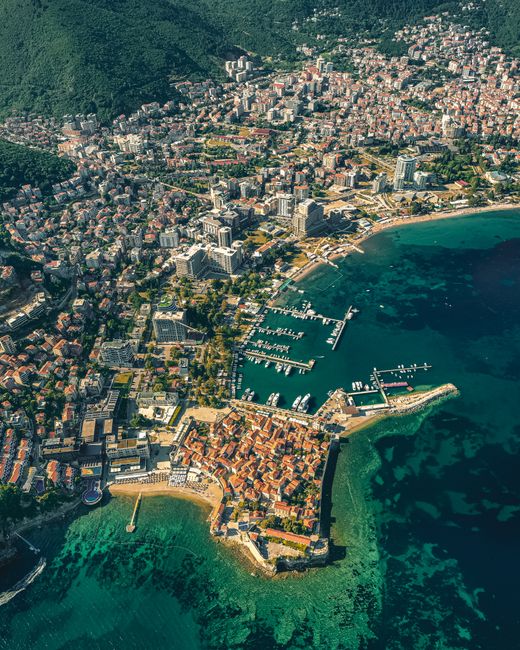
Budva Travel Guide
Plan a trip to Budva: the walled old town and citadel, Mogren, Jaz, Bečići and the other Budva Riviera beaches, Sveti Stefan after the…
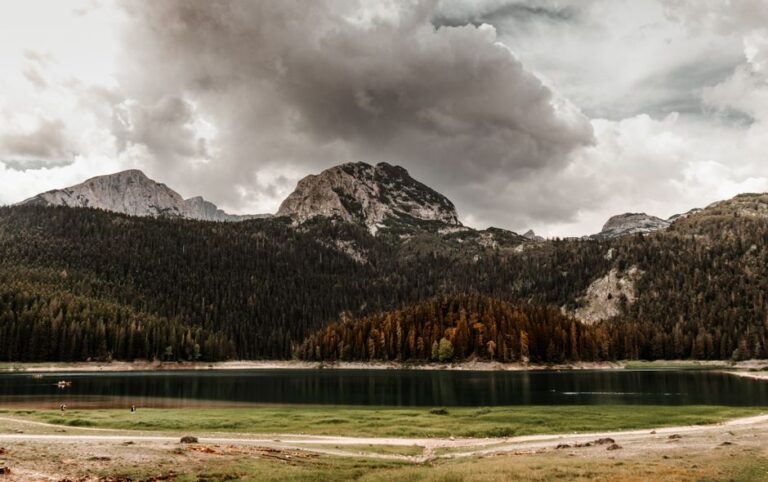
Durmitor National Park Travel Guide
Plan a visit to Durmitor National Park: 2026 ticket and service prices, the Black Lake walk, hikes to Bobotov Kuk, the Ice Cave and…
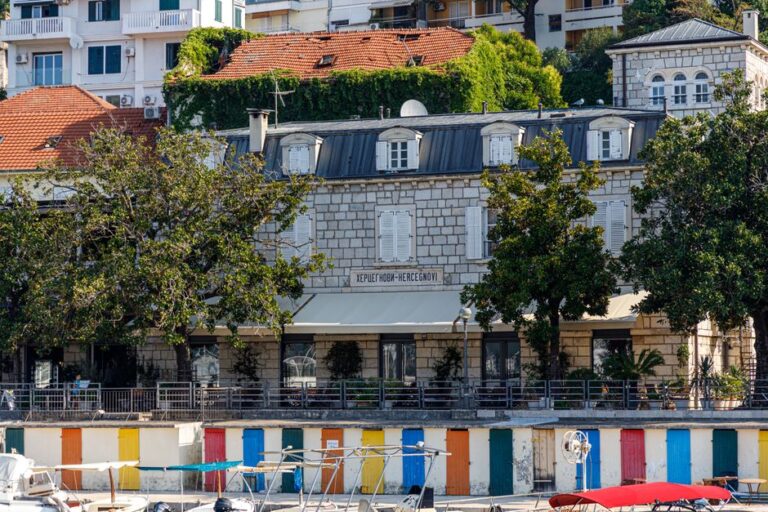
Herceg Novi Travel Guide
Plan a trip to Herceg Novi: the old town and clock tower, Forte Mare, Kanli Kula and the Spanish fortress, Savina Monastery, the 7…
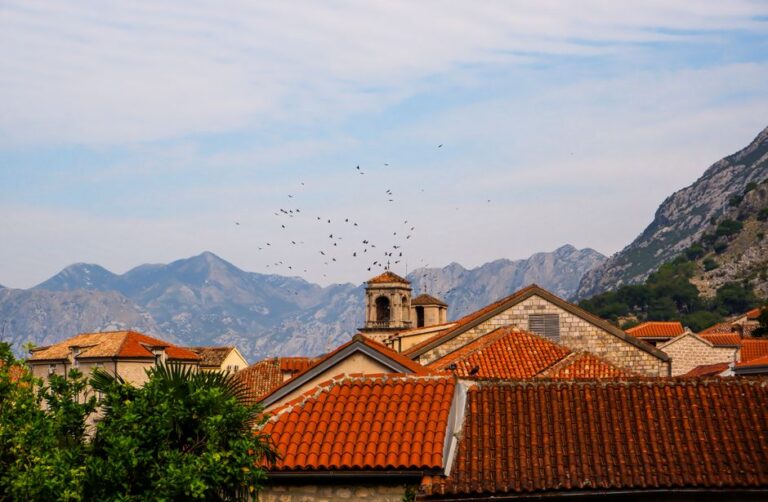
Kotor Travel Guide
Plan a trip to Kotor: the city walls and San Giovanni fortress with the 2026 ticket price and entrances, the old town's squares, St…
Best time to visit Montenegro
The coast has a Mediterranean climate: hot, dry, very sunny summers and mild, very wet winters, with most rain from October to March. Podgorica, in a basin just inland, is the hottest place in the country in summer. The mountains are a different world: Žabljak has short, mild summers and long, snowy winters. The table shows the average daily high and low temperatures from the official 1991–2020 climate normals that Montenegro’s Institute of Hydrometeorology and Seismology submitted to the World Meteorological Organization.
| Area (weather station) | Spring (Mar–May) | Summer (Jun–Aug) | Autumn (Sep–Nov) | Winter (Dec–Feb) | Best months |
|---|---|---|---|---|---|
| Bay of Kotor (Herceg Novi) | highs 16–24 °C | highs 28–32 °C, lows 18–21 °C | highs 27 °C falling to 18 °C | highs 13–14 °C, lows about 5 °C | June, September |
| Budva Riviera and south coast (Bar) | highs 16–24 °C | highs 28–30 °C, lows 18–21 °C | highs 27 °C falling to 19 °C | highs 13–14 °C, lows 5–7 °C | June, September |
| Podgorica and Lake Skadar (Podgorica) | highs 16–26 °C | highs 31–35 °C, lows 19–22 °C | highs 28 °C falling to 17 °C | highs 11–13 °C, lows 2–3 °C | May, late September–October |
| Durmitor (Žabljak, 1,450 m) | highs 6–15 °C | highs 19–22 °C, lows 8–9 °C | highs 17 °C falling to 8 °C | highs 2–3 °C, lows −6 to −7 °C | July–September; January–March for skiing |
July and August have only three to four days with rain at Herceg Novi, Bar and Podgorica, but November is the wettest month on the coast, with over 230 mm at Herceg Novi. The mountains above the Bay of Kotor are among the rainiest places in Europe: the Institute notes that Crkvice, above the bay, averages about 5,000 mm a year. The sea is warm enough for most swimmers from June to early October and warmest in August.
Heat, the bura and the shoulder seasons
Summer heatwaves above 35 °C are common in Podgorica and increasingly on the coast; plan walks and fortress climbs for the morning or evening. The cold bura wind can blow down from the mountains in winter, and southerly storms bring heavy rain in late autumn. May, June, September and early October give the best balance of warm weather, warm sea, open hotels and fewer people. For the mountains, July to September is the hiking season; snow can linger on the high passes until June, and the Durmitor Ring road usually closes in winter.
Crowds and prices through the year
July and August are the peak, when Montenegrins, Serbians and visitors from across Europe fill the coast, beach clubs charge the most for loungers and the road between Kotor and Budva crawls. Kotor is also one of the Adriatic’s busiest cruise ports, with several ships in port on many summer days. June and September are warm, calmer and cheaper. From November to March, many beach hotels and restaurants close, but Kotor, Herceg Novi and Podgorica stay alive, and Žabljak fills up again for skiing.
Festivals and public holidays
Highlights include the Mimosa Festival in Herceg Novi in February, the Kotor winter and summer carnivals, Perast’s Fašinada boat procession to Our Lady of the Rocks on 22 July, the KotorArt summer festival of music and theatre, and summer festivals in Budva’s old town. Public holidays include New Year (1–2 January), Orthodox Christmas (7 January, with Christmas Eve on 6 January), Orthodox Easter from Good Friday to Easter Monday (Easter Sunday falls on 2 May 2027), Labour Day (1–2 May), Independence Day (21–22 May) and Statehood Day (13–14 July). Catholic and Muslim holidays are also observed by those communities.
How long to stay: sample itineraries
Montenegro is compact: Herceg Novi to Budva is about an hour’s drive, and Budva to Žabljak about three to four. Even so, two bases are better than one.
5 days: the Bay of Kotor and Budva
Fly into Tivat or Podgorica, or arrive from Dubrovnik. Three nights in Kotor or Perast: the old town and the fortress climb, a boat to Our Lady of the Rocks, and a day up to Lovćen and Cetinje. Two nights in Budva for the old town, the beaches and Sveti Stefan.
7–8 days: coast and mountains
Three nights on the Bay of Kotor, two in Budva or Petrovac, with a half-day at Lake Skadar on the way north, then two or three nights in Žabljak for the Black Lake, a Durmitor hike, the Tara bridge and a rafting trip. Fly home from Podgorica.
10–14 days: Dubrovnik to Durmitor
Start with two or three nights in Dubrovnik, cross to Herceg Novi (two nights), then Kotor and Perast (three nights), Budva and Sveti Stefan (two nights), Lake Skadar and Cetinje (one night), Žabljak and Durmitor (three nights) and, if time allows, Kolašin and Biogradska Gora or Ulcinj’s long beach in the far south.
Entry, money, fees and costs
Entry and visas (last reviewed October 2026)
Montenegro is not in the European Union and not in the Schengen area, so you go through passport control on arrival and departure, even from Croatia. It is a candidate for EU membership: by July 2026 all 33 negotiating chapters had been opened and 18 provisionally closed, according to the EU Delegation to Montenegro, and the government aims to join around 2028. Until then, Schengen rules do not apply here.
- Visa-free stays: citizens of the EU, the UK, the United States, Canada, Australia, New Zealand, Japan and many other countries can visit without a visa for up to 90 days in any 180-day period. Holders of some valid visas or residence permits issued by Schengen countries, the UK, the US and a few others can usually enter for a shorter period. Check the list for your passport with Montenegro’s Ministry of Foreign Affairs before you go.
- New visa rules from 1 November 2026: to align with EU visa policy, the government decided in July 2026 that citizens of Russia, Belarus, Turkey, China and Saudi Arabia will need a visa from 1 November 2026, as announced by the Ministry of Foreign Affairs and reported in the press. If that affects you, apply early.
- Schengen days: days spent in Montenegro do not count towards the Schengen 90-in-180-day limit, which makes it a useful break on a long European trip.
- EES and ETIAS: Montenegro does not use the EU’s Entry/Exit System or ETIAS. But when non-EU travellers cross back into Croatia, or fly on to a Schengen country, they enter the Schengen area, and the EES, fully running at all Schengen external borders since 10 April 2026, records their passport details, photo and fingerprints on the first crossing. ETIAS is not in operation as of October 2026; the EU has said it is planned for the last quarter of 2026 without setting a date, and press reports point to 2027.
- Passports: carry a passport valid for your whole stay; many governments advise at least three months beyond your planned departure. EU citizens can also cross with a national ID card for shorter stays, but a passport is simpler.
Rules change, so check the official pages before you travel: Montenegro’s Ministry of Foreign Affairs, the European Commission’s EES and ETIAS pages and your own government’s travel information.
Registration and the tourist tax
Every foreign visitor must be registered with the local tourist organisation within 24 hours of arrival. Hotels, campsites and licensed private hosts do this for you, usually through an app or online system, and add the tourist tax (boravišna taksa) to your bill. In Tivat, for example, the local tourist organisation sets it at €1 per adult per night, €0.50 for 12- to 18-year-olds, with children under 12 exempt; other coastal towns charge similar amounts. If you stay with friends or in an unregistered flat, you must register yourself at the local tourist office or police station, and you can be fined at the border if you cannot show that you were registered. Keep the registration slip (sometimes called the white card) that your host gives you.
The euro, cash and tipping
Montenegro uses the euro, although it is not in the eurozone and does not issue its own coins or notes; it adopted the German mark in 1999 and switched to the euro with it in 2002. Cards are accepted in most hotels, restaurants and shops on the coast, but carry cash for small cafés, markets, boat taxis, beach loungers, fortress tickets in some places, and almost everything in the mountains. Bank cash machines are common in towns. When a machine or terminal offers to charge you in your home currency, choose euros. Tipping is appreciated: round up or leave about 10% in restaurants for good service.
Language and a few useful words
Montenegrin is the official language, very close to Serbian, Croatian and Bosnian, and written in both the Latin and Cyrillic alphabets; road signs are usually in both. English is widely spoken by younger people and in tourism, and Russian and Serbian are common on the coast. Try dobar dan (good day), zdravo (hello), hvala (thank you), molim (please), izvinite (excuse me), da and ne (yes and no) and živjeli (cheers).
Typical travel costs
Montenegro is cheaper than Croatia, though the gap has narrowed on the coast in summer, and Budva, Kotor’s old town and Sveti Stefan can be expensive. These estimates, per person per day, are a planning guide as of October 2026:
| Style | Estimated cost per day | What that looks like |
|---|---|---|
| Budget | about €45–70 | Hostel bed or simple private room, bakery breakfasts and burek, one restaurant meal, local buses, free beaches |
| Mid-range | about €100–160 | Apartment or 3-star hotel shared by two, restaurant lunches and dinners, a fortress or park ticket, a boat trip, a hire car for a few days |
| High-end | about €300+ | Boutique hotel on the bay or a resort near Sveti Stefan, fine dining, private boat trips and guided tours |
Add more for beach-club loungers in July and August, which can cost much more than in June. The figures are our estimates, not official statistics.
Getting there and getting around
Arrival airports
Montenegro has two international airports, both run by Airports of Montenegro. Tivat (TIV) sits on the Bay of Kotor, a few kilometres from Tivat and about 15–20 minutes from Kotor and 30 minutes from Budva; it is busiest in summer. Podgorica (TGD), just south of the capital, has more year-round flights and is the better choice for the north and Lake Skadar; Budva is about an hour’s drive away. Many visitors also fly into Dubrovnik (DBV) in Croatia, about 30–40 minutes from the Montenegrin border, which works well for Herceg Novi and Kotor.
Crossing from Croatia
The main crossing is Karasovići (Croatia) – Debeli Brijeg (Montenegro) on the coast road south of Dubrovnik, a few kilometres from Herceg Novi. It is an external Schengen border, so expect two passport checks and, on summer weekends and when tour coaches arrive, queues of an hour or more. Non-EU travellers entering Croatia are registered in the EES. A smaller crossing at Vitaljina – Kobila, near the tip of the Prevlaka peninsula, can be quieter. Hire cars need permission and insurance cover to cross borders, so tell the rental company in advance.
Buses
Buses are the main public transport and run frequently along the coast between Herceg Novi, Kotor, Tivat, Budva, Petrovac, Bar and Ulcinj, and inland to Cetinje, Podgorica and Žabljak. They are cheap, and you buy tickets at the bus station or from the driver; a small charge for luggage in the hold and a station fee are normal. In summer, book a seat a day ahead on popular routes, including the international lines to Dubrovnik, Sarajevo and Belgrade.
Trains and ferries
Montenegro’s one main railway runs from the port of Bar via Podgorica and through the mountains to Bijelo Polje and on to Serbia: one of the most spectacular lines in Europe, with hundreds of tunnels and the high Mala Rijeka viaduct. As of October 2026, the overnight train to Belgrade leaves Bar at 20:10 and arrives in Belgrade at 07:08, with second-class seats from Bar at €23.80, according to Montenegro’s passenger railway, ŽPCG; check the timetable for day trains and sleeping cars. Across the bay, the small car ferry between Kamenari and Lepetane saves the long drive round the Bay of Kotor between Herceg Novi and Tivat; it runs day and night, and is reported to cost about €5 per car, with foot passengers free. International ferries link Bar with Bari in Italy.
Driving
A car is the best way to reach Lovćen, Lake Skadar and the mountains, but you do not need one for Kotor’s or Budva’s old towns, where parking is scarce. Drive on the right. Roads are mostly two-lane and winding, with tunnels, hairpins and slow lorries; the coast road between Kotor and Budva jams in summer. Key rules reported by rental companies and motoring guides: dipped headlights on day and night all year; a blood alcohol limit of 0.3 g/kg (zero for drivers under 24 and professional drivers); and speed limits of 50 km/h in towns, 80 km/h on open roads and 130 km/h on the motorway. There is no vignette. Tolls apply only on the Sozina tunnel between Podgorica and the coast (about €2.50 for a car) and on the short Smokovac–Mateševo motorway north of Podgorica (about €3.50). Carry your driving licence, the car’s papers and proof of insurance valid in Montenegro.
Beaches, the sea and safety in the water
Montenegro’s beaches range from pebble coves and concrete bathing platforms in the Bay of Kotor to long pebble and sand beaches on the Budva Riviera and the 12 km sandy Velika plaža at Ulcinj. Many beaches are split between free public sections and beach clubs that rent loungers and umbrellas, and prices for loungers rise sharply in July and August. The water in the bay is calm and warm; the open coast is clearer but can have waves. See our beaches guide, plus snorkeling, diving and boat trips.
- Sea urchins and rocks: common on rocky shores; wear water shoes.
- Boats: speedboats and taxi boats run close to shore in the bay and around Budva; stay inside the marked swimming zones.
- Lifeguards: present on many organised beaches in summer, but not on wild coves.
- Dress code: several coastal towns, including Budva, fine people for walking around town in swimwear or bare-chested; keep beachwear for the beach.
Safety, health and connectivity
Safety
Montenegro is generally safe for visitors. The main risks are on the roads: narrow mountain routes, fast overtaking and tired drivers in summer, so drive defensively and avoid night driving in the mountains. Watch for pickpockets in crowded old towns, agree taxi fares in advance or use a registered taxi company, and be careful with alcohol and fireworks in Budva’s nightlife strip. In summer, wildfires break out on the dry hillsides of the coast; never light fires outdoors, never throw away cigarettes and follow official instructions. Emergency numbers: 112 for all services, 122 police, 123 fire and 124 ambulance.
In the mountains
Weather changes quickly on Durmitor, Prokletije and Lovćen: carry a waterproof and a warm layer even in August, start long hikes early to avoid afternoon storms, and tell someone your route. Mountain rescue is reached through 112. Rafting on the Tara should only be done with registered operators who provide helmets, life jackets and wetsuits.
Health
Montenegro is not in the EU, so the European Health Insurance Card is not generally valid here; take travel insurance that covers medical treatment. Pharmacies (apoteka) are well stocked. Tap water is generally safe in towns, though many people drink bottled water on the coast in summer. Check for ticks after walks in meadows and forests.
Connectivity and power
Because Montenegro is outside the EU, EU “roam like at home” rules do not automatically apply; check your plan or buy a local SIM or eSIM, which is cheap. Coverage is good on the coast and in towns, patchier in canyons and high mountains. Wi-Fi is standard in accommodation. Plugs are the European two-pin type (C and F), at 230 V; see our travel adapters guide.
Food, wine and culture
Food changes with the altitude. On the coast, eat grilled fish, black risotto, mussels from the Bay of Kotor, octopus salad and olive oil from Bar’s ancient groves. Inland, try Njeguški pršut (smoked ham) and cheese from Njeguši, lamb or veal slow-cooked under the sač iron bell, and trout and carp from Lake Skadar. In the north, mountain dishes such as kačamak (cornmeal and potato with cheese and cream) and cicvara keep hikers going. The local red wine is Vranac, grown around Lake Skadar and Podgorica; Krstač is the white. Finish with a coffee and a rakija. Dress modestly in churches and monasteries, covering shoulders and knees; at Ostrog and other monasteries, women may be asked to wear a skirt, which is often lent at the door. See our wine tasting guide.
Things to do: boats, hiking, rafting and skiing
- Boat trips in the Bay of Kotor: to Our Lady of the Rocks, the Blue Cave on Luštica and the former submarine tunnels, from Kotor, Perast, Tivat or Herceg Novi.
- Hiking: the fortress and the Ladder of Kotor above Kotor, Lovćen, Durmitor’s peaks and lakes, Biogradska Gora and Prokletije. See our hiking guide.
- Rafting: on the Tara, usually from Brštanovica to Šćepan Polje, from May to October.
- Kayaking and paddleboarding: calm water in the bay and on Lake Skadar.
- Cycling: the roads around Lake Skadar and the Durmitor Ring, for fit riders. See our cycling guide.
- Skiing: Savin Kuk at Žabljak and the Kolašin resorts from about December to March, depending on snow.
- Sightseeing: Kotor, Perast, Budva, Cetinje and Stari Bar. See our city sightseeing guide.
What to pack
For summer on the coast, bring light clothes, a sun hat, high-factor sunscreen, a refillable bottle, swimwear and water shoes for pebbles and urchins. Add grippy shoes for polished old-town stones and the fortress steps, hiking shoes and a fleece for the mountains, where nights are cool even in August, and a rain jacket for Durmitor and for any trip from October to April. Pack a scarf or shirt for churches and your passport for border crossings.
Montenegro travel FAQ
When is the best time to visit Montenegro?
June and September for the coast: hot, sunny weather, a warm sea and fewer crowds than in July and August. July to September is best for hiking in Durmitor, and January to March for skiing.
How many days do you need in Montenegro?
Five days for the Bay of Kotor and Budva; a week to ten days to add Lovćen, Lake Skadar and Durmitor.
Is Montenegro in the EU or Schengen?
Neither. Montenegro is an EU candidate, negotiating membership, with 18 of 33 chapters provisionally closed by July 2026. It is outside Schengen, so there are passport checks at every border, and days here do not count towards your Schengen limit.
Does Montenegro use the euro?
Yes. Montenegro has used the euro since 2002, although it is not part of the eurozone. Cards work in most places on the coast, but carry cash for small purchases and in the mountains.
Do I need a visa for Montenegro?
Not if you hold a passport from the EU, the UK, the US, Canada, Australia and many other countries: you can stay up to 90 days in 180 without a visa. From 1 November 2026, citizens of Russia, Belarus, Turkey, China and Saudi Arabia need one. Check the Ministry of Foreign Affairs list for your passport.
Do I need ETIAS or EES for Montenegro?
No. Neither applies in Montenegro. Non-EU travellers are registered by the EES when they cross into Croatia or another Schengen country. ETIAS is not running as of October 2026.
Do I have to register in Montenegro?
Yes, within 24 hours of arrival, but hotels and licensed hosts do it for you and add a tourist tax of about €1 per adult per night. If you stay privately, register at the local tourist office or police station.
How do I get from Dubrovnik to Montenegro?
By bus, car or tour via the Karasovići–Debeli Brijeg border, about an hour to Herceg Novi and two to two and a half hours to Kotor, plus border queues in summer.
Which airport is best for Montenegro?
Tivat for the Bay of Kotor and Budva, especially in summer; Podgorica for year-round flights, Lake Skadar and the north; Dubrovnik in Croatia for Herceg Novi and Kotor.
Is there a motorway vignette in Montenegro?
No. You pay tolls only at the Sozina tunnel and on the short Smokovac–Mateševo motorway. Dipped headlights must be on at all times.
Are Montenegro’s beaches sandy?
Some are. The Budva Riviera has pebble and coarse-sand beaches, and Ulcinj’s Velika plaža is 12 km of sand. The Bay of Kotor mostly has pebble coves and bathing platforms.
Is Montenegro safe for tourists?
Yes, generally. Take care on mountain roads, watch for pickpockets in crowds, respect fire bans in summer and call 112 in an emergency.
Can I combine Montenegro with Croatia or Albania?
Easily. Dubrovnik is an hour from the border, and buses run south to Shkodër in Albania. See our Croatia guide for the Dalmatian coast.
Sources and last review
Researched and last reviewed on 4 October 2026. EU accession status comes from the EU Delegation to Montenegro; EES and ETIAS from the European Commission; the Kotor fortress price from the Municipality of Kotor; Durmitor prices from National Parks of Montenegro; registration and tourist tax from the Tivat Tourist Organisation; the Bar–Belgrade train from ŽPCG; climate normals from Montenegro’s Institute of Hydrometeorology and Seismology (WMO 1991–2020 normals). The November 2026 visa changes, the Kamenari ferry price, driving rules and tolls, and the Sveti Stefan reopening come from published reports and are flagged for checking. Daily costs are estimates. Prices, timetables and rules change, so check the official sites before you travel.
Plan your trip
Partner links: TravelerCenter may earn a commission if you book, at no extra cost to you.
🇷🇸 Useful Serbian phrases for Montenegro
All 38 Serbian phrases: restaurant, hotel, emergencies, romance (printable) →