Short answer: The best road trips in Europe are Iceland’s Ring Road, the fjord roads of western Norway, Scotland’s North Coast 500, Ireland’s Wild Atlantic Way, Portugal’s Douro Valley, the white towns of Andalusia, Provence, the Great Dolomite Road, the Dalmatian coast from Split to Dubrovnik, and Germany’s Romantic Road. Most need five to ten days, and late spring to early autumn is the best time for nearly all of them.
Europe is made for driving holidays: distances are short, the scenery changes every hour, and a car reaches the villages, wineries and viewpoints that trains skip. This list mixes wild northern landscapes with sunny southern routes.
For each route you get why it is on the list, the days we suggest for an unhurried trip, the best season, highlights and a practical note. At the end, a short section covers car rental, tolls and vignettes.
The 10 road trips at a glance
| Road trip | Days we suggest | Best season | Tolls and vignettes |
|---|---|---|---|
| Iceland’s Ring Road | 10–14 | June to August | None on the Ring Road itself |
| Norway’s fjords and Trollstigen | 7–10 | Late May to September | Automatic AutoPASS tolls |
| Scotland’s North Coast 500 | 5–7 | May to September | None |
| Ireland’s Wild Atlantic Way | 10–14 (5–7 for the south) | April to September | A few toll roads; M50 near Dublin |
| Porto and the Douro Valley, Portugal | 3–5 | May–June, September–October | Electronic tolls on some motorways |
| Andalusia’s white towns, Spain | 7–10 | March–May, late September–November | Some toll motorways |
| Provence, France | 5–7 | May–June, September; lavender mid-June to mid-July | Motorway tolls; Crit’Air sticker for low-emission zones |
| The Great Dolomite Road, Italy | 5–7 | Mid-June to late September | Motorway tolls; Tre Cime toll road |
| Split to Dubrovnik, Croatia | 5–7 | May–June, September–October | Motorway tolls |
| Germany’s Romantic Road | 4–6 | April–June, September–October | No car tolls in Germany |
1. Iceland’s Ring Road
Why it is on the list: Route 1 circles the whole island in about 1,300 km (800 miles), past waterfalls, black-sand beaches, glacier lagoons and lava fields. In June 2026 a new section in Hornafjörður, near Höfn, shortened it by 12 km.
Days and season: 10–14 days for the full loop. June to August brings long, bright days and every road open. Iceland’s mountain F-roads into the Highlands usually stay closed from mid-September until June or July, according to the Icelandic Road and Coastal Administration, and winter storms can close parts of the Ring Road for a day or two.
Best things to do: start with the Golden Circle, then follow the south coast to the glacier lagoon at Jökulsárlón in Vatnajökull National Park. Add a two-day detour to the Snæfellsnes peninsula if you have time.
Practical note: driving off marked roads is illegal, and many rental contracts exclude F-roads unless you rent a 4×4. Fill up when you can in the east and north. See our Reykjavík travel guide and Iceland travel guide.
2. Norway’s fjords and Trollstigen
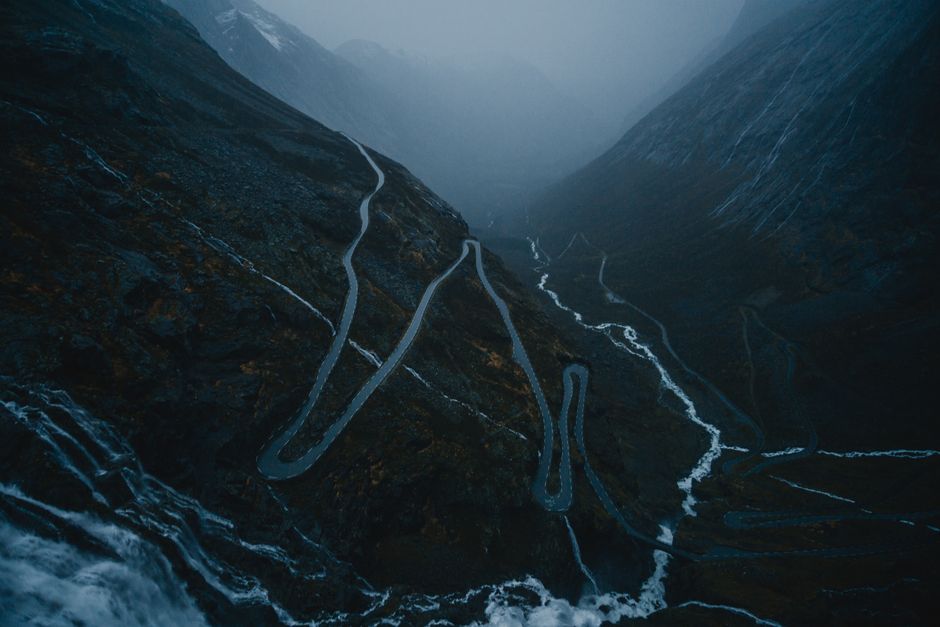
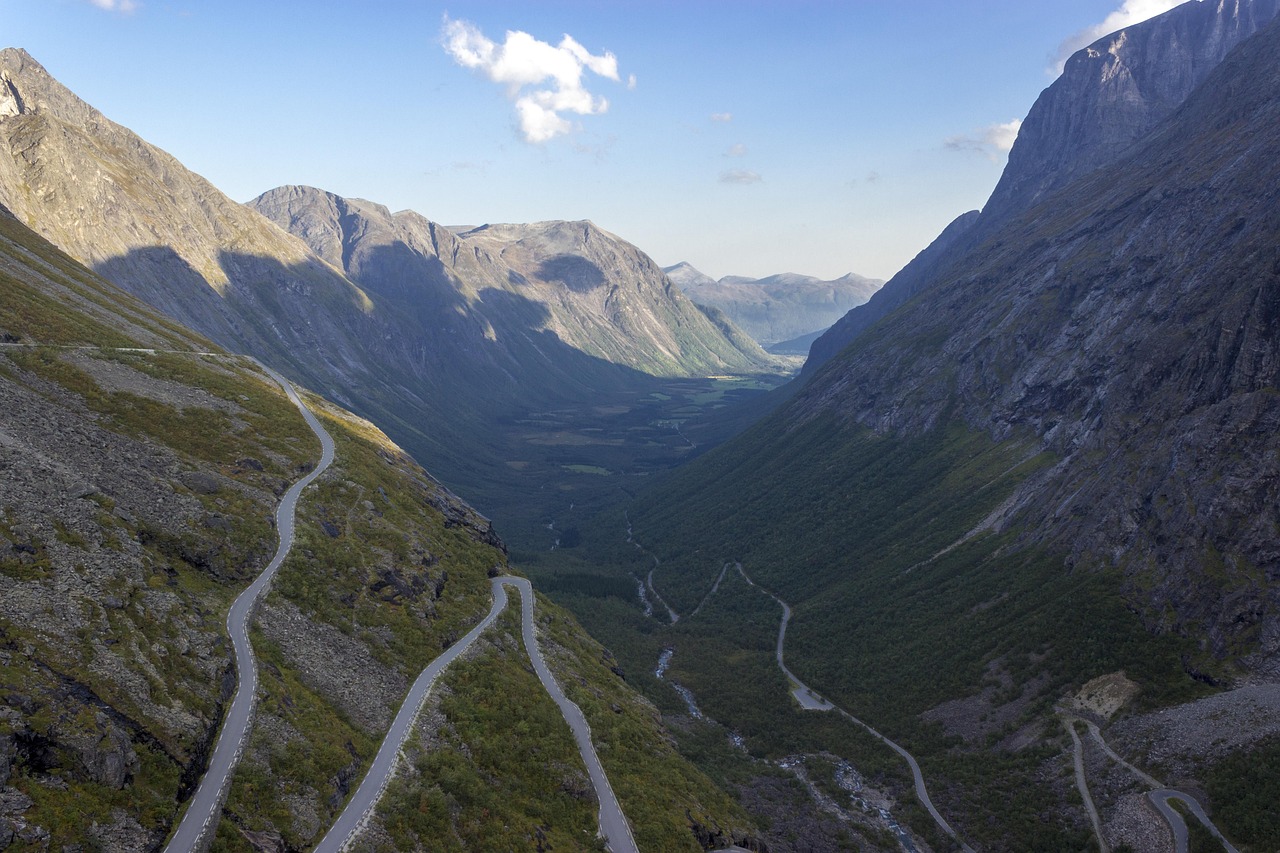
Why it is on the list: western Norway’s roads climb from the fjords to snowfields in a few hairpins. A classic route runs from Bergen to Flåm and the Sognefjord, then north to Geiranger, over the Eagle Road and Trollstigen to Åndalsnes.
Days and season: 7–10 days, with short ferry crossings in between. The scenic route Geiranger–Trollstigen is always closed in winter and is normally open from mid-May to October or November, depending on the snow, according to the regional tourist board, Fjord Norway. Late May and June bring the fullest waterfalls.
Best things to do: take a boat on the Geirangerfjord past the Seven Sisters waterfall, then drive up to the Dalsnibba viewpoint, about 1,500 m above the fjord, and down the 11 hairpin bends of the Eagle Road.
Practical note: Norway’s road tolls are automatic (AutoPASS). Rental cars carry a tag, and the rental company passes the charges on, often with a fee. Mountain roads can close at short notice, so check the Norwegian Public Roads Administration’s traffic page each morning. See our Norway travel guide.
3. Scotland’s North Coast 500
Why it is on the list: the North Coast 500 is a 516-mile (830 km) loop around the north of the Scottish Highlands, starting and ending in Inverness. It passes white-sand beaches, sea lochs, castles and some of Europe’s emptiest country.
Days and season: 5–7 days, or 7–10 with the Isle of Skye. The route’s official site calls May to September the most popular time, and late spring and early autumn the best mix of scenery and quieter roads.
Best things to do: drive the high pass to Applecross on the west coast, and stop at the beaches and cliffs of the far north-west around Durness.
Practical note: much of the route is single-track road. When a car comes toward you, pull into the nearest passing place on your left, or stop opposite one on your right; never park in them. In the UK you drive on the left. See our Scottish Highlands travel guide and United Kingdom travel guide.
4. Ireland’s Wild Atlantic Way
Why it is on the list: Ireland’s signposted coastal route runs about 2,500 km (1,550 miles) from the Inishowen Peninsula in Donegal to Kinsale in County Cork. It links sea cliffs, the limestone Burren, the bogs and lakes of Connemara, and the peninsulas of Kerry.
Days and season: 10–14 days for the whole route, or 5–7 days for the southern half from Galway to Kerry. April to early June is often the driest stretch of the year, and summer brings the longest days.
Best things to do: drive the Slea Head loop on the Dingle Peninsula, which the local tourism site recommends doing clockwise, and base yourself in Killarney for the lakes and mountains of Kerry.
Practical note: you drive on the left, and country roads are often narrow, so allow longer than the map suggests. If you pick up your car in Dublin, the M50 ring road has a barrier-free toll: with no tag or account, you must pay online, by phone or at a Payzone shop by 20:00 the next day. See our Ireland travel guide.
5. Porto and the Douro Valley, Portugal
Why it is on the list: the vineyards of the Douro climb the valley in terraces above the river, in a wine region first demarcated for port in 1756. The national road EN222 follows the south bank for more than 225 km, and its stretch between Peso da Régua and Pinhão, 27 km with 93 bends along the river, has been named one of the world’s best roads to drive.
Days and season: 3–5 days with Porto. May–June and September–October are best; the grape harvest usually runs from September into early October, and July and August are hot in the valley.
Best things to do: book a tasting at a wine estate, and watch the sunset over the river from the São Leonardo de Galafura viewpoint. To extend the trip, drive south to the Algarve, where the A22 motorway has been toll-free since 1 January 2025.
Practical note: some Portuguese motorways have electronic tolls only, with no booths. Most rental cars have a toll device; if not, follow the official Portugal Tolls instructions for foreign-registered cars. See our Douro Valley travel guide, getting around Portugal and Portugal travel guide.
6. Andalusia’s white towns, Spain
Why it is on the list: southern Spain links great cities with whitewashed mountain towns. A loop from Seville to Córdoba, Granada and Ronda, with a beach day in Cádiz or Málaga, takes in Moorish palaces, olive groves and gorges.
Days and season: 7–10 days. March to May and late September to November are best. In July and August, average highs in Seville reach about 35–36°C (95–97°F), according to Spain’s weather service, AEMET.
Best things to do: book timed tickets well ahead for the Alhambra and the Royal Alcázar of Seville, then stand on Ronda’s Puente Nuevo, above a gorge about 100 m deep.
Practical note: park outside the old centers and walk in; the lanes are narrow and several cities have low-emission zones. Spain still has some toll motorways (AP), but the AP-4 between Seville and Cádiz has been toll-free since 2020. See our Spain travel guide.
7. Provence, France
Why it is on the list: hilltop villages, vineyards, Roman monuments and, in early summer, lavender. A car is the easiest way to link Avignon, Aix-en-Provence, the Luberon villages and the canyon of the Gorges du Verdon.
Days and season: 5–7 days, or 8–10 with the Verdon and the Camargue. May–June and September are the most comfortable. For lavender, the official Routes de la Lavande says flowering starts around mid-June on the Valensole plateau, with fields in bloom from about mid-June to mid-July.
Best things to do: visit the Palais des Papes in Avignon, then drive the rim roads above the Verdon gorge and the lavender plateau at Valensole.
Practical note: most French motorways (autoroutes) have tolls. To drive into a city’s low-emission zone (ZFE), you need a Crit’Air sticker, which foreign cars can order only from the official site certificat-air.gouv.fr; ask your rental company whether the car has one. See our Provence travel guide and France travel guide.
8. The Great Dolomite Road, Italy
Why it is on the list: the Great Dolomite Road runs from Bolzano to Cortina d’Ampezzo over the Costalunga, Pordoi and Falzarego passes, through pale, jagged peaks that glow pink at sunset. Side trips lead to the mountain villages of Val Gardena and Alta Badia.
Days and season: 5–7 days. Mid-June to late September is best, when lifts and mountain huts are open. Spring and late autumn are quiet, with many hotels closed.
Best things to do: ride a lift up to a high meadow for an easy walk, and drive to the Tre Cime di Lavaredo. The toll road to the Tre Cime car park needs an online booking with your license plate; in 2026 it cost €40 for a car, valid for 12 hours, and the season runs from late May to late October.
Practical note: Italian motorways have tolls, and many historic centers are camera-controlled limited-traffic zones (ZTL); driving in without a permit brings a fine via the rental company. See our Dolomites travel guide and Italy travel guide.
9. Split to Dubrovnik, Croatia
Why it is on the list: the Dalmatian coast strings together old towns, islands and clear water. Start in Split, inside a Roman emperor’s palace, follow the Makarska Riviera, and finish in walled Dubrovnik. With an extra day, continue to Kotor in Montenegro.
Days and season: 5–7 days, including a ferry day to Hvar. May–June and September–October have warm sea and fewer crowds than July and August.
Best things to do: walk Dubrovnik’s city walls early in the morning, and stop in Ston for its long medieval walls and the oysters of Mali Ston Bay.
Practical note: since the Pelješac Bridge opened in July 2022, you can drive from Split to Dubrovnik without crossing the short stretch of Bosnia and Herzegovina at Neum. Croatia’s motorways have tolls. Montenegro is outside the EU, so carry your passport and check that your rental contract allows the crossing. See our Croatia travel guide.
10. Germany’s Romantic Road
Why it is on the list: Germany’s oldest themed route, created in 1950, runs about 460 km from Würzburg through walled medieval towns to Füssen, near King Ludwig II’s Neuschwanstein Castle.
Days and season: 4–6 days. April–June and September–October are best on weekdays. In winter, the route turns into a Christmas-market trip, with the Reiterlesmarkt in Rothenburg running from late November until just before Christmas.
Best things to do: walk the walls of Rothenburg ob der Tauber in the evening, then tour Neuschwanstein in the Bavarian Alps; visits are by guided tour only and often sell out, so book ahead.
Practical note: Germany has no motorway tolls for cars. If you cross into Austria, you need a vignette for its motorways, and from 1 December 2026 the Austrian vignette is digital only. See our Bavaria travel guide and Germany travel guide.
Car rental tips: tolls, vignettes and paperwork
- License and permit: some European countries require an International Driving Permit alongside your US license, and rental desks may ask for one. In the US, only AAA and the American Automobile Touring Alliance (AATA) are authorized by the State Department to issue them.
- Vignettes: Switzerland, Austria and Slovenia charge for motorways with a vignette. Switzerland’s costs CHF 40 and runs from 1 December to 31 January of the following year; the e-vignette is sold on the official via.admin.ch site. Austria’s is digital only from 1 December 2026. A car rented in these countries normally has one; a car from a neighboring country may not.
- Electronic tolls: Portugal, Norway and Dublin’s M50 use cameras or tags instead of booths. Ask the rental company how tolls are charged.
- Toll booths: France, Italy, Spain and Croatia have classic toll motorways; cards are widely accepted.
- City rules: watch for low-emission zones in France and Spain and camera-controlled ZTL zones in Italian historic centers. The easiest rule: park outside the old town and walk in.
- Crossing borders and one-way rentals: tell the rental company in advance if you plan to cross a border, especially outside the EU, and expect a fee for dropping the car in another country.
Plan your road trip
Pick a route and our free trip planner builds a day-by-day plan for your dates and budget. Check the usual weather on your dates with the Destination weather tool, and use the packing list tool to pack for sun and cold mountain passes in one bag.
Frequently asked questions
What is the most scenic road trip in Europe?
For pure scenery, Iceland’s Ring Road and western Norway’s fjord roads are hard to beat. For scenery with towns, food and wine, choose Provence, the Douro Valley or the Dolomites.
How many days do you need for a road trip in Europe?
Five to seven days covers most single-region trips, such as Provence, the Dolomites or the North Coast 500. Iceland’s Ring Road and the whole Wild Atlantic Way need 10–14 days. Keep driving to three or four hours a day so you have time to stop.
When is the best time for a road trip in Europe?
Late spring to early autumn. Northern and mountain routes are best from about June to September, when high roads are open; Norway’s Trollstigen is normally open from mid-May to October or November. Andalusia and Provence are most comfortable in spring and autumn.
Do I need a vignette to drive in Europe?
Only in Switzerland, Austria and Slovenia, for their motorways. France, Italy, Spain, Portugal and Croatia charge tolls instead, and Germany has no motorway tolls for cars.
Can Americans drive in Europe with a US license?
Often yes for short visits, but some countries also require an International Driving Permit. Get it from AAA or the American Automobile Touring Alliance, the only two issuers authorized by the State Department. Remember that you drive on the left in the UK and Ireland.