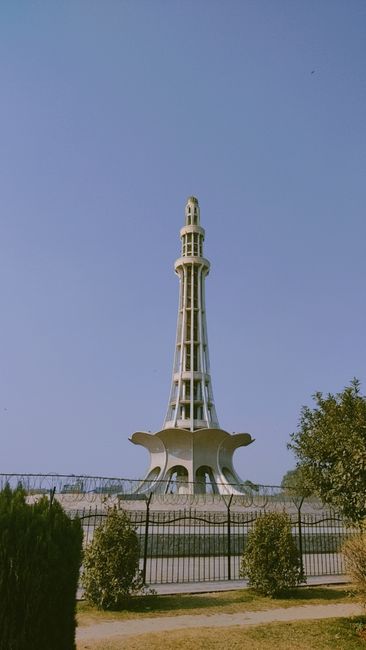
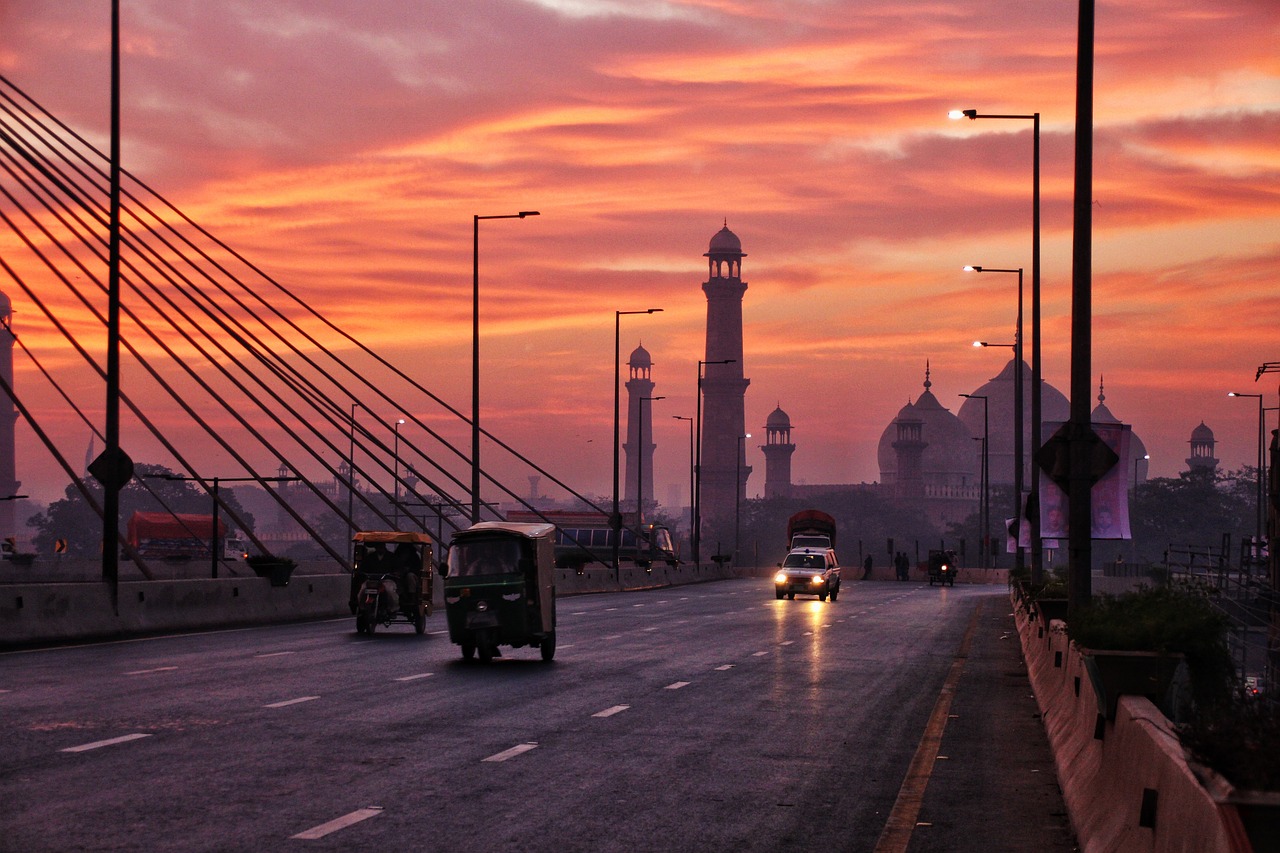
Pakistan stretches from the Arabian Sea to the highest mountain ranges on Earth, where the Karakoram, the Himalaya and the Hindu Kush meet. In the north, the Karakoram Highway climbs past glaciers, apricot orchards and fortified villages to the Hunza Valley and the Chinese border, beneath peaks such as K2 and Nanga Parbat; five of the world’s fourteen mountains above 8,000 m (26,250 ft) stand in Pakistan. In the plains, Lahore is one of South Asia’s great historic cities, with the Badshahi Mosque, the Lahore Fort, the walled city and some of the best food in the region, while Islamabad, the green, planned capital beneath the Margalla Hills, is the gateway to the north and to the Buddhist ruins of Taxila. Pakistan also holds the Indus Valley city of Mohenjo-daro, Mughal gardens, Sufi shrines with weekly qawwali music and famously generous hospitality. Travel needs planning: you need a visa arranged online in advance, several regions require permission or are closed to foreigners, security incidents occur in the major cities and the northwest, and in the mountains, the monsoon from late June to September triggers floods and landslides that block the roads. The best seasons are October to March for the cities and May to October for the north.
Right now in Pakistan
- Wed 20–28°C 69–83°F Clear
- Thu 22–29°C 71–84°F Clear
- Fri 22–28°C 71–82°F 5 mm Mostly clear
Weather: MET Norway (CC BY 4.0) · Air quality: OpenAQ
Multi-day tours of Pakistan
Multi-day tours from local operators. You check dates and book on Viator, our partner; we may earn a commission at no extra cost to you. How we earn money
Pakistan at a glance
The Islamic Republic of Pakistan has a population of about 241 million, according to its 2023 census, the fifth-largest in the world. It covers about 796,000 km² (307,000 sq miles), not counting Gilgit-Baltistan and Azad Jammu and Kashmir, which Pakistan administers; with them, it is a little larger than Texas. It has four provinces, Punjab, Sindh, Khyber Pakhtunkhwa and Balochistan, plus the Islamabad Capital Territory, Gilgit-Baltistan and Azad Jammu and Kashmir. The capital is Islamabad, and the largest city is Karachi, on the coast. Urdu and English are the official languages, with Punjabi, Pashto, Sindhi, Saraiki, Balochi and many mountain languages spoken regionally; about 96% of people are Muslim.
Pakistan uses Pakistan Standard Time (UTC+5), with no daylight saving time, half an hour behind India. Electricity is 230 V, and sockets take round two-pin (type C), round three-pin (type D) and British-style (type G) plugs. The currency is the Pakistani rupee (PKR).
A short history
The Indus Valley civilization flourished at Mohenjo-daro and Harappa from about 2600 BCE. Later, the region was the heart of Gandhara, a center of Buddhist art around Taxila and Peshawar, and from the 16th century part of the Mughal Empire, whose emperors built many of Lahore’s monuments. Britain ruled it as part of British India from the mid-19th century. At Partition, on August 14, 1947, Pakistan became independent as a homeland for South Asia’s Muslims, in two wings; East Pakistan became Bangladesh in 1971. Islamabad replaced Karachi as the capital in the 1960s. The Karakoram Highway to China was completed in 1979, and tourism to the north has grown strongly in recent years.
Pakistan’s regions
- Punjab: Lahore, the Mughal and Sikh heritage of the plains, Rohtas Fort, the Khewra Salt Mine and the Sikh holy sites of Nankana Sahib and Kartarpur.
- Islamabad and the Potohar plateau: the capital, its twin city Rawalpindi, Taxila and the hill station of Murree.
- Gilgit-Baltistan: the Karakoram and western Himalaya, with Hunza, Nagar, Gilgit, Skardu, Deosai National Park, Fairy Meadows and K2 base camp.
- Khyber Pakhtunkhwa: Peshawar, the Swat Valley, Chitral and the Kalash valleys; access for foreigners is restricted in much of the province.
- Sindh: Karachi, the Indus Valley site of Mohenjo-daro, the Makli necropolis at Thatta and the Arabian Sea coast.
- Balochistan: a vast desert province with a long coast, where foreigners need special permission and travel is very limited.
Regions
Where to go: mountains, Mughal cities and the Indus
A first trip usually combines a city or two with the north, via Islamabad. See our guides to each place:
- Lahore: the Badshahi Mosque, the Lahore Fort, the walled city with the Wazir Khan Mosque, the Shalimar Gardens, food streets and the Wagah border ceremony.
- Islamabad: the Faisal Mosque, the Pakistan Monument, Margalla Hills trails, Saidpur Village and day trips to Taxila and Rohtas Fort.
- Hunza Valley: Karimabad’s Baltit and Altit forts, views of Rakaposhi and Ultar Sar, Attabad Lake, the Passu Cones, suspension bridges and the Khunjerab Pass on the Chinese border.
Beyond Hunza, Skardu, in Baltistan, reached by flights from Islamabad, is the base for the high plateau of Deosai National Park, the lakes of Shangrila and Upper Kachura, and expeditions to K2 and the Baltoro Glacier. Fairy Meadows, reached by jeep and on foot from the Karakoram Highway near Raikot Bridge, has close views of Nanga Parbat (8,126 m / 26,660 ft). In Sindh, Mohenjo-daro, one of the largest cities of the Indus Valley civilization, and the vast Makli Necropolis near Thatta are UNESCO World Heritage Sites, reached from Karachi.
Karachi, Pakistan’s largest city and economic capital, has colonial architecture, the white marble Mazar-e-Quaid, the mausoleum of founder Muhammad Ali Jinnah, the Clifton beaches and excellent food, but crime and periodic violence mean visits need care. The Kalash valleys near Chitral and the Swat Valley, once popular, lie in areas of Khyber Pakhtunkhwa that require permission and are affected by security restrictions; check the current situation before planning.
In Punjab, Multan, the “city of saints”, has the blue-tiled tombs of Sufi saints such as Shah Rukn-e-Alam, and Bahawalpur has the Noor Mahal palace and the desert fort of Derawar on the edge of the Cholistan Desert; in the south of the province, ask locally about security before you go. Closer to Islamabad, the hill stations of Murree and the Galyat, at about 2,300 m (7,500 ft), offer pine forests and walks, and are crowded with domestic tourists on summer weekends. The Khewra Salt Mine, one of the world’s oldest and largest, has illuminated chambers and a mosque built of salt bricks.
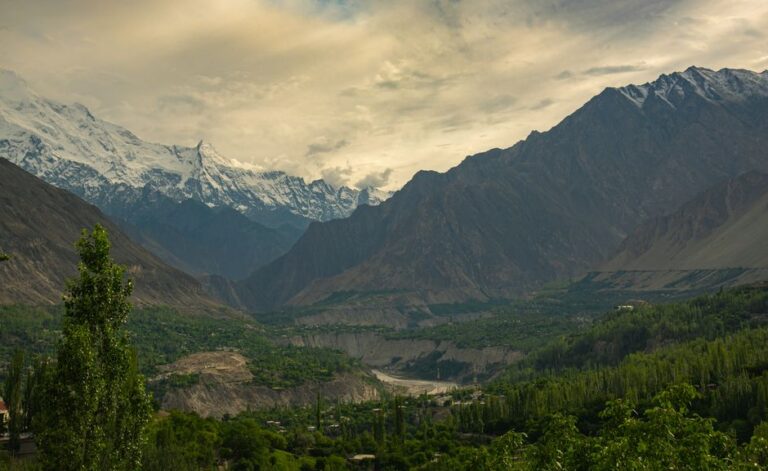
Hunza Valley Travel Guide
Plan a trip to the Hunza Valley: registration in Gilgit-Baltistan, Karimabad, Nagar, Attabad Lake and Gojal and where to stay, Baltit and Altit forts,…
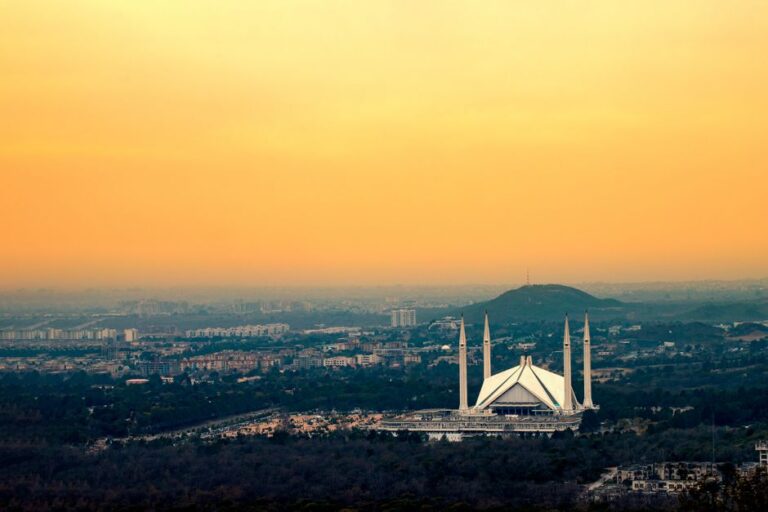
Islamabad Travel Guide
Plan a trip to Islamabad: F-6, F-7, the Blue Area and Rawalpindi and where to stay, the Faisal Mosque, Pakistan Monument, Lok Virsa, Daman-e-Koh…
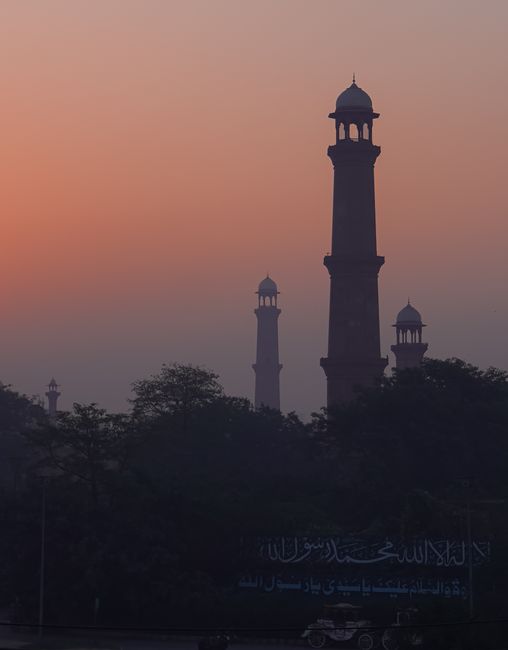
Lahore Travel Guide
Plan a trip to Lahore: the Walled City, Mall Road and Gulberg and where to stay, the Badshahi Mosque, Lahore Fort and Sheesh Mahal,…
Best time to visit Pakistan
Pakistan’s climate varies hugely with altitude. In the plains of Punjab and Sindh, October to March is the best time, with warm, sunny days, cool nights and occasional winter fog, while May and June bring extreme heat, often above 40 °C (104 °F), and the monsoon, from late June to September, brings humid heat and heavy rain to Lahore and Islamabad. In the mountains of the north, the season runs from May to October: April brings apricot and cherry blossom to Hunza, June to August is the trekking and climbing season, when the high passes are open, and late October and early November bring golden autumn colors. Winter in the north is very cold, with snow closing the high roads.
The table shows rounded averages from the 1991–2020 climate normals of the Pakistan Meteorological Department, as submitted to the World Meteorological Organization (WMO), for the main cities. No normals for Gilgit-Baltistan are included in that dataset; see our Hunza Valley guide for the mountain seasons.
| Area (station) | January high / low | June high / low | Rain a year | Wettest months |
|---|---|---|---|---|
| Lahore | 18 °C (65 °F) / 8 °C (46 °F) | 39 °C (102 °F) / 27 °C (81 °F) | about 670 mm (27 in) | July and August |
| Islamabad | 18 °C (64 °F) / 4 °C (38 °F) | 38 °C (101 °F) / 25 °C (76 °F) | about 1,260 mm (50 in) | July and August |
| Karachi | 26 °C (79 °F) / 12 °C (54 °F) | 36 °C (96 °F) / 29 °C (83 °F) | about 190 mm (7 in) | July and August |
Pakistan month by month
| Month | Weather | Highlights | Crowds and prices |
|---|---|---|---|
| January | Cool, foggy mornings in the plains; deep winter in the north | Lahore and Islamabad sightseeing; skiing at Malam Jabba and Naltar | Moderate |
| February | Mild in the plains; cold in the north | Spring arrives in Lahore | Moderate |
| March | Pleasant in the plains | Good for Lahore, Taxila and Mohenjo-daro | Moderate |
| April | Warming fast | Apricot and cherry blossom in Hunza | Rising in the north |
| May | Very hot in the plains; mild in the north | Northern season opens; Khunjerab Pass usually reopens | High in the north |
| June | Extreme heat in the plains | Trekking; Deosai’s wildflowers; Babusar Pass usually opens | High in the north |
| July | Monsoon in the plains | Climbing and trekking; landslide risk on mountain roads | High; domestic summer holidays |
| August | Monsoon; floods possible | Independence Day on August 14 | High |
| September | Monsoon ending | Good trekking; harvests in Hunza | Moderate |
| October | Dry and warm in the plains; crisp in the north | Autumn colors in Hunza and Skardu late in the month | Moderate |
| November | Cool in the plains; smog in Punjab | Golden poplars in early November; northern season ends | Low in the north |
| December | Cool and foggy in the plains | City sightseeing; snow in the north | Low |
Festivals and holidays
- Ramadan and Eid: the dates move about 11 days earlier each year; during Ramadan, eating, drinking and smoking in public during daylight are not allowed, and many restaurants close until sunset. Eid al-Fitr and Eid al-Adha are national holidays, when transport is packed and cities empty.
- Basant: the spring kite festival of Lahore, banned for years for safety reasons; check whether it is permitted in the year you travel.
- Independence Day: August 14, with flags, fireworks and celebrations.
- Urs festivals: anniversaries of Sufi saints, celebrated at shrines with music and devotion, such as Data Ganj Bakhsh in Lahore.
- Shandur Polo Festival: freestyle polo on one of the world’s highest polo grounds, between Gilgit and Chitral, usually in early July.
Monsoon, floods and landslides
The monsoon, usually from late June to early October, can cause flooding in every province and landslides in the mountains, damaging roads and bridges; the 2022 floods affected a third of the country, and floods also hit the north in 2025. In Gilgit-Baltistan, landslides frequently block the Karakoram Highway and other mountain roads, sometimes for days, and glacial lake outbursts threaten some valleys. Follow forecasts from the Pakistan Meteorological Department and alerts from the National Disaster Management Authority, travel in daylight, and leave spare days in your plans. In winter, smog shrouds Lahore and much of Punjab from about November to January, with very poor air quality.
How long to stay: sample itineraries
- 7 days: Islamabad (2 nights), fly to Gilgit and continue to Hunza (4 nights), return by air.
- 10 days: Lahore (2), Islamabad (2) and Hunza (5), with a day trip to the Khunjerab Pass.
- 14 days: add Skardu (3), flying from Islamabad, or travel overland via the Babusar Pass and Fairy Meadows in summer.
- Three weeks: add Karachi and Mohenjo-daro, or a trek in the Karakoram with a licensed operator.
Entry, money and costs
Visas and the e-visa (last reviewed October 2026)
Almost all visitors need a visa arranged online before travel through the Pakistan Online Visa System of the Ministry of Interior, at visa.nadra.gov.pk. According to the Directorate General of Immigration and Passports, citizens of 175 countries, including the United States, the United Kingdom, Canada, Australia, most of Europe, China and Japan, can apply for an e-visa; a tourist visa is normally valid for three months, with two entries, and processing takes 7–10 working days. Visa fees are set on a reciprocal basis and depend on your nationality, and US citizens can be granted five-year multiple-entry visas with stays of up to three months. In August 2024, the government announced free tourist visas within 24–48 hours for citizens of 126 countries, known as visa prior to arrival, but this option has not been available on the portal since January 1, 2026, according to visa specialists and media reports, and no official statement has been issued; check the portal for the options and fees shown for your nationality when you apply.
Tourist visas can be extended to six months in total at regional passport offices, and in Gilgit-Baltistan by the Deputy Commissioners of Gilgit and Skardu. Your passport must be valid for at least six months from the date of application. Make sure your passport is stamped on entry, since leaving is difficult without the stamp, and overstaying brings surcharges. Indian citizens apply under separate rules.
Permission, NOCs and registration
Foreigners need advance permission from local or federal authorities to travel in parts of Khyber Pakhtunkhwa, Balochistan and several districts of Azad Jammu and Kashmir, and may need a No Objection Certificate (NOC) from the Ministry of Interior. Foreigners may not go within 10 miles (16 km) of the Line of Control, the Afghan border or the Chinese border except at official crossings, and areas around military installations, nuclear plants and air and naval bases are prohibited. All foreigners must register with the local authorities in Gilgit-Baltistan, usually at police checkpoints on arrival, and climbing peaks above 6,000 m (19,700 ft) and some treks need permits, which can take up to two months to arrange through a licensed operator. Police escorts are sometimes assigned to foreigners in higher-risk areas.
Customs and rules to know
Importing alcohol or pork is illegal. Non-Muslim foreigners can drink only with a permit, in licensed hotel bars and permit rooms, and public drinking is an offense. Blasphemy is a serious criminal offense with severe penalties, and accusations can lead to violence; be careful in any discussion of religion, including online. Do not photograph military sites, airports, bridges, dams or from aircraft, and ask before photographing people, especially women. Carry your passport or a copy at all times.
Money and cards
The currency is the rupee (PKR). In early October 2026, the rate was about 277 rupees to the US dollar; prices on this site use about 277. ATMs are common in cities and towns, though less so in the mountains, where some places have only one or two machines and power cuts are frequent; carry cash for Hunza and Skardu. Cards are accepted in upscale hotels, restaurants and malls in the cities, but card fraud is common, so use ATMs inside banks. US dollars, euros and pounds are easy to change in cities.
Tipping
Tipping is customary: leave about 10% in restaurants unless service is included, round up taxi fares, and tip drivers, guides and porters at the end of a trip.
What a trip costs
Prices are approximate, for October 2026, converted at about 277 rupees to the US dollar.
| Item | Typical cost |
|---|---|
| Plate of biryani or nihari at a local restaurant | 400–900 PKR (about US$1.45–3.25) |
| Dinner in a mid-range restaurant | 2,500–5,000 PKR (about US$9–18) per person |
| Cup of chai | 80–200 PKR (about US$0.30–0.70) |
| Lahore Fort entry for foreigners | about 1,000 PKR (about US$3.60) |
| Ride-hailing car across Lahore or Islamabad | 500–1,200 PKR (about US$1.80–4.30) |
| Coach from Lahore to Islamabad | 2,500–4,000 PKR (about US$9–14) |
| Flight Islamabad–Gilgit or Skardu, one way | 15,000–30,000 PKR (about US$54–108) |
| Mid-range hotel double, per night | 10,000–25,000 PKR (about US$36–90) |
A comfortable mid-range trip costs roughly 20,000–35,000 PKR (about US$72–126) per person per day, sharing a double room, plus internal flights or a car with driver for the north.
Where to stay
Islamabad and Lahore have international chain hotels with strong security, mid-range business hotels and a growing number of boutique guesthouses; hotels are often in walled compounds with bag checks at the gate. In Hunza, Karimabad has family-run guesthouses and hotels with terraces facing Rakaposhi, while Gulmit, Passu and Attabad Lake have simple lodges and a few upscale hotels; Skardu has everything from riverside resorts to basic inns. In the north, many places close from about November to March, heating and hot water can be limited, and power cuts are common, so ask about generators or solar power. Rooms fill in July and August, when Pakistanis escape the heat of the plains, and during Eid holidays.
Guides, drivers and tours
Many visitors travel with a licensed tour operator, which arranges permits, police registration, drivers and hotels, and knows which roads are open after landslides. Hiring a car with an experienced local driver for the north is the safest way to travel the mountain roads and can be arranged in Islamabad, Gilgit or Karimabad. Trekking and mountaineering need a licensed operator and, for many routes, a registered guide; porters and cooks are hired locally.
Getting there and getting around
Airports
The main international airports are Islamabad (ISB), Lahore (LHE) and Karachi (KHI), with flights from the Gulf hubs, Istanbul, London and other European cities, China and Southeast Asia, plus smaller international airports at Peshawar, Multan, Sialkot and other cities. See our Turkey and China guides.
Flights to the north
Pakistan International Airlines flies small aircraft from Islamabad to Gilgit (about 1 hour) and Skardu, among the most scenic flights in the world, passing Nanga Parbat. Flights depend on clear weather and are frequently delayed or cancelled, so build in spare days and a road alternative.
The Karakoram Highway and other roads
The Karakoram Highway (N35) runs from Hasan Abdal, near Islamabad, about 1,300 km (800 miles) to the Khunjerab Pass on the Chinese border, following the Indus and Hunza rivers. The section from Mansehra through Besham, Dasu and Chilas has a history of security incidents and frequent landslides, and journeys from Islamabad to Gilgit along it take 14–18 hours or more; in summer, many travelers use the alternative N15 via the Kaghan Valley and the Babusar Pass (about 4,170 m / 13,700 ft), usually open from about June to October, before rejoining the highway at Chilas. Never drive these roads at night, and use experienced local drivers. Motorways link Islamabad with Lahore (the M2) and Peshawar, and comfortable intercity coaches run on them.
Trains, coaches and ride-hailing
Pakistan Railways links Karachi, Lahore, Rawalpindi and Peshawar, but trains have been targeted by attacks in some provinces, including the hijacking of the Jaffar Express in Balochistan in March 2025, and many visitors prefer coaches or flights. In cities, use ride-hailing apps such as Careem, inDrive or Yango, or taxis booked through your hotel, rather than street taxis.
Crossing borders
The Wagah crossing with India, between Lahore and Amritsar, is currently closed to travelers, although the daily flag-lowering ceremony still takes place; see our Amritsar guide. The Khunjerab Pass crossing with China, on the Karakoram Highway, is open to foreign tourists seasonally, usually from about April to November, and can close at short notice because of snow; you need a Chinese visa or visa-free eligibility. Borders with Afghanistan and Iran are in high-risk areas and can close without warning.
National parks and World Heritage Sites
Pakistan has six UNESCO World Heritage Sites:
- Archaeological Ruins at Mohenjo-daro: a planned Indus Valley city of about 2500 BCE, in Sindh.
- Taxila: Gandharan Buddhist monasteries and three successive cities near Islamabad. See our Islamabad guide.
- Buddhist Ruins of Takht-i-Bahi and Neighboring City Remains at Sahr-i-Bahlol: a hilltop monastery near Mardan.
- Fort and Shalimar Gardens in Lahore: Mughal masterpieces. See our Lahore guide.
- Historical Monuments at Makli, Thatta: one of the world’s largest necropolises.
- Rohtas Fort: a 16th-century fortress built by Sher Shah Suri.
The north has Khunjerab, Deosai, Central Karakoram and Margalla Hills national parks, among others, with snow leopards, Marco Polo sheep, ibex and Himalayan brown bears. See our hiking and city sightseeing guides.
Culture, food and everyday etiquette
Food
Pakistani food is rich, meaty and generous. Try biryani, especially Karachi’s spicy version; nihari, slow-cooked beef stew eaten for breakfast; haleem; karahi, meat cooked in a wok with tomatoes and chilies; seekh kebabs, chapli kebabs from the northwest and tikka from the grill; and halwa puri with chickpeas for a weekend breakfast. Flatbreads, from naan to paratha, accompany everything, and lassi and sweet milky chai are everywhere. In Hunza, try apricot dishes, walnut cake and chapshuro, a meat-filled bread. Street food is generally safe where it is cooked fresh; drink bottled water.
A few words of Urdu
English is widely spoken in cities, hotels and among younger people, but a few words of Urdu go a long way: assalam-o-alaikum (hello, the standard greeting), shukriya (thank you), ji haan (yes), nahin (no), kitne ka hai? (how much?), bohat acha (very good) and khuda hafiz (goodbye).
Responsible travel
Use licensed tour operators and guides, especially in the north, and support local guesthouses and women’s craft cooperatives in Hunza. Carry out all your rubbish from trails and campsites, since waste is a growing problem in the mountains. Ask before photographing people, never photograph women without permission, and respect local customs in conservative areas.
Etiquette
Dress modestly: men and women should cover shoulders and legs in public, and women usually wear loose clothing and carry a scarf to cover their heads in mosques, shrines and rural areas. Remove shoes before entering mosques and homes. Use your right hand for eating and passing things. Hospitality is a point of honor, and you will often be offered tea; accept graciously. Public displays of affection are frowned upon, and conservative dress is especially important during Ramadan.
Safety, health and connectivity
These are the current conditions to know before you travel:
- Security: there is a high threat of terrorism, mainly directed at state security forces, especially in Khyber Pakhtunkhwa and Balochistan, but attacks have also struck Karachi, Islamabad and Lahore; a suicide bombing at a mosque in Islamabad on February 6, 2026, killed at least 36 people. Be cautious at crowded religious gatherings, rallies and public events, keep a low profile and follow local news.
- Restricted areas: see “Permission, NOCs and registration” above. Most of Balochistan, much of Khyber Pakhtunkhwa (including Peshawar, Swat and the former tribal areas), northern Sindh and the Line of Control are restricted or affected by violence; the N45 between Mardan and Chitral has had serious incidents.
- The Karakoram Highway: the section between Mansehra and Chilas has a history of attacks on travelers, and every section north of Battagram has had landslides; travel only in daylight, in good weather, with an experienced driver.
- Monsoon, landslides and floods: from late June to early October; see the seasonal section above. Take extreme care crossing swollen rivers.
- Altitude: Karimabad is at about 2,500 m (8,200 ft), and the Khunjerab Pass at about 4,700 m (15,400 ft); ascend gradually and watch for altitude sickness.
- Crime: street crime, card fraud and scams occur in cities; be careful on foot at night.
- Health: dengue occurs after the monsoon, and polio vaccination may be required on departure for long stays; drink bottled water, and have insurance that covers mountain rescue and evacuation.
- Women travelers: women traveling alone often attract attention and occasional harassment; dress conservatively, sit with families in buses and restaurants, where there are often separate family sections, and use hotel-booked transport at night.
- Emergencies: call 15 for police, 1122 for rescue and ambulance (in most provinces) and 16 for fire.
Mobile coverage is good in cities and along main roads, patchier in the mountains. Buy a SIM from Jazz, Zong, Telenor or Ufone with your passport, which is registered biometrically; in Gilgit-Baltistan, the local operator SCOM often has the best coverage. Mobile data and the internet can be cut during protests.
Things to do: peaks, forts, mosques and food
Watch sunrise turn Rakaposhi pink from the Eagle’s Nest above Karimabad, walk across the Hussaini suspension bridge, drive to the Khunjerab Pass, explore the Badshahi Mosque and the Lahore Fort, eat your way along Lahore’s food streets, watch the flag-lowering ceremony at Wagah, climb the Margalla Hills above Islamabad and see the Gandharan sculptures of Taxila. See our hiking, city sightseeing and cycling guides. Pakistan pairs with China over the Khunjerab Pass, and with Nepal and India for a longer trip in South Asia.
Pakistan travel FAQ
Do I need a visa to visit Pakistan?
Almost all visitors do. Apply online through the Pakistan Online Visa System (visa.nadra.gov.pk) before you travel; citizens of 175 countries can apply for an e-visa.
Is the Pakistan tourist visa free?
Fees depend on your nationality and are set on a reciprocal basis. Free 24–48-hour tourist visas for 126 countries were introduced in 2024, but that option has not been shown on the portal since January 2026; check the fee for your nationality when you apply.
How long does a Pakistan e-visa take?
Officially 7–10 working days; apply at least two to three weeks before you travel.
Do I need an NOC to visit Hunza?
No NOC is normally needed for Hunza, Gilgit or Skardu, but all foreigners must register with the local authorities in Gilgit-Baltistan, and some treks and peaks need permits.
How do I get to Hunza from Islamabad?
Fly to Gilgit in about an hour and drive about 2–3 hours to Karimabad, or travel by road via the Karakoram Highway or, in summer, the Babusar Pass, in about 14–18 hours.
Is the Karakoram Highway open all year?
The highway to Hunza is kept open except when landslides block it, but the Khunjerab Pass usually closes from about December to March or April, and the Babusar Pass from about November to May or June.
What is the best time to visit Pakistan?
October to March for Lahore, Islamabad and Karachi; May to October for the north, with blossom in April and autumn colors in late October.
Can I cross from Pakistan to India at Wagah?
Not currently: the crossing is closed to travelers, although the daily border ceremony still takes place.
Can foreigners drink alcohol in Pakistan?
Non-Muslim foreigners can drink with a permit in licensed hotel bars; importing alcohol is illegal, and public drinking is an offense.
What should women wear in Pakistan?
Loose clothing that covers shoulders and legs, with a scarf to cover the head in mosques, shrines and rural areas.
What currency is used in Pakistan?
The Pakistani rupee, about 277 to the US dollar in October 2026. Carry cash for the mountains, where ATMs are few.
Is Pakistan safe for tourists?
Many visitors travel to Lahore, Islamabad and Gilgit-Baltistan, but there is a high threat of terrorism, much of the northwest and southwest is restricted, and monsoon landslides are a real hazard. Plan with licensed operators and follow local news.
How many days do I need in Pakistan?
A week for Islamabad and Hunza; 10–14 days to add Lahore and Skardu.
Sources and last review
Researched and last reviewed on 5 October 2026. E-visa eligibility for 175 countries, tourist visa validity and entries, processing times, reciprocal fees, US five-year visas, extensions and overstay surcharges: the Directorate General of Immigration and Passports (dgip.gov.pk); climate normals: the Pakistan Meteorological Department via the World Meteorological Organization’s 1991–2020 normals. Permission and NOC rules, distance limits near borders, registration in Gilgit-Baltistan, trekking permits, the Karakoram Highway, the Babusar Pass, flights to Gilgit and Skardu, the Wagah and Khunjerab crossings, alcohol and pork, blasphemy, photography, the February 2026 Islamabad attack, the 2025 train hijacking, monsoon and landslide risks are from the UK government’s factual entry and safety pages. The suspension of free visas from January 2026 is from visa news reports, as the official portal could not be read; the exchange rate is a cross rate from the Central Bank of Myanmar’s published rates; population, area, history, UNESCO sites, road distances, journey times, festivals, emergency numbers and typical prices are general references or estimates, flagged for checking. Rules change, so check official sites before you go.
Plan your trip
Partner links: TravelerCenter may earn a commission if you book, at no extra cost to you.
🇵🇰 Useful Urdu phrases for Pakistan
All 38 Urdu phrases: restaurant, hotel, emergencies, romance (printable) →