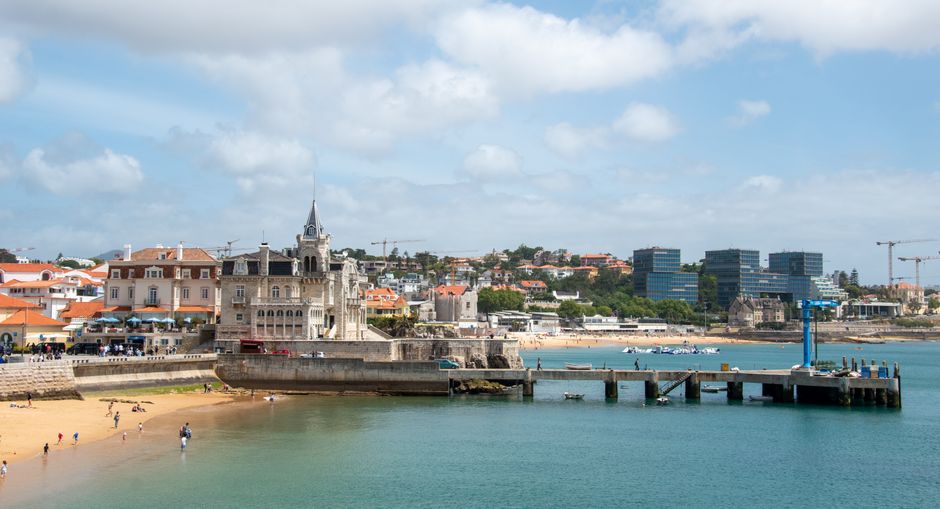
Cascais is a seaside town at the mouth of the Tagus estuary, 40 minutes west of Lisbon by train, where the coast turns from calm bays to wild Atlantic cliffs. A fishing village that became the summer retreat of Portugal’s kings in the 1870s, it still has fishing boats on its little beach, along with a marina, a 16th-century citadel, mansions turned into museums and a seafront promenade to the old resort of Estoril. West of town, the coast road passes the Boca do Inferno sea cave and runs on to Guincho, a long, windswept beach below the Sintra hills that is loved by surfers and kitesurfers. Cascais makes an easy day trip from Lisbon, or a relaxed base for the coast and Sintra. Give it one day for the town, or three days to add the beaches, the cycle path to Guincho and Cabo da Roca.
Right now in Cascais
- Wed 17–22°C 63–72°F Mostly clear
- Thu 16–26°C 62–78°F Mostly clear
- Fri 18–26°C 65–79°F Clear
Weather: MET Norway (CC BY 4.0) · Sea temperature: NOAA CoastWatch · Air quality: OpenAQ · Rates: ECB
Top tours in Cascais
See all tours for Cascais →
From local operators, with prices and reviews; you check availability and book on Viator, our partner. We may earn a commission at no extra cost to you. How we earn money
Cascais at a glance
- Best for: an easy beach day from Lisbon, seafood, museums, cycling and walking by the sea, surfing and a base for Sintra.
- How long: a day trip for the town, the museums and Boca do Inferno; 2–3 days to add Guincho, Cabo da Roca, Estoril and Sintra.
- Best time: June to September for swimming; May, June and September for fewer crowds. Summers are cooler and breezier than in Lisbon, and the sea stays cool all year.
- Getting in: CP trains from Lisbon’s Cais do Sodré station take about 40 minutes, every 20 minutes off-peak on weekdays; as of October 2026, a return ticket cost €5.10.
- Getting around: on foot in town, by bike or bus along the coast; Carris Metropolitana bus 1624 links Cascais with Cabo da Roca and Sintra.
- Before you go: entry rules, money and general safety are in our Portugal travel guide.
Cascais, area by area
Cascais sits on a small bay facing south, sheltered from the north winds that blow along the open Atlantic coast just to the west. The town centre, the marina and the beaches are all within a 15-minute walk of the railway station.
The old town and the bay
Around the station and the fishermen’s beach, Praia da Ribeira, the old town is a maze of whitewashed lanes, cobbled squares with wave-patterned pavements, seafood restaurants and shops. The town hall square and the main church, with its blue-and-white tiles and gilded altars, are a short walk away. Best for: first visits, eating out and short stays without a car.
The Citadel and the marina
South-west of the bay, the walls of the 16th- and 17th-century Citadel enclose a former royal palace, now the Palace of the Presidency, and a small art district with galleries, a hotel and cafés. The marina lies just beyond, with restaurants and boat trips. Best for: art, sunset drinks and waterfront dining.
The Museum Quarter and the coast road
West of the Citadel, the Museum Quarter (Bairro dos Museus) groups the Paula Rego museum, the Cultural Centre, the Count of Castro Guimarães museum and the Santa Marta lighthouse in old villas and gardens. The coast road continues past Boca do Inferno to Guincho. Best for: culture and quiet stays among villas and pines.
Estoril
East of Cascais, Estoril is the older resort of grand hotels, the Casino Estoril, palm-lined gardens and Tamariz beach, linked to Cascais by a seafront promenade about 3 km long. Best for: walks by the sea, golf and classic hotels.
Top things to see in Cascais
Prices and hours below were checked on official sites in October 2026. They change, so check before you go.
The beaches of the bay
The town has several small, sandy beaches within a few minutes’ walk of the station: Praia da Ribeira, the fishermen’s beach in the centre; Praia da Rainha, a tiny cove below the cliffs where the queen once bathed; and Praia da Conceição and Praia da Duquesa, side by side towards Estoril. The water is calm and clear but cold, usually below 20 °C even in summer. In July and August they fill up fast; go early, or walk the promenade to the longer beaches at Estoril and São João. Lifeguards are on duty during the official summer bathing season. See our beaches guide.
The Paula Rego House of Stories and the Museum Quarter
The Casa das Histórias Paula Rego, a museum in red concrete with two pyramid towers designed by the architect Eduardo Souto de Moura, shows paintings and prints by Paula Rego, one of Portugal’s best-known artists, and works by her husband, Victor Willing. As of October 2026, the Museum Quarter’s official price list showed €5 for each of its main venues (the Paula Rego museum, the Cultural Centre and the Citadel palace gallery), €7.50 for a one-day pass to all of them, and free entry for visitors aged 18 and under; over-65s pay half. A combined ticket sold only at CP ticket offices on the Cascais line, €9, adds a return train from Lisbon’s Cais do Sodré to the four museum venues. The municipality lists the museum’s hours as 10:00–19:00 from April to October and 10:00–18:00 from November to March; check closing days before you go.
Nearby, the Museu Condes de Castro Guimarães, a fairy-tale mansion with a tower above a small cove, holds furniture, azulejos and a library, and its park, Parque Marechal Carmona, has peacocks, ponds and shady paths. The Santa Marta Lighthouse Museum, in a striped blue-and-white lighthouse by the marina, tells the story of Portugal’s lighthouses.
The Citadel and the Palace of the Presidency
Cascais’ Citadel was built from the 16th century to guard the entrance to the Tagus. Inside, the former royal palace, where King Luís I spent his summers, is now an official residence of Portugal’s President; it can be seen only on a guided tour booked in advance. The rest of the Citadel is open to stroll, with galleries and cafés in the old barracks and views over the marina.
Boca do Inferno
About 2 km west of the centre along the coast road, the “Mouth of Hell” is a collapsed sea cave in the cliffs where Atlantic waves crash and spray on rough days. Viewing platforms and paths are free and always open; stay behind the railings, as the rocks are slippery and the sea is dangerous. The walk from town along the seafront takes about 25 minutes.
Estoril and the seafront promenade
The Paredão, a promenade beside the sea, links Cascais to Estoril and on to São João do Estoril, about 3 km of easy walking or jogging past beaches, cafés and old forts. In Estoril, the gardens of the Casino Estoril lead up from the station to the casino, which inspired Ian Fleming’s first Bond novel and is open to visitors over 18.
Guincho, Cabo da Roca and the wild coast
West of Cascais, the coast turns north and becomes part of the Sintra-Cascais Natural Park: cliffs, dunes and heath, with the Sintra hills behind. Guincho beach, about 9 km from town, is a long sweep of sand backed by dunes. It is one of the best places near Lisbon for surfing, windsurfing and kitesurfing, but the wind is often strong and the currents can be dangerous: swim only when lifeguards are on duty and the flag allows it. Beyond it, small coves such as Praia do Abano lie below the cliffs.
A separate cycle path runs along the coast road from Cascais to Guincho, mostly flat, past Boca do Inferno and the lighthouse at Cabo Raso; the town’s bike rental schemes and private shops rent bikes. Further on, Cabo da Roca, the westernmost point of mainland Europe, is about 30 minutes by car or by Carris Metropolitana bus 1624, which continues to Sintra. See our cycling guide and our surfing guide.
Things to do in Cascais
Surf and swim along the Cascais line
Between Lisbon and Cascais, the train stops at beaches all along the coast. Carcavelos, a long sandy beach about 25 minutes from Lisbon, has the most reliable surf on this stretch and many surf schools; Guincho is for more experienced surfers and wind-sport riders. The sea is coldest and the waves biggest from autumn to spring.
Day trip to Sintra
Sintra’s palaces and gardens are about 30 minutes away by car, or by bus 1624 via Cabo da Roca. A loop from Cascais to Cabo da Roca, Sintra and back to Lisbon by train makes a full day. See our Sintra guide.
Eat and drink like a local
Cascais is known for fish and seafood: grilled sardines in summer, sea bass and bream, clams in garlic and coriander (amêijoas à Bulhão Pato) and shellfish by weight. The fish market by Praia da Ribeira holds an auction of the day’s catch in the afternoon. For dessert, try a pastel de nata, and finish with ice cream on the seafront.
Getting to Cascais
By train. CP’s Cascais line runs from Cais do Sodré in Lisbon along the coast, stopping at Belém, Carcavelos and Estoril. Under the timetable in force since 6 April 2026, the journey takes about 40 minutes, with trains every 20 minutes off-peak on weekdays and more often at rush hour. As of October 2026, a return from Lisbon cost €5.10, or €2.05 a ride with “zapping” credit on a reloadable navegante card (€0.50); a 24-hour Carris, Metro and CP pass cost €11.40.
From the airport. Take the Metro to Cais do Sodré and change to the train, or a taxi or ride-hailing car, about 30–45 minutes depending on traffic.
By bus from Sintra. Carris Metropolitana route 1624 runs between Cascais bus terminal and Sintra via Cabo da Roca.
Getting around Cascais
The centre, the marina, the Museum Quarter and the bay beaches are all walkable. MobiCascais, the municipal mobility network, runs local buses and bike-sharing; Carris Metropolitana buses link Cascais with Guincho, Cabo da Roca and Sintra. A car is useful for the coast road but parking in summer is limited and paid.
When to go and how long to stay
Cascais has a mild climate: warm, dry summers and mild, wetter winters. Summer days are a few degrees cooler than in central Lisbon thanks to the sea breeze, and it is windier on the open coast at Guincho and Cabo da Roca, where the north wind (nortada) blows most summer afternoons. July and August are the busiest months. June and September are the best for the beach, and spring and autumn for walking and cycling. Most rain falls from October to April.
| Season | Average high (Lisbon / Cabo da Roca) | Days with rain a month (Lisbon) | What it’s like |
|---|---|---|---|
| Spring (Mar–May) | 19–23 °C / 16–19 °C | 6–8 | Green and fresh; wildflowers on the coast; the sea is cold. |
| Summer (Jun–Aug) | 26–29 °C / 20–22 °C | 1–2 | Dry and sunny with breezy afternoons; busiest beaches. |
| Autumn (Sep–Nov) | 27 °C falling to 18 °C / 22 °C falling to 17 °C | 4–10 | Warm September; rain returns from October; big surf. |
| Winter (Dec–Feb) | 15–16 °C / 14–15 °C | 8–10 | Mild and quiet, with rainy spells and storms on the coast. |
Figures are IPMA 1991–2020 normals for Lisbon (Instituto Geofísico) and Cabo da Roca. Cascais usually falls between the two: a little cooler than Lisbon in summer, a little warmer than the cape.
Cascais in 1 day
Take an early train from Cais do Sodré. Walk from the station to Praia da Ribeira and the old town, visit the Paula Rego museum and the Condes de Castro Guimarães park, have a seafood lunch, then walk or cycle to Boca do Inferno. Finish with a stroll along the promenade to Estoril and the train back.
Cascais in 3 days
Add a day on the coast: the cycle path to Guincho, a surf lesson or a beach day, and sunset at Cabo da Roca. On the third day, take bus 1624 via Cabo da Roca to Sintra’s palaces, and return to Lisbon by train. See our Lisbon guide.
Where to stay in Cascais
- The old town: for walking to everything, restaurants and the train.
- The Citadel and the marina: for waterfront hotels and sunsets.
- Estoril: for classic hotels, the casino and the promenade.
- The coast road and Guincho: for surfers, resort hotels and quiet, with a car or bike.
Cascais charges a municipal tourist tax per adult per night, added to the hotel bill; check the amount with your accommodation.
Practical tips for Cascais
- Go early in summer: trains and bay beaches are busiest from late morning on weekends in July and August.
- Respect the sea: swim at lifeguarded beaches, and keep back from the cliff edges at Boca do Inferno and Cabo da Roca.
- Bring a layer: afternoon winds can make the coast feel cool even in summer.
- Museum days: check closing days and holidays on the Museum Quarter website before you go.
- Emergencies: call 112.
What to pack for Cascais
Pack summer clothes, a light jacket or sweater for the breeze, swimwear, a towel, sunscreen, a sun hat and sunglasses. Bring comfortable shoes for the cobbles and the coastal paths, and a windproof layer for Guincho and Cabo da Roca. In winter, bring a rain jacket and warm layers.
Cascais travel FAQ
How do I get from Lisbon to Cascais?
Take the CP train from Cais do Sodré; it takes about 40 minutes and runs every 20 minutes off-peak on weekdays. As of October 2026, a return cost €5.10.
Is Cascais worth a day trip from Lisbon?
Yes. In one day you can see the old town, the beaches of the bay, the Paula Rego museum and Boca do Inferno, and walk the promenade to Estoril.
Can you swim at Cascais?
Yes. The bay beaches are calm and sheltered, but the water is cold, usually below 20 °C. Guincho is open to the Atlantic and often rough; swim only where lifeguards are on duty.
How much does the Paula Rego museum cost?
As of October 2026, €5 for adults, or €7.50 for a one-day pass to all the Museum Quarter’s main venues. Visitors aged 18 and under go free, and over-65s pay half.
How do I get from Cascais to Cabo da Roca and Sintra?
By Carris Metropolitana bus 1624 from the Cascais bus terminal, which runs via Cabo da Roca to Sintra, or by car in about 30 minutes to the cape.
Is Guincho beach good for swimming?
Only on calm days and with lifeguards present. Guincho is known for strong wind and currents, which make it popular with surfers and kitesurfers.
Is Cascais or Estoril a better base?
Cascais has more restaurants, the museums and the old town; Estoril is quieter, with classic hotels and the casino. They are linked by a 3-km seafront promenade and the train.
How many days do you need in Cascais?
One day is enough for the town. Stay two or three days to add Guincho, Cabo da Roca and Sintra.
When is the best time to visit Cascais?
June and September for the beach without the peak crowds; spring and autumn for walking and cycling.
Nearby destinations
Sources and last review
Researched and last reviewed on 4 October 2026. Museum Quarter prices and the combined train ticket: the Museum Quarter (Bairro dos Museus) of the Municipality of Cascais; Paula Rego museum hours: the Municipality of Cascais; train times and fares: CP (Comboios de Portugal), timetable from 6 April 2026 and fares from 1 January 2026; bus 1624: Carris Metropolitana; climate: IPMA 1991–2020 normals for Lisbon and Cabo da Roca. The Paula Rego museum’s closing day and the distances along the coast road come partly from secondary sources and are flagged for checking. Prices, timetables and rules change, so check the official links before you go. For entry rules, money and general safety, see our Portugal travel guide; for the capital, our Lisbon guide; and for the palaces in the hills, our Sintra guide.
Plan your trip
Partner links: TravelerCenter may earn a commission if you book, at no extra cost to you.
🇵🇹 Useful Portuguese phrases for Cascais
All 38 Portuguese phrases: restaurant, hotel, emergencies, romance (printable) →